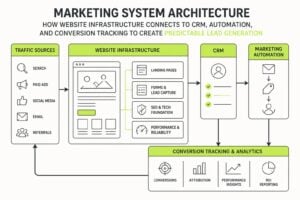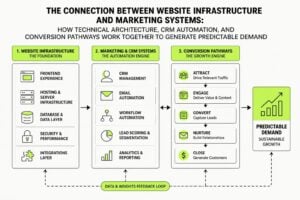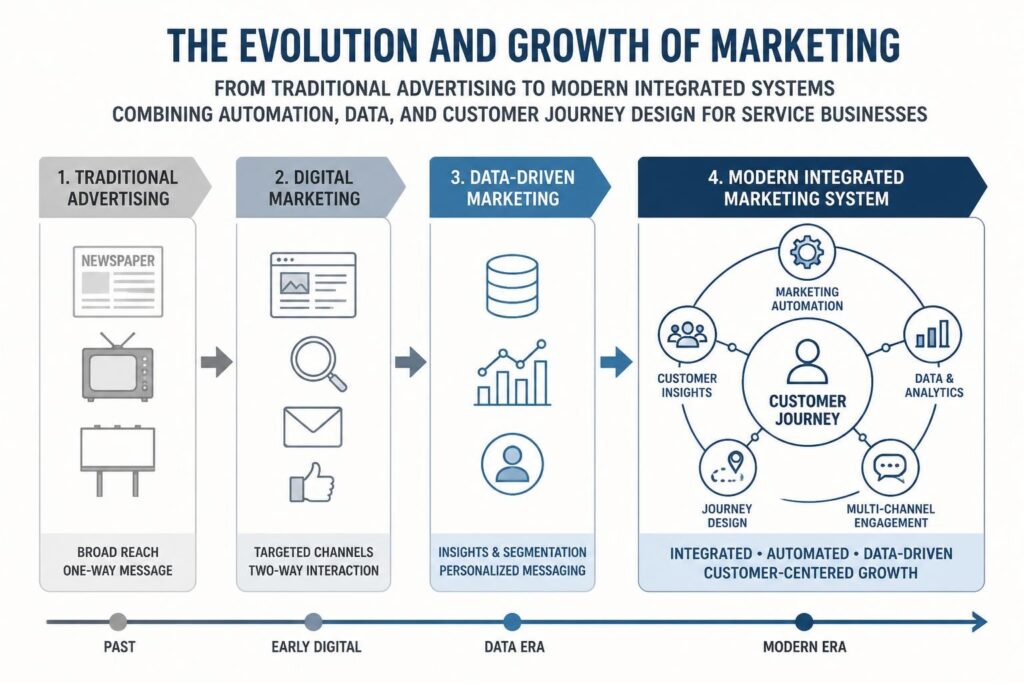
The growth of marketing over the past two decades has fundamentally changed how service businesses attract and convert clients. What once relied on gut instinct and creative campaigns now demands infrastructure, data, and repeatable systems. This shift isn’t just about new channels or tools. It reflects a deeper truth: businesses that treat marketing as a system rather than a series of tactics build predictable growth. The companies struggling today aren’t lacking ideas. They’re missing the structure that turns attention into demand and leads into long-term relationships.
The Evolution From Tactics to Systems
Marketing used to be something you did to people. You bought ads, sent direct mail, made cold calls, and hoped enough prospects converted to justify the spend. The evolution of marketing concepts shows how this approach gradually gave way to customer-centric thinking, but the real inflection point came when digital infrastructure made it possible to track, automate, and optimise entire customer journeys.
The growth of marketing as a structured discipline accelerated when businesses realised they could measure everything. Every click, every email open, every form submission. This data didn’t just improve campaigns. It revealed gaps in the process: leads falling through cracks, inconsistent follow-up, unclear conversion paths. The businesses that leaned into this built CRMs, mapped customer journeys, and created nurture sequences that worked while they slept.
What Changed in the Past Decade
Several forces converged to reshape how marketing operates:
- Digital channels matured beyond simple banner ads into sophisticated platforms with targeting, retargeting, and attribution
- Automation became accessible to businesses of all sizes, not just enterprise companies with IT departments
- Customer expectations shifted toward personalisation, speed, and relevance at every touchpoint
- Data protection and privacy forced marketers to build direct relationships rather than rely on borrowed audiences
According to recent digital marketing industry statistics, the sector continues expanding at rates that outpace traditional media. But this growth isn’t evenly distributed. Service businesses that invested in owned infrastructure, email lists, and automated systems captured disproportionate value compared to those chasing the latest platform or viral tactic.
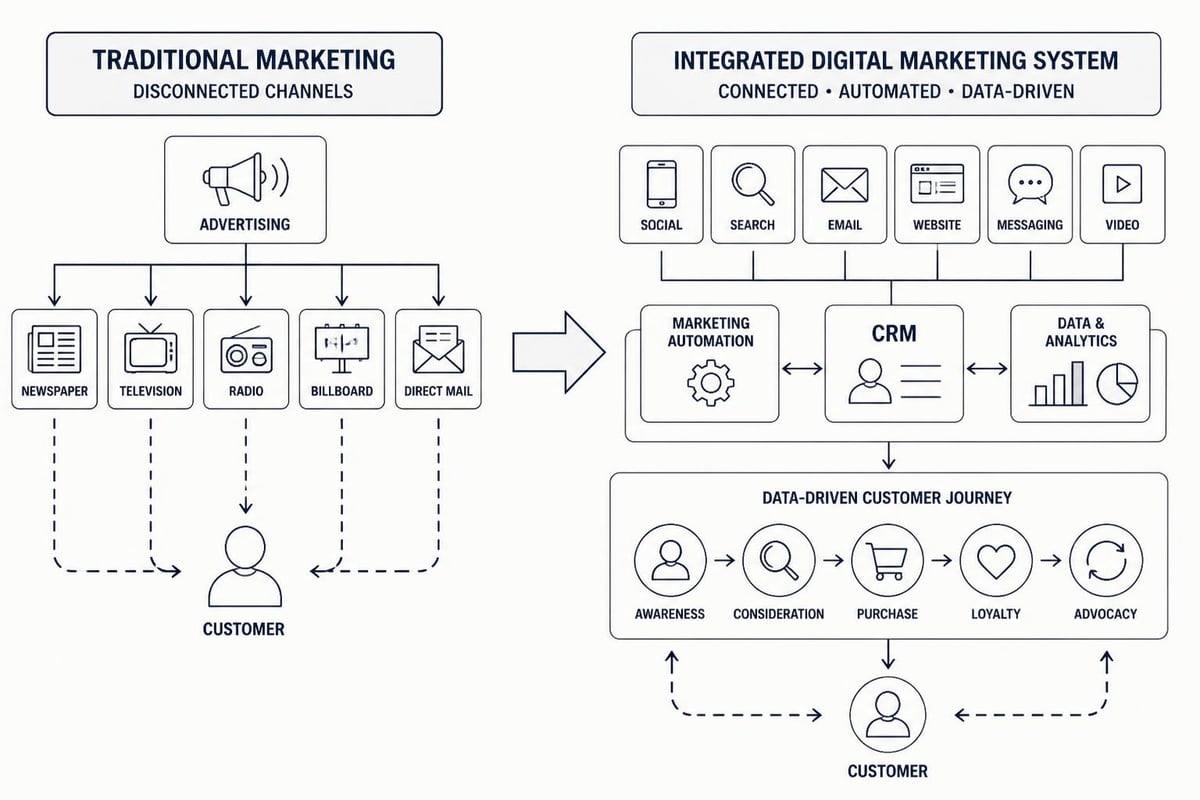
Why Service Businesses Need Different Marketing Infrastructure
Product companies can afford to spray and pray. They have transaction volumes that smooth out inefficiencies. Service businesses don’t have that luxury. Every lead matters. Every conversation counts. The cost of acquisition and the lifetime value of a client make precision essential.
The growth of marketing technology has created tools specifically designed for this model. CRMs that track relationships over months or years. Email sequences that nurture trust before asking for a sale. Booking systems that remove friction from scheduling. Analytics that show which marketing activities actually generate revenue, not just traffic or likes.
The Infrastructure That Actually Matters
When we work with service businesses, the same gaps appear repeatedly:
- No central system of record for leads and clients
- Manual follow-up that depends on someone remembering to do it
- Disconnected tools that don’t talk to each other
- No clear path from first contact to paying client
- Marketing metrics that measure vanity over revenue
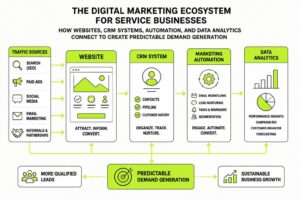
Building marketing systems for business growth means addressing these fundamentals before chasing advanced tactics. A service business with a solid CRM and automated nurture sequence will outperform one with a massive social following but no system to capture and convert interest.
The 7-Step Marketing Plan gives businesses a framework to build this infrastructure methodically. It starts with clarity on goals and audience, then builds out the platform strategy, lead magnets, CRM, nurture campaigns, and referral systems that create compounding growth. Each step feeds the next, removing the chaos that kills momentum.
How Data Changed Everything About Marketing Decisions
The growth of marketing as a data-driven discipline has been one of the most significant shifts in the past fifteen years. Before digital infrastructure, you placed an ad and guessed at results. Maybe you used a unique phone number or promo code to track responses. Maybe you just watched revenue and hoped the ad worked.
Now you can see exactly which email subject line performed better, which landing page converted more visitors, which traffic source brought the highest quality leads. This visibility changes decision-making from opinion-based to evidence-based.
| Marketing Era | Decision Basis | Feedback Loop | Optimisation Speed |
|---|---|---|---|
| Pre-digital | Intuition, experience | Months to quarters | Slow, expensive |
| Early digital | Basic metrics (clicks, opens) | Weeks to months | Moderate |
| Modern systems | Full funnel attribution | Real-time to days | Continuous |
What to Actually Measure
The trap many businesses fall into is measuring everything and understanding nothing. The growth of marketing analytics platforms means you can drown in data. What matters for service businesses:
- Cost per qualified lead (not just cost per click)
- Lead-to-client conversion rate across the entire journey
- Time from first contact to closed deal
- Lifetime client value and retention
- Return on ad spend at the campaign and channel level
These metrics tell you whether your marketing system is working or just creating activity. A service business might get 500 website visitors per month, but if none convert to leads, the traffic is worthless. Better to have 50 visitors and 10 qualified leads than 500 visitors and two bad-fit enquiries.
The marketing industry report highlights how data-driven approaches are now standard across sectors, not competitive advantages. The businesses pulling ahead aren’t just using data. They’re building systems that act on it automatically.
The Creator Economy and the Shift in Attention
One of the most significant drivers in the growth of marketing has been the rise of the creator economy. According to recent industry analysis, ad spending in the creator economy now exceeds total media industry ad spend. That’s a fundamental redistribution of where attention lives.
For service businesses, this shift presents both opportunity and risk. The opportunity is that smaller, more targeted audiences built around trust and expertise convert better than mass media ever did. The risk is that rented attention on platforms you don’t control can disappear overnight when algorithms change.
Building Owned vs. Rented Audiences
The smartest approach combines both:
- Rented platforms (social media, YouTube, podcasts) to reach new people and demonstrate expertise
- Owned platforms (email lists, website, CRM) to capture relationships and control the conversation
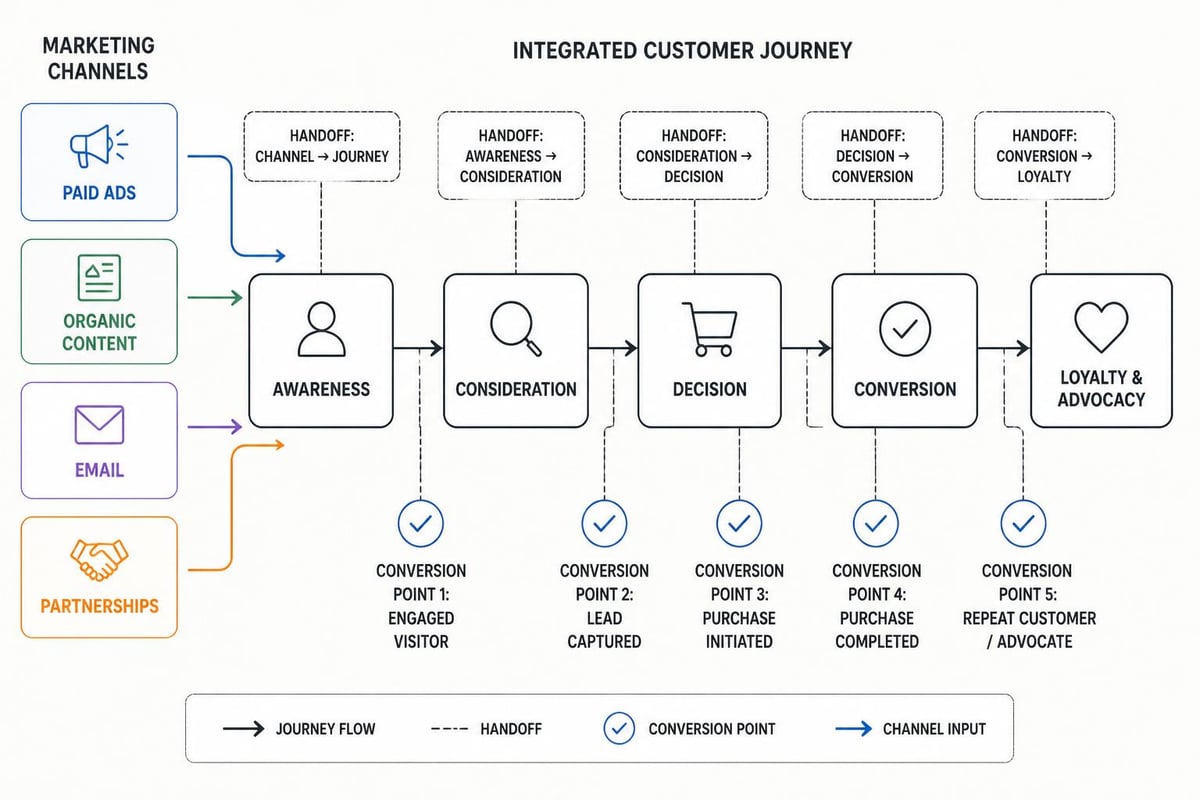
The growth of marketing automation makes this handoff seamless. Someone discovers you on LinkedIn, downloads a guide from your website, enters your email nurture sequence, books a call when they’re ready. No manual work required. No leads falling through gaps because someone forgot to follow up.
Online branding works best when it combines visibility on rented platforms with infrastructure that converts that visibility into owned relationships. A viral post means nothing if you can’t capture and nurture the attention it generates.
The Integration Problem Most Businesses Ignore
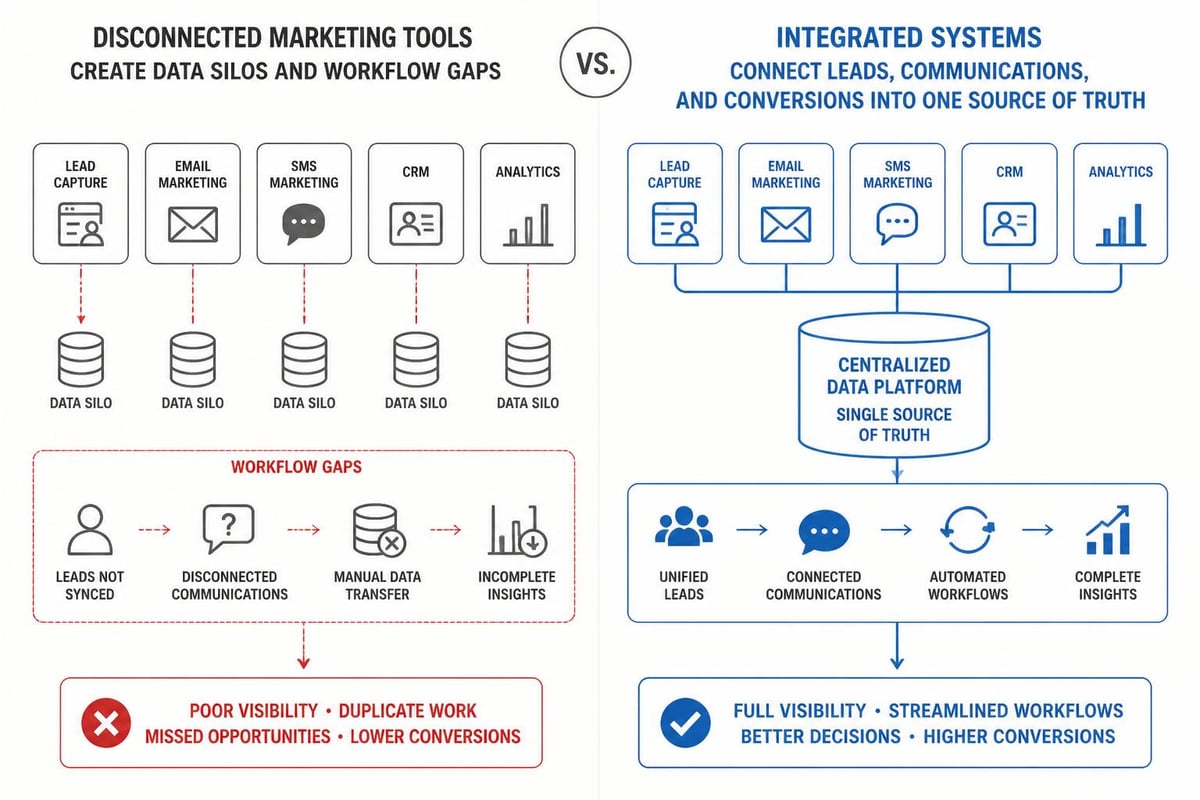
As marketing has grown more sophisticated, the number of tools involved has exploded. Website platforms, email systems, CRMs, scheduling tools, analytics, advertising platforms, social media schedulers. Each one promising to solve a specific problem.
The result is usually chaos. Data trapped in silos. Manual copying between systems. Leads that exist in one place but not another. Reports that don’t match because different tools define conversions differently.
What Integration Actually Looks Like
Real integration isn’t about connecting every tool to every other tool. It’s about designing a marketing system where information flows logically from one stage to the next without human intervention.
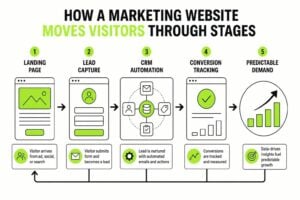
A properly integrated system for a service business might work like this:
- Prospect clicks an ad and lands on a dedicated page
- They download a guide, which adds them to the CRM with a specific tag
- An automated email sequence starts based on that tag
- The sequence provides value over several weeks while positioning your service
- When they’re ready, they book a call directly from an email link
- The booking syncs to your calendar and updates their CRM record
- A reminder sequence starts automatically
- After the call, the outcome is recorded and triggers the next appropriate sequence
No manual data entry. No forgotten follow-ups. No wondering where a lead came from or what content they’ve seen. This is what digital marketing business systems should deliver, but most businesses are nowhere close.
The Role of Content in Modern Marketing Growth
The growth of marketing content as a primary acquisition channel has fundamentally changed how service businesses attract clients. Content isn’t just blog posts or social media updates. It’s the entire experience someone has with your brand before they ever speak to you.
Your website content positions you. Your email content builds trust. Your social content demonstrates expertise. Your ad content interrupts attention and redirects it toward owned platforms. Each piece serves a specific purpose in the broader system.
Content That Converts vs. Content That Fills Space
Most business content falls into the second category. It exists because someone said you need to post three times per week or publish weekly blog articles. But it doesn’t connect to a larger strategy. It doesn’t move people from awareness to consideration to decision.
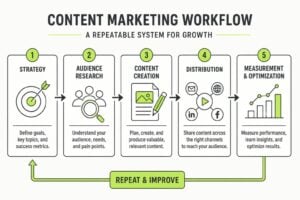
Effective content for service businesses:
- Addresses specific objections or questions prospects have at different stages
- Demonstrates expertise in ways that generic competitors can’t replicate
- Guides people toward a specific next step rather than leaving them to figure it out
- Feeds into automated systems that nurture the relationship over time
The evolution of marketing technologies shows how content creation, distribution, and tracking have become increasingly sophisticated. Service businesses that treat content as system fuel rather than random acts of marketing see compounding returns over time.
Platform Strategy and the Multi-Channel Reality
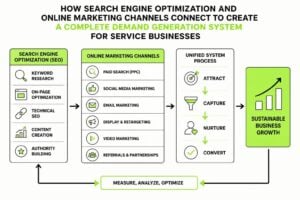
The growth of marketing channels means businesses now face dozens of options: Google Ads, Facebook, Instagram, LinkedIn, YouTube, TikTok, podcasts, email, SEO, partnerships, events, direct mail. The temptation is to be everywhere. The reality is that spreading thin across too many channels kills results.
For service businesses, platform strategy should answer three questions:
- Where does your ideal client spend attention?
- Which channels align with your strengths and resources?
- What’s the minimum viable channel mix to create predictable leads?
Most service businesses need only two or three primary channels if they’re executed properly. One paid channel to accelerate visibility. One organic channel to build authority. One relationship channel to activate referrals and partnerships.
| Channel Type | Purpose | Investment Level | Time to Results |
|---|---|---|---|
| Paid (ads) | Fast visibility, testing | High financial, low time | Days to weeks |
| Organic (SEO, content) | Sustainable authority | Low financial, high time | Months to years |
| Relationship (email, partnerships) | Conversion and retention | Medium both | Weeks to months |
The key is building systems around each channel rather than treating them as isolated tactics. Your ads should feed your CRM. Your content should support your email sequences. Your partnerships should activate existing clients as advocates. Everything connects.
Why Most Marketing Fails Despite All This Growth
With all the tools, data, and knowledge available, you’d expect most marketing to work brilliantly. Instead, most service businesses still struggle with inconsistent leads, unpredictable revenue, and marketing that feels like throwing money into a black hole.
The problem isn’t lack of tactics or channels. It’s lack of system thinking. Businesses approach marketing as a collection of separate activities rather than an integrated machine. They run ads without proper landing pages. Build email lists without nurture sequences. Create content without a conversion path. Hire agencies that optimise individual pieces without understanding the whole.
The Execution Gap
According to global marketing statistics, businesses continue increasing marketing spend year after year. But increased spending doesn’t automatically translate to better results. The gap between what’s possible and what most businesses achieve comes down to execution.
Strong execution means:
- Clear strategy that everyone understands and follows
- Documented processes that remove dependency on individual people remembering things
- Integrated systems where data and leads flow automatically
- Regular review of what’s working and what needs adjustment
- Patience to let compounding effects build rather than chasing quick wins
The businesses that win don’t have secret tactics. They have better systems, clearer processes, and the discipline to execute consistently over time. They’ve built marketing and web development as integrated functions rather than separate departments that occasionally talk to each other.
Building Marketing That Compounds Over Time
The most important shift in the growth of marketing is understanding that effective marketing is an asset, not an expense. A well-built email list grows in value. A properly structured CRM becomes more valuable with every interaction it tracks. Content published today can generate leads for years if it’s optimised properly.
This is why short-term thinking kills service businesses. Chasing the latest platform or tactic creates temporary activity without lasting infrastructure. Building systems feels slower at first but creates exponential returns over time.
What Compounding Marketing Looks Like
- Month 1-3: You’re building infrastructure, creating foundational content, setting up automation. Results are minimal.
- Month 4-6: Systems start working. Leads flow more consistently. You’re refining based on early data.
- Month 7-12: Compounding kicks in. Previous content ranks. Email sequences are optimised. Referrals activate. Growth accelerates.
- Year 2+: The system runs largely without you. New leads enter automatically. Nurture happens while you deliver client work. Revenue becomes predictable.
This timeline requires patience most businesses don’t have. They want results in week two and abandon strategies in month three. The businesses that commit to building proper infrastructure eventually lap their competitors who keep chasing quick fixes.
The growth of marketing as a discipline has made the path clearer than ever. The marketing areas that drive results for service businesses are well documented. The tools exist and are more accessible than ever. The only question is whether you’ll build systems that compound or keep repeating tactics that don’t.
The growth of marketing has created unprecedented opportunity for service businesses willing to build structured systems. The chaos that kills most marketing efforts isn’t inevitable. It’s a choice. MDO Digital helps service businesses remove that chaos by building high-trust websites, CRM infrastructure, and data-driven marketing that converts attention into predictable demand. If you’re ready to move from random tactics to structured growth that compounds over time, MDO Digital can help you build the systems that scale.