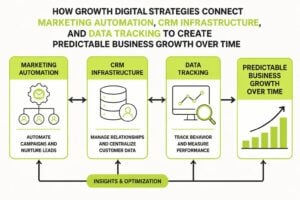
Most service businesses treat business and marketing as separate departments. Operations runs the engine, marketing feeds it leads, and somewhere between the two, chaos breeds. Leads fall through cracks. Client onboarding feels improvised. The best intentions dissolve into spreadsheet mayhem. The truth is simpler than most advisors make it: business and marketing aren't parallel tracks. They're the same system, and when they don't talk to each other, growth stalls.
The Foundation Problem in Business and Marketing
Every business wants more clients. Fewer understand what happens after a lead says yes.
Most marketing efforts focus on top-of-funnel theatre. SEO, ads, content calendars, Instagram grids. The work is visible, measurable, shareable. But the infrastructure that catches those leads, qualifies them, nurtures them, and converts them? That's where the real business happens, and it's where most systems fall apart.
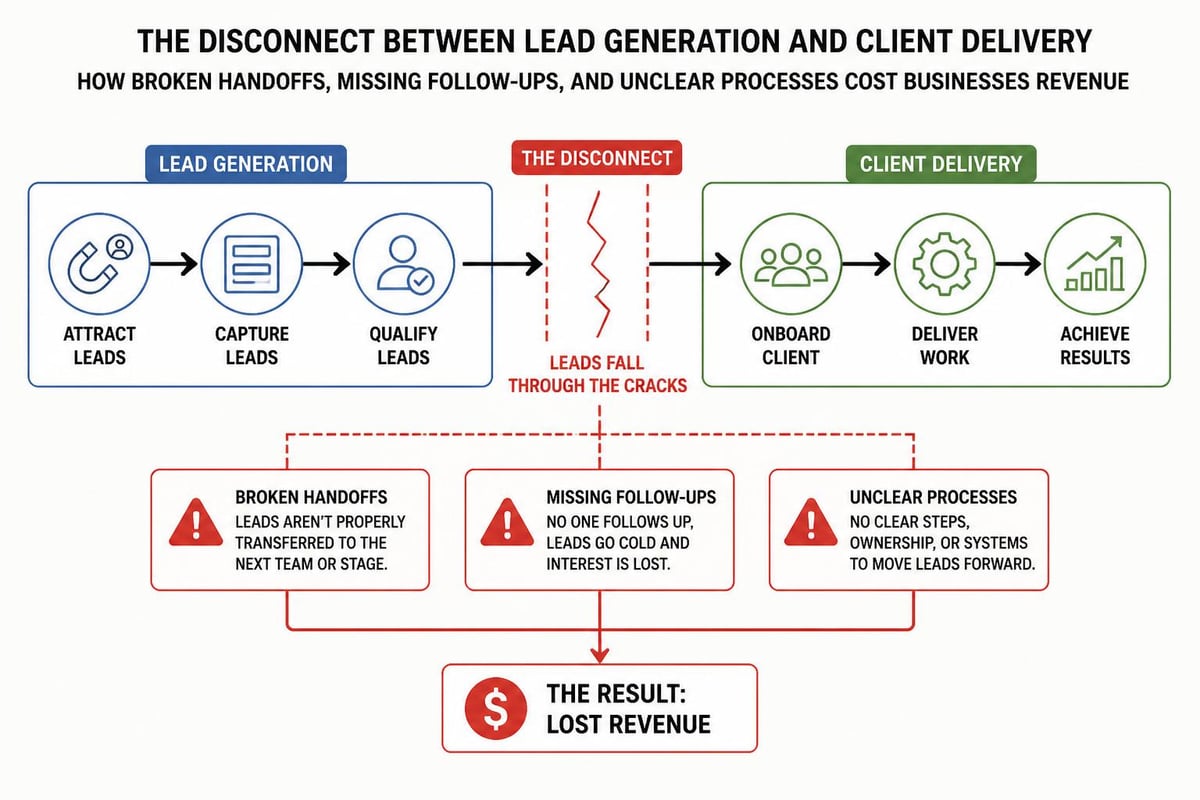
Here's what breaks down:
- Leads enter through forms but no one knows who follows up
- CRM data sits unused or incomplete
- Marketing sends traffic that sales can't convert
- Clients have no structured onboarding experience
- No one tracks what actually creates revenue
You can have the best website in your industry. If your CRM doesn't feed your sales process, and your sales process doesn't feed client delivery, you're building on sand. The real work isn't getting more attention. It's building the systems that turn attention into compounding growth. For detailed research on how businesses approach marketing systems and infrastructure, academic resources provide frameworks worth studying.
What Business and Marketing Alignment Actually Means
Alignment isn't a buzzword workshop with sticky notes on a wall. It's operational. It means your business model, your service delivery, and your marketing promises all point in the same direction.
Define What You Actually Sell
Start with the commercial reality. Not your mission statement. Not your values poster. What do clients pay for, and what do they receive?
If you're a consulting firm, do clients buy hours, outcomes, or access? If you're a productised service, what's included and what costs extra? Get specific. Vague offerings create vague marketing, which attracts vague leads who waste everyone's time.
| Business Model | What Clients Buy | What Marketing Sells |
|---|---|---|
| Consulting | Expert guidance and strategy | Transformation and results |
| Productised service | Fixed-scope deliverables | Speed and predictability |
| Retainer | Ongoing access and support | Peace of mind and growth |
Your business model determines your marketing model. If they don't match, you'll spend forever educating prospects who still don't understand what you do.
Map the Client Journey to Your Systems
Most businesses know their sales funnel. Fewer know their systems funnel, the infrastructure that supports each stage of the client lifecycle.
Here's the structure:
- Awareness – How do people find you? (SEO, referrals, ads, content)
- Consideration – What convinces them you're credible? (Website, case studies, testimonials)
- Decision – What removes friction from saying yes? (Clear pricing, simple onboarding, fast response)
- Delivery – How do you actually serve them? (Project management, communication cadence, tools)
- Retention – What keeps them coming back? (Results, relationships, systems that work)
- Referral – What makes them recommend you? (Exceptional experience, easy referral process)
Each stage needs systems. If stage three (decision) relies on a human remembering to send a proposal, you've got a bottleneck. If stage five (retention) has no follow-up process, you're losing clients who'd happily stay.
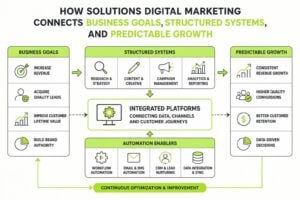
Effective business and marketing strategies depend on structured systems at every touchpoint. Many businesses benefit from frameworks like a 7-Step Marketing Plan that connects goal setting, audience definition, platform selection, and CRM infrastructure into one repeatable process.
Build Your CRM as Your Single Source of Truth
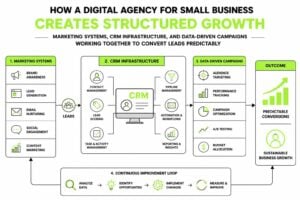
If your CRM is just a contact list, you're wasting it. A proper CRM is the spine of your business and marketing system. It tracks where leads come from, what they're interested in, what stage they're at, and what happens next.
Essential CRM functions for service businesses:
- Lead source tracking (which channels actually generate revenue)
- Stage progression (awareness to client to advocate)
- Automated nurture sequences (educate, build trust, stay visible)
- Task triggers (follow-ups that don't rely on memory)
- Revenue attribution (what marketing efforts pay off)
Most CRMs can do this out of the box. The issue isn't software, it's discipline. If your team doesn't update it, segment properly, or use the data, the tool is decoration. Business and marketing alignment starts with data hygiene. Clean inputs, reliable outputs.
For businesses exploring CRM options, resources like Cornell’s business research databases offer comparative insights into industry-standard tools.
Creating Marketing That Feeds Business Systems
Marketing without infrastructure is noise. Infrastructure without marketing is starvation. You need both, and they need to work together.
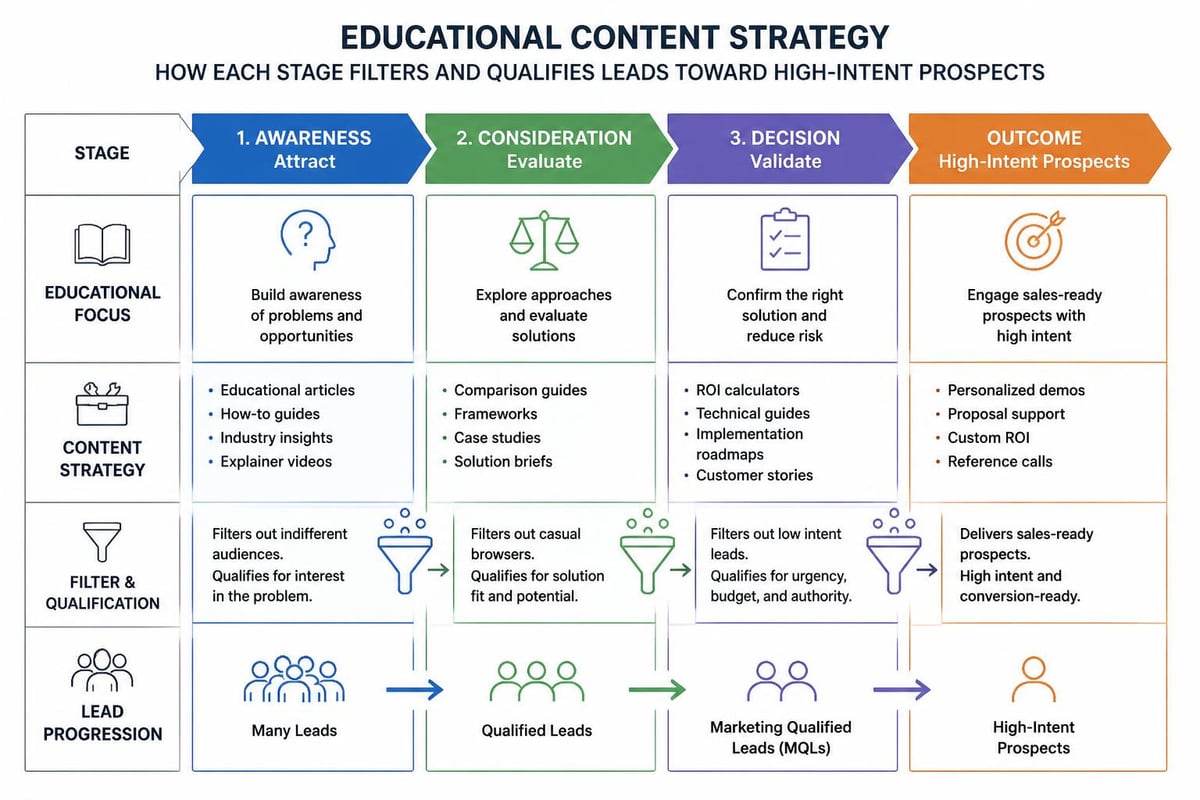
Content That Qualifies, Not Just Attracts
Most content marketing chases volume. Blog posts optimised for traffic. Social posts optimised for likes. Emails optimised for opens. None of that matters if the people consuming it aren't buyers.
Better approach: create content that educates your ideal client on how to evaluate solutions like yours. This filters out tyre kickers and educates serious prospects before they ever book a call.
Examples of qualifying content:
- How to assess if you need branding work or just better messaging
- What to ask a marketing agency before signing a contract
- How to calculate the ROI of automation infrastructure
- Red flags in web design proposals
This content does double duty. It builds trust and it sets expectations. The prospects who engage deeply are pre-qualified by the time they reach out.
Offers That Match Your Capacity
Your lead magnet, your intro offer, your core service, they all need to align with what you can actually deliver at scale.
If you offer free audits but can't handle the volume, you'll burn your team and disappoint prospects. If your core service requires deep discovery but your marketing sells speed, you'll attract the wrong clients.
| Offer Type | Good For | Misaligned When |
|---|---|---|
| Free audit | Consultative sales | You can't handle volume or follow-up |
| Low-cost entry offer | Building trust at scale | Clients expect full-service support |
| High-ticket retainer | Deep partnerships | You haven't proven expertise first |
| Productised package | Speed and clarity | Clients need custom solutions |
Align your offers with your business model. If you sell retainers, your marketing should attract clients ready for ongoing partnerships. If you sell productised services, your marketing should emphasise speed, clarity, and fixed scope. Business and marketing alignment means your offers don't create operational chaos.
Automate the Boring, Humanise the Critical
Automation gets misused. Businesses automate relationship-building (bad) or leave repetitive admin tasks to humans (also bad).
Automate these:
- Lead capture and CRM entry
- Email nurture sequences for cold leads
- Appointment booking and reminders
- Invoice generation and payment follow-up
- Client onboarding checklists
Keep these human:
- Discovery calls
- Proposal customisation
- Project kickoffs
- Strategic check-ins
- Relationship building
The goal isn't to remove humans. It's to free them from tasks that don't require judgment, so they can focus on the interactions that build trust and deliver value. Research from institutions like Purdue’s market research guides highlights how automation adoption varies across industries, but the principle holds: automate process, personalise connection.
Building Predictable Demand in Business and Marketing
Predictability beats heroics. You don't need a viral post or a miracle quarter. You need systems that deliver consistent results.
Track What Matters
Most businesses drown in metrics that don't drive decisions. Pageviews, impressions, followers. Vanity metrics feel productive but they don't pay the bills.
Track these instead:
- Lead source by revenue (which channels bring paying clients)
- Conversion rate by stage (where prospects drop off)
- Customer acquisition cost (what you spend to win a client)
- Lifetime value (what a client is worth over time)
- Time to close (how long sales cycles take)
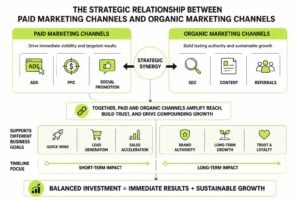
This data tells you where to double down and where to cut losses. If referrals bring 60% of your revenue, build a referral system. If paid ads cost more than a client is worth, shut them off. Business and marketing strategy is just math and honesty.
Build Repeatable Systems
One-off wins don't scale. Systems do. Whether it's content production, lead follow-up, or client onboarding, repeatability creates leverage.
Example: content production system
- Keyword research based on client questions
- Outline drafts reviewed by subject experts
- First drafts written to template
- Edits focused on clarity and structure
- Publish with internal links and CTAs
- Repurpose into email and social content
Every step is defined. Every role is clear. The system runs whether you're in the room or not. That's how small teams compete with big agencies. More on digital marketing systems and how structure creates scale.
Protect Your Leads
The worst failure in business and marketing isn't getting too few leads. It's losing the ones you already have.
Most lead leakage happens in three places:
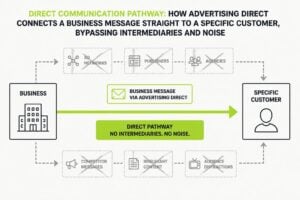
- Handoff between marketing and sales (form submissions no one follows up)
- Slow response times (prospects move on while you're "getting back to them")
- No nurture for not-yet-ready leads (they forget you exist)
Fix these with process, not people. Automate lead notifications. Set response time SLAs. Build nurture sequences that keep you top of mind without requiring manual effort.
Protecting leads isn't glamorous. But it's the difference between 10% and 40% conversion rates, and that's the difference between survival and scale.
Common Failures in Business and Marketing Alignment
Even smart operators make predictable mistakes. Here's what to avoid.
Treating Marketing as a Department, Not a Function
Marketing isn't a silo. It's how your business shows up, communicates, and builds trust. If only the "marketing team" thinks about messaging, you've already lost.
Everyone in your business is part of marketing. How you answer the phone, structure your invoices, onboard clients, handle complaints, it all communicates your brand. Business and marketing alignment means everyone understands the client experience they're creating.
Building Infrastructure You Don't Use
The graveyard of business tools is vast. Expensive CRMs with 12% adoption. Project management software no one updates. Automation flows that break and never get fixed.
Don't buy tools to look professional. Buy them to solve actual problems, and commit to using them properly. A spreadsheet you maintain beats a CRM you ignore.
Optimising for Metrics That Don't Create Revenue
It's easy to optimise open rates, click rates, bounce rates. It's harder to admit those metrics don't correlate with revenue.
Focus upstream. What gets people to buy? What keeps them as clients? What makes them refer? Optimise for those outcomes, even if the metrics look less impressive on a report.
For deeper exploration of business research methodology, Stark State’s business resources guide and Olympic College’s marketing databases provide peer-reviewed perspectives on measurement and attribution.
What Structured Growth Actually Looks Like
Growth without structure is chaos with a bigger budget. Structured growth compounds because systems improve over time.
Year One: Build the Foundation
- Clear service offering and pricing
- Website that builds trust and captures leads
- CRM that tracks and nurtures prospects
- Basic email sequences for new leads
- Reliable client onboarding process
This isn't sexy. It's foundational. Most businesses skip it and wonder why scaling feels impossible.
Year Two: Optimise and Expand
- Refine offers based on what sells
- Add content that addresses common objections
- Build referral systems into client delivery
- Test new lead sources with small budgets
- Improve conversion rates at each funnel stage
You're not inventing new tactics. You're making existing systems better.
Year Three: Scale What Works
- Double down on proven channels
- Hire to remove bottlenecks, not to look bigger
- Automate repeatability, maintain quality
- Expand service lines that clients request
- Build partnerships that multiply reach
Structured growth isn't linear, but it's predictable. You know what levers to pull because you've been tracking what works. That's the advantage of aligning business and marketing from the start.
Business and marketing aren't separate challenges. They're one system, and when the pieces connect properly, growth stops feeling like a gamble. If you're ready to remove the chaos, protect your leads, and build infrastructure that compounds over time, MDO Digital can help you design the systems that make it happen. We work with service businesses that want clarity, structure, and results that actually scale.