The term “digital marketing expert” gets thrown around a lot. Everyone from social media managers to full-stack growth advisors claims the title. But not all digital marketing experts are built the same. Some specialise in one channel and do it brilliantly. Others understand how multiple systems connect and build entire marketing engines from scratch. The difference matters when you’re trying to scale a service business without burning through cash or creating chaos. Let’s cut through the noise and look at what these people actually do, how they think, and whether you need one.
What Digital Marketing Experts Actually Specialise In
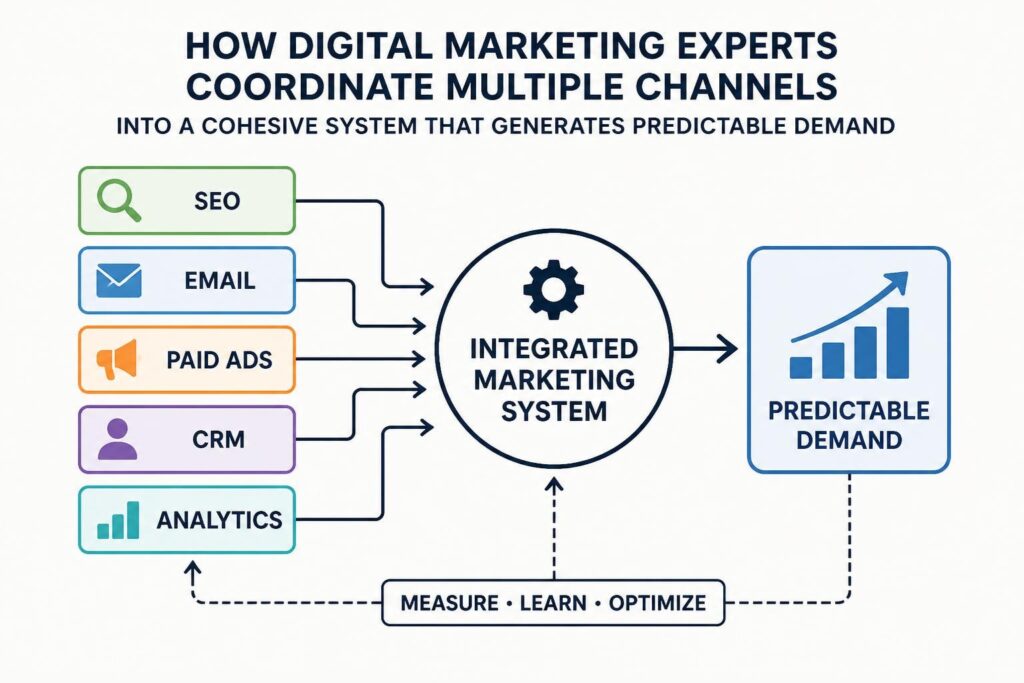
The phrase “digital marketing expert” covers a wide territory. Some focus on a single discipline. Others take a systems view and coordinate multiple channels into a coherent strategy.
Channel Specialists vs Systems Thinkers
Channel specialists go deep on one platform or tactic:
- SEO experts who understand technical structure, content strategy, and how Google actually ranks pages
- Paid media strategists who manage ad accounts, build audiences, and optimise for cost per acquisition
- Email marketers who write sequences, segment lists, and drive conversions through automation
- Conversion rate optimisation (CRO) specialists who test landing pages, forms, and user flows
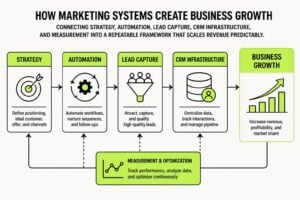
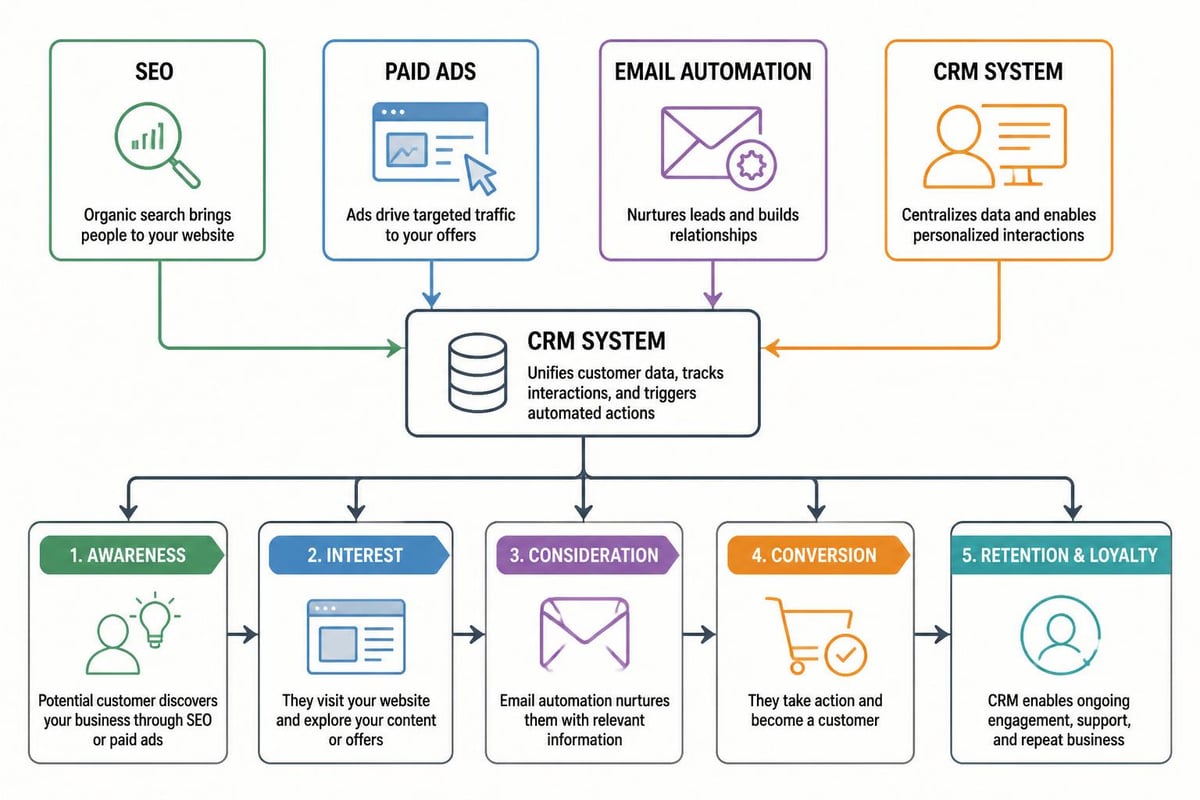
Then there are systems thinkers. These digital marketing experts see how channels work together. They build frameworks that turn traffic into leads, leads into customers, and customers into repeat buyers. They care less about mastering Facebook ads and more about creating a predictable pipeline.
This distinction is important. A channel specialist can solve a specific problem. A systems expert builds the infrastructure that scales.
What Makes Someone an Actual Expert
Experience alone doesn’t make someone an expert. Plenty of people have spent years in marketing without developing genuine skill. Real digital marketing experts share a few traits:
- They understand data and use it to make decisions, not just report on what happened
- They can explain complex ideas in plain language without hiding behind jargon
- They’ve built systems that worked, failed, and been rebuilt better
- They know what works in theory often breaks in practice
According to a curated list of digital marketing experts, the most respected names in the field combine hands-on execution with clear thinking. They don’t just follow trends. They test, measure, and refine until something actually works.
How Digital Marketing Experts Approach Strategy
Strategy isn’t a document. It’s a set of decisions about where to focus, what to ignore, and how to allocate resources. Digital marketing experts don’t start with tactics. They start with structure.
Building the Foundation
Before running ads or publishing content, good experts establish the basics:
- Clear positioning that explains who you serve and what problem you solve
- A defined buyer persona with real pain points, not vague demographics
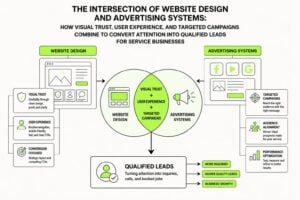
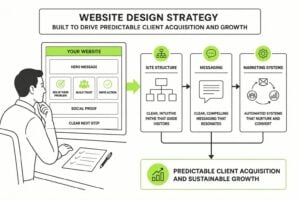
- A website that converts, not just looks good
- A CRM to capture and track leads so nothing falls through the cracks
- Measurement systems that show what’s working and what’s wasting money
This foundation matters more than most businesses realise. You can’t fix a leaky bucket by pouring more water into it. Digital marketing experts know that infrastructure comes first. Tactics come second.
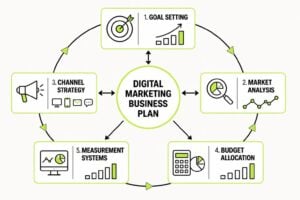
If you’re wondering where to start, the 7-Step Marketing Plan offers a practical framework that walks through each layer, from setting goals to generating referrals. It’s designed for service businesses that need a repeatable system, not a one-off campaign.
Choosing Channels That Actually Fit
Not every channel works for every business. Digital marketing experts match tactics to the way your customers actually buy.
| Business Type | High-Value Channels | Low-Value Channels |
|---|---|---|
| High-ticket B2B | LinkedIn, SEO, email nurture | TikTok, display ads |
| Local services | Google Business, local SEO, reviews | Twitter, Pinterest |
| E-commerce | Paid social, email, retargeting | Cold outreach, podcasts |
| Professional services | Referrals, content marketing, speaking | Broad Facebook ads |
This isn’t about following best practices. It’s about knowing where your audience spends time and what triggers them to take action. A good expert won’t push you toward a channel just because it’s trendy. They’ll ask hard questions about your customer journey and build from there.
Common Mistakes When Hiring Digital Marketing Experts
Hiring the wrong person is expensive. Not just in money, but in time lost and opportunities missed. Here’s where businesses often go wrong.
Confusing Activity With Results
Some digital marketing experts are great at looking busy. They’ll send weekly reports packed with metrics. Impressions, reach, engagement. All of it useless if none of it leads to revenue.
Real experts focus on outcomes:
- Leads generated and qualified
- Cost per acquisition
- Customer lifetime value
- Revenue attributed to specific channels
If someone can’t connect their work to money in the door, they’re not an expert. They’re an administrator.
Expecting One Person to Do Everything
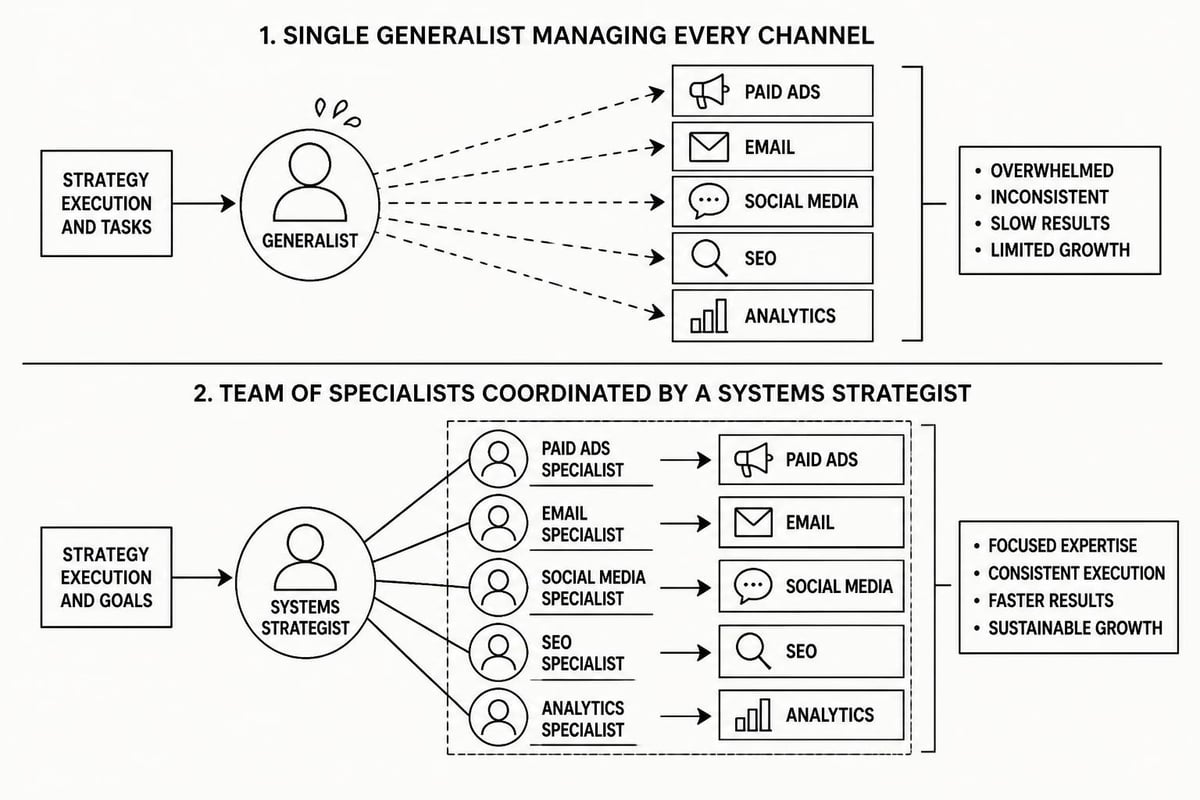
No single person is excellent at SEO, paid ads, email marketing, web development, design, copywriting, and analytics. Digital marketing covers too much ground. The best setups use specialists where it matters and generalists to coordinate.
If you hire one “expert” and expect them to run everything, you’ll get mediocre results across the board. Better to define what you actually need and hire for that, whether it’s marketing systems or a specific channel.
Ignoring Cultural Fit
Technical skill matters. But so does how someone works. Digital marketing experts who thrive in fast-paced startups might struggle in traditional industries. Someone brilliant at creative campaigns might hate the grind of CRM setup and automation.
Ask about:
- How they communicate (daily check-ins or weekly summaries?)
- How they handle failure (do they iterate or defend?)
- What tools they prefer (are they willing to learn yours?)
- How they prioritise (quick wins or long-term infrastructure?)
You’re not just hiring a skill set. You’re adding someone to your operations. Make sure they fit.
What to Expect When Working With Digital Marketing Experts
Good working relationships come from clear expectations. Here’s what realistic outcomes look like.
Timeline to See Results
Different channels move at different speeds:
- Paid ads: Results in days, optimization over weeks
- SEO: 3-6 months for meaningful traffic
- Email automation: Immediate setup, compounding returns over months
- Content marketing: 6-12 months to build authority
Digital marketing experts worth hiring will tell you this upfront. If someone promises instant results across the board, they’re either lying or inexperienced. According to profiles of leading digital marketing experts, the best in the field set realistic expectations and then exceed them through consistent execution.
How They Measure Success
Metrics should ladder up to business goals. A good expert will establish benchmarks and track progress transparently.
| Metric | What It Measures | Why It Matters |
|---|---|---|
| Traffic | Website visitors | Top of funnel health |
| Conversion rate | Visitors who take action | How well your site persuades |
| Cost per lead | Ad spend divided by leads | Efficiency of acquisition |
| Lead-to-customer rate | Leads that become buyers | Quality of targeting |
| Customer LTV | Revenue per customer over time | Long-term value of marketing |
If your expert can’t explain how their work connects to these numbers, push back. Marketing shouldn’t be a black box.
Communication and Reporting
Frequency matters less than clarity. Some businesses need daily updates. Others prefer monthly deep dives. What’s non-negotiable is honesty about what’s working and what’s not.
Digital marketing experts who sugarcoat poor performance or bury bad news in jargon aren’t protecting you. They’re protecting themselves. The good ones flag problems early and come with solutions, not excuses.
The Role of AI and Automation in Modern Digital Marketing
Digital marketing in 2026 isn’t the same as it was five years ago. AI tools have shifted what’s possible and what’s table stakes. Experts who haven’t adapted are falling behind.
What AI Actually Does Well
AI excels at repetitive tasks and pattern recognition:
- Writing first drafts of ad copy, emails, and social posts
- Analysing large datasets to spot trends
- Personalising content based on user behavior
- Predicting customer churn or purchase likelihood
But AI doesn’t replace strategy. It amplifies execution. Digital marketing experts who use AI well treat it like a junior team member. It handles grunt work. They handle decisions. Research on neural networks in digital marketing content design shows AI can improve engagement when directed by someone who understands customer psychology.
Where Human Expertise Still Wins
Machines can’t replace judgment. They can’t read a room, sense a market shift, or understand the emotional drivers behind a purchase decision. They’re also terrible at:
- Developing brand voice and tone
- Building relationships with customers and partners
- Spotting opportunities in messy, incomplete data
- Making ethical calls about messaging and targeting
The digital marketing experts who thrive in 2026 blend both. They use automation to scale. They use their brains for everything else.
Do You Actually Need a Digital Marketing Expert?
Not every business does. If you’re early stage and cash-strapped, hiring an expert might be premature. You might be better off learning the basics yourself and executing scrappily until you have revenue to invest.
But if you’re past that point, and you’re trying to scale, the cost of not having an expert is higher than the cost of hiring one. Wasted ad spend, lost leads, inconsistent messaging, and scattered tactics add up fast.
Signs You’re Ready to Hire
You should consider bringing in digital marketing experts when:
- You’re spending money on marketing but can’t track where leads come from
- Your website gets traffic but doesn’t convert
- You have multiple tools and systems that don’t talk to each other
- You’re too busy delivering your service to build a proper marketing engine
- You’ve tried DIY marketing and hit a ceiling
If any of these sound familiar, it’s time. You don’t need to hire a full team. You just need someone who can install the right systems and train you to run them. That’s where agencies focused on marketing systems make the most sense. They build the infrastructure, then hand you the controls.
The Build vs Buy Decision
Some businesses prefer to hire in-house. Others prefer agencies or freelancers. Both work, but they suit different situations.
In-house works when:
- You need someone embedded in daily operations
- Your market or product is complex and requires deep context
- You have enough volume to keep someone busy full-time
Agencies or contractors work when:
- You need a range of skills without hiring a full team
- You want results faster without recruitment lag
- You’d rather pay for output than manage headcount
There’s no universal answer. The right choice depends on your stage, budget, and how hands-on you want to be. For a deeper look at when to outsource, explore how marketing systems support business growth.
How to Vet Digital Marketing Experts Before You Hire
Anyone can claim expertise. Here’s how to separate signal from noise.
Questions to Ask in the Interview
These cut through fluff:
- What’s a campaign you ran that failed, and what did you learn?
- How do you prioritise when everything feels urgent?
- What’s your process for understanding a new business or market?
- Can you walk me through how you’d approach our specific situation?
- What tools do you use, and why those over alternatives?
Watch how they answer. Good experts think out loud. They don’t have canned responses. They ask clarifying questions. They admit what they don’t know.
Red Flags to Watch For
Avoid digital marketing experts who:
- Guarantee specific rankings or results (“We’ll get you to #1 on Google”)
- Use jargon to dodge simple questions
- Can’t provide case studies or references
- Push you toward long-term contracts without proving value first
- Claim to be experts in everything
According to a guide exploring prominent digital marketing experts, the most credible names in the field are transparent about their strengths and limitations. They focus on fit, not selling.
Checking Their Work
Ask for examples. Not just results, but process. How did they diagnose the problem? What did they try first? What did they change when it didn’t work?
Look for evidence of:
- Strategic thinking, not just tactics
- Clear communication in their writing and presentations
- Attention to detail in their past campaigns
- Adaptability when plans change
If they can’t show you how they think, don’t hire them.
Digital marketing experts add value when they build systems that remove chaos and create predictable demand. The best ones don’t just run campaigns. They install infrastructure that works whether they’re in the room or not. If you’re ready to move from scattered tactics to structured growth, MDO Digital helps service-based businesses build high-trust websites, CRM automation, and data-driven marketing that compounds over time. Let’s build something that lasts.