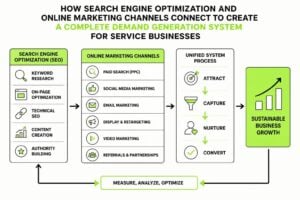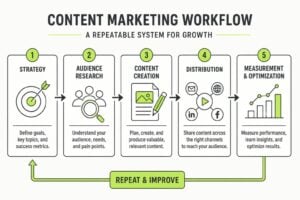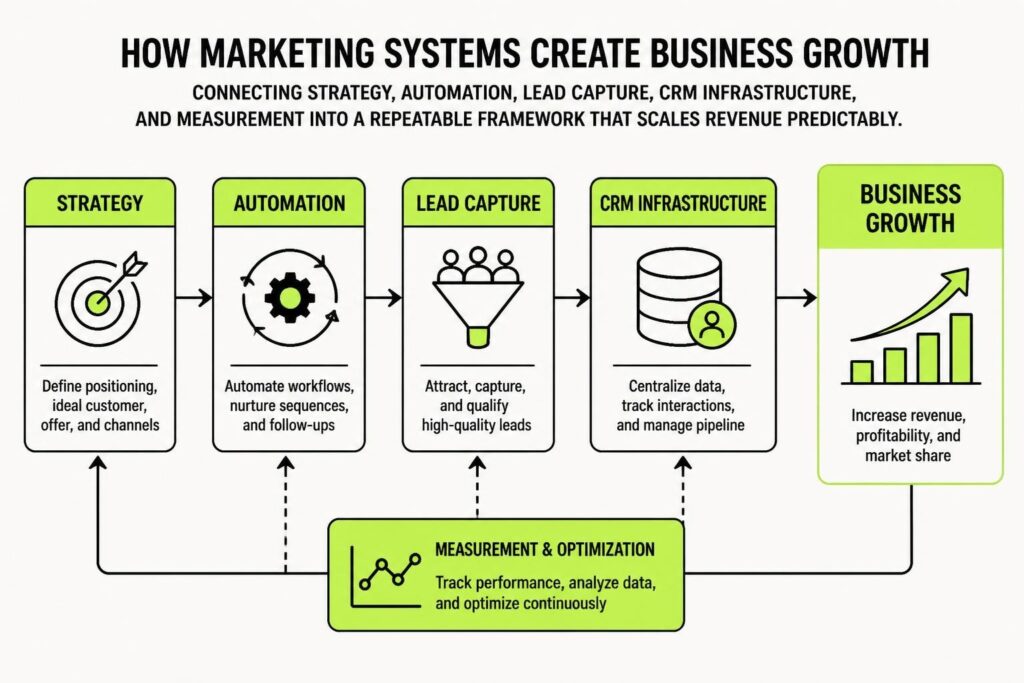
Marketing for business growth isn't about luck or sporadic campaigns. It's about building systems that predictably turn attention into revenue. Most service businesses approach marketing like a game of roulette, spending money on ads, posting content when they remember, and hoping something sticks. The businesses that actually scale treat marketing differently. They build infrastructure that protects leads, nurtures relationships, and compounds over time. The difference between chaos and growth is having a repeatable process you can trust.
Why Most Marketing Doesn't Drive Growth
Too many businesses confuse activity with progress. They post on social media, send occasional emails, maybe run some ads. But none of it connects. Each tactic exists in isolation, which means every lead is a fresh start rather than part of a system.
The core problems look like this:
- No clear path from awareness to sale
- Leads fall through the cracks because there's no follow-up structure
- Marketing data lives in disconnected tools
- No way to measure what actually works
- Campaigns start and stop based on whoever has time that week
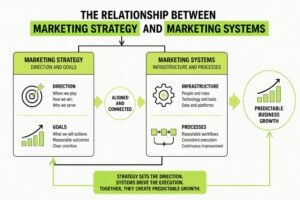
Growth comes from fixing the infrastructure, not adding more tactics. When Forbes Business Development Council members discuss proven B2B marketing strategies, they consistently emphasize systems over one-off campaigns. You need marketing for business growth that creates a flywheel, not just temporary bumps in traffic.
The other issue is treating marketing like a creative exercise instead of a business function. Good marketing needs structure, measurement, and accountability. That doesn't mean it can't be creative, but creativity without systems is just expensive content production.
Building Your Marketing Foundation
Before you scale anything, you need clarity on who you serve and what problem you solve. This sounds basic, but most businesses skip it. They try to appeal to everyone, which means their message resonates with no one.
Define Your Buyer With Precision
Start by documenting exactly who your ideal client is. Not demographics, actual characteristics that matter. What keeps them awake at night? What have they already tried that didn't work? What do they value more than price? Write this down in detail because every marketing decision flows from this foundation.
Your buyer persona should answer:
- What specific problem are they trying to solve right now?
- What language do they use to describe that problem?
- Where do they look for solutions?
- What objections stop them from buying?
- What does success look like to them?
This clarity changes everything. Your website copy becomes sharper. Your ad targeting gets tighter. Your sales conversations start further down the funnel because prospects already feel understood.
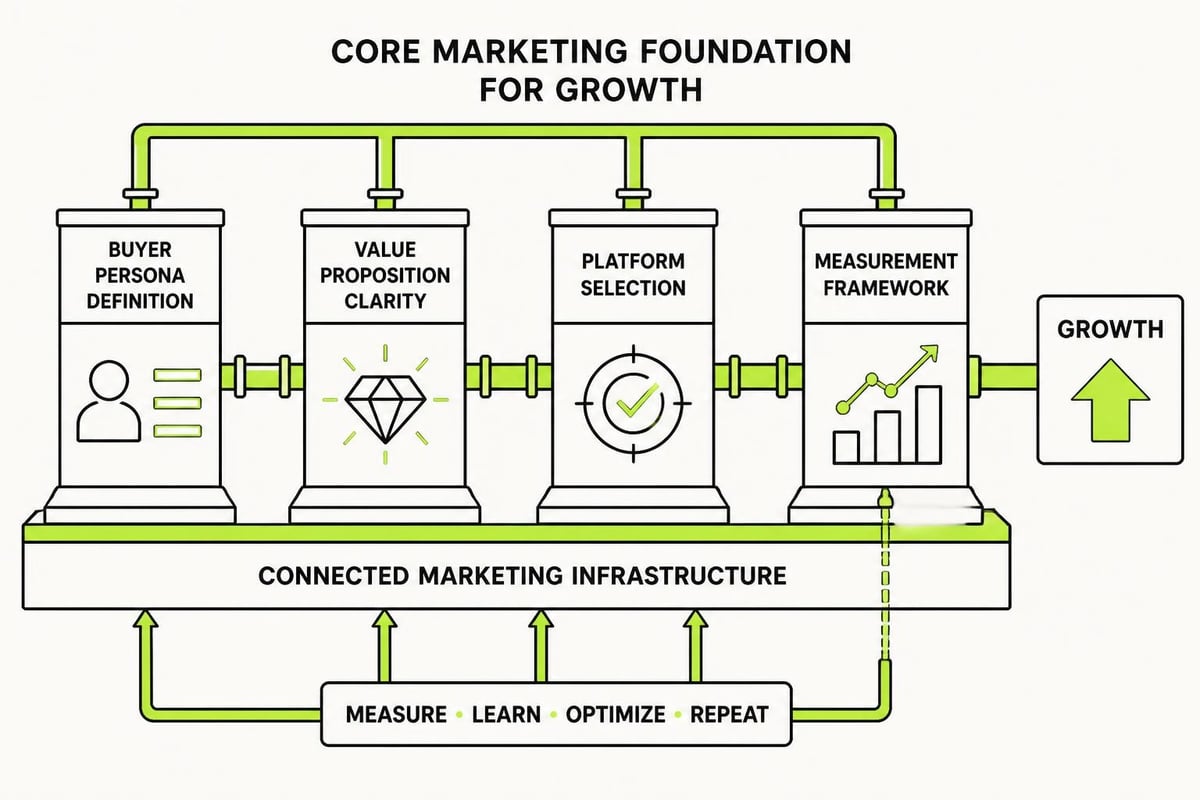
Choose Platforms That Match Your Buyer
Stop trying to be everywhere. Pick the platforms where your buyer actually spends time and go deep. For business and marketing growth, this usually means fewer platforms with better execution rather than spreading yourself thin.
| Platform Type | Best For | Growth Mechanism |
|---|---|---|
| B2B services, consulting | Authority content, warm outreach | |
| Existing audiences, nurture | Automated sequences, segmentation | |
| Google Ads | High-intent searches | Direct response, conversion tracking |
| SEO | Long-term authority | Compound content, organic traffic |
The mistake is launching on every platform simultaneously. Build one channel properly first. Get your systems working. Then expand. Marketing for business growth requires depth before breadth.
Creating Your Lead Capture System
Traffic without capture is just expensive entertainment. You need a structured way to convert attention into contact information you can actually use. This means building offers that trade genuine value for an email address.
Effective lead magnets share common traits:
- Solve one specific problem immediately
- Require minimal time to consume
- Demonstrate your expertise clearly
- Lead naturally to your paid offering
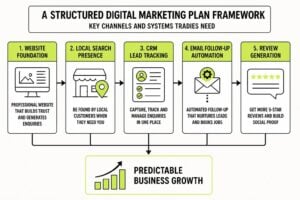
The 7-Step Marketing Plan framework shows how this fits into a larger system. Your lead magnet isn't the end goal, it's the entry point into a nurture system that builds trust and moves people toward a sale.

Your capture system needs multiple entry points. Website forms, content upgrades, webinar registrations, quiz results. Each one should feed into your CRM with proper tagging so you know exactly how someone found you and what they care about.
Building CRM Infrastructure That Protects Revenue
Here's where most service businesses lose money. They capture leads but have no system to follow up. Prospects get one email, maybe two, then nothing. The lead dies. That's not marketing for business growth, that's just wasting ad spend.
Design Nurture Sequences That Convert
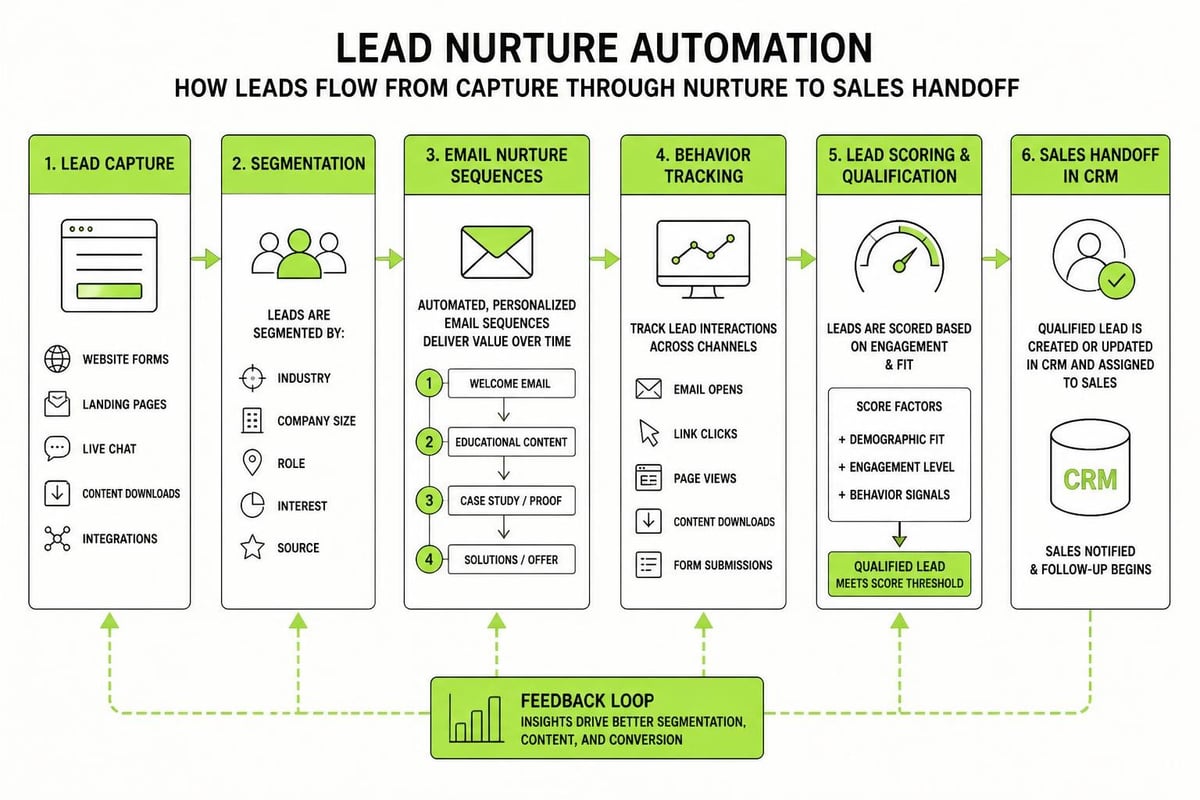
Your CRM should automatically move leads through a structured journey. This isn't about blasting emails, it's about delivering value in a sequence that builds trust and demonstrates expertise.
A basic nurture sequence includes:
- Immediate delivery of whatever they requested
- Quick win email that creates a small result
- Education content that deepens their understanding
- Case study or proof that shows your approach works
- Clear invitation to book a call or make a purchase
Each email should stand alone as valuable content while moving the relationship forward. The automation does the heavy lifting, but the messaging needs to feel personal and relevant.
Track everything. Open rates, click rates, conversion points. This data tells you where people engage and where they drop off. Use that information to refine your sequences over time. Marketing systems improve through iteration, not guesswork.
Segment Based on Behavior
Not every lead needs the same message. Your CRM should segment people based on what they've shown interest in, what they've downloaded, which emails they've opened. This lets you send relevant content instead of generic broadcasts.
| Segment Type | Trigger | Message Focus |
|---|---|---|
| Problem-aware | Downloaded lead magnet | Education on solutions |
| Solution-aware | Clicked service pages | How you deliver differently |
| Purchase-ready | Booked discovery call | Case studies, testimonials |
| Past clients | Completed project | Referral requests, expansion |
Segmentation turns your email list from a broadcast channel into a targeted communication system. People get content that actually matters to them, which means higher engagement and better conversion rates.
Measuring What Actually Drives Growth
You can't improve what you don't measure. Marketing for business growth requires specific metrics that connect spending to revenue. Vanity metrics like social media followers or website visits mean nothing if they don't lead to sales.
Track these core metrics:
- Cost per lead across each channel
- Lead to opportunity conversion rate
- Opportunity to customer conversion rate
- Customer acquisition cost
- Customer lifetime value
- Return on ad spend
When you track properly, you know exactly which marketing activities generate profit and which ones burn cash. This lets you double down on what works and cut what doesn't. The Hurree blog outlines effective marketing strategies but measurement is what separates strategy from execution.
Connect your CRM to your analytics tools. You should be able to track a lead from first touch through to closed revenue. This visibility shows you the real customer journey, not just the last click.
Scaling Campaigns With Confidence
Once your systems work at a small scale, you can invest more without increasing risk. This is how marketing becomes a growth lever rather than an expense category. You're not guessing, you're scaling proven processes.
Start With Paid Channels You Control
Organic growth compounds, but it takes time. Paid advertising gives you immediate feedback and lets you test messaging quickly. Start with small budgets, prove your conversion path works, then increase spend systematically.
The key is having your backend systems ready first. Running ads without CRM infrastructure just creates expensive chaos. You need the automation, the nurture sequences, the measurement all working before you pour fuel on the fire.
Your paid campaign checklist:
- Landing page with clear offer
- Thank you page with next steps
- Email sequence that delivers value
- CRM tagging for proper segmentation
- Conversion tracking from ad to sale
- Regular reporting on cost per acquisition
When these pieces connect properly, scaling becomes mathematical. You know your numbers, so you can calculate exactly how much ad spend generates how much revenue. That's marketing and business development working as it should.
Build Content That Compounds
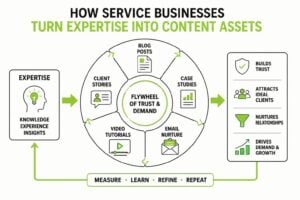
Paid ads get you quick wins. Content builds long-term authority. Both matter for sustainable growth. Your content strategy should answer every question your buyers ask throughout their decision process.
Create content in tiers. Top of funnel content attracts attention through search and social. Middle funnel content educates and positions your approach. Bottom funnel content overcomes objections and demonstrates proof.
Each piece should link naturally to others, creating a web that keeps people engaged with your brand. The digital marketing plan structure you build determines whether content creates actual pipeline or just vanity traffic.
Creating Customer Experiences That Generate Referrals
Marketing for business growth doesn't stop at the sale. Your best growth channel is existing customers who tell others about you. This requires delivering an experience worth talking about.
Design Touchpoints That Build Trust
Map every interaction a customer has with your business. From first inquiry through project delivery and beyond. Each touchpoint is an opportunity to either strengthen or weaken the relationship.
Critical customer touchpoints include:
- Inquiry response time and quality
- Onboarding clarity and structure
- Project communication frequency
- Delivery quality and timeliness
- Post-project follow-up and support
Automate the routine parts so you can focus on the high-value interactions. Your CRM should trigger emails, assign tasks, and remind you when to check in. This consistency builds trust because nothing falls through the cracks.
Build Systematic Referral Generation
Don't wait for referrals to happen organically. Create a system that asks at the right moment with the right incentive. The best time to ask is right after you've delivered exceptional value, when satisfaction is highest.
| Referral Trigger | Timing | Ask Method |
|---|---|---|
| Project completion | Within 48 hours | Automated email sequence |
| Positive feedback | Immediately | Personal follow-up |
| Milestone achieved | When result is visible | Case study request |
| Anniversary | Annual check-in | Relationship review call |
Make referring easy. Give people specific language they can use. Show them exactly who would benefit from working with you. Remove friction from the process and you'll see more referrals come through. This approach aligns with insights from The Hartford’s strategies for small business growth, which emphasize customer retention and advocacy.
Integrating Technology Without Adding Complexity
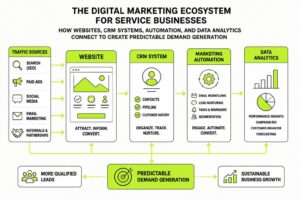
The right tools amplify your systems. The wrong ones create busywork and confusion. For digital marketing that actually scales, you need technology that connects rather than fragments.
Your core stack should include:
- CRM for contact management and automation
- Email platform integrated with your CRM
- Analytics to track website and campaign performance
- Project management to deliver work consistently
- Scheduling to eliminate booking friction
Each tool should talk to the others. Data should flow automatically between systems. When you capture a lead, your CRM should trigger nurture emails, assign follow-up tasks, and track engagement without manual work.
Avoid tool sprawl. Every new platform adds complexity and potential failure points. Before adding anything, ask whether it solves a problem you actually have or just seems interesting. Marketing for business growth requires discipline about what you adopt.
Testing and Iteration as Competitive Advantage
Your first version of anything won't be your best. The businesses that grow fastest are the ones that test systematically and improve constantly. This means treating marketing as an ongoing optimization process, not a set-it-and-forget-it system.
Run structured tests on:
- Email subject lines and send times
- Landing page headlines and calls to action
- Ad copy and creative variations
- Lead magnet formats and topics
- Pricing presentation and structure
Test one variable at a time so you know what actually caused the change. Document results so you build institutional knowledge rather than starting fresh every time. The SEMrush guide to business growth strategies emphasizes this data-driven approach to continuous improvement.
Small improvements compound. A 10% better conversion rate on your landing page combined with 10% better email open rates and 10% better sales close rates doesn't add up to 30% growth. It multiplies to 33% growth. Keep testing, keep improving, and those gains stack over time.
When to Build vs Buy Your Marketing Systems
Some businesses try to piece together everything themselves. Others outsource completely and lose control. The right approach usually sits in the middle, with clarity about what requires internal expertise and what's better delegated.
Build in-house when:
- The skill creates competitive differentiation
- You need speed and control over iterations
- Internal knowledge compounds over time
- The cost of hiring is justified by strategic value
Buy or partner when:
- Specialized expertise isn't your core business
- Speed to market matters more than perfect control
- Opportunity cost of learning exceeds hiring cost
- You need proven systems without trial and error
For most service businesses, small business digital marketing services provide the infrastructure faster than building it yourself. You get proven systems, experienced execution, and can focus on what you actually do best.
Marketing for business growth works when you build it as a system, not a collection of tactics. The businesses that scale consistently have clear processes for capturing leads, nurturing relationships, and converting attention into revenue. They measure what matters, test constantly, and improve based on data rather than assumptions. If you're ready to remove the chaos and build marketing infrastructure that actually compounds, MDO Digital specializes in exactly this challenge. We build the CRM systems, automation, and measurement frameworks that turn marketing from an expense into a predictable growth engine.