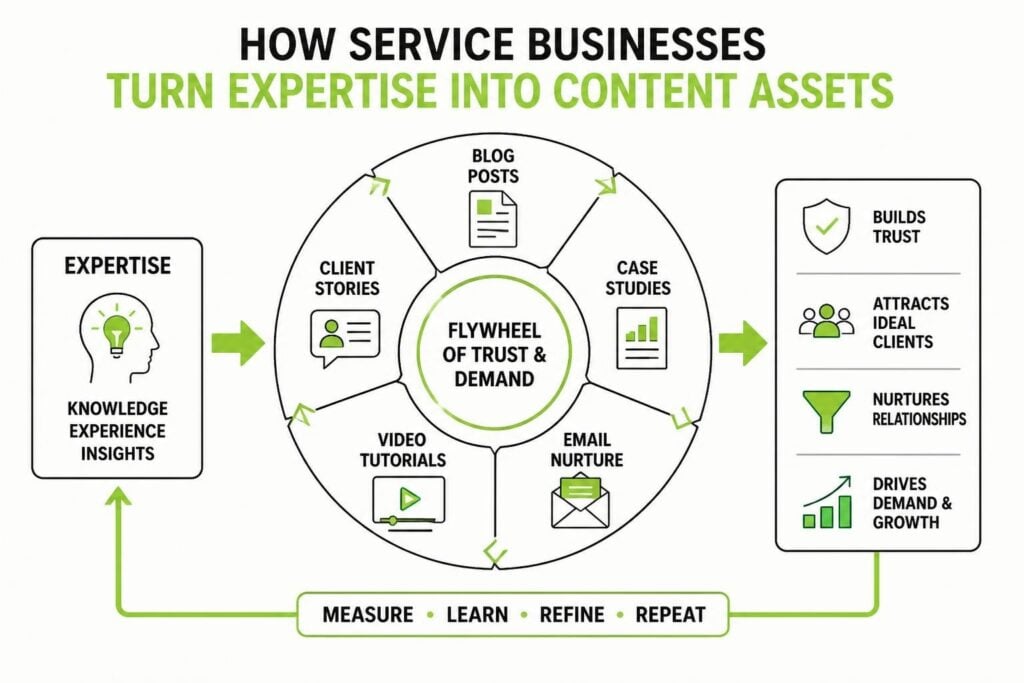
Service businesses don't sell products. You sell expertise, trust, and the promise that you'll solve a problem better than anyone else. That's harder to market. You can't slap a photo on Instagram and expect bookings. You need to educate, prove your competence, and stay front of mind until someone's ready to buy. That's where content marketing earns its keep. Done right, it turns your knowledge into assets that attract, nurture, and convert. Done poorly, it's just noise that wastes time and budget.
This article walks through content marketing ideas for service business owners who want repeatable systems, not random posts. We'll cover formats, distribution, repurposing, and how to tie it all back to actual leads and revenue.
Why Content Marketing Works for Service Businesses
Content marketing isn't new, but it's still the most effective way for service businesses to build authority without relying on cold calls or paid ads alone. When someone searches for a solution you provide, your content can be the first thing they find. When they're not ready to buy yet, your content keeps you in their inbox until they are.
The Content Marketing Institute’s 2024 playbook highlights that buyers want education, not pitches. They research before they reach out. If you're not publishing useful content, you're invisible during that research phase.
Here's what content does well for service businesses:
- Builds trust before the first conversation
- Demonstrates expertise without needing a sales call
- Creates inbound leads from search and social
- Nurtures prospects over weeks or months
- Gives you something to share, send, and repurpose
It's not about posting daily. It's about publishing strategically so every piece does multiple jobs: attracts traffic, builds authority, and moves people closer to booking a call.
Case Studies and Client Stories That Sell
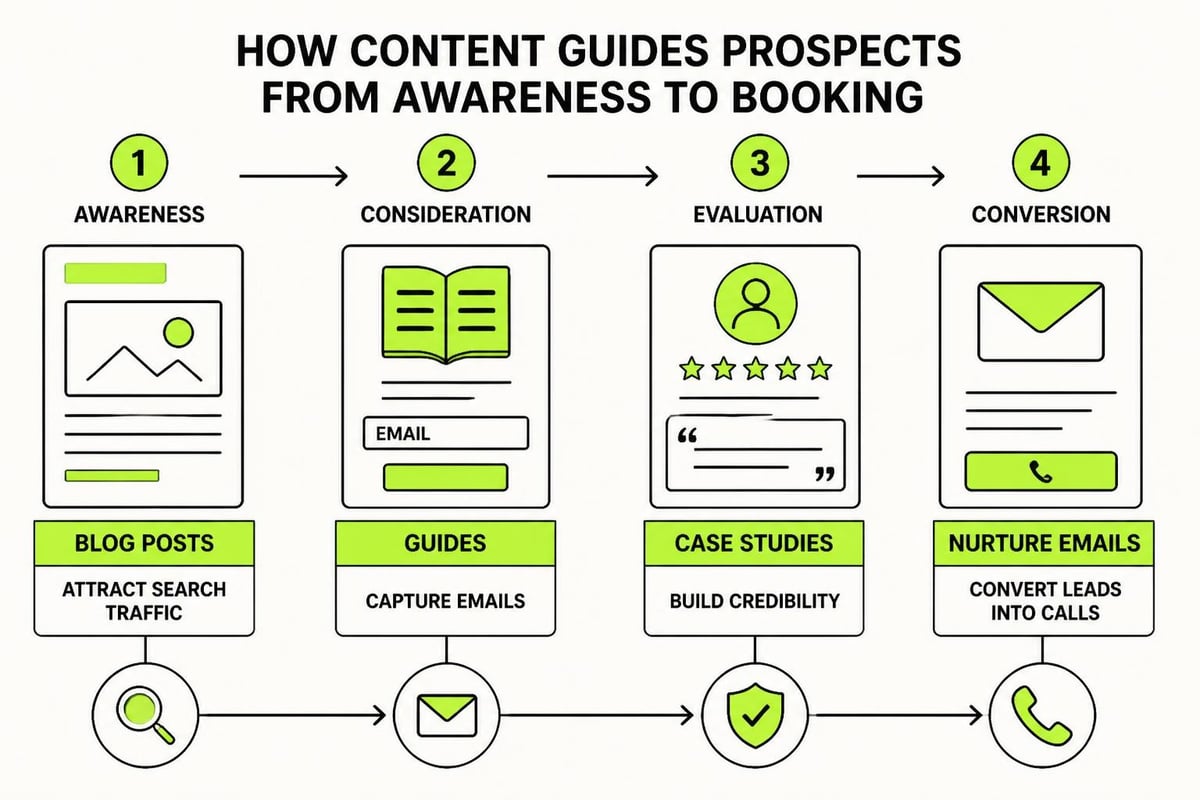
Case studies are the workhorse of content marketing ideas for service business owners. They do three things at once: prove you've solved a problem, show how you work, and give prospects a story they can see themselves in.
A good case study isn't a testimonial. It's a structured story with a problem, process, and result. Walk through what the client struggled with, what you did, and what changed. Use real numbers where you can. "Increased leads by 40%" is stronger than "saw great results."
How to Structure a Case Study
- Problem: What was broken or missing when the client came to you?
- Solution: What did you build, fix, or implement?
- Process: How did you do it? What steps or decisions mattered?
- Results: What measurable outcomes did the client see?
- Testimonial: A direct quote from the client adds credibility.
Publish case studies on your website, send them in nurture emails, and use them in proposals. They work because they're specific. Generic claims don't convert. Stories with details do.
HubSpot’s guide on content marketing for professional services points out that case studies are often the final piece of content a prospect consumes before making a decision. They want proof, not promises.
Educational Blog Content That Ranks and Converts
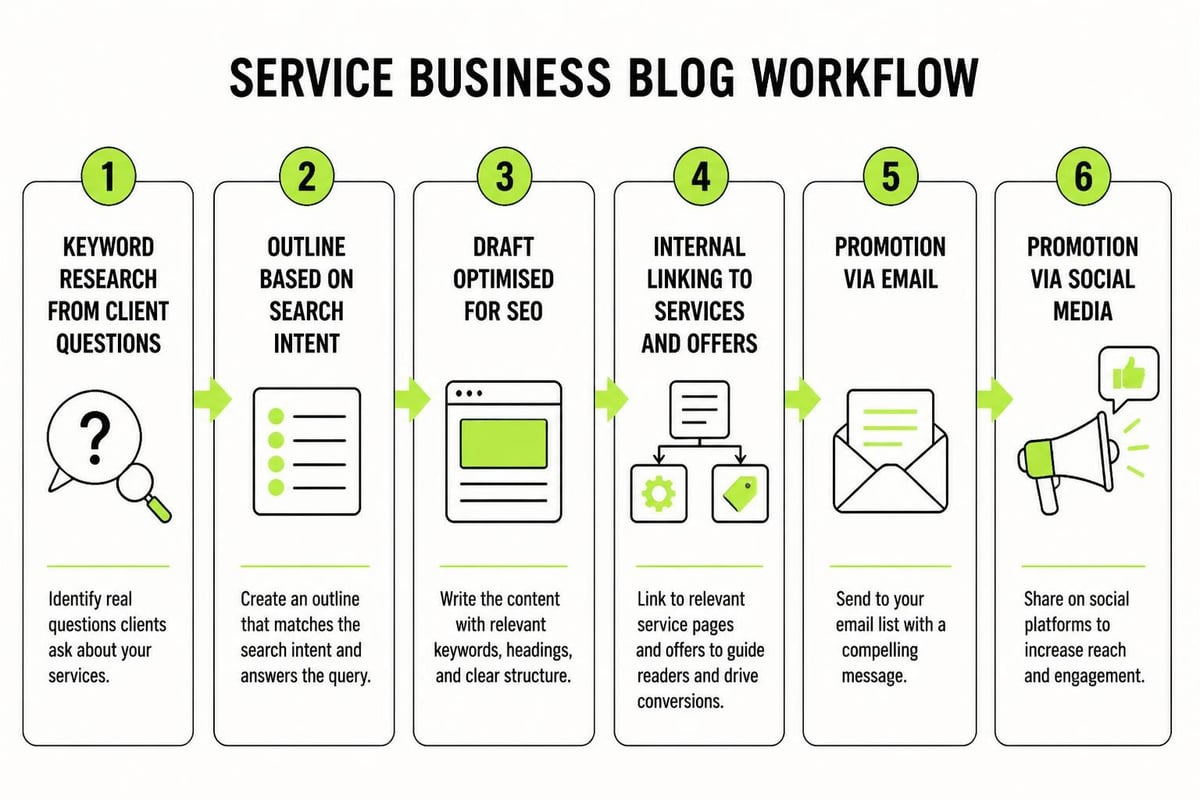
Blogging still works, but only if you write for search intent and real questions. The goal isn't to publish often. It's to publish content that ranks, answers questions, and moves people toward a decision.
Start with the questions your prospects actually ask. What do they Google before they book a call? What objections do they have? What don't they understand about your process or your industry?
Strong blog topics for service businesses:
- How-to guides that solve part of the problem
- Comparisons (your approach vs. competitors or DIY)
- Process breakdowns (what happens when someone hires you)
- Mistakes to avoid (common failures in your industry)
- Cost or pricing guides (transparency builds trust)
Each post should target a single keyword or question. Use that phrase in the title, headings, and naturally throughout the content. Then link internally to related posts, your services, or lead magnets. Building a marketing system means connecting content to the rest of your funnel, not leaving it isolated.
| Blog Content Type | Best For | Conversion Goal |
|---|---|---|
| How-to guides | Search traffic | Email capture |
| Process breakdowns | Trust building | Service page visits |
| Comparison posts | Decision stage | Call bookings |
| Mistake lists | Awareness stage | Newsletter sign-ups |
Don't just publish and forget. Update old posts, add new examples, and track which ones drive leads. Semrush’s content marketing tips include treating your blog like an asset library, not a news feed.
Lead Magnets and Gated Content
Lead magnets turn traffic into contacts. You offer something valuable in exchange for an email address. Once someone's on your list, you can nurture them until they're ready to buy.
The best lead magnets solve a specific problem quickly. They don't need to be long. They need to be useful. A one-page checklist, a simple template, or a short guide often outperforms a 50-page ebook.
Lead magnet ideas for service businesses:
- Checklist (steps to prepare for a project or audit)
- Template (proposal, brief, or planning doc)
- Resource list (tools, vendors, or providers you recommend)
- Quiz or assessment (helps them self-diagnose a problem)
- Mini-course or email series (5 days of education)
Once someone downloads your lead magnet, they enter a nurture sequence. That's where email marketing does the heavy lifting. You send educational emails, case studies, and occasional offers over weeks or months. The goal is to stay useful and top of mind.
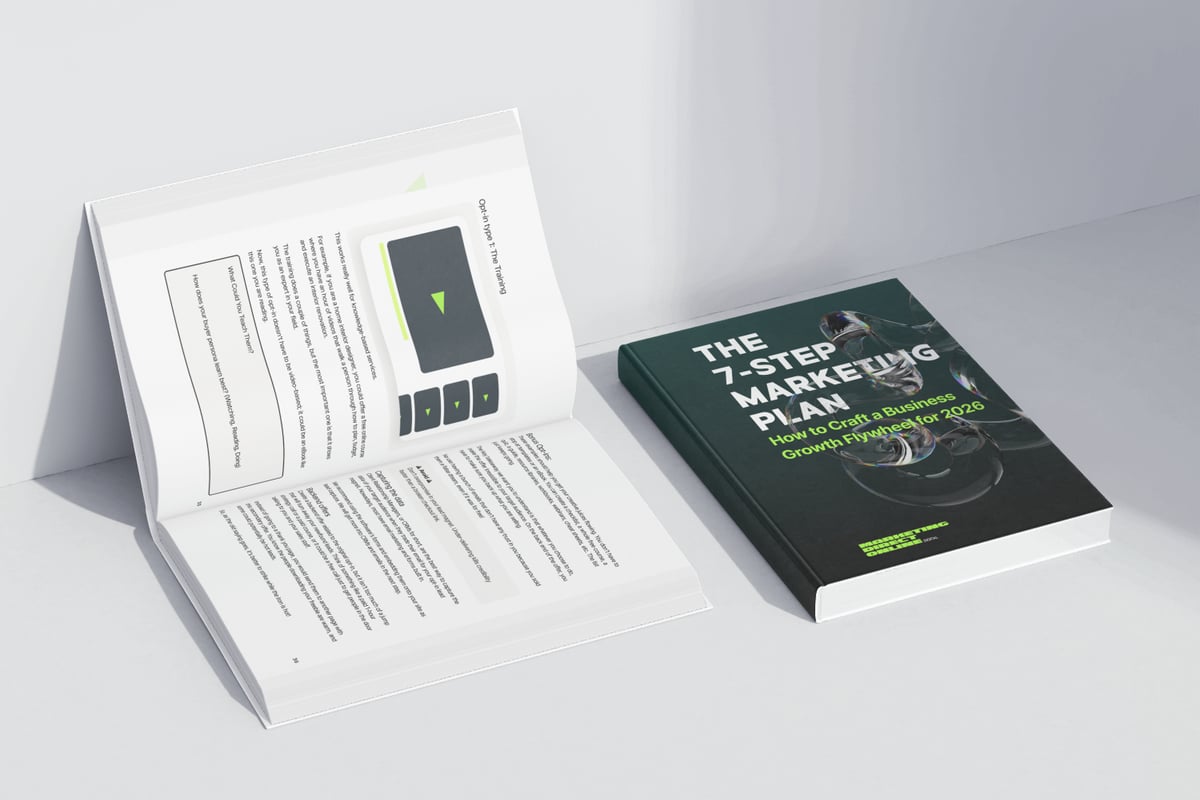
A practical framework like the 7-Step Marketing Plan helps service businesses map out exactly how to turn attention into predictable leads through structured offers and CRM-driven nurture.
Video Content That Builds Trust Fast
Video is still the fastest way to build trust online. People buy from people, and video lets them see you, hear you, and decide if they want to work with you before they ever book a call.
You don't need expensive production. A smartphone, good lighting, and clear audio are enough. What matters is the content: answer questions, explain your process, and show your personality.
Video Formats That Work
- Explainer videos: Break down a complex process in 2-3 minutes
- FAQ videos: Answer common questions on camera
- Behind-the-scenes: Show how you deliver your service
- Client interviews: Record short testimonials or case study walkthroughs
- Screen recordings: Walk through software, dashboards, or tools you use
Publish videos on YouTube, embed them on your website, and share clips on social. Wistia’s video marketing insights show that video on landing pages increases conversions, and videos on service pages help explain what you do better than text alone.
Video also repurposes well. You can pull quotes for social, transcribe for blog posts, and use clips in email campaigns. One video becomes five pieces of content.
Email Newsletters That Nurture and Convert
Email is the only channel you own. Social platforms change their algorithms. Search rankings fluctuate. Your email list is yours.
A good newsletter isn't a sales pitch every week. It's a mix of education, stories, and occasional offers. You're building a relationship, not hammering people with CTAs.
What to include in a service business newsletter:
- One main idea or lesson (brief, practical, useful)
- A story or example (case study snippet, client win, or personal experience)
- A resource or link (blog post, tool, or external article)
- A soft CTA (reply, book a call, or download something)
Send weekly or fortnightly. Consistency matters more than frequency. The goal is to stay in their inbox so when they're ready to buy, they think of you first.
Segment your list where possible. People who downloaded a specific lead magnet might need different emails than people who visited your pricing page. Personalisation doesn't need to be complex, just relevant.
Local and Service-Area Content for Regional Businesses
If you serve specific locations, local content is one of the best content marketing ideas for service business growth. It helps you rank for "service + location" searches and positions you as the go-to provider in each area.
Create dedicated pages for each location or service area you cover. Don't just duplicate the same content with a city name swapped in. Add local details: nearby landmarks, common problems in that area, or client examples from that region.
BrightLocal’s guide to service-area pages explains how to structure these pages for both users and search engines. Include local keywords, embed a map, and add testimonials from clients in that area.
You can also create local blog content: "Common [problem] in [city]" or "Why [service] matters for [region] businesses." This attracts local search traffic and builds authority in each market you serve.
| Local Content Type | SEO Value | Conversion Value |
|---|---|---|
| Service-area pages | High | Medium |
| Local blog posts | Medium | High |
| Suburb-specific guides | Medium | Medium |
| Client case studies by location | Low | Very High |
Local content pairs well with Google Business Profile posts, local backlinks, and regional partnerships. It's not glamorous, but it drives leads.
Repurposing Content Across Channels
You don't need to create new content every day. You need to repurpose what you've already made. One long-form piece can become ten assets.
Take a blog post and turn it into:
- A LinkedIn carousel or thread
- An email to your list
- A YouTube video or Reel
- A PDF download or checklist
- A series of Instagram posts
Start with your best-performing content. What's already getting traffic or engagement? Repurpose that. Don't just post the same thing twice. Adapt it for the platform and the audience.
Deloitte’s research on AI in content production shows that service businesses are using AI tools to speed up repurposing: turning transcripts into summaries, drafting social captions from blog posts, or pulling key quotes from videos. It's not about replacing creativity. It's about scaling what already works.
Repurposing also keeps your content working longer. A blog post from 2025 can still drive leads in 2026 if you refresh it, share it again, and link to it from new content.
Using AI to Speed Up (Not Replace) Content Creation
AI tools can help you create content faster, but they can't replace strategy or expertise. Use AI to draft outlines, summarise research, or generate first drafts. Then edit, add your voice, and make it specific to your business.
Practical AI use cases for content marketing:
- Generate blog outlines from a topic or keyword
- Transcribe videos or podcasts and turn them into blog posts
- Draft email subject lines or social captions
- Summarise long reports or articles into key points
- Create variations of ad copy or landing page headlines
AI works best when you feed it context. Don't ask it to write a generic blog post. Give it your client questions, your process, or a case study outline. The more specific your input, the more useful the output.
But don't publish AI content unedited. It's obvious, it's generic, and it won't build trust. Treat AI as a research assistant, not a replacement for your expertise.
Measuring What Actually Matters
Content marketing only works if you track results and adjust. Vanity metrics like page views or social likes don't pay the bills. Focus on metrics that connect to revenue.
Key metrics for service business content:
- Organic search traffic: Are you ranking for the right keywords?
- Email list growth: Are lead magnets converting?
- Engagement rate: Are people reading, watching, or clicking?
- Lead quality: Are content leads turning into sales calls?
- Content-to-close rate: Which pieces of content assist conversions?
Set up tracking in your CRM so you can see which content led to each contact. Tag leads by source (blog, video, email, etc.) and track which content types convert best.
Review performance monthly. Double down on what's working. Cut or improve what's not. Content marketing isn't set-and-forget. It's a system that improves over time when you measure and iterate.
Building a Sustainable Content Calendar
A content calendar keeps you consistent without burning out. It doesn't need to be complex. A simple spreadsheet with dates, topics, formats, and distribution channels is enough.
Plan monthly or quarterly. Map out blog posts, emails, videos, and social content. Align content with your business goals: if you're launching a new service, create content that educates prospects about that service.
Sample monthly content plan:
- One long-form blog post (target keyword, SEO-optimised)
- One case study or client story
- One video (FAQ or process walkthrough)
- Four emails (mix of education and promotion)
- Repurposed social content from the blog and video
Batch creation saves time. Write multiple blog posts in one session. Record several videos back-to-back. Schedule emails in advance. The goal is consistency, not perfection.
Link your content to your broader marketing and business development strategy. Every piece should serve a purpose: attract, educate, nurture, or convert.
Making Content Marketing Compound Over Time
The best content marketing ideas for service business owners are the ones that build on each other. Each blog post links to others. Each email references a case study. Each video drives traffic to a lead magnet.
Over time, your content library becomes an asset. Old posts still rank. Old videos still get views. Old emails still get opened. You're not starting from zero every month.
The key is treating content like infrastructure, not ephemeral social posts. Invest in evergreen content that solves real problems. Update it, repurpose it, and promote it regularly.
Service businesses that commit to content marketing for 12 months see compounding results. Month one might generate three leads. Month twelve might generate thirty, because you've built authority, ranked for more keywords, and grown your email list.
Start small. Pick two or three formats. Publish consistently. Measure what works. Then scale.
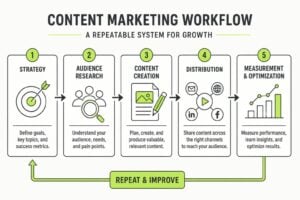
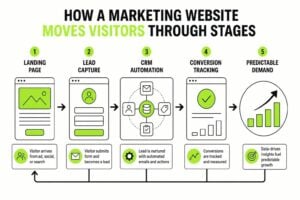
Content marketing works when it's tied to a system, not treated as a side project. The ideas above only deliver results if they're part of a repeatable process that captures leads, nurtures them, and converts them into clients. If you're ready to build that system, MDO Digital can help you design the infrastructure, messaging, and automation that turn content into predictable demand.