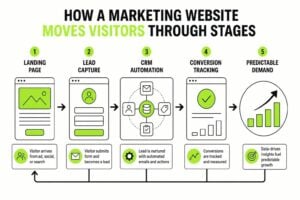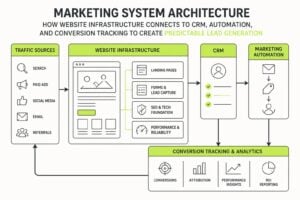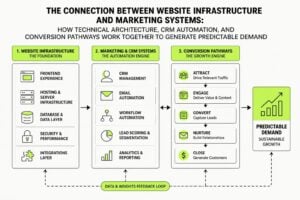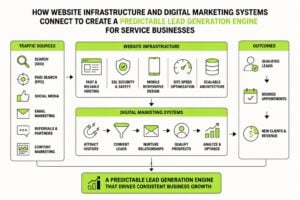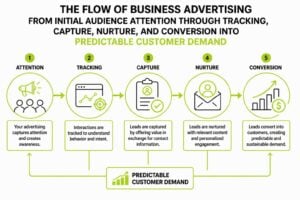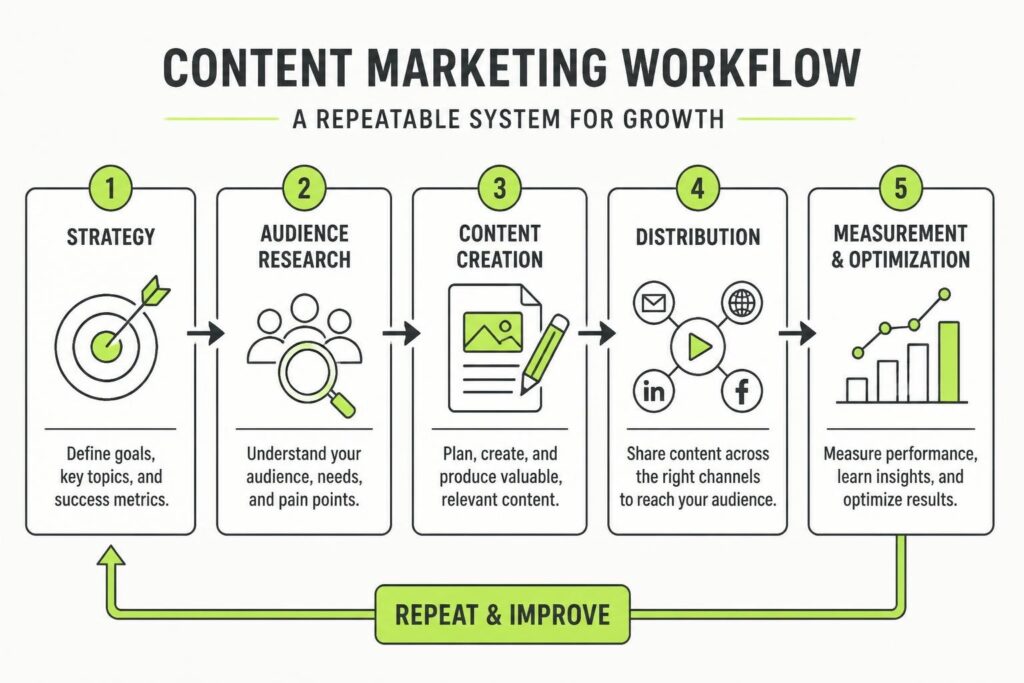
A content marketing agency is fundamentally different from a traditional advertising shop. Instead of interrupting people with messages they didn't ask for, these agencies build systems that attract, educate, and convert buyers through valuable content. They create blogs, guides, videos, newsletters, and social content designed to solve problems and answer questions at every stage of the buyer journey. The best ones don't just make content. They build infrastructure that turns attention into predictable demand, often using CRM platforms, automation, and data to track what actually works. For service businesses trying to scale, working with the right content marketing agency means replacing chaotic output with a repeatable system that compounds over time.
What A Content Marketing Agency Actually Does
Most businesses think a content marketing agency just writes blog posts or manages social media. That's a fraction of the picture.
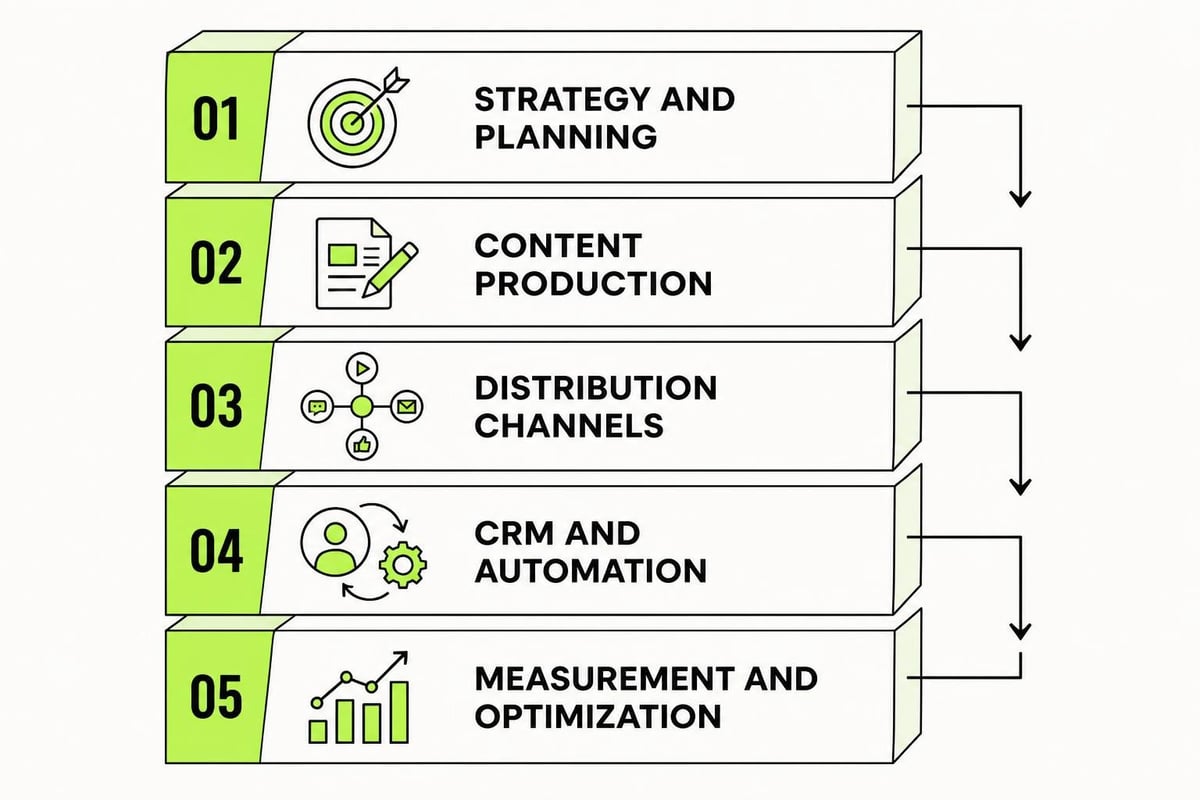
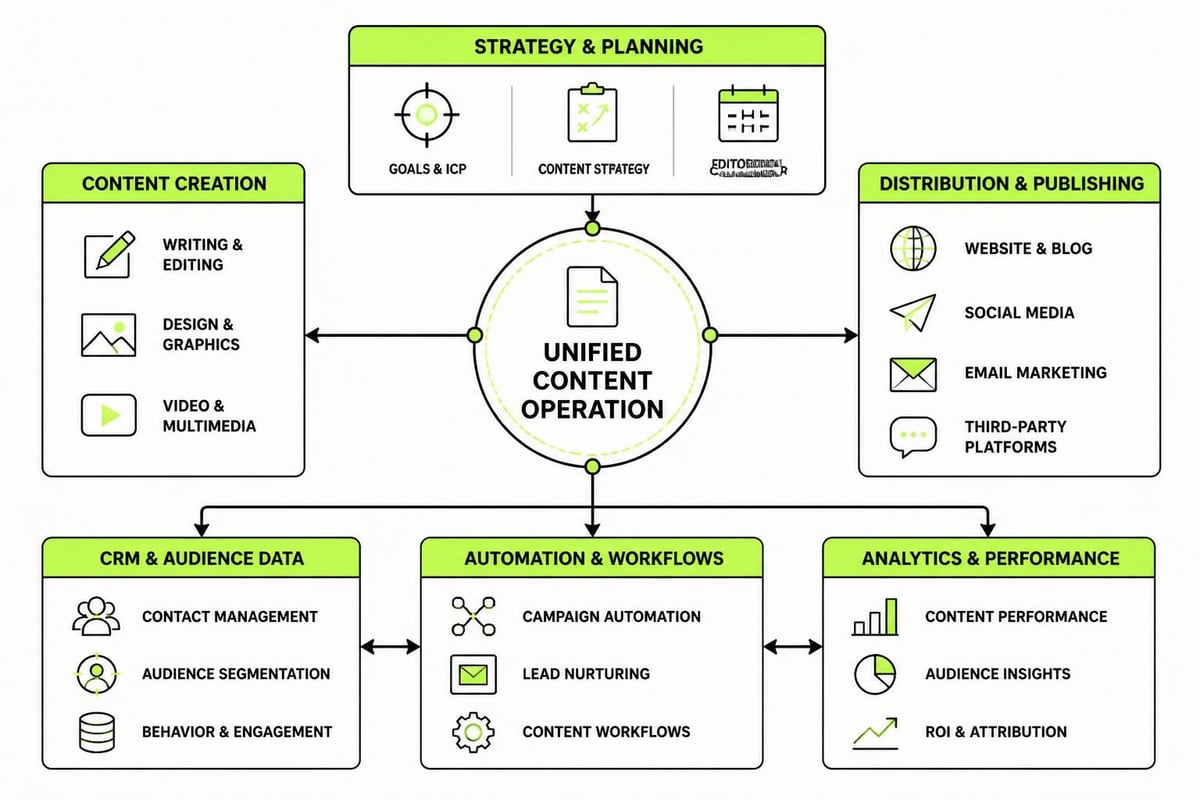
A proper content marketing agency builds the entire system. They start with strategy, mapping content to specific buyer stages and business goals. Then they create the content itself, whether that's long-form guides, case studies, email sequences, or video scripts. Distribution comes next, placing that content where your buyers actually spend time and optimising for search, social, or email.
The infrastructure layer is where most agencies separate from content mills:
- CRM integration to track which content drives leads and revenue
- Automation workflows that nurture prospects based on behaviour
- Data dashboards showing what content performs and what doesn't
- SEO frameworks that protect organic traffic over years
- Content calendars aligned to product launches, sales cycles, and market timing
According to B2B content marketing research from 2025, the gap between high-performing and average content programs isn't creativity. It's operational maturity and measurement discipline. Agencies that treat content as a system outperform those that treat it as a creative service.
Strategy Before Execution
You can't produce useful content without knowing who you're talking to and what you're trying to achieve. A content marketing agency should start every engagement with discovery: understanding your buyer personas, their questions at each stage, your competitors' content gaps, and your internal capacity.
Good agencies won't just ask what you want to rank for. They'll ask what actions you need buyers to take, what objections stop deals, and which content already exists that can be repurposed or improved. Harvard Business Review’s analysis of the content marketing revolution highlights that strategic alignment between content and business outcomes is what separates performative content from revenue-driving programs.
This phase should produce a content roadmap, not just a list of blog topics. That roadmap connects each piece of content to a specific stage in your buyer journey and a measurable business outcome.
Why Service Businesses Hire Content Marketing Agencies
Service businesses face a unique challenge. You're not selling a product someone can demo in five minutes. You're selling expertise, trust, and outcomes that take months to deliver. Content marketing is the only scalable way to build that trust before a prospect ever speaks to you.
Service businesses hire agencies for a few core reasons:
- Internal teams don't have the capacity. Your people are delivering client work, not writing thought leadership.
- They lack content infrastructure. No CRM workflows, no SEO framework, no system to measure what works.
- Inconsistent output kills momentum. Publishing three blogs one month and nothing for six months doesn't build authority.
- They need specialised skills. SEO, video production, email automation, and analytics require different expertise.
The pattern we see most often is this: a business has tried content in-house, published sporadically, saw no results, and concluded content doesn't work. Then they hire an agency that treats content as a system, not a task list, and suddenly the leads start flowing. It's not magic. It's structure.
When you're building a marketing system that actually scales, content sits at the centre. It feeds your SEO, supports your paid ads, educates your email list, and shortens your sales cycle by answering objections before they're asked.
A structured approach removes the guesswork. That's where frameworks like the 7-Step Marketing Plan become valuable. It walks you through setting goals, defining your buyer persona, choosing platforms, building opt-in offers, setting up CRM nurture campaigns, delivering great client experiences, and generating referrals. Each step feeds the next, creating a flywheel that compounds over time. You can grab the full breakdown here: 7-Step Marketing Plan.

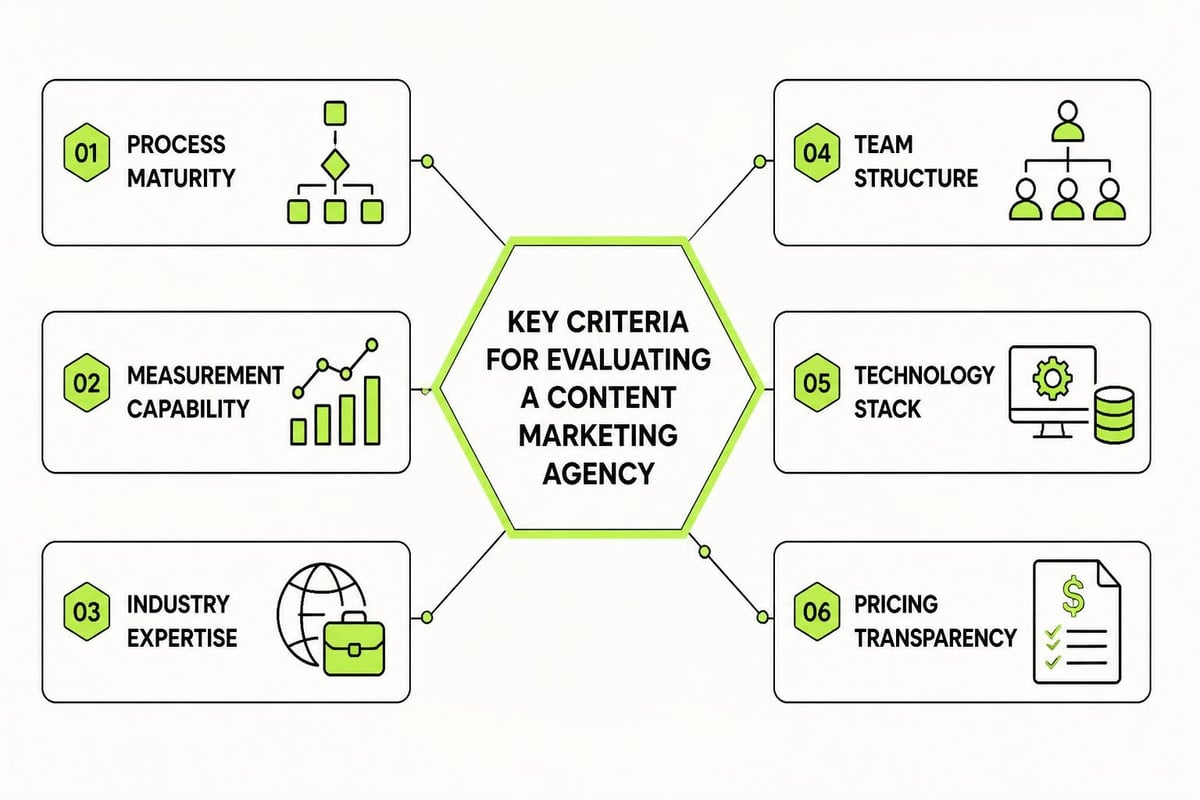
How To Evaluate A Content Marketing Agency
Not all agencies are built the same. Some are glorified freelancer networks. Others are full-service machines with deep technical chops. Here's what to look for when you're comparing options.
Operational Maturity And Process
Ask how they manage production. Do they have an editorial calendar? How do they handle revisions? What's their approval process? Who owns the CRM integration? A solid agency will walk you through their workflow without hesitation.
Forrester’s research on B2B content operations shows that operational excellence, not creative brilliance, is the biggest predictor of content ROI. Agencies with documented processes, repeatable templates, and clear accountability structures deliver better results than boutique shops relying on individual talent.
Measurement And Reporting
If an agency can't show you how they track content performance, walk away. You need to know which blog posts drive leads, which pages convert, and which topics build organic traffic over time.
Ask these questions:
- What metrics do you report on monthly?
- How do you connect content to revenue?
- Do you integrate with our CRM or analytics platform?
- Can you show examples of dashboards from other clients?
Warning signs include:
- Reporting only vanity metrics like page views or social likes
- No mention of CRM or lead tracking
- Vague language about "brand awareness" without concrete KPIs
- No discussion of attribution or how content assists conversions
Industry Experience And Vertical Knowledge
Some agencies work across dozens of industries. Others specialise. There's no right answer, but you need to know which you're getting. A generalist agency brings fresh perspectives but requires more onboarding. A specialist knows your buyer's language but might recycle the same ideas.
For service businesses in marketing, branding, and digital spaces, look for agencies that understand complex B2B sales cycles and long consideration periods. Your content needs to educate, not just entertain.
Content Types And Channels A Good Agency Handles
A full-service content marketing agency doesn't just do blog posts. They orchestrate content across every channel where your buyers spend time.
| Content Type | Purpose | Where It Lives |
|---|---|---|
| Long-form guides | Build authority, capture search traffic | Website, gated downloads |
| Case studies | Prove results, support sales | Website, sales collateral |
| Email sequences | Nurture leads, educate prospects | CRM, marketing automation |
| Social content | Build awareness, drive traffic | LinkedIn, Twitter, Instagram |
| Video content | Explain complex concepts, showcase personality | YouTube, website, social |
| Webinars | Engage warm leads, demonstrate expertise | Zoom, on-demand library |
The agency you hire should be able to map these content types to your buyer journey and recommend the right mix based on where your audience actually consumes information. Data-driven content marketing trends show that multi-channel strategies outperform single-channel efforts, but only if the content is cohesive and reinforces the same core messages.
Platform-Specific Strategy
Different platforms reward different content styles. LinkedIn favours thought leadership and professional insights. Google rewards comprehensive, well-structured content that answers search intent. YouTube needs storytelling and personality. A good agency tailors content to the platform, not just reposts the same thing everywhere.
Google’s creator playbook emphasises that successful content strategies account for how people discover, consume, and share content on each platform. Your agency should understand these nuances and adjust format, length, tone, and distribution accordingly.
Pricing Models And What You Actually Get
Content marketing agencies price in a few standard ways. Understanding the model helps you evaluate proposals and avoid surprises.
Retainer Model
You pay a fixed monthly fee for a defined scope of work. This might include X blog posts, Y social posts, email sequences, and reporting. Retainers work well when you need consistent output and want to build a long-term partnership.
Project-Based Pricing
You pay a one-time fee for a specific deliverable, like a content audit, a quarter's worth of pillar content, or a full email nurture campaign. Good for testing an agency before committing long-term.
Performance-Based Pricing
Rare in content marketing, but some agencies tie fees to results like lead volume or organic traffic growth. This sounds appealing but often requires a hybrid model (base fee plus performance bonus) since content ROI takes months to materialise.
| Pricing Model | Best For | Watch Out For |
|---|---|---|
| Retainer | Ongoing partnership, consistent output | Scope creep, unclear deliverables |
| Project | Testing an agency, one-off campaigns | Lack of continuity, no long-term strategy |
| Performance | Established businesses with conversion data | Unrealistic timelines, attribution disputes |
When comparing marketing agency pricing, don't just look at the monthly fee. Ask what's included. Does the price cover strategy, production, distribution, SEO optimisation, CRM setup, and reporting? Or just writing? The cheapest agency often delivers the least, and you'll spend more fixing it later.
Integration With Your Existing Marketing Stack
A content marketing agency doesn't operate in isolation. They need to plug into your CRM, email platform, analytics tools, and website infrastructure. If they can't, your content won't convert.
Key integrations to discuss upfront:
- CRM (HubSpot, Salesforce, Pipedrive) for lead tracking and attribution
- Marketing automation (ActiveCampaign, Marketo, Drip) for email sequences
- Analytics (Google Analytics, Looker, Mixpanel) for performance measurement
- SEO tools (Ahrefs, SEMrush, Moz) for keyword research and tracking
- Content management systems (WordPress, Webflow, Contentful) for publishing
Deloitte Digital’s research on AI-ready content creation highlights that modern content operations require tight integration between content production tools and downstream marketing systems. Agencies that can't navigate your tech stack will create friction, slow down approvals, and limit your ability to measure ROI.
Red Flags And Common Mistakes When Hiring
You'll waste time and money if you hire the wrong agency. Here are the patterns to avoid.
They promise rankings or leads too quickly. Content marketing takes time. If an agency guarantees page-one rankings in 90 days or 100 leads in the first quarter, they're either lying or planning to buy low-quality traffic.
No onboarding or discovery process. If they pitch you a content calendar without asking about your buyers, competitors, or business goals, they're guessing. You'll get generic content that doesn't convert.
Cheap pricing with no explanation. If one agency quotes $2,000 a month and another quotes $8,000 for "the same" work, they're not offering the same work. Ask what's included and what's not.
No one on the team has done the work. Agencies staffed entirely by account managers and junior writers struggle to deliver strategic insights. You need people who've built content systems, not just managed freelancers.
HubSpot’s breakdown of SEO blunders includes a common one: hiring agencies that don't understand technical SEO or content structure. They'll publish dozens of posts that never rank because they skipped keyword research, internal linking, and on-page optimisation.
The Freelancer vs Agency Decision
Some businesses consider hiring freelancers instead of an agency. Freelancers are cheaper and more flexible, but they rarely build systems. You'll get content, not infrastructure. Unless you already have a CRM, automation workflows, and an editorial calendar in place, a freelancer can't deliver the same outcomes as a full-service agency.
Freelancers work best when you need specialised skills (a video editor, a technical writer) to plug into an existing system. If you're building the system from scratch, you need an agency.
What Success Looks Like In The First Year
Realistic expectations matter. Content marketing compounds over time, but the first year has specific milestones you should hit.
Months 1-3: Foundation
The agency conducts discovery, builds your content strategy, sets up CRM integrations, and publishes the first batch of content. You won't see significant lead volume yet, but you should see:
- A documented content roadmap aligned to business goals
- Initial organic traffic growth (small but measurable)
- CRM workflows in place to capture and nurture leads
- A publishing cadence that's consistent and sustainable
Months 4-6: Traction
Content starts ranking. Email sequences are live. You begin seeing leads attributed to content. Key metrics include:
- 20-30% increase in organic traffic compared to baseline
- First content-driven leads entering the pipeline
- Improvement in engagement metrics (time on page, pages per session)
- Refinements to the content calendar based on early data
Months 7-12: Momentum
The flywheel kicks in. Older content ranks higher, new content builds on existing authority, and leads flow more predictably. Expect:
- 50-100% increase in organic traffic year-over-year
- Content contributing 15-25% of new leads
- Improved conversion rates as buyer education improves
- Case studies and proof points from the content program itself
These timelines assume consistent execution and realistic budgets. If you pause content for months or slash the budget halfway through, you reset progress.
How To Structure The Partnership For Long-Term Success
The best client-agency relationships are partnerships, not vendor relationships. You bring industry knowledge and buyer insights. The agency brings process, production, and technical expertise. Together, you build something neither could alone.
Set clear expectations upfront:
- Define success metrics and review them quarterly
- Agree on approval processes and turnaround times
- Clarify who owns content IP and distribution rights
- Establish a feedback loop for continuous improvement
Create a communication rhythm:
- Weekly check-ins for production updates
- Monthly performance reviews with data
- Quarterly strategy sessions to adjust direction
- Annual planning to align content with business goals
When both sides commit to transparency and accountability, the relationship compounds. The agency learns your business deeply, produces better content over time, and becomes an extension of your team. That's when content marketing shifts from a cost centre to a growth engine.
For businesses in branding and advertising or digital and content marketing, this partnership model is essential. You're not outsourcing a task. You're building shared infrastructure that protects and grows your market position over years, not quarters.
The right content marketing agency doesn't just write words. They build the systems, infrastructure, and data discipline that turn attention into predictable demand. If you're looking to replace chaos with structure and build marketing that compounds over time, MDO Digital can help. We specialise in marketing systems, branding, and data-driven execution for service businesses ready to scale with clarity.