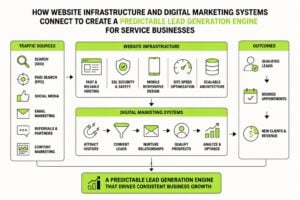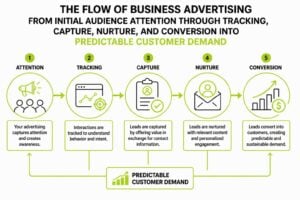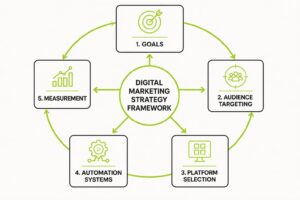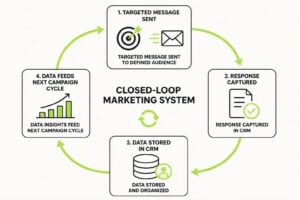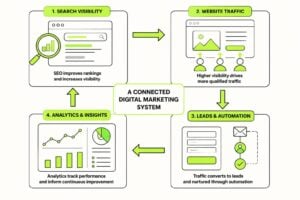
Most service businesses treat their website and marketing as separate projects. The website gets built first, usually by a developer who's never thought about lead capture. Then marketing gets bolted on later, handled by someone who doesn't understand the technical constraints. The result is a mess of disconnected tools, leaking leads, and campaigns that can't scale because the infrastructure wasn't built for it. Web and marketing aren't two different things. They're the same system, and when you separate them, both suffer.
Why Web and Marketing Must Be Built Together
Your website is not a brochure. It's the infrastructure that captures attention, qualifies intent, and routes people into your marketing system. Every page, form, and interaction point needs to feed data somewhere useful. If your site doesn't connect to your CRM, you're losing leads. If your forms don't trigger automations, you're wasting time on manual follow-up. If your analytics don't track real conversions, you're guessing at what works.
Marketing, meanwhile, is what fills that infrastructure with demand. Campaigns drive traffic. Content creates trust. Ads put your offer in front of the right people. But without a website that can handle the load, convert the visitors, and protect the data, all that effort evaporates. Web and marketing are two halves of the same machine.
The Technical Stack That Connects Them
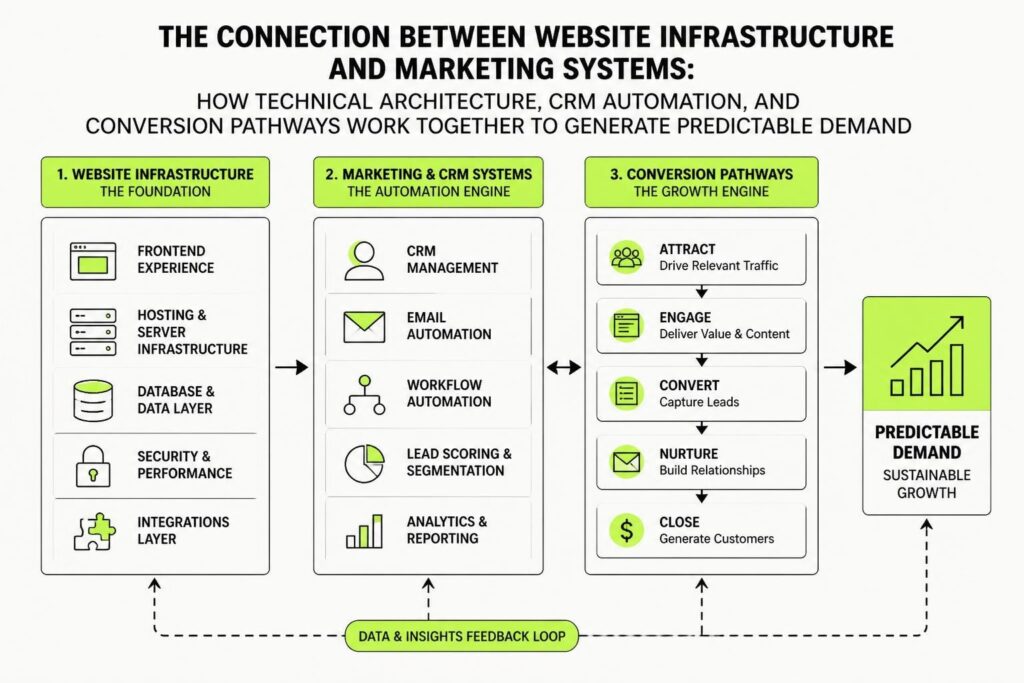
Here's what a properly integrated web and marketing system looks like:
- Website platform that loads fast, tracks user behaviour, and integrates cleanly with your CRM
- CRM and automation that captures every lead, scores engagement, and triggers follow-up sequences
- Analytics layer that connects website activity to pipeline revenue, not just vanity metrics
- Content management that lets you publish, test, and iterate without needing a developer every time
- Ad and email platforms that feed data back into the CRM so you know what's working
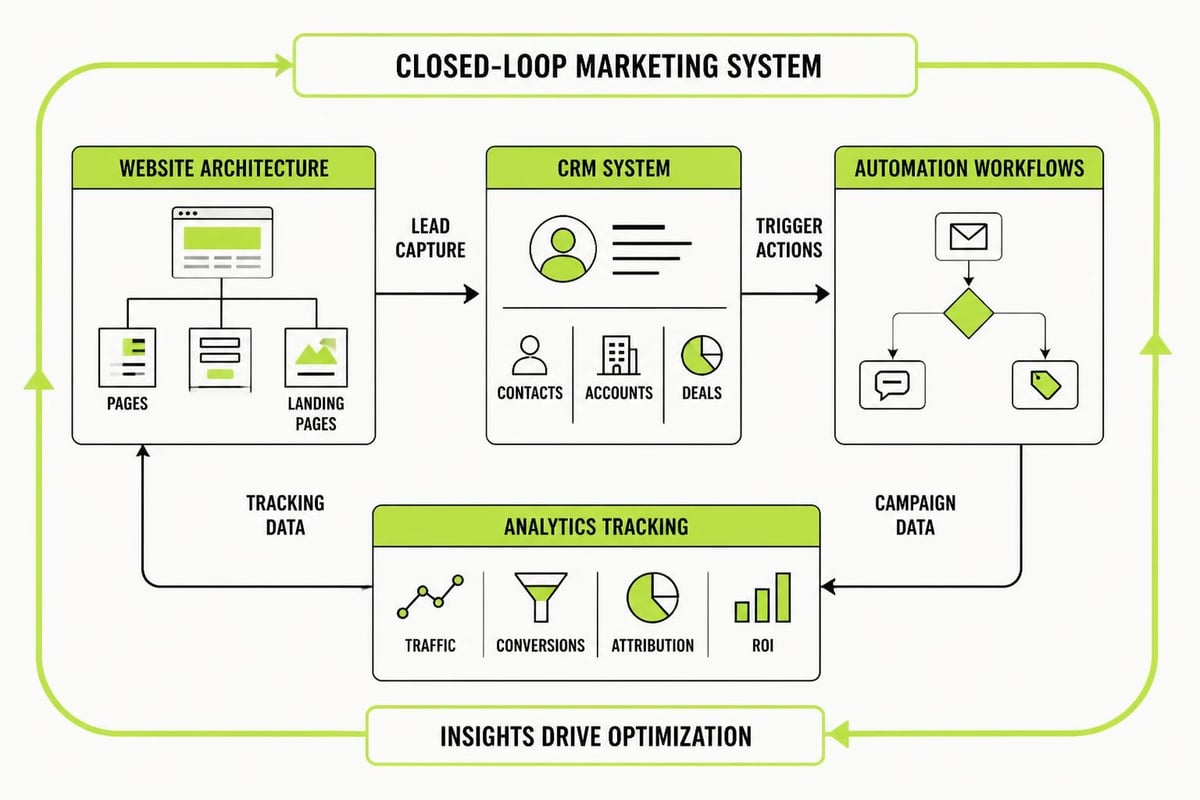
Each piece talks to the others. When someone fills out a form, they're tagged in your CRM, added to a nurture sequence, and tracked through to conversion. When a campaign underperforms, you can see it in the data and adjust. When a page converts well, you know exactly why.
Google's own documentation on Core Web Vitals makes it clear that site speed and user experience directly impact search rankings. A slow site doesn't just frustrate visitors, it costs you visibility. That's why web performance isn't just a developer problem, it's a marketing problem too.
Building for Conversion, Not Just Traffic
Traffic is easy to buy. Conversion is what separates businesses that grow from businesses that burn budget. Your website needs to be designed with one clear job: move people from awareness to action. That means every page has a purpose, every headline speaks to intent, and every form removes friction.
Start with your homepage. Most service businesses waste this space on vague mission statements and stock photos. Instead, lead with the problem you solve, the outcome you deliver, and a single clear next step. No jargon. No fluff. Just clarity.
| Page Type | Primary Goal | Key Elements |
|---|---|---|
| Homepage | Qualify and direct | Clear value prop, benefit-focused headlines, single CTA |
| Service page | Educate and convert | Specific outcomes, process overview, case proof, booking form |
| Blog/content | Build trust and SEO | Useful insight, internal links, opt-in offers |
| Landing page | Convert traffic | One offer, minimal nav, form above fold, social proof |
Your service pages should explain what you do in terms your buyer actually cares about. Not your process, not your credentials, the change they'll experience after working with you. Then show proof. Testimonials, case studies, specific results. Make it easy to believe.
Landing pages are where paid traffic lands, and they need to be ruthless. One message. One offer. One action. Remove the main navigation so people can't wander off. Keep the form short. Add urgency if it's genuine. Test relentlessly.
Forms and CTAs That Actually Work
Every form on your site is a negotiation. You're asking for information in exchange for something valuable. If the value isn't clear, people bail. If the form is too long, people bail. If the button copy is weak, people hesitate.
Keep forms to the minimum fields you actually need. First name and email is often enough to start a conversation. You can collect more later, once trust is established. Use smart defaults and autofill wherever possible.
Button copy matters more than you think. "Submit" tells people nothing. "Get the guide" or "Book a strategy call" sets a clear expectation. Use action words that describe the outcome, not the mechanism.
The Role of Automation in Scalable Web and Marketing
Manual follow-up doesn't scale. If every lead requires someone to send an email, book a meeting, or chase a response, you're capped by hours in the day. Automation isn't about replacing humans, it's about protecting their time for high-value work.
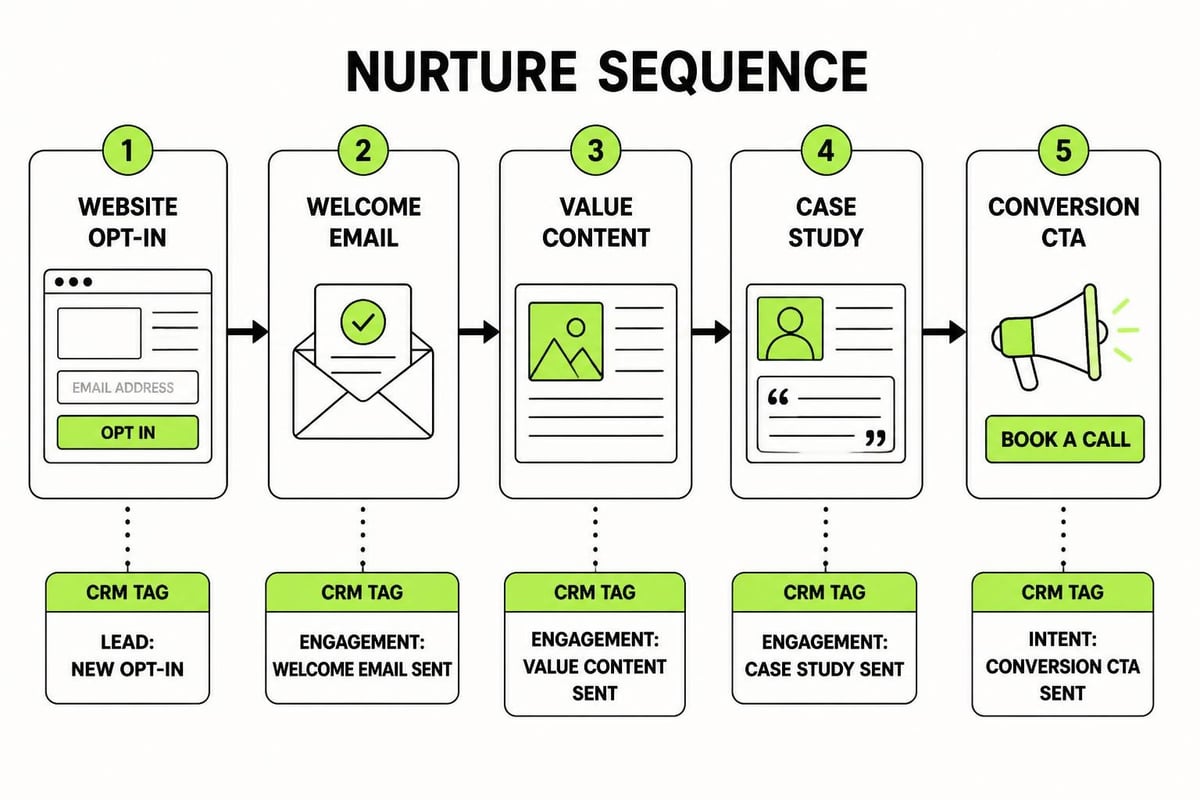
When someone downloads a lead magnet, they should immediately get the asset, be added to a nurture sequence, and be tagged in your CRM. No delay. No manual steps. If they engage with your emails, your system should score that behaviour and alert your team when someone's ready to talk.
Here's a simple automation sequence that works for most service businesses:
- Opt-in confirmation: Deliver the thing they asked for instantly
- Day 1 follow-up: Introduce yourself, set expectations, share a quick win
- Day 3 value email: Teach something useful, no pitch
- Day 7 case study: Show proof of what's possible
- Day 10 soft CTA: Invite them to book a call or reply with questions
- Ongoing nurture: Weekly or fortnightly emails with insight, updates, offers
Tag behaviour at every step. Opened the email? Clicked a link? Visited a pricing page? All of that feeds your CRM so you know who's engaged and who's gone cold. That's how web and marketing infrastructure turns attention into predictable pipeline.
A practical framework for building a repeatable marketing system breaks this down into seven clear steps, from setting goals through to generating referrals. Each step builds on the last, creating a flywheel that compounds over time.
Content Strategy That Supports Both SEO and Trust
Content isn't just for SEO. It's how you build authority, answer objections, and stay visible between the moment someone discovers you and the moment they're ready to buy. But it has to be useful. Thought leadership that doesn't teach anything is just noise.
Write for your buyer's questions, not your ego. What are they searching for before they even know you exist? What objections come up in sales calls? What do they need to understand before they can make a decision? Answer those questions in depth, and you'll rank for the terms that matter.
Structure your content for both humans and search engines. Use clear headings. Break up long paragraphs. Add lists and tables where they help. Link to related content on your own site so people can go deeper. The Moz Beginner’s Guide to SEO covers the fundamentals well if you're new to optimisation.
Internal Linking and Site Architecture
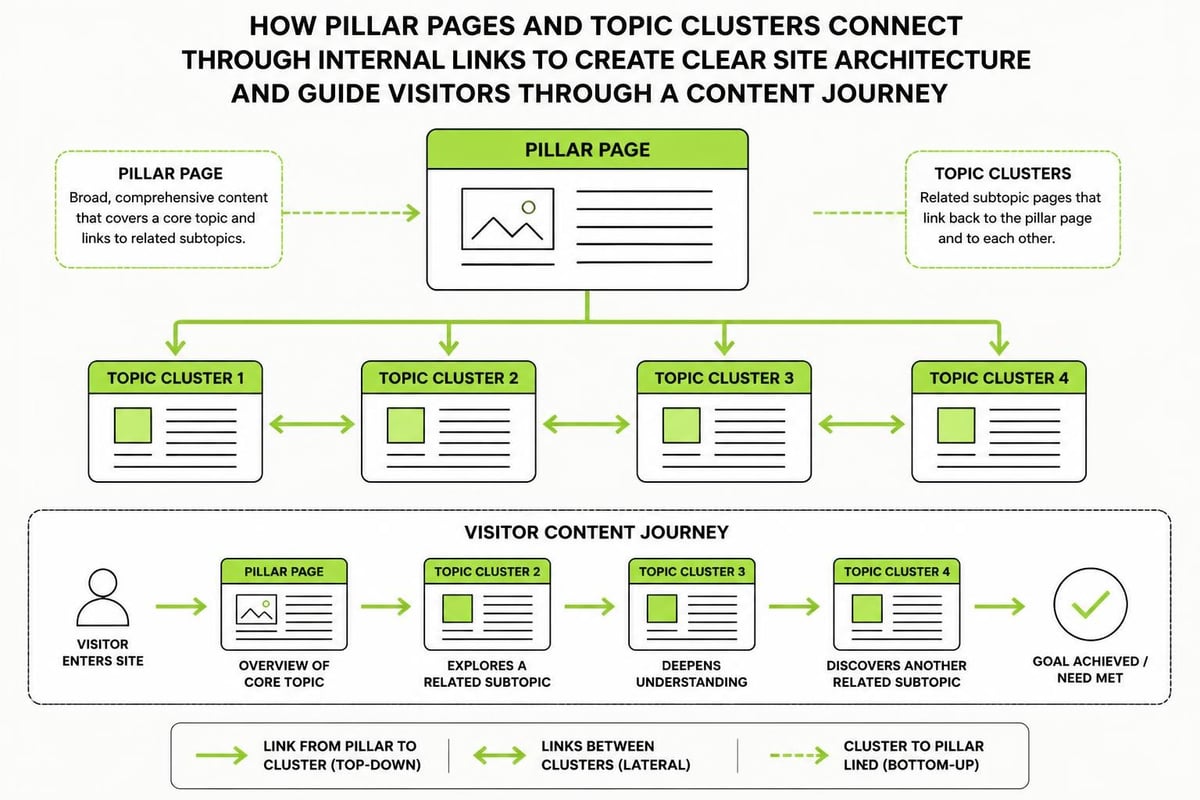
Your website should guide people through a logical journey. Every piece of content should link to the next step, whether that's another article, a service page, or a booking form. Internal links help search engines understand your site structure and keep visitors engaged longer.
Think of your site like a hub-and-spoke model. Pillar content sits at the centre, covering broad topics in depth. Cluster content dives into specific subtopics and links back to the pillar. This structure makes it easy for people to find what they need and signals to Google what your site is about.
If you're building out content strategy, check out how to build a marketing system for a practical approach to aligning content with demand generation.
Measuring What Matters in Web and Marketing
Most businesses track the wrong metrics. Page views don't pay the bills. Social media likes don't close deals. You need to measure the things that connect directly to revenue: leads captured, pipeline created, deals closed, and customer lifetime value.
Start by setting up goal tracking in your analytics. Every form submission, every button click, every page visit that signals intent should be logged. Then connect that data to your CRM so you can see which campaigns, pages, and content pieces are actually driving conversions.
Here's what to track at a minimum:
- Traffic sources: Where your best leads come from (organic, paid, referral, direct)
- Conversion rate by page: Which pages turn visitors into leads
- Lead-to-customer rate: How many leads actually close
- Cost per lead and cost per acquisition: What you're paying for growth
- Customer lifetime value: What each customer is worth over time
If you can't draw a line from a marketing activity to a dollar amount, you're flying blind. Web and marketing systems only work when you can see what's working and double down on it.
The Nielsen Norman Group’s research on UX metrics provides a solid framework for aligning user experience improvements with business outcomes. Conversion rate optimisation isn't guesswork, it's hypothesis-driven testing based on real behaviour.
Technical Foundations That Enable Marketing Scale
Your website's technical health directly impacts your marketing effectiveness. A slow site kills conversions. Broken tracking hides your best opportunities. Poor mobile experience wastes half your traffic. You can't scale marketing on broken infrastructure.
Run regular audits on:
- Page speed and Core Web Vitals: Use tools like web.dev to measure and improve load times
- Mobile responsiveness: Most traffic is mobile now, your site better work perfectly on every screen
- Form and tracking integrity: Test every form, every tracking tag, every integration monthly
- Security and uptime: SSL certificates, backups, monitoring, all the boring stuff that breaks at the worst time
Modern web architecture is moving toward composable systems. Headless CMS platforms, API-first tools, edge delivery networks. This isn't just developer speak, it's about making your marketing more flexible. The Netlify State of Web Development report shows how teams are adopting these approaches to move faster and reduce dependencies.
Accessibility and Inclusive Design
Building accessible websites isn't just compliance, it's good business. When your site works for people with disabilities, it works better for everyone. Clear navigation helps everyone find what they need. Readable text helps everyone understand your message. Keyboard navigation helps everyone who doesn't want to use a mouse.
Follow the Web Content Accessibility Guidelines as a baseline. Use semantic HTML. Add alt text to images. Ensure sufficient colour contrast. Make sure forms can be completed without a mouse. These aren't optional extras, they're part of building a professional web and marketing presence.
Privacy, Tracking, and the Post-Cookie Landscape
Third-party cookies are dying. Browser tracking is being restricted. Privacy regulations are tightening across every market. If your marketing depends on surveillance-based targeting, you're running on borrowed time. The shift is toward first-party data, privacy-first measurement, and contextual targeting.
That's actually good news if you have strong web and marketing infrastructure. When you own the relationship through your CRM, you don't need third-party cookies. When your content builds trust, you don't need invasive tracking. When people opt in because you offer something valuable, you have clean data you can use.
Focus on building your email list, your CRM database, and your direct traffic. Use server-side tracking where possible. Implement consent management properly. Work with platforms that respect privacy while still giving you the insights you need. The IAB Tech Lab’s guidance on private audience activation offers practical approaches for measurement in a privacy-first world.
| Old Approach | Modern Approach |
|---|---|
| Buy third-party lists | Build owned audiences through opt-ins |
| Track across the web | Measure on-site behaviour and first-party data |
| Retarget endlessly | Nurture with permission-based email |
| Optimise for impressions | Optimise for actual conversions |
The businesses that will win in 2026 and beyond are the ones that build trust, create value, and earn attention rather than stealing it.
Email as Core Web and Marketing Infrastructure
Email isn't dead, it's the most reliable channel you have. Social platforms change their algorithms. Ad costs fluctuate. SEO takes time. Email is direct, owned, and when done well, highly effective. But only if it's integrated with the rest of your system.
Your email platform should connect to your website, your CRM, and your analytics. When someone clicks a link in an email, that behaviour should be logged. When they visit a pricing page, your sales team should know. When they engage repeatedly, they should be scored as hot.
According to the Litmus State of Email research, personalisation and automation continue to drive the best results. Segmentation matters. Timing matters. Relevance matters. Batch-and-blast emails to your entire list stopped working years ago.
Build segments based on behaviour, interests, and where someone is in the buying journey. Send different messages to new subscribers versus long-term readers. Test subject lines, send times, and content formats. Measure open rates, but focus more on clicks and conversions.
Aligning Teams Around Web and Marketing Outcomes
The biggest barrier to effective web and marketing isn't technical, it's organisational. When web development sits in IT, marketing sits in a different department, and sales operates in isolation, you end up with fractured systems and misaligned goals.
Everyone needs to be working toward the same metrics. Developers should understand how their work impacts conversion rates. Marketers should understand technical constraints. Sales should feed insights back into both web and marketing strategy. That's how you build systems that compound.
Have regular cross-functional meetings where you review:
- What campaigns are running and how they're performing
- What changes are needed on the website to support marketing goals
- What sales is hearing from prospects and customers
- What technical issues are blocking conversions or causing friction
When teams align around shared outcomes, web and marketing becomes a system instead of a set of disconnected projects. For businesses looking to scale, this clarity in marketing and business development makes all the difference.
Practical Steps to Integrate Your Web and Marketing System
If you're starting from scratch or fixing a broken setup, here's where to begin:
- Audit what you have: List every tool, platform, and process in your current stack
- Map the data flows: Where does information go when someone fills out a form or clicks an ad?
- Identify the gaps: What's breaking? What's manual? What's not being measured?
- Choose core platforms: CRM, website platform, email tool, analytics. Pick tools that integrate.
- Build the connections: Use native integrations or automation platforms to link systems together
- Create standard processes: Document how leads are captured, tagged, nurtured, and handed to sales
- Set up reporting: Build dashboards that show real conversion metrics, not vanity stats
- Test everything: Run through the entire journey as a prospect would. Find the friction points.
- Iterate based on data: Review performance monthly, identify what's working, kill what's not
This isn't a one-time project. Web and marketing infrastructure evolves as your business grows, as technology changes, and as customer behaviour shifts. Build in regular review cycles so you're always optimising.
When to Build In-House vs When to Partner
Some businesses try to do everything themselves. Others outsource everything and lose control. The right answer sits somewhere in the middle, depending on your size, complexity, and internal capability.
Build in-house when:
- You have the technical and marketing talent already on the team
- Your systems need constant iteration and testing
- You operate in a niche that requires deep internal knowledge
- The cost of hiring is lower than the cost of ongoing agency fees
Partner with specialists when:
- You need to move fast and don't have time to build expertise
- The technical complexity exceeds your team's capability
- You want access to proven systems and frameworks without trial and error
- Your team is focused on delivery and doesn't have capacity for infrastructure work
Most successful setups involve a hybrid approach. Internal teams handle day-to-day execution. External partners help with strategy, system design, and technical implementation. The key is making sure whoever's responsible for web and marketing understands they're building one system, not two.
If you're working through this challenge, exploring digital branding solutions that integrate web and marketing infrastructure might give you a clearer starting point.
Web and marketing only work when they're built as one integrated system, not separate projects. The technical infrastructure, the conversion pathways, the data flows, and the automation all need to align around the same goal: turning attention into predictable demand. If you're ready to remove the chaos, protect your leads, and build a marketing system that actually scales, MDO Digital can help you design the infrastructure, connect the tools, and create the clarity you need to grow with confidence.