Most service businesses don't have a marketing problem. They have a systems problem. You're posting on LinkedIn, sending emails, updating the website, maybe running some ads. But nothing connects. Leads slip through the cracks. You can't tell what's working. And every month feels like starting from scratch. That's not a failure of effort. That's what happens when you're running tactics without a digital marketing strategy. The good news? Strategy isn't mysterious. It's a series of clear decisions that turn random activity into structured growth.
What a Digital Marketing Strategy Actually Does
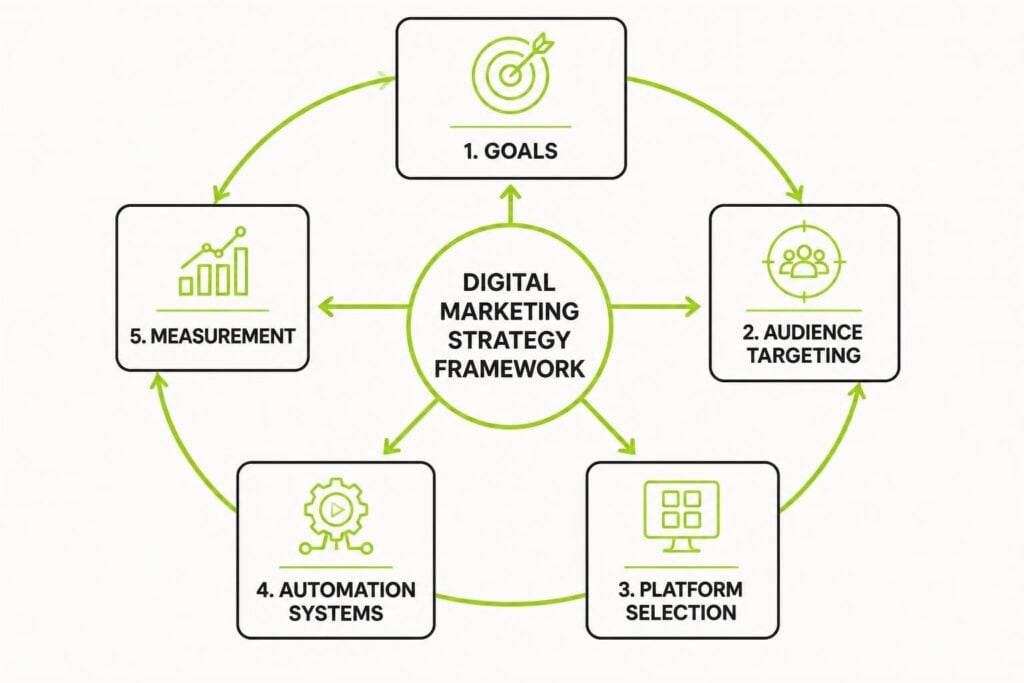
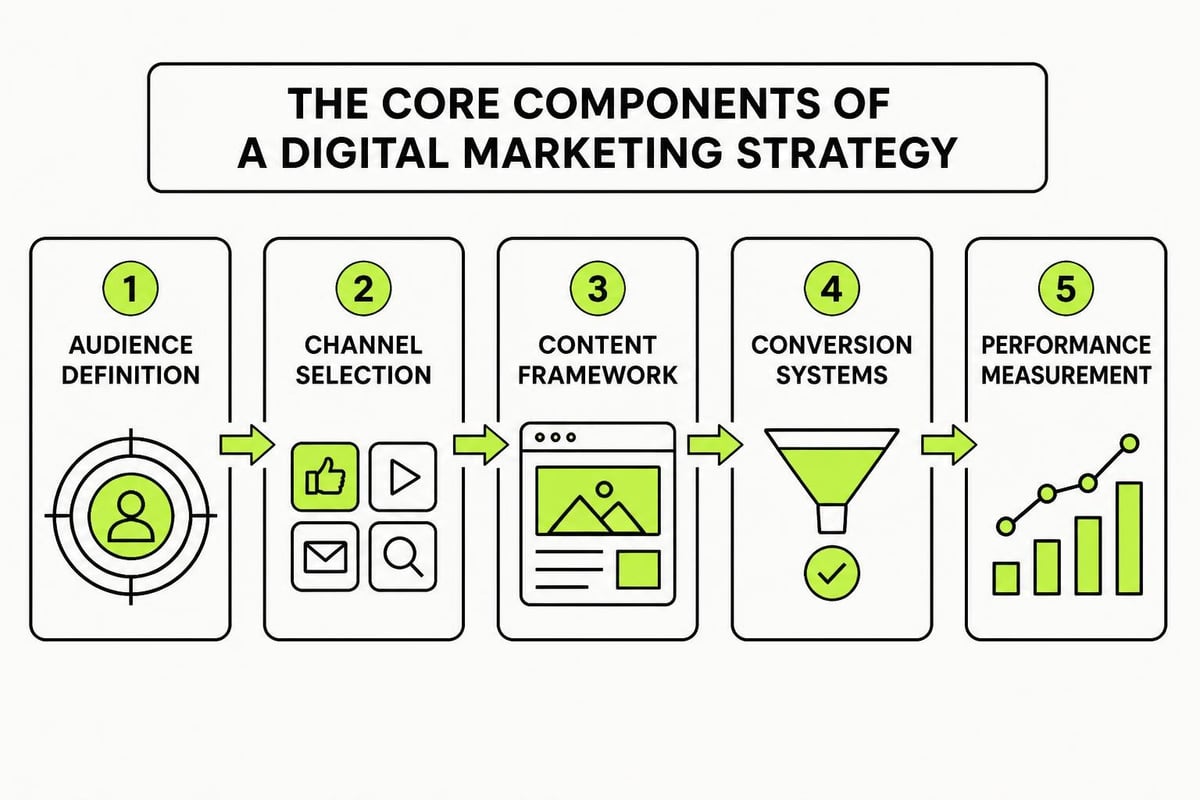
A digital marketing strategy is the blueprint that connects every marketing decision to a business outcome. It answers four questions: who you're trying to reach, what problem you're solving for them, how you'll earn their attention, and how you'll convert that attention into revenue.
Without strategy, you get:
- Channels that don't talk to each other
- Content with no clear purpose
- Leads that vanish before you can follow up
- Marketing spend you can't trace to results
With strategy, you build:
- A system where each piece feeds the next
- Clear metrics that show what's driving demand
- Infrastructure that protects and nurtures every lead
- Predictable growth you can scale with confidence
The difference isn't creative genius. It's structure. Strategy removes the guesswork and replaces it with repeatable processes that compound over time.
Start With Goals That Connect to Revenue
Vague goals create vague results. "Get more leads" doesn't tell you what to build or how to measure success. Your digital marketing strategy should start with specific, revenue-tied objectives.
Define Your North Star Metric
Pick one number that matters most to your business in 2026. For service businesses, it's usually:
- Monthly qualified leads
- Pipeline value
- New client acquisition cost
- Customer lifetime value
Once you've got that number, work backwards. If you need 10 new clients per month and your close rate is 20%, you need 50 qualified conversations. If 10% of leads book a call, you need 500 leads. Now you've got targets for every stage.
Common goal mistakes to avoid:
- Setting targets without knowing your current conversion rates
- Chasing vanity metrics like followers or page views
- Ignoring the time it takes to see results
- Forgetting to account for seasonal fluctuations
HubSpot's practical guide to digital strategy offers templates for mapping goals to specific channels and campaigns, which helps keep everything aligned.
Build Your Buyer Persona With Actual Data
Most buyer personas are fiction. They're built on assumptions, not conversations. A strong digital marketing strategy starts with real insight into who buys, why they buy, and what stops them.
Talk to your best clients. Ask what problem they were trying to solve before they found you. Ask what nearly stopped them from reaching out. Ask where they go for advice. Record the exact words they use. That language becomes your messaging.
| Persona Element | Where to Find It | How to Use It |
|---|---|---|
| Pain points | Client interviews, support tickets | Headline copy, ad messaging |
| Decision triggers | Sales call notes, CRM data | Campaign timing, offer structure |
| Objections | Lost deal notes, FAQ patterns | Nurture content, sales enablement |
| Preferred channels | Analytics, survey responses | Channel prioritisation, budget allocation |
Your persona should tell you which platform to focus on, what content will earn attention, and how to structure your offer. If you can't answer those three questions, keep digging.
Choose Platforms Based on Access, Not Hype
Every year there's a hot new platform. And every year, businesses waste budget chasing an audience that isn't there. Your digital marketing strategy should focus on the channels where your buyers actually spend time and are open to being reached.
Match Platform to Intent
Different platforms serve different stages of the buyer journey. Understanding where your audience is in that journey shapes where you show up.
Awareness stage platforms:
- LinkedIn (for B2B and professional services)
- Google search (for high-intent queries)
- YouTube (for educational content)
- Industry forums and communities
Consideration stage platforms:
- Email (for nurture sequences)
- Retargeting ads (for engaged visitors)
- Webinars and demos
Decision stage platforms:
- Direct outreach
- Sales calls
- Proposal tools
Don't try to own every platform. Pick two or three where you can consistently show up, and build systems around them. Depth beats breadth.
Create an Opt-In That Earns Permission
Cold outreach is getting harder. Privacy regulations are tightening. Inboxes are noisier. The most sustainable path to attention in 2026 is earning permission through value first.
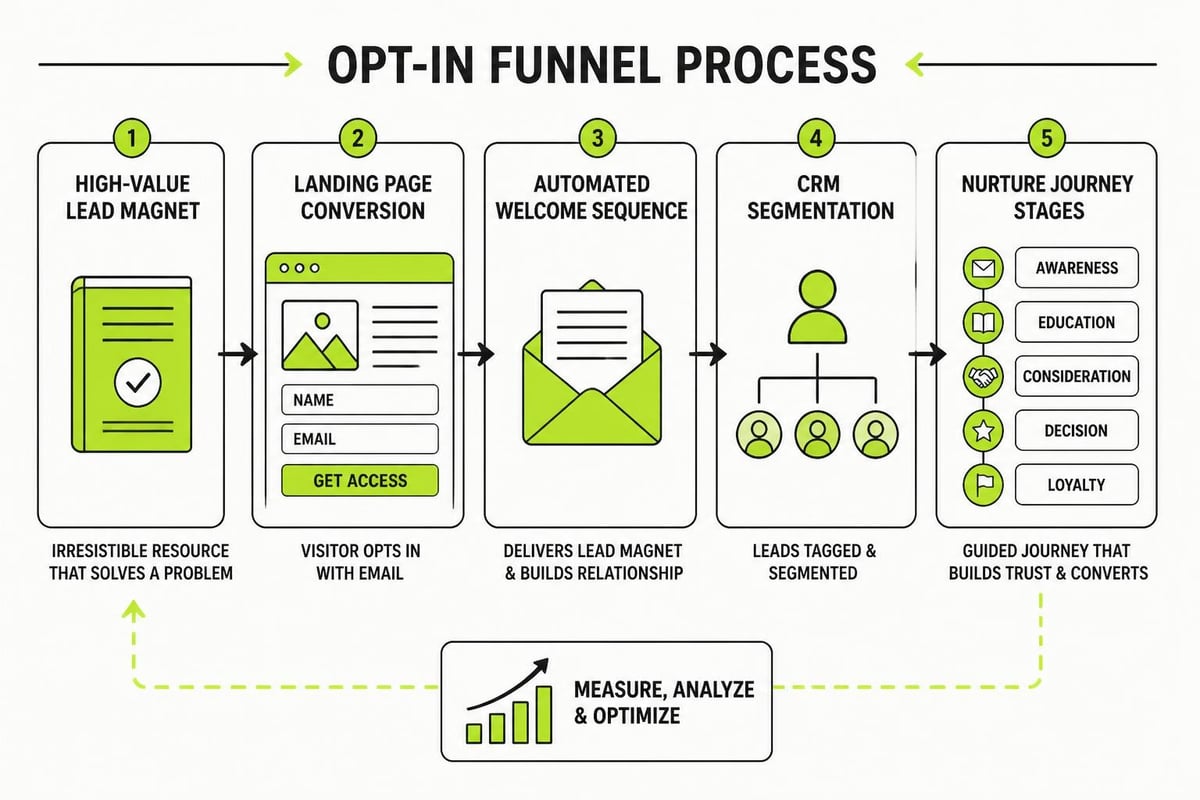
An opt-in offer is the gateway to your audience. It should solve one specific problem fast. Think checklist, template, calculator, audit, or short guide. The goal isn't to give everything away. It's to prove you understand the problem and can help solve it.
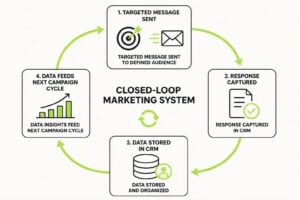
When someone opts in, they're signalling intent. That signal is what your digital marketing strategy needs to capture and act on. Which is where most businesses drop the ball. They collect the email and do nothing with it. Or worse, they blast a generic newsletter and wonder why no one responds.
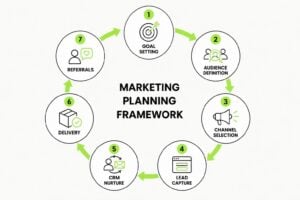
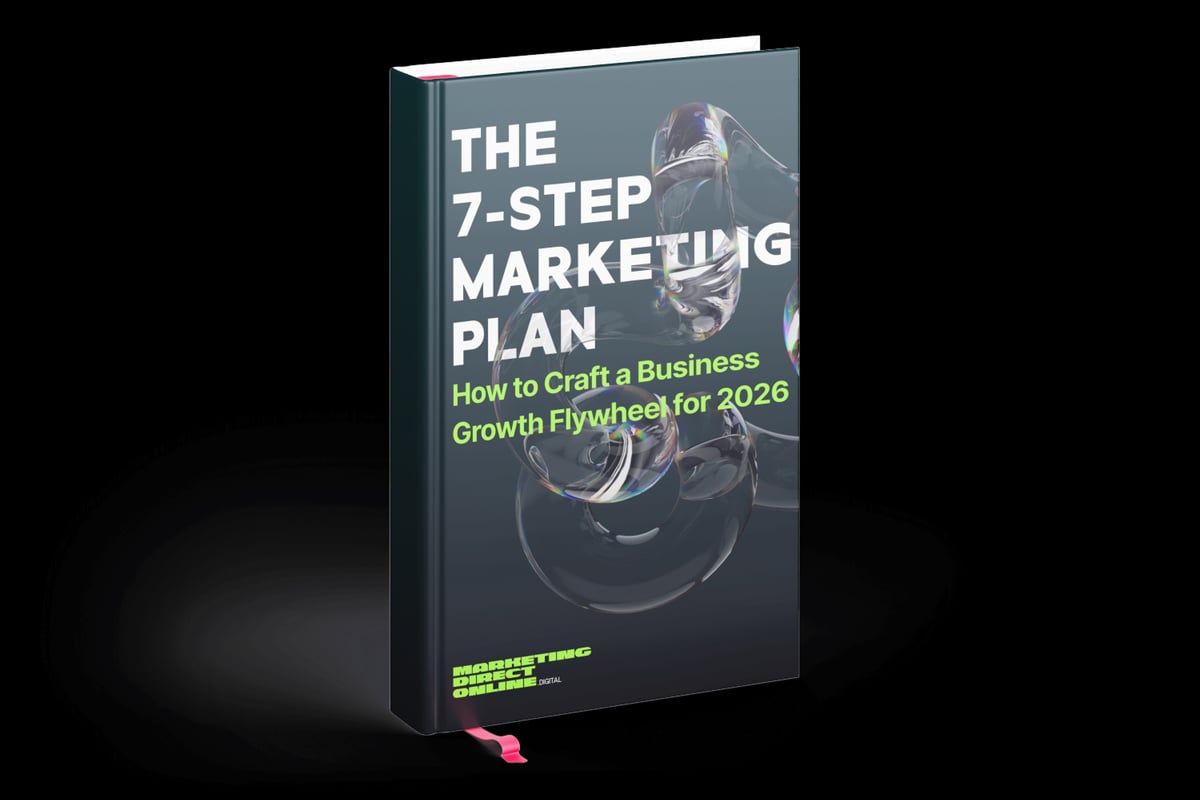
A structured approach like the 7-Step Marketing Plan gives you a clear framework for turning that opt-in into a repeatable system, from the first touchpoint through to referral. It's not about complexity. It's about clarity at each step.
Build Your CRM and Automation Infrastructure
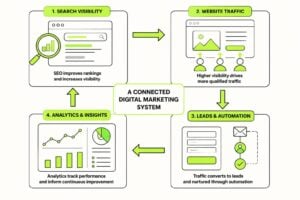
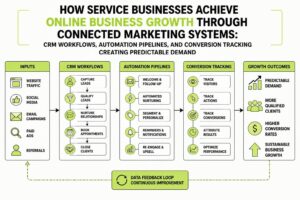
Here's where strategy becomes real. You need a place to store every lead, track every interaction, and trigger the right follow-up at the right time. Without this, your digital marketing strategy is just a list of ideas.
Your CRM is the central nervous system. It should:
- Capture leads from every source (website forms, ads, manual entry)
- Tag and segment based on behaviour and intent
- Trigger automated sequences based on actions
- Surface the right leads to your sales team at the right time
Automation That Feels Human
Automation isn't about being robotic. It's about removing manual work so you can focus on the conversations that matter. A good nurture sequence feels like a helpful guide, not a sales pitch.
Essential automations for service businesses:
- Welcome sequence (3-5 emails introducing your approach)
- Educational drip (weekly value-driven content)
- Re-engagement campaign (for cold leads)
- Post-sale onboarding (to reduce churn and increase referrals)
Each sequence should have a clear goal and a clear next step. If someone clicks a link, tag them. If they don't open for 30 days, move them to a different sequence. The system should work without you having to remember.
Measurement tools like Google Analytics can integrate with your CRM to track exactly which campaigns and content are driving qualified leads, giving you a feedback loop that sharpens your strategy over time.
Create Content That Moves People Forward
Content for the sake of content is noise. Every piece you publish should serve the strategy. That means it either builds awareness, nurtures trust, or drives a decision.
Map Content to the Buyer Journey
Your digital marketing strategy should include a content framework that covers each stage.
| Stage | Content Type | Goal | Distribution |
|---|---|---|---|
| Awareness | Blog posts, LinkedIn posts, YouTube videos | Earn attention and build authority | SEO, social, paid ads |
| Consideration | Case studies, guides, webinars | Demonstrate your approach and results | Email nurture, retargeting |
| Decision | Proposals, demos, consultations | Remove friction and close the deal | Direct outreach, sales enablement |
The Content Marketing Institute's guide to developing a content strategy walks through the three foundational questions that shape what you create and where you share it.
Don't create in a vacuum. Look at your CRM data. What questions are prospects asking? What objections keep coming up? What case studies close deals? Turn that insight into content.
Measure What Matters and Ignore the Rest
Analytics can become a rabbit hole. Page views, bounce rates, session duration, scroll depth. Most of it doesn't tell you whether your digital marketing strategy is working.
Focus on the metrics that connect to revenue:
- Lead volume: Are you hitting your target number of qualified leads?
- Conversion rate: What percentage of visitors become leads, and leads become clients?
- Cost per acquisition: How much are you spending to win a client?
- Customer lifetime value: What's the total revenue from a client relationship?
If those numbers are moving in the right direction, the strategy is working. If not, you know where to dig in.
Build a Monthly Review Rhythm
Set aside time each month to review performance. Look at what drove the most leads. Look at where leads dropped off. Look at which content or campaigns converted. Then adjust.
This isn't about chasing quick wins. It's about compounding small improvements. A 5% lift in conversion rate doesn't sound exciting, but over a year it's the difference between stagnation and growth.
Google's modern measurement playbook offers frameworks for tracking attribution and customer journeys in a privacy-first world, which is essential as third-party data becomes less reliable.
Align Your Team Around the System
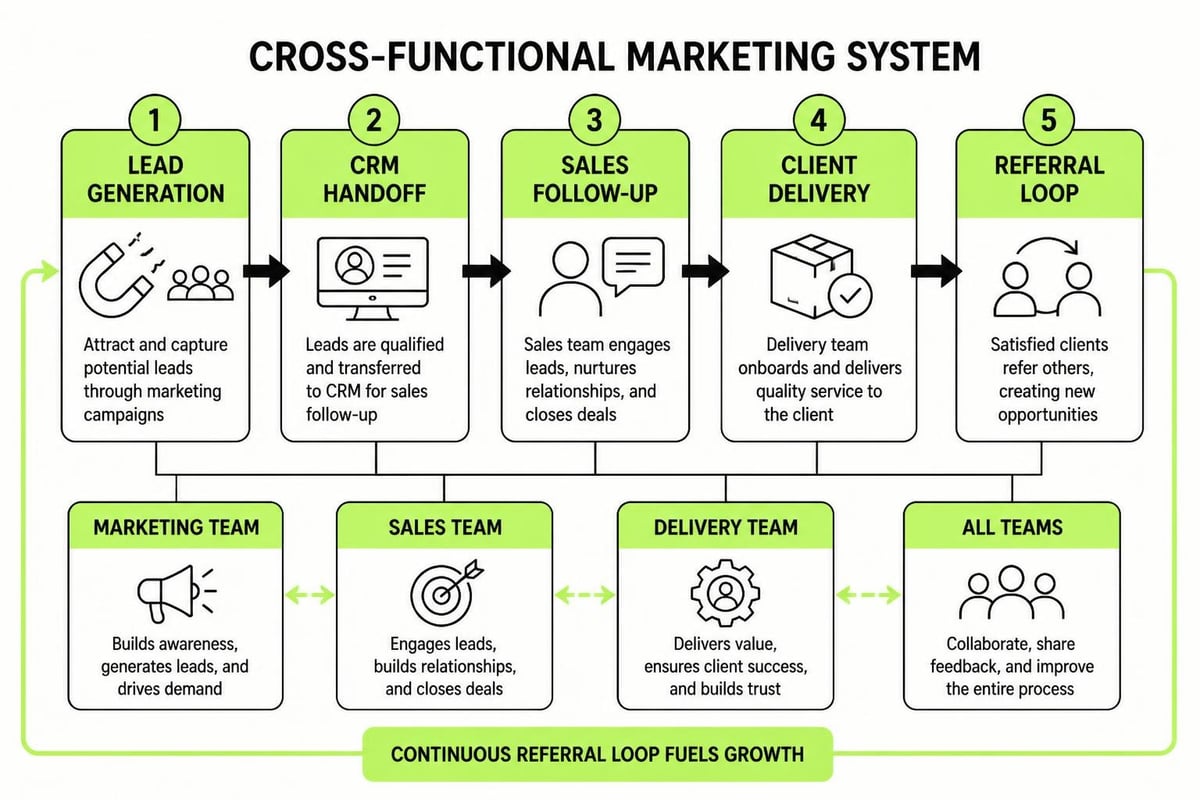
A digital marketing strategy only works if everyone understands their role. Marketing generates leads. Sales converts them. Delivery creates the experience that earns referrals. When those functions are siloed, leads fall through the gaps.
Create shared visibility:
- Weekly pipeline reviews where marketing and sales both attend
- A shared CRM everyone updates consistently
- Clear handoff points between marketing-qualified and sales-qualified leads
- Feedback loops so sales can tell marketing what's working
The best digital marketing strategy in the world falls apart if the sales team doesn't follow up, or if the onboarding experience doesn't match what marketing promised. Alignment isn't a nice-to-have. It's the difference between a strategy that compounds and one that fizzles out.
Test, Learn, and Iterate Without Losing Focus
The temptation is to change everything when results plateau. New channels, new messaging, new offers. That's how you end up back in chaos.
A strong digital marketing strategy leaves room for testing, but within guardrails. Pick one variable to test at a time. Run it for long enough to gather meaningful data. Then decide whether to scale, tweak, or kill it.
What to Test First
Start with the biggest levers:
- Offer positioning: Does a different headline or value proposition lift conversions?
- Call-to-action: Does "Book a Call" outperform "Get a Quote"?
- Nurture sequence timing: Do 3-day gaps work better than 7-day gaps?
- Channel mix: Should you shift budget from LinkedIn to Google, or vice versa?
Track everything in a simple testing log. Hypothesis, method, results, decision. Over time, this becomes a library of insight that sharpens your strategy.
Building a content plan that aligns with your strategy is easier when you use structured frameworks like the 10-step guide from the Digital Marketing Institute, which breaks down planning into repeatable stages.
Protect Your Leads With Privacy and Compliance
As data privacy laws tighten globally, your digital marketing strategy needs to account for compliance from the start. It's not just a legal box to tick. It's a trust signal.
Make sure your forms include clear consent language. Store data securely. Give people easy ways to unsubscribe or delete their information. Use first-party data wherever possible, and avoid relying on third-party cookies that are disappearing anyway.
The Data & Marketing Association’s guide offers practical advice on building privacy into your marketing operations, which is especially relevant as regulations evolve in 2026 and beyond.
Compliance isn't exciting, but it protects your reputation and keeps your systems running smoothly. A single data breach or privacy complaint can undo years of trust-building.
Scale What Works, Cut What Doesn't
Once your digital marketing strategy is running, the goal shifts from building to optimising. Double down on the channels, content, and offers that drive results. Cut or pause the ones that don't.
This sounds obvious, but most businesses keep pouring budget into underperforming tactics out of habit or hope. Your strategy should include regular audits where you ask:
- Which channel delivers the lowest cost per lead?
- Which content type generates the most engagement and conversions?
- Which nurture sequence has the highest open and click rates?
- Which lead source closes at the highest rate?
Use that data to reallocate resources. If LinkedIn is outperforming Google Ads, shift budget. If case studies convert better than blog posts, create more case studies. Let the numbers guide the decisions.
For context on broader trends and benchmarks, Statista’s marketing data offers industry statistics that can help you understand where your performance sits relative to the market.
Turn Clients Into Your Best Marketing Channel
The most underutilised part of most digital marketing strategies is the post-sale experience. You've worked hard to win the client. Now turn them into a referral engine.
Deliver an outstanding onboarding. Check in regularly. Ask for feedback. When the project wraps, make it easy for them to leave a review or refer a colleague.
Simple referral systems that work:
- A post-project email asking for a Google review with a direct link
- A quarterly check-in offering a free audit or resource
- A referral incentive for introducing new clients
- Case study interviews that showcase their results
This isn't aggressive or salesy. It's structured follow-up that keeps you top of mind and creates a flywheel. Happy clients talk. Your job is to make it easy for them to talk about you in the right places.
At MDO Digital, we've seen how a well-executed referral system can account for 30-40% of new business once it's up and running. It's the most cost-effective channel you'll ever build.
A digital marketing strategy isn't a document you write once and file away. It's the operating system that connects your marketing to revenue, removes chaos, and creates predictable growth. If you're ready to build infrastructure that protects every lead and turns attention into demand, MDO Digital can help you design and implement systems that scale with clarity. Get in touch with MDO Digital and let's build something that lasts.