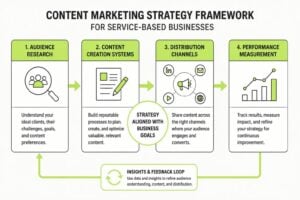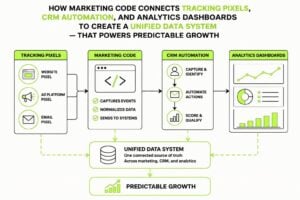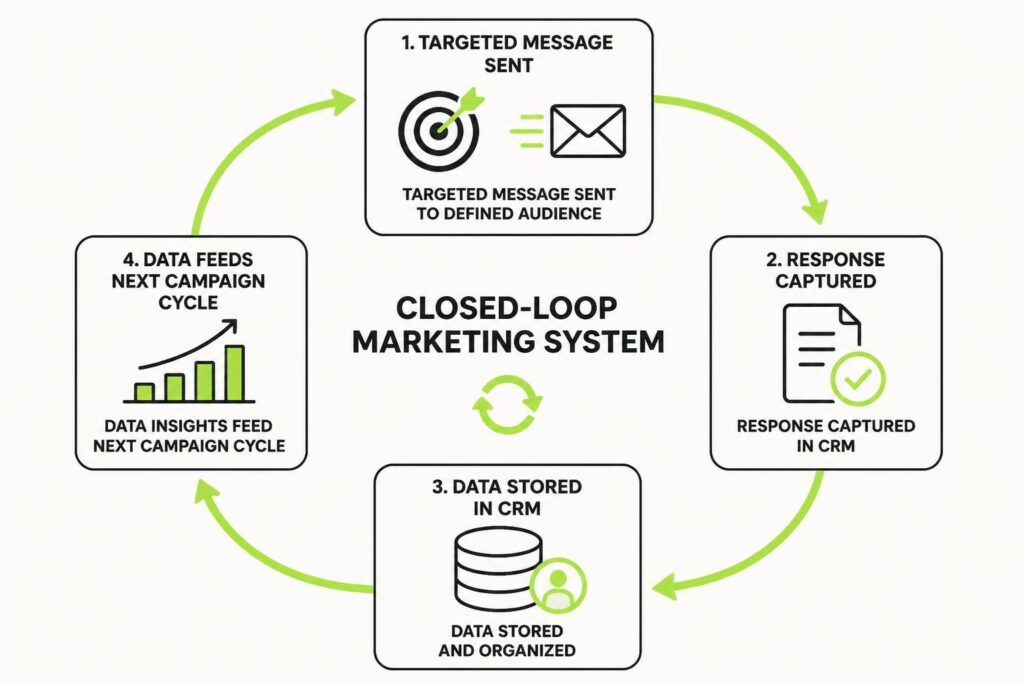
Direct marketing isn't about shouting into the void. It's about sending the right message to the right person at the right time, then measuring what happens next. For service-based businesses, this approach removes guesswork and replaces it with structured systems that generate predictable demand. You know who received your message, how they responded, and what action to take next. That clarity is rare in marketing, and it's precisely why direct marketing remains one of the most powerful tools for businesses that value control, accountability, and growth.
What Direct Marketing Actually Means
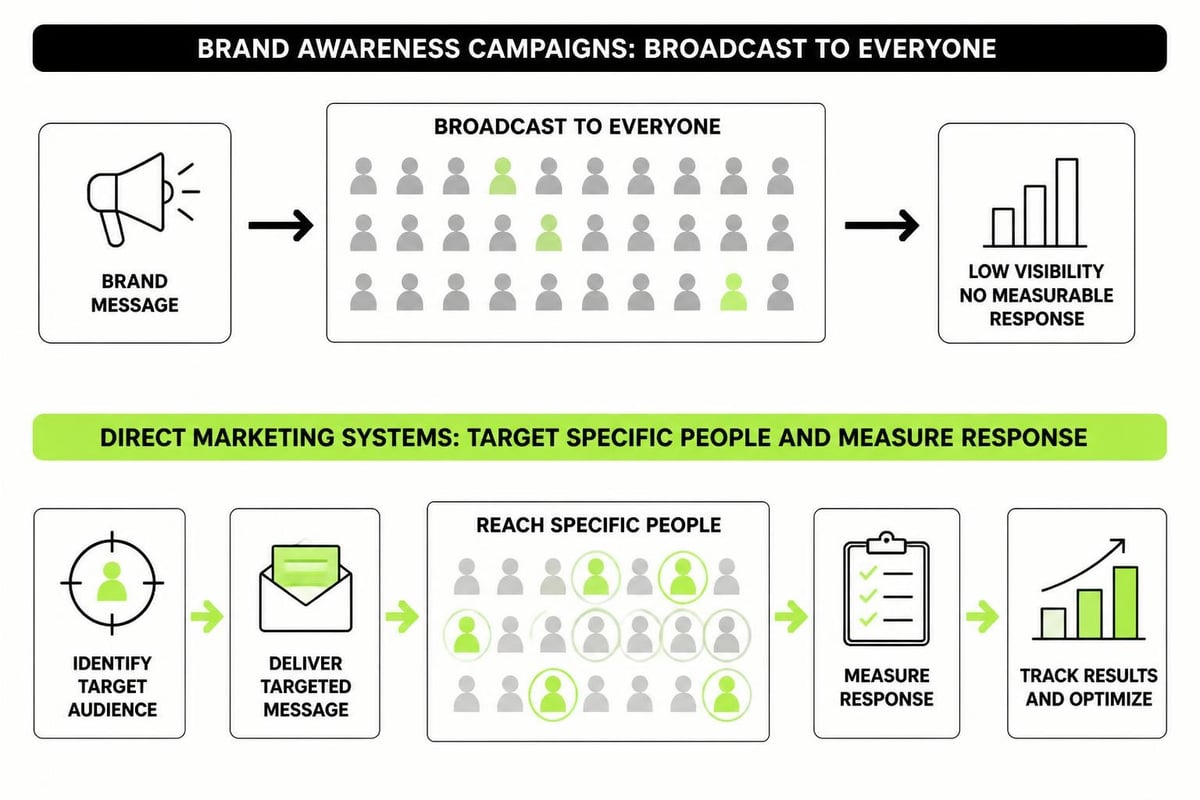
Direct marketing is any promotional activity where you communicate directly with a specific audience and invite a measurable response. No middleman. No brand awareness campaign that disappears into the ether. You send an email, a letter, a text, or a message, and you track what happens.
The key elements are targeting, personalisation, and measurement. You're not broadcasting. You're selecting individuals based on behaviour, demographics, or intent. You're crafting messages that speak to their specific situation. And you're capturing data on who opened, clicked, called, or bought.
Why Service Businesses Rely on It
Service businesses live and die by pipeline. You can't stockpile your expertise on a shelf. Revenue comes from booked calls, signed contracts, and ongoing client relationships. Direct marketing gives you visibility into that pipeline at every stage.
- You control who enters your funnel
- You nurture relationships over weeks or months
- You measure cost per lead and conversion rate with precision
- You adjust campaigns in real time based on performance
Traditional advertising builds awareness. Direct marketing builds demand. And for businesses that need predictable cash flow, demand always wins.
Channels That Still Deliver Results
Direct marketing isn't limited to one medium. The best campaigns layer multiple channels, each reinforcing the other. Modern marketing works across channels, and your job is to choose the ones that match your audience's behaviour.
Email Marketing
Email remains the workhorse of direct marketing. Low cost, high control, instant delivery. You own the list, you write the message, and you see exactly who engaged.
Why it works:
- Permission-based (people opted in)
- Segmentable by behaviour, interest, or lifecycle stage
- Automatable for onboarding, nurture, and re-engagement
- Measurable down to the individual recipient
The DMA’s 2023 email benchmarks show median open rates around 18% and click rates near 2.3% across industries. Service businesses often exceed those numbers with well-segmented, relevant campaigns.
Direct Mail
Yes, physical mail. Response rates for direct mail have climbed in recent years as digital channels become noisier. According to Lob’s 2024 State of Direct Mail report, direct mail response rates average 4.4% for prospect lists, far higher than email.
Mail works when you're targeting high-value prospects who receive hundreds of emails daily. A well-designed postcard or letter stands out. It forces a moment of attention. And for considered purchases like consulting, legal services, or coaching, that moment matters.
SMS and Messaging
Text messaging has the highest open rate of any channel, often above 90%. It's immediate, personal, and hard to ignore. Use it for appointment reminders, time-sensitive offers, or follow-ups after a meeting.
Best practices:
- Get explicit consent (legally required in most regions)
- Keep messages short and action-focused
- Include an opt-out option in every message
- Limit frequency to avoid fatigue
Messaging apps like WhatsApp or Messenger offer similar immediacy with richer media options. If your audience lives on those platforms, meet them there.
Telemarketing and Outbound Calls
Calling isn't dead. It's just more targeted. Outbound calls work when you're reaching decision-makers at businesses, following up on warm leads, or offering high-touch services where a conversation builds trust faster than an email thread.
The key is preparation. Know who you're calling, why now, and what outcome you're after. Cold calls to unqualified lists waste time. Warm calls to people who've engaged with your content or fit a tight profile? Those convert.
| Channel | Avg Response Rate | Best Use Case | Cost Level |
|---|---|---|---|
| 2-5% | Nurture, education, re-engagement | Low | |
| Direct Mail | 4-5% | High-value prospects, physical impact | Medium |
| SMS | 10-20% | Urgent updates, reminders, offers | Low |
| Telemarketing | 5-10% | Complex services, enterprise sales | High |
Building the Infrastructure
Direct marketing requires systems. You can't run effective campaigns from a spreadsheet and a Gmail account. You need tools that capture leads, segment audiences, automate follow-up, and report on performance.
CRM as the Backbone
Your CRM holds every contact, every interaction, and every stage in the buyer journey. It's where direct marketing lives. Without a CRM, you're flying blind.
A proper CRM lets you:
- Tag contacts by source, interest, or stage
- Trigger automated emails based on behaviour
- Track which messages led to bookings or sales
- Score leads so you prioritise the hottest prospects
For service businesses, the CRM isn't just a database. It's the engine that turns attention into revenue. If your CRM is messy, your direct marketing will be too. Clean data, clear tagging, and structured workflows matter more than flashy features.
Automation That Doesn't Feel Robotic
Automation handles repetitive tasks so you can focus on strategy and high-value conversations. But poorly executed automation feels cold. The goal is to send the right message at the right time, not to spam everyone on a schedule.
Examples of smart automation:
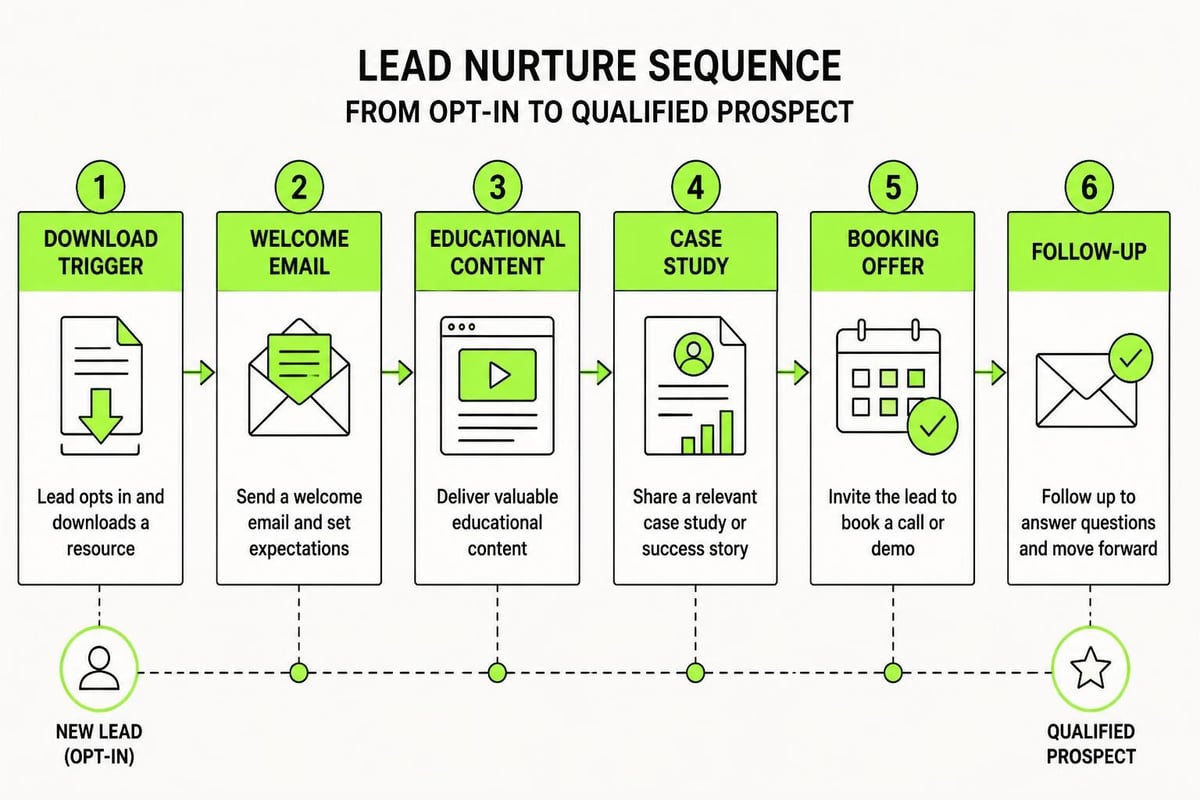
- Welcome series when someone downloads a resource
- Follow-up sequence after a discovery call
- Re-engagement campaign for contacts who've gone quiet
- Birthday or anniversary messages (if relevant to your business)
Automation works when it's triggered by behaviour and personalised with data. A generic "Just checking in" email three months after someone joined your list won't cut it. A message tied to a specific action or milestone will.
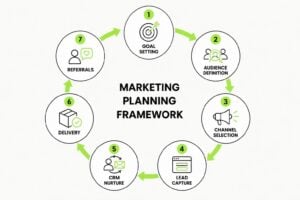
Many businesses struggle to connect the dots between tactics and outcomes. A structured approach like the 7-Step Marketing Plan gives you a repeatable framework for building campaigns that actually convert, from goal-setting through to review generation.
Compliance and Trust
Direct marketing operates under strict rules. You're contacting people directly, often using personal data, and regulators take privacy seriously. Violating compliance doesn't just risk fines. It destroys trust.
Email Rules You Can't Ignore
In the U.S., the CAN-SPAM Act sets baseline requirements: accurate headers, clear subject lines, a visible unsubscribe link, and your physical address in every email.
In the EU, GDPR goes further. You need a lawful basis for processing data, usually consent or legitimate interest. Consent must be freely given, specific, and revocable. Pre-ticked boxes don't count. Neither does silence.
Australia's Spam Act requires consent before sending commercial messages and a functional unsubscribe mechanism. Most countries have similar laws. Know the rules where your audience lives.
Building Permission, Not Just Lists
Compliance is the floor. Trust is the ceiling. You can follow every regulation and still annoy people if your messages aren't relevant or respectful.
How to earn and keep trust:
- Be clear about what you'll send when people opt in
- Segment your list so people only get messages that matter to them
- Honour unsubscribes immediately (don't wait the legal maximum)
- Test frequency to find the sweet spot (weekly might work, daily probably won't)
Pew Research found that 73% of Americans feel they have little control over what companies do with their data. Direct marketing gives you a chance to be different. Transparency, respect, and relevance build long-term relationships that scale.
Measuring What Matters
If you can't measure it, you can't improve it. Direct marketing's advantage over brand campaigns is attribution. You know exactly what you sent, who received it, and what they did next.
Core Metrics to Track
Start with the basics:
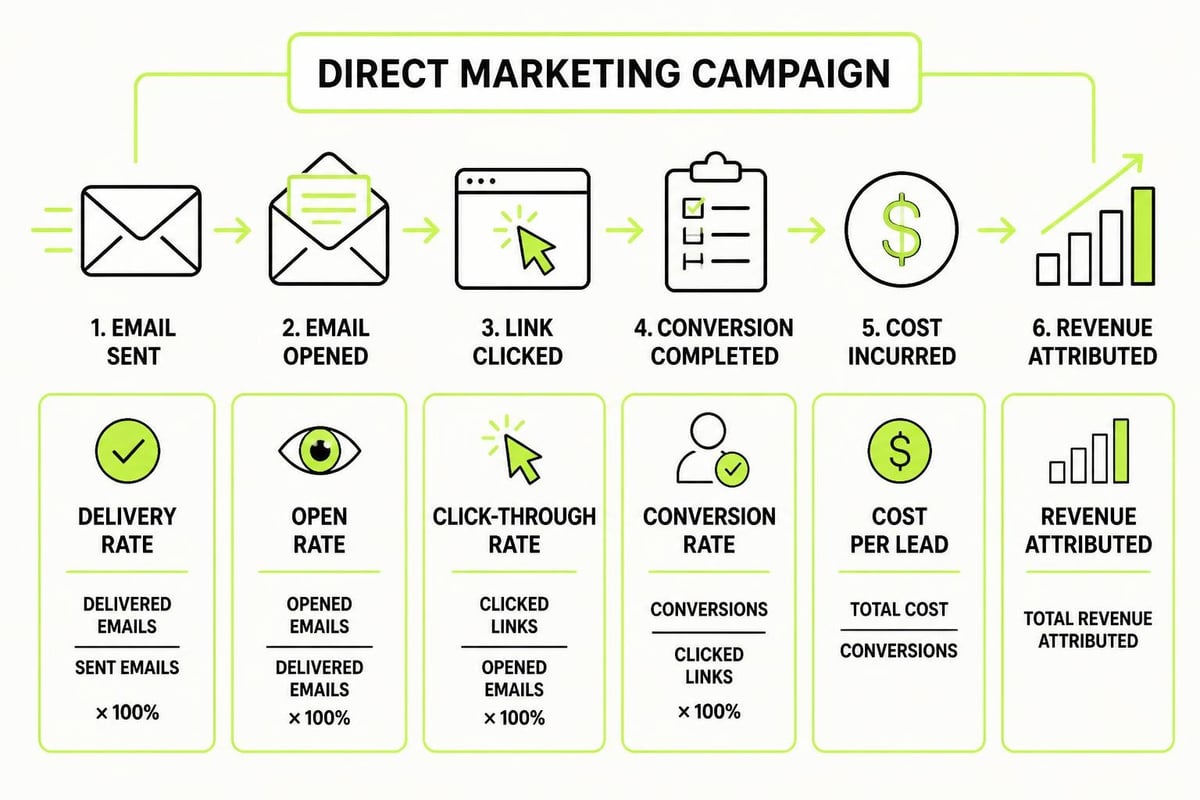
- Delivery rate: Did the message reach the recipient?
- Open rate: Did they engage with it?
- Click-through rate: Did they take the next step?
- Conversion rate: Did they complete the desired action?
- Cost per acquisition: How much did you spend to get one customer?
For email, track bounce rate and unsubscribe rate as well. Rising bounces mean your list is degrading. Rising unsubscribes mean your messaging is off.
Attribution Across Touchpoints
Most buyers don't convert on the first message. They open an email, visit your site, read a blog post, then book a call weeks later. Attribution models help you understand which touchpoints contributed to the sale.
| Model | Logic | Best For |
|---|---|---|
| First-touch | Credits the first interaction | Understanding lead sources |
| Last-touch | Credits the final interaction | Understanding conversion drivers |
| Multi-touch | Spreads credit across all touchpoints | Complex, long sales cycles |
| Time-decay | Weights recent touchpoints more heavily | Short to medium cycles |
For service businesses with considered purchases, multi-touch or time-decay models give you a clearer picture of what's working. A prospect might discover you through content marketing, engage via email, and convert after a call. All three matter.
Testing and Iteration
Direct marketing rewards testing. Small tweaks to subject lines, send times, or offers can shift results significantly.
What to test:
- Subject lines (clarity vs curiosity, length, personalisation)
- Send time (weekday mornings often outperform weekends, but test for your audience)
- Call-to-action copy and placement
- Offer type (discount, resource, consultation)
- Segmentation (industry, behaviour, stage)
Run A/B tests with large enough sample sizes to reach statistical significance. One test won't transform your results, but a culture of testing compounds over time.
Common Mistakes That Kill Campaigns
Even experienced marketers make avoidable errors. Here are the ones we see most often.
Buying Lists
Purchased lists are almost always a waste. The people didn't opt in. They don't know you. Engagement will be abysmal, and complaints will hurt your sender reputation. Build your list organically through lead magnets, content, and genuine value.
Ignoring Mobile
Over 60% of emails are opened on mobile devices. If your message doesn't render well on a small screen, you've lost the reader. Use responsive design, keep subject lines short, and make CTAs tappable.
Over-Sending
More emails don't mean more sales. They mean more unsubscribes. Find a frequency that keeps you top of mind without becoming noise. For most service businesses, once or twice a week is the ceiling.
Weak Offers
If your call-to-action is vague ("Learn more"), people won't act. Be specific. "Book a 20-minute strategy session" or "Download the client onboarding checklist" gives clarity and urgency.
No Follow-Up
One email won't close a sale for a high-consideration service. Plan multi-step sequences that educate, build trust, and guide prospects toward a decision. A single touchpoint is a missed opportunity.
How Direct Marketing Fits Into Bigger Systems
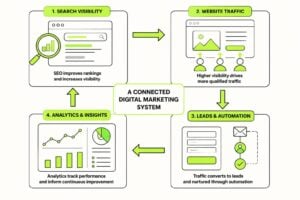
Direct marketing doesn't exist in isolation. It's one piece of a broader marketing system that generates demand, captures leads, and converts them into clients.
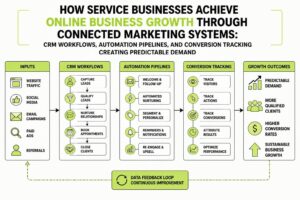
Your website attracts attention through SEO and content. Visitors opt in for a resource or consultation. They enter a CRM-powered nurture sequence. You send targeted emails based on behaviour. Some book calls. Some need more time. The system handles both.
Digital branding establishes trust before the first direct message. Marketing automation ensures follow-up happens consistently. Each piece reinforces the others.
The businesses that scale don't rely on one-off campaigns or random tactics. They build infrastructure that captures, qualifies, and converts leads systematically. Direct marketing is the connective tissue that keeps prospects engaged from first contact to closed deal.
Where to Start
If you're new to direct marketing, don't try to build everything at once. Start with one channel, one audience segment, and one clear offer.
A simple first campaign:
- Choose your warmest segment (past clients, recent inquiries, engaged email subscribers)
- Define one specific outcome (book a call, download a resource, reply to a question)
- Write a short, clear message that delivers value before asking
- Set up tracking so you know who responded
- Follow up with responders within 24 hours
Once that campaign runs, measure. What worked? What didn't? Where did people drop off? Use those insights to refine the next campaign.
Scale comes from repetition and refinement, not perfection on day one. The businesses winning with direct marketing didn't start with flawless systems. They started with simple campaigns, tracked the data, and improved month after month.
Direct marketing works because it's measurable, targetable, and built for iteration. When you combine the right message with clean data and a CRM that captures every interaction, you create a system that turns attention into predictable demand. If you're ready to move from random tactics to structured growth, MDO Digital builds the marketing infrastructure that service businesses need to scale with clarity. We handle the CRM setup, automation workflows, and campaign execution so you can focus on doing the work that matters.