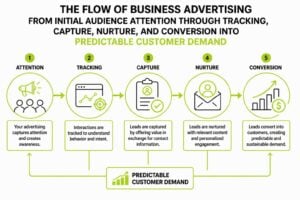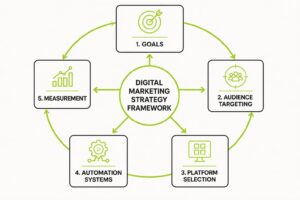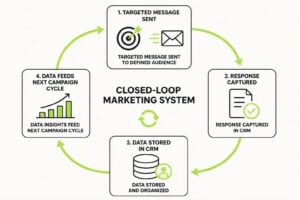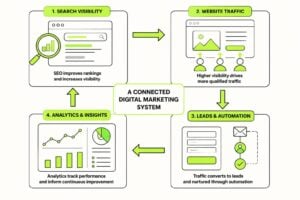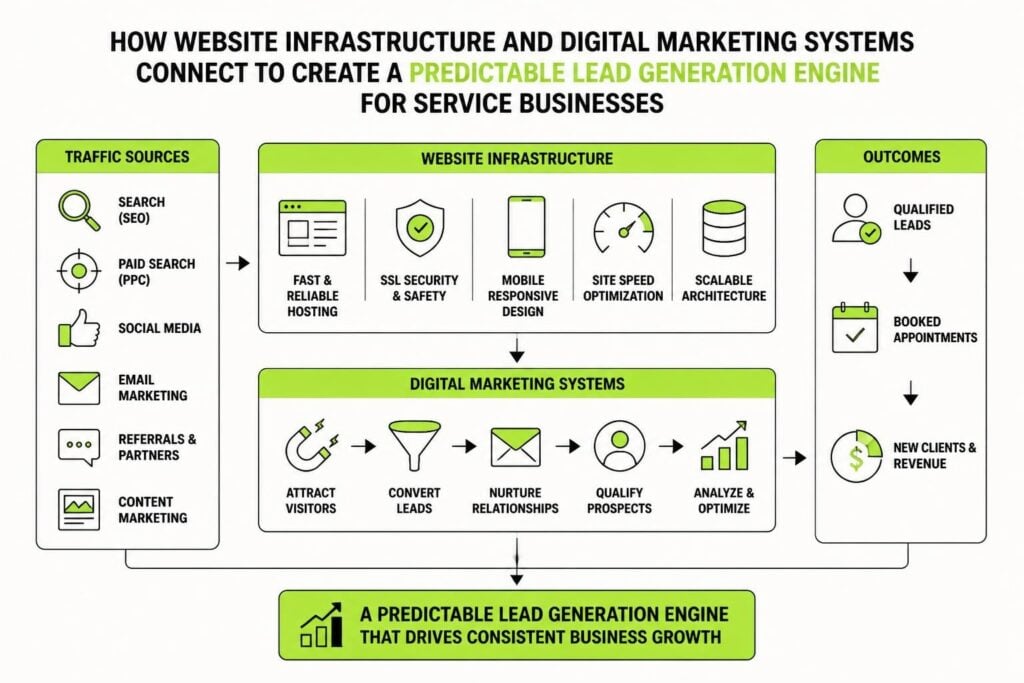
Your website isn't a brochure. It's the first touch in a system that should turn strangers into leads, leads into clients, and clients into advocates. Yet most businesses treat website and digital marketing as separate projects, built by different people, at different times, with no plan to connect them. The website sits static. The marketing runs in circles. Nothing compounds. The fix isn't more traffic or a flashier design. It's building both as parts of one system, where each piece feeds the next and the whole thing generates predictable demand. That's what separates growing businesses from stuck ones.
Why Website and Digital Marketing Must Work as One System
Most service businesses approach website and digital marketing as two distinct tasks. They hire a designer for the site, then later bring in a marketer to drive traffic. The problem is simple. A beautiful website that doesn't convert is expensive decoration. Marketing campaigns that send people to a confusing site waste every dollar spent on ads.
When you build them separately, you get:
- High traffic, low conversions because the site wasn't designed with visitor intent in mind
- Gorgeous design that doesn't answer the questions prospects actually ask
- Marketing campaigns optimized for clicks but no infrastructure to capture and nurture leads
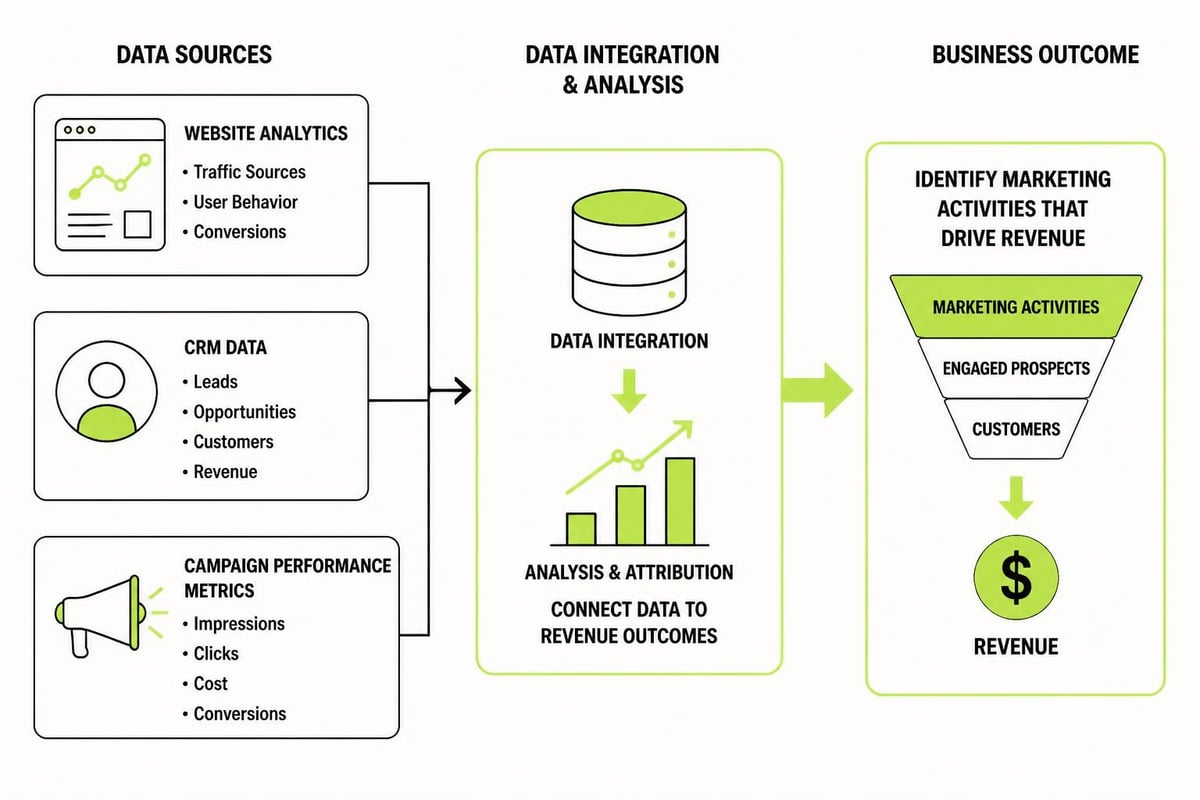
- Data scattered across tools with no way to track what actually drives revenue
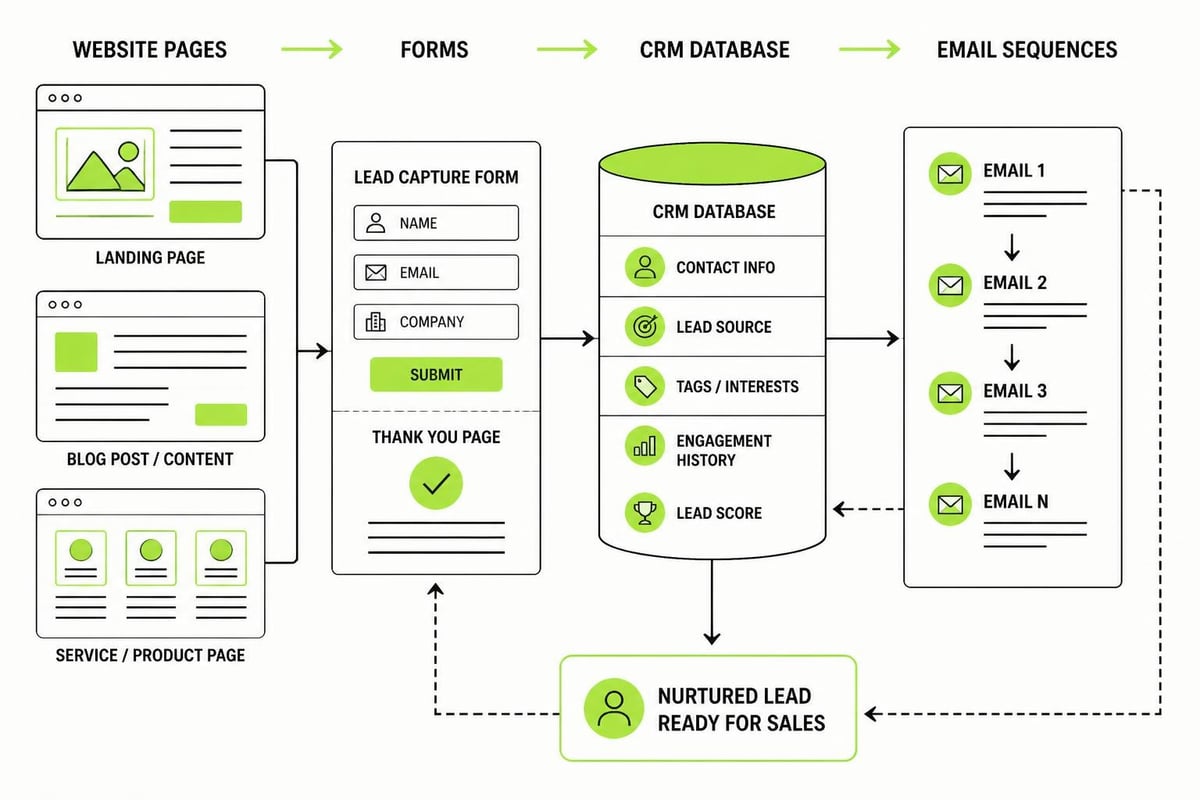
The businesses that grow treat their website as marketing infrastructure, not a design project. Every page serves a purpose. Every form feeds a CRM. Every campaign connects to a nurture sequence. It's a closed loop where attention becomes demand, and data tells you what's working.
The Core Components That Need to Connect
A functional website and digital marketing system has three layers. First, the website itself must be fast, clear, and built to guide visitors toward one specific action. Second, the marketing channels need to send the right people to the right pages with messaging that matches what they just clicked. Third, the backend infrastructure (your CRM, email platform, analytics) must capture every lead and move them through a structured journey.
Here's what that looks like in practice:
| Component | Purpose | Common Failure Point |
|---|---|---|
| Website pages | Communicate value, build trust, collect leads | Generic messaging that doesn't speak to a specific buyer |
| Lead capture forms | Turn visitors into known contacts | Too many fields, unclear value exchange |
| CRM and automation | Nurture leads until they're ready to buy | No follow-up system or automation in place |
| Analytics and tracking | Measure what works, kill what doesn't | Tracking vanity metrics instead of conversion data |
| Content and SEO | Attract the right people through search | Content written for algorithms, not humans |
When these pieces connect, you create what we call a marketing flywheel. New visitors find you through content or ads, land on a page built to convert them, enter your CRM, receive targeted follow-up, and eventually book a call or buy. The data from each step improves the next one. That's how building a marketing system compounds over time instead of starting from zero every month.
Building a High-Trust Website That Converts
Your website has one job: make it easy for the right people to say yes. That means stripping away everything that creates friction, doubt, or confusion. Most service business websites fail here. They're either too vague (trying to appeal to everyone) or too complicated (burying the value under jargon and feature lists).
Structure Your Site Around Buyer Intent
Start with the buyer's journey, not your service list. Someone who just discovered you has different questions than someone who's been following you for months. Your site structure should reflect that.
Map your pages to buyer stages:
- Awareness stage (blog, guides, educational content): Answer the questions prospects type into Google before they know solutions like yours exist
- Consideration stage (service pages, case studies): Show how you solve the problem better than alternatives
- Decision stage (contact page, pricing, booking): Remove every barrier between "I'm interested" and "Let's start"
The homepage should orient visitors fast. Within five seconds, they need to know what you do, who it's for, and what to do next. If your hero section is a vague tagline and stock photos, you've lost them. Use plain language. Make the value obvious. Put one clear call to action above the fold.
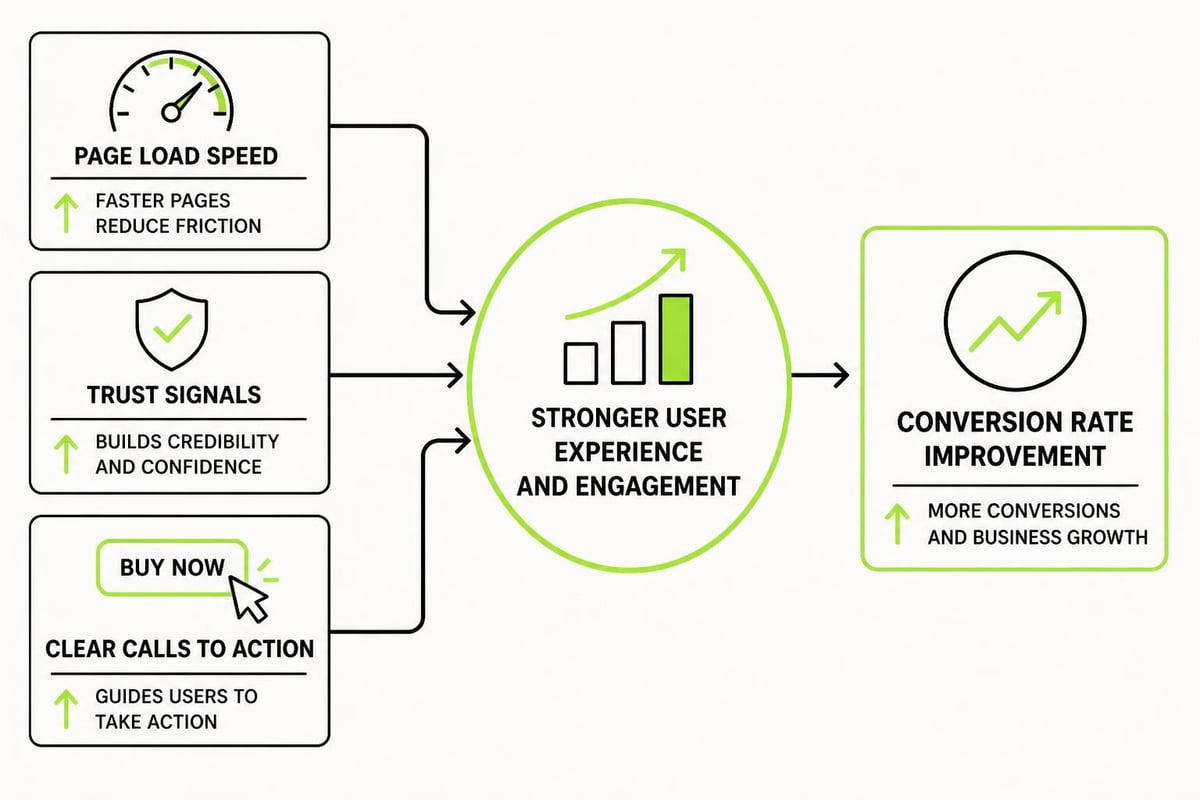
Speed and mobile performance aren't optional. Google’s SEO guidelines make it clear that site speed and mobile usability directly impact rankings. More importantly, slow sites kill conversions. Every extra second of load time costs you leads. Use lazy loading for images, compress files, choose fast hosting, and test on actual mobile devices.
Accessibility isn't just good practice, it's good business. Following the Web Content Accessibility Guidelines (WCAG) makes your site usable for everyone, improves SEO, and reduces legal risk. Simple fixes like proper heading structure, alt text on images, and sufficient color contrast make a measurable difference.
Design for Trust, Not Just Beauty
Pretty websites don't convert. Trustworthy ones do. Design choices should reduce perceived risk and make your expertise obvious. That means clear service descriptions, visible contact details, real client results, and proof you've solved this problem before.
Design elements that build trust:
- Client logos and testimonials placed near key decision points
- Case studies with specific results, not vague claims
- Team photos and bios that show real humans work here
- Clear privacy and data handling statements
- No stock photos pretending to be your team or office
Responsive design isn't about making things shrink on mobile. It's about adapting the experience to the device. Mobile users have different intent and tolerance than desktop users. Your mobile site should load faster, have larger tap targets, and prioritize the most important content first.
Running Digital Marketing That Compounds
Traffic without a system is just noise. The goal of digital marketing isn't getting more visitors. It's attracting the right people, capturing their attention, and moving them toward a decision. That requires choosing the right channels, creating content that matches intent, and building automation that nurtures leads while you focus on delivery.
Pick Channels Based on Where Your Buyers Actually Are
Not every platform matters for your business. Trying to be everywhere spreads you thin and produces mediocre results across the board. Instead, identify where your ideal clients spend time and go deep on those channels.
For most service businesses, the highest-return channels are organic search, email, and one or two social platforms. Organic search (SEO) brings in people actively looking for solutions. Email nurtures them until they're ready. Social builds awareness and trust.
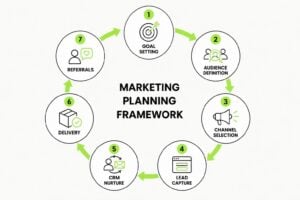
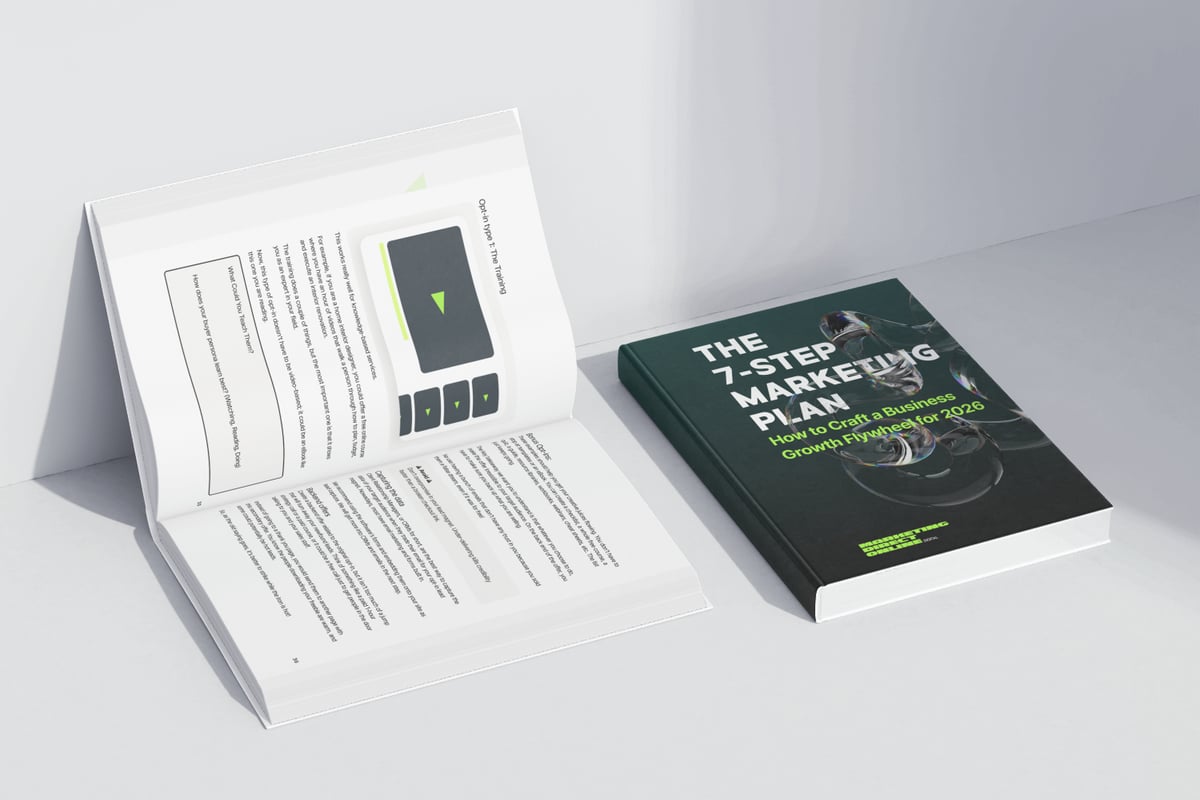
A structured approach helps. The 7-Step Marketing Plan gives you a clear framework for choosing channels, creating opt-in offers, building nurture campaigns, and generating referrals. Each step feeds the next, so your marketing compounds instead of requiring constant new effort.
| Channel | Best For | Common Mistake |
|---|---|---|
| SEO and content | Long-term demand generation | Writing for keywords instead of solving real problems |
| Email marketing | Nurturing leads over time | Sending broadcasts instead of segmented sequences |
| LinkedIn (B2B) | Building authority and relationships | Posting motivational quotes instead of expertise |
| Google Ads | Fast validation and lead generation | Sending traffic to generic pages |
| Referral systems | Leveraging existing clients | Treating referrals as luck instead of a process |
According to HubSpot’s research on marketing trends, businesses that align their website, content, and CRM see 36% higher customer retention and more predictable revenue growth. That alignment starts with channel selection and ends with automation.
Create Content That Moves People Through Stages
Content isn't about publishing more. It's about guiding buyers from "I have a problem" to "You're the one to fix it." Each piece should serve a specific stage and lead naturally to the next step.
How content maps to the buyer journey:
- Top of funnel (blog posts, guides, research): Attract strangers by answering their early questions
- Middle of funnel (case studies, comparison guides): Show them why your approach works
- Bottom of funnel (pricing pages, booking links, demos): Make buying easy
Research from the Content Marketing Institute shows that 78% of high-performing B2B marketers have a documented content strategy. They know what content to create, who it's for, and how success is measured. Most don't, so they publish randomly and hope something sticks.
SEO isn't gaming Google. It's making your expertise findable. Use Moz’s beginner’s guide to SEO to understand technical foundations, then focus on solving real problems with clear, specific content. The algorithm rewards usefulness, not keyword stuffing.
Build Automation That Nurtures Leads Without Manual Work
Your CRM should do the heavy lifting. Once someone enters your system (through a form, download, or inquiry), automation moves them forward based on behavior and time. The right email at the right moment beats a hundred generic newsletters.
Core automation sequences every service business needs:
- Welcome sequence for new subscribers: Introduce yourself, deliver what they signed up for, set expectations
- Lead nurture for prospects not ready to buy: Share case studies, address objections, stay top of mind
- Onboarding sequence for new clients: Reduce confusion, set them up for success, ask for referrals at the peak of satisfaction
- Re-engagement for cold leads: Remind them why they signed up, offer something new, clean your list
The key is segmentation. Not everyone is at the same stage or interested in the same services. Tag leads based on what they download, which pages they visit, and how they respond. Send targeted follow-up that matches their intent. This is where digital marketing strategy separates amateurs from professionals.
Recent digital marketing trends show increased use of AI for personalization and predictive analytics. You don't need fancy AI to start. You need solid fundamentals: clear tags, behavior-based triggers, and messaging that speaks to specific problems.
Measuring What Matters and Improving Over Time
Vanity metrics feel good but don't pay the bills. Page views, social followers, and email open rates tell you nothing about revenue. The metrics that matter are the ones tied directly to business outcomes: leads generated, conversion rates, cost per acquisition, and customer lifetime value.
Set Up Tracking That Reveals the Truth
You can't improve what you don't measure. Install proper analytics on your website, connect it to your CRM, and track the full journey from first visit to closed deal. Most businesses only see the top of the funnel. They know how many people visit but have no idea which pages, campaigns, or keywords actually drive sales.
Metrics to track at each stage:
| Stage | Key Metric | Why It Matters |
|---|---|---|
| Traffic | Qualified visitors by source | Tells you which channels bring the right people |
| Engagement | Time on page, scroll depth | Reveals if content resonates or confuses |
| Conversion | Form fills, downloads, bookings | Measures how well your site turns visitors into leads |
| Nurture | Email engagement, link clicks | Shows if your follow-up is relevant |
| Revenue | Cost per acquisition, customer LTV | Determines campaign profitability and ROI |
Understanding your audience matters. Pew Research data on internet usage shows behavior patterns, device preferences, and content consumption habits vary widely by demographic. Use this insight to refine targeting and messaging.
Run Tests, Kill What Doesn't Work, Double Down on What Does
Testing isn't about perfection. It's about learning faster than your competition. Run small experiments on headlines, calls to action, page layouts, and email subject lines. Track results. Keep what works. Discard the rest.
The Nielsen Norman Group’s usability research provides evidence-based guidance on what actually improves user experience and conversions. Small changes, like clearer button text or repositioning a form, often produce double-digit conversion lifts.
Website and digital marketing work best when you treat them as evolving systems, not finished projects. Review your data monthly. Look for drop-off points. Ask why people leave. Fix friction. Add clarity. The businesses that win aren't the ones with the biggest budgets. They're the ones that iterate fastest and execute with discipline.
Connecting the Pieces Into a Growth Engine
The gap between a website and digital marketing that work separately versus work together is the difference between constant hustle and predictable growth. When your site is built to convert, your marketing sends the right traffic, and your CRM nurtures leads automatically, you create a system that runs while you deliver for clients.
This isn't about complexity. It's about intention. Every page, every campaign, and every email should have a clear purpose and a logical next step. When someone lands on your site from a Google search, they should find an answer, see proof you can help, and know exactly what to do next. When they join your email list, they should receive targeted follow-up that moves them closer to a decision.
Most businesses get stuck because they add tactics without strategy. They launch ads, publish content, redesign their site, and wonder why nothing compounds. The fix is simple but not easy: build infrastructure first, then layer marketing on top. Start with a clear buyer journey. Map your website to it. Choose one or two channels. Create content that serves each stage. Automate follow-up. Measure what drives revenue. Improve based on data.
Service businesses that embrace this approach stop trading time for attention. They build systems that generate demand whether they're working or not. That's how you scale with clarity instead of chaos.
Website and digital marketing aren't separate projects. They're two halves of one system that either works together or wastes your time and budget. When your site converts and your marketing nurtures, you replace guesswork with predictable growth. That's exactly what we build at MDO Digital. We design high-trust websites, build CRM and automation infrastructure, and run data-driven campaigns that turn attention into revenue. If you're ready to stop patching gaps and start building a system that compounds, let's talk.