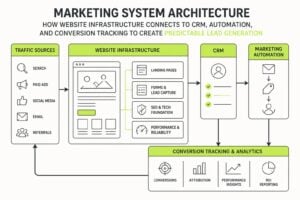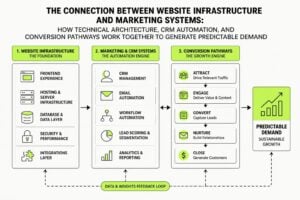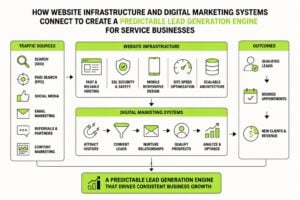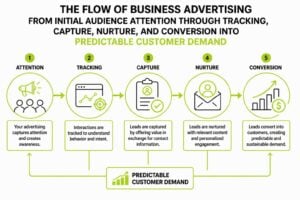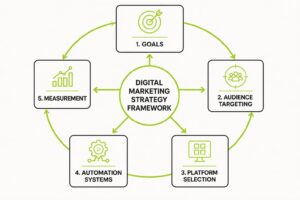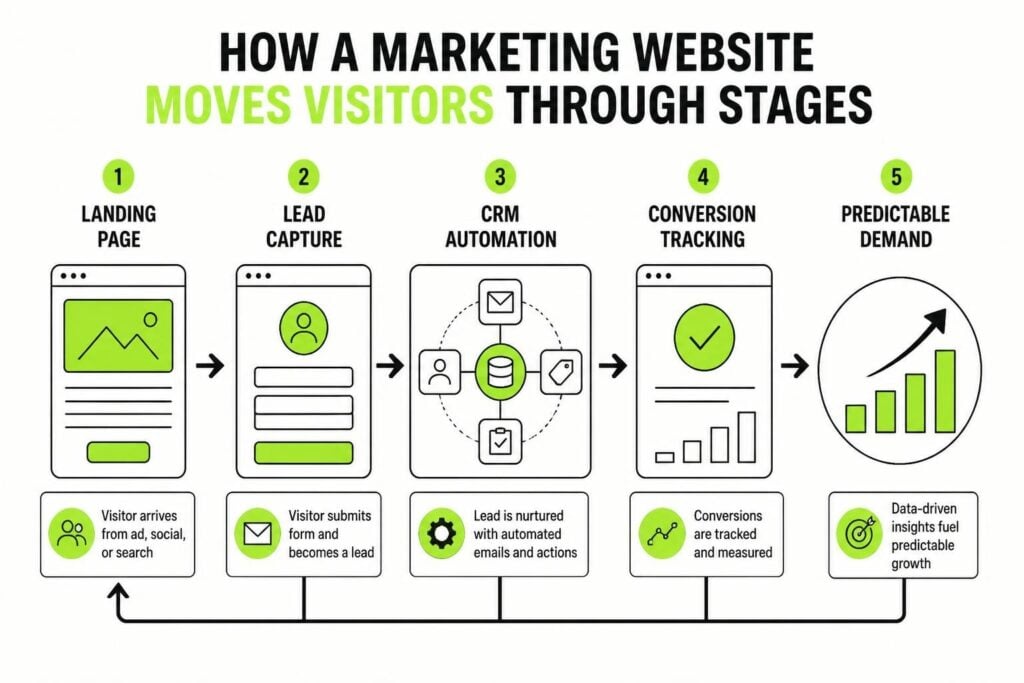
A marketing website isn't just a digital brochure. It's the front door to your sales system, the place where attention becomes interest, and interest turns into leads. For service-based businesses, your website either builds trust and captures demand, or it leaks potential clients straight to your competitors. The difference comes down to structure, clarity, and intent. Most business websites fail because they're built to inform, not convert. A proper marketing website does both.
What Makes a Marketing Website Different
A standard website tells people what you do. A marketing website shows them what happens next.
The shift is subtle but critical. Every page, headline, and call to action exists to move someone closer to a decision. That means your homepage isn't a portfolio. It's a filter. Your service pages aren't feature lists. They're case builders. Your contact page isn't a form dump. It's the final step in a sequence you've been guiding since the first click.
Purpose Built for Conversion
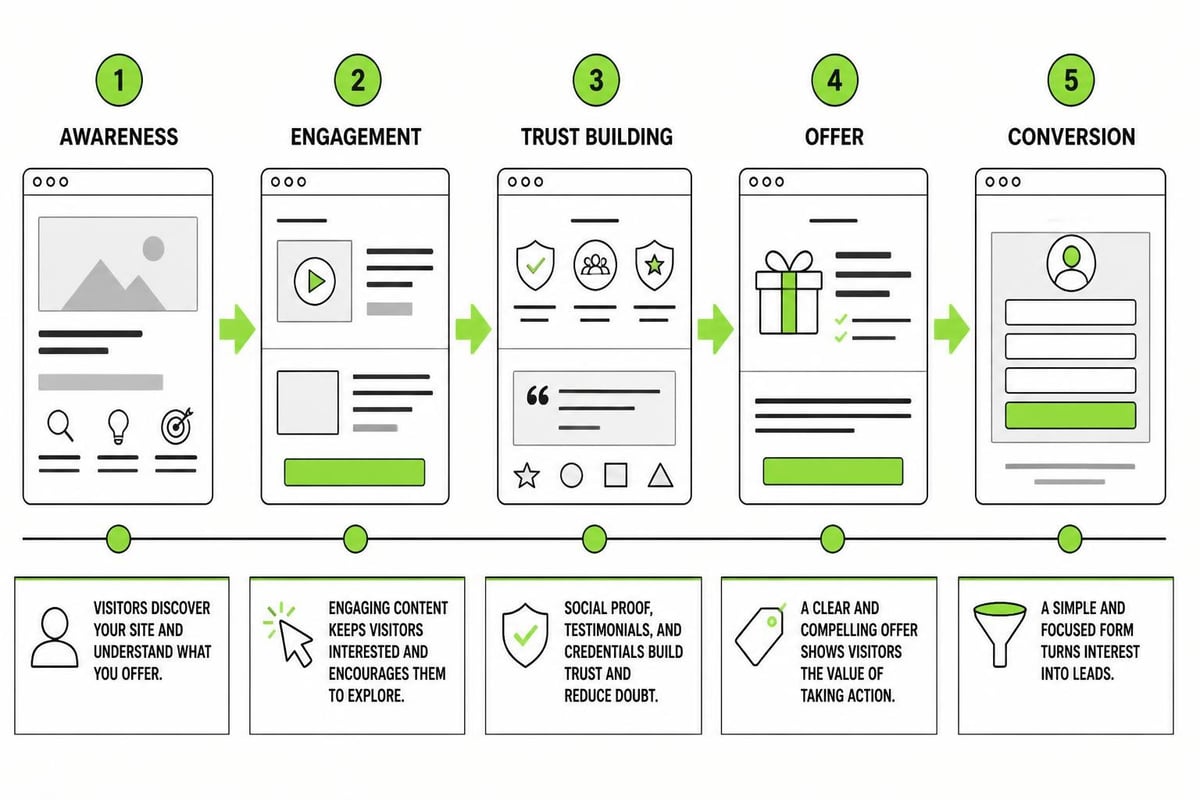
Marketing websites are designed with a clear outcome in mind. That outcome is almost always lead capture. Whether it's a booked call, a downloaded guide, or an email signup, the site is structured to make that action feel like the logical next step.
This intent shapes everything:
- Navigation is simplified to reduce decision fatigue
- Copy speaks directly to a defined audience and their pain points
- Offers are placed at natural decision points, not scattered randomly
- Forms ask only for what's needed to start a conversation
- Trust signals like testimonials, case studies, and credentials appear where doubt lives
A well-built marketing website doesn't trick people into converting. It removes friction, answers objections, and makes the path forward obvious.
The Core Pages Every Marketing Website Needs
Not every page carries the same weight. Some pages do the heavy lifting. Others exist to answer specific questions or satisfy search intent. Here's the structure that works for most service businesses.
| Page Type | Primary Goal | Key Elements |
|---|---|---|
| Homepage | Filter and direct traffic | Clear value prop, audience qualifier, primary CTA |
| Service pages | Educate and convert | Problem/solution framework, benefits, social proof |
| About page | Build trust and credibility | Story, values, proof you're real and capable |
| Contact page | Capture leads | Simple form, clear next steps, response expectation |
| Case studies / Portfolio | Demonstrate results | Specific outcomes, client stories, measurable wins |
| Resources / Blog | Attract and nurture | SEO-driven content, email capture, authority building |
Your homepage does the sorting. It tells the right people they're in the right place and pushes the wrong people away. That's not rude. It's efficient. If you try to speak to everyone, you convert no one.
Service pages need to do more than describe what you offer. They need to connect the dots between a visitor's problem and your solution. That means leading with the pain point, not your process. The homepage design principles from Nielsen Norman Group lay out the UX fundamentals that make this work.
Trust Signals That Actually Matter
People don't trust easily online, and they shouldn't. Your job is to prove you're worth their attention before asking for their email or their time.
Real trust signals include:
- Client logos from recognisable brands (if you have them)
- Testimonials that mention specific outcomes, not vague praise
- Case studies with numbers, timelines, and named clients
- Certifications or credentials that mean something to your audience
- Clear contact information with real people, not just forms
Fake trust signals include stock photos of "your team," made-up awards, and testimonials that sound like ad copy. People can smell these from a mile away.
Technical Foundations That Support Marketing Goals
A beautiful site that loads slowly or breaks on mobile isn't a marketing website. It's a liability. Technical performance directly impacts trust, conversions, and how Google ranks your pages.
Speed and Page Experience
Google's Page Experience signals include Core Web Vitals, mobile usability, and HTTPS. These aren't just SEO factors. They're user experience factors. If your site takes more than three seconds to load, you've already lost a chunk of your traffic.
Fast sites convert better because they feel more professional. Slow sites create doubt. Why would someone trust you with their business if you can't even load a webpage?
Key metrics to track:
- Largest Contentful Paint (LCP) should be under 2.5 seconds
- First Input Delay (FID) should be under 100 milliseconds
- Cumulative Layout Shift (CLS) should be under 0.1
These aren't abstract. They measure how quickly your page becomes usable and how stable it is while loading. Tools like Google PageSpeed Insights and GTmetrix will show you where you're bleeding speed.
Mobile Responsiveness
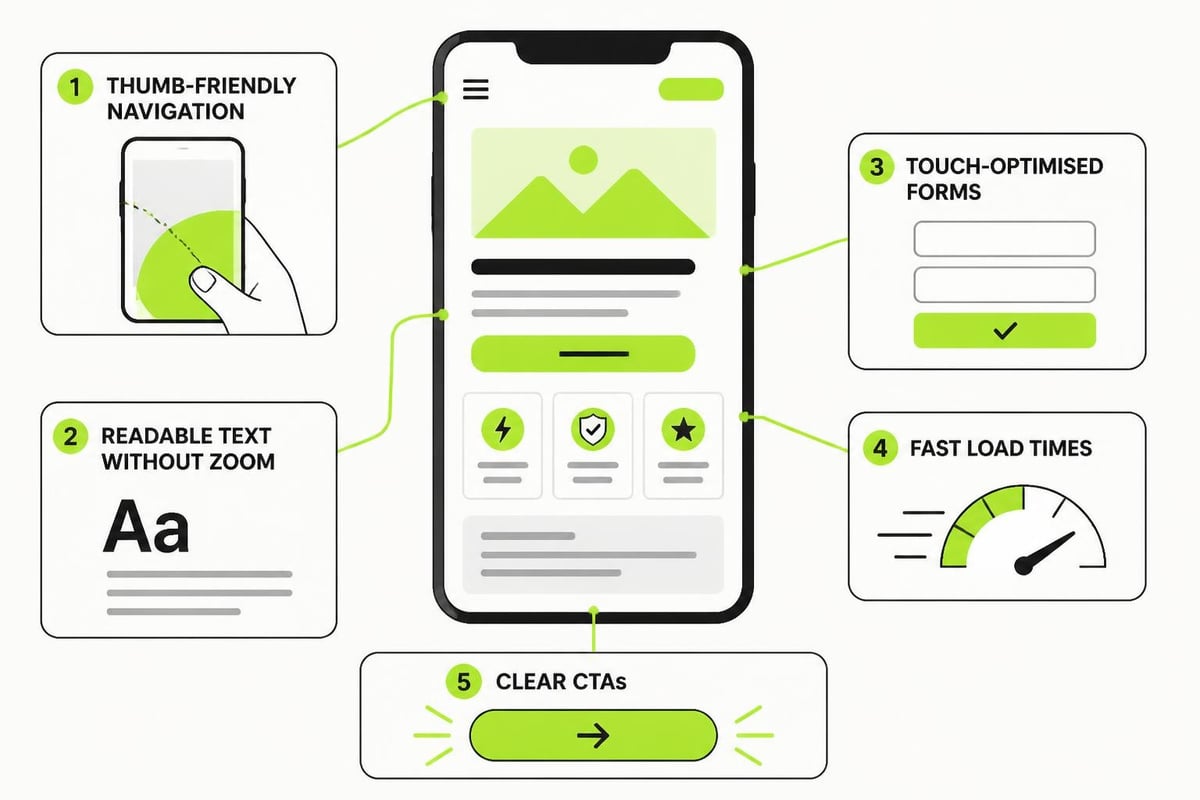
More than half your traffic will come from mobile devices. If your marketing website doesn't work perfectly on a phone, you're turning away the majority of your audience.
Responsive design isn't optional anymore. It's table stakes. That means your layout, navigation, forms, and CTAs all need to adapt to smaller screens without losing clarity or function.
SEO and Content Strategy for Marketing Websites
A marketing website that no one finds is just expensive hosting. SEO makes your site discoverable. Content makes it valuable. Together, they turn strangers into visitors and visitors into leads.
On-Page SEO Essentials
Every page on your marketing website should be optimised for a specific search intent. That means choosing one primary keyword per page and structuring your content around it.
Basic on-page SEO includes:
- Title tags that include your target keyword and stay under 60 characters
- Meta descriptions that summarise the page and encourage clicks (140-150 characters)
- Headings (H1, H2, H3) that structure content logically and include variations of your keyword
- Alt text on images that describes what's shown and includes relevant terms where natural
- Internal links that connect related pages and guide visitors deeper into your site
- URL structure that's clean, readable, and keyword-friendly
The Ahrefs SEO guide breaks down the technical and content-focused tactics that actually move the needle. For a detailed audit process, Semrush’s SEO audit checklist is a solid starting point.
Content That Converts
Good content answers the questions your audience is already asking. Great content does that while positioning your service as the logical solution.
For service businesses, the highest-converting content usually falls into a few categories:
- How-to guides that solve specific problems your audience faces
- Comparison posts that position your approach against alternatives
- Case studies that demonstrate your process and results
- Thought leadership that shows you understand the nuances of your space
A structured content plan is part of what makes a marketing system work long-term. You're not just writing blog posts. You're building an asset library that attracts, educates, and qualifies leads while you sleep.
Lead Capture and Conversion Infrastructure
A marketing website without lead capture is just a blog. The infrastructure you build around forms, CTAs, and follow-up is what turns traffic into pipeline.
Offer Strategy
People don't give you their email for nothing. You need to offer something valuable enough to justify the exchange. For service businesses, that usually means information or access.
Common lead magnets include:
- Guides or templates that solve a narrow problem
- Assessments or audits that reveal gaps they didn't know they had
- Webinars or workshops that teach a high-value skill
- Calculators or tools that deliver instant, personalised insights
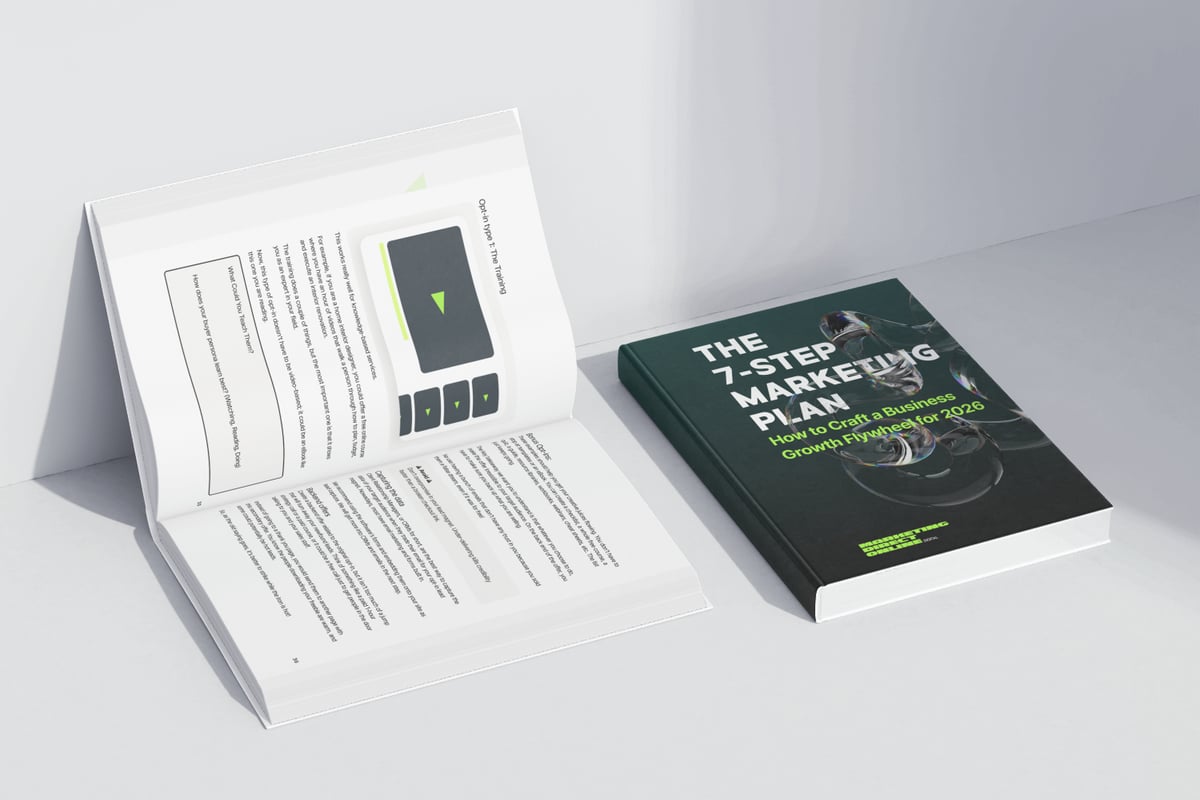
The 7-Step Marketing Plan is a practical framework that helps businesses build a repeatable system for generating and nurturing leads. It covers everything from goal setting and buyer personas to CRM automation and referral loops, creating a flywheel that compounds over time. If you're looking for a structured approach to lead generation, the 7-Step Marketing Plan is a solid place to start.
CRM and Automation
Once someone fills out a form, what happens next? If the answer is "nothing automated," you're leaving money on the table.
Your marketing website should feed directly into a CRM. That CRM should trigger a nurture sequence. That sequence should move leads toward a call or purchase without manual intervention.
| Stage | Action | Automation |
|---|---|---|
| Lead capture | Form submission | Add to CRM, tag by source |
| Immediate follow-up | Confirmation email | Send lead magnet, set expectations |
| Nurture sequence | Educational emails | Deliver value, build trust, introduce offer |
| Conversion | Booked call or sale | Calendar link, sales handoff |
This isn't complicated. It's just structured. The businesses that scale are the ones that build systems, not the ones that rely on remembering to follow up.
Design, Trust, and Brand Consistency
Your marketing website is a brand touchpoint. Every colour, font, image, and headline either reinforces your positioning or dilutes it.
Visual Hierarchy and Clarity
Good design isn't about looking pretty. It's about making the most important things impossible to miss. That means using size, contrast, and whitespace to guide attention.
Your headline should be the biggest text on the page. Your CTA button should stand out from everything else. Your navigation should be simple enough that a first-time visitor knows where to go without thinking.
Clarity beats creativity every time. If someone has to work to understand what you do or what to do next, they'll leave.
Accessibility and Inclusivity
An accessible marketing website isn't just ethical. It's good business. Accessibility improvements often improve usability for everyone, not just people with disabilities.
Following the Web Content Accessibility Guidelines (WCAG) means your site works for more people. That includes:
- Proper heading structure for screen readers
- Sufficient colour contrast for readability
- Keyboard navigation for people who can't use a mouse
- Alt text on images for visually impaired users
- Captions or transcripts for video and audio content
An accessible site also tends to rank better. Google rewards sites that work well for everyone.
Tracking, Measurement, and Iteration
You can't improve what you don't measure. Your marketing website should be instrumented to track the metrics that matter.
Key Metrics to Monitor
Not all traffic is equal. Not all conversions carry the same weight. Focus on the numbers that directly connect to revenue.
Traffic metrics:
- Organic search traffic from Google and other search engines
- Referral traffic from backlinks and partner sites
- Direct traffic from people who already know your brand
Engagement metrics:
- Bounce rate (high bounce = poor targeting or weak content)
- Time on page (longer time = higher engagement)
- Pages per session (more pages = deeper interest)
Conversion metrics:
- Form submissions (lead capture rate)
- CTA click-through rate (how compelling your offers are)
- Conversion rate by traffic source (which channels deliver quality leads)
Tools like Google Analytics, Hotjar, and your CRM reporting will show you where the gaps are. Most businesses find their conversion rate improves when they focus on message clarity and reducing form friction, not by redesigning the whole site.
Privacy, Compliance, and Data Use
With privacy regulations tightening globally and third-party cookies fading out, how you collect and use data on your marketing website matters more than ever. The IAB State of Data report covers the shift to cookieless measurement and addressability, which impacts how you track and attribute conversions.
Your site should have a clear privacy policy, a cookie consent mechanism where required, and first-party tracking in place. Building your own data infrastructure through forms, CRM, and email lists protects you from platform changes and gives you direct access to your audience.
What a High-Performing Marketing Website Feels Like
When everything works together, your marketing website becomes a quiet growth engine. It attracts the right people through search and referrals. It qualifies them with clear messaging and smart offers. It captures their details and moves them into a nurture system. It converts attention into pipeline without needing you to chase every lead manually.
The businesses that grow predictably are the ones that treat their website as infrastructure, not decoration. They test, measure, and improve based on data. They keep messaging tight and offers valuable. They connect the dots between traffic, conversion, CRM, and sales. For more context on how marketing and design intersect to create this kind of clarity, the principles are straightforward but require deliberate execution.
A marketing website isn't a project you finish. It's a system you refine. The foundations (speed, SEO, design, lead capture) don't change much. The tactics (offers, copy, CTAs) evolve as you learn what works. That's the difference between a site that ages badly and one that compounds value over time.
Digital CX research from Forrester’s analysis highlights how businesses are shifting focus toward customer experience and personalisation. The sites that win in 2026 are the ones that combine strong fundamentals with smart, data-informed iteration.
Building a marketing website that actually generates leads and sales comes down to structure, clarity, and ruthless focus on what converts. If your current site isn't doing the work it should be, the problem is usually fixable. At MDO Digital, we design high-trust websites, build CRM and automation infrastructure, and run data-driven marketing that turns attention into predictable demand. If you're ready to stop leaking leads and start building a system that scales, let's talk.