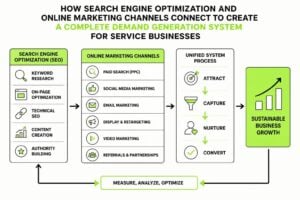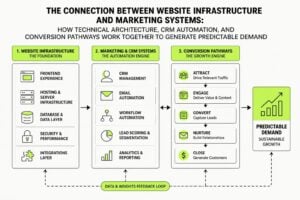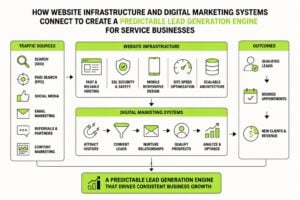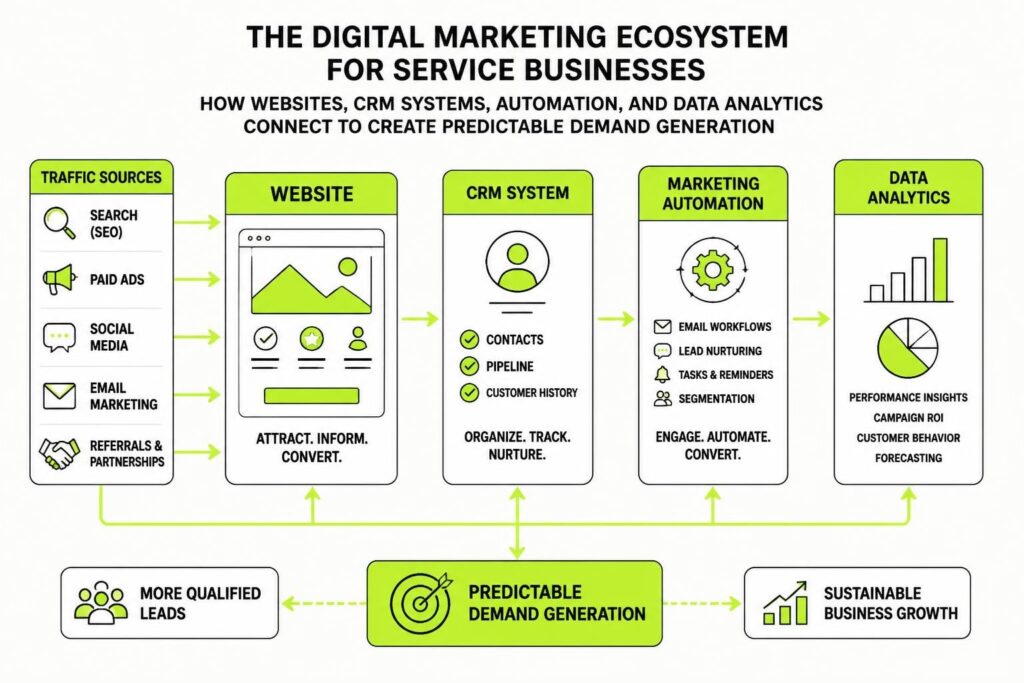
Most service businesses don't need more digital marketing solutions. They need fewer, better ones that actually talk to each other. The typical setup looks like a Frankenstein project: a website that doesn't capture leads properly, a CRM nobody updates, scattered advertising campaigns with no clear owner, and analytics that raise more questions than they answer. It's chaos dressed up as marketing. Real digital marketing solutions aren't about adding more tools or tactics. They're about building a system where every piece serves a purpose, protects your leads, and creates compound growth over time. That's the difference between staying busy and actually scaling.
What Digital Marketing Solutions Actually Mean in 2026
The term gets thrown around like confetti at a wedding, but digital marketing solutions worth paying for solve specific problems. They're not vague promises about "increasing your online presence" or "boosting engagement."
Good solutions address three core challenges:
- Getting found by people who actually need what you sell
- Converting attention into qualified leads you can follow up with
- Nurturing relationships until prospects are ready to buy
Everything else is noise. A website redesign isn't a solution if it doesn't improve conversion rates. Social media content isn't a solution if it doesn't connect to your CRM. Paid advertising isn't a solution if you can't track which leads turned into revenue.
The evolution of digital marketing has made it easier to measure what works, but harder to cut through the options. You can now track a customer's journey from first click to final invoice, but only if your systems are connected properly.
The Integration Problem Nobody Talks About
Most businesses collect tools like they're going out of fashion. WordPress for the website. Mailchimp for emails. Google Ads for traffic. Facebook for organic reach. HubSpot or ActiveCampaign or whatever the consultant recommended.
Each tool works fine on its own. The disaster happens in the gaps between them.
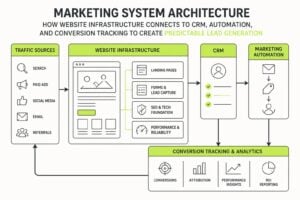
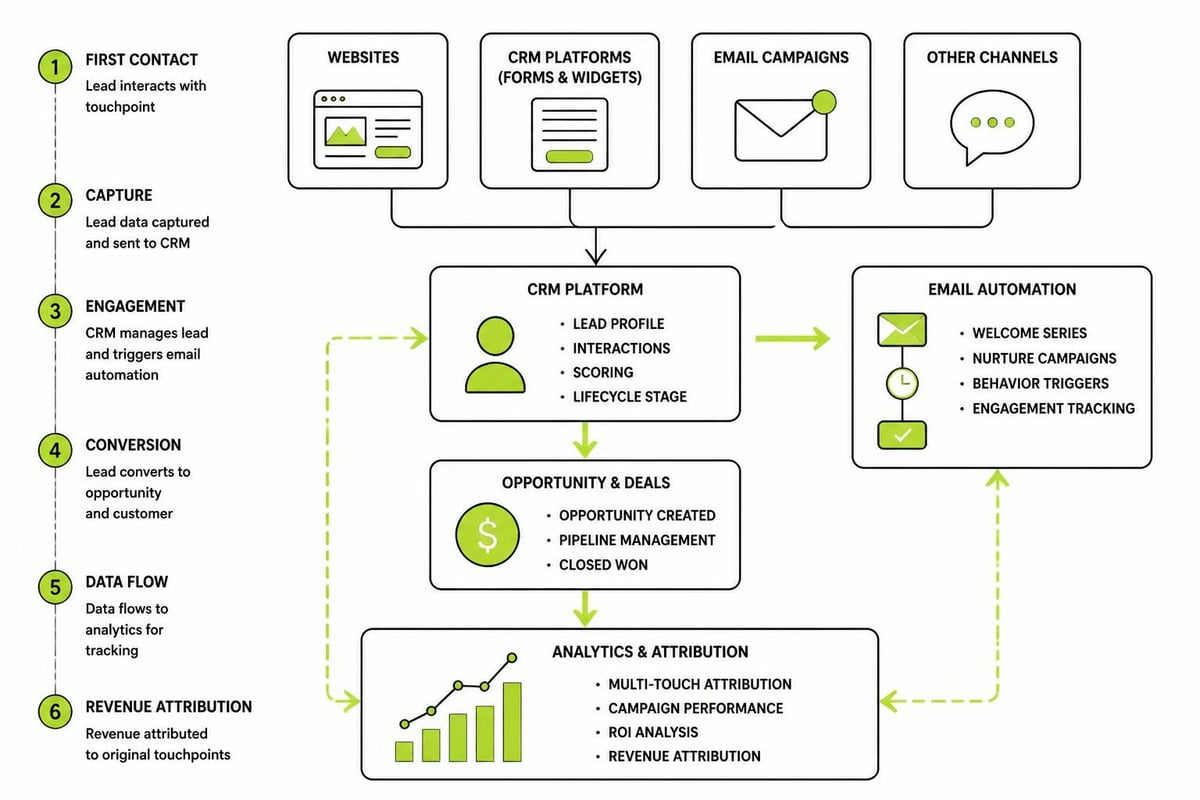
When your website form doesn't sync with your CRM, leads disappear. When your email platform doesn't know what ads someone clicked, you send the wrong message. When your analytics can't attribute revenue to specific campaigns, you waste budget on channels that don't convert.
Real digital marketing solutions connect the dots. They ensure data flows from one system to the next without manual copying and pasting. They create a single source of truth about each lead, so everyone on your team sees the same information.
Building a Marketing System That Compounds
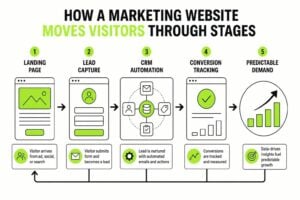
The best digital marketing solutions create flywheel effects. Each part makes the next part work better. Your website brings in leads. Your CRM qualifies them. Your nurture campaigns educate them. Your sales process converts them. Your client experience generates referrals and reviews that make your website more credible.
It's a loop that gets stronger over time, but only if you build it with intention.
The Seven Components That Matter
Every effective marketing system contains these elements, whether you're a plumber or a consultant:
- Clear positioning that explains who you help and what problem you solve
- A platform where your ideal clients actually spend time
- Lead magnets that trade value for contact information
- CRM infrastructure that captures and organizes every lead
- Automated nurture that builds trust before the sales conversation
- Exceptional delivery that creates word-of-mouth momentum
- Review and referral systems that feed new leads back into the funnel
Miss any one of these and the flywheel stalls. Build them all and you've got a machine that runs without you babysitting every campaign. The 7-Step Marketing Plan framework walks through exactly how these pieces connect, giving you a practical roadmap instead of vague theory.

Most service businesses already do three or four of these steps. The gap between average results and predictable growth lives in the missing pieces.
Choosing Channels That Actually Fit Your Business
Not every business needs TikTok. Not every service makes sense on LinkedIn. Digital marketing solutions fail most often because someone sold you on a channel that doesn't match how your clients buy.
Matching Tactics to Your Buyer Journey
| Channel Type | Best For | Requires |
|---|---|---|
| SEO & Content | Long consideration cycles, high trust needed | Time, expertise, patience |
| Paid Search | Ready-to-buy searches, clear intent | Budget, conversion tracking |
| Social Organic | Relationship-building, visual services | Consistency, engagement |
| Social Paid | Targeting specific demographics | Creative assets, testing budget |
| Email Nurture | Converting warm leads, client retention | CRM, automation setup |
The IAB State of Data 2025 guide shows how privacy changes and addressability challenges have shifted channel effectiveness. What worked in 2022 doesn't always work now.
Your job isn't to be everywhere. It's to dominate the channels where your specific clients look for help.
Ask three questions before committing to any channel:
- Where do my best current clients say they found me?
- Can I track leads from this channel into actual revenue?
- Do I have the resources to do this consistently for six months?
If you can't answer yes to all three, pick a different channel. Better to own one platform completely than spread yourself thin across five.
The Content Question
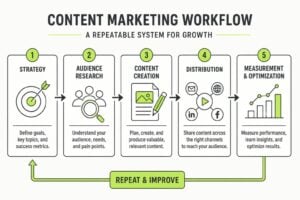
Every digital marketing solution eventually comes back to content. Ads need copy. Websites need pages. Email campaigns need sequences. Social platforms need posts.
Most businesses treat content as a chore, cranking out generic blog posts or recycling the same update across platforms. That's not a solution. That's busywork.
Good content does specific jobs:
- Educational content builds trust before the sales conversation
- Problem-focused content attracts searches from people ready to buy
- Client story content provides social proof and overcomes objections
- Thought leadership content differentiates you from cheaper competitors
The key is matching content types to where someone sits in your funnel. Don't write the same piece for a cold visitor and a warm lead considering two quotes. According to Ahrefs’ semantic SEO guide, search engines now reward content that thoroughly answers intent, not just keywords.
Measurement That Actually Informs Decisions
Analytics dashboards are often glorified vanity metric collections. Page views, impressions, engagement rates, all lovely numbers that don't tell you whether your marketing makes money.
Digital marketing solutions need measurement frameworks that connect activity to revenue.
The Metrics That Matter
Track these, ignore most everything else:
- Lead volume by channel: Where qualified prospects come from
- Cost per lead: What you pay to acquire each contact
- Lead-to-customer rate: What percentage of leads actually buy
- Customer acquisition cost: Total marketing spend divided by new customers
- Lifetime value: Average revenue per client over the relationship
- Channel ROI: Revenue generated minus channel costs
When you track these consistently, patterns emerge. You spot which channels bring leads that convert versus leads that waste time. You identify bottlenecks where prospects drop off. You calculate exactly how much you can afford to spend acquiring a new customer.
The Nielsen 2024 Annual Marketing Report emphasizes cross-media measurement and attribution in fragmented ecosystems. Modern buyers don't follow linear paths anymore. They might see an ad, read three blog posts, sign up for a webinar, ignore your emails for two months, then suddenly book a call.
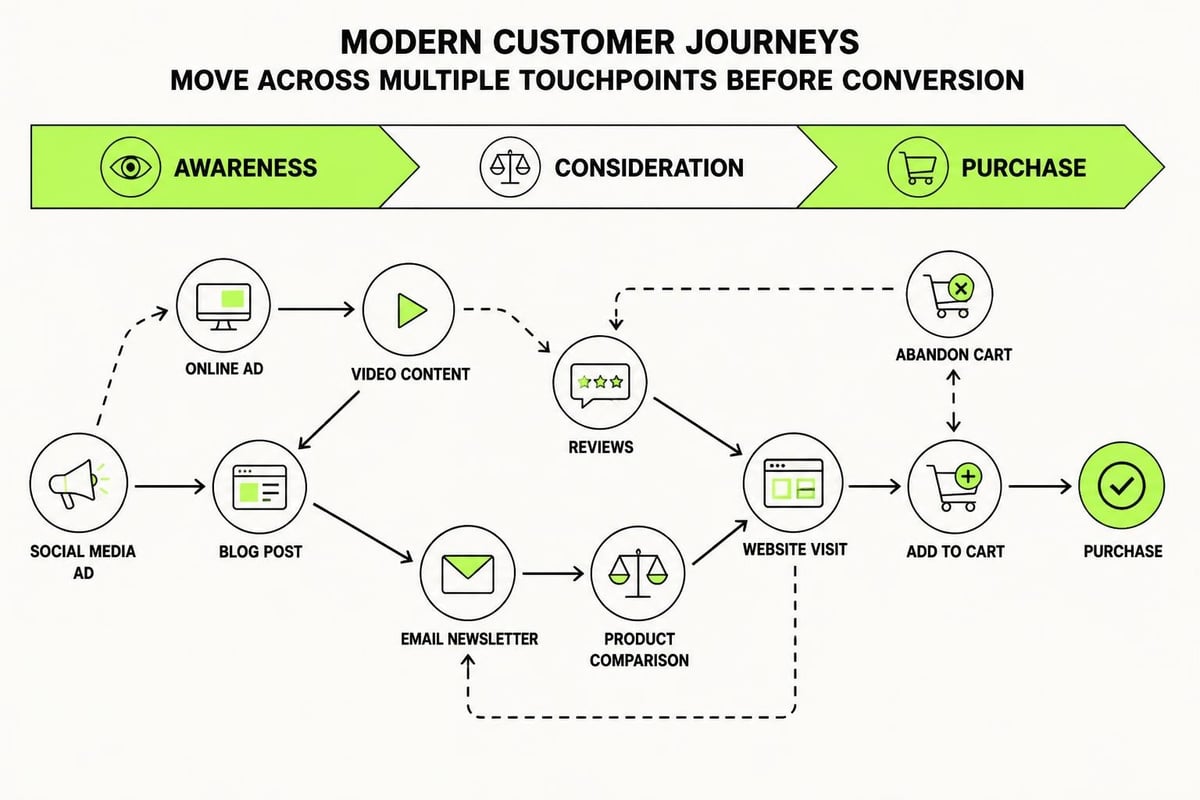
Your measurement system needs to handle that complexity without requiring a data science degree to interpret.
Setting Up Proper Attribution
Most small businesses use last-click attribution by default. Whatever channel got the final touch before someone converts gets all the credit. It's simple but wildly misleading.
That SEO blog post someone read three months ago deserves some credit. So does the LinkedIn post that initially caught their attention. And the email sequence that kept you top-of-mind.
Multi-touch attribution spreads credit across the journey. First-touch models credit what started the relationship. Linear models split credit evenly. Time-decay models weight recent interactions higher.
None are perfect, but all are better than last-click. The WARC Effective 100 summary shows effectiveness research from global campaigns, demonstrating how proper attribution changes budget allocation significantly.
For most service businesses, a simple approach works fine:
- Tag every marketing link with UTM parameters
- Track first touch and last touch in your CRM
- Survey new clients about how they found you
- Review the full contact timeline before attributing success
It's not perfect science, but it's infinitely better than guessing.
Common Pitfalls in Digital Marketing Solutions
The same mistakes show up repeatedly, regardless of industry or business size. Recognizing them helps you avoid wasting months and budget.
Treating Leads Like Commodities
Not all leads are equal. The person who downloaded a checklist isn't the same as someone who watched three webinars and requested a quote. Your CRM and automation should reflect that.
Segment leads by:
- Source channel
- Content consumed
- Engagement level
- Fit with ideal client profile
- Timeline to purchase
Then nurture each segment differently. Hot leads get direct sales outreach. Cold leads get educational content. Poor-fit leads get politely filtered out instead of wasting your sales team's time.
Ignoring the Mobile Experience
More than half your traffic comes from phones. If your forms are painful to fill out on mobile, your lead magnets don't display properly, or your site loads slowly on 4G, you're hemorrhaging potential clients.
Test every conversion point on an actual phone, not just in Chrome's mobile view. Better yet, hand your phone to someone unfamiliar with your business and watch them try to contact you. The friction points become obvious fast.
Building on Rented Land
Social media platforms are powerful distribution channels. They're terrible foundations for your entire digital presence. When Facebook changes its algorithm or LinkedIn kills a feature you relied on, your access to your audience evaporates.
Own your infrastructure:
- Your website and hosting
- Your email list and CRM data
- Your client database and history
- Your content and intellectual property
Use social platforms to drive traffic back to properties you control. Build your digital presence on assets that can't be algorithmically throttled or shut down overnight.
The Build Versus Buy Decision
Every business faces the question: Do we build digital marketing solutions in-house or hire someone to handle it?
There's no universal answer, but the trade-offs are predictable.
| Approach | Advantages | Disadvantages |
|---|---|---|
| In-house | Complete control, institutional knowledge | Requires hiring, training, managing |
| Agency | Expertise, systems, outside perspective | Monthly retainer, less control |
| Freelancers | Flexible, lower cost than agency | Coordination overhead, variable quality |
| DIY | Lowest cost, total ownership | Steep learning curve, time-intensive |
Most service businesses do best with a hybrid model. Own the strategy and relationships. Get expert help implementing technical infrastructure. Keep content creation in-house once systems are proven.
The worst option is dabbling. Hiring an agency but micromanaging every decision. Bringing on freelancers but never briefing them properly. Building systems yourself but never finishing them.
Pick an approach, commit to it for at least six months, then evaluate. Marketing systems take time to build momentum. Jumping between approaches every quarter guarantees mediocre results.
Making Digital Marketing Solutions Work Long-Term
The hardest part isn't getting started. It's maintaining consistency when the initial excitement fades and you're three months in without dramatic results yet.
Building Sustainable Rhythms
Weekly:
- Review lead quality and volume
- Update CRM with notes from sales conversations
- Publish at least one piece of valuable content
- Check campaign performance and pause what's broken
Monthly:
- Analyze channel ROI and shift budget accordingly
- Review conversion rates at each funnel stage
- Update nurture sequences based on common questions
- Plan next month's content and campaigns
Quarterly:
- Deep-dive attribution analysis
- Refresh messaging based on what's resonating
- Audit technical infrastructure for broken links and forms
- Test new channels or tactics as experiments
None of this requires heroic effort. It does require showing up consistently, which most businesses struggle with more than the actual work.
When to Pivot and When to Persist
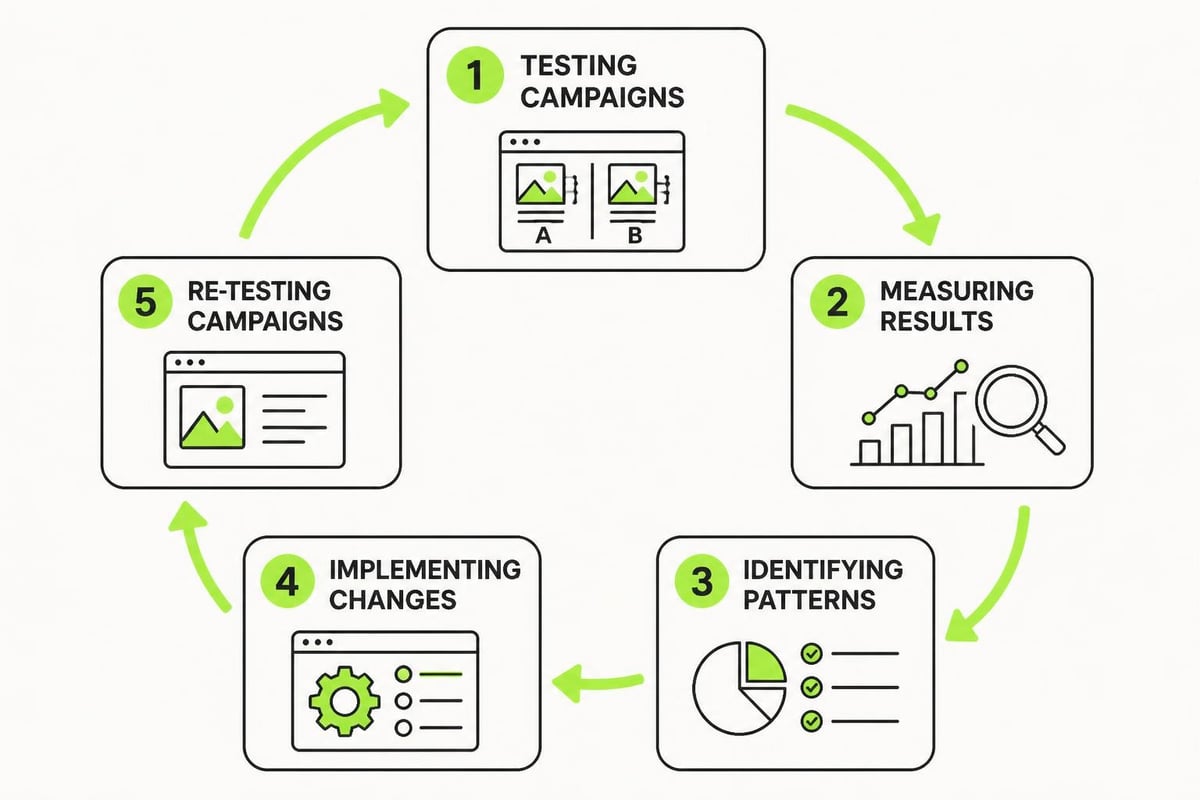
Digital marketing solutions need time to work, but not everything deserves infinite patience. Use these signals to decide whether to double down or change direction:
Keep going if:
- Lead volume is growing, even if conversion rates are flat
- Engagement metrics trend upward over three months
- Sales feedback confirms leads are increasingly qualified
- Channel costs are stable or decreasing
Change something if:
- Three months of consistent effort produces zero qualified leads
- Cost per lead increases despite optimization attempts
- Conversion rates drop below industry benchmarks
- Sales team consistently reports leads are wrong fit
The branding and digital marketing connection matters here. Sometimes the issue isn't your tactics but your positioning. If leads consistently ghost after learning more about your services, your messaging might attract the wrong people.
Integration With Business Operations
Digital marketing solutions don't exist in a vacuum. They connect directly to how your business operates, delivers services, and manages growth.
The CRM as Central Nervous System
Your CRM should be the single source of truth for every client and prospect interaction. Not just contact details, but the full context:
- Which marketing campaigns they engaged with
- What content they consumed
- Sales conversations and proposal history
- Project delivery notes and client satisfaction
- Upsell opportunities and referral potential
When marketing, sales, and delivery all update the same system, everyone works from the same playbook. The handoff from marketing to sales gets smooth. Sales can brief delivery teams properly. Client success can identify expansion opportunities.
Most businesses use about 10% of their CRM's capability. The gap isn't usually the tool, it's the discipline to keep it updated and the processes that make updates automatic.
Automation That Doesn't Feel Robotic
Marketing automation done poorly feels spammy and impersonal. Done well, it feels thoughtful and timely.
The difference is context and relevance. A generic "just checking in" email three days after someone downloads a guide is noise. A targeted resource that directly addresses the next logical question in their buying journey is helpful.
Good automation triggers include:
- Specific actions taken (watched pricing page, downloaded comparison guide)
- Time-based milestones (3 weeks since initial contact, 6 months since last project)
- Stage changes in your sales process
- External events relevant to your service
Each automated touch should provide value or advance the relationship. If you can't articulate why this message helps this person right now, don't send it.
The Realistic Timeline for Results
Everyone wants immediate results. Digital marketing solutions take longer than you hope but less time than you fear.
Month 1-2: Setup and foundation. Building infrastructure, connecting systems, launching initial campaigns. Few leads, mostly learning.
Month 3-4: Early traction. Campaigns optimize, content starts ranking, initial leads convert. Still not profitable on marketing spend.
Month 5-6: Momentum builds. Lead volume increases, conversion rates improve, CAC drops. Marketing starts paying for itself.
Month 7-12: Compounding returns. SEO compounds, referrals increase, retargeting audiences grow. Marketing becomes a reliable growth channel.
Year 2+: Systematic scaling. You know what works, can predict lead flow, and invest confidently in expansion.
This assumes consistent execution and reasonable expectations. Industries with longer sales cycles take longer to show results. High-ticket services need fewer leads but more nurture time. The business to business digital marketing timeline often extends because of organizational buying processes.
Most businesses quit somewhere in months 3-5, right before things start working. That's usually when you should be doubling down instead.
Digital marketing solutions work when they're built as systems, not collections of random tactics. Service businesses that remove chaos, protect leads, and create structured growth will always outperform competitors chasing the latest platform or hack. If you're ready to build marketing that compounds instead of just keeping you busy, MDO Digital specializes in exactly that: high-trust websites, connected CRM infrastructure, and data-driven campaigns that turn attention into predictable demand. The difference is in the execution.