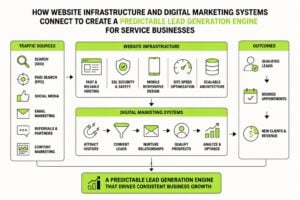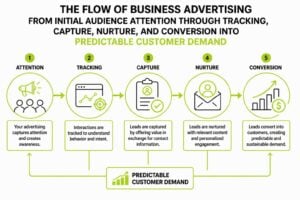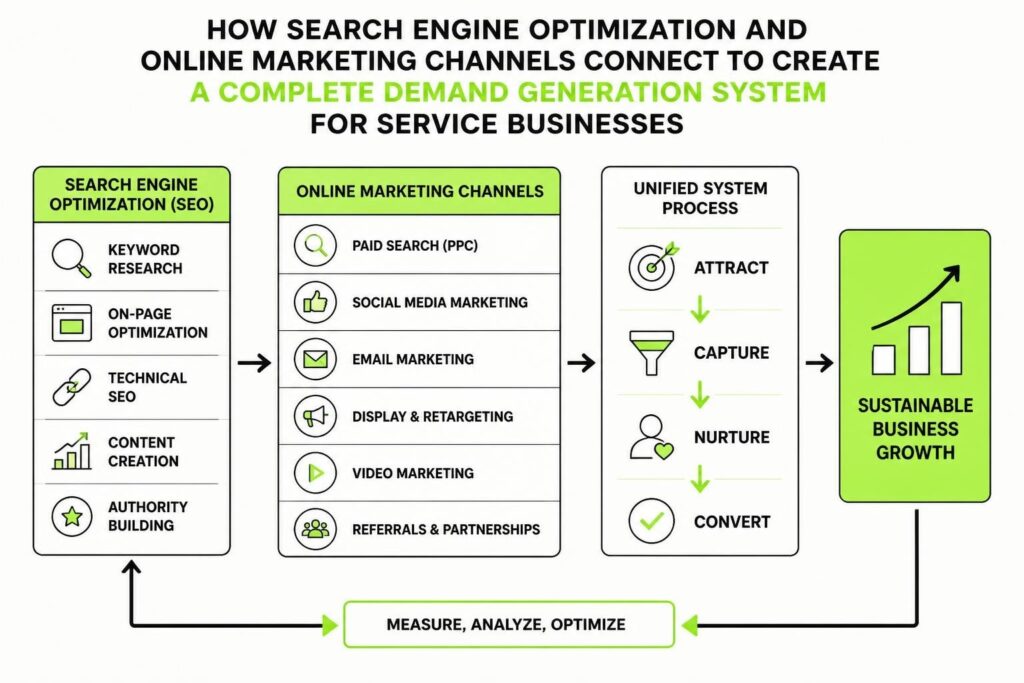
Most service businesses treat seo and online marketing as separate activities. SEO gets handed to someone who fiddles with keywords. Marketing becomes a scattergun of social posts and occasional ads. The result? Fragmented effort, inconsistent leads, and no clear path from visibility to revenue. The truth is simpler. SEO and online marketing aren't different disciplines. They're parts of a single system that either works together or wastes your time. When you structure them properly, they create compounding growth. When you don't, you're just making noise.
Why SEO and Online Marketing Need Each Other
SEO without marketing is like building a shopfront in the middle of nowhere. You might rank, but if no one's searching for what you offer or your content doesn't convert, the traffic means nothing. Online marketing without SEO is burning budget to rent attention. The moment you stop paying, you disappear.
Together, they form something more useful. SEO builds the foundation for long term visibility and trust. It's your owned asset, the thing that keeps working while you sleep. Online marketing amplifies that foundation, tests messaging quickly, and captures demand before your organic presence catches up.
The Real Job of SEO
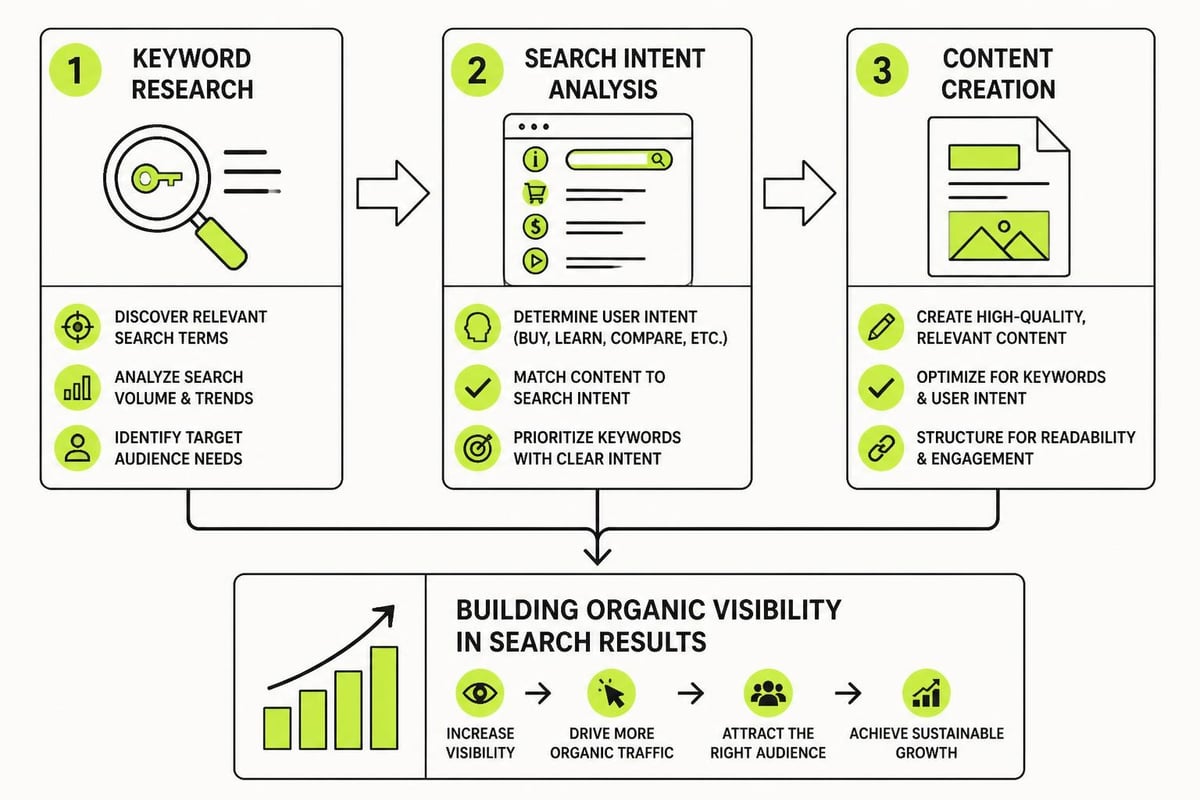
Search engine optimization isn't about gaming Google. It's about making your business discoverable to people actively looking for what you do. When someone searches "CRM setup for service business" or "branding agency for professional services," you either show up or you don't. That's the game.
SEO does three things well:
- Attracts high intent traffic from people already looking for solutions
- Builds authority through consistent, helpful content that ranks over time
- Creates owned assets that compound in value rather than expire when budgets run out
The mistake most businesses make is treating SEO as a technical checklist. Meta tags, alt text, sitemaps. Sure, those matter. But they're infrastructure, not strategy. The real work is understanding what your buyers search for, creating content that answers those questions better than anyone else, and structuring your site so Google can make sense of it. Google’s Search Central documentation explains the fundamentals if you want to go deeper.
What Online Marketing Actually Delivers
Online marketing is everything you do to get attention and move people toward a decision. Paid ads, email campaigns, social content, retargeting, partnerships. It's faster than SEO, more controllable, and easier to measure in the short term.
Where online marketing wins:
- Speed to market. You can test a message today and see results tomorrow.
- Audience targeting. Reach specific people based on behavior, demographics, or intent signals.
- Data feedback. Learn what resonates, what converts, and what to double down on.
The downside? It's rented land. Stop paying, stop showing up. That's why businesses that rely only on paid marketing end up on a treadmill. Revenue grows, but so does the ad spend needed to maintain it. The margin shrinks. The dependency deepens.
When you combine seo and online marketing, you get the best of both. Marketing buys you time while SEO builds equity. SEO feeds marketing with proven content and insights. They're not competitors. They're partners in a system.
Building a System That Connects SEO and Online Marketing
Most businesses jump straight into tactics. Run some ads, write a blog, hope it works. That's not a system. That's guessing. A proper system starts with clarity about who you're talking to, what they need, and how they make decisions. Then you build the infrastructure to support that journey.
Map the Buyer Journey
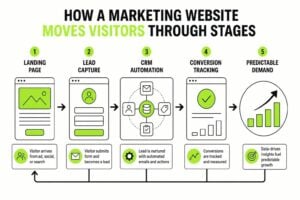
Your buyers move through stages. Unaware, problem aware, solution aware, product aware, decision ready. Different stages need different content and different channels. SEO typically captures people in the middle (problem and solution aware). Paid marketing can reach people earlier or later, depending on how you target.
| Stage | What They Need | SEO Role | Marketing Role |
|---|---|---|---|
| Problem Aware | Education, context | Blog posts, guides, how-to content | Social content, awareness ads |
| Solution Aware | Options, comparisons | Category pages, comparison articles | Retargeting, case studies |
| Decision Ready | Trust signals, proof | Service pages, reviews, testimonials | Direct response ads, email nurture |
Mapping this out gives you a structure. You're not just creating content or running ads. You're filling gaps in the journey so fewer people fall through the cracks.
Build the Infrastructure First
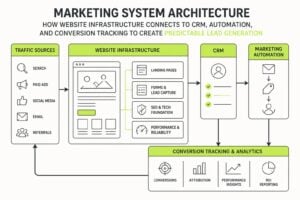
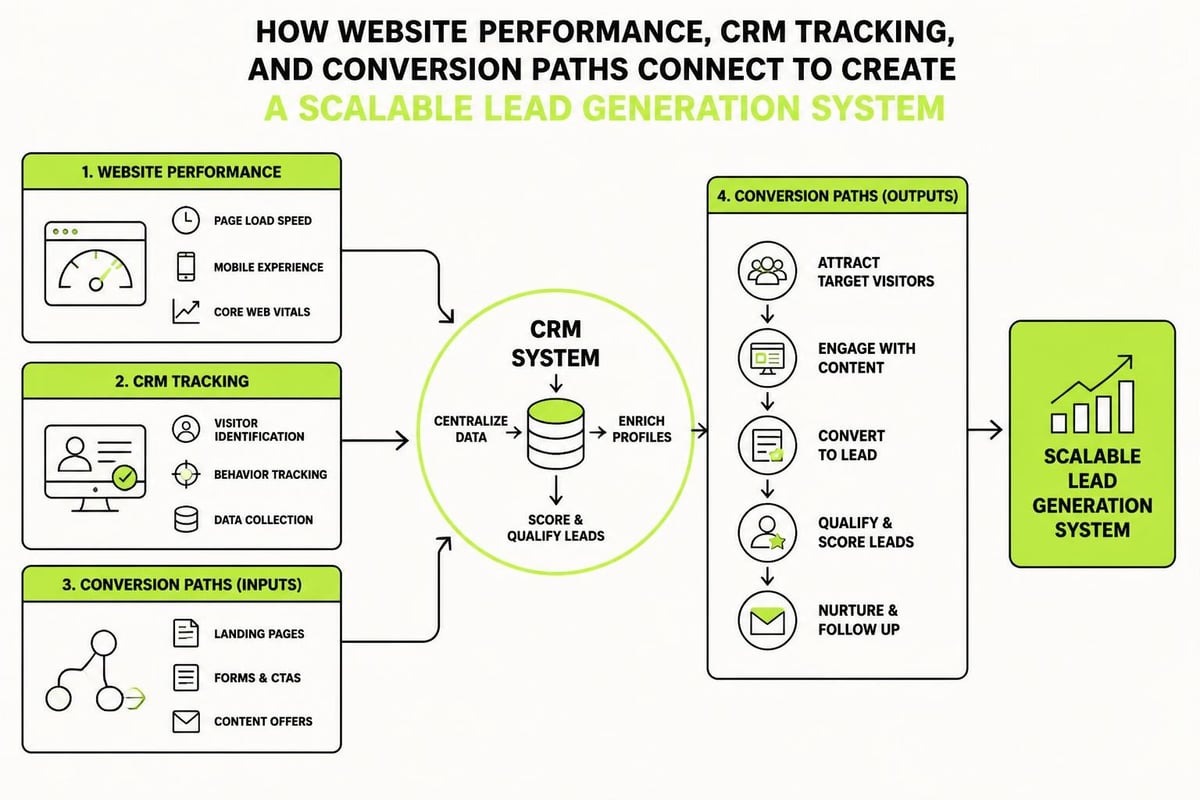
Before you chase traffic, make sure you can handle it. That means:
- A website that loads fast and works on mobile. Core Web Vitals matter for rankings and conversions. SISTRIX has a solid tutorial on measuring performance.
- Clear conversion paths. Every page should have a next step that makes sense for where the visitor is in their journey.
- CRM and tracking in place. If you can't track where leads come from or what happens to them, you're flying blind.
This isn't glamorous work, but it's the difference between a system that scales and one that leaks. You can drive all the traffic in the world, but if your site's slow, confusing, or doesn't capture leads properly, you're just wasting money.
Content as the Core Asset
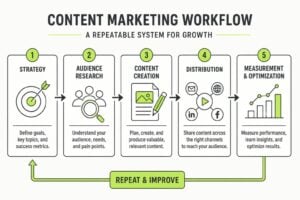
Content is where seo and online marketing overlap most naturally. Every piece of content you create can serve multiple purposes. A blog post optimized for search can become an email, a social post, a lead magnet, or ad copy. You're not creating once per channel. You're creating once and distributing strategically.
Good content does four jobs:
- Ranks for relevant search terms so people find you organically
- Establishes authority so people trust you when they arrive
- Captures contact information through lead magnets or newsletter signups
- Feeds your marketing channels with proven messaging and angles
The key is thinking in systems, not one-offs. Don't write a blog post and forget it. Promote it through email, share it on LinkedIn, use it as a landing page for ads, update it every six months to keep it fresh. That's how you get compound returns.
If you're building content from scratch, Ahrefs’ SEO best practices guide walks through keyword research and on-page optimization in detail. For ongoing strategy, Content Marketing Institute’s trends piece highlights where the industry is heading.
Integrating Paid and Organic Channels
One of the biggest missed opportunities in seo and online marketing is treating paid and organic as separate buckets. Different teams, different budgets, different goals. That's inefficient. The data from your paid campaigns should inform your SEO strategy, and your organic performance should shape where you spend ad budget.
Use Ads to Test and SEO to Scale
Paid ads give you fast feedback. You can test headlines, offers, and landing pages in days. That tells you what resonates before you invest months in content production. Once you know what works, create SEO content around those themes. You're not guessing. You're scaling what's already been validated.
Conversely, your top performing organic content reveals what people actually care about. If a blog post ranks well and converts, that's a signal. Build retargeting audiences around that content, or run ads to similar keywords where you don't rank yet.
Retargeting Closes the Gap
Most people don't convert on the first visit. They read an article, poke around your site, then leave. Retargeting brings them back. It's one of the highest ROI tactics in online marketing because you're only paying to reach people who've already shown interest.
Combine this with strong SEO content, and you've got a loop. Organic traffic comes in through helpful articles. Those visitors get tagged for retargeting. Over the next few weeks, they see ads reminding them you exist, showcasing case studies, or offering a consultation. Eventually, they convert.
This is where understanding how to build a marketing system becomes practical rather than theoretical. You're not running random tactics. You're orchestrating touchpoints across multiple channels to move people toward a decision.
Measuring What Actually Matters
The biggest trap in seo and online marketing is vanity metrics. Rankings, impressions, clicks. They feel good, but they don't pay the bills. The only metrics that matter are the ones tied to business outcomes: leads, pipeline, revenue, customer acquisition cost.
Track the Full Funnel
Most businesses measure the top (traffic) and the bottom (sales) but ignore the middle. That's where the leaks happen. Set up tracking so you can see:
- Where traffic comes from (organic, paid, referral, direct)
- What content converts best (which pages generate leads)
- How leads move through the pipeline (from MQL to SQL to customer)
- What channels produce the lowest CAC (cost to acquire a customer)
| Metric | What It Tells You | Why It Matters |
|---|---|---|
| Organic traffic growth | SEO visibility trending up or down | Leading indicator of future leads |
| Conversion rate by source | Which channels bring quality traffic | Where to focus budget and effort |
| Cost per lead | Efficiency of paid campaigns | Whether marketing spend is sustainable |
| Lead to customer rate | Quality of leads and sales process | Reveals bottlenecks in conversion |
You don't need a dozen dashboards. You need a simple weekly report that shows what's working and what's not. Then you adjust.
Attribution Gets Messy
Here's the truth. Attribution is imperfect. Someone might find you through organic search, leave, see a retargeting ad, ignore it, come back via direct traffic a week later, and convert. Which channel gets credit? Technically, all of them. Practically, most tools assign it to the last click.
Don't obsess over perfect attribution. Focus on trends. Is organic traffic growing? Are leads from organic higher quality than paid? Is CAC going up or down? Those signals tell you more than trying to assign exact credit to every touchpoint.
Common Mistakes That Kill Results
Even businesses that understand seo and online marketing conceptually often fail in execution. Usually, it's one of these mistakes.
Inconsistency. SEO is a long game. If you publish three blog posts, wait two months, check rankings, see nothing, and give up, you've wasted your time. Same with ads. Running a campaign for two weeks isn't long enough to optimize or gather meaningful data.
Ignoring search intent. Ranking for a keyword is pointless if it's the wrong keyword. If you're a branding agency and you rank for "free logo maker," that traffic won't convert. Match your content to what your actual buyers search for. Moz’s Beginner’s Guide to SEO covers search intent in depth.
No follow-up system. Generating leads means nothing if you don't have a process to nurture them. Most buyers aren't ready to buy today. They need time, education, and trust. That's where email sequences, retargeting, and CRM automation come in.
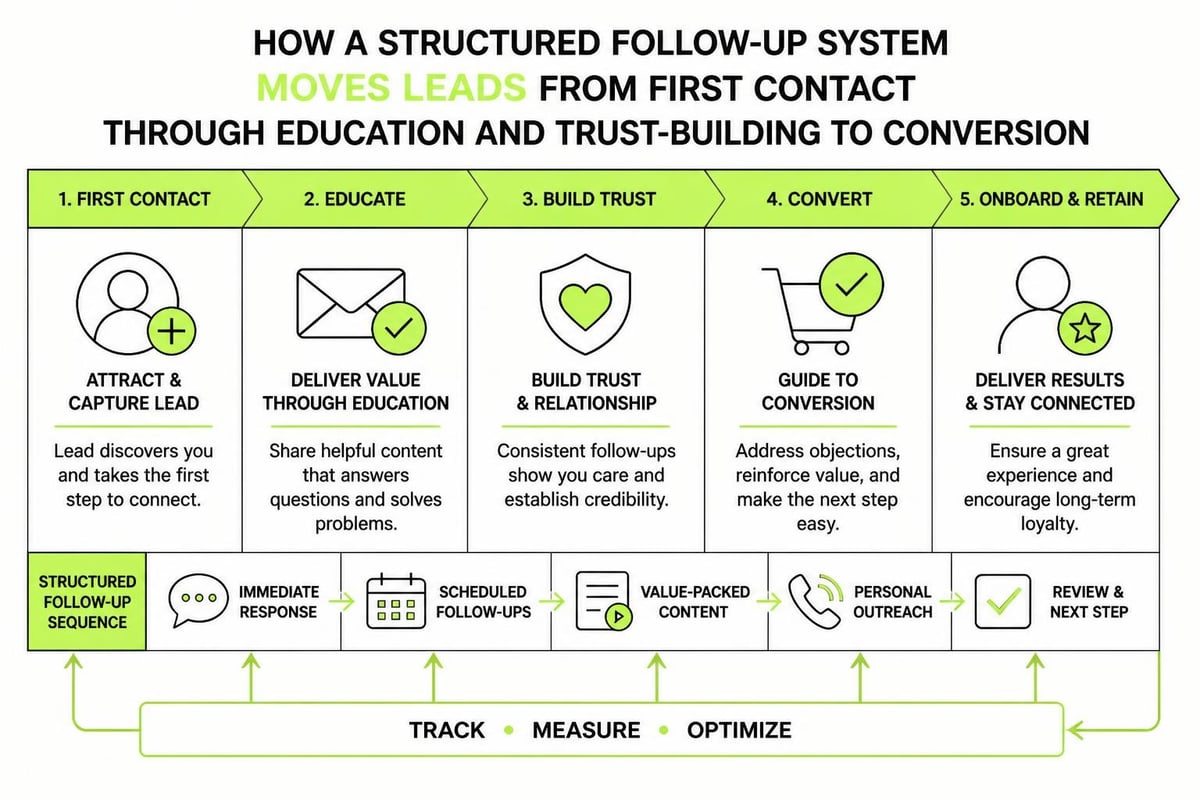
Siloed teams. SEO people don't talk to the ad team. Marketing doesn't talk to sales. Everyone's optimizing their own silo while the overall system underperforms. Break down those walls. Share data, align goals, and work as one system.
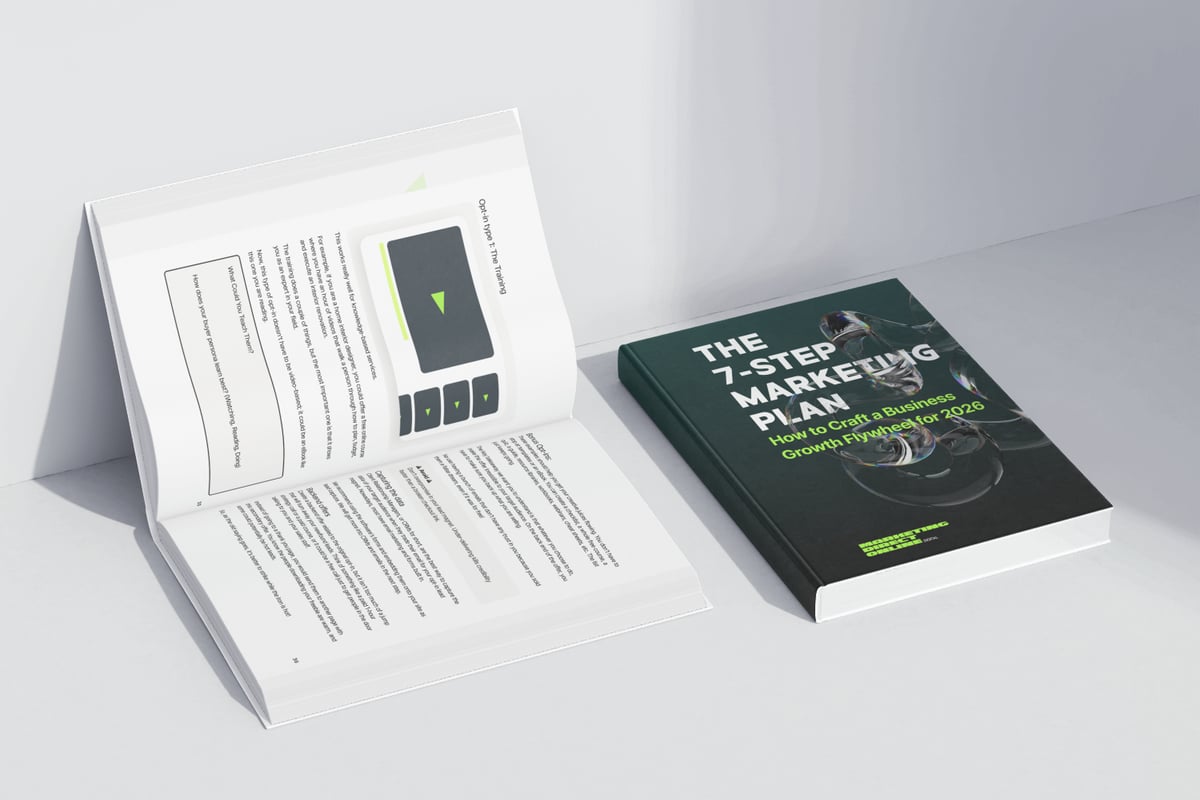
A practical way to avoid these pitfalls is to follow a clear framework that connects all the pieces. The 7-Step Marketing Plan walks through setting goals, defining your buyer, choosing the right platforms, creating lead magnets, building nurture campaigns, delivering great experiences, and generating referrals. Each step feeds the next, creating a flywheel rather than a fragmented set of tactics.
Keeping Up Without Burning Out
SEO and online marketing change constantly. Google updates its algorithm. New platforms emerge. Best practices shift. Trying to keep up with everything is a fast track to burnout. The better approach is to build on principles rather than tactics.
Focus on these fundamentals:
- Create content that genuinely helps your buyers solve problems
- Make your website fast, clear, and easy to navigate
- Build an email list and nurture it consistently
- Test and measure everything so you know what works
- Automate repetitive tasks so you can focus on strategy
Tactics will change. Principles won't. If you build a system around understanding your buyer, creating value, and removing friction, you'll adapt to whatever comes next. Search Engine Journal’s SEO trends report and HubSpot’s SEO resources are good places to stay informed without drowning in noise.
SEO and Online Marketing as a Growth Engine
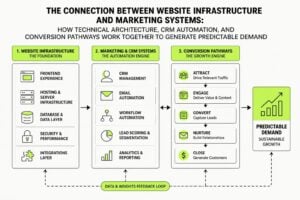
When you treat seo and online marketing as parts of a single system, the results compound. Organic visibility grows. Paid campaigns get more efficient because you're feeding them proven messaging. Your email list expands with engaged subscribers. Referrals increase because your content and experience build trust.
It's not magic. It's structure. You're not chasing tactics or hoping something sticks. You're building an engine that generates predictable demand over time. That's how service businesses scale without chaos.
The work isn't complicated, but it does require discipline. Publish consistently. Track what matters. Adjust based on data. Keep showing up. Most businesses fail not because they don't know what to do, but because they don't stick with it long enough to see it work.
Structured growth comes from treating seo and online marketing as a connected system, not separate tasks. When you align your content, channels, and infrastructure around a clear buyer journey, leads stop feeling random and start feeling predictable. MDO Digital helps service businesses build that system with high-trust websites, CRM automation, and data-driven marketing designed to convert attention into long-term demand. If you're ready to remove the chaos and create growth that compounds, let's talk.