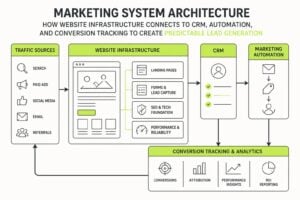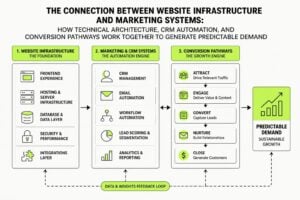
Most service businesses lose leads because they treat marketing like throwing darts in the dark. They post content, run ads, answer enquiries, and hope something sticks. But without a structured system to guide people from stranger to client, you're leaving money on the table. A marketing funnel isn't just theory. It's infrastructure that captures attention, builds trust, and turns interest into predictable demand. When you know how to build a marketing funnel properly, you stop guessing and start measuring what works.
What a Marketing Funnel Actually Does
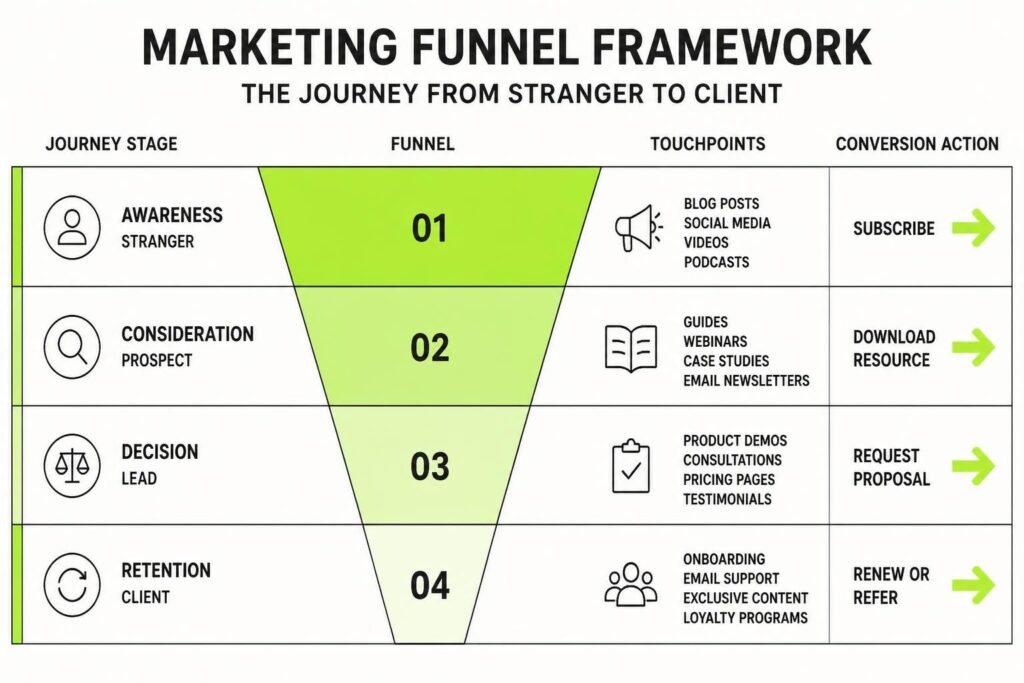
A marketing funnel maps the journey someone takes before they become a client. It starts with awareness and moves through stages of increasing commitment until they buy, then keeps them engaged after the sale.
The core stages include:
- Awareness: They discover you exist
- Interest: They engage with your content or offers
- Consideration: They evaluate whether you're the right fit
- Decision: They commit and become a client
- Retention: They stay, refer, and buy again
Each stage requires different tactics. At the top, you need reach and attention. In the middle, you build trust and demonstrate value. At the bottom, you remove friction and close the deal. Understanding how marketing funnels work helps you design touchpoints that move people forward naturally.
The mistake most businesses make is treating every lead the same. Someone who just found you needs different content than someone who's been reading your emails for six months. A funnel lets you segment, personalise, and deliver the right message at the right time.
Step One: Define Your Ideal Client and Their Journey
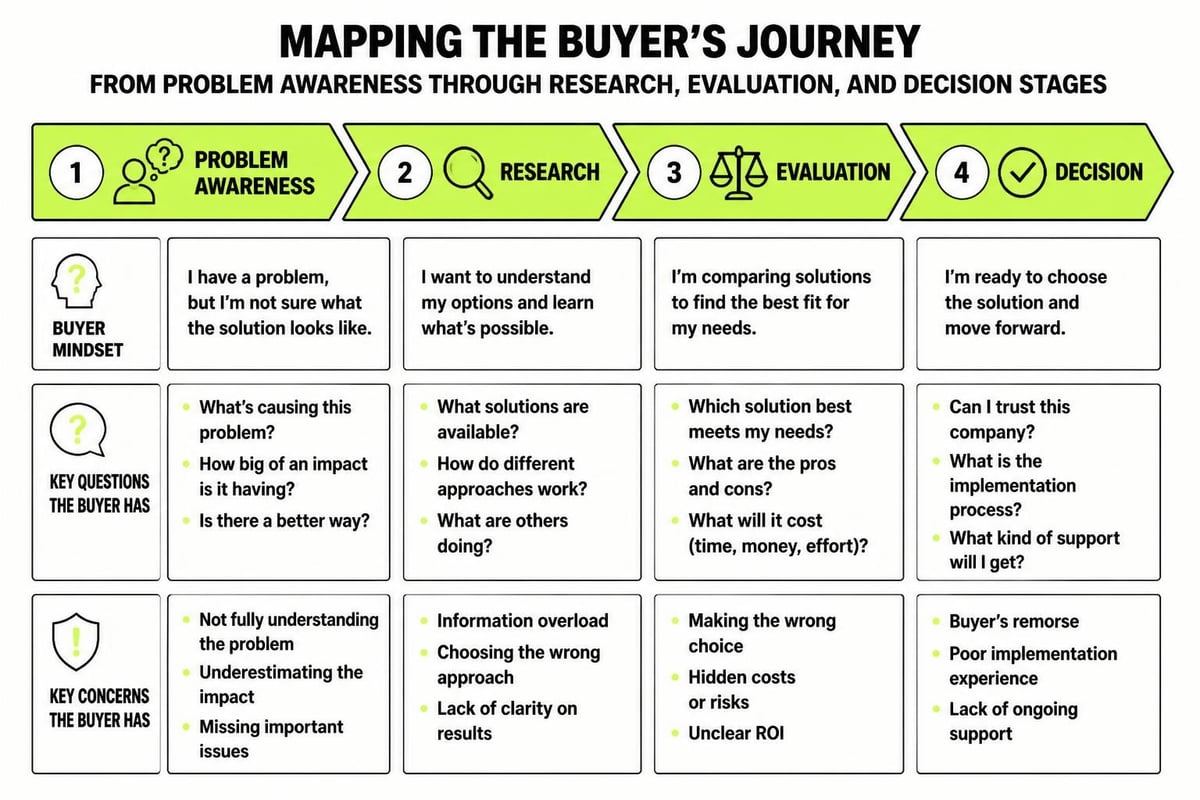
Before you build anything, you need to know who you're talking to and what stops them from buying. Start with a clear buyer persona. What do they want? What scares them? Where do they hang out online?
Map Their Current State to Desired Outcome
Your ideal client is somewhere between problem-aware and solution-aware. They might know they need help but don't know you exist yet. Or they're comparing options and looking for proof you can deliver.
Write down:
- What triggers them to start looking for help
- What questions they ask at each stage
- What objections come up before they commit
- Where they go for information
This isn't guesswork. Talk to past clients. Review discovery calls. Check what questions come up in emails. The patterns will show you where friction exists and what content you need to create.
Step Two: Choose Your Traffic Sources and Entry Points
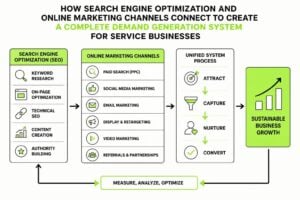
You can't build a funnel without traffic. Pick 1-2 channels where your ideal clients actually spend time, then build consistent systems around them.
Common entry points include:
- Organic content (SEO blogs, YouTube, podcasts)
- Paid advertising (Google Ads, LinkedIn, Meta)
- Referrals and partnerships
- Direct outreach (email, LinkedIn DMs)
Don't spread yourself thin. It's better to own one channel than to dabble in five. If you're targeting business owners, LinkedIn and organic marketing might make sense. If you're B2C, Instagram or Google Ads could work better.
The goal is to drive traffic to a specific offer or piece of content designed to capture contact information. That's your first conversion point. Without it, you're just creating content that disappears into the void.
Build an Opt-In Offer Worth Trading For
No one gives you their email for nothing anymore. You need an opt-in offer that solves a real, immediate problem. It could be a checklist, template, guide, calculator, or mini-course. The format matters less than the value.
For service businesses, the best opt-ins demonstrate your process or thinking. They give a taste of what working with you looks like. If your offer is good enough, people will self-select as qualified leads before you ever speak to them.
A strong opt-in offer bridges the gap between curiosity and commitment. It shows you understand their problem and have a structured way to solve it.
When building a repeatable system, frameworks like the 7-Step Marketing Plan help you connect traffic, offers, and follow-up into a single coherent process that keeps generating leads over time.
Step Three: Build Your CRM and Nurture Infrastructure
Once someone opts in, they enter your system. This is where most businesses fall apart. They collect emails and do nothing with them. Or they send one generic follow-up and give up.
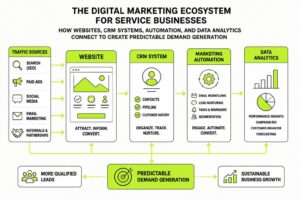
Learning how to build a marketing funnel means building the infrastructure to nurture leads automatically. You need a CRM (customer relationship management system) and email automation at minimum.
| Tool Type | Purpose | Example Use |
|---|---|---|
| CRM | Store contacts, track interactions, segment audiences | Tag leads based on interest, track deal stages |
| Email Platform | Send automated sequences, broadcasts | Deliver opt-in, send weekly value emails |
| Automation | Trigger actions based on behavior | Move leads between segments, notify sales team |
Your nurture sequence should educate, build trust, and move people closer to a decision. Each email should have one clear purpose. Don't sell in every message. Teach, share case studies, answer objections, and demonstrate your process.
A typical nurture sequence might include:
- Welcome email with immediate value
- Origin story or case study
- Educational content related to their problem
- Social proof or testimonials
- Soft offer or next step
The marketing systems you build here determine whether leads go cold or convert. Automation removes the chaos and ensures no one slips through the cracks.
Step Four: Create Content for Each Funnel Stage
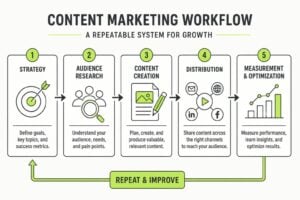
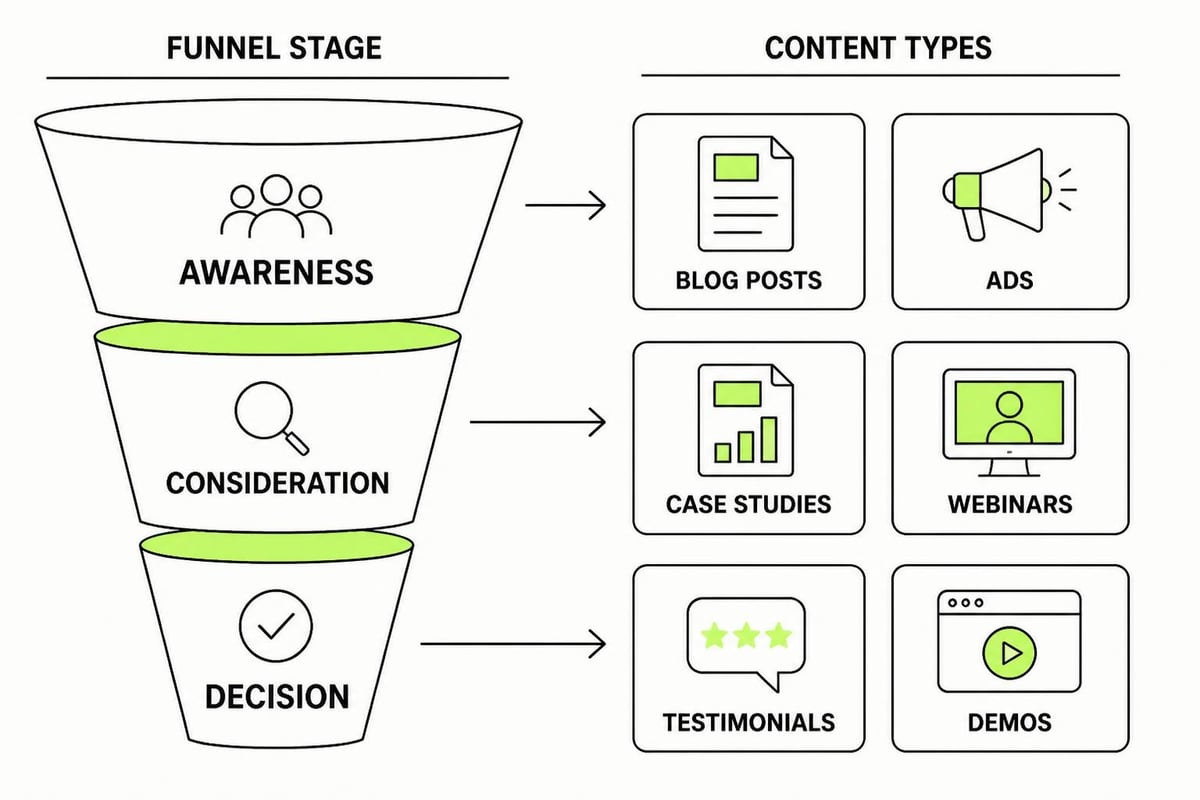
Content fuels the funnel. But not all content serves the same purpose. Top-of-funnel content attracts and educates. Middle-of-funnel content builds trust and positions you as the solution. Bottom-of-funnel content removes objections and closes deals.
Top of Funnel: Awareness Content
This is how people find you. Blog posts, YouTube videos, social content, and ads that answer questions or solve small problems. The goal is visibility and capturing contact information.
Focus on search intent and pain points. What do people Google when they first realize they have a problem? Create content that ranks for those terms and leads to your opt-in offer.
Middle of Funnel: Consideration Content
Here you're competing for attention and trust. Case studies, comparison guides, webinars, and detailed how-to content work well. You want to demonstrate expertise and show you understand their situation better than competitors.
This stage is about differentiation. Why you? What makes your process better? What results have you delivered? The more specific and evidence-based, the better.
Bottom of Funnel: Decision Content
Now they're ready to buy but need final reassurance. Testimonials, pricing guides, FAQs, and product demos close gaps. Some businesses also use consultations or audits as a final conversion step.
Make the next action obvious. Remove friction. Answer every objection before it's asked. The clearer and simpler you make the buying process, the more people convert.
Step Five: Design Conversion Points That Actually Work
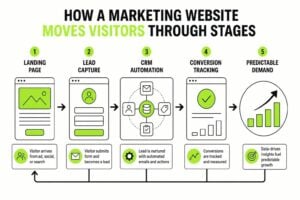
A funnel is only as good as its conversion points. These are the moments where someone takes action: subscribing, booking a call, buying a product, or referring a friend.
Each conversion point needs:
- A clear value proposition: What's in it for them?
- Minimal friction: Fewer form fields, fewer clicks
- Trust signals: Social proof, guarantees, credentials
- Strong call to action: One clear next step
Test everything. Headline, button copy, form length, page layout. Small changes can double conversion rates. Tools like heatmaps and session recordings show you where people drop off and what needs fixing.
For service businesses, the most common conversion point is a discovery call or consultation. Make booking easy. Use a calendar tool that syncs with your CRM. Send confirmation and reminder emails automatically. Reduce no-shows with pre-call questions or preparation guides.
Step Six: Measure, Optimize, and Plug the Leaks
Knowing how to build a marketing funnel is one thing. Optimizing it is where the real growth happens. Track metrics at every stage so you know exactly where leads drop off and where to focus effort.
Key metrics to monitor:
- Traffic volume and sources
- Opt-in conversion rate
- Email open and click rates
- Lead-to-consultation conversion rate
- Consultation-to-client conversion rate
- Customer lifetime value
- Cost per acquisition
| Metric | What It Tells You | Healthy Benchmark |
|---|---|---|
| Opt-in rate | How compelling your offer is | 20-40% from warm traffic |
| Email open rate | Subject line and sender trust | 20-30% for cold lists, 40%+ for engaged |
| Click-through rate | Content relevance | 2-5% average |
| Consultation booking rate | Funnel effectiveness | 5-15% from nurture sequence |
Most funnels leak. People opt in but never open emails. They click but don't book. They book but don't show. Each leak represents lost revenue. Plug the biggest leaks first. If your opt-in rate is strong but email engagement is weak, fix your nurture sequence before worrying about traffic.
Resources like Monday.com’s guide to building and optimizing marketing funnels offer practical frameworks for tracking performance and identifying bottlenecks across different business models.
Step Seven: Extend the Funnel Beyond the First Sale
The funnel doesn't end at the sale. Retention, referrals, and repeat purchases are where the real profit lives. Acquiring a new client costs 5-10 times more than keeping an existing one. Yet most businesses ignore post-sale experience.
Build systems to:
- Onboard new clients smoothly
- Deliver consistent value and communication
- Ask for feedback and testimonials
- Create referral incentives
- Offer additional services or upsells
A referral is proof your funnel works. When clients trust you enough to recommend you, you've built a system that compounds. The Forbes approach to building a marketing funnel emphasises creating a systematic journey that doesn't stop at conversion but continues through advocacy.
Happy clients become your best marketing channel. They send pre-qualified leads who already trust you. Make it easy for them to refer by providing templates, links, or incentives.
Common Mistakes That Kill Marketing Funnels
Even well-designed funnels fail when businesses make predictable mistakes. Avoid these and you'll be ahead of 80% of competitors.
Mistake one: Too many steps
Every extra click, form field, or decision point loses people. Simplify ruthlessly.
Mistake two: No follow-up system
Leads go cold fast. If you don't have automated follow-up, you're burning money.
Mistake three: Generic messaging
Segmentation matters. Someone who downloaded your pricing guide needs different content than someone who watched a case study video.
Mistake four: Ignoring mobile experience
Most people will see your funnel on a phone. If it doesn't work there, you lose.
Mistake five: Building before testing
Don't spend months on a perfect funnel. Build the minimum version, test it, and improve based on real data.
The business and marketing strategies that work long-term are the ones you can measure, test, and refine continuously.
Tools and Systems to Build Your Funnel
You don't need expensive tools to start. But you do need the right stack to scale. Here's what most service businesses need:
- Website/landing page builder: WordPress, Webflow, or Unbounce
- CRM: HubSpot, Pipedrive, or ActiveCampaign
- Email platform: ConvertKit, Mailchimp, or ActiveCampaign
- Analytics: Google Analytics, Hotjar
- Calendar booking: Calendly, Acuity
- Payment processing: Stripe, PayPal
Choose tools that integrate. Your CRM should talk to your email platform. Your calendar should update your CRM. Disconnected tools create data gaps and manual work.
For most businesses, the barrier isn't technology. It's strategy. You can have the best tools in the world and still fail if you don't understand your buyer's journey or create compelling offers.
Aligning Your Funnel with Brand and Messaging
How to build a marketing funnel isn't just about tactics. It's about creating a consistent experience that reflects your brand at every touchpoint. If your ads promise one thing and your website delivers another, trust breaks.
Every element should reinforce:
- Who you help
- What problem you solve
- How you're different
- Why they should trust you
Your funnel is your brand in action. The tone, design, pace, and offers should feel coherent from first click to final invoice. Inconsistency creates doubt. Doubt kills conversions.
Strong branding and marketing integration means your funnel doesn't feel like marketing. It feels like a helpful journey that naturally leads somewhere valuable.
Running Paid Traffic Through Your Funnel
Organic traffic takes time. Paid traffic can validate your funnel fast. But burning budget on ads without a proven funnel is expensive education.
Before you scale paid campaigns, make sure:
- Your opt-in converts at 20%+ from cold traffic
- Your nurture sequence gets 30%+ open rates
- Your consultation booking rate is 10%+
- Your close rate is profitable at your target cost per lead
Once those numbers work, paid traffic becomes a lever. You know exactly what a lead costs and what a client is worth. Scale becomes a math problem, not a guessing game.
Platforms like Contentsquare’s funnel optimization guide focus on user engagement metrics that help you improve conversion at every paid touchpoint.
Building a marketing funnel that converts isn't complicated, but it does require structure, consistency, and ongoing refinement. When you map the journey, create offers that attract the right people, and build systems that nurture them toward a decision, growth becomes predictable. If you need help designing a funnel that works for your business or want to remove the chaos from your current marketing, MDO Digital builds CRM infrastructure, automation, and data-driven systems that turn attention into clients. Let's talk about what structured growth looks like for you.