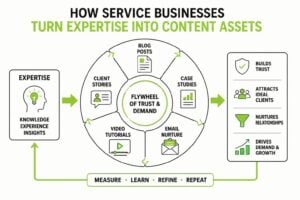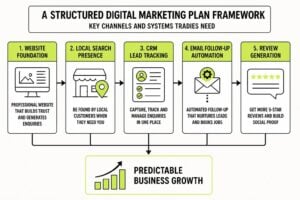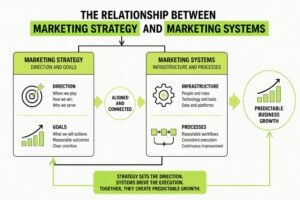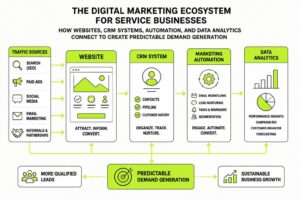
Most service businesses approach online branding backwards. They chase trends, redesign websites every two years, and wonder why their marketing feels scattered. The truth is simpler than you’d think: online branding works when it’s built as a system, not a collection of assets. When your brand shows up the same way across every touchpoint, when your messaging connects to your automation, when prospects recognize you before they remember your name, that’s when growth becomes predictable. This isn’t about creativity for its own sake. It’s about creating structure that compounds.
What Online Branding Actually Means in 2026
Online branding is the systematic presentation of who you are, what you do, and why it matters across every digital channel where your business exists. It’s not your logo. It’s not your color palette. It’s the complete experience someone has with your business from the first Google search to the tenth email in their inbox.
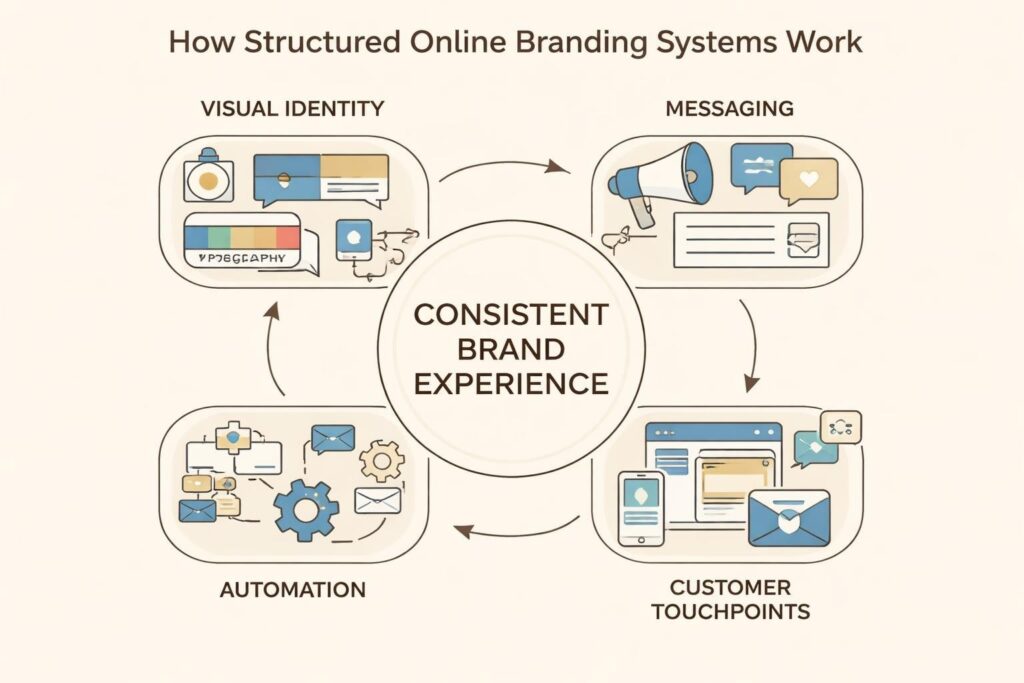
Think of it as infrastructure, not decoration. Your brand guidelines inform your website. Your website feeds your CRM. Your CRM triggers automation that reinforces your positioning. Everything connects.
The Components That Matter
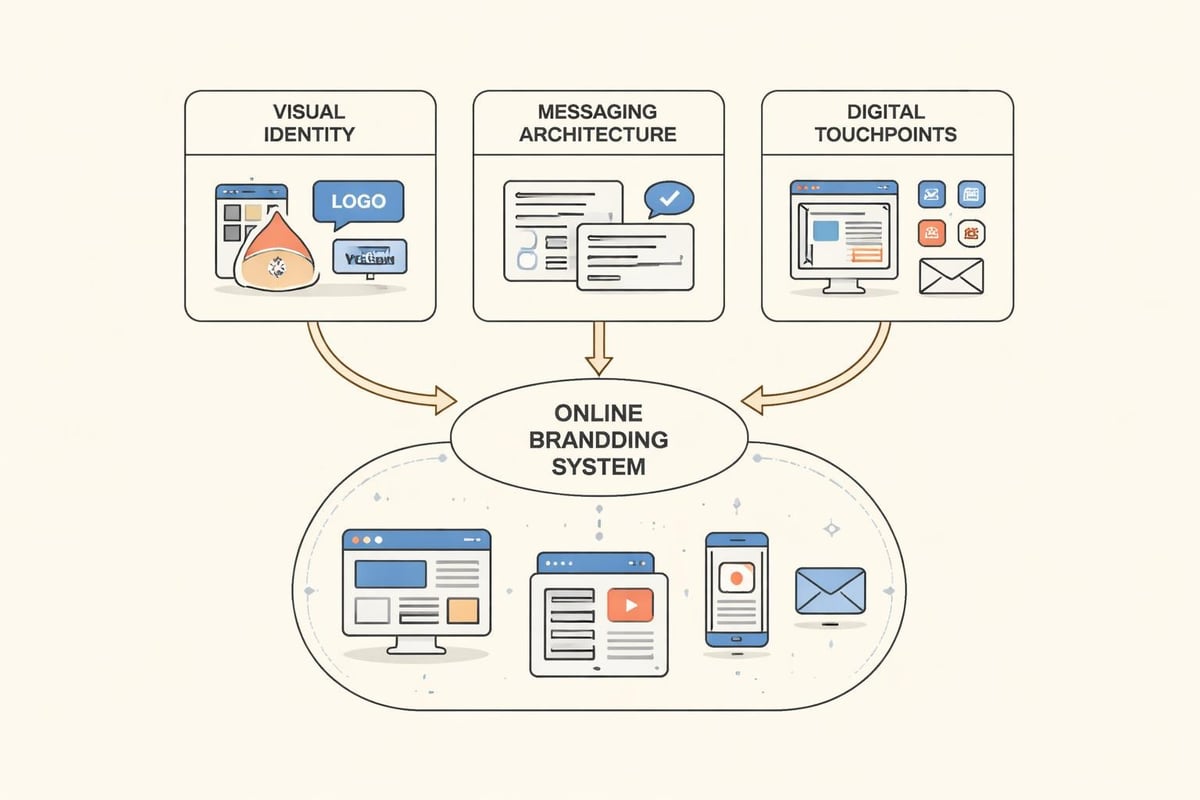
Visual identity is the foundation, but it’s just the start. Logos, typography, color systems, and design templates create recognition. When someone lands on your site, opens your email, or sees your LinkedIn post, they should know it’s you within two seconds.
Messaging architecture defines how you talk about what you do. This includes your positioning statement, value propositions, core messaging pillars, and the specific language you use to describe problems and solutions. Successful brands use consistent messaging across channels to build recognition and trust over time.
Digital touchpoints are where your brand actually lives: your website, email signatures, social profiles, proposal templates, CRM communications, and any platform where prospects interact with you. Each one should feel like part of the same system.
| Component | What It Includes | Why It Matters |
|---|---|---|
| Visual Identity | Logo, colors, typography, templates | Creates instant recognition |
| Messaging | Positioning, value props, tone | Builds understanding and trust |
| Touchpoints | Website, email, social, proposals | Delivers consistent experience |
| Automation | Email sequences, CRM workflows | Scales brand experience |
Building Brand Systems That Scale
Most businesses treat their brand like a coat of paint. They apply it once and hope it sticks. That approach falls apart the moment you need to onboard a new team member, launch a new service, or expand into a new channel. Systems scale. Preferences don’t.
Start With Guidelines That Actually Get Used
Your brand guidelines should live where your team works, not in a PDF nobody opens. Document the decisions that matter:
- Logo usage with actual file names and download links
- Color codes in hex, RGB, and CMYK
- Typography with web font links and fallbacks
- Voice and tone with real examples from your business
- Approved messaging for common scenarios
IntelligenceBank outlines practical approaches to making brand guidelines accessible and actionable across teams, which directly impacts consistency.
The best guidelines answer the question: “What do I do right now?” They show, not just tell.
Connect Your Brand to Your Systems
Here’s where most businesses leave money on the table. Your CRM doesn’t know about your brand. Your email automation uses default templates. Your proposal software looks nothing like your website.
Every system you use should reinforce your brand. When someone fills out a form on your site, the confirmation email should match. When they get added to your CRM, the first touchpoint should feel intentional. When you send a proposal, it should look like an extension of the conversation, not a generic document.
This is what systematic branding actually looks like in practice. It’s operational, not aspirational.
The Website as Brand Hub
Your website isn’t just a touchpoint. It’s the center of your online branding system. Everything else points back to it or extends from it. If your website doesn’t clearly communicate your brand, nothing else will compensate.
Design for Recognition First, Conversion Second
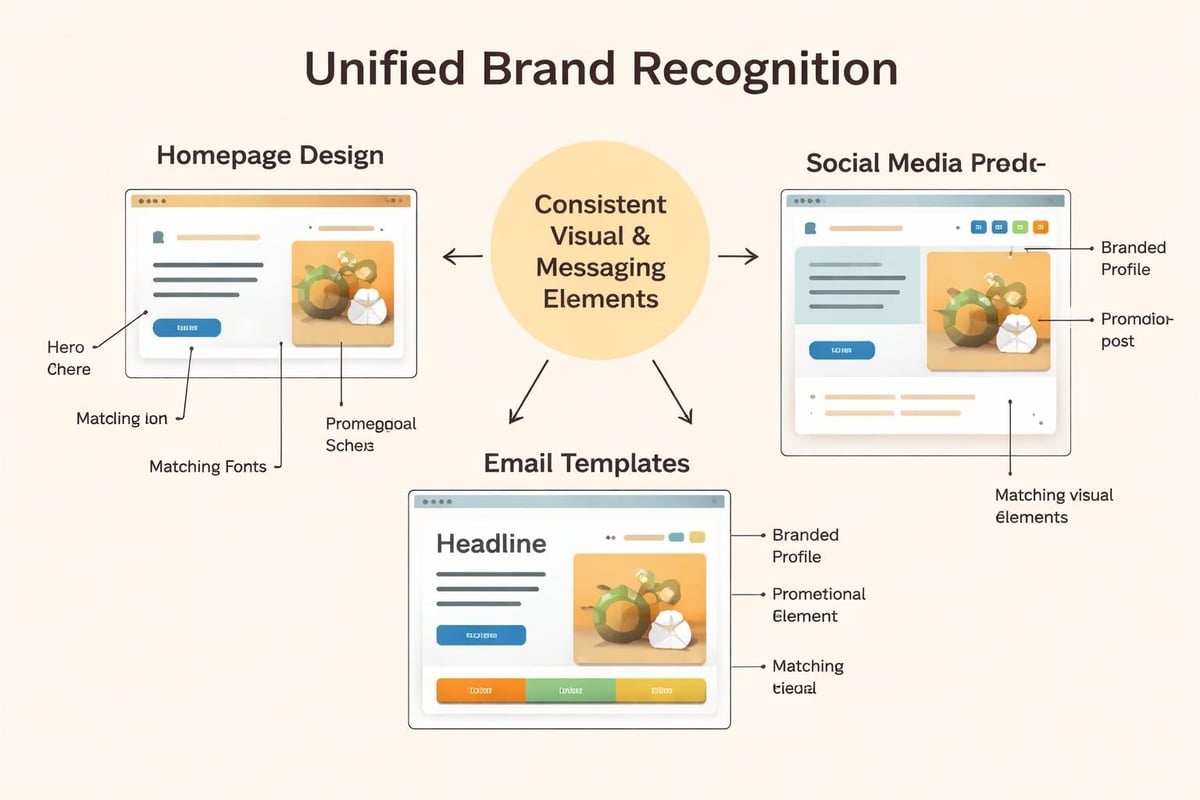
Recognition creates conversion over time. When someone lands on your site after seeing your LinkedIn post, reading your email, or getting a referral, they should immediately know they’re in the right place. That requires consistency, not creativity.
Visual consistency means your site uses the same colors, typography, and design language as every other branded asset. No surprises, no disconnects.
Messaging consistency means your homepage positioning matches what you say in emails, proposals, and discovery calls. Chapman University emphasizes the importance of purpose-built web development that maintains consistent branding across all digital properties.
Functional consistency means navigation, forms, and user flows follow patterns your audience expects. Don’t make people work to understand how your site operates.
Structure Content Around Your Positioning
Your site architecture should mirror how you talk about your work. If you position yourself around specific outcomes, your navigation should reflect those outcomes. If you organize services by industry, your content should follow that logic.
This isn’t about SEO tricks. It’s about making your brand easy to understand. When structure matches positioning, people convert faster because they’re not confused. Check out our approach to website design services to see how structure and branding connect.
Automation That Reinforces Your Brand
Online branding fails when it depends on manual effort. You can’t personally review every email, social post, or client communication. You need automation that carries your brand without you.
Email Sequences That Sound Like You
Your welcome sequence, nurture campaigns, and follow-up automations should use your actual voice. Not corporate speak. Not borrowed templates. The same tone you’d use on a discovery call.
Write these sequences yourself or with someone who understands your positioning. Include:
- Opening hooks that match your messaging
- Value delivery that connects to your core positioning
- Transitions that feel natural, not robotic
- Calls to action that align with your brand personality
Test them by reading them out loud. If you wouldn’t say it on a call, don’t put it in an automated email.
CRM Tags and Workflows That Protect Brand Experience
Your CRM should track more than contact info. It should track where someone is in their relationship with your brand. Tag people based on:
- How they found you (channel attribution)
- What content they’ve consumed
- What problems they’ve expressed
- What stage they’re in (awareness, consideration, decision)
Then build workflows that serve relevant content based on those tags. Someone who downloaded a guide on automation shouldn’t get emails about website design. That’s lazy branding, and it erodes trust.
| Automation Type | Brand Requirement | Impact on Trust |
|---|---|---|
| Welcome sequence | Matches website messaging | Sets expectations |
| Nurture campaigns | Uses consistent voice and examples | Builds familiarity |
| Follow-up emails | References previous interactions | Shows attention |
| Re-engagement | Acknowledges time passed | Maintains relationship |
Social Presence Without the Performance
Social media is part of your online branding system, not a separate marketing channel. The goal isn’t virality. It’s consistent visibility that reinforces what people already know about you.
Pick Channels That Match Your Buyer Behavior
You don’t need to be everywhere. You need to be where your buyers actually spend time and pay attention. For most B2B service businesses, that’s LinkedIn. For some, it’s Twitter. For a few, it’s Instagram or YouTube.
Choose based on where conversations happen, not where you’re most comfortable. Then commit to showing up consistently with content that reflects your brand.
Content That Connects to Your Positioning
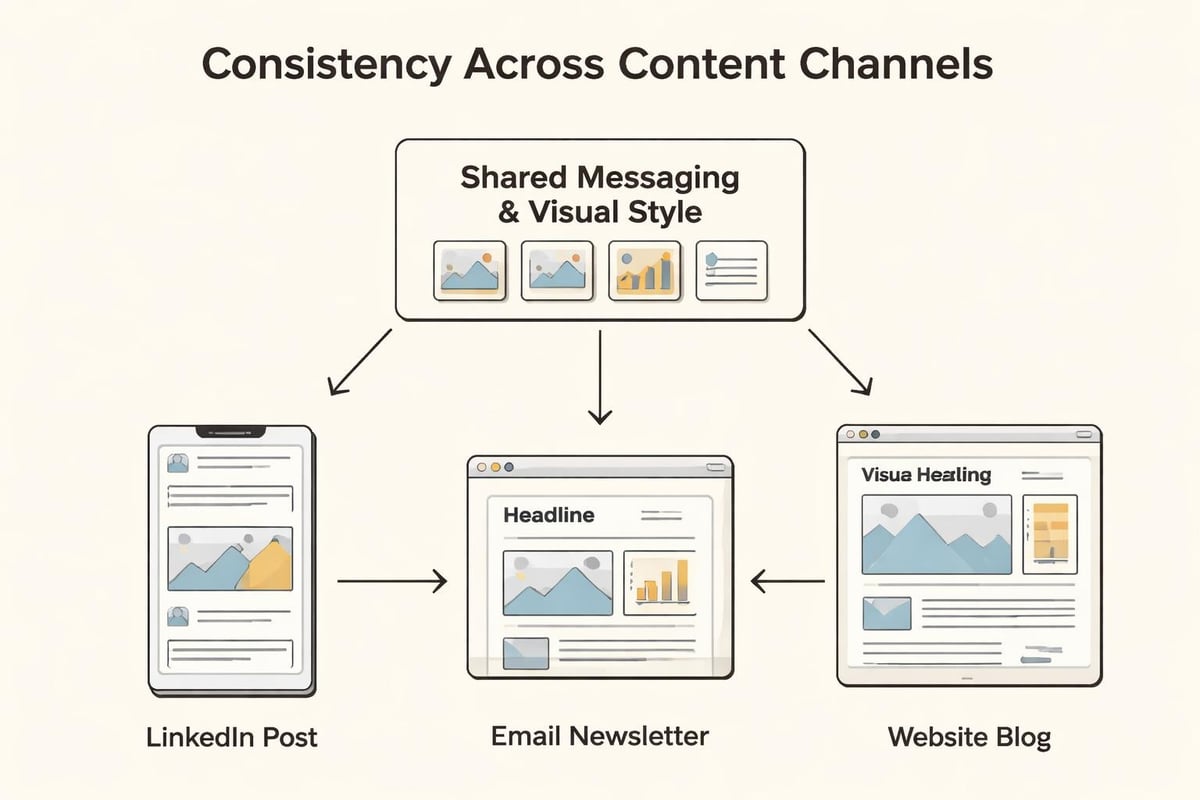
Everything you post should ladder back to your core positioning. If you help service businesses scale with structured systems, your content should demonstrate systems thinking. If you specialize in high-trust design, your posts should show design principles in action.
Building brand identity through content requires consistency in both format and message. Post types should become recognizable patterns over time.
Don’t chase trends that contradict your brand. If you position as the calm, strategic option, hot takes and controversy undermine that. Stay in character.
Measurement That Actually Matters
Most businesses track the wrong metrics for online branding. Impressions don’t matter. Likes don’t matter. Even traffic doesn’t matter if it’s not the right traffic. Focus on signals that indicate brand strength.
Brand Search Volume
How many people search for your business name directly? This is the clearest signal that your online branding is working. It means people remember you, trust you enough to come back, or heard about you and want to learn more.
Track this monthly in Google Search Console. Growth here means your brand is gaining recognition.
Message Match Rate
When someone lands on your site from an email, social post, or ad, do they stay? Or do they bounce immediately? High bounce rates from branded sources suggest messaging inconsistency. The promise didn’t match the experience.
Track bounce rate by channel and source. Investigate disconnects.
Conversion Consistency Across Channels
Your conversion rate should be relatively stable across channels for similar traffic types. If your LinkedIn traffic converts at 8% but your email traffic converts at 2%, something’s broken in the experience. Either your emails over-promise or your site under-delivers.
Look for patterns that reveal brand inconsistencies, then fix them systematically. More insights on tracking performance across channels can be found in our case studies.
Brand Guidelines for Real Businesses
Large enterprises have brand teams to enforce guidelines. Service businesses have founders wearing twelve hats. Your guidelines need to work for actual humans under time pressure.
Make Decisions Easy, Not Perfect
Your brand guidelines should reduce decision fatigue, not create it. When someone needs to create a slide deck, send a proposal, or write an email, they shouldn’t wonder what font to use or how to describe what you do.
Provide:
- Templates for common documents (proposals, decks, one-pagers)
- Approved copy for positioning statements and value props
- Image libraries with on-brand photography and graphics
- Example communications that demonstrate tone and structure
Northern Arizona University recommends maintaining user-friendly design standards that make brand compliance natural, not forced.
Update Guidelines as Your Brand Evolves
Your brand in 2026 isn’t the same as your brand in 2024. As you grow, your positioning sharpens. Your messaging improves. Your visual identity matures. Guidelines should reflect current reality, not past decisions.
Review quarterly. Update anything that no longer fits. Archive old versions so you maintain history but don’t create confusion. Our branding category explores how brands evolve while maintaining consistency.
The Reputation Layer
Online branding includes what you don’t control: reviews, mentions, and electronic word-of-mouth. These signals either reinforce or contradict your intentional brand. You can’t control them completely, but you can influence them systematically.
Ask at the Right Moment
Request reviews when someone has just experienced value. Not when they sign a contract. Not three months later. Right after a win, a successful launch, or a solved problem.
Make it easy: send a direct link, pre-fill what you can, offer options (Google, LinkedIn, industry-specific platforms). Most people want to help. Remove friction.
Respond to Everything
Every review, mention, and comment is a brand touchpoint. Respond professionally, stay in character, and demonstrate the same values you claim on your website.
Negative feedback is a branding opportunity. How you handle it shows more about your character than a dozen case studies. Own mistakes, fix problems, follow through publicly.
Monitor Consistently
Set up alerts for your brand name, key team members, and core positioning terms. You can’t manage what you don’t see. Red Stone Studio outlines practical monitoring approaches that keep brand perception visible without creating overwhelming noise.
Tools like Google Alerts, Mention, or Brand24 work fine. The system matters more than the software.
Implementation Over Inspiration
You don’t need a rebrand. You need to implement what you already know. Most businesses have decent visual identity, reasonable messaging, and functional websites. What they lack is systematic application across every touchpoint.
Start here:
Audit your current state. Screenshot every branded touchpoint: website, emails, social profiles, proposals, CRM templates. Lay them side by side. Notice disconnects.
Document what’s already working. Identify the elements that feel most “you.” The messaging that converts. The design that gets compliments. The emails people actually respond to.
Create templates for recurring needs. Don’t start from scratch every time. Build reusable structures for proposals, email sequences, social posts, and client communications.
Connect your systems. Ensure your CRM, email platform, and website share data and maintain consistent branding. Integration creates leverage.
Train your team on brand application. Show them how to use templates, where to find approved assets, and what decisions they can make without approval. Empower execution.
Systematic online branding isn’t a project. It’s infrastructure that supports everything else you do in marketing and sales. Strikingly emphasizes that consistency across channels creates the memorable experiences that turn attention into demand.
When Brand and Growth Align
The best online branding creates leverage. Every new piece of content reinforces existing positioning. Every client interaction strengthens reputation. Every automated sequence delivers brand experience without manual effort. Growth compounds because your brand works as a system, not a collection of disconnected tactics.
This is how service businesses scale with clarity instead of chaos. Strong brands don’t just attract attention-they convert it into predictable demand because every touchpoint builds trust, removes friction, and moves prospects toward decisions. The businesses winning in 2026 aren’t the loudest or the most creative. They’re the most consistent, the most systematic, and the most intentional about how their brand shows up everywhere it matters.
Online branding either scales your business or scatters your effort. The difference is systems. At MDO Digital, we build marketing infrastructure that removes chaos and creates structured growth through high-trust websites, CRM automation, and brand systems that work without constant oversight. If you’re ready to turn scattered marketing into predictable demand, let’s talk about building systems that actually compound.