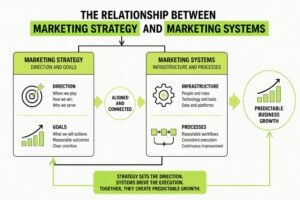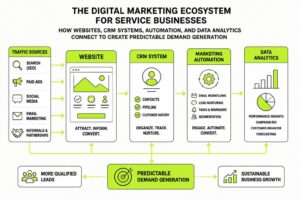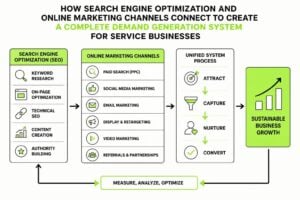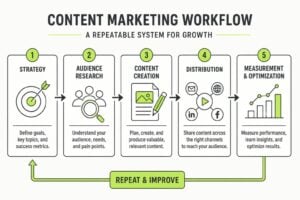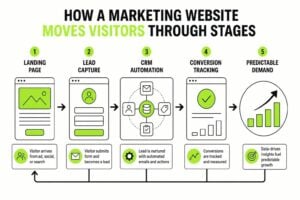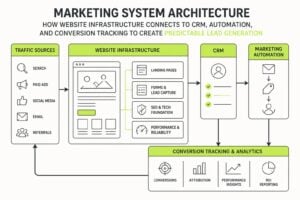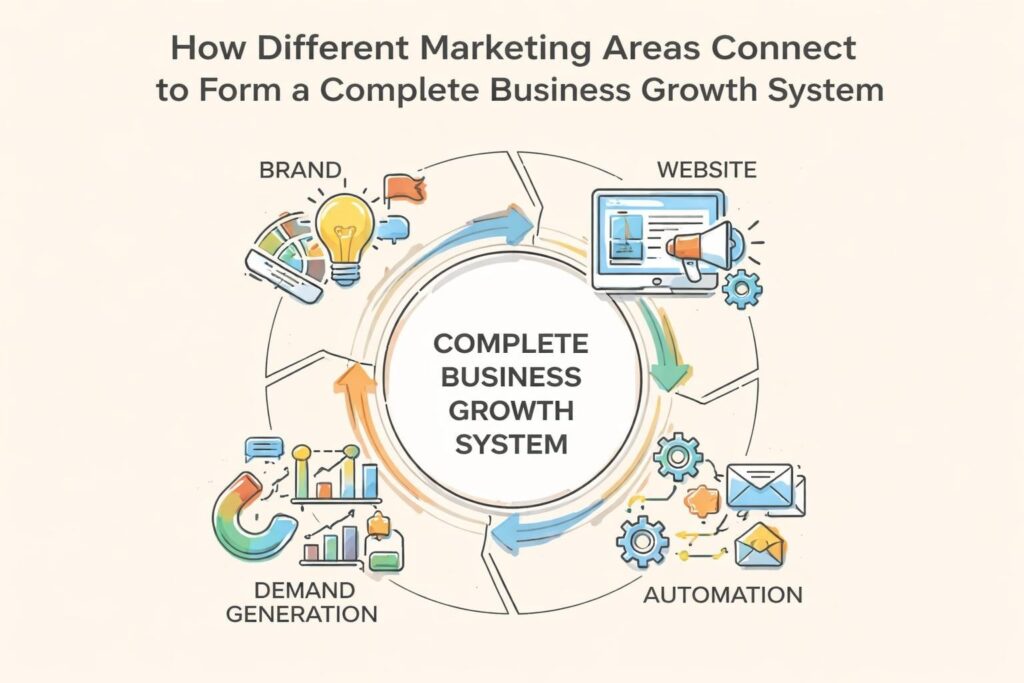
Most service businesses treat marketing like a grab bag of tactics. They run ads when things get quiet, update their website when someone complains, and chase whatever platform seems to be working for someone else. This scattered approach creates chaos instead of compound growth. Understanding the core marketing areas and how they connect gives you the structure to build predictable demand. Not every business needs to activate every area at once, but knowing where they fit in your system makes it easier to scale with clarity.
What Marketing Areas Actually Mean for Your Business
The term “marketing areas” refers to the distinct disciplines that make up your complete marketing system. Think of them as departments in your revenue engine, each with its own purpose but all feeding into the same outcome: converting attention into customers.
Marketing areas traditionally include brand management, market research, advertising, content marketing, customer relationship management, and promotional strategy. For service businesses specifically, these areas need to work together in a sequence that protects leads and removes friction from the buying process.
The core marketing areas for service businesses include:
- Brand positioning and messaging
- Website and digital presence
- Content and thought leadership
- Paid advertising and media
- CRM and marketing automation
- Data and performance tracking
Each area supports the others. Your brand messaging informs your advertising. Your website converts the traffic your content generates. Your CRM captures what your paid media delivers. When these marketing areas operate independently, you leak leads and waste budget.
How Marketing Areas Connect in a System
The mistake most businesses make is treating each marketing area as a separate project. They hire someone to “do social media” or “run ads” without connecting that work to the rest of the system. This creates gaps where leads fall through.
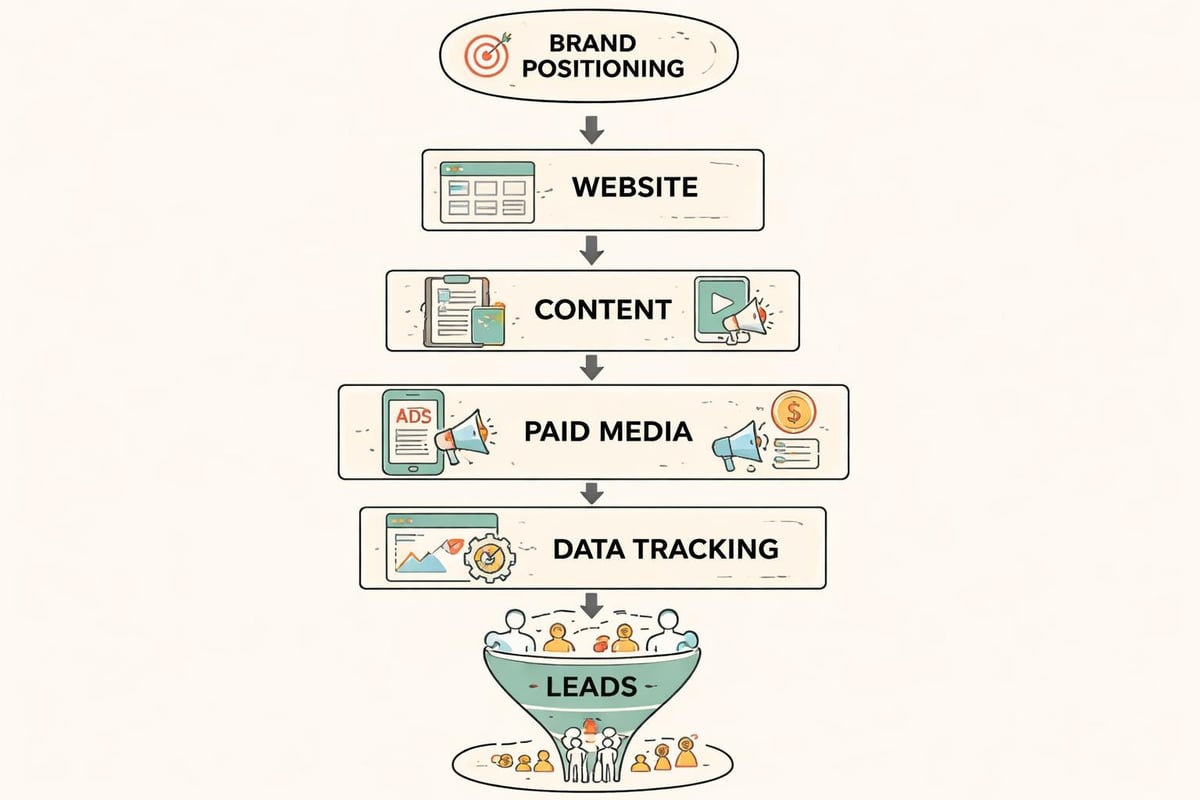
A structured approach means understanding the flow. Brand work establishes what you stand for and who you serve. Your digital presence proves it through design and positioning. Content builds trust and authority. Paid media amplifies reach. Automation captures and nurtures interest. Data tells you what’s working and where to double down.
| Marketing Area | Primary Purpose | Key Output |
|---|---|---|
| Brand Strategy | Differentiation and positioning | Clear messaging framework |
| Website Design | Trust and conversion | High-trust digital presence |
| Content Marketing | Authority and organic reach | Traffic and thought leadership |
| Paid Advertising | Controlled demand generation | Qualified leads on demand |
| Marketing Automation | Lead capture and nurturing | Protected customer journey |
| Performance Tracking | Optimization and accountability | Data-driven decisions |
This table shows how each marketing area produces a specific output that feeds the next stage. You can’t automate leads you haven’t captured. You can’t capture leads without traffic. You can’t convert traffic without trust.
Brand and Positioning as Foundation
Brand isn’t your logo or color palette. It’s the positioning work that makes everything else efficient. When you’re clear about who you serve and what problem you solve better than anyone else, your marketing areas align naturally.
Most service businesses skip this step. They jump straight to tactics because brand work feels abstract. But without clear positioning, your advertising budget fights against itself. Your content attracts the wrong audience. Your CRM fills with tire-kickers instead of buyers.
Strong brand positioning defines:
- Your specific customer and their core problem
- Your unique approach or methodology
- The outcome you deliver and how it’s different
- The proof points that support your claims
When these elements are clear, every other marketing area becomes easier to execute. Your website writes itself because you know exactly what message converts your specific customer. Your content strategy focuses on the topics that matter to your audience. Your ads don’t have to yell because the message already resonates.
Building Trust Through Digital Presence
Your website is the centerpiece of your marketing areas. It’s where every other effort points. Paid ads send traffic there. Content links back to it. Email automation drives people to specific pages. If your site doesn’t build trust and make the next step obvious, everything upstream is wasted effort.
High-trust websites for service businesses do three things well: they establish credibility fast, they make the offer clear, and they reduce friction in the buying process. This means social proof above the fold, clear service descriptions without jargon, and simple paths to contact or purchase.
The design and branding choices you make communicate as much as the words. Clean layouts signal professionalism. Strategic use of whitespace makes information digestible. Consistent visual identity reinforces your positioning work.
Many businesses treat their website as a one-time project. They launch it and forget it. But your site should evolve with your marketing system. As you learn what messaging converts, update the copy. As you add services or refine your offer, reflect those changes. Your digital presence is infrastructure, not decoration.
Content and Authority Building
Content marketing is the area that builds long-term equity. Unlike paid advertising, which stops delivering when you stop spending, quality content compounds over time. A well-optimized article can drive qualified traffic for years.
The key is treating content as a strategic marketing area, not a blog you update when you remember. This means planning topics around customer questions, search intent, and the gaps in your market. It means creating assets that support the buying journey at every stage, from awareness through decision.
Effective content marketing includes:
- Educational articles that address customer problems
- Case studies and proof of methodology
- Service-specific pages optimized for search
- Lead magnets and downloadable resources
- Email sequences that nurture over time
For service businesses, content marketing careers often focus on creating thought leadership that establishes expertise. This isn’t about viral posts or entertainment. It’s about demonstrating depth of knowledge and practical application.
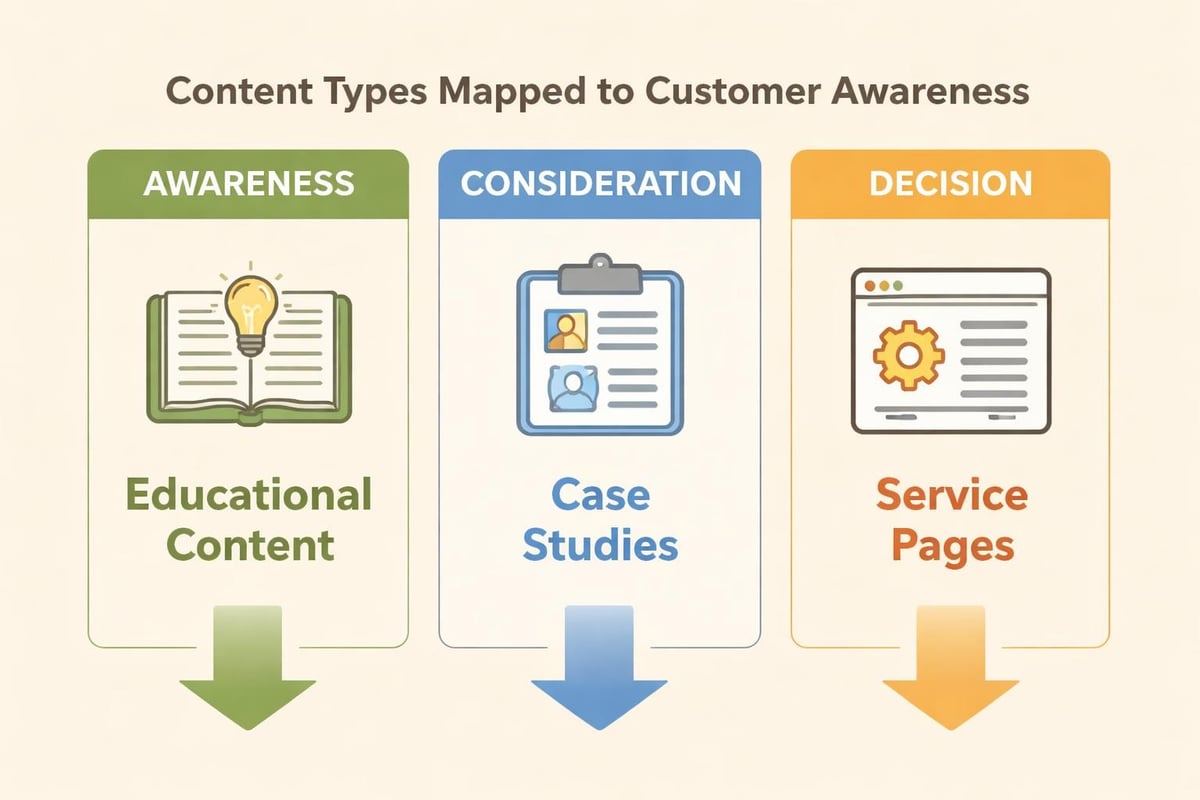
The content area also supports every other marketing discipline. Your ads can link to relevant articles instead of cold landing pages. Your sales team can share case studies that address specific objections. Your automation sequences can deliver educational value before asking for the sale.
Paid Media and Demand Generation
Advertising is the marketing area that gives you control. While organic efforts take time to build, paid media lets you test messaging, reach new audiences, and generate leads on demand. The challenge is doing it profitably.
Most service businesses waste advertising budget because they haven’t done the foundational work. They run ads to a generic website, with broad targeting, and wonder why the leads don’t convert. Paid media only works when the other marketing areas are solid.
Understanding promotional mix strategies helps you balance paid advertising with other tactics. Some businesses need search ads to capture high-intent traffic. Others benefit from display or social ads that build awareness over time. The right mix depends on your customer journey and average deal value.
Paid advertising works best when you have:
- Clear messaging that resonates with a specific audience
- A high-trust website that converts cold traffic
- A CRM system that captures and tracks leads
- Enough margin to support customer acquisition costs
- Patience to test and optimize over several months
The businesses that succeed with paid media treat it as a system, not a campaign. They test different audiences, track conversion paths, and optimize based on data. They understand that the first click rarely results in a sale, so they build remarketing sequences and nurture funnels.
CRM and Marketing Automation
This is the marketing area most service businesses neglect, and it costs them millions in lost revenue. Without a system to capture leads, track interactions, and follow up consistently, you’re basically paying to generate interest and then hoping people remember to contact you.
Marketing automation connects your demand generation efforts to your sales process. When someone downloads a resource, they enter a sequence. When they visit your pricing page three times, your team gets notified. When a lead goes cold, they receive re-engagement content automatically.
The marketing mix concept includes distribution, which in 2026 means the systems that deliver your message at the right time. Automation handles this at scale. Instead of manual follow-up that depends on someone remembering, you build sequences that nurture leads based on behavior.
| Automation Type | Purpose | Example Use Case |
|---|---|---|
| Lead Capture | Collect contact info | Form submissions trigger welcome sequence |
| Behavioral Triggers | Respond to actions | Pricing page visits alert sales team |
| Nurture Sequences | Build trust over time | Educational emails over 30 days |
| Re-engagement | Revive cold leads | Content offers to inactive contacts |
| Customer Onboarding | Reduce churn | Post-purchase education and check-ins |
Setting up your CRM and automation infrastructure is foundational work. It’s not sexy, but it protects every dollar you spend on other marketing areas. Building this infrastructure means defining your lead stages, mapping customer journeys, and creating the content assets that support each step.
Data and Performance Tracking
The final marketing area that ties everything together is measurement. You can’t optimize what you don’t track, and most service businesses are flying blind. They know they spent money on ads and hired someone to write content, but they can’t connect those investments to actual revenue.
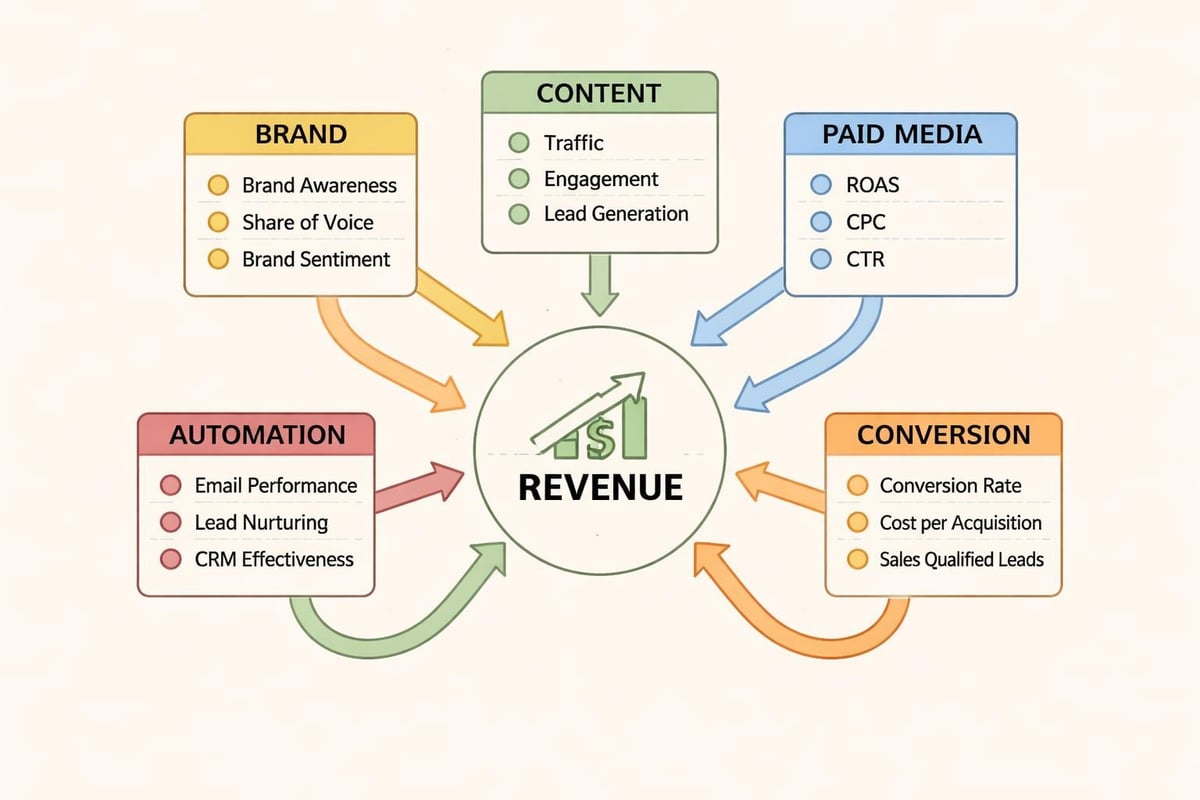
Performance tracking means defining what success looks like for each marketing area, then measuring it consistently. For content, that might be organic traffic and time on page. For paid media, it’s cost per qualified lead and conversion rate. For automation, it’s open rates and sequence completion.
Key metrics by marketing area:
- Brand: Share of voice, brand search volume, message recall
- Website: Conversion rate, bounce rate, pages per session
- Content: Organic traffic, keyword rankings, engagement metrics
- Paid Media: CPA, ROAS, click-through rate, conversion rate
- Automation: Email open rate, sequence conversion, lead stage velocity
- Overall: Customer acquisition cost, lifetime value, revenue attribution
The businesses that scale profitably use data to make decisions, not gut feelings. They A/B test landing pages, compare campaign performance, and shift budget toward what works. They understand market segmentation and track metrics by customer type to refine targeting over time.
How Marketing Areas Work Together at Different Scales
Early-stage businesses can’t activate every marketing area at once, and they shouldn’t try. The priority sequence matters. Start with brand positioning and a high-trust website. Add content to build organic reach. Layer in automation to protect leads as volume increases. Then scale with paid media once conversion paths are proven.
Businesses in growth mode should have all marketing areas operational but not all at the same intensity. Your focus shifts based on what’s working and where the bottlenecks are. If your paid media is performing but leads aren’t converting, the problem is messaging or website experience. If content is driving traffic but no one’s buying, your CRM and follow-up system needs work.
Different marketing specializations matter more at different scales. A solo consultant might prioritize content and referrals. A growing agency needs automation and paid demand generation. An established firm focuses on brand differentiation and customer retention.
The common thread is system thinking. Each marketing area supports the others, and gaps in one create waste in another. You can’t run effective advertising to a website that doesn’t convert. You can’t automate a customer journey you haven’t mapped. You can’t measure performance without clear goals and tracking infrastructure.
Avoiding Common Marketing Area Mistakes
The biggest mistake is treating marketing areas as isolated tactics instead of connected systems. Businesses hire a “social media person” or “ads specialist” without giving them the context or tools to connect their work to revenue. This creates activity without outcomes.
Another common error is jumping to execution before doing strategic work. You can’t outsource your way out of unclear positioning. No amount of paid traffic will fix a website that doesn’t build trust. Automation can’t save a broken sales process. The foundational marketing areas, brand and infrastructure, must be solid before tactical areas can perform.
Watch for these warning signs:
- Running ads without conversion tracking or CRM integration
- Creating content with no distribution or promotion plan
- Building automation sequences based on assumptions, not customer behavior
- Measuring vanity metrics (likes, impressions) instead of business outcomes
- Switching tactics constantly without giving anything time to compound
The antidote is structure. Define what each marketing area should accomplish. Build the infrastructure to support it. Measure what matters. Optimize based on data. Most businesses know what they should be doing; they just haven’t organized their marketing areas into a system that executes consistently.
Building Your Marketing System for Scale
Understanding marketing areas gives you the framework to scale intentionally. Instead of chasing every new platform or tactic, you focus on strengthening the areas that drive outcomes for your specific business model.
For service businesses, this usually means brand clarity, a high-trust digital presence, content that builds authority, automation that protects leads, and data that guides decisions. Paid media accelerates what’s already working. Partnerships and referrals compound over time. But the core marketing areas create the foundation everything else builds on.
The work isn’t complicated, but it does require commitment. You can’t build a marketing system in a weekend workshop or by hiring one person to “handle marketing.” You need cross-functional coordination between brand, sales, operations, and technology. You need documentation so systems outlive individuals. You need iteration based on real performance data.
This is why agencies like MDO Digital exist. Most service businesses don’t have the internal capacity to activate all marketing areas simultaneously while running daily operations. Structured support accelerates the build, prevents expensive mistakes, and creates systems that scale as you grow.
Understanding how different marketing areas connect into a complete system removes the chaos most businesses tolerate. Each discipline has a specific role, and when they work together, you get predictable demand instead of feast-or-famine revenue. If you’re ready to build marketing infrastructure that compounds over time, MDO Digital can help you design the systems, build the automation, and implement the strategy that turns attention into customers. Let’s remove the guesswork and create structured growth.