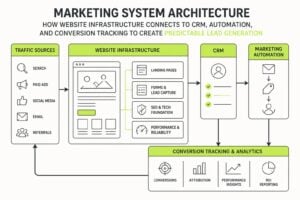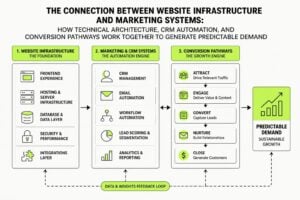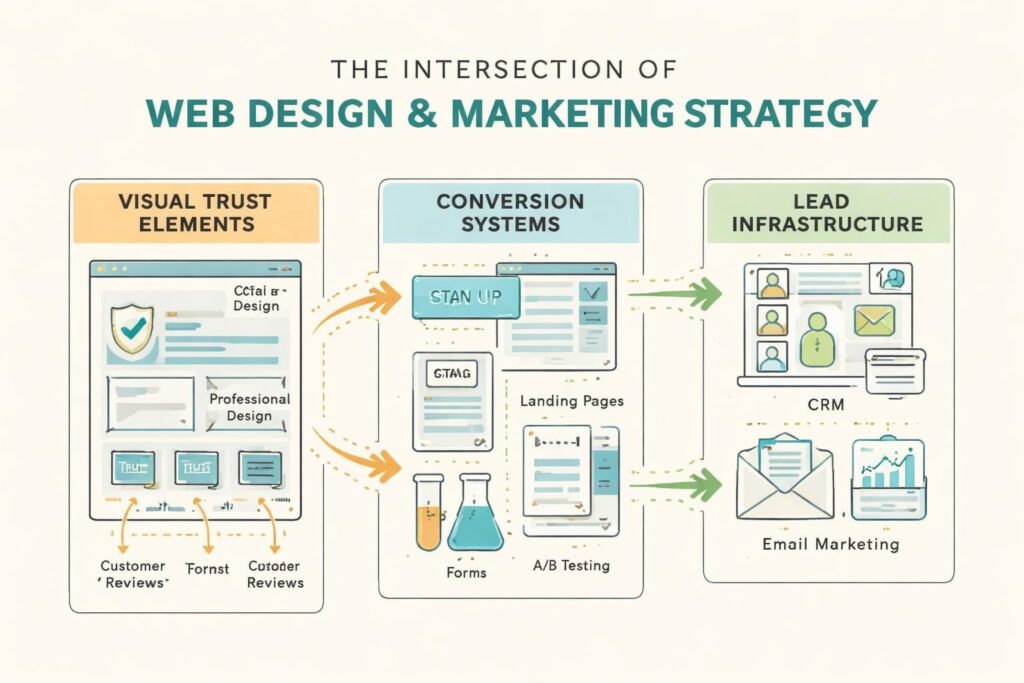
Most service businesses treat web design and marketing as separate projects. You hire a designer to make things look good, then hand it to a marketer to drive traffic. But that's where the chaos starts. Your site looks clean but doesn't convert. Your ads perform well but land on pages that lose trust. The disconnect costs you leads, time, and budget. When web design and marketing work as one system, everything changes. Your site becomes infrastructure that protects leads, builds trust, and turns attention into predictable demand.
Why Web Design and Marketing Must Work Together
Web design isn't decoration. It's the first line of your marketing system. Every element on your site either builds trust or creates friction. Your headline, your navigation, your contact forms, they all shape whether a visitor becomes a lead or bounces to a competitor.
Marketing drives people to your site, but design determines what happens next. If your messaging promises expertise but your site looks generic, you've broken trust before the conversation starts. If your ads target high-intent buyers but your landing page buries the call to action, you're burning budget.
The gap between web design and marketing shows up in metrics. High traffic with low conversions. Strong click-through rates with weak form fills. These aren't traffic problems or offer problems. They're system problems.
Design as Marketing Infrastructure
Your website should do three things: establish authority, remove doubt, and make the next step obvious. That's not just design work. That's marketing strategy translated into structure.
Key elements that bridge design and marketing:
- Visual hierarchy that guides attention to conversion points
- Brand consistency that reinforces messaging across every touchpoint
- Page speed that protects paid traffic from bouncing
- Mobile responsiveness that captures leads regardless of device
- Clear calls to action that align with campaign intent
When these elements align, your site becomes a conversion asset, not just a digital brochure. Modern web design best practices emphasize this integration, focusing on how design choices directly impact marketing outcomes.
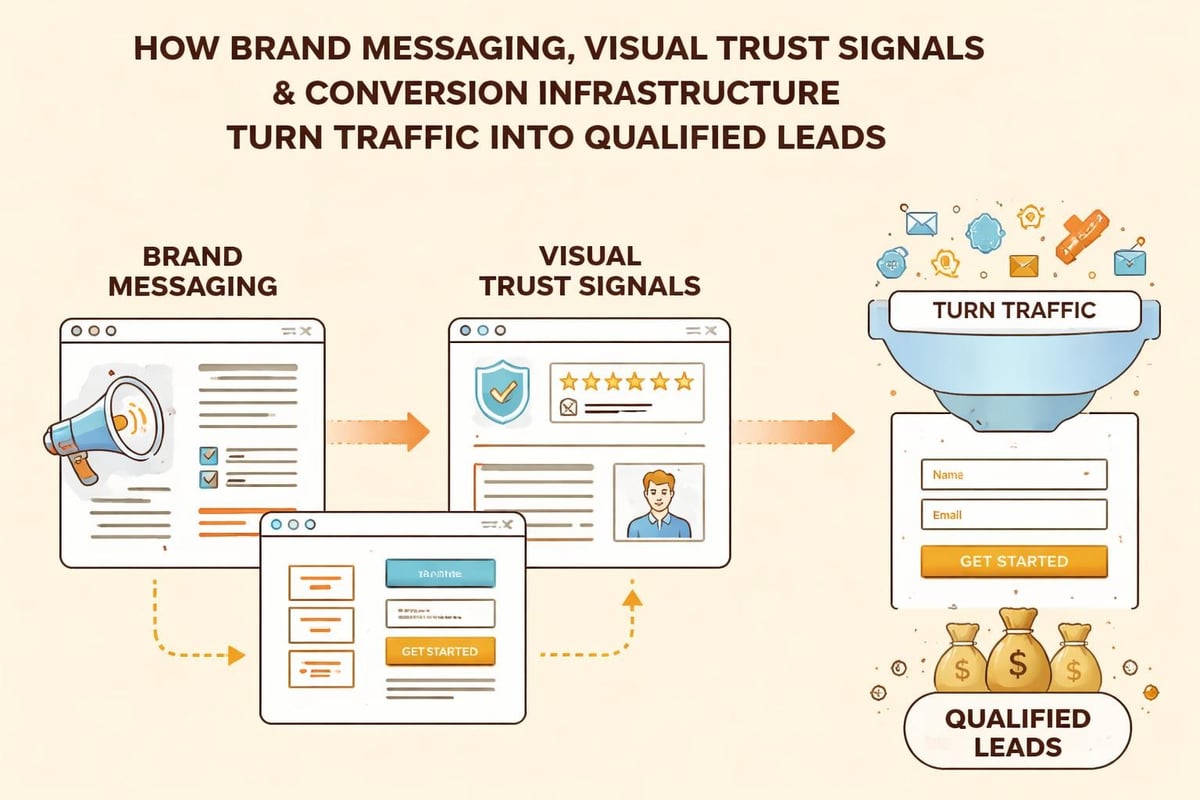
Building High-Trust Websites That Convert
Trust is the currency of web design and marketing. Service businesses don't sell products off a shelf. You're asking people to believe you can solve their problem before they've experienced your work. Your site needs to earn that belief fast.
High-trust design starts with clarity. Visitors should understand what you do, who you serve, and why you're different within seconds. If they need to hunt for that information, they won't.
Structure That Supports Conversion
Here's what actually matters on a service business website:
- A clear value proposition above the fold – Not clever copy. Actual clarity about outcomes.
- Proof that reinforces your promise – Case studies, testimonials, results tied to specific client problems.
- Navigation that anticipates intent – Service pages, process breakdowns, contact options. No mystery clicks.
- Forms that respect time – Ask for what you need, nothing more. Every extra field costs conversions.
- Speed that protects traffic – Slow sites kill paid campaigns. Every second past three seconds drops conversions by double digits.
This isn't about following trends. It's about removing friction between attention and action. When choosing the right web design approach, focus on tools and methods that support your marketing goals, not just visual appeal.
| Design Element | Marketing Impact | Common Mistake |
|---|---|---|
| Homepage headline | Sets positioning and filters audience | Vague or clever instead of clear |
| Service pages | Converts researching visitors to leads | Feature-focused instead of outcome-focused |
| Contact forms | Captures intent at peak interest | Too many fields or buried placement |
| Page speed | Protects ad spend and organic traffic | Heavy images and unoptimized code |
| Mobile layout | Captures 60%+ of traffic effectively | Desktop design shrunk down |
The structure of your site should map to how people actually make buying decisions. Most service buyers research, compare, then reach out. Your design needs to support each phase.
Marketing Systems That Feed Predictable Growth
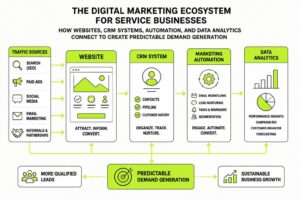
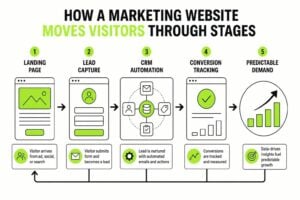
Web design and marketing integration isn't just about pretty landing pages. It's about building systems that compound over time. Every visitor should enter a structure that tracks behavior, nurtures interest, and creates opportunities for conversion.
This is where most businesses leave money on the table. They invest in design. They run campaigns. But there's no infrastructure connecting the two. Leads come in through contact forms and disappear into email chaos. Follow-up is inconsistent. Attribution is guesswork.
The Infrastructure You Actually Need
CRM integration – Your website should feed directly into your customer relationship system. When someone fills a form, they should enter a nurture sequence automatically. No manual exports, no lost leads.
Tracking and attribution – You need to know which marketing channels drive action, not just traffic. Where do your best clients come from? Which pages convert highest? What's the path from first click to closed deal?
Automation that protects leads – Instant confirmation emails, scheduled follow-ups, reminder sequences. These aren't nice-to-haves. They're the difference between a 5% conversion rate and a 25% conversion rate on the same traffic.
Content that builds authority – Blog posts, case studies, guides. Not for SEO tricks. For demonstrating expertise before prospects ever book a call. Your web development and digital marketing efforts should reinforce each other, creating a system where every piece of content strengthens trust and moves people toward conversion.
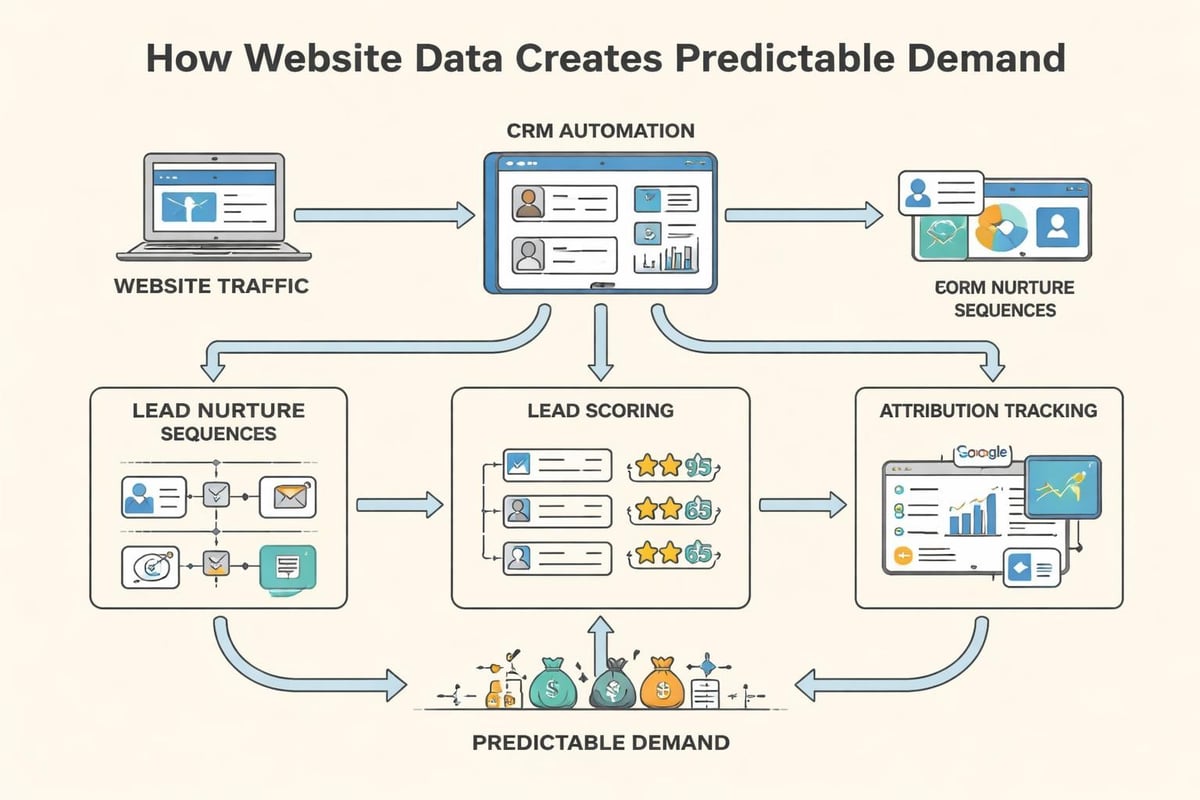
The businesses that scale aren't running more campaigns. They're running better systems. Their web design and marketing work as one infrastructure that captures attention, builds trust, and converts consistently.
Content Strategy as the Bridge Between Design and Marketing
Content is where web design and marketing collide. Your site structure creates the paths. Your marketing drives the traffic. Content is what happens at every touchpoint in between.
Most service businesses treat content as an afterthought. Stock photos, generic copy, inconsistent messaging. But content is where trust gets built or broken. It's where your brand voice becomes real. It's where you prove you understand the problems your prospects are facing.
What Actually Works
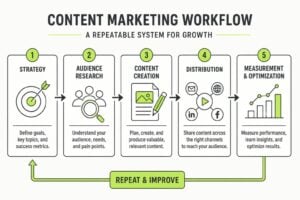
Forget content calendars built around keywords you think you should rank for. Build content around the questions your prospects actually ask. The objections they raise. The outcomes they want.
Effective content types for service businesses:
- Service page content – Deep dives into how you solve specific problems, not feature lists
- Case studies – Real client stories with context, challenge, solution, results
- Process breakdowns – Transparency about how you work builds trust before the first call
- Educational resources – Guides and frameworks that demonstrate expertise without giving away the work
This content doesn't just fill pages. It does marketing work. It qualifies leads, answers objections, and moves people through your funnel. When building marketing websites, your content strategy should be just as considered as your visual design.
The structure of your content matters as much as the words. Scannable headlines, clear sections, visual breaks. People don't read websites. They scan for relevance. Your job is to make that scan successful.
Data-Driven Design That Improves Over Time
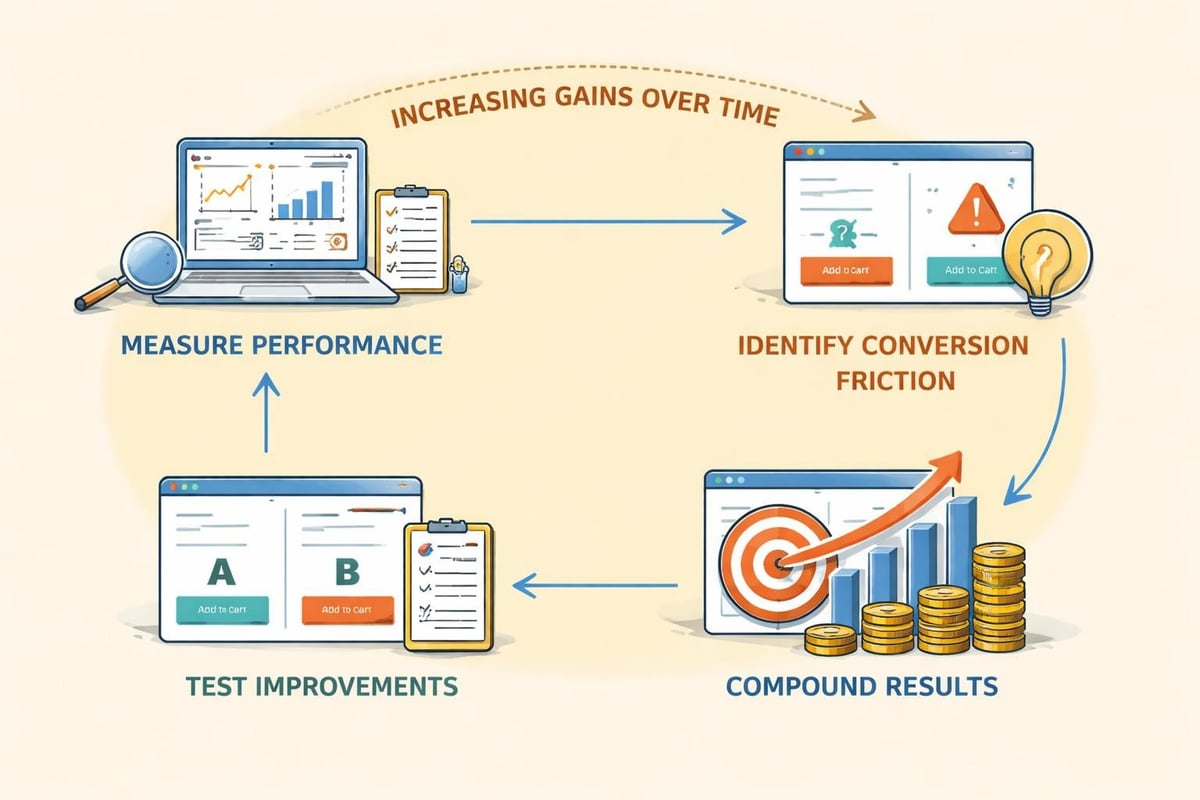
The best web design and marketing systems get stronger with use. Every visitor generates data. Every conversion (or bounce) teaches you something. But only if you're set up to learn from it.
Too many businesses launch a site and consider it done. They run campaigns and hope for the best. There's no testing. No iteration. No compounding improvement.
Building a Testing Culture
Start with baseline metrics. What's your current conversion rate by traffic source? Where do people drop off? Which pages hold attention? You can't improve what you don't measure.
Then test one variable at a time:
- Headline variations on key landing pages
- Call-to-action placement and copy
- Form length and field requirements
- Page layouts that change visual hierarchy
- Proof elements like testimonials and case study placement
Track everything through your analytics and CRM. Don't trust gut feelings. Trust the data. A headline that sounds smart might convert worse than plain language. A beautiful layout might create friction you don't see.
| Testing Focus | Why It Matters | How to Measure |
|---|---|---|
| Landing page headlines | First impression that filters or attracts | Time on page, scroll depth, conversion rate |
| CTA button placement | Captures intent at peak interest | Click-through rate, form starts vs completions |
| Form field count | Balance between qualification and friction | Form completion rate, lead quality score |
| Mobile layout | Majority of traffic source | Mobile conversion rate vs desktop |
| Page load speed | Protects paid traffic investment | Bounce rate by speed threshold, paid campaign ROI |
The businesses winning with web design and marketing aren't lucky. They're systematic. They build, measure, learn, and optimize. Understanding web design best practices gives you a foundation, but your specific audience will teach you what actually works for your business.
Accessibility and Inclusive Design
Web design and marketing that ignores accessibility leaves leads on the table. About 15% of the global population lives with some form of disability. If your site isn't accessible, you're excluding potential clients who might be perfect fits for your services.
But accessibility isn't just about compliance or ethics. It makes your site better for everyone. Clear navigation helps all users. Readable fonts reduce friction. Keyboard accessibility benefits power users. Good accessibility is good design.
Practical Accessibility Wins
You don't need to be a WCAG expert to start. Focus on the basics that create immediate improvement:
- Color contrast that meets minimum standards (4.5:1 for body text)
- Alt text on all images that conveys meaning, not just descriptions
- Keyboard navigation that works without a mouse
- Form labels that clearly identify what each field requires
- Heading structure that creates logical page hierarchy
These aren't just checkboxes. They improve usability across your entire audience. Better contrast makes mobile viewing easier. Clear labels reduce form errors. Logical heading structure helps everyone scan content faster.
Modern web design standards increasingly emphasize accessibility as a core principle, not an afterthought. The service businesses that embrace this early gain competitive advantage while their competitors play catch-up.
Integration with Your Broader Marketing Stack
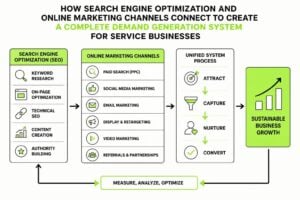
Your website doesn't exist in isolation. It's one piece of your marketing system. The businesses that scale connect everything: website, CRM, email marketing, paid campaigns, social proof, analytics.
This integration is where web design and marketing become truly powerful. A prospect sees your ad, clicks to a landing page designed for that specific campaign, fills a form that triggers an email sequence, and enters your CRM tagged with the source. Every touchpoint is tracked. Every interaction feeds your understanding.
The Connected Stack
Website to CRM – Direct integration means no leads fall through cracks. Form fills, chat conversations, phone calls, all captured and assigned automatically.
Email marketing to website – Campaigns that drive to specific landing pages. Behavior tracking that segments your list based on interest. Automated follow-ups that bring people back to high-value content.
Paid advertising to custom landing pages – No generic homepage traffic. Every campaign gets a page designed around that specific offer, message, and audience.
Analytics to attribution – Understanding the full journey from first touch to closed client. What content did they consume? Which emails drove action? What was the path that converted?
This is how marketing and business development work together in practice. Not as separate functions, but as one system where every component strengthens the others.
When everything connects, you stop guessing. You know what works. You can predict outcomes. You can scale what's working and cut what isn't. That's when growth becomes structured instead of chaotic.
Scaling Without Breaking Your Systems
The trap of web design and marketing growth is that what works at small scale often breaks at larger scale. Your scrappy manual processes hit capacity. Your simple site structure becomes confusing. Your email follow-ups get inconsistent.
Building for scale doesn't mean over-engineering from day one. It means choosing infrastructure that can grow with you. It means automating the repeatable parts so humans focus on the strategic work.
What Scales and What Doesn't
| Scalable | Breaks at Scale |
|---|---|
| Automated lead nurture sequences | Manual follow-up emails |
| Template-based landing pages | One-off custom builds |
| Centralized content management | Files scattered across drives |
| Systematic testing and optimization | Redesigns based on opinions |
| Clear attribution and reporting | Spreadsheet tracking |
The goal isn't to automate everything. It's to protect your time for high-value work while systems handle the repeatable parts. Your CRM should route leads automatically. Your website should qualify prospects before they book time. Your marketing should run in structured campaigns, not constant firefighting.
This approach to digital growth means you can handle 10x the leads without 10x the team. Your systems do the heavy lifting. Your people do the thinking.
Maintenance That Protects Your Investment
Launching a site isn't the end. It's the beginning. Your web design and marketing systems need ongoing care or they degrade. Links break. Content goes stale. Security vulnerabilities appear. Conversion rates drift down as friction slowly accumulates.
Most businesses ignore maintenance until something breaks. Then it's an emergency. A rushed fix. More chaos.
Regular maintenance that matters:
- Security updates on your platform and plugins
- Performance monitoring to catch speed degradation
- Broken link checks that protect SEO and user experience
- Content audits to refresh outdated information
- Conversion tracking verification to ensure data accuracy
- Backup systems that protect against disaster
Set a monthly schedule. Check your core metrics. Review your tracking. Test your forms. Update your proof points. It's boring work, but it protects everything you've built.
The businesses with the strongest web design and marketing results aren't the ones that launch perfectly. They're the ones that improve consistently. Small gains compound. Systems get stronger. Growth becomes predictable.
Web design and marketing aren't separate projects to outsource and forget. They're the foundation of how you capture attention, build trust, and create predictable demand. When they work together as one system, everything else gets easier. If you're ready to build infrastructure that actually scales, MDO Digital can help you design the systems, remove the chaos, and create growth that compounds. Let's build something that works.