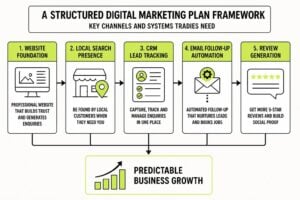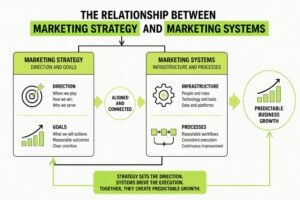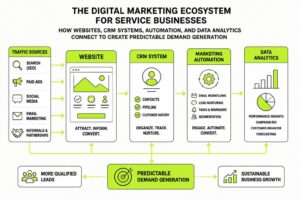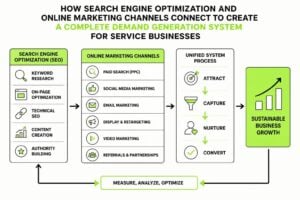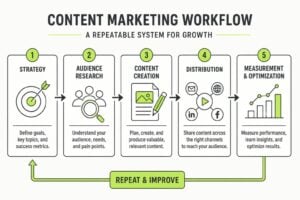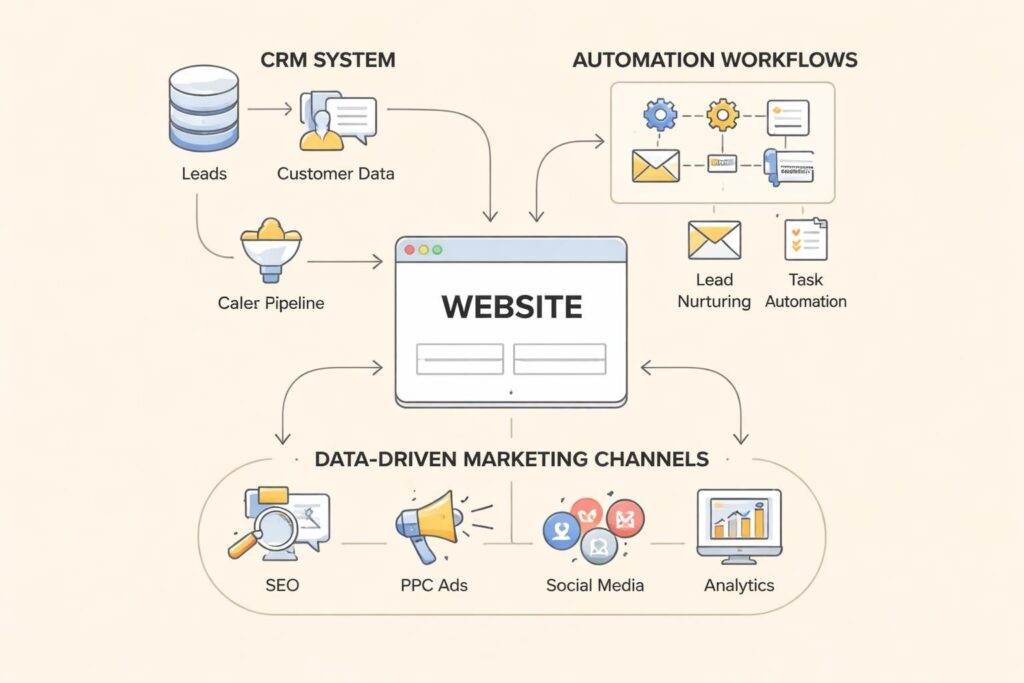
Most service businesses treat their website and marketing as separate projects. They hire a developer to build pages, then hand everything to a marketer who tries to generate leads. The problem shows up fast: marketing sends traffic to pages that don't convert, the website collects leads that fall through cracks, and nobody can track what's actually working. When web development and digital marketing operate as one system instead of two departments, you stop fixing symptoms and start building infrastructure that compounds.
Why Web Development and Digital Marketing Need Each Other
Your website isn't a brochure. It's the infrastructure for every marketing dollar you spend. A beautifully designed site means nothing if it can't capture visitor data, segment audiences, or trigger follow-up sequences. Marketing campaigns fail when they send traffic to pages that load slowly, confuse visitors, or lose leads in broken forms.
The connection between web development and digital marketing shows up in three places:
- Data capture architecture: Forms, tracking pixels, event triggers that feed your CRM
- Page performance: Load speed, mobile responsiveness, navigation flow that affects conversion rates
- Automation infrastructure: How your website talks to email platforms, scheduling tools, and analytics systems
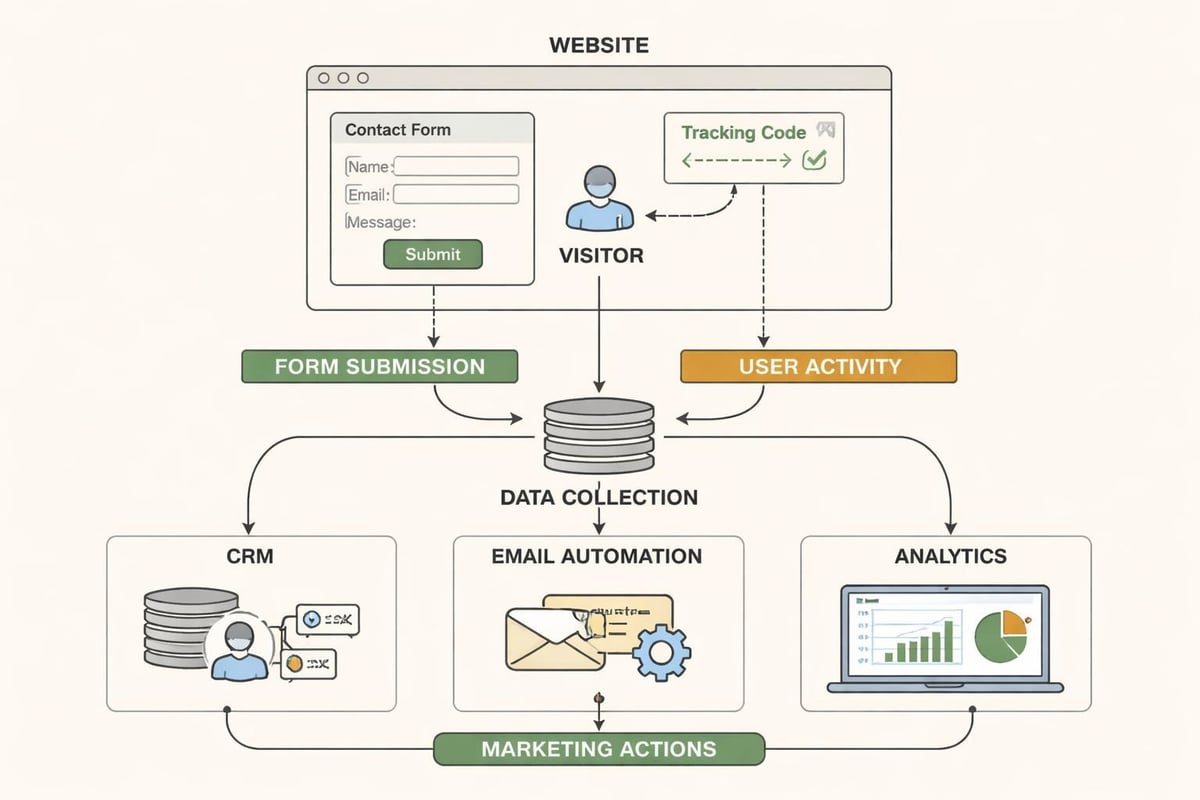
Service businesses often build a website, launch ads, then wonder why leads aren't converting. The disconnect happens because marketing web development wasn't planned as a single system. Your developer doesn't know which actions matter to your marketing team. Your marketer doesn't understand technical limitations. Both sides guess instead of coordinate.
Building Website Infrastructure That Supports Marketing Goals
Modern web development starts with marketing requirements, not design preferences. Before you pick colours or fonts, map out the customer journey. What actions do visitors need to take? What data do you need to collect? How does information flow from your website into your sales process?
Technical Foundation for Marketing Systems
Your website needs specific technical capabilities to support serious marketing work:
| Technical Requirement | Marketing Purpose | Business Impact |
|---|---|---|
| Fast page load (under 2 seconds) | Reduces bounce rate on paid traffic | Protects ad spend |
| Mobile-responsive design | Captures mobile search traffic | Expands addressable market |
| Form integration with CRM | Automatic lead capture and routing | Prevents lead loss |
| Event tracking setup | Measures specific user actions | Enables optimization |
| Email automation connection | Triggers sequences based on behavior | Nurtures leads automatically |
The World Wide Web Consortium provides standards for HTML and CSS that ensure your technical foundation works across browsers and devices. This isn't about following rules for the sake of rules, it's about making sure your marketing infrastructure doesn't break when someone views it on an iPhone.
Most businesses skip the boring infrastructure work and jump straight to design. Six months later, they're rebuilding everything because the site can't handle the marketing systems they need. Build the foundation first.
Conversion Architecture vs Pretty Pages
A high-converting website doesn't need fancy animations or complex layouts. It needs clear paths to action, minimal friction, and technical reliability. Web development for marketing purposes focuses on:
- Clear hierarchy: Visitors should know exactly what to do next
- Minimal form fields: Every extra field costs you conversions
- Speed optimization: Compress images, minimize scripts, cache aggressively
- Mobile-first design: Most B2B traffic comes from mobile devices now
- Accessible navigation: Following W3C accessibility guidelines improves usability for everyone
The development choices you make directly impact marketing performance. A form that takes 15 seconds to load loses half your paid traffic. A checkout process that requires account creation kills conversions. These aren't marketing problems or development problems, they're systems problems.
Digital Marketing Strategy Built on Technical Reality
Marketing teams love to plan campaigns without consulting their developers. They promise features that aren't built, create landing pages that break on mobile, or design nurture sequences that can't trigger because the website doesn't track the right events.
Campaign Infrastructure Requirements
Before you launch any marketing campaign, verify your technical infrastructure can support it:
- Tracking setup: Conversion pixels, event tracking, UTM parameter handling
- Landing page performance: Load speed under 2 seconds, mobile optimization
- Form functionality: CRM integration, error handling, confirmation sequences
- Automation triggers: Webhook connections, API integrations, data sync
- Analytics configuration: Goal tracking, funnel visualization, attribution modeling
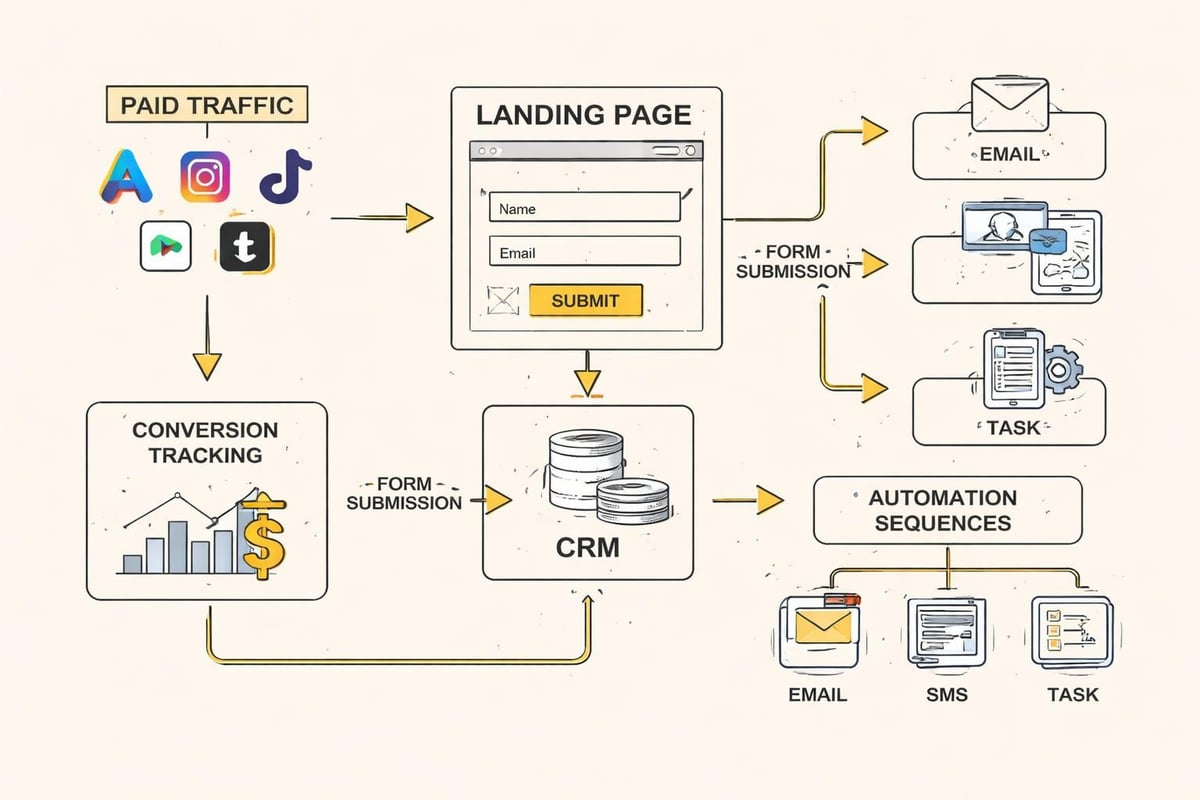
When Search Engine Journal discusses data sources for content strategy, they're talking about connecting marketing decisions to actual performance data. That only works if your web development includes proper analytics implementation from day one.
SEO as a Development Requirement
Search optimization isn't something you add after building a website. It's built into the development process through:
- Clean URL structures: Descriptive, hierarchical, human-readable
- Proper heading hierarchy: H1, H2, H3 used correctly for content structure
- Image optimization: Alt text, file compression, lazy loading
- Schema markup: Structured data that helps search engines understand content
- Internal linking architecture: Logical site structure that distributes authority
Service businesses often hire SEO consultants to fix websites that weren't built with search in mind. The consultant makes recommendations that require development work, which costs money and takes time. Build it right the first time.
Creating authoritative content requires understanding both content strategy and technical implementation. Your marketing team needs to know what the website can do. Your development team needs to understand what marketing requires.
Systems Integration: Where Development Meets Marketing Operations
The real power of web development and digital marketing shows up in automation and integration. Your website shouldn't just display information, it should be the central nervous system for your entire marketing operation.
Core Marketing System Integrations
Every service business needs these integrations working properly:
- CRM connection: Leads from website forms automatically create contact records
- Email platform: Form submissions trigger welcome sequences and nurture campaigns
- Scheduling system: Discovery call bookings sync with calendar and send confirmations
- Analytics platform: User behavior data flows to reporting dashboards
- Payment processing: Service bookings or product purchases complete without manual intervention
These integrations require both development work (API connections, webhooks, data mapping) and marketing setup (campaign logic, segmentation rules, automation sequences). When online branding includes these technical systems, not just visual identity, businesses build actual competitive advantages.
Data Flow and Lead Routing
Here's where most service businesses lose money: leads come in through the website, but nobody knows where they go or what happens next. Proper web development and digital marketing integration creates clear data flow:
| Stage | Development Component | Marketing Component |
|---|---|---|
| Capture | Form with CRM integration | Landing page copy and offer |
| Qualification | Conditional logic based on responses | Lead scoring rules |
| Routing | Automatic assignment to sales rep | Notification triggers |
| Nurture | Tag application for segmentation | Email sequence activation |
| Follow-up | Task creation in CRM | Sales enablement content |
Without technical infrastructure that supports this flow, you're manually moving data between systems, which means leads fall through cracks and marketing can't scale.
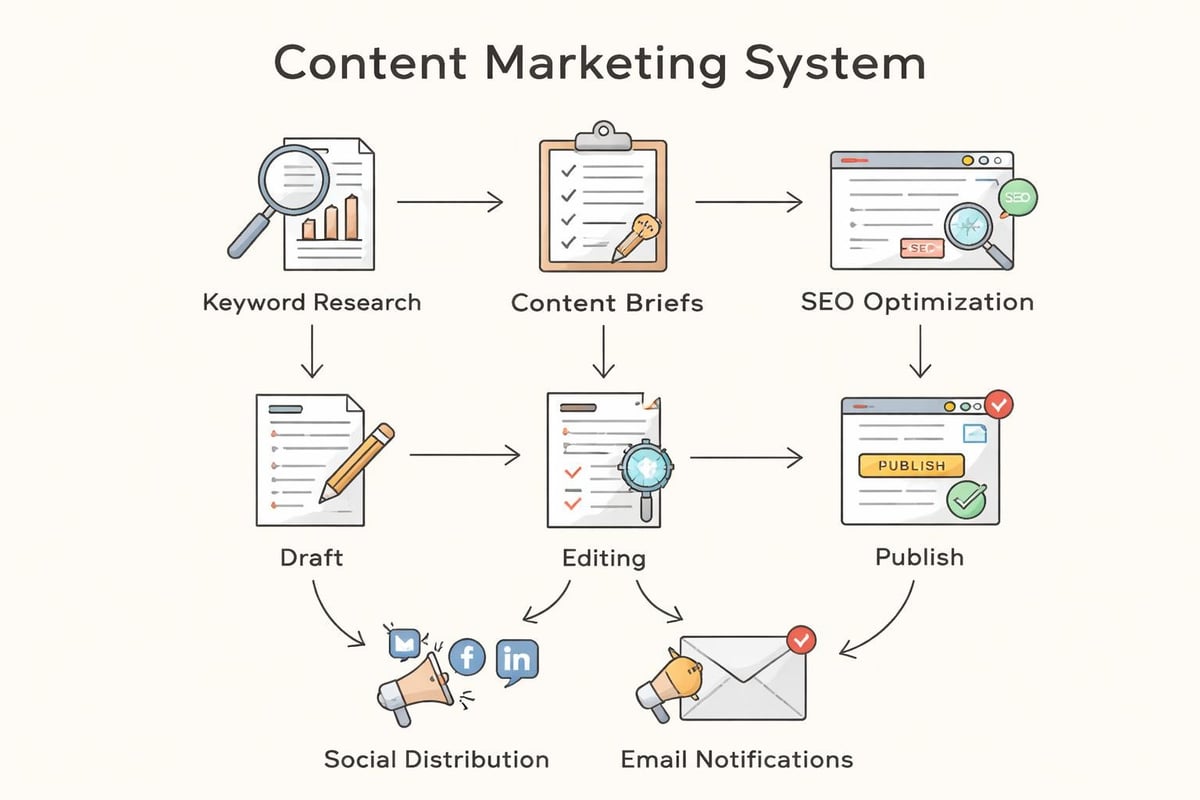
Content Marketing Supported by Technical Infrastructure
Content marketing fails when the technical foundation can't support it. You create valuable blog posts, but your website doesn't capture email addresses. You build resource libraries, but can't track who downloads what. You invest in SEO, but your site structure works against you.
Publishing Systems That Enable Consistency
Service businesses struggle with content consistency because publishing is painful. If every blog post requires developer intervention, you won't publish regularly. Modern web development includes:
- Content management systems: Easy publishing without technical skills
- Template systems: Consistent formatting across all content
- Media libraries: Organized asset management
- Version control: Track changes and revert if needed
- Preview environments: Review before publishing
When digital and content marketing includes proper technical setup, marketing teams can execute without bottlenecks. They publish when they want, update pages as needed, and test variations without waiting for developers.
Performance Tracking and Optimization
Creating content without tracking performance wastes time and money. Your web development should include:
- Page-level analytics: Which content drives conversions
- Engagement metrics: Time on page, scroll depth, interaction rates
- Conversion tracking: Downloads, form fills, booking completions
- Attribution modeling: Which content assists in sales
- A/B testing infrastructure: Compare variations systematically
According to Search Engine Watch’s analysis on marketing trends, businesses that connect content performance to revenue outcomes make better decisions about what to create. That requires technical infrastructure that most websites don't have.
Building Marketing Authority Through Technical Excellence
Your website's authority affects everything from search rankings to conversion rates. Building website authority requires both content strategy and technical execution.
Technical Factors That Build Trust
Visitors evaluate credibility in seconds. Technical elements that signal authority:
- Security certificates: HTTPS across the entire site
- Professional email addresses: Not Gmail or Yahoo
- Fast load times: Under 2 seconds on all devices
- Error-free experience: No broken links or 404 pages
- Consistent branding: Design system applied everywhere
These seem like small details until you realize that identifying authoritative sources depends on these signals. If your website feels broken or amateur, your marketing claims don't matter.
Measurement and Improvement Cycles
Web development and digital marketing both improve through testing and iteration. Set up measurement systems that show what's working:
Key Performance Indicators Across Both Disciplines
| Metric Category | Development KPI | Marketing KPI |
|---|---|---|
| Traffic | Page load time | Organic sessions |
| Engagement | Session duration | Pages per session |
| Conversion | Form completion rate | Lead generation cost |
| Revenue | Purchase completion | Customer acquisition cost |
| Retention | Error rate | Return visitor rate |
Track these monthly. When numbers decline, investigate whether the problem is technical (slow pages, broken forms) or strategic (wrong messaging, weak offers). Most businesses blame marketing when development is the issue, or vice versa.
Choosing Partners Who Understand Both Sides
The biggest mistake service businesses make is hiring specialists who don't talk to each other. Your developer builds what they think looks good. Your marketer creates campaigns without understanding technical constraints. Nobody owns the outcome.
Look for partners who approach web development and digital marketing as one system. They should ask about your sales process before designing pages. They should understand automation infrastructure, not just ad platforms. They should build technical systems that support long-term marketing strategy.
Case studies from similar businesses show results when development and marketing align. Revenue grows because the entire system works together, not because one department got slightly better at their isolated job.
Resources like the Web Analytics Consultants Association’s learning guides help you understand what good integration looks like. But understanding and executing are different skills.
Implementation Over Theory
Most articles about web development and digital marketing stay theoretical. They explain concepts without showing you how to actually build the systems. Real implementation requires specific technical decisions:
- Which CRM integrates best with your website platform?
- How do you set up conversion tracking that survives iOS updates?
- What automation triggers create the most value with least complexity?
- How do you structure content for both search engines and human readers?
These questions have technical answers that affect marketing results. When you understand what makes websites authoritative from both content and technical perspectives, you make better decisions about where to invest.
The businesses that grow predictably don't have better ideas. They have better systems. Their websites capture every lead. Their automation follows up instantly. Their tracking shows exactly what's working. They built infrastructure that supports marketing instead of fighting it.
Your competitors are probably still treating web development and digital marketing as separate projects. That's your advantage if you build integrated systems now. Start with clear data flow, add automation where it removes manual work, and track everything that matters to revenue.
Web development and digital marketing create predictable growth when they work as one system, not separate departments fighting over budget and blame. If you're done with websites that look good but don't convert, or marketing that burns budget without building assets, MDO Digital designs the infrastructure that service businesses actually need. We build high-trust websites connected to CRM systems and automation that protects every lead while creating compound growth over time.