The phrase "online online marketing" might sound redundant at first. But it actually captures something important about how marketing works now. It's not just about being online. It's about marketing that exists entirely in digital systems, where every touchpoint is tracked, every lead is captured, and every campaign feeds data back into your infrastructure. This is marketing built for service-based businesses that want predictable growth instead of random wins.
What Online Online Marketing Actually Means
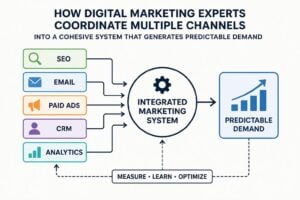
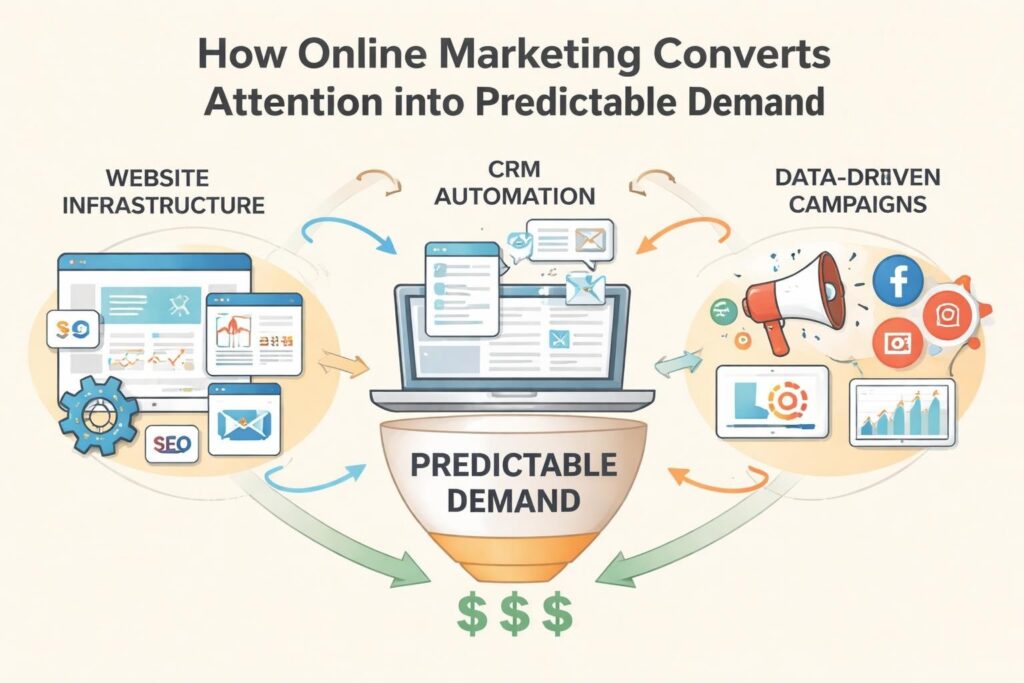
When we talk about online online marketing, we're describing a fully integrated approach where your digital presence, automation systems, and marketing campaigns work as one connected machine.
It's different from traditional online marketing in a few key ways:
- System-first thinking: Every campaign feeds into your CRM, not just your inbox
- Infrastructure focus: Your website, automation, and data tracking are built before you scale ads
- Compound growth: Each lead adds to your knowledge base, making future campaigns smarter
- Zero leakage: Leads don't fall through cracks because the system catches them
Most service businesses run campaigns that generate attention but lose leads because the infrastructure isn't there. They get traffic but no tracking. Inquiries but no follow-up system. Interest but no way to nurture it into demand.
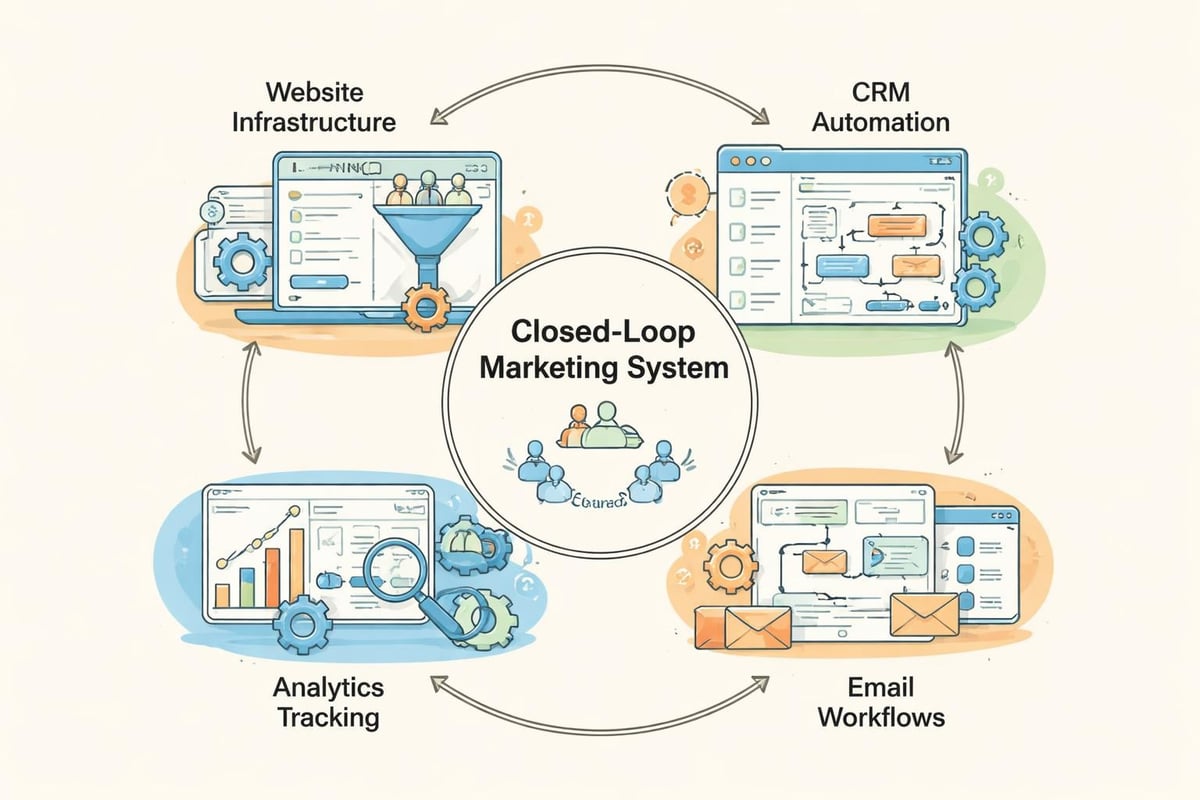
Online online marketing solves this by treating your marketing as a closed-loop system. When someone visits your site, requests information, or engages with content, that action triggers automated workflows, updates your CRM, and informs your next move.
The Infrastructure Layer
Before you spend a dollar on ads, your infrastructure needs to work. This means:
- A high-trust website that clearly communicates what you do and who you serve
- CRM integration that captures every lead automatically
- Email automation that nurtures leads without manual work
- Analytics setup that shows which channels actually convert
- Form and chat systems that qualify leads before they hit your calendar
This foundation is what separates businesses that scale from businesses that stay stuck. Marketing and web development need to work together, not in silos.
Building Data-Driven Campaigns That Convert
Online online marketing runs on data, not hunches. Every campaign should answer three questions: Where did this lead come from? What did they do? What should happen next?
The shift toward AI-first browsers and the end of the pageview economy means traditional metrics like page views matter less than conversion actions. You need to track behaviors that indicate buying intent.
| Metric Type | What It Measures | Why It Matters |
|---|---|---|
| Lead source | Which channel brought them in | Shows where to invest more |
| Engagement depth | How many pages, time on site, resources downloaded | Indicates qualification level |
| Conversion events | Form fills, calls booked, chat started | Direct revenue indicators |
| Email behavior | Opens, clicks, replies | Nurture effectiveness |
| Customer lifecycle | Time from lead to close, LTV | Campaign ROI calculation |
When you build campaigns around these metrics, you stop guessing and start scaling what works. This is where digital growth becomes systematic instead of sporadic.
Campaign Types That Work in 2026
Different campaign types serve different parts of your funnel. Here's what actually drives results for service businesses:
Search campaigns still work for high-intent keywords. When someone searches for exactly what you offer, you want to be there. But the game has changed with AI overviews. Your content needs to answer questions so well that AI tools reference it.
Retargeting campaigns convert people who already know you exist. Someone visited your pricing page but didn't book? Show them case studies. They downloaded a guide? Invite them to a consultation.
Email nurture campaigns keep leads warm until they're ready to buy. Most service purchases take weeks or months to decide. Automated email sequences educate, build trust, and stay top of mind without constant manual effort.
Content marketing campaigns attract strangers and turn them into qualified leads. When you publish useful content and distribute it strategically, you build authority and capture contact information from people actively researching solutions.
Content marketing and branding work together to create this attraction system, but only if your infrastructure can handle the leads it generates.
The CRM and Automation Backbone
Here's where online online marketing separates from basic digital marketing. Your CRM isn't just a contact database. It's the nervous system of your entire marketing operation.
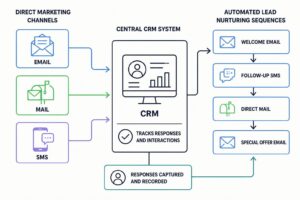
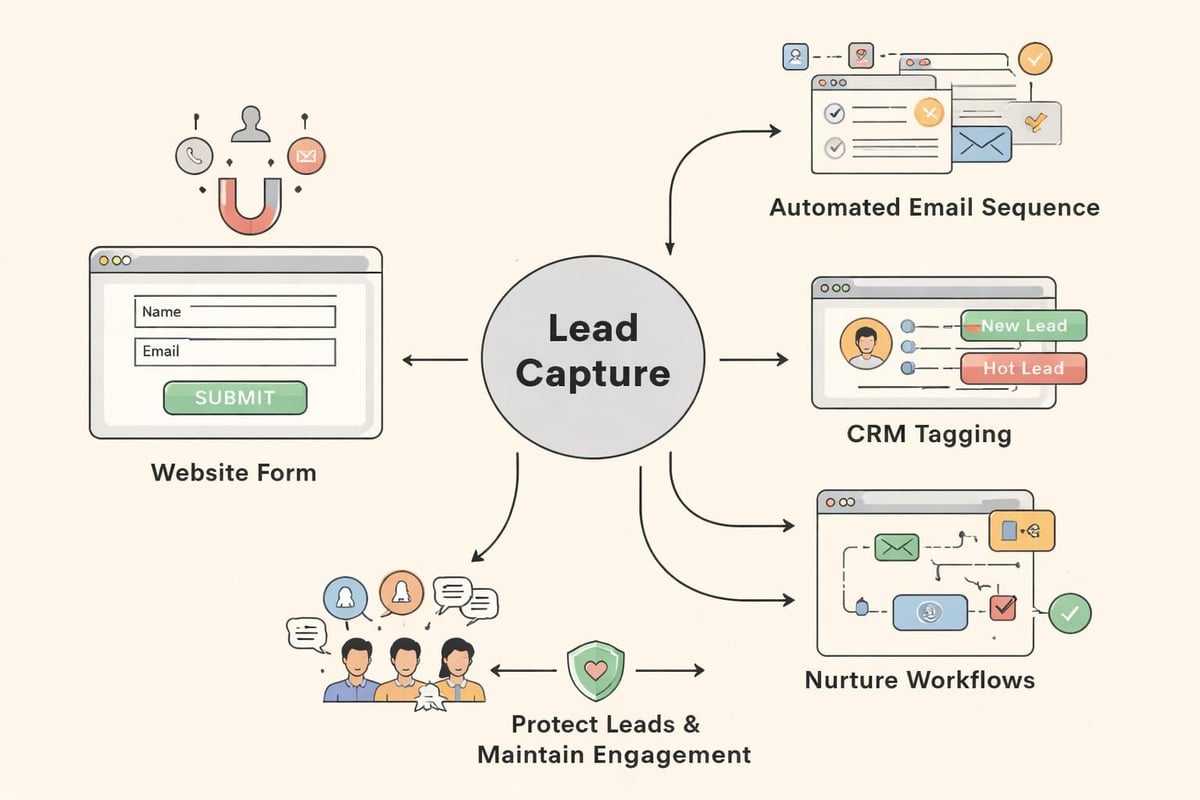
When someone fills out a contact form, your CRM should:
- Log the lead with source tracking
- Tag them based on which service they inquired about
- Trigger a personalized welcome email
- Add them to the appropriate nurture sequence
- Create a task for your team to follow up
- Track every interaction moving forward
None of this requires manual work. It happens automatically because the system is built right.
Automation Workflows That Protect Leads
Most businesses lose leads in three places: between inquiry and response, between proposal and decision, and in long nurture cycles. Automation fixes all three.
Immediate response workflows reply within minutes, not hours. Even if it's just acknowledgment and timeline setting, speed matters. People contact multiple providers. First response often wins.
Proposal follow-up workflows remind prospects about pending proposals, share relevant case studies, and make it easy to say yes. Don't let deals die from silence.
Long-term nurture workflows keep your business visible to leads who aren't ready yet. Monthly value emails, quarterly check-ins, and relevant content shares maintain the relationship until timing aligns.
This infrastructure is what marketing systems and branding agencies build for clients who want sustainable growth.
Content and Distribution Strategy
Content drives online online marketing, but only if you distribute it properly. Publishing blog posts and hoping for traffic doesn't work anymore. You need a system.
Your content strategy should include:
- Educational content that answers questions your prospects actually ask
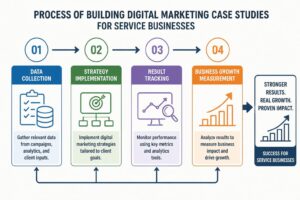
- Case studies that demonstrate results for clients like theirs
- Process content that shows how you work and what to expect
- Comparison content that helps buyers evaluate options
- Thought leadership that positions you as the authority
The rise of alternative channels and video-first content means written content alone isn't enough. You need to repurpose ideas across formats.
Distribution Channels That Generate Demand
Publishing content is step one. Getting it in front of the right people is where demand happens.
- Email list: Your owned audience gets first access
- Search optimization: Content is built to rank for specific queries
- LinkedIn: Where your prospects actually spend time
- Partner channels: Referral partners share your best content
- Retargeting: Previous visitors see new content
- Guest platforms: Contributing to industry publications
Each channel requires different formatting and messaging, but the core ideas stay consistent. This is digital and content marketing working as an integrated system.
Measuring What Matters in 2026
Traditional marketing analytics are dying. Page views and bounce rates matter less than conversion actions and revenue attribution. The question isn't "How many people visited?" It's "How many became customers and what did we spend to get them?"
Attribution modeling connects leads back to their source. Someone might find you through organic search, return via LinkedIn, and convert after an email. Which channel gets credit? With proper tracking, you know the full journey.
Lead scoring prioritizes which leads to focus on. Not every contact is equally likely to buy. Score leads based on behavior, engagement, and fit. Focus sales energy where it matters.
Customer acquisition cost (CAC) tells you what growth actually costs. If you spend $2,000 to close one client worth $10,000, you have room to scale. If you spend $8,000, something needs fixing.
Lifetime value (LTV) measures total customer worth. When you know LTV, you know how much you can afford to spend on acquisition. This unlocks aggressive scaling that competitors can't match.
According to the Interactive Advertising Bureau, ad spending in the creator economy now exceeds traditional media. But throwing money at influencers without measurement infrastructure is just expensive hope.
Building Trust Through Digital Presence
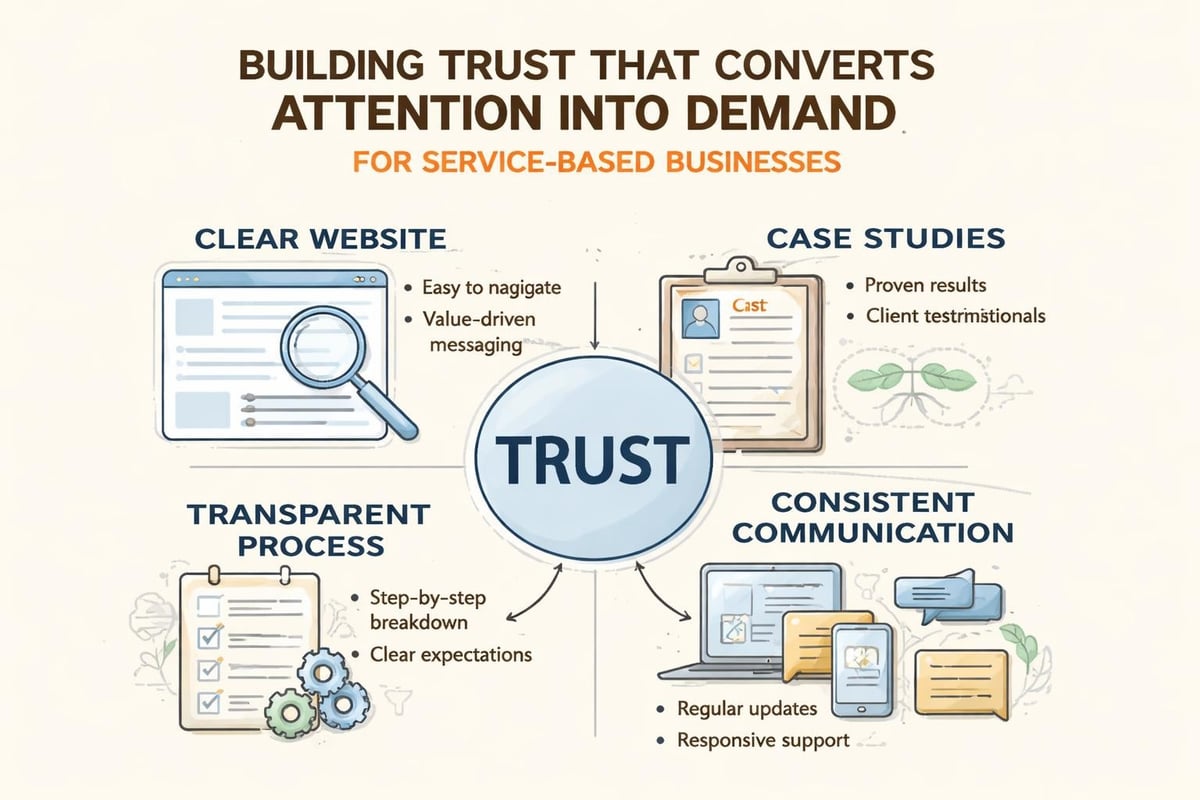
Online online marketing only works if people trust you. Your website, content, and communication style either build confidence or create doubt.
Website clarity is non-negotiable. Visitors should understand what you do, who you serve, and why you're different within 10 seconds. Vague positioning kills conversions.
Social proof through case studies, testimonials, and recognizable client logos reduces risk. People want to know someone like them has succeeded with you.
Transparent processes show how you work. When prospects understand your methodology, timeline, and what to expect, they feel safer moving forward.
Consistent communication builds familiarity. Regular emails, content, and touchpoints keep you visible without being annoying.
This is where branding and advertising merge into a cohesive presence that makes buying feel natural instead of risky.
Scaling With Systems, Not Just Spending
The difference between businesses that scale and businesses that plateau is systems. You can throw more money at ads, but without infrastructure to handle increased lead volume, you just create expensive chaos.
Capacity planning matches marketing spend to fulfillment capacity. Don't generate more leads than you can serve well. Scale marketing and delivery together.
Standardized processes make growth predictable. When each client follows the same onboarding, project, and communication flow, you can handle more volume without quality drops.
Team automation gives everyone the tools to work efficiently. When CRM, project management, and communication systems connect, nothing falls through cracks.
Financial modeling shows when to invest and when to pause. Track CAC, LTV, cash flow, and margins so scaling decisions are based on numbers, not feelings.
Many businesses focus on marketing agency pricing without considering the systems needed to deliver results at scale. Cheap marketing with no infrastructure loses money. Well-built systems with higher prices generate profit.
Adapting to Platform and Technology Shifts
Online online marketing requires constant adaptation. What worked last year might not work now. The platforms, algorithms, and buyer behaviors keep evolving.
Privacy changes limit tracking capabilities. iOS updates block pixels. Cookie deprecation changes retargeting. But businesses with strong first-party data (email lists, CRM databases, customer records) weather these changes better than those dependent on third-party tracking.
AI tools are reshaping how people research and buy. The predictions for marketing trends emphasize hyper-personalization and data-driven strategies. Generic campaigns die. Personalized, relevant communication wins.
Search behavior is evolving. AI overviews answer questions without sending traffic to websites. This means your content needs to be so authoritative that AI tools cite you, and your brand needs to be strong enough that people seek you out directly.
Social commerce lets people buy without leaving platforms. The growth of social commerce means your products or services need presence where transactions happen, not just where awareness builds.
The answer isn't chasing every trend. It's building flexible infrastructure that adapts without rebuilding from scratch each time platforms change.
Online online marketing isn't about doing more. It's about building systems that work together so every dollar spent generates measurable returns and every lead gets properly nurtured. When your website, CRM, automation, and campaigns function as one machine, growth becomes predictable instead of random. If you're ready to remove chaos and build marketing infrastructure that actually scales, MDO Digital helps service-based businesses create the systems, clarity, and demand generation that compounds over time.