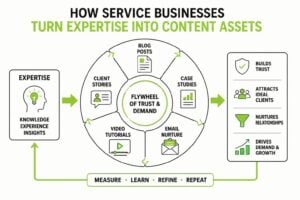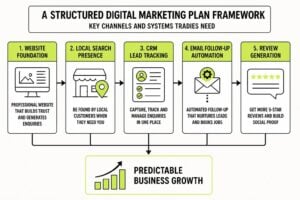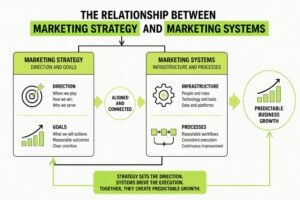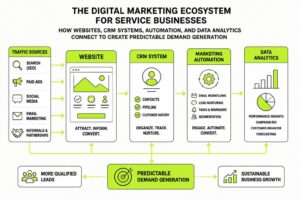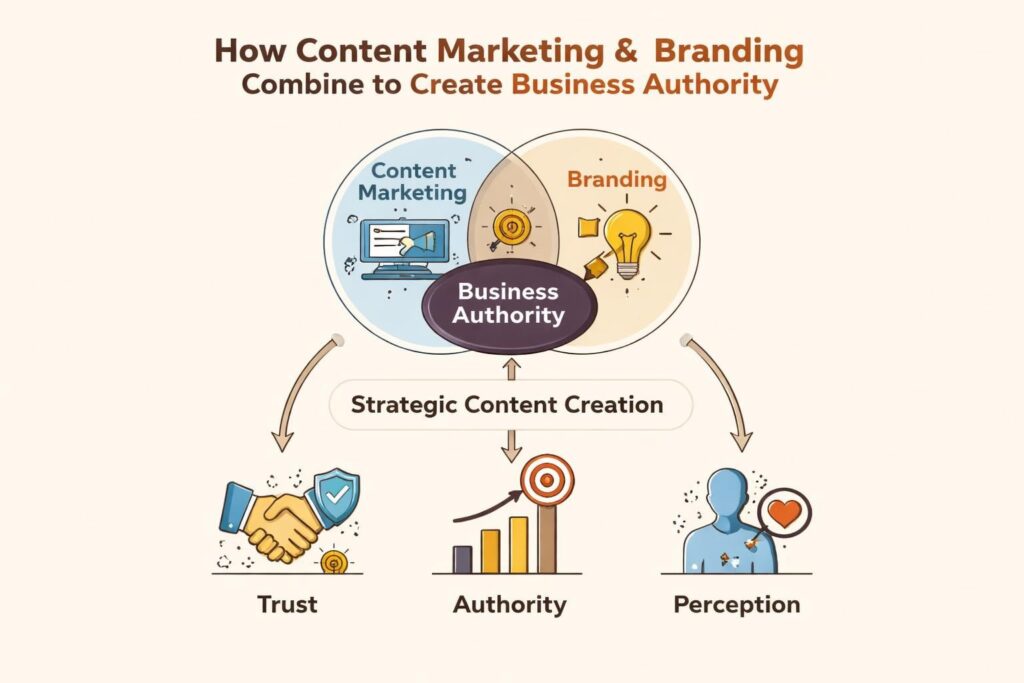
Most service businesses treat content marketing and branding as separate tasks. One team writes blog posts and social updates. Another manages logos and colour palettes. But this split creates a problem. Your content doesn't reinforce your brand position, and your brand doesn't give your content a clear voice. The result is forgettable marketing that blends into the noise. When you align content marketing and branding properly, everything you publish builds recognition, authority, and trust. It's not about more content. It's about content that actually moves your business forward.
Why Content Marketing and Branding Must Work Together
Content without brand clarity is just noise. You can publish daily, rack up views, and still fail to convert because no one knows what you stand for. Your audience might consume your content, but they won't remember you when it's time to buy.
Branding gives content a purpose. It defines who you're talking to, what you believe, and why someone should care. When your branding strategy is solid, every piece of content reinforces the same message.
Here's what happens when they're disconnected:
- Content feels generic and doesn't stand out
- Messaging shifts depending on who's writing
- Your audience can't articulate what makes you different
- Leads arrive confused about what you actually do
When they're aligned:
- Every article, email, and post builds the same perception
- Your tone and perspective become recognizable
- Trust compounds over time
- Prospects arrive ready to buy because they already know you
Think of branding as the foundation and content marketing as the structure you build on top. Without the foundation, nothing holds. Without the structure, no one sees what you've built.
Building Authority Through Strategic Content
Authority isn't about being the loudest voice. It's about being the most trusted. Service businesses often assume they need massive audiences to build authority, but that's backwards. You need authority to build the right audience.
Creating authoritative content starts with depth, not breadth. Pick specific problems your ideal clients face and solve them completely. Don't write surface-level "what is" content. Write the "how to fix" and "why this matters now" content that people bookmark.
Content Formats That Build Brand Authority
Different formats serve different purposes in your content marketing and branding strategy. Most businesses default to blog posts and wonder why nothing sticks.
| Format | Authority Signal | Best Use Case |
|---|---|---|
| Long-form guides | Deep expertise, comprehensive knowledge | Pillar content, SEO foundation |
| Case studies | Proven results, real implementation | Sales enablement, trust building |
| Original research | Unique insights, industry leadership | PR, backlinks, differentiation |
| Process documentation | Systematic thinking, transparency | Educational content, onboarding |
| Opinion pieces | Clear perspective, thought leadership | Brand positioning, audience alignment |
The format matters less than the consistency. Pick two or three formats you can maintain and commit to them. Your audience will learn what to expect from you, and that predictability builds trust.
Choosing Topics That Reinforce Your Position
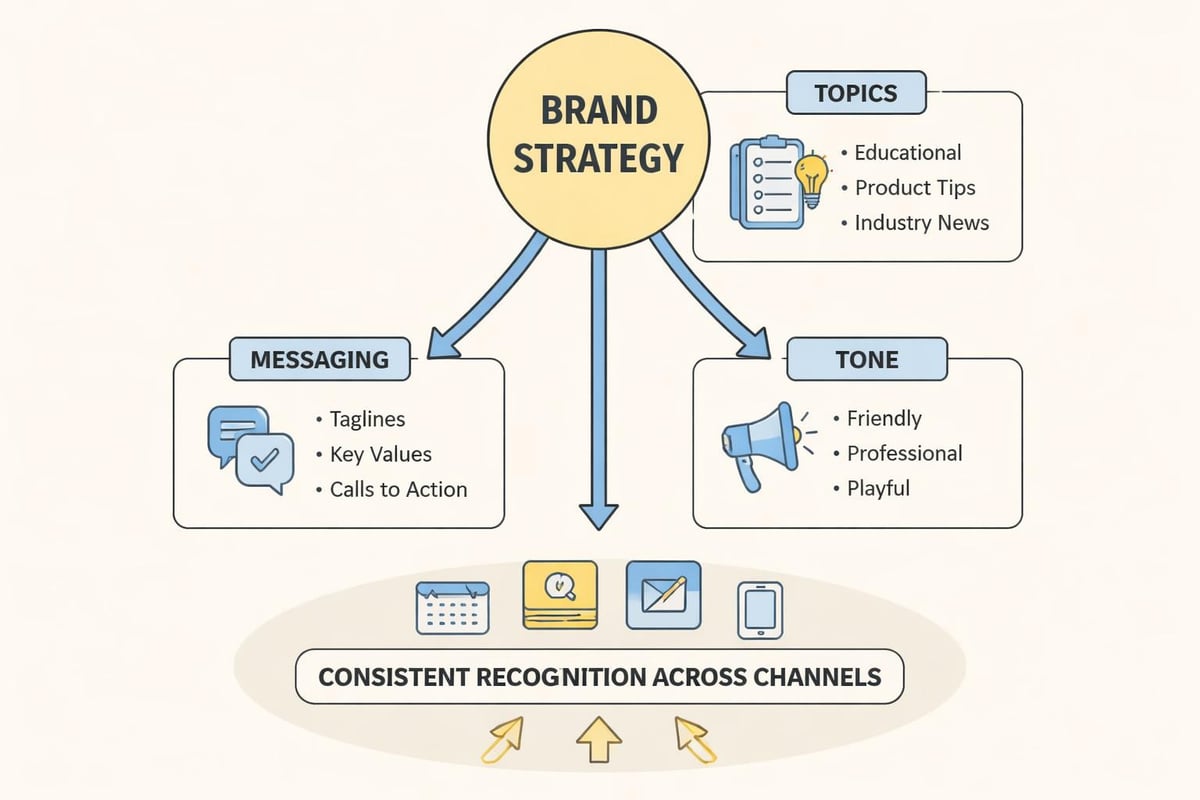
Random content dilutes your brand. Strategic content strengthens it. Every topic you choose should connect back to your core positioning.
If you position as the systems-focused marketing agency, your content should reflect that. Write about infrastructure, processes, measurement, and long-term thinking. Avoid trend-chasing unless you can connect it back to your core message.
Using data to establish the right content focus helps you balance what your audience searches for with what strengthens your brand. Look for overlap between:
- Problems your ideal clients actively research
- Topics where you have genuine expertise
- Gaps your competitors aren't addressing well
- Questions that lead to your services naturally
The sweet spot is content that ranks well AND positions you correctly. One without the other wastes effort.
The Voice Behind Your Content Marketing and Branding
Your brand voice isn't about being clever. It's about being consistent. Most businesses change tone depending on the platform, the writer, or their mood that day. This fragments your brand.
Define your voice with constraints:
- Perspective: What do you believe that others don't?
- Language: What words do you use or avoid?
- Structure: How complex or simple are your sentences?
- Personality: What qualities show up in every piece?
For service businesses, the voice should build confidence without arrogance. You want to sound like the advisor who's seen this before, not the salesperson who needs the deal.
Write like you talk to clients in person. If you wouldn't say it in a strategy session, don't write it in your content. This consistency makes your content marketing and branding feel like the same entity, not two different teams.
Voice Consistency Across Channels
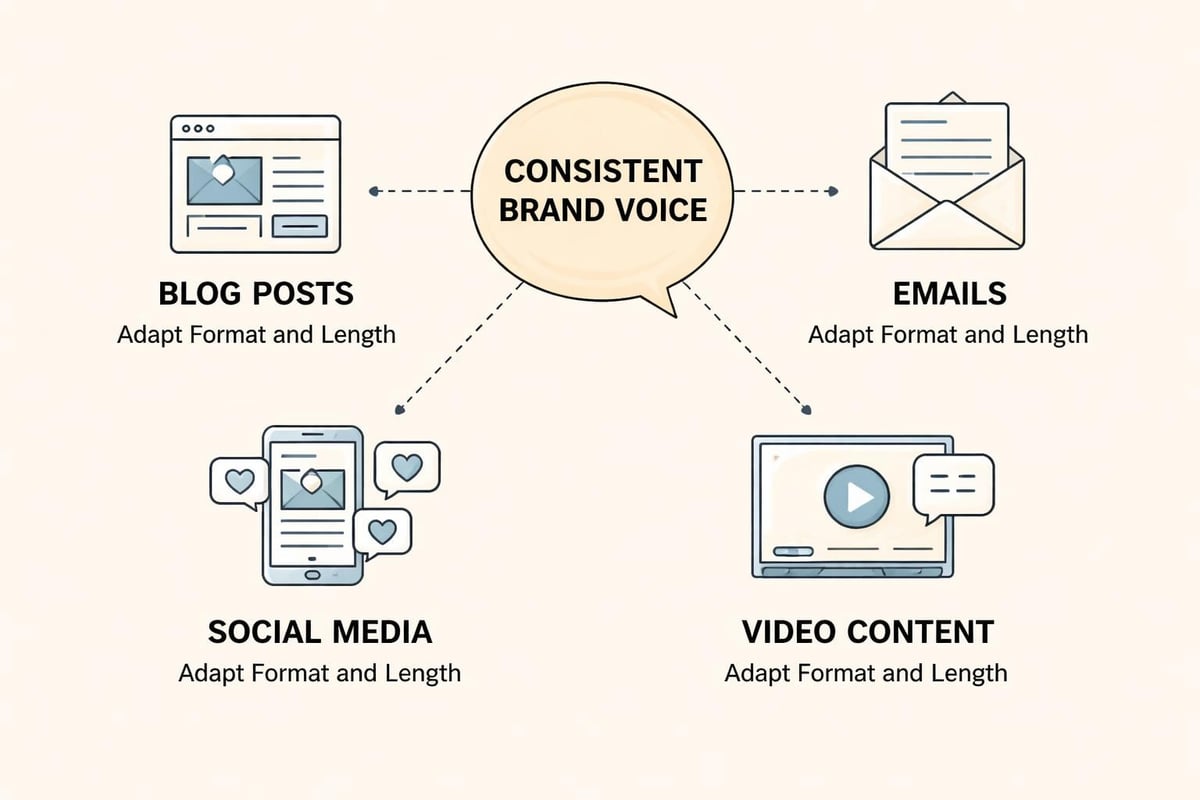
Different platforms need different lengths, but your voice shouldn't change. An email, LinkedIn post, and blog article should all sound like they came from the same person.
Platform adaptation without voice change:
- LinkedIn: Professional context, same core perspective
- Email: Direct and personal, same expertise level
- Blog: Comprehensive depth, same language choices
- Video: Conversational delivery, same beliefs
The mechanics change. The voice doesn't. This is how you become recognizable before someone sees your logo.
Content Marketing and Branding for Service Businesses
Product companies can show their offering. Service businesses have to prove capability before the client experiences it. That's where content marketing becomes thought leadership.
Your content is your proof. It demonstrates how you think, how you solve problems, and what you prioritize. A potential client reading your content should be able to imagine working with you.
Demonstrating Process Without Giving Everything Away
The biggest fear with educational content is that you'll teach prospects to do it themselves. In practice, detailed content attracts better clients, not DIY tire-kickers.
Share frameworks, not implementation:
- Explain the components of a CRM system (what needs to connect)
- Document why automation fails (the strategic errors)
- Break down funnel metrics (which numbers actually matter)
- Outline project phases (the sequence and dependencies)
The prospect who wants to hire you will read this and think "I need someone who knows this." The prospect who wants to DIY will try, get stuck, and either quit or come back later with more respect for the complexity.
Your digital marketing expertise becomes obvious when you explain not just what to do, but why it works and what happens when it doesn't.
Turning Content Into Sales Momentum
Content marketing and branding should create momentum, not just awareness. Every piece of content should move someone closer to a decision.
Map content to the buyer journey:
| Stage | Content Type | Goal |
|---|---|---|
| Awareness | Educational articles, industry trends | Position authority, build recognition |
| Consideration | Process guides, comparison content | Demonstrate methodology, set criteria |
| Decision | Case studies, implementation details | Prove results, remove uncertainty |
| Retention | Advanced tactics, optimization guides | Deliver ongoing value, reduce churn |
Not every article needs a hard CTA, but every article should have a clear next step. Link to related content. Offer a resource. Point toward a conversation. Make it easy for interested readers to go deeper.
Measuring What Actually Matters
Most businesses measure content marketing wrong. They count traffic, shares, and likes while ignoring whether any of it creates business results. Vanity metrics make you feel productive while your pipeline stays empty.
Content marketing and branding metrics that matter:
- Time on page (engagement, not just clicks)
- Repeat visitors (building an audience, not renting attention)
- Conversion to lead magnet or consultation (qualification)
- Lead source attribution (what content actually drives deals)
- Brand search volume (growing recognition)
Traffic is an input, not an output. What you do with that traffic determines whether content marketing works.
Creating a Content Measurement System
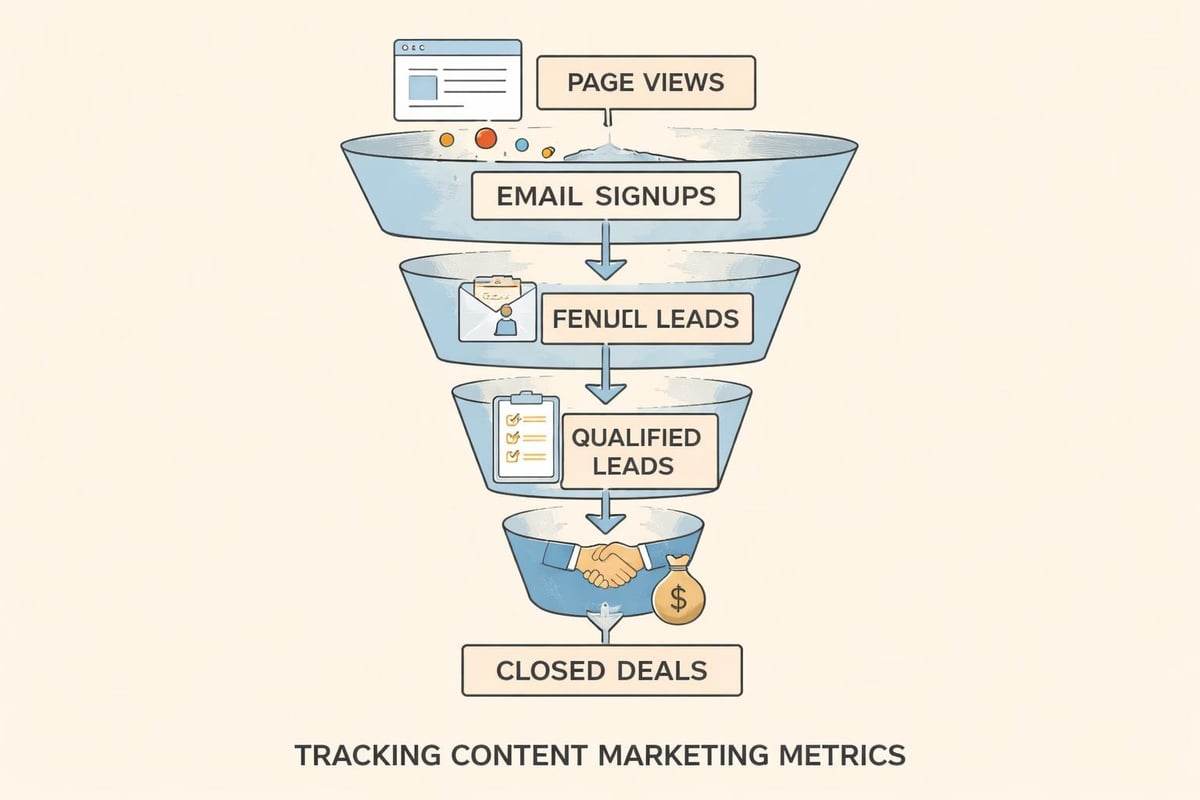
Start simple. Track the journey from content to client. Use your CRM to tag how leads found you. Ask new clients what content they consumed before reaching out.
Build a simple tracking structure:
- Tag blog posts by topic category and buyer journey stage
- Track which content pieces drive email signups
- Monitor which articles existing leads consume before booking calls
- Measure conversion rates by traffic source and content type
- Calculate customer acquisition cost by content channel
You'll see patterns. Certain topics convert better. Certain formats attract qualified leads. Some content brings traffic but wrong-fit prospects. Use this data to refine your content marketing and branding approach over time.
Building a Sustainable Content System
Most businesses quit content marketing before it works. They publish for three months, see modest results, and decide it doesn't work for them. But content marketing and branding is a compounding strategy. The work you do today builds value for years.
The key is building a system you can maintain. You don't need daily posts. You need consistent quality that accumulates over time.
Content Production That Actually Fits Your Business
Don't model your content schedule on companies with full content teams. Model it on what you can sustain for two years straight.
Sustainable content schedules by team size:
| Team Size | Realistic Output | Focus |
|---|---|---|
| Solo or small team | 1-2 articles monthly | Depth, evergreen value |
| 3-5 people | 1 weekly article | Consistency, topic clusters |
| 6-10 people | 2-3 weekly pieces | Multi-format, channel expansion |
| 10+ people | Daily content | Full-funnel coverage, testing |
Start smaller than you think. You can always scale up. You can't always recover from burnout or inconsistency.
Your marketing systems should support content creation, not fight it. Template your process. Document your standards. Make it repeatable.
Content Repurposing and Extension
One good idea should fuel multiple pieces of content. This isn't about being lazy. It's about being strategic.
Turn core content into multiple formats:
- Long article becomes email series (break into sections)
- Process guide becomes video walkthrough (screen share or presentation)
- Client work becomes case study (document results and methodology)
- FAQ becomes social content series (one question per post)
- Workshop content becomes pillar article (expand and formalize)
Each format reaches different people and serves different purposes. Someone might skip your 3,000-word article but watch your 10-minute video. Give them options without creating entirely new content from scratch.
Content Marketing and Branding Integration Checklist
Making content marketing and branding work together requires intentional planning. Here's how to ensure alignment before you publish anything.
Before creating any content, verify:
- Does this topic reinforce our brand position?
- Would our ideal client care about this?
- Does it sound like our established voice?
- Can we cover this with actual expertise?
- Does it connect to our services naturally?
- Will it still be relevant in 12 months?
Before publishing, check:
- Does the headline match our brand tone?
- Are we using our standard terminology?
- Does this complement our existing content?
- Is there a clear next step for interested readers?
- Have we linked to related content where relevant?
This checklist prevents the random, off-brand content that dilutes your message. Every piece should make your brand clearer, not cloudier.
Authority Compounds With Consistency
The businesses that win with content marketing and branding aren't the ones that post most often. They're the ones that show up consistently with a clear point of view. Over time, that consistency builds recognition. Recognition builds trust. Trust converts to business.
You're not trying to go viral. You're trying to become the obvious choice for a specific type of client. That requires showing up repeatedly with valuable, on-brand content that proves you understand their problems better than anyone else.
Building brand authority through content is a patient game. You plant seeds with every article. Some sprout in weeks. Others take months. But compound growth is real, and it separates businesses that scale from businesses that stay stuck.
Start with one quality piece this month. Then another next month. After a year, you'll have a content library that works for you every day. After two years, you'll wonder why you didn't start sooner.
The gap between you and your competitors isn't talent or budget. It's consistency and clarity. Show up with both, and your content marketing and branding will build the business you want.
Content marketing and branding aren't separate functions. They're two parts of the same growth system. When you align them correctly, every piece of content you create builds authority, trust, and pipeline momentum. If you're ready to build a marketing system that removes chaos and creates predictable demand, let's talk about how MDO Digital can help you structure content and brand infrastructure that actually compounds over time.