Marketing expertise doesn't show up in a certification or a flashy case study deck. It builds slowly through structured work, repeated execution, and the kind of clear thinking that only comes from solving real problems for real businesses. The gap between someone who talks marketing and someone who actually delivers it is enormous. One has learned frameworks. The other has built systems that work when money is on the line. That difference matters more than most businesses realise when they're choosing who to trust with their growth.
What Marketing Expertise Actually Means
Real marketing expertise is the ability to diagnose positioning problems, design systems that protect leads, and execute campaigns that create predictable demand. It's not about knowing every tactic or chasing every trend. It's about understanding how attention converts into revenue and building infrastructure that makes that conversion repeatable.
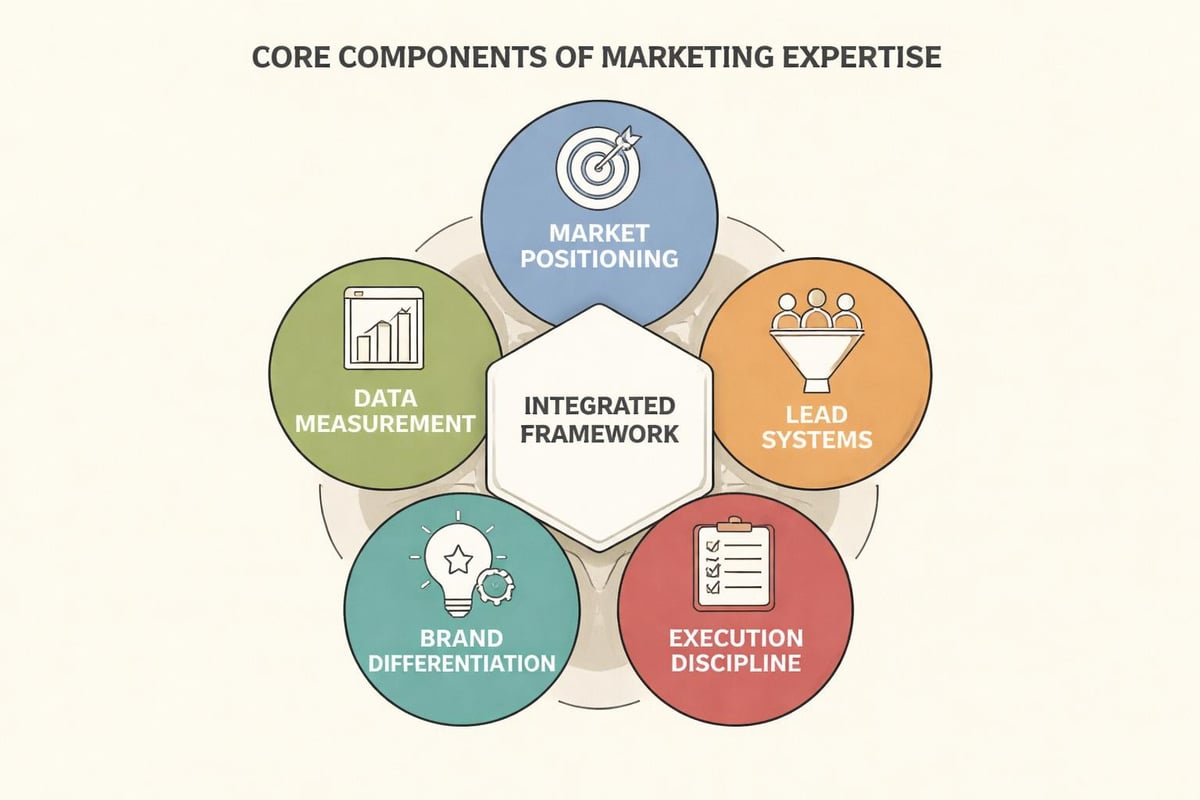
Marketing expertise includes:
- Clarity on who you serve and what problem you solve
- Systems that capture, nurture, and close leads without chaos
- Data literacy to measure what's working and cut what isn't
- Positioning that differentiates you in a crowded market
- Execution discipline that compounds over time
Most businesses mistake surface-level knowledge for depth. They hire based on confidence or portfolio polish instead of asking whether someone can actually build what they need. The result is wasted budget, scattered efforts, and campaigns that look good but don't convert.
The Difference Between Theory and Application
You can read every marketing book published in the last decade and still have no idea how to fix a broken funnel or position a service business in a competitive market. Theory gives you vocabulary. Application gives you judgment. Marketing expertise develops when you've built enough campaigns to know which levers actually move revenue and which ones just create noise.
Service businesses need people who understand the mechanics of trust-building, not just the mechanics of ad platforms. They need someone who can look at their website, their CRM, their messaging, and their offer structure and see where the system is bleeding leads. That requires both technical skill and strategic thinking, and it's rare to find both in one place.
| Theoretical Knowledge | Applied Expertise |
|---|---|
| Knows frameworks and models | Builds systems that execute frameworks |
| Can explain tactics | Knows which tactics fit which context |
| Talks about best practices | Adapts practices to business reality |
| Focuses on what's trendy | Focuses on what compounds |
| Learns from courses | Learns from client outcomes |
Building Marketing Systems That Scale
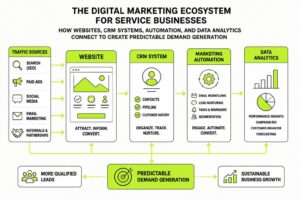
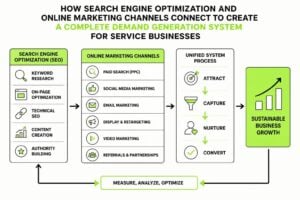
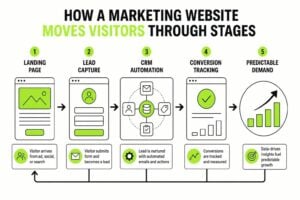
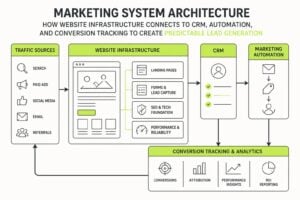
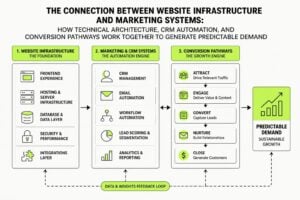
Marketing expertise shows up most clearly in systems work. Anyone can run an ad campaign. Not everyone can design the infrastructure that turns ad clicks into qualified leads, nurtured prospects, and closed deals without manual chaos.
The businesses that scale are the ones with clear systems for digital growth at every stage of the customer journey. They know how leads enter their world, how they're nurtured, what triggers a buying decision, and how to measure each step. That clarity doesn't happen by accident. It's designed by people who understand both marketing mechanics and business operations.
The Core Components of a Marketing System
- Lead capture infrastructure that collects contact information and intent data without friction
- CRM architecture that segments leads based on behaviour and readiness
- Automation sequences that nurture relationships without requiring manual follow-up
- Conversion mechanisms that move prospects from interest to decision
- Data dashboards that show what's working and what needs adjustment
None of this is glamorous. It's plumbing. But plumbing is what keeps a house functional, and marketing systems are what keep a business growing predictably. Marketing expertise means knowing how to build these systems so they work together, not in isolation.
When you work with someone who actually has depth in this area, you notice it immediately. They ask about your current tech stack. They want to see your funnel conversion rates. They care about lead quality, not just lead volume. They think in terms of systems, not campaigns. That perspective changes everything.
Positioning and Brand Clarity
The most underrated aspect of marketing expertise is the ability to clarify positioning. Most businesses are too close to their own work to see how confusing their message is. They think they're being comprehensive when they're actually being vague. They list services instead of solving problems. They talk about themselves instead of speaking to the customer's reality.
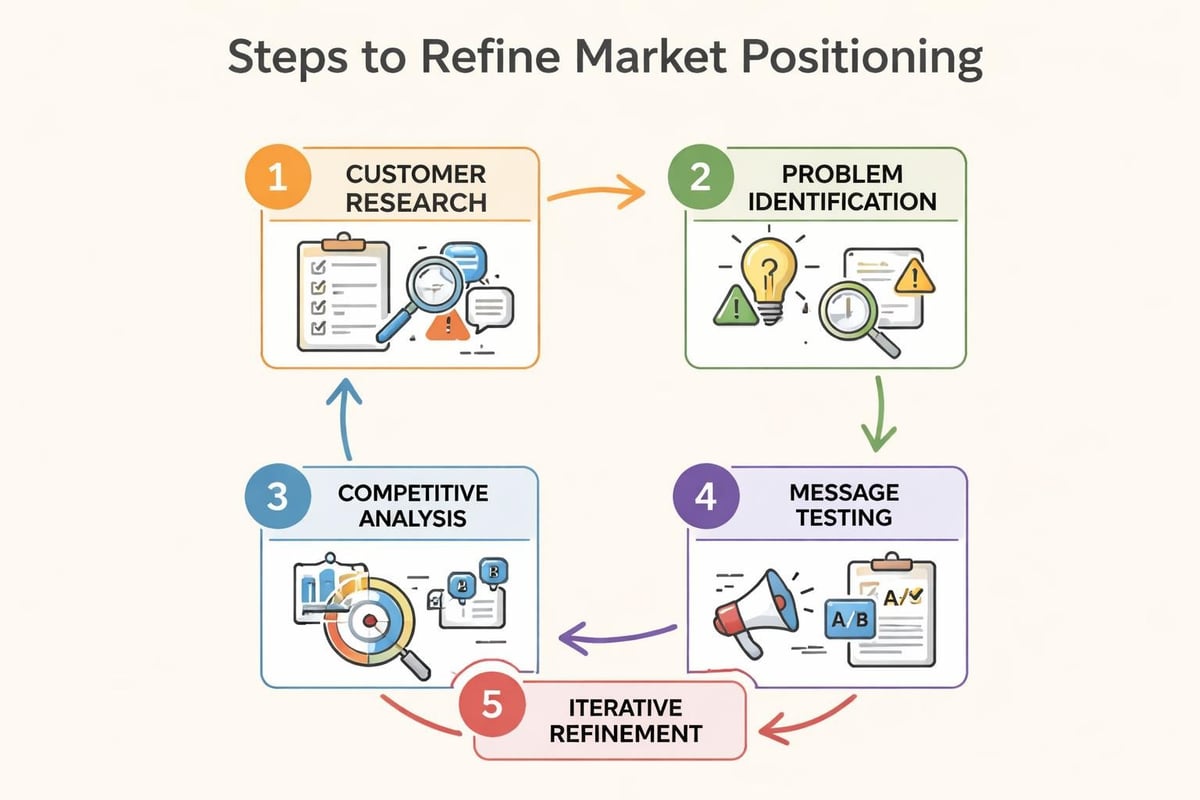
Strong positioning requires:
- A clear answer to "who is this for?"
- A specific problem you solve better than alternatives
- Proof that you've done this work successfully before
- Language that matches how your market actually thinks
- Differentiation that matters to the buyer, not just to you
This is where branding and marketing systems overlap. Your brand isn't your logo or your colour palette. It's the mental shortcut people use to decide whether you're relevant to them. If your positioning is muddy, no amount of tactical execution will fix the underlying problem. You'll attract the wrong leads, waste time on unqualified prospects, and wonder why your marketing doesn't convert.
How to Audit Your Own Positioning
Look at your homepage. Can someone understand what you do, who it's for, and why it matters in under ten seconds? If not, your positioning needs work. Read your service descriptions. Are they written in your language or your customer's language? Do they describe features or outcomes?
Clear positioning isn't about clever wordsmithing. It's about understanding your market well enough to speak directly to their needs without jargon or fluff. That understanding comes from conversations, research, and experience working with real clients. It's a skill that compounds as you get more reps in a specific market.
Data Literacy and Campaign Optimisation
Marketing expertise without data literacy is just guesswork with a budget. You need to know what to measure, how to interpret the numbers, and which metrics actually correlate with revenue. Too many businesses track vanity metrics like social media followers or website traffic while ignoring conversion rates, lead quality, and customer acquisition cost.
The goal isn't to become a data scientist. It's to develop enough fluency that you can look at campaign performance and make informed decisions. Should you increase ad spend? Should you adjust targeting? Should you rewrite your landing page copy? The data tells you, but only if you know how to read it.
| Vanity Metric | Business Metric |
|---|---|
| Total website visits | Conversion rate from visit to lead |
| Social media likes | Engagement that indicates buying intent |
| Email list size | Open rates and click-through behaviour |
| Ad impressions | Cost per qualified lead |
| Content views | Content that moves prospects to action |
Building a Measurement Framework
Start with the end goal and work backwards. If your goal is ten new clients per month, what does that require in terms of sales conversations? If you need twenty conversations to close ten deals, what does that require in qualified leads? If you need a hundred leads to get twenty qualified prospects, what does that require in traffic and conversion rates?
This backwards planning reveals exactly where your system is weak. Maybe your traffic is fine but your conversion rate is terrible. Maybe your conversion rate is strong but you're not generating enough volume. Data-driven marketing removes the guesswork and shows you where to focus your effort.
Understanding authoritative sources in content strategy also plays into this. The data you trust needs to come from credible places. Your decisions should be based on verified performance metrics, not assumptions or what worked for someone else's business in a different context.
The Role of Trust in Marketing Expertise
Expertise isn't just technical skill. It's also the ability to build trust with your market. Service businesses especially need this because they're not selling a product someone can touch or test. They're selling outcomes, which means the buying decision is based almost entirely on trust.
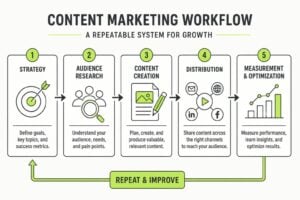
How do you build that trust before someone becomes a customer? Through consistent execution, transparent communication, and proof that you've delivered results for others. This is where content marketing, case studies, and thought leadership intersect. You're demonstrating expertise publicly so that when someone is ready to buy, they already believe you can deliver.
Creating authoritative content requires both knowledge and the willingness to share it without holding back. Too many businesses are afraid to give away their best ideas because they think it devalues their service. The opposite is true. When you help someone solve a problem for free, you build trust that makes them want to work with you on bigger problems.
Signals of Credible Marketing Expertise
- Specificity in case studies: Not just "increased revenue" but exact numbers and context
- Clear frameworks: Repeatable systems, not one-off miracles
- Honest about limitations: What you don't do is as important as what you do
- Focus on client outcomes: Results matter more than process complexity
- Transparent pricing and process: No mystery or vague promises
These signals matter because they separate people who talk marketing from people who execute it. The market is full of noise. The businesses that cut through are the ones that demonstrate competence before asking for trust.
How to Evaluate Marketing Expertise in Others
When you're hiring a marketing partner, you need to know what questions to ask. Don't just accept credentials or testimonials at face value. Dig into how they think, how they work, and what results they've actually delivered.
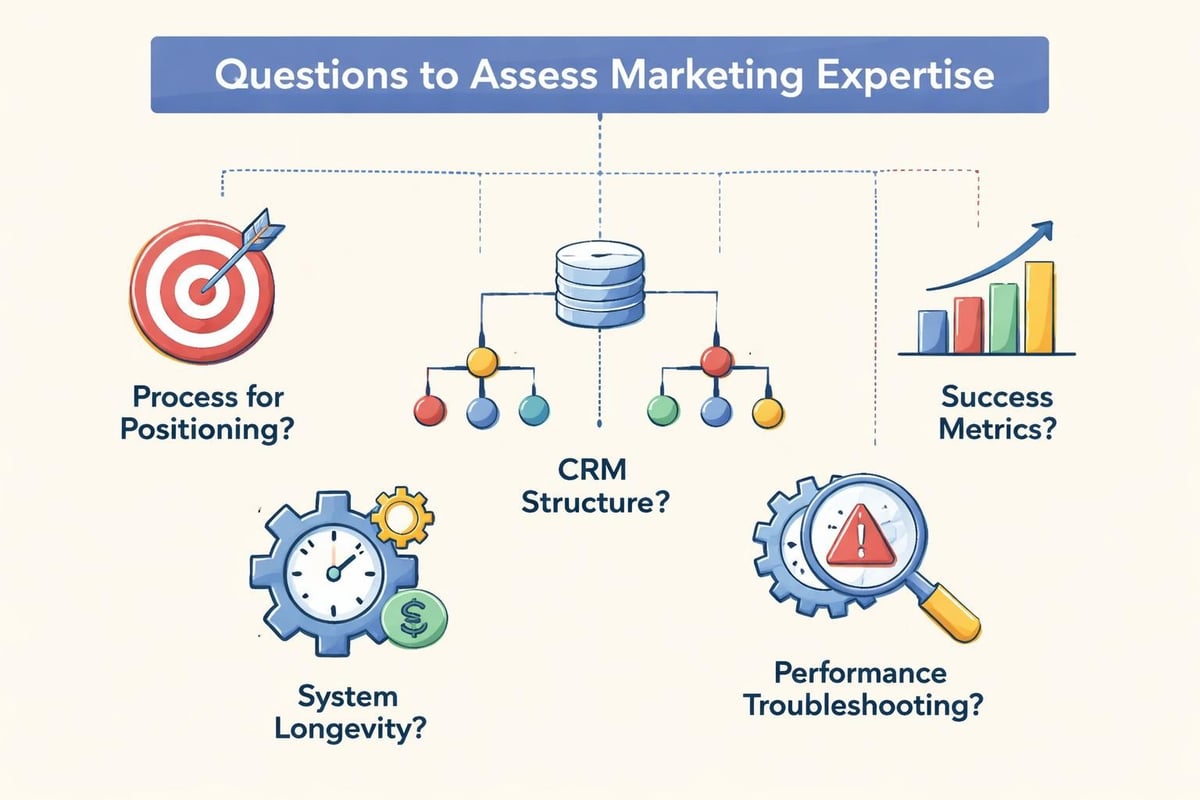
Questions that reveal real expertise:
- What's your process for diagnosing positioning problems?
- How do you structure a CRM for a service business?
- What metrics do you track to measure campaign success?
- Can you show me a system you've built that's still working two years later?
- How do you handle campaigns that aren't performing?
The answers should be specific, grounded in experience, and focused on systems rather than tactics. If someone talks only about creative or only about ads, they're likely missing the bigger picture. Marketing expertise requires both strategic thinking and operational execution.
You also want to evaluate how they handle E-E-A-T principles in their own marketing. Do they demonstrate experience? Do they cite credible sources? Do they build authority through content? These aren't just SEO factors. They're indicators of how someone approaches their own positioning and credibility.
Building Your Own Marketing Expertise
If you're a business owner, you don't need to become a marketing expert yourself. But you do need enough literacy to evaluate the people you hire and understand what's working in your own business. That baseline knowledge protects you from wasted budget and bad advice.
Where to Start
- Learn the fundamentals of positioning: Understand who you serve and what makes you different
- Get comfortable with your data: Know where your leads come from and what they do next
- Study your customer journey: Map out every touchpoint from awareness to purchase
- Build simple systems: Start with basic automation and refine as you grow
- Measure what matters: Focus on metrics tied to revenue, not vanity numbers
The goal isn't to do all the work yourself. It's to know enough that you can have intelligent conversations with the people who do. You want to be able to look at a campaign proposal and know whether it's grounded in strategy or just tactical fluff.
Reading about different types of information sources also helps you develop critical thinking about marketing advice. Not all sources are equally credible. Learning to distinguish between surface-level content and genuinely useful insight is a skill that compounds over time.
The Compounding Nature of Marketing Expertise
One of the most valuable aspects of real marketing expertise is that it compounds. Every campaign you run teaches you something. Every system you build becomes a template for the next one. Every client you work with deepens your understanding of a market.
This compounding effect is why experienced practitioners are worth more than newcomers, even if the newcomer has all the certifications. Time in the work creates pattern recognition. You start to see problems before they happen. You know which shortcuts work and which ones create technical debt. You understand the difference between what looks good and what actually drives results.
For service businesses, this means your marketing should get more efficient over time, not less. Your messaging should get clearer. Your systems should get tighter. Your conversion rates should improve. If that's not happening, something is wrong with either your strategy or your execution.
Long-Term Thinking in Marketing Systems
Marketing expertise shows up most clearly in how someone thinks about time horizons. Are they optimising for this month or this year? Are they building systems that will still work in 2028, or are they chasing tactics that will be obsolete in six months?
The businesses that scale sustainably are the ones that invest in marketing systems and infrastructure that compound over time. SEO takes months to build but delivers for years. Email automation requires upfront work but pays off with every new subscriber. Brand positioning is hard to get right but becomes a moat once established.
Short-term tactics have their place. But expertise means knowing when to focus on foundation work that creates long-term value, even when it's less immediately exciting than a flashy campaign.
Where Marketing Expertise Intersects with Business Strategy
Marketing isn't separate from business strategy. It's the engine that drives growth. When someone has real marketing expertise, they think like a business operator, not just a campaign manager. They care about profit margins, customer lifetime value, and operational capacity because those factors determine what marketing is actually possible.
This is why marketing and business development overlap so heavily. You can't design a marketing system without understanding the business model it's serving. You can't set realistic growth targets without knowing operational constraints. You can't position a service without understanding the economics that make it viable.
Strategic questions marketing expertise should address:
- What's the maximum number of clients we can serve with current capacity?
- What's our ideal customer lifetime value and how does that inform acquisition cost?
- Which market segments are most profitable and easiest to serve?
- How does our pricing structure affect our marketing message?
- What's our competitive advantage and how do we communicate it?
If your marketing partner isn't asking these questions, they're probably not thinking strategically. They're executing tactics without understanding the business context, and that almost always leads to misaligned expectations and disappointing results.
Why Marketing Expertise Matters More Now
The marketing landscape has never been more complex. More channels, more data, more competition, more noise. In this environment, surface-level knowledge isn't enough. You need depth. You need systems thinking. You need people who understand how all the pieces fit together and how to build infrastructure that works across multiple platforms and customer touchpoints.
At the same time, buyers are more sophisticated. They research extensively before making contact. They compare options carefully. They're skeptical of hype and sales pitches. This means your marketing needs to do more heavy lifting before a sales conversation even happens. Understanding how to rank source types and build credibility through authoritative content becomes essential in this context.
The businesses that win are the ones that invest in real marketing expertise, not just tactical execution. They build systems that capture attention, convert interest into leads, and nurture relationships until the buyer is ready. They measure what matters and optimise relentlessly. They position clearly and execute consistently.
That's not something you can fake or shortcut. It requires time, experience, and a commitment to structured growth over quick wins.
Marketing expertise is the foundation of predictable growth. It's what separates businesses that scale from businesses that spin their wheels with scattered campaigns and inconsistent results. If you're ready to build systems that actually work, remove the chaos from your marketing, and create structured growth that compounds over time, MDO Digital can help. We specialise in marketing infrastructure for service businesses that want clarity, not complexity.