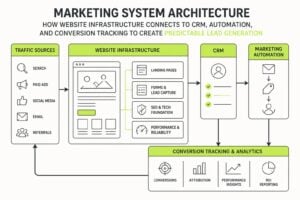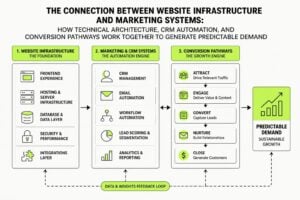
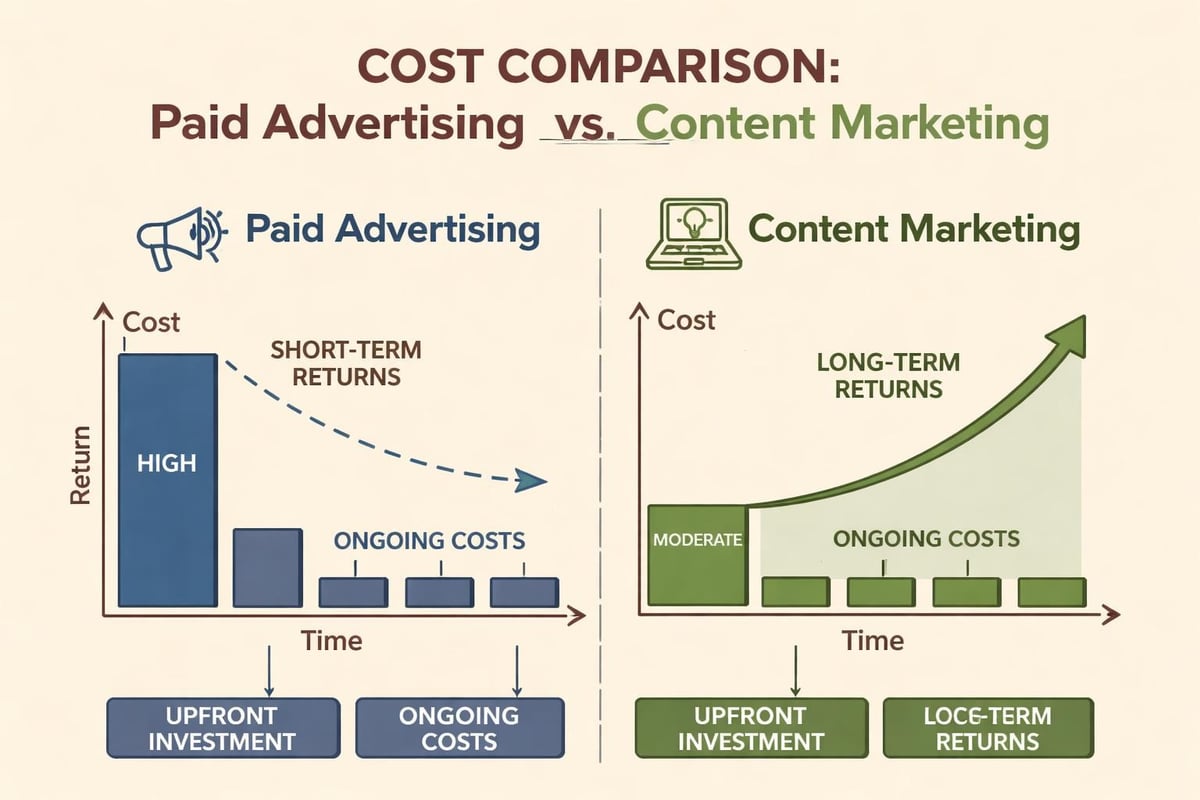
Most small businesses throw money at ads and hope for the best. They boost posts, run campaigns, and wonder why nothing sticks after the budget runs out. The hard truth is that paid attention disappears the moment you stop paying. Content marketing for small businesses works differently. It builds trust over time, creates assets that compound, and turns your expertise into a system that attracts the right people without burning cash every month. This isn't about going viral or posting daily. It's about creating clarity, demonstrating value, and building infrastructure that generates predictable demand.
Why Content Marketing for Small Businesses Actually Works
Traditional advertising interrupts. Content attracts. When someone searches for a solution, reads an article that solves their problem, and finds your business at the source, you've already won half the battle. They came looking. You provided value before asking for anything.
The economics make sense for smaller operations. According to research on content marketing’s cost-effectiveness, it generates three times more leads than traditional marketing while costing 62% less. That math works when you're not sitting on enterprise budgets.
Here's what content marketing delivers:
- Trust before transactions – You demonstrate expertise before someone needs to believe your sales pitch
- Compounding returns – A good article works for years, not days
- Qualified inbound leads – People who found you through content already understand what you do
- Lower customer acquisition costs – Organic channels don't charge per click
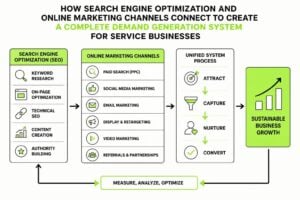
- SEO infrastructure – Content creates the foundation for long-term search visibility
Service businesses benefit most. Your expertise is the product. Content lets you package that knowledge in ways prospects can consume before they're ready to buy. It shortens sales cycles because education happens before the first conversation.
The Real Barrier Isn't Budget
Most small business owners know content matters. They've been told to "start a blog" or "post on LinkedIn" for years. The barrier isn't money. It's clarity and systems.
You don't know what to write about. You start three articles and finish none. You publish something, get no response, and quit. This pattern repeats because content marketing for small businesses fails when treated as a side project instead of infrastructure.
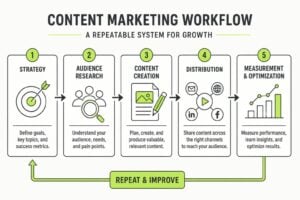
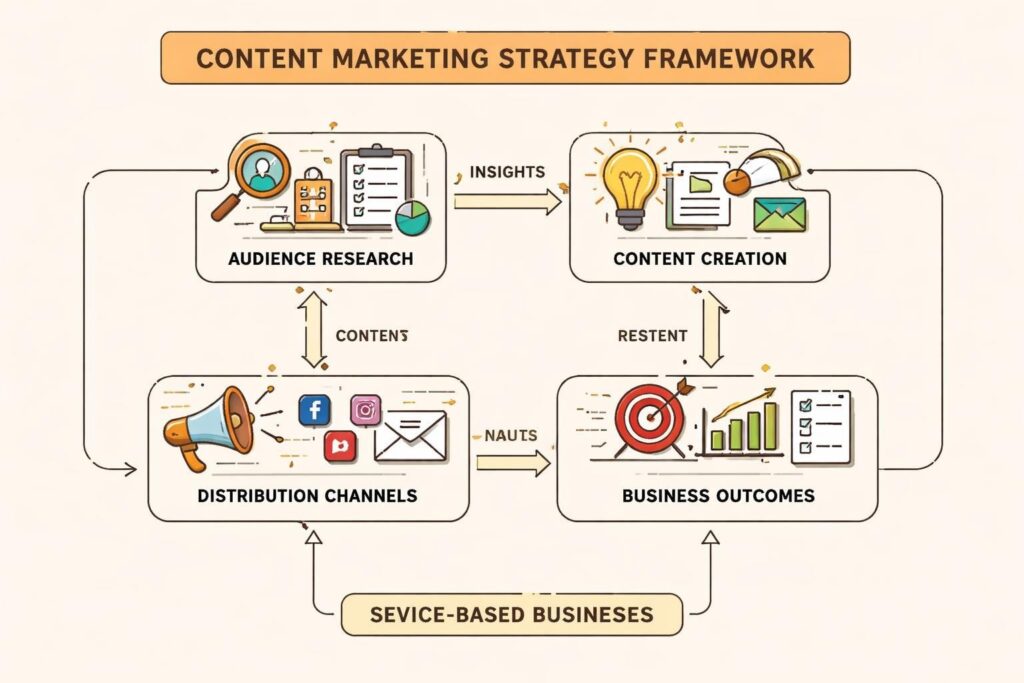
The solution isn't posting more. It's building a system that turns your expertise into repeatable formats, distributes strategically, and connects to actual business outcomes. Branding and content marketing work together when your message is clear and your delivery is consistent.
Building Your Content Foundation
Start with the questions your prospects actually ask. Not the questions you want to answer. Not thought leadership hot takes. The specific, practical questions that come up in discovery calls, email threads, and sales conversations.
Document these questions ruthlessly. Create a spreadsheet. Track every variation. Notice patterns. This is your content roadmap for the next year.
Three Content Pillars That Convert
| Content Type | Purpose | Business Impact |
|---|---|---|
| Educational | Answer specific questions, solve immediate problems | Builds trust, generates organic traffic, shortens sales cycles |
| Process-driven | Show how you work, explain methodology | Differentiates from competitors, pre-qualifies leads |
| Results-focused | Case studies, client outcomes, proof | Overcomes objections, demonstrates capability |
Every piece should serve one of these purposes. Educational content brings people in. Process content builds confidence in your approach. Results content closes the gap between interest and action.
The mistake is creating content that doesn't connect to outcomes. Blog posts that inform but don't guide. Videos that entertain but don't qualify. Social posts that get engagement but no business impact.
According to Salesforce’s content marketing guide, the most effective small business content directly addresses customer pain points and provides actionable solutions. Not theory. Not inspiration. Solutions.
Format Follows Function
You don't need to be everywhere. Pick formats that match how your audience consumes information and how you naturally communicate.
For service businesses:
- Long-form articles – Deep dives on methodology, process, industry changes
- Email sequences – Nurture prospects over weeks, not days
- Case studies – Detailed breakdowns of client work and outcomes
- Short-form posts – Daily visibility on platforms where prospects spend time
- Video walkthroughs – Screen recordings explaining concepts or tools
Start with one format. Make it consistent. Add more only when the first one runs on its own. The best digital marketing content comes from repetition and refinement, not variety.
Creating Content That Converts Attention to Demand
Content without distribution is just documents on your computer. Content without conversion paths is entertainment. The system needs both creation and activation.
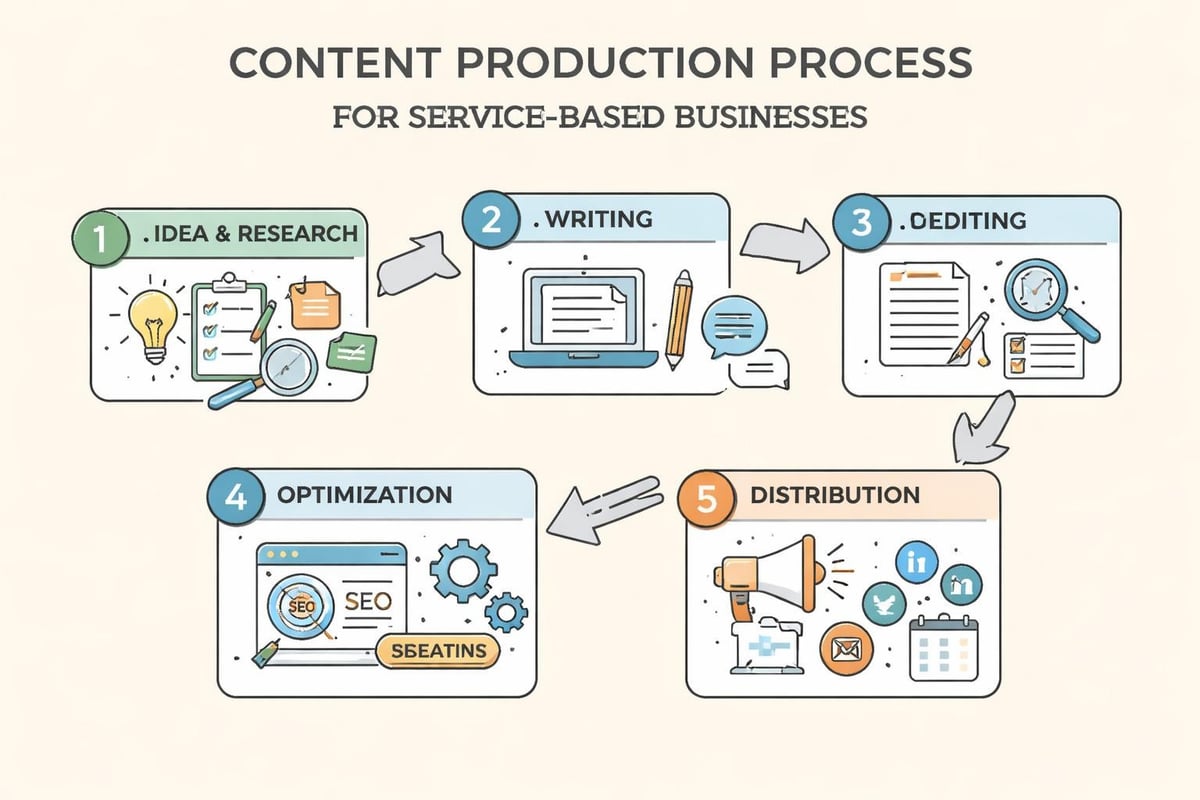
The Production System
Most businesses fail at content because they treat each piece as a new project. No templates. No process. No reuse. Every article starts from zero.
Build repeatable structures:
- Article templates for common topic types (how-to, comparison, framework)
- Research systems that capture ideas as they emerge
- Editorial calendars that plan quarters, not weeks
- Review processes that improve quality without killing momentum
Production speed matters less than consistency. One strong article per week beats four mediocre posts. The rhythm creates expectation. Your audience knows when to check back. Search engines notice the pattern.
For service businesses specifically, the best content often comes from client work. Document your process. Anonymize the examples. Turn project learnings into articles. This approach, covered in depth by content marketing strategies for small businesses, ensures your content stays grounded in real work rather than theoretical advice.
Distribution That Actually Reaches People
Publishing content on your website and hoping Google finds it is not a strategy. Distribution needs as much planning as creation.
Your distribution mix should include:
- Owned channels – Your website, email list, owned social profiles
- Earned visibility – SEO, backlinks, mentions, shares
- Strategic partnerships – Guest posts, collaborations, cross-promotion
- Targeted outreach – Sending specific content to specific people who need it
Email remains the highest-converting channel for most service businesses. Not because it's trendy. Because you control it. Build your list. Send value consistently. Make offers when appropriate. This infrastructure compounds faster than any social platform.
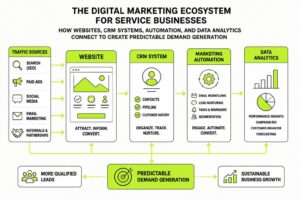
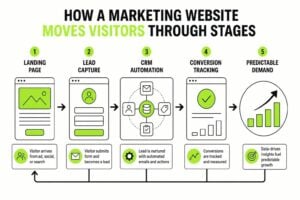
Marketing and business development align when your content system feeds your pipeline. Every article should connect to a next step. Email signup. Resource download. Discovery call. The path should be obvious.
Measuring What Matters
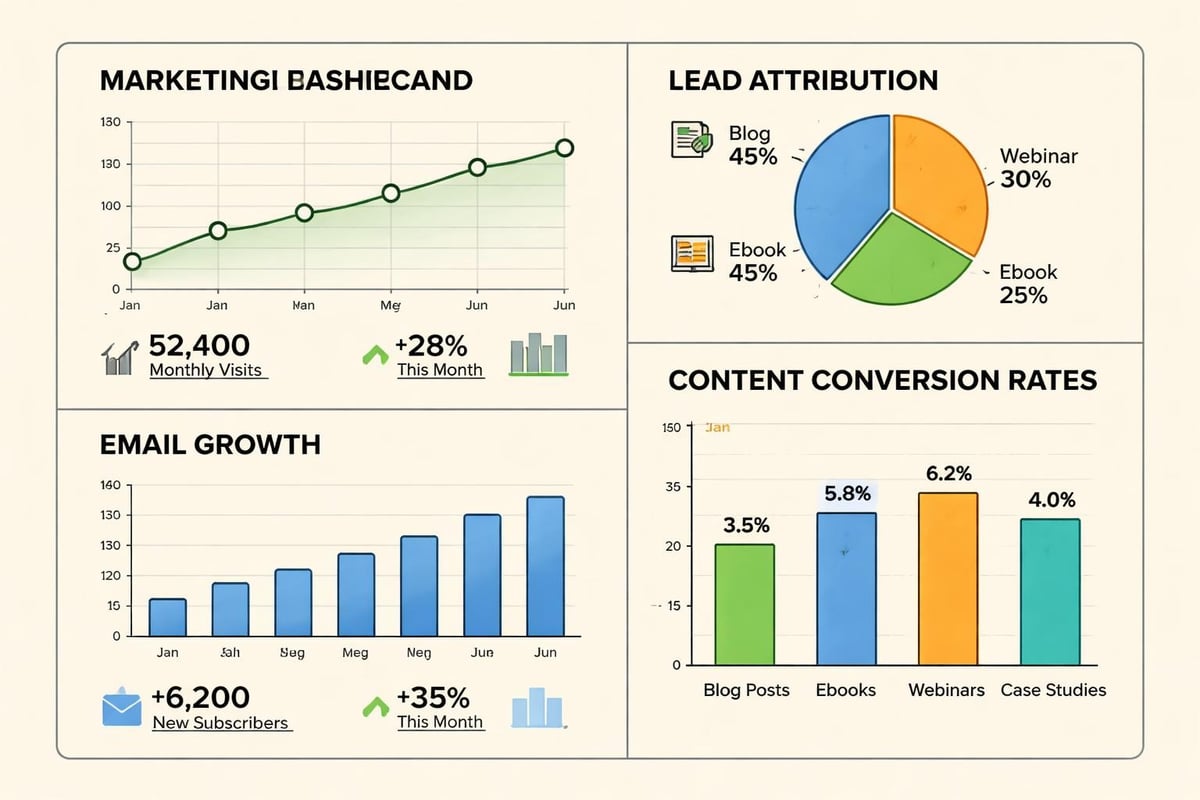
Vanity metrics feel good but don't pay bills. Page views, likes, and shares matter only if they connect to business outcomes. Track what actually indicates progress toward revenue.
Metrics That Connect to Growth
| Metric | What It Tells You | Action Threshold |
|---|---|---|
| Email list growth | Audience building over time | Consistent weekly adds |
| Organic search traffic | SEO performance and topic relevance | Month-over-month growth |
| Content-attributed leads | Direct business impact | Track in CRM per piece |
| Sales cycle length | How content affects buying speed | Compare content vs. cold leads |
| Customer acquisition cost | Marketing efficiency | Lower than paid channels |
The goal isn't massive traffic. It's qualified attention that converts at higher rates and lower costs than other channels. A hundred visitors who match your ideal client profile beat ten thousand random clicks.
Set up proper attribution. Tag URLs. Track form sources. Ask leads how they found you. Your CRM should connect content to revenue. Without this connection, you're creating in the dark.
Optimization Through Iteration
Content marketing for small businesses improves through refinement, not reinvention. Look at what works. Do more of it. Look at what doesn't. Stop or fix it.
Monthly review questions:
- Which pieces generated leads or conversations?
- What topics drove the most engaged traffic?
- Where did people drop off or disengage?
- Which headlines and formats performed best?
- What questions emerged that we haven't addressed?
Use these insights to guide next month's calendar. Content strategy isn't a one-time plan. It's a feedback loop that gets smarter with each cycle. The businesses that win with content are the ones who treat it as infrastructure, not campaigns.
Common Mistakes That Kill Results
Inconsistency Kills Momentum
The biggest mistake is starting strong and fading. Three months of weekly posts, then nothing for six. Your audience forgets you exist. Search engines stop checking. Momentum evaporates.
Consistency beats intensity. One article every two weeks for a year builds more value than daily posts for a month. Set a rhythm you can actually maintain. Protect it like you protect client delivery time.
Creating in a Vacuum
Writing what you find interesting instead of what your audience needs is creative masturbation. Every piece should tie back to problems your prospects face or questions they're asking.
If you're not sure what to write, look at your inbox. Review discovery call notes. Check your support tickets. The content roadmap is already there in the questions people ask when they're evaluating you or working with you.
Forgetting the Business Goal
Content for content's sake is a hobby. Content for business generates demand. Every piece needs a purpose that connects to outcomes. Awareness. Consideration. Conversion. Know which stage each piece serves.
Build conversion paths. Add relevant CTAs. Link to service pages. Make the next step clear. The marketing systems that work best connect content consumption directly to pipeline movement.
Skipping the Infrastructure
Publishing without email capture is leaving money on the table. Most visitors won't return. Most won't remember your name. If you don't capture attention when you have it, it's gone.
Build the infrastructure first:
- Email signup forms on every page
- Lead magnets that qualify as much as they convert
- CRM that tracks content attribution
- Nurture sequences that continue the conversation
Content marketing and branding work together when your content reinforces your positioning and your infrastructure captures and converts attention systematically.
Making Content Work Long-Term
The businesses that succeed with content marketing for small businesses treat it like any other operational system. It has inputs, processes, outputs, and feedback loops. It gets refined over time based on performance data.
Your 90-day implementation:
- Weeks 1-2 – Audit existing questions, build content roadmap, set up infrastructure
- Weeks 3-6 – Create first batch of foundational content (6-8 pieces)
- Weeks 7-10 – Publish weekly, build distribution system, start email list growth
- Weeks 11-12 – Review performance, refine approach, plan next quarter
This timeline assumes you're building while running your business. It's realistic for service businesses without dedicated content teams. The key is protecting the time and treating it as non-negotiable as client delivery.
When to Scale Production
Scale when you've proven the system works. When content regularly generates qualified leads. When attribution is clear. When you have more topic ideas than production capacity.
Scaling too early creates waste. You produce more content that doesn't convert. Scaling too late leaves money on the table. You have proven angles that could reach more people.
The signal to scale is consistent performance. Month after month, content drives measurable business outcomes. That's when you add production capacity, expand distribution, or invest in higher production quality.
The Compound Effect
Content marketing for small businesses creates compounding returns when done right. Each piece builds on the last. Your library grows. Your authority strengthens. Your search visibility expands. Your email list deepens.
After a year of consistent execution, you have 50+ articles working for you. Thousands of email subscribers. Regular organic traffic. Lower acquisition costs. Shorter sales cycles. The system starts to feel effortless because the infrastructure is doing the work.
This is how service businesses scale without scaling ad budgets proportionally. You build assets that generate demand over time. You create systems that turn expertise into pipeline. You remove the chaos and build structured growth.
The businesses that commit to content marketing for small businesses as infrastructure rather than campaigns are the ones that win. They show up consistently. They measure what matters. They refine based on feedback. They build systems that compound.
Content marketing works when you treat it like the business infrastructure it is. Build systems, create consistently, measure what matters, and connect everything to actual outcomes. If you need help building marketing infrastructure that removes chaos and creates structured growth, MDO Digital specializes in turning expertise into predictable demand through high-trust websites, automation systems, and data-driven content that converts.