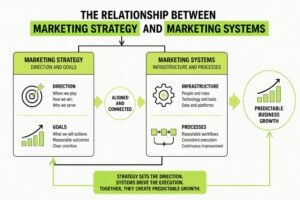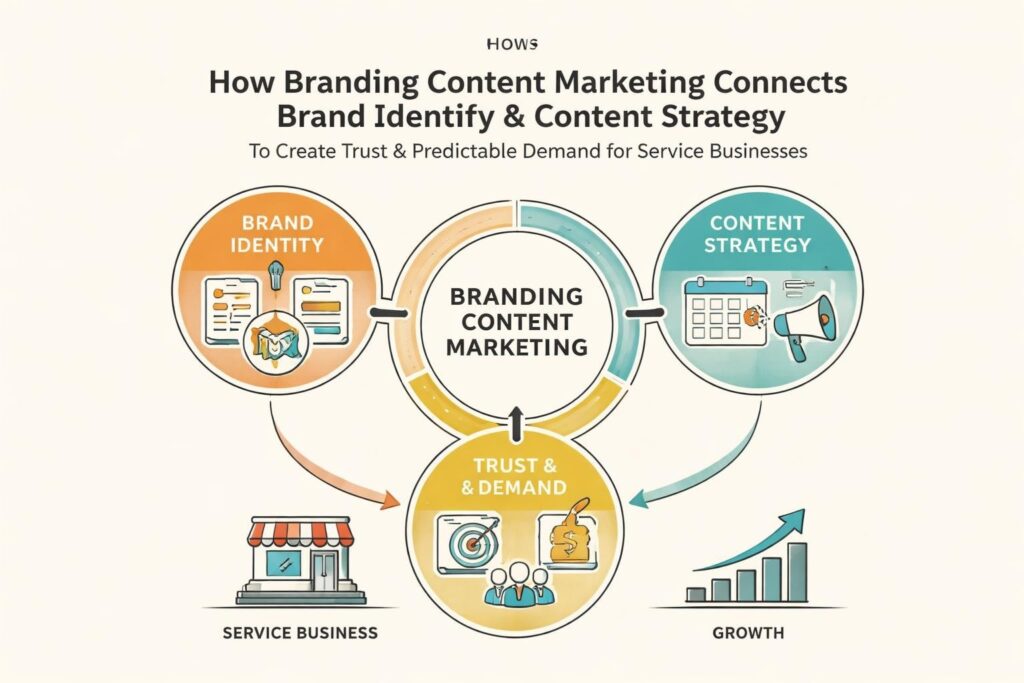
Most service businesses treat content and branding as separate disciplines. One team handles the logo, colors, and messaging. Another cranks out blog posts and social updates. The gap between them costs you trust, consistency, and revenue. Branding content marketing bridges that divide. It's the practice of embedding your brand identity, values, and positioning into every piece of content you publish. Not as decoration, but as the structural foundation that makes your content recognizable, memorable, and effective at converting attention into clients.
What Branding Content Marketing Actually Means
Branding content marketing isn't about slapping your logo on a blog post. It's about creating content that reinforces who you are, what you stand for, and why someone should choose you over the dozens of alternatives in their inbox.
Think of it this way: your brand is a promise. Your content is the proof.
When branding and advertising work together through content, you're not just publishing information. You're building a reputation. Every article, video, email, and social post either strengthens that reputation or dilutes it. The businesses that scale with clarity understand this. They don't chase trends or copy competitor tactics. They publish content that sounds like them, serves their audience, and moves people closer to a buying decision.
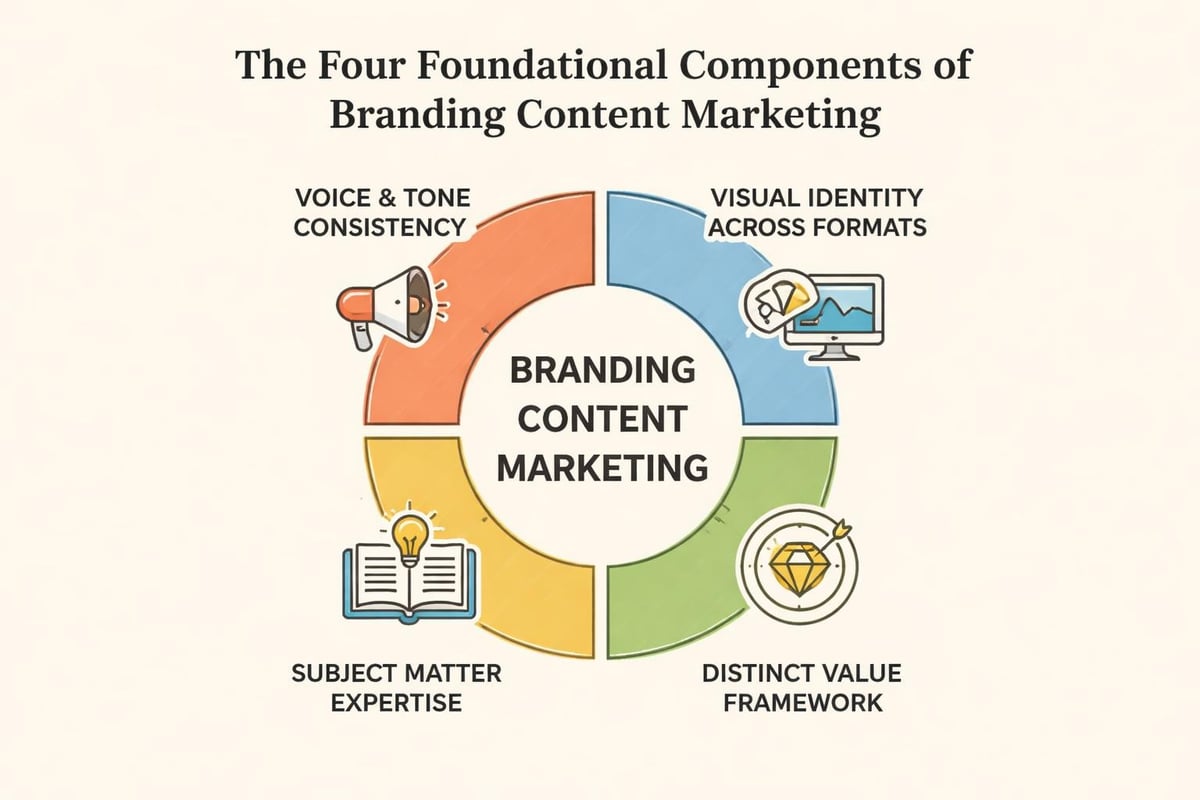
The Components of Effective Branding Content Marketing
Voice and tone: This is how you sound. Formal or casual. Technical or approachable. Confident or humble. Your content should sound like the same person wrote it, whether it's a LinkedIn post or a 2000-word guide.
Visual identity: Beyond logos, this includes typography, color usage, image style, and layout. Readers should recognize your content before they see your name.
Subject matter focus: What topics do you own? What expertise do you claim? Branding content marketing means staking territory and defending it with depth, not breadth.
Value framework: What do you believe? What do you reject? Your content should reflect a clear point of view, not neutral observations that could come from anyone.
Why Service Businesses Need Branding Content Marketing
Service businesses don't sell products people can touch. You're selling expertise, process, and outcomes. That makes trust the only currency that matters. Branding content marketing builds that trust by demonstrating competence before someone ever contacts you.
Consider what happens when a potential client finds your content. They're evaluating three things simultaneously:
- Do you understand my problem? Your content needs to articulate their challenges with specificity, not generic platitudes.
- Can you solve it? You need to demonstrate capability through frameworks, case examples, and clear explanations of your process.
- Are you someone I want to work with? This is pure branding. Tone, values, personality. The intangibles that make someone choose you over a cheaper alternative.
Most businesses nail one or two of these. Branding content marketing delivers all three in every piece you publish. When you look at successful branded content examples, the pattern is clear: the content doesn't just inform, it builds affinity.
The Problem with Generic Content
Generic content treats readers like search engines. It answers questions technically but builds zero brand equity. You rank for a keyword, get traffic, and watch people bounce because nothing about the experience was memorable.
Here's what generic looks like:
- Listicles with no perspective
- How-to guides that could apply to any industry
- Blog posts optimized for SEO but written by someone who doesn't understand your business
- Content that sounds like it was assembled from competitor research and AI prompts
Branding content marketing flips this. You write for humans first, algorithms second. You take positions. You share frameworks you've developed. You sound like yourself, not like the top ten results on Google.
Building Your Branding Content Marketing System
Systems beat motivation every time. If you rely on inspiration to create branded content, you'll publish inconsistently and your brand will fracture. Here's how to structure your approach.
Step 1: Define Your Brand Parameters
Before you write a word, document these elements:
| Element | Questions to Answer |
|---|---|
| Voice | How do we sound? What words do we use/avoid? |
| Audience | Who are we speaking to? What do they care about? |
| Positioning | What makes us different? What do we reject? |
| Topics | What subjects do we own? What's outside our lane? |
| Goals | What should content achieve? How do we measure it? |
This isn't creative writing. It's infrastructure. When your team (or you) sits down to create content, these parameters remove ambiguity. You're not starting from zero every time.
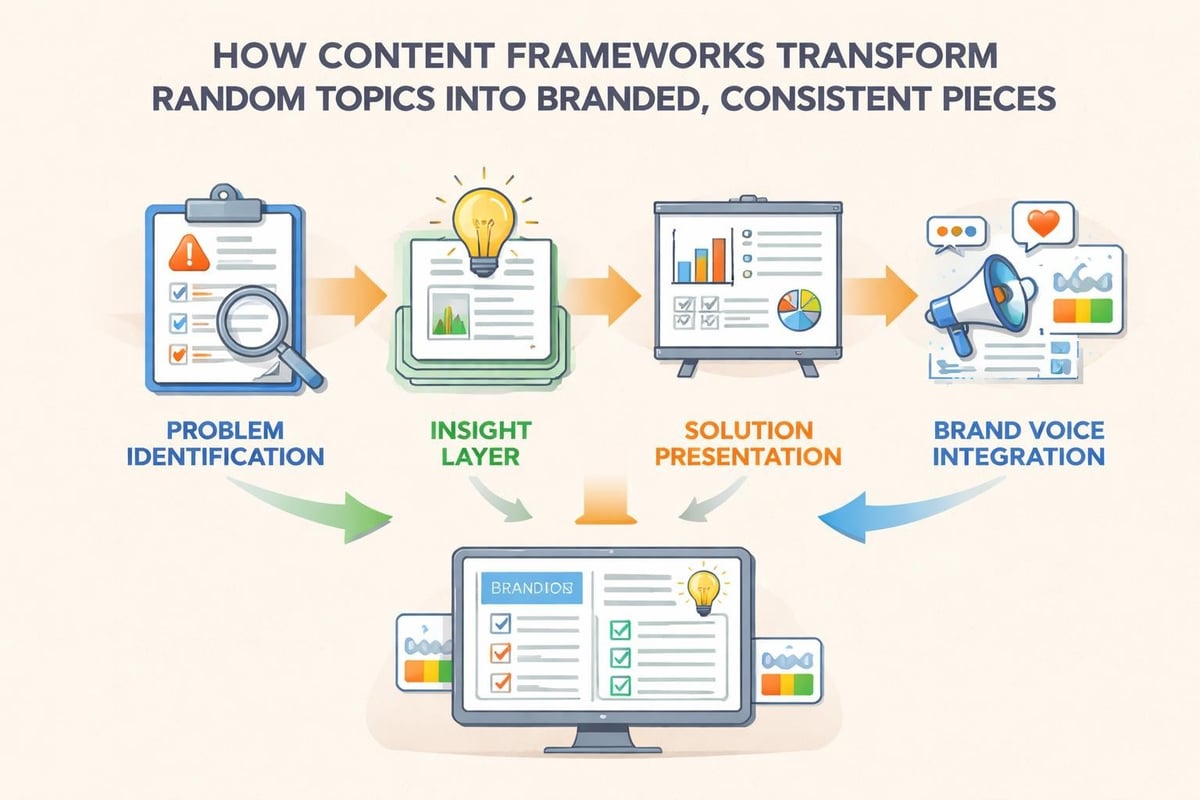
Step 2: Create Content Frameworks
Frameworks are repeatable structures that maintain brand consistency while addressing different topics. They're the scaffolding that makes your content recognizable.
Examples of content frameworks:
- Problem/Insight/Solution: Start with the problem your audience faces, share a non-obvious insight about why it exists, then present your solution.
- Myth-Busting: Identify a common belief in your industry, explain why it's wrong, and offer the correct approach.
- Behind-the-Scenes: Show how you actually do the work, with specific details that demonstrate expertise.
When you apply these frameworks consistently, your content starts feeling cohesive even across different topics and formats. That's branding content marketing at work.
Step 3: Build a Distribution System
Publishing content without distribution is like opening a store without telling anyone. Your digital and content marketing strategy needs built-in promotion, not as an afterthought.
Distribution channels to systematize:
- Email list: Every piece of content gets sent to your list with context about why it matters.
- Social platforms: Repurpose content into platform-native formats (LinkedIn posts, Twitter threads, short videos).
- Partner networks: Collaborate with complementary businesses to expand reach without diluting brand.
- Paid promotion: Strategic ad spend on your best-performing content to new audiences.
The key is consistency. One great article published and promoted beats ten mediocre posts that disappear into the void. Effective content promotion strategies amplify your brand reach while maintaining message integrity.
Measuring Branding Content Marketing Success
Vanity metrics lie. Traffic numbers mean nothing if they don't convert. Here's what actually matters when you're building brand through content.
Engagement Depth
Are people reading your full articles? Watching your videos to completion? This signals content quality and brand resonance. High bounce rates and low time-on-page mean your content isn't connecting.
Brand search volume
Are more people searching for your business name? That's direct evidence your content is building brand awareness. Track this monthly in Google Search Console.
Content-attributed conversions
How many leads come directly from content? Set up tracking that shows which articles drive contact form submissions, demo requests, or calls. This proves ROI.
Return readership
First-time visitors are fine. People who come back repeatedly are better. They're entering your brand ecosystem. Track this through audience retention metrics in your analytics platform.
| Metric | What It Tells You | How to Improve It |
|---|---|---|
| Engagement depth | Content relevance and quality | Better headlines, stronger openings, clear value props |
| Brand search | Name recognition growth | Consistent publishing, unique POV, strategic distribution |
| Content conversions | Direct business impact | Clear CTAs, relevant offers, trust-building content |
| Return readership | Brand affinity | Series content, email nurture, consistent publishing |
Understanding marketing digital content measurement helps you optimize for outcomes that matter, not just activity that feels productive.
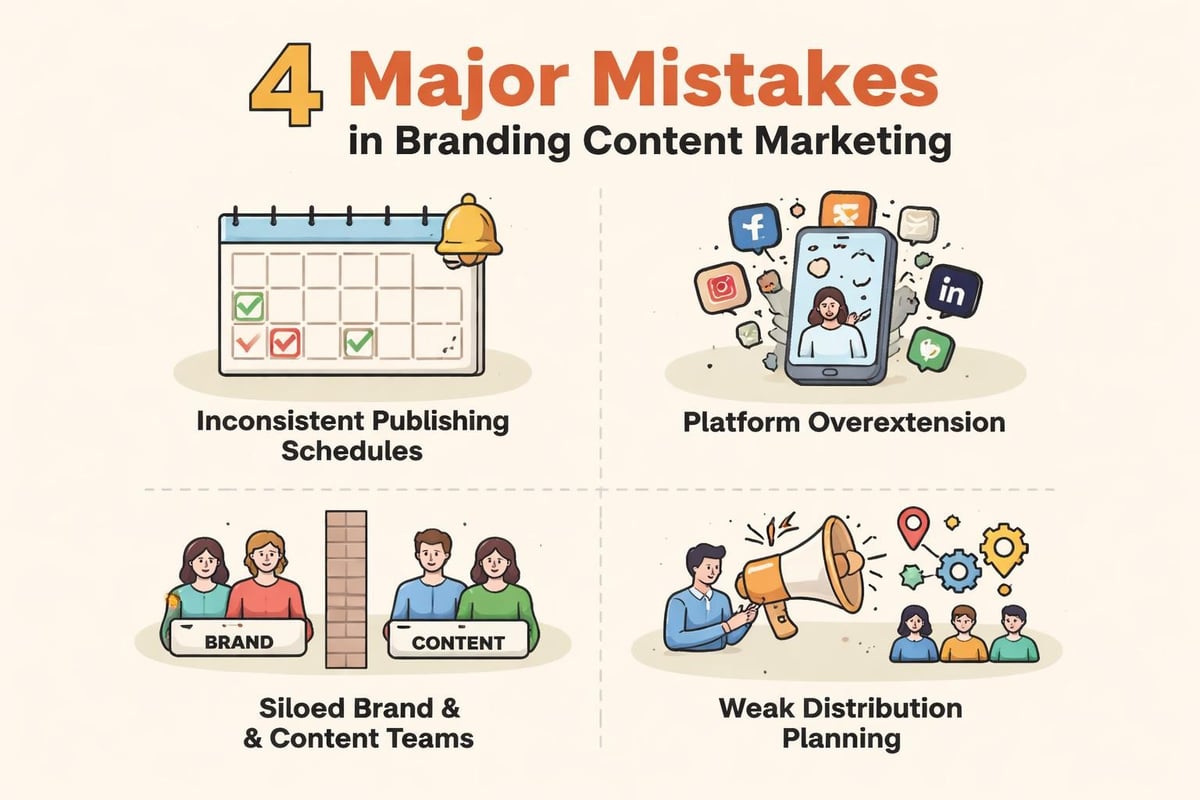
Common Branding Content Marketing Mistakes
Smart businesses still mess this up. Here's what to avoid.
Mistake 1: Inconsistent Publishing
Publishing twice a week for a month, then going silent for six weeks destroys brand momentum. Your audience forgets you exist. Algorithms deprioritize your content. Trust erodes.
Fix it: Publish less frequently but consistently. One quality piece every two weeks beats erratic bursts.
Mistake 2: Chasing Every Platform
You don't need to be everywhere. Spreading thin means weak presence across multiple channels instead of strong presence where your audience actually is.
Fix it: Master one or two platforms before expanding. Build real audience there, then consider adding channels.
Mistake 3: Separating Brand from Content Teams
When brand strategy lives in one silo and content creation in another, you get misaligned messaging. Content that looks professional but sounds generic.
Fix it: Brand guidelines should inform every content decision. Content creators need to understand positioning, not just keywords.
Mistake 4: Ignoring Distribution
Creating great content then hoping it finds an audience is wishful thinking. Distribution is half the work, minimum.
Fix it: Build promotion time into your content calendar. Every piece gets a distribution plan before you hit publish.
Scaling Branding Content Marketing Operations
As your business grows, your content operation needs to scale without losing brand integrity. That requires systems, not just more hands.
Documentation Is Infrastructure
Everything about how you create content should be documented:
- Style guide: Voice, tone, grammar preferences, word usage
- Visual guidelines: Image style, layout templates, design elements
- Process documentation: From ideation to publishing to promotion
- Quality checklist: What every piece must include before going live
This lets you bring in writers, designers, or agencies without sacrificing brand consistency. Content branding at scale requires this foundation.
Template Everything
Templates aren't restrictive, they're liberating. They handle the structure so you can focus on substance.
Create templates for:
- Blog post structures by content type
- Email newsletters
- Social media posts
- Video scripts
- Case studies and testimonials
Templates ensure brand consistency while speeding up production. Your team spends time on strategy and creativity, not reinventing format.
Build a Content Library
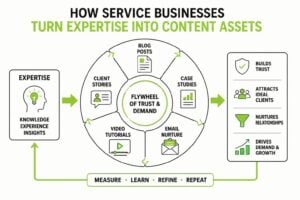
Every piece of content you create is an asset. Organize it properly and you can repurpose, reference, and build on it over time.
Your content library should include:
- All published content with performance data
- Approved brand messaging and positioning statements
- Research and data that informs content
- Content ideas and outlines in development
- Media assets (images, videos, graphics)
This turns content from disposable posts into compounding intellectual property that strengthens your online branding over time.
Integrating Branding Content Marketing with Other Systems
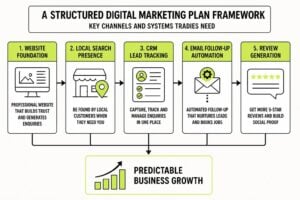
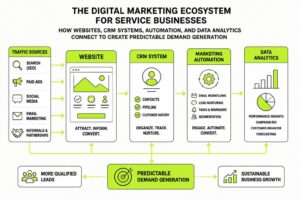
Content doesn't exist in isolation. It feeds and is fed by your CRM, automation, and sales systems.
CRM Integration
Every content interaction should inform your CRM. When someone reads three articles about automation, your CRM should tag them as interested in that topic. When they download a guide, they enter a specific nurture sequence.
This lets you personalize follow-up and understand which content actually moves people through your pipeline.
Marketing Automation
Automation turns static content into dynamic journeys. Based on behavior, interests, and engagement, you serve relevant content that builds trust progressively.
Examples:
- Someone reads an intro article, gets emailed a deeper guide three days later
- A lead downloads a framework, enters a five-email series with implementation tips
- A prospect visits your pricing page, receives case studies and ROI calculators
Sales Enablement
Your sales team should use your content throughout the sales process. Not as attachments, but as proof points and education.
When a prospect raises an objection, your sales team shares a relevant article. When they need to understand your process, there's a detailed guide. This reinforces brand consistency and positions your team as educators, not pitchers.
Looking at content marketing case studies shows how integrated systems amplify results beyond what isolated tactics achieve.
Co-Marketing and Partnership Content
Sometimes the fastest path to new audiences is through partnership. But co-marketing requires careful brand protection. You're associating your name with another business, which can strengthen or weaken your position.
Partnership Selection Criteria
Partner with businesses that:
- Share your values but serve different needs
- Target similar audiences without direct competition
- Maintain quality standards that match or exceed yours
- Have complementary expertise that adds value to the collaboration
Maintaining Brand Integrity in Co-Marketed Content
Follow best practices for branding co-marketed content to protect your brand while maximizing reach:
- Agree on messaging and positioning upfront
- Define visual branding guidelines for the shared content
- Clarify promotion responsibilities and timelines
- Maintain editorial control over how your brand is represented
- Track performance separately to understand ROI
Co-marketing expands reach without diluting brand when executed with clear agreements and quality standards.
The Long Game of Branding Content Marketing
Most businesses quit content too early. They publish for three months, see modest results, and conclude it doesn't work. That's like planting a tree and expecting shade next week.
Branding content marketing compounds. Each piece builds on the last. Your third article attracts more readers than your first because you have a back catalog. Your tenth article ranks faster because you've established topical authority. Your twentieth article converts better because you've built trust over time.
The businesses that win with content are the ones that commit to the timeline. They publish consistently for years, not months. They refine their approach based on data, not gut feelings. They understand that brand is built slowly and lost quickly.
Your marketing and business development strategy needs this long-term view. Quick wins matter, but sustainable growth comes from systems that compound.
Branding content marketing isn't a tactic, it's infrastructure. When you embed brand into every piece of content you create, you build recognition, trust, and demand that competitors can't easily replicate. If you're ready to build content systems that actually scale your service business with clarity, MDO Digital can help you design the infrastructure, remove the chaos, and create structured growth that compounds over time.