Choosing a nearby digital marketing agency is one of those decisions that feels bigger than it should. You need someone who understands your market, can meet face-to-face when it matters, and won't just throw tactics at you without a system behind them. The proximity part matters more than you'd think, not because digital work requires being in the same room, but because local agencies understand the context of your business environment. They know your competitors, your customer base, and the regional nuances that affect how marketing performs. But being nearby isn't enough. You need an agency that builds infrastructure, not just campaigns.
What Makes a Digital Marketing Agency Worth Your Time
Not all agencies are built the same. Some focus on creative work, others on performance marketing, and a few rare ones actually build systems that scale. When you're evaluating a nearby digital marketing agency, you're really looking at whether they understand how marketing connects to your business operations.
The core question is simple: Does this agency think in campaigns or systems?
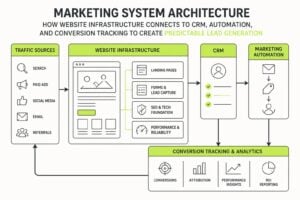
A campaign-focused agency will run ads, post content, and send you reports. A systems-focused agency will build infrastructure that captures leads, nurtures them automatically, tracks every touchpoint, and gives you predictable pipeline growth. The difference shows up in your CRM, your automation setup, and whether your marketing compounds over time or resets every quarter.
Services That Actually Move the Needle
Here's what matters when evaluating digital marketing agency services:
- Website design with conversion architecture (not just pretty pages)
- CRM and automation infrastructure (so leads don't fall through cracks)
- Data-driven paid media (where every dollar has a job)
- SEO that builds authority (not just keyword stuffing)
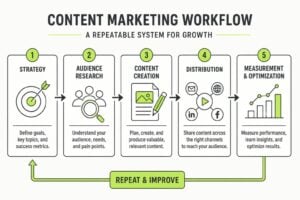
- Content systems (repeatable processes, not random blog posts)
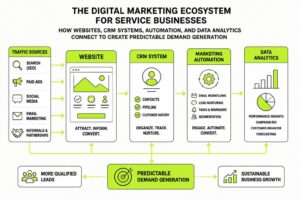
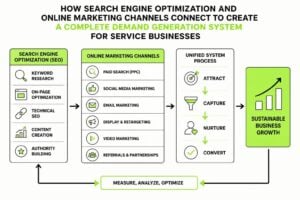
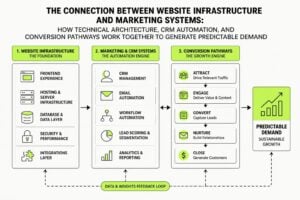
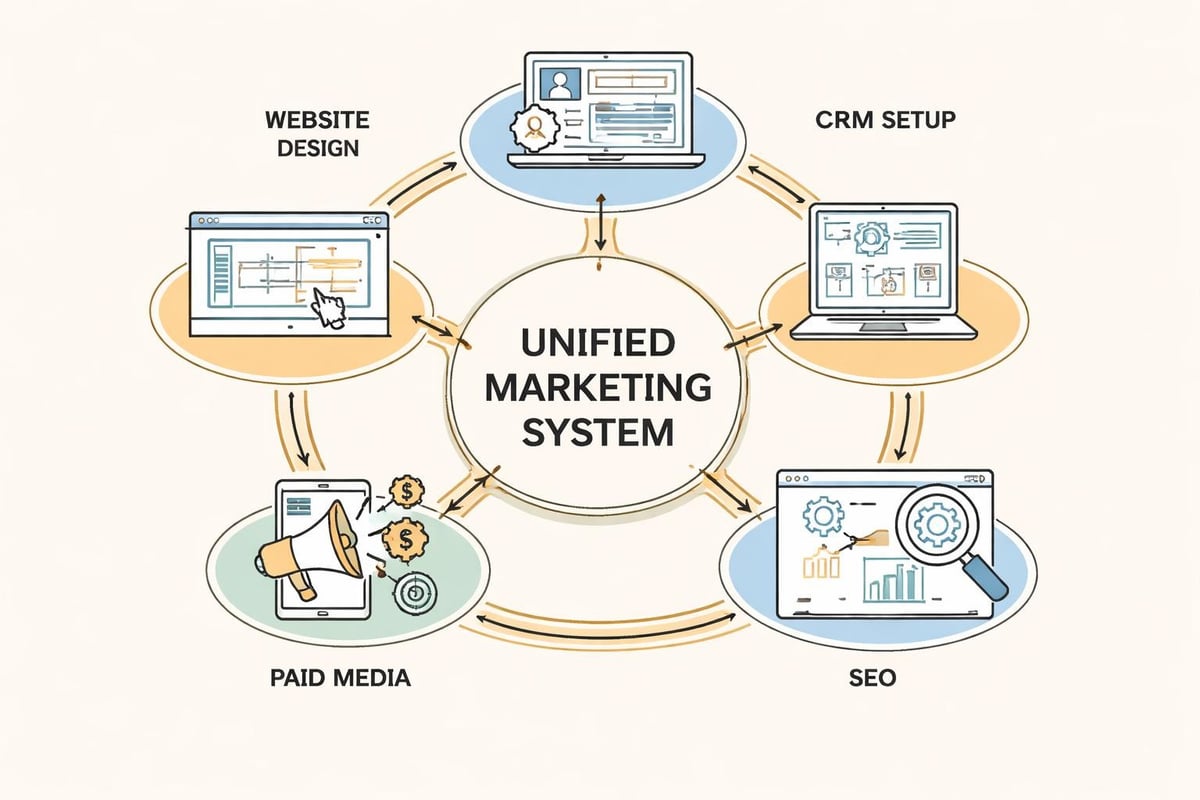
The agencies worth working with don't just offer these services. They connect them. Your website feeds your CRM. Your CRM triggers automation. Your automation supports your sales team. Your paid media and SEO work together, not in silos. That's the difference between tactics and systems.
Why Location Still Matters in Digital Work
You'd think digital marketing would make location irrelevant, but that's not quite true. A nearby digital marketing agency brings advantages that remote partnerships can't replicate, even in 2026.
Face-to-face strategy sessions hit different. When you're working through positioning, messaging, or major infrastructure decisions, being in the same room changes the quality of conversation. Video calls work for updates and reporting, but the heavy lifting benefits from proximity.
Local market knowledge saves time. An agency in your area already understands your competitive landscape, seasonal patterns, and customer expectations. They don't need three months to figure out what works in your market because they've already done campaigns for businesses facing similar challenges.
| Benefit | Why It Matters | Real Impact |
|---|---|---|
| Quick meetings | Strategy sessions without travel | Faster decision-making |
| Market context | Understanding local competition | Better positioning |
| Timezone alignment | Same working hours | Easier collaboration |
| Network overlap | Shared professional connections | Better partnerships |
The Trust Factor
There's also something to be said for accountability. When an agency is nearby, they can't just ghost you. Their reputation lives in your community. They run into your peers at local events. That social pressure creates a different level of service quality than a remote agency that can disappear without consequence.
How to Evaluate an Agency's Systems Thinking
Most agencies will tell you they're different. Here's how to actually tell if a nearby digital marketing agency thinks in systems or just runs campaigns.
Ask About Their Tech Stack
A systems-focused agency will have strong opinions about CRM platforms, automation tools, and how different technologies connect. They should be able to explain why they use specific tools and how those tools talk to each other. If they're platform-agnostic or don't have infrastructure preferences, that's a red flag.
Questions to ask:
- What CRM do you typically implement and why?
- How do you connect website forms to sales pipelines?
- What automation sequences do you build by default?
- How do you track attribution across channels?
- What reporting infrastructure do you set up?
The answers should be specific and opinionated. Vague responses about "whatever the client prefers" usually mean they haven't thought deeply about systems.
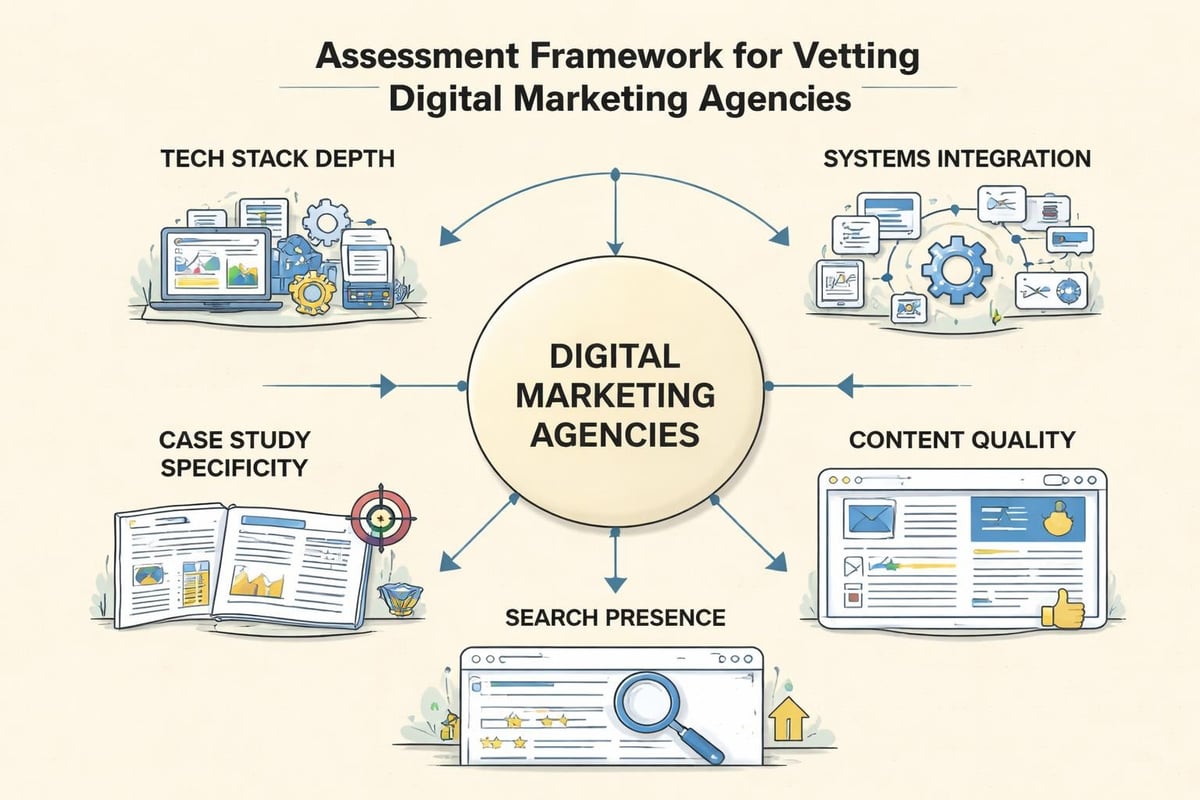
Look at Their Own Marketing
This one's obvious but often overlooked. How an agency markets itself tells you everything about their capabilities. If their website is outdated, their content is thin, or their own SEO is weak, why would you trust them with yours?
Check these markers:
- Website quality: Is it fast, clear, conversion-optimized?
- Content depth: Do they publish substantial, useful articles?
- Search visibility: Do they rank for relevant terms?
- Social proof: Are there case studies with actual numbers?
A nearby digital marketing agency that can't market itself effectively won't suddenly become competent when working on your business. Their own marketing is the proof of concept for their methodology.
The Integration Problem Most Agencies Ignore
Here's where most agencies fall short. They'll run great ads or build a nice website, but they don't connect the pieces. Your paid traffic lands on pages that don't capture leads properly. Your leads enter a CRM that doesn't trigger follow-up. Your sales team works from spreadsheets instead of pipeline data.
Key services that drive growth only work when they're integrated. The best nearby digital marketing agency candidates will talk about infrastructure from day one.
What Integration Actually Looks Like
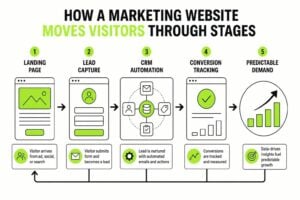
When a lead fills out a form on your website:
- They enter your CRM with source attribution
- An automation sequence starts immediately
- Your team gets notified with context
- The lead receives relevant content based on their entry point
- Every interaction is tracked and attributed
- Pipeline reports update in real-time
This isn't complicated technology. It's just thoughtful systems design that most agencies skip because they're focused on the next campaign launch instead of building compounding infrastructure.
| Without Integration | With Integration |
|---|---|
| Leads in multiple places | Single source of truth |
| Manual follow-up | Automated nurture sequences |
| Attribution guesswork | Clear source tracking |
| Disconnected reporting | Unified dashboards |
| Sales and marketing silos | Aligned teams and data |
Pricing Models and What They Reveal
How a nearby digital marketing agency prices their work tells you a lot about how they think. Most agencies charge monthly retainers based on time and effort. Better agencies price based on the value they deliver and the systems they build.
Common Pricing Structures
Retainer model: Monthly fee for ongoing services. This works if the scope is clear and the agency isn't just billing hours. Watch for retainers that grow without corresponding increases in value.
Project-based: Fixed price for specific deliverables. Good for website builds, CRM implementations, or defined campaigns. The risk is agencies cutting corners to protect margin.
Performance-based: Payment tied to results. Sounds great but often creates misaligned incentives. The agency focuses on vanity metrics instead of business outcomes.
Value-based: Pricing reflects the business impact, not the hours worked. This is rare but indicates an agency that understands they're building assets, not just delivering services.
Understanding marketing agency pricing helps you evaluate whether you're paying for time or transformation. The best agencies charge for the systems they build and the predictability they create, not just the campaigns they run.
The Team Structure Question
Who actually does the work matters more than the agency's brand or office size. A nearby digital marketing agency might have impressive credentials, but if your account is managed by junior staff or freelancers they barely supervise, you're not getting what you paid for.
Key Roles to Understand
- Strategist: Sets direction, owns results
- Technical lead: Builds infrastructure, manages integrations
- Channel specialists: Execute specific tactics (ads, SEO, content)
- Account manager: Keeps projects moving, communicates progress
Ask directly: "Who will be working on my account, and what's their experience?" If they won't give you straight answers or the team changes frequently, that's a problem. You want continuity and expertise, not a revolving door of contractors.
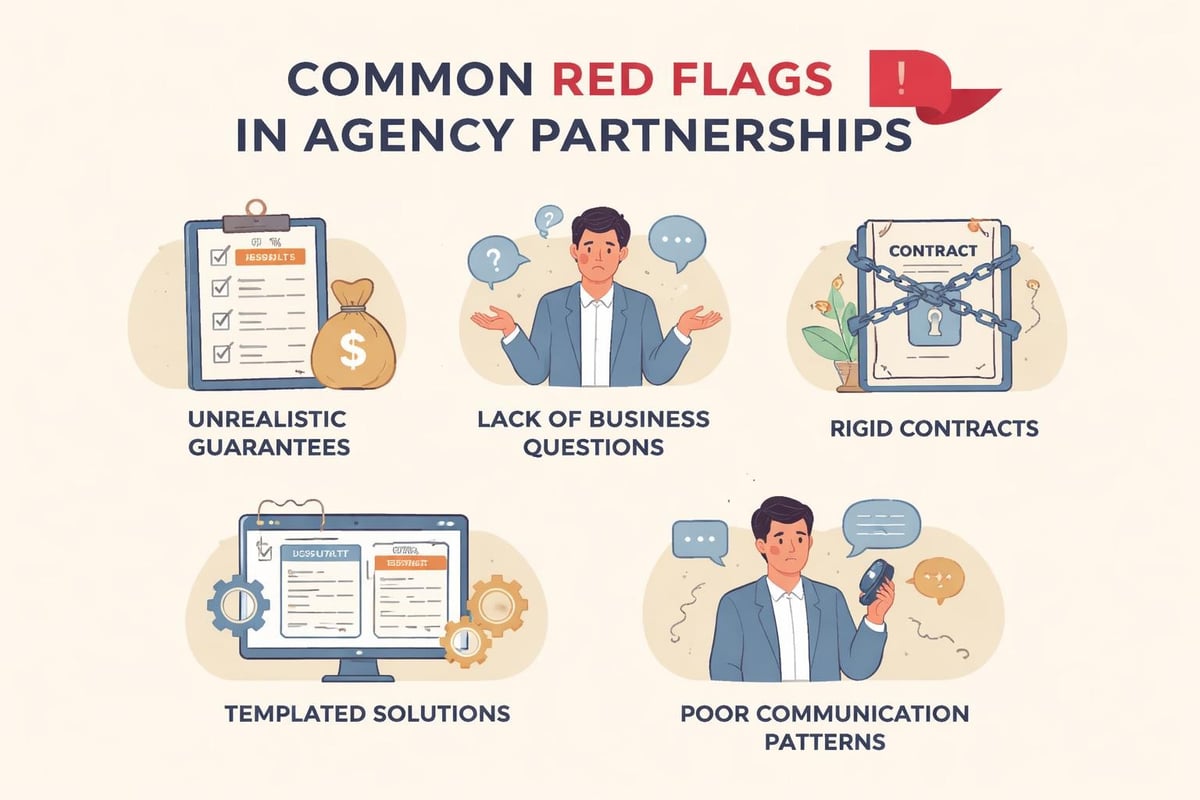
Red Flags That Signal You Should Walk Away
Some warning signs are obvious. Others are subtle. Here's what should make you reconsider a nearby digital marketing agency before signing anything.
They promise specific rankings or traffic numbers. Anyone guaranteeing page one rankings or exact traffic increases doesn't understand how search engines or paid media actually work. Results depend on too many variables to promise specific outcomes.
They don't ask about your business model. If an agency jumps straight to tactics without understanding how you make money, how your sales process works, or what your customer acquisition cost needs to be, they're not thinking strategically.
Their contracts are rigid and long. While agencies need some commitment to do meaningful work, contracts that lock you in for a year or more with no performance clauses are designed to protect the agency, not you.
They talk more than they listen. Good agencies ask questions and diagnose before prescribing. If they're pitching services before understanding your situation, they're selling packages, not solving problems.
Making the Final Decision
After you've evaluated several options, the choice often comes down to fit. The best nearby digital marketing agency for you might not be the biggest or the cheapest. It's the one that understands your business model, thinks in systems, and has the technical depth to build infrastructure that compounds.
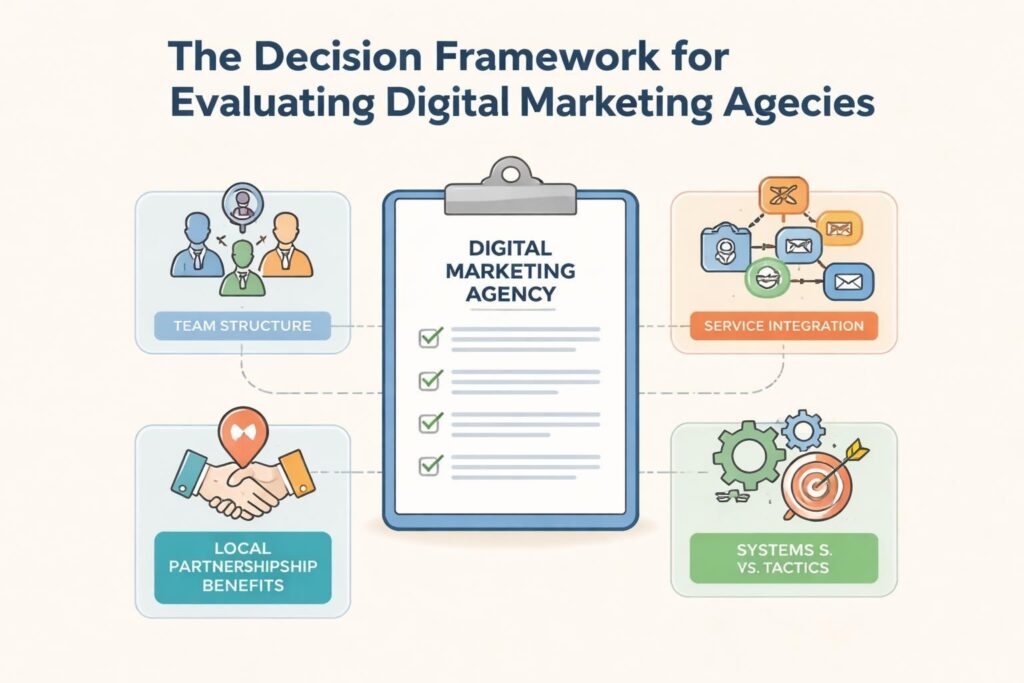
Decision Framework
Create a simple scorecard across these dimensions:
- Systems thinking: Do they build infrastructure or just run campaigns?
- Technical depth: Can they implement CRM, automation, and attribution?
- Market understanding: Do they know your competitive landscape?
- Team quality: Who actually does the work, and what's their experience?
- Communication: Are they clear, direct, and responsive?
- Pricing alignment: Does their model match the value they create?
Weight these factors based on what matters most to your business. For service-based businesses especially, systems thinking and technical depth should rank highest. You need an agency that protects leads and creates predictable pipeline, not just generates attention.
What Success Actually Looks Like
The right partnership with a nearby digital marketing agency changes how your business operates. Not just your marketing, but your entire growth system.
Month one through three: Infrastructure gets built. CRM implemented, automation sequences created, tracking properly configured, website optimized for conversion. This feels slow but it's laying foundation.
Month four through six: Channels start producing. Paid media campaigns launch with proper attribution. SEO work begins showing movement. Content systems generate consistent output. Your pipeline becomes more predictable.
Month seven through twelve: Systems compound. Automation handles more follow-up. Attribution data improves targeting. Content builds authority. Your cost per acquisition drops while volume increases. Marketing becomes an engine, not a mystery.
This timeline assumes you're working with an agency that builds systems. Campaign-focused agencies might show faster early results but hit a ceiling because there's no infrastructure supporting long-term growth. Understanding different marketing strategies helps you evaluate whether an agency's approach will scale or stall.
Metrics That Matter
Stop obsessing over impressions and clicks. Focus on business metrics:
- Pipeline value: Total potential revenue in your CRM
- Conversion rates: From visitor to lead, lead to opportunity, opportunity to customer
- Cost per acquisition: What you spend to get a customer
- Customer lifetime value: What each customer is worth over time
- Attribution accuracy: Which channels actually drive revenue
A good nearby digital marketing agency will report on these metrics from the start and improve them systematically. If they're only showing you traffic and engagement numbers, they're not focused on what actually matters to your business.
How Service-Based Businesses Should Evaluate Agencies Differently
If you run a service-based business, your evaluation criteria need to be more specific than product companies. Your sales cycle is longer, your deal sizes vary, and relationship quality matters more than transaction volume.
Look for agencies that understand consultative sales, the importance of positioning and thought leadership, and how to build trust before asking for the sale. Marketing and business development for services requires different infrastructure than e-commerce or SaaS.
Service Business Priorities
- Lead quality over quantity: Better to have fewer well-qualified leads than volume of poor fits
- Nurture sequences: Automated content that builds trust over weeks or months
- Sales enablement: Materials and systems that support consultative selling
- Attribution complexity: Tracking long sales cycles with multiple touchpoints
- Retention focus: Existing client communication and expansion opportunities
A nearby digital marketing agency experienced with service businesses will talk about these priorities early. They'll want to understand your sales process, average deal size, sales cycle length, and how decisions get made. If they treat your service business like a product company, the strategies won't fit.
The Ongoing Partnership Dynamic
Hiring an agency isn't a transaction. It's a partnership that requires ongoing collaboration. The best nearby digital marketing agency will push back when you're wrong, bring ideas proactively, and hold you accountable for your role in success.
Your responsibilities matter. Agencies need access to your data, timely feedback on creative, participation in strategy sessions, and realistic expectations. If you're slow to respond or constantly changing direction, even the best agency will struggle to deliver results.
Regular communication cadence keeps things on track. Weekly updates, monthly strategy reviews, quarterly planning sessions. This rhythm ensures alignment and catches problems early.
Evolution is expected. What works in quarter one might need adjustment by quarter three. Markets shift, competitors adapt, channels evolve. The right agency partnership includes continuous optimization, not just set-it-and-forget-it execution.
Finding the right nearby digital marketing agency comes down to systems thinking and execution capability. You need a partner who builds infrastructure that compounds, not just campaigns that reset every month. If you're a service-based business looking to scale with clarity and remove the chaos from your marketing, MDO Digital specializes in exactly that: high-trust websites, CRM and automation systems, and data-driven marketing that creates predictable demand. We focus on protecting leads and building structured growth that actually works over time.