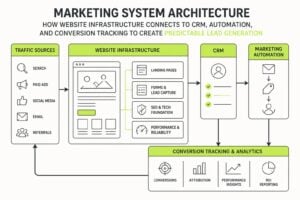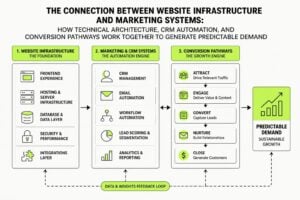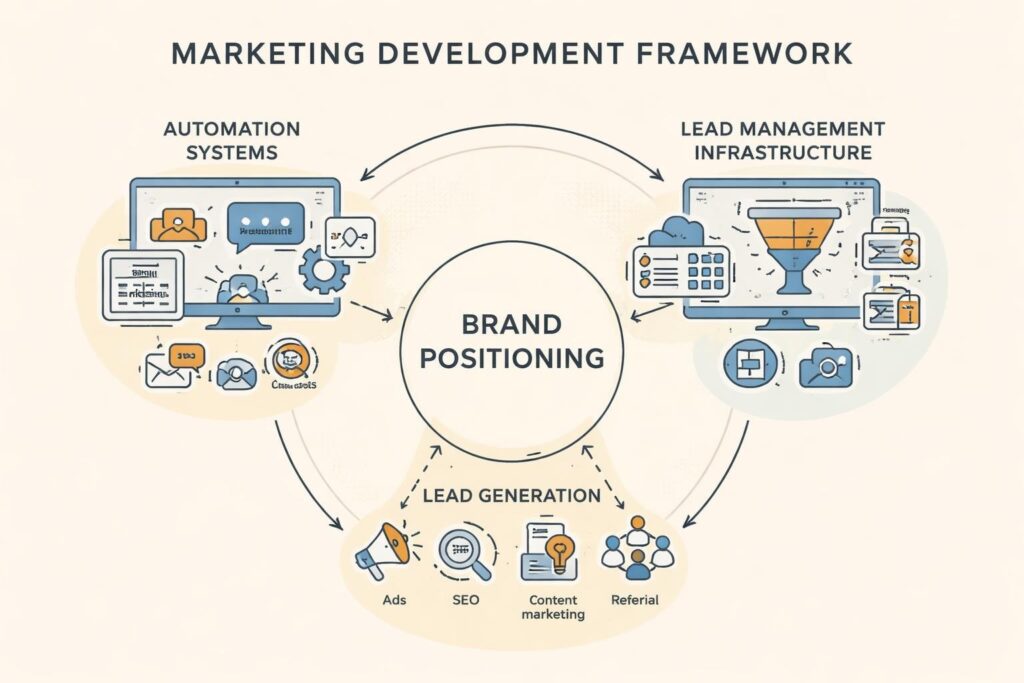
Marketing development isn't just running campaigns or posting content. It's the foundational work of building systems that turn attention into predictable demand. For service businesses, this means creating infrastructure that captures leads, nurtures relationships, and produces consistent growth without burning out your team. Most businesses treat marketing as a series of disconnected tactics. Marketing development flips that approach, focusing on integrated systems that compound results over time. It's less about doing more and more about building better.
What Marketing Development Actually Means
Marketing development is the process of designing, implementing, and optimising the systems that drive business growth. It combines strategy, technology, and execution into a cohesive framework.
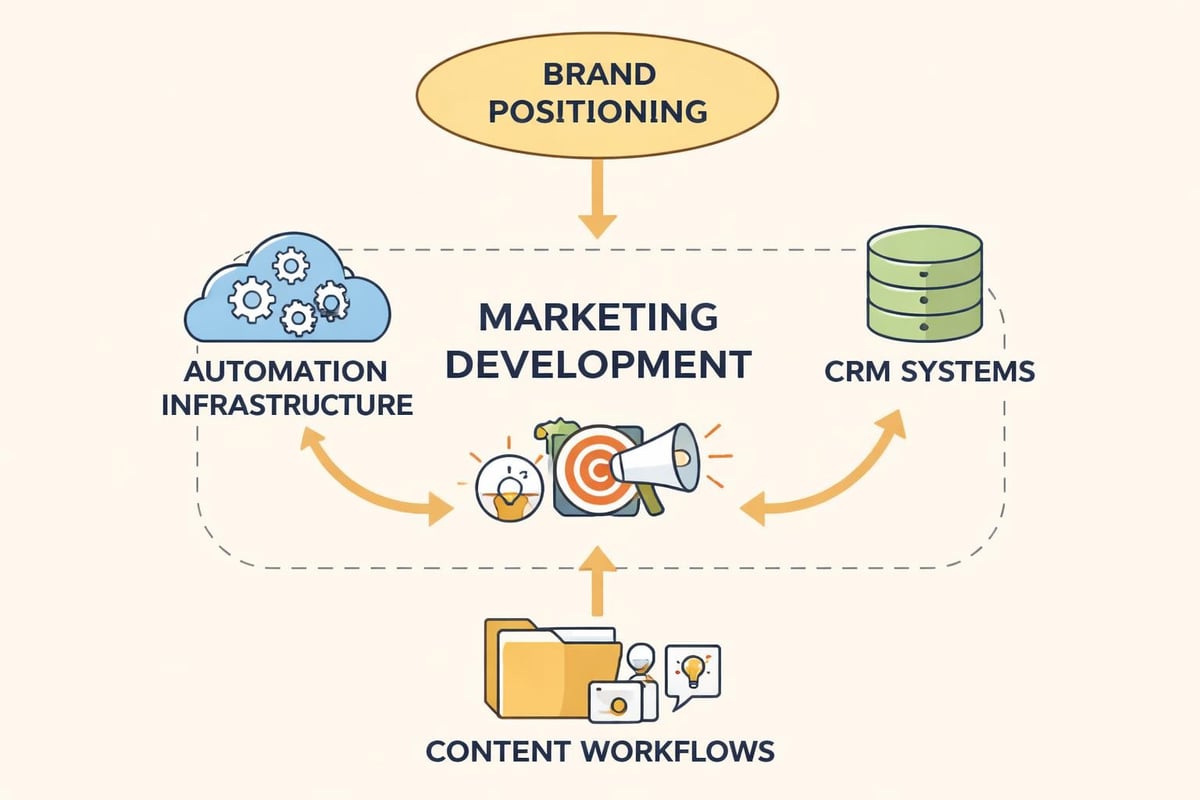
Think of it as building the engine, not just pressing the accelerator. You're creating repeatable processes for lead generation, customer acquisition, and retention. This includes your CRM infrastructure, automation workflows, content systems, and data tracking.
Core components of marketing development include:
- Brand positioning and messaging frameworks
- Marketing automation and CRM setup
- Lead capture and nurturing systems
- Content production workflows
- Performance tracking and attribution
- Integration between marketing tools and business operations
The difference between marketing and marketing development is simple. Marketing executes campaigns. Marketing development builds the infrastructure that makes those campaigns scalable and measurable.
Why Service Businesses Need This Foundation
Service businesses face a specific challenge. You're selling expertise, not products. Your sales cycle is longer, your average contract value is higher, and trust matters more than convenience.
Without proper marketing development, you end up with scattered leads across email inboxes, inconsistent follow-up, and no clear picture of what's actually working. You might get referrals, but you can't predict revenue. You run ads, but can't track which leads turned into paying clients.
Marketing systems solve this by creating structure around chaos. Every lead gets captured. Every prospect follows a nurture sequence. Every campaign gets measured against revenue, not just clicks.
Building Your Marketing Development Framework
Start with clarity. What does success look like in numbers? How many leads do you need to hit revenue targets? What's your close rate? How long is your sales cycle?
These answers shape everything else. Your marketing development framework should work backwards from revenue goals to define the activities, systems, and metrics that matter.
The Three Layers of Marketing Development
Layer one is positioning. Before you build systems, you need clear messaging. What problem do you solve? Who do you solve it for? Why should they choose you over alternatives?
This isn't fluffy brand work. It's the foundation for every email, landing page, and sales conversation. Without it, your automation sends generic messages that don't convert.
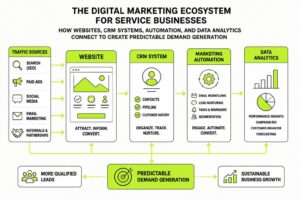
Layer two is infrastructure. This includes your CRM, marketing automation platform, website forms, tracking pixels, and integration between tools.
The 2024 marketing technology landscape shows hundreds of options, but most service businesses need just a handful of well-integrated tools. Choose platforms that talk to each other and support your specific workflows.
| Infrastructure Element | Purpose | Integration Points |
|---|---|---|
| CRM | Contact management, deal tracking | Email, calendar, payment processor |
| Marketing automation | Email sequences, lead scoring | CRM, website forms, analytics |
| Website | Lead capture, education | CRM, automation, analytics |
| Analytics | Attribution, performance tracking | All marketing channels |
Layer three is execution systems. How do you consistently produce content? How do leads move through your funnel? What triggers follow-up actions?
Document these processes. Create templates. Build checklists. Marketing development removes the need to reinvent the wheel every time you run a campaign.
Designing Lead Flow That Actually Converts
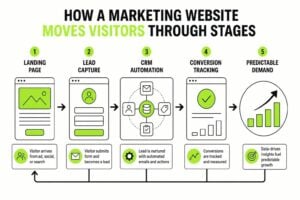
Lead flow is the path someone takes from first awareness to becoming a client. Most businesses let this happen organically, which means it barely happens at all.
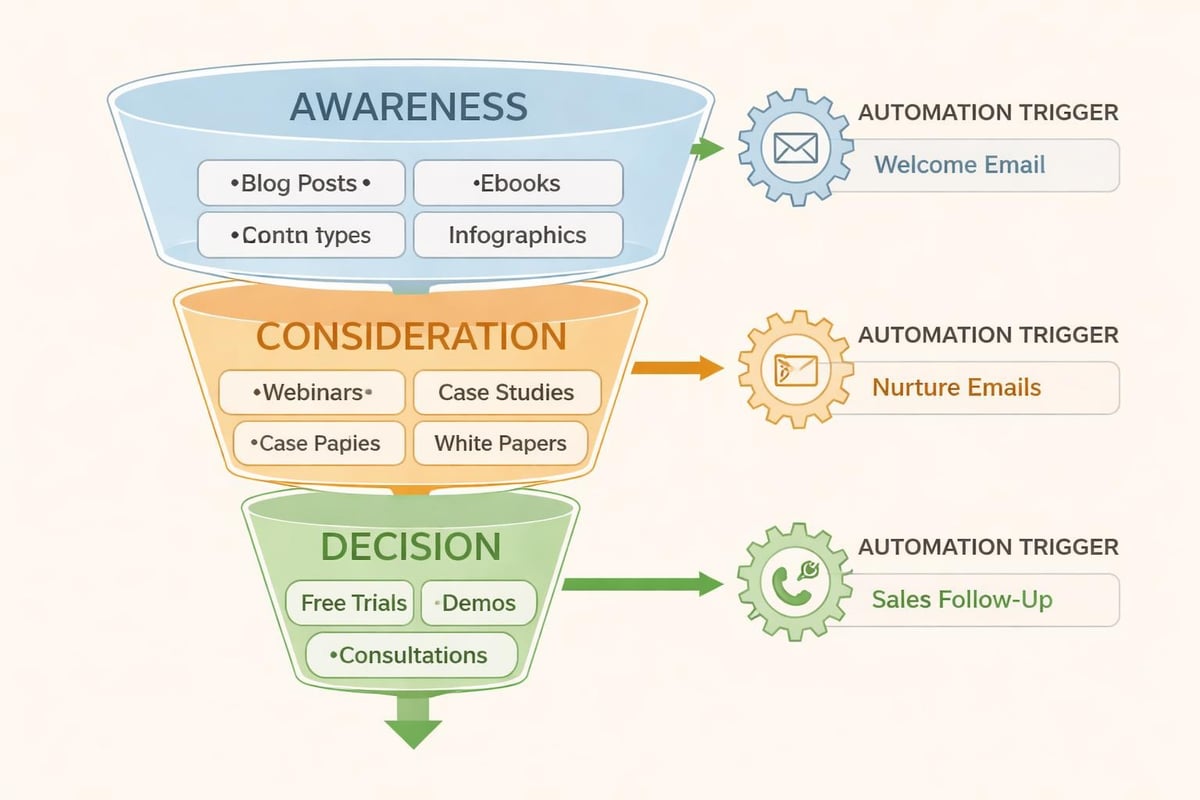
Marketing development designs intentional journeys. You define the stages, the content for each stage, and the triggers that move people forward.
Mapping Your Lead Journey
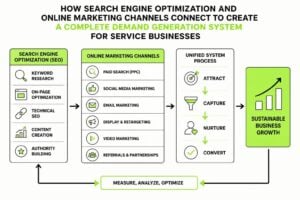
- Awareness: How do people first discover you? SEO, referrals, ads, partnerships? Each source needs a specific entry point.
- Consideration: What information do they need to evaluate you? Case studies, process explanations, pricing frameworks?
- Decision: What final elements build enough trust to book a call or sign a contract?
Every stage requires different content and different follow-up. Someone who downloaded your guide needs nurture emails. Someone who visited your pricing page needs a direct sales conversation.
Your CRM should track these stages automatically. When someone downloads a resource, they enter a nurture sequence. When they visit high-intent pages multiple times, your team gets an alert.
Automation That Feels Human
Marketing automation gets a bad reputation because most people use it to send robotic emails. Done properly, automation enhances relationships instead of replacing them.
The key is context. Generic "just checking in" emails are spam. But an email triggered by specific behavior (downloaded your service guide, visited pricing twice, hasn't engaged in 30 days) can provide genuinely helpful information at the right moment.
According to Forrester’s evaluation of marketing automation platforms, the best systems balance automation with personalization. They use data to inform communication without making every interaction feel algorithmic.
Automation use cases for service businesses:
- Welcome sequences for new subscribers
- Educational nurture for specific service interests
- Re-engagement campaigns for cold leads
- Post-sale onboarding and check-ins
- Feedback collection after project milestones
The goal isn't to automate everything. It's to automate the repeatable parts so your team can focus on high-value conversations.
Measuring What Actually Matters
Marketing development requires measurement, but not vanity metrics. Forget impressions and likes. Focus on the numbers that connect to revenue.
The Metrics Framework
Top of funnel: How many new leads are you generating? What's the cost per lead by channel? Which sources produce the highest quality?
Track these by campaign and by month. Look for trends. If your cost per lead is climbing, your audience is saturated or your messaging is off.
Middle of funnel: How many leads are engaging with your nurture content? What's your email open rate? How many leads are requesting sales conversations?
This reveals whether your positioning and content are working. Low engagement means your messaging doesn't resonate or you're attracting the wrong people.
Bottom of funnel: What's your close rate? How long is your sales cycle? What's the average contract value?
These metrics tell you if your marketing is attracting qualified prospects. A high close rate with a short sales cycle means your positioning is doing its job.
| Metric | What It Reveals | Target Range (Service Businesses) |
|---|---|---|
| Cost per lead | Channel efficiency | $50-$500 depending on service value |
| Lead to opportunity rate | Lead quality and nurture effectiveness | 15-30% |
| Opportunity to client rate | Sales process and positioning strength | 30-50% |
| Customer acquisition cost | Overall marketing efficiency | 10-20% of annual client value |
Marketing development ties these metrics together. You can see which campaigns produce leads that actually close. You can calculate the true ROI of every marketing dollar.
Building Content Systems That Scale
Content is the fuel for marketing development, but most businesses approach it reactively. They publish when they have time, which means they rarely publish at all.
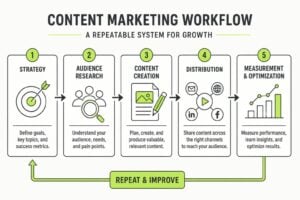
A content system removes that friction. You define topics in advance, create production workflows, and build a library that works for you over time.
The Content Calendar Approach
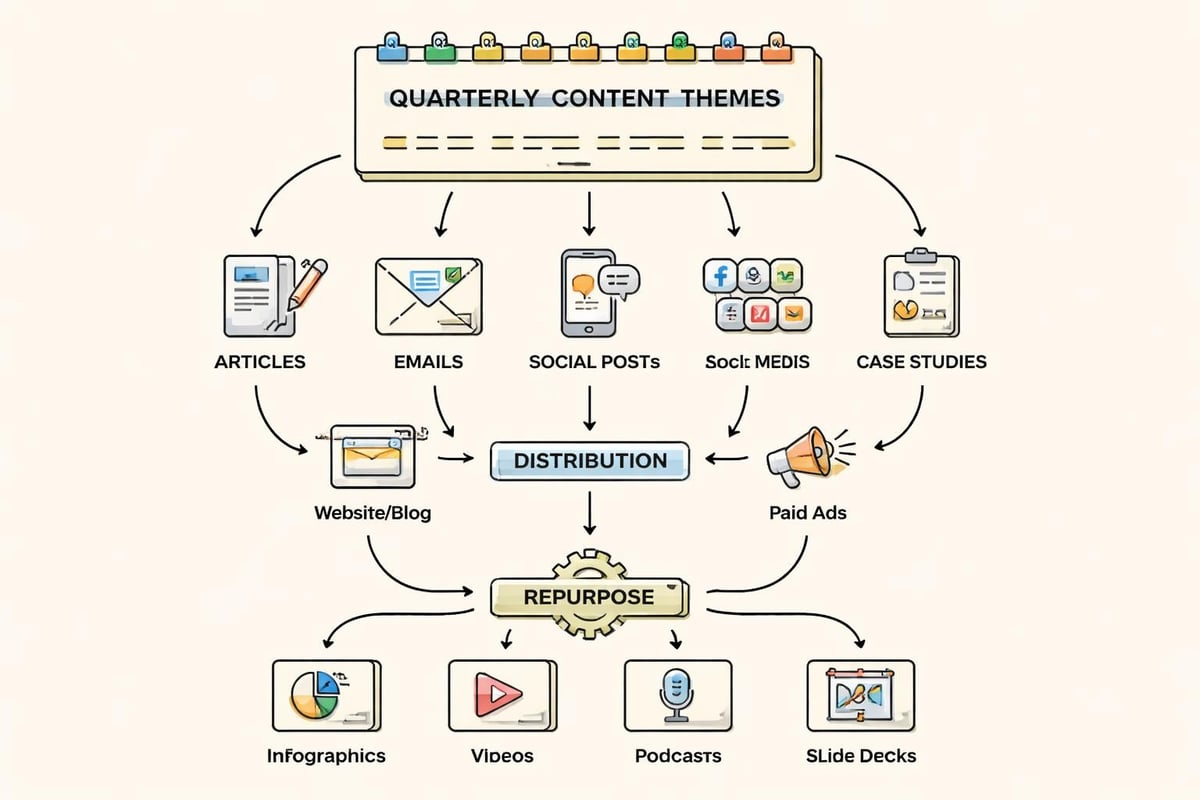
Start with quarterly themes based on what your prospects need to understand. If you're a branding and marketing agency, your themes might cover positioning, visual identity, messaging frameworks, and brand implementation.
Within each theme, create multiple formats:
- Long-form articles that establish expertise
- Email sequences that educate subscribers
- Social posts that drive traffic
- Case studies that demonstrate results
- Video or audio for different learning preferences
Each piece connects to your lead flow. Blog posts capture search traffic. Email sequences nurture leads. Case studies close deals.
The emerging marketing strategy trends for 2025 emphasize integrated content ecosystems over one-off posts. Your content should reference itself, creating pathways for prospects to go deeper.
Integrating Sales and Marketing Operations
Marketing development breaks down when sales and marketing operate in silos. Marketing generates leads, sales complains about quality. Sales loses deals, marketing blames follow-up.
Integration solves this. Both teams work from the same CRM. Both teams see the full customer journey. Both teams share responsibility for conversion rates.
Creating Operational Alignment
Define lead stages together. What makes a lead marketing qualified versus sales qualified? When should marketing hand off to sales? What information does sales need to have productive conversations?
Document these criteria in your CRM. Set up automation that notifies sales when leads hit qualification thresholds.
Establish feedback loops. Sales should report which leads convert and why. Marketing should adjust messaging and targeting based on that feedback.
This isn't a quarterly meeting. It's ongoing communication about what's working and what needs refinement.
Build shared dashboards. Both teams should see the same metrics: lead volume, conversion rates, pipeline value, revenue attribution.
When everyone operates from the same data, you eliminate finger-pointing and focus on system improvements.
Scaling Marketing Development Over Time
Marketing development isn't a one-time project. It's an iterative process that evolves as your business grows.
Start simple. Get your CRM set up properly. Build one core automation sequence. Create a basic content calendar. Measure the fundamentals.
As you gain data, you'll see where to invest next. Maybe your email nurture needs more sophistication. Maybe you need better attribution tracking. Maybe you're ready for paid advertising with proper lead flow already in place.
Progressive marketing development stages:
- Foundation: CRM setup, basic automation, contact management
- Systematization: Lead scoring, segmented nurture, content workflows
- Optimization: Advanced attribution, A/B testing, multi-channel integration
- Expansion: New channel development, team growth, advanced analytics
Most service businesses spend too long in stage one or jump to stage four before they're ready. The right progression depends on your revenue, team size, and growth goals, but the sequence matters.
You can't optimize what isn't built. You can't expand what isn't working. Marketing development is patient work that compounds when done properly.
Common Implementation Mistakes
Mistake one: Tool obsession. Buying expensive software before defining your processes. Tools support systems, they don't create them.
Mistake two: Complexity creep. Building elaborate automation before you understand what messaging works. Start simple, add complexity as you prove concepts.
Mistake three: Ignoring data. Running campaigns without tracking results or, worse, tracking results without acting on them. Data exists to inform decisions.
Mistake four: Inconsistent execution. Building systems but not using them. Marketing development requires discipline and follow-through.
The best marketing and business development systems are often the simplest ones, executed consistently over time.
The Role of Technology in Marketing Development
Technology enables marketing development, but it's not the solution itself. You need the right tools, properly integrated, supporting well-designed processes.
For most service businesses, this means:
- A proper CRM (HubSpot, Salesforce, or similar)
- Marketing automation (often included in your CRM)
- Website with form tracking and conversion optimization
- Email platform integrated with your CRM
- Analytics that tracks beyond just web traffic
The key is integration. When your tools talk to each other, you get a complete picture of each prospect's journey. When they're disconnected, you're stitching together incomplete data and missing opportunities.
Choose platforms based on your actual needs, not feature lists. An over-complicated tool you don't use is worse than a simple tool you use religiously.
Making Marketing Development Practical
The theory matters less than implementation. Marketing development works when you commit to building systems instead of just running tactics.
Start by auditing what you have. How do leads enter your world? Where do they go? Who follows up? What gets measured?
Identify the biggest gaps. Usually it's lead follow-up, lack of nurture, or no attribution tracking. Pick one problem and build a system to solve it.
Document everything. Create process maps. Write down your automation logic. Define your lead stages clearly.
Then execute consistently. Marketing development compounds over time, but only if you stick with it long enough to see results. Most businesses give up too early, right before the system starts working.
Digital marketing infrastructure isn't flashy. It's the unglamorous work of building foundations that support predictable growth. But it's what separates businesses that scale from businesses that hustle forever.
Marketing development transforms chaotic tactics into structured systems that produce predictable results. It requires upfront work to build the infrastructure, but that investment compounds into sustainable growth that doesn't depend on constantly doing more. If you're ready to remove the chaos and build marketing systems that actually scale, MDO Digital helps service businesses design the infrastructure, automation, and processes that turn attention into reliable demand.