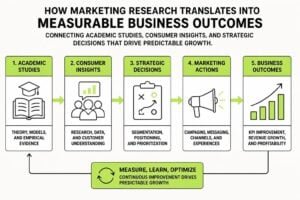
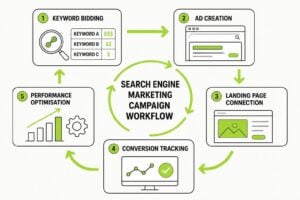
Most service businesses treat their marketing like a collection of separate tools. A website here, some social posts there, maybe an email campaign when they remember. Each piece sits alone, doing its own thing, with no real connection to what comes before or after. But the businesses that scale consistently? They’ve figured out something different. They’ve built what researchers studying network theory call a growth web, a connected system where every part strengthens the others and compounds over time.
What Makes a Growth Web Different
A growth web isn’t just marketing. It’s infrastructure.
Think of it like the difference between a few scattered plants and an actual garden. The plants might survive on their own, but a garden has soil systems, water channels, companion planting, and structures that make everything grow better together. Your marketing works the same way.
The core difference comes down to three characteristics:
- Every touchpoint feeds data and momentum into the next stage
- Systems are designed to capture and protect value, not just generate it
- Growth compounds because the structure learns and improves with scale
When you look at how the World Wide Web itself evolved, you see similar patterns. The most successful sites weren’t just creating content, they were building link structures that created network effects. Each new page added value to existing pages, and the whole system became more valuable as it grew.
The Compound Effect of Connected Systems
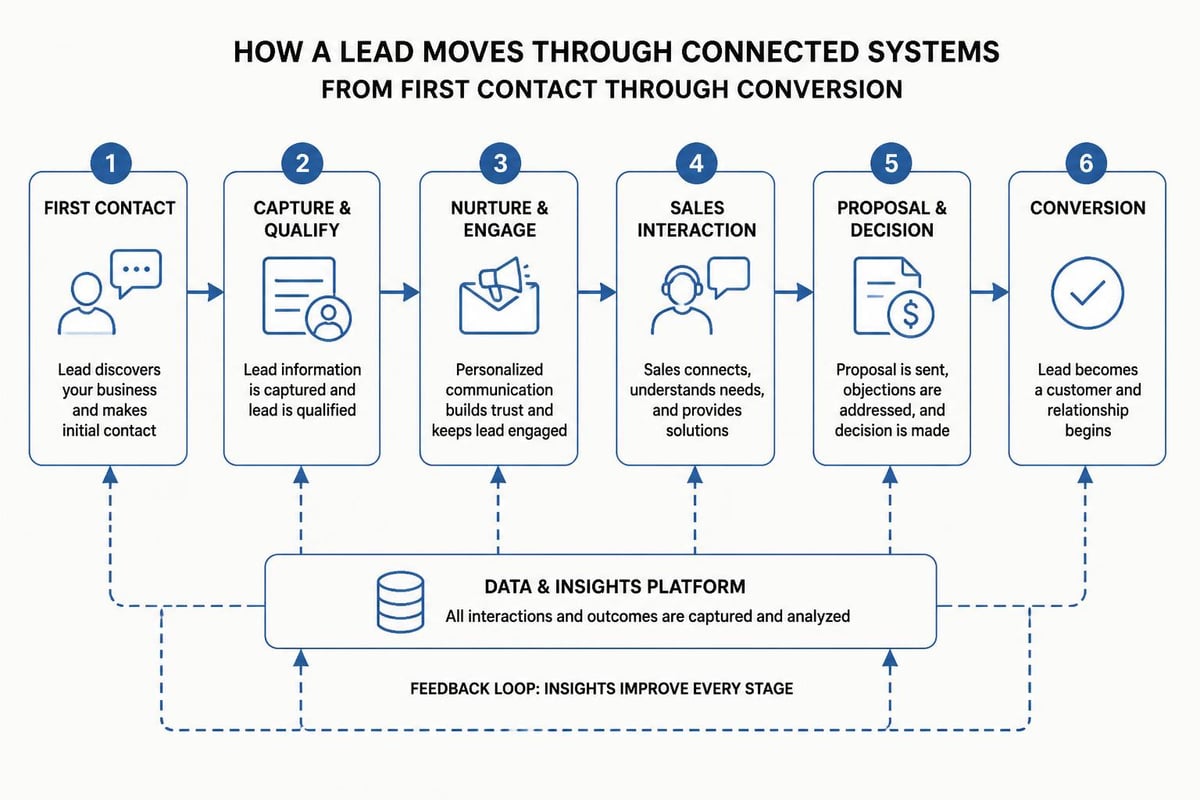
Here’s where most businesses leak revenue. They spend money getting attention, but they don’t have the infrastructure to convert and retain it efficiently.
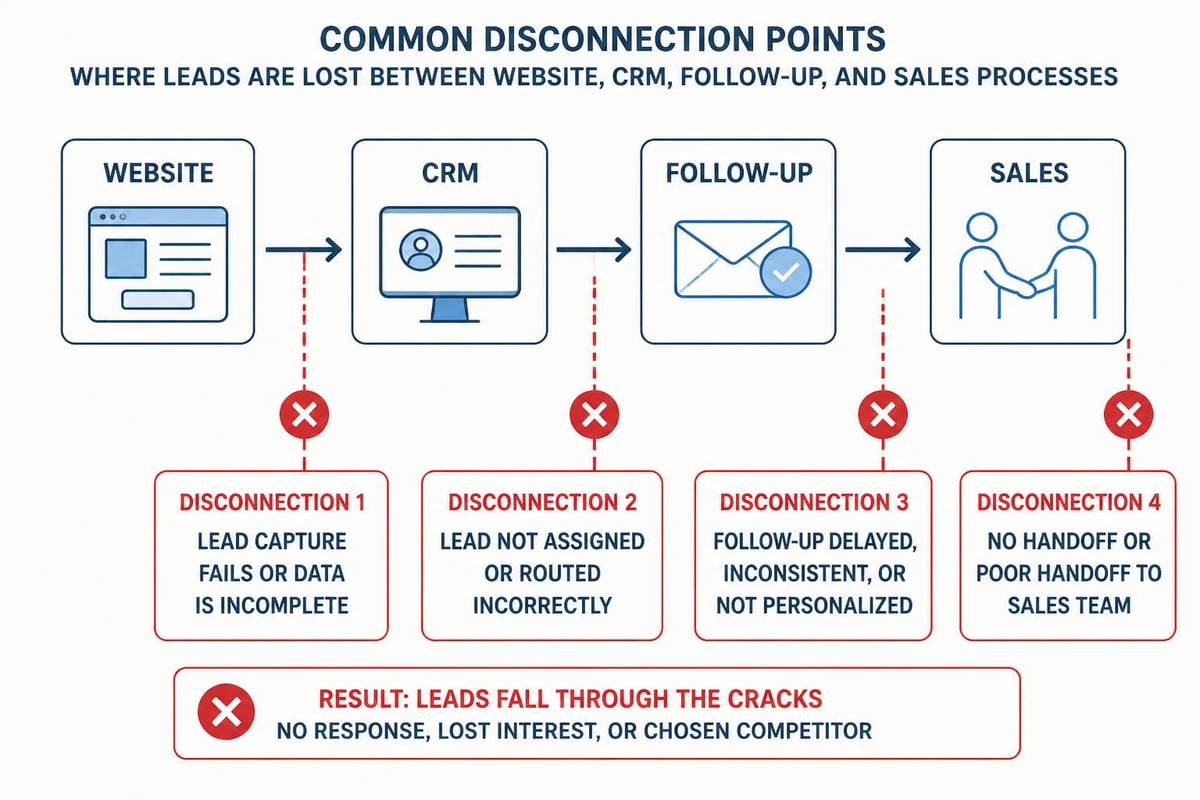
You run ads. Someone clicks. They land on your website. Maybe they fill out a form. Then what? If that lead just sits in an inbox, or gets a generic follow-up three days later, you’re burning money. The growth web approach treats every lead like the asset it is.
| Traditional Approach | Growth Web Approach |
|---|---|
| Channels operate independently | Each channel feeds the next |
| Manual follow-up, inconsistent timing | Automated sequences, perfect timing |
| Data stays siloed | Centralised CRM shows full journey |
| Growth requires more ad spend | Growth improves conversion at every stage |
| Success depends on individual effort | Success comes from system performance |
The magic isn’t in any single piece. It’s in how they work together.
Building Your Foundation: The CRM Core
Every growth web needs a centre. For service businesses, that’s your CRM.
Not a spreadsheet. Not an inbox full of starred emails. An actual customer relationship management system that tracks every interaction, automates the repetitive stuff, and gives you clean data about what’s working.
Your CRM should connect:
- Website form submissions and chat interactions
- Email marketing and nurture sequences
- Sales pipeline and deal tracking
- Customer delivery and project management
- Review generation and referral programs
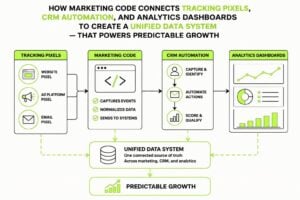
When these pieces talk to each other, you stop losing leads in the gaps. Someone fills out a contact form at 11pm on a Saturday? They get an immediate automated response that sets expectations, delivers value, and books them into your calendar. No manual work required.
This is where the 7-Step Marketing Plan becomes practical, not theoretical. Each step in the framework builds on the last, creating a system that keeps generating and converting leads automatically.
Data Flows Create Growth Loops
The second-order effect matters more than you’d think.
When your website, CRM, and marketing automation actually share data, you can do things manual processes can’t touch. Someone visits your pricing page three times but doesn’t fill out a form? That’s a signal. Your system can automatically add them to a nurture sequence that addresses common pricing objections.
Someone downloads your lead magnet but goes quiet? You can track that behaviour and trigger a different follow-up sequence than someone who’s actively opening emails and clicking links.
Research into scaling properties of web networks shows that connection density matters as much as raw size. The same applies to your marketing. More connections between your systems creates more paths to conversion and more opportunities to recover leads who would otherwise go cold.
The Three Layers That Make It Work
Building a proper growth web means thinking in layers, not tactics.
Layer One: Attention Systems
This is where most businesses start and stop. Ads, SEO, content, social media. The stuff that gets eyeballs.
But in a growth web, these aren’t separate channels competing for budget. They’re designed to work together, each playing a specific role based on intent and awareness level.
- Paid advertising captures high-intent searches and targets specific audiences
- Content marketing builds authority and catches organic search traffic
- Social media maintains presence and nurtures relationships
- Email outreach activates dormant contacts and generates referrals
The key? Every attention source has a clear next step designed specifically for that traffic source’s intent level. Someone clicking a Google ad about “marketing systems for consultants” shouldn’t see the same landing page as someone who found your blog post about brand positioning.
Layer Two: Conversion Infrastructure
Here’s where the growth web really separates from scatter-gun marketing.
Your conversion infrastructure includes:
- High-trust website with clear paths for different buyer stages
- Landing pages optimised for specific campaigns and offers
- Forms and chatbots that qualify leads while capturing them
- Lead magnets that deliver value and demonstrate expertise
- Booking systems that reduce friction and no-shows
Each piece needs to do more than just exist. It needs to feed data forward. When someone downloads your guide to marketing systems, your CRM should tag them, add them to a relevant sequence, and track which pages they visit next. That behaviour tells you when they’re ready for a sales conversation.
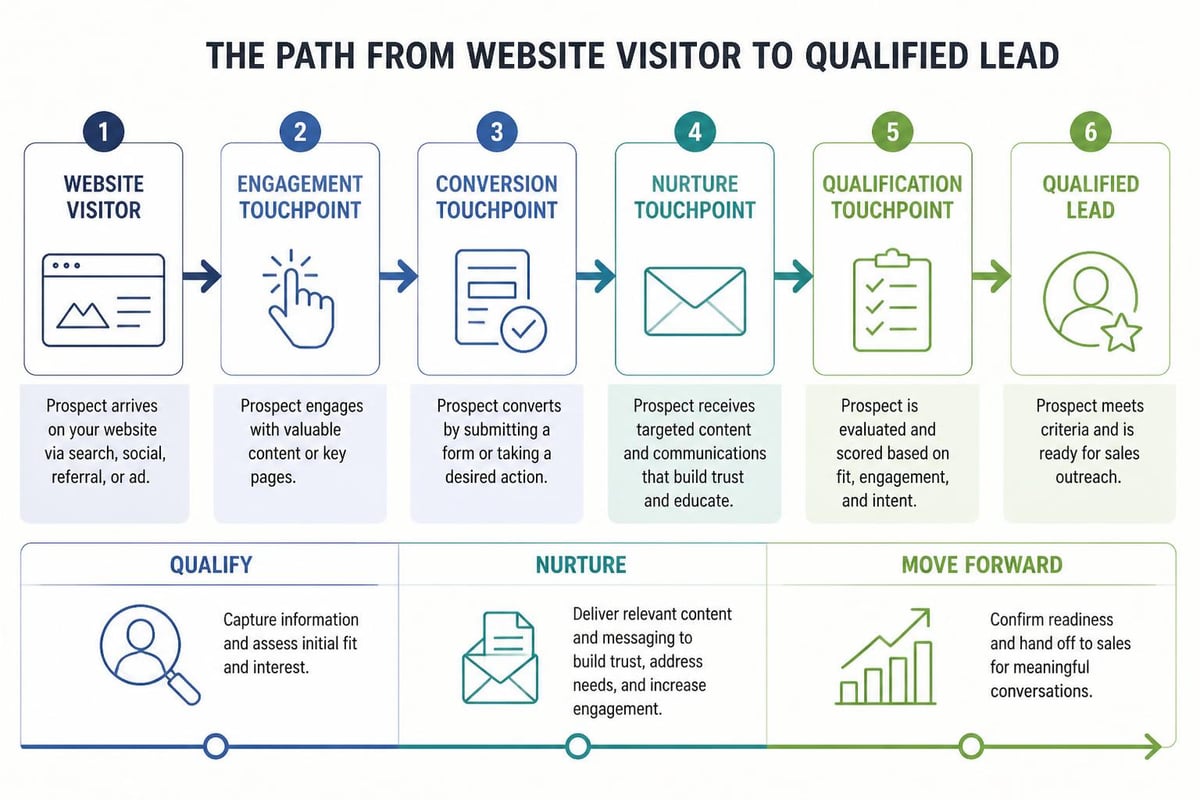
Studies examining network models that mimic web evolution reveal that growth isn’t random. It follows patterns based on connection quality and preferential attachment. Your best leads will engage with multiple touchpoints before converting. Build those touchpoints deliberately.
Layer Three: Retention and Amplification
This is the layer most service businesses completely ignore. They’re so focused on getting new leads that they underinvest in the clients they already have.
But in a true growth web, existing clients are your most valuable asset. They cost nothing to market to, they already trust you, and they’re your best source of referrals and testimonials.
Your retention layer should systematically:
- Deliver an experience worth talking about
- Collect testimonials and case studies at peak satisfaction
- Generate reviews on platforms that matter to your next clients
- Create referral momentum through structured programs
- Identify upsell and cross-sell opportunities based on usage data
When you build this layer properly, your cost to acquire new clients drops while your lifetime value climbs. That’s when growth becomes predictable instead of stressful.
Measuring What Actually Matters
The beauty of a growth web is that it generates clean data. No more guessing whether your marketing works. You can see exactly where leads come from, which sequences convert best, and where the friction points slow things down.
| Metric | What It Tells You | How to Improve It |
|---|---|---|
| Lead-to-SQL rate | How well qualification works | Better forms, targeted traffic |
| SQL-to-close rate | Sales process effectiveness | Stronger nurture sequences |
| Time to close | System efficiency | Reduce friction, automate follow-up |
| Customer LTV | Delivery and retention quality | Improve experience, add services |
| Referral rate | Client satisfaction | Systematise review and referral requests |
Track these across your CRM and you’ll spot the bottlenecks. Maybe your lead volume is great but qualification is weak. Maybe you close well but time-to-close is too long. Each problem has a system solution.
The digital growth approach means you’re not just throwing more money at ads hoping something sticks. You’re improving conversion at every stage, which multiplies results.
Common Mistakes That Break the Web
Building connected systems sounds logical. But most businesses make the same mistakes when they try.
Mistake one: Building on the wrong foundation. If your website can’t track behaviour, or your CRM can’t automate sequences, you’re trying to build a growth web on quicksand. Fix the infrastructure first.
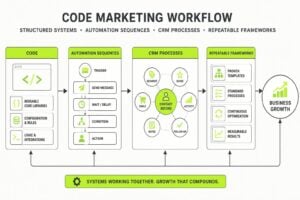
Mistake two: Over-complicating early. You don’t need 47 different tools and integrations day one. Start with the core loop: traffic to landing page, landing page to CRM, CRM to nurture sequence, sequence to sales conversation. Get that working smoothly before you add complexity.
Mistake three: Not protecting leads. The whole point of a growth web is that nothing falls through cracks. If someone fills out a form and doesn’t get an immediate response, then a follow-up, then another touchpoint, your web has a hole in it.
Mistake four: Ignoring the data. Your systems are telling you what works. Are people dropping off at the same point in your sequence? Is one lead source converting at 30% while another converts at 3%? Listen to that. Double down on what works, fix or kill what doesn’t.
Making It Work for Service Businesses
Service businesses have specific advantages when building a growth web. Your offers are usually higher value, your sales cycles involve actual conversations, and your clients stick around longer than e-commerce transactions.
That means your web can be more sophisticated. You’re not trying to convert someone in 30 seconds. You’re nurturing them over weeks or months, building trust, demonstrating expertise, and making the sale feel inevitable rather than pressured.
The service business growth web typically includes:
- Educational content that establishes authority in your niche
- Lead magnets that solve a small problem and hint at bigger solutions
- Multi-touch nurture sequences that address objections before sales calls
- Sales conversations that feel consultative, not transactional
- Delivery systems that turn clients into advocates
When you connect these properly, marketing and business development becomes a predictable system instead of a constant scramble. You know roughly how many leads you need to hit revenue targets, what your conversion rates are at each stage, and where to invest to get the biggest lift.
The businesses winning in 2026 aren’t the ones with the biggest ad budgets. They’re the ones with the tightest systems. They waste less, convert more, and compound growth over time.
The Integration Challenge
Here’s the bit that trips people up. Building a growth web means your tools actually need to talk to each other.
Your website needs to feed your CRM. Your CRM needs to trigger your email platform. Your email platform needs to update your CRM based on engagement. Your sales pipeline needs to trigger delivery workflows. Your delivery system needs to request reviews at the right moment.
That’s a lot of moving parts. And if you build it on tools that don’t integrate well, you’ll spend more time maintaining the system than using it.
Questions to ask before committing to any tool:
- Does it integrate natively with our CRM, or do we need middleware?
- Can we track the full customer journey across platforms?
- Will adding this create more manual work or reduce it?
- Does it give us the data we actually need to make decisions?
Sometimes the answer is paying more for better tools. Sometimes it’s consolidating onto fewer platforms that do more. What matters is that the system works together, not just in theory but in daily practice.
Building vs Buying Your Growth Web
You’ve got two basic paths here. Build it yourself piece by piece, or work with someone who’s done it before.
The DIY approach can work if you’ve got time and technical skill. You’ll learn a lot. You’ll also make mistakes, waste money on tools that don’t fit, and probably rebuild parts of it at least once.
Working with specialists who understand marketing systems means you skip the trial and error. You get infrastructure designed for your specific business model, tools chosen for integration not features, and systems that work from day one.
Either way, the goal stays the same: build a structure that captures attention, converts it efficiently, and compounds results over time. That’s what separates businesses that scale from businesses that stay stuck.
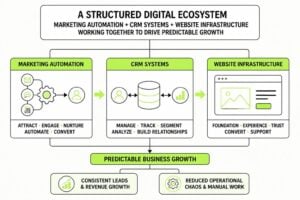
A growth web isn’t magic, it’s just systems working together the way they should. When your website, CRM, automation, and marketing channels actually connect, you stop losing leads and start compounding growth. If you’re tired of scattered tactics and ready for infrastructure that scales, MDO Digital builds exactly that, marketing systems designed for service businesses that want predictable growth without the chaos.