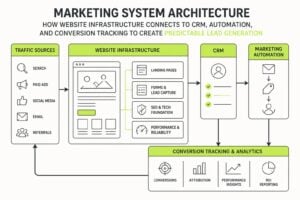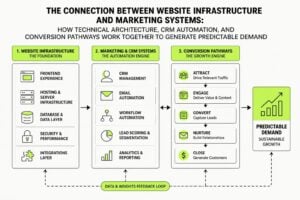
When you search "digital marketing team near me," you're usually facing one of two situations. Either your current marketing isn't working and you need help, or you're growing fast and can't handle it all yourself. Both are good problems to have. The question isn't whether you need marketing expertise, it's how you structure that expertise around your business. Location still matters in 2026, not because everything happens face to face, but because proximity creates accountability, shared context, and the kind of working relationship that survives when things get messy.
What a Digital Marketing Team Actually Does
A proper digital marketing team near me search should start with understanding what you actually need. Most service businesses think they need "marketing," but what they really need is a system that generates predictable demand.
Core functions include:
- Strategy and positioning (knowing what to say and who to say it to)
- Content creation (writing, design, video)
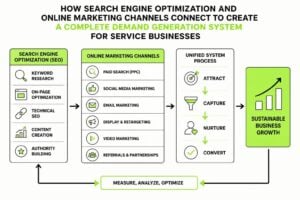
- Paid advertising (Meta, Google, LinkedIn)
- Organic reach (SEO, social, email)
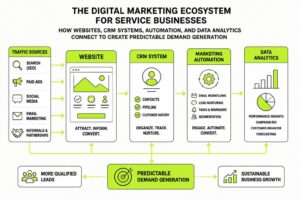
- CRM and automation (lead capture, nurture, follow-up)
- Analytics and reporting (what's working, what's not)
The mistake most businesses make is hiring for tactics before they have strategy. You end up with someone running ads to the wrong audience, or writing blog posts that don't connect to your offer. Building a scalable marketing team requires role clarity and KPI mapping, not just filling seats.
The Hidden Cost of Generalists
One person can't do all of this well. A "marketing person" might be excellent at content but terrible at paid media. They might understand social but have no idea how to build a CRM workflow. When you hire a generalist, you get average execution across the board. That's fine for maintenance, but it won't move the needle.
In-House vs Agency vs Hybrid Models
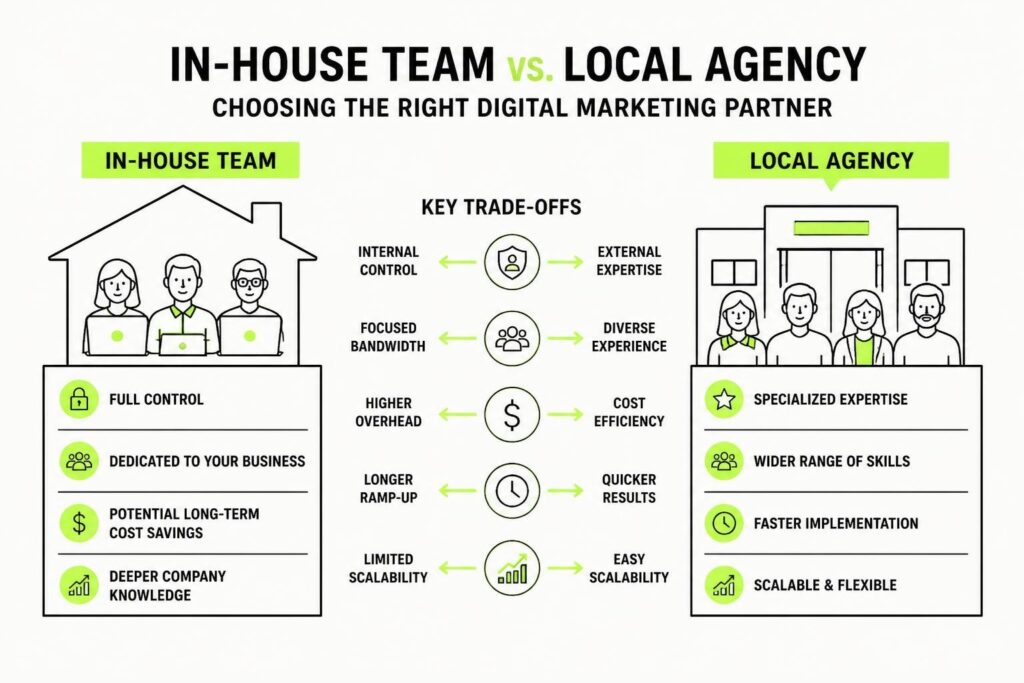
There's no single right answer here. The best structure depends on your revenue, growth rate, and how much control you want over daily execution.
| Model | Best For | Strengths | Weaknesses |
|---|---|---|---|
| In-house team | $2M+ revenue, fast growth | Full control, deep brand knowledge | Expensive, hard to scale, skill gaps |
| Agency partner | <$2M revenue, need speed | Expertise across channels, scalable | Less control, potential misalignment |
| Hybrid (internal + agency) | $1M-$5M revenue, specific gaps | Balance of control and expertise | Requires good coordination |
An in-house digital marketing team near me makes sense when you have the volume to justify salaries, benefits, and management overhead. You're looking at $200k+ annually for even a small team (one strategist, one content person, one media buyer). Add another $50k for tools, training, and turnover.
When Local Agencies Work Better
For most service businesses, a local agency partner gives you access to specialist skills without the fixed overhead. You're not paying for someone to sit idle between campaigns. You're paying for outcomes. The structure of a digital marketing team matters less than whether they can execute your strategy and report transparently.
A good digital marketing team near me should feel like an extension of your business, not a vendor you email once a month. Proximity helps. You can meet in person when things need sorting. You share local market knowledge. There's less of the "let me check with my account manager" runaround.
Key Roles You Actually Need
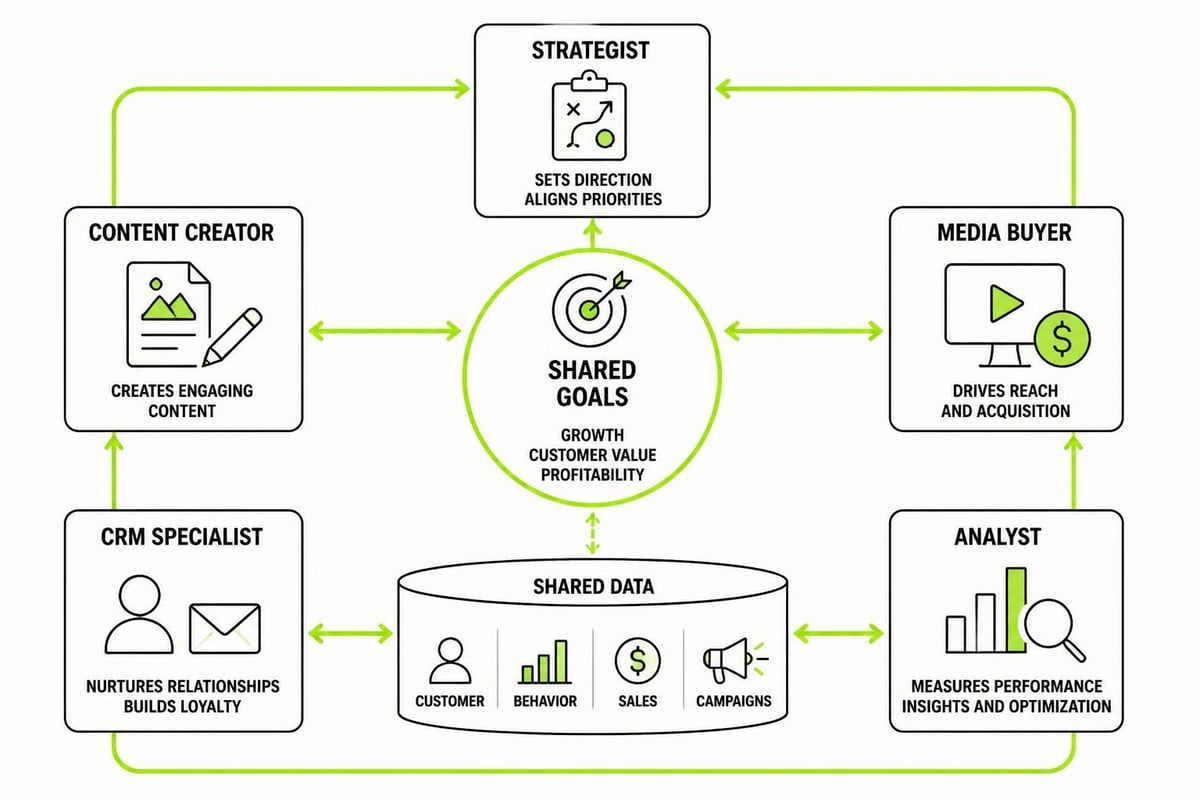
Forget job titles for a moment. Focus on functions. Here's what a working digital marketing team needs to deliver results in 2026.
Strategy and Positioning
Someone needs to own your positioning, messaging, and go-to-market strategy. This isn't a part-time job. It's the foundation everything else builds on. Without clear positioning, your ads waste money talking to the wrong people, and your content doesn't land.
This role also owns your customer journey. How do leads discover you? What happens after they opt in? Where do they get stuck? A strategist maps this out, identifies gaps, and prioritises what to fix first.
Content and Creative
Content takes many forms:
- Written (blogs, emails, sales pages, ad copy)
- Visual (graphics, social posts, infographics)
- Video (short form, long form, testimonials)
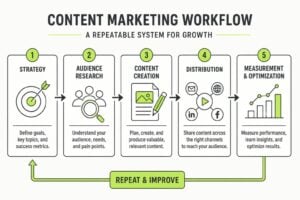
Most businesses underestimate how much content they need. One blog post a month won't cut it. You need a steady flow of material that educates, builds trust, and moves people toward your offer. Content marketing works when it's consistent and strategic, not sporadic.
Paid Media and Performance
Running ads profitably requires skill. You need someone who understands audience targeting, creative testing, funnel optimisation, and platform mechanics. Meta ads work differently to Google ads. LinkedIn has its own quirks. TikTok is a whole other beast.
A good media buyer doesn't just launch campaigns. They analyse data, kill what's not working, and double down on what is. They understand your cost per lead, your close rate, and your customer lifetime value. Without that financial literacy, you're flying blind.
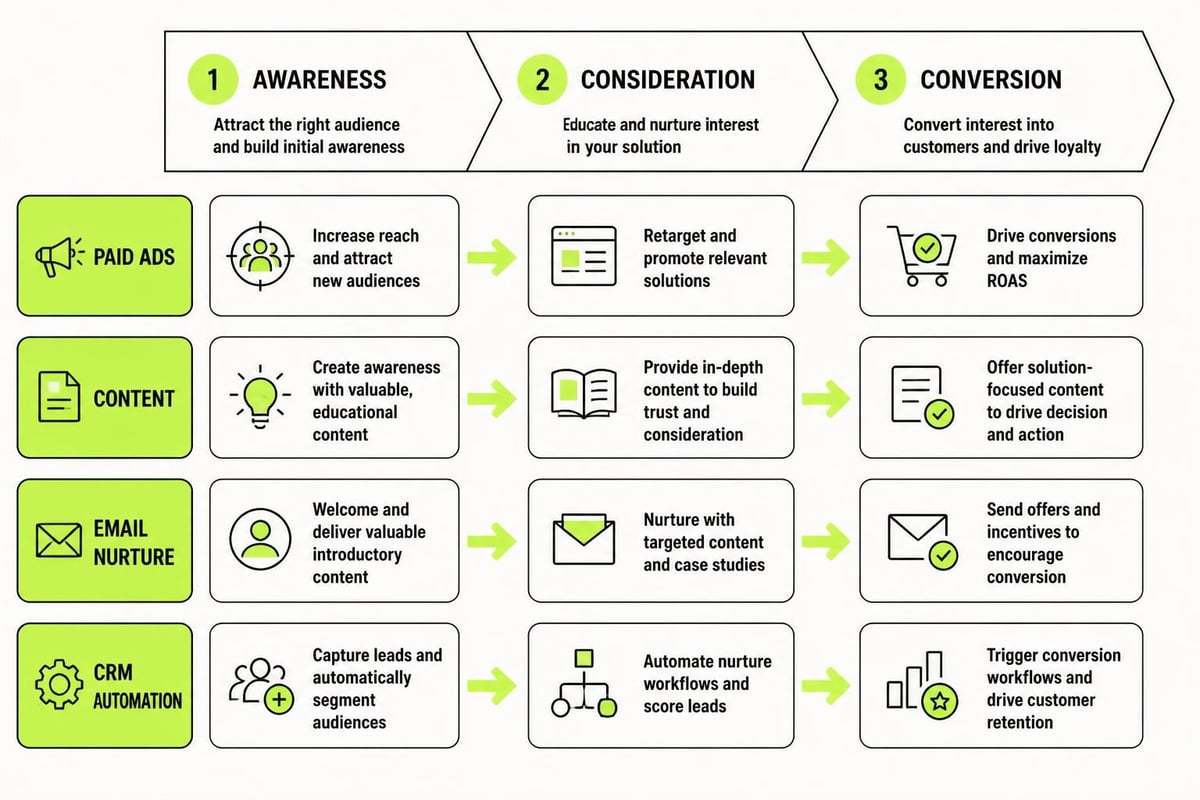
CRM and Automation
This is where most businesses fall apart. You generate leads, then nothing happens. They sit in a spreadsheet or get one awkward follow-up call.
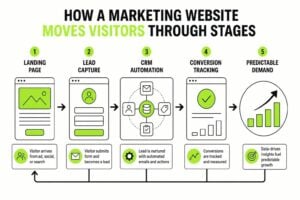
A CRM specialist builds the infrastructure that captures leads, tags them based on behaviour, sends automated sequences, and surfaces hot opportunities to your sales team. This isn't glamorous work, but it's what separates businesses that scale from those that stay stuck. If you're serious about building marketing systems, this function is non-negotiable.
We've seen businesses transform just by implementing a proper lead nurture sequence. Instead of hoping leads remember you, you stay in front of them with valuable content until they're ready to buy.
A practical framework like the 7-Step Marketing Plan helps you structure this process from goal setting through to generating referrals. It gives you a repeatable system rather than random acts of marketing. You can access the full framework here.

Analytics and Reporting
Someone needs to make sense of the numbers. What's your traffic doing? Which channels drive the most qualified leads? What's your cost per acquisition by source? Where are people dropping off?
This role isn't about pretty dashboards. It's about insight. Can you explain why revenue went up or down last month? Do you know which campaigns are profitable and which are burning cash? If not, you're guessing, not growing.
How to Assess a Digital Marketing Team Near Me
When you're evaluating potential partners or hires, skip the fluff. Here's what actually matters.
Ask these questions:
- Can you show me a documented process for onboarding a new client?
- How do you handle underperforming campaigns?
- What tools do you use for reporting, and can I access them directly?
- Who owns what in your team, and who will I actually work with?
- How do you structure your retainers or project fees?
Good teams have clear answers. They'll walk you through their process, show you examples, and explain how they measure success. Vague teams talk about "driving engagement" and "building awareness" without tying it to revenue.
Red Flags to Watch For
Be wary of any digital marketing team near me that promises instant results, guarantees rankings, or won't share access to your own ad accounts. You should own your assets, your data, and your accounts. A partner manages them for you, but you're never locked in.
Also watch for teams that want to do everything. If they claim to be world-class at SEO, paid ads, web development, branding, and video production, they're probably average at all of it. Specialist teams that know their lane and collaborate well deliver better results than generalist agencies trying to be all things.
Building Your Own Team Internally
If you're committed to hiring, do it strategically. Don't just post a "marketing manager" job ad and hope for the best.
Start with Strategy
Your first hire should be a strategic thinker who can build the plan and then bring in specialists to execute. This person needs to understand your business model, your customer, and how marketing drives revenue. They'll own the roadmap and coordinate freelancers or junior hires.
Hiring sequence for most businesses:
- Marketing strategist or head of growth
- Content creator (writer or designer, depending on your channel)
- Media buyer or SEO specialist (based on where your leads come from)
- CRM/automation specialist
- Analyst or data person
Each hire should solve a specific bottleneck. If you can't define what's currently broken or missing, you're not ready to hire. Understanding different team structures helps you build in the right order.
Budget Reality
Here's a rough guide for Australian markets in 2026. Salaries vary by city and experience, but these are ballpark figures:
| Role | Junior | Mid-Level | Senior |
|---|---|---|---|
| Marketing Strategist | $70k-$85k | $90k-$120k | $130k-$160k+ |
| Content Creator | $60k-$75k | $80k-$100k | $110k-$140k |
| Media Buyer | $65k-$80k | $85k-$110k | $120k-$150k |
| CRM Specialist | $70k-$85k | $90k-$115k | $125k-$155k |
Add 30-40% on top for superannuation, payroll tax, benefits, and overhead. A "small" team of three people will cost you $300k-$400k all in. That doesn't include tools, software, or ad spend.
The Hybrid Approach That Actually Works
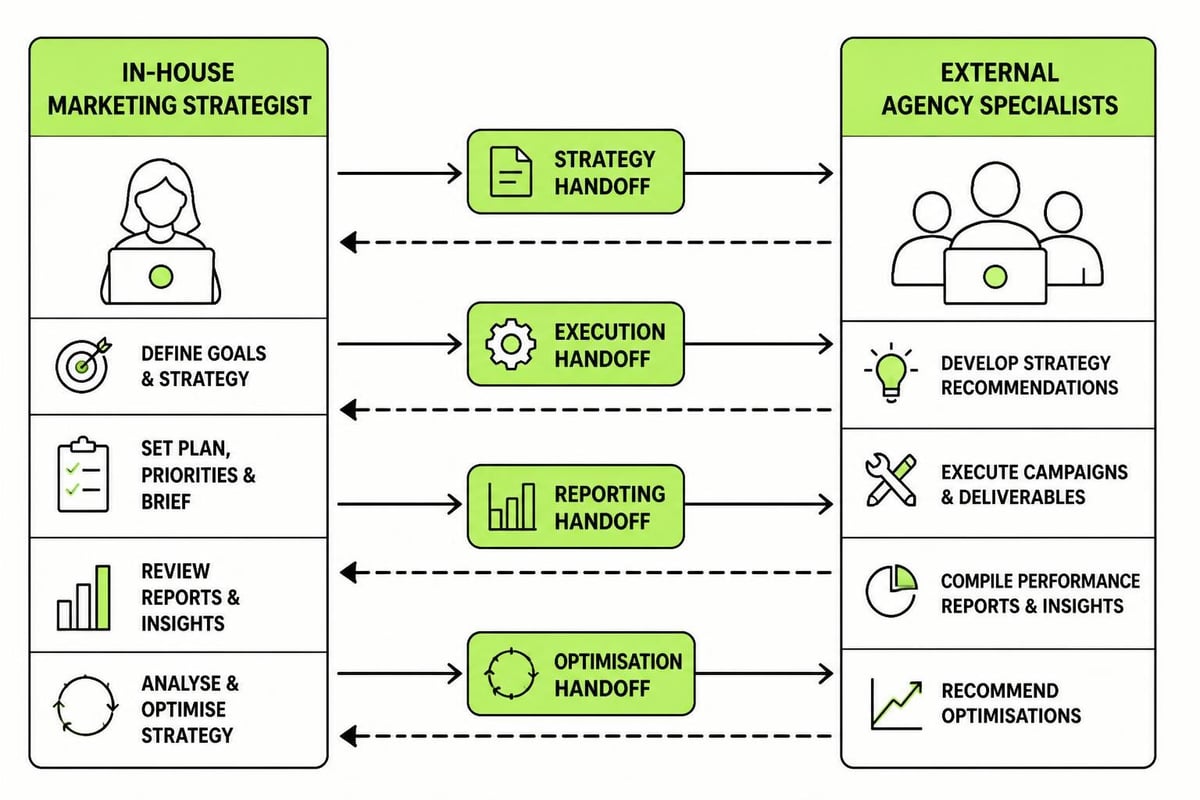
Most businesses between $500k and $5M in revenue do best with a hybrid model. You hire one internal person to own strategy and coordination, then partner with specialists for execution.
Your internal person becomes the glue. They understand your business deeply, manage the agency relationship, and ensure everything aligns with your goals. The agency brings depth in channels you can't afford to hire for full-time.
This works particularly well for marketing and business development where you need strategic thinking tied directly to sales outcomes, but you also need technical execution across multiple channels.
Making the Partnership Work
Set clear expectations upfront. Who owns what? How often do you meet? What do you measure? How do you handle revisions or scope changes?
Weekly or fortnightly check-ins keep things on track. Monthly reporting should tie activities to business outcomes, not vanity metrics. If your agency can't explain how their work connects to revenue, something's wrong.
The best partnerships feel collaborative, not transactional. Your agency should push back when your ideas won't work and suggest better alternatives. If they just say "yes" to everything, they're order-takers, not partners.
Tools and Infrastructure You'll Need
Regardless of whether you build, buy, or blend, you need proper infrastructure. Your digital marketing team near me is only as good as the systems supporting them.
Essential stack:
- CRM (HubSpot, Salesforce, or similar)
- Email platform (often built into your CRM)
- Project management (Asana, ClickUp, Monday)
- Analytics (Google Analytics 4, platform-specific dashboards)
- Ad platforms (Meta Business Suite, Google Ads, LinkedIn Campaign Manager)
- Design tools (Canva, Figma, Adobe Suite)
Don't cheap out on tools. A $50/month CRM that doesn't integrate properly will cost you thousands in lost leads and wasted time. Your team needs systems that talk to each other and give you a single source of truth.
Marketing systems and automation become the backbone of everything else. Without them, you're doing manual work that doesn't scale.
Common Mistakes to Avoid
Hiring too fast is expensive. Hiring too slow means you miss opportunities. Here's what trips most businesses up.
Hiring Before You Have Process
If you don't know what good looks like, how will your new hire know? Document your current marketing process, even if it's basic. Write down what you sell, who you sell to, and what messages resonate. Give your team something to work from.
Expecting One Person to Do Everything
The "unicorn marketer" doesn't exist. Someone who's brilliant at strategy is usually average at execution. Someone who loves paid ads probably doesn't want to write blog posts. Hire for specific outcomes, not broad job descriptions.
Not Defining Success Metrics
What does "good marketing" mean for your business? More leads? Better quality leads? Higher close rates? Shorter sales cycles? Define it upfront and make sure your team knows how they'll be measured.
Ignoring the Sales Handoff
Marketing doesn't end when someone fills in a form. If your sales process is broken, more leads just means more wasted opportunities. Your digital marketing team needs to work closely with sales to understand what makes a qualified lead and how to nurture people who aren't ready yet. This is where business and marketing alignment becomes critical.
What Good Looks Like in 2026
The best digital marketing teams, whether internal or external, operate like a product team. They build, test, measure, and iterate. They're not attached to their ideas. They care about what works.
They use data to make decisions, but they also understand context. A campaign that "failed" might have taught you something valuable about your messaging. A channel that looks expensive might be attracting your best customers.
They communicate clearly. You never wonder what's happening or why something changed. They show you the numbers, explain what they mean, and recommend next steps.
And they understand that digital marketing isn't separate from your business. It's the engine that feeds your sales pipeline and funds your growth. Everything they do should connect to revenue, retention, or referrals.
Finding the right digital marketing team near you comes down to clarity. Know what you need, what you can afford, and what success looks like. Whether you build internally, partner with an agency, or create a hybrid model, the structure matters less than execution. If you need help building marketing systems that actually generate predictable demand, MDO Digital works with service businesses to remove chaos, protect leads, and create structured growth. We'd be happy to chat about what makes sense for your situation.