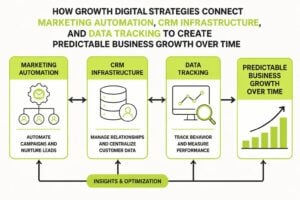
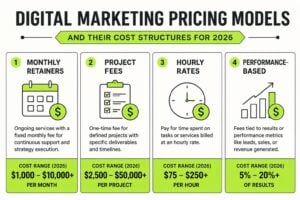
Running a digital marketing project without proper structure is like building a house without blueprints. You might get something standing, but it won't be what you need, and it definitely won't last. Most service businesses start with good intentions, scatter energy across too many channels, lose track of what's working, and end up frustrated by the lack of predictable results. The difference between campaigns that fizzle and systems that compound isn't creativity or budget. It's how you structure the work from the start.
What Makes a Digital Marketing Project Different
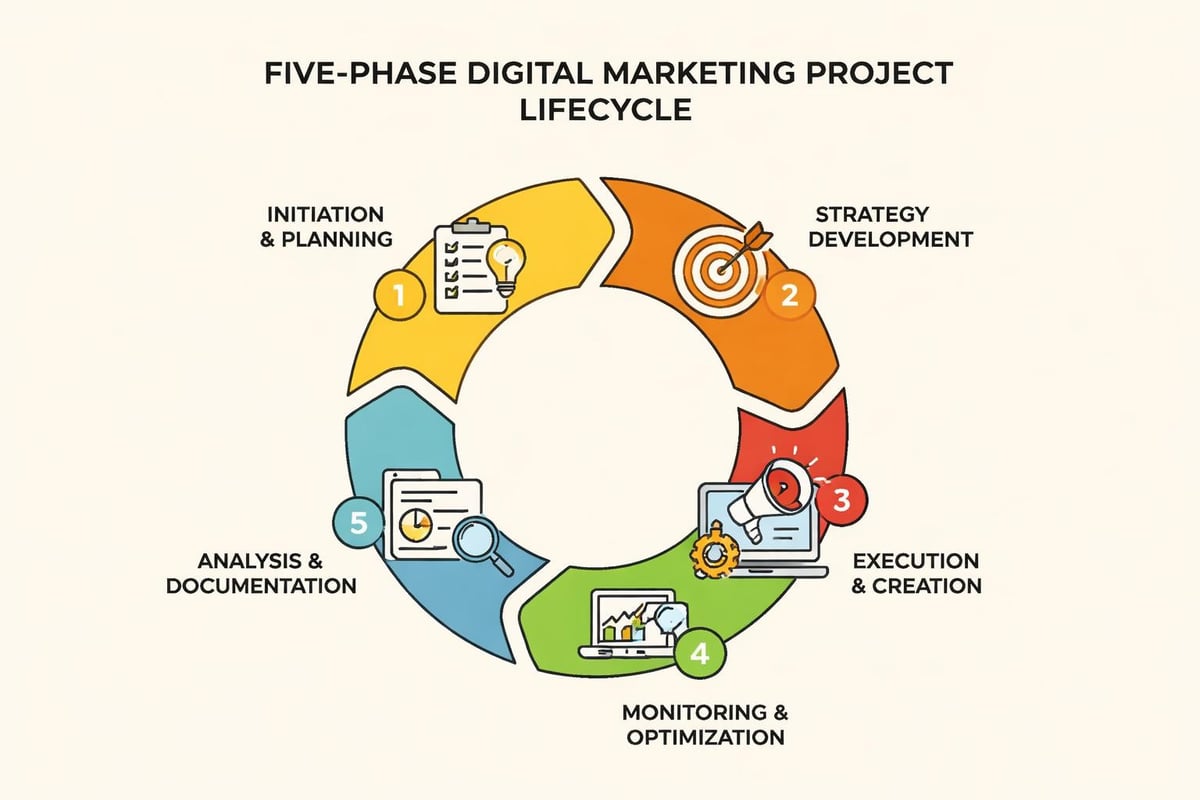
A digital marketing project isn't just a campaign with a deadline. It's a structured initiative designed to achieve specific business outcomes through digital channels, whether that's lead generation, brand awareness, customer retention, or revenue growth.
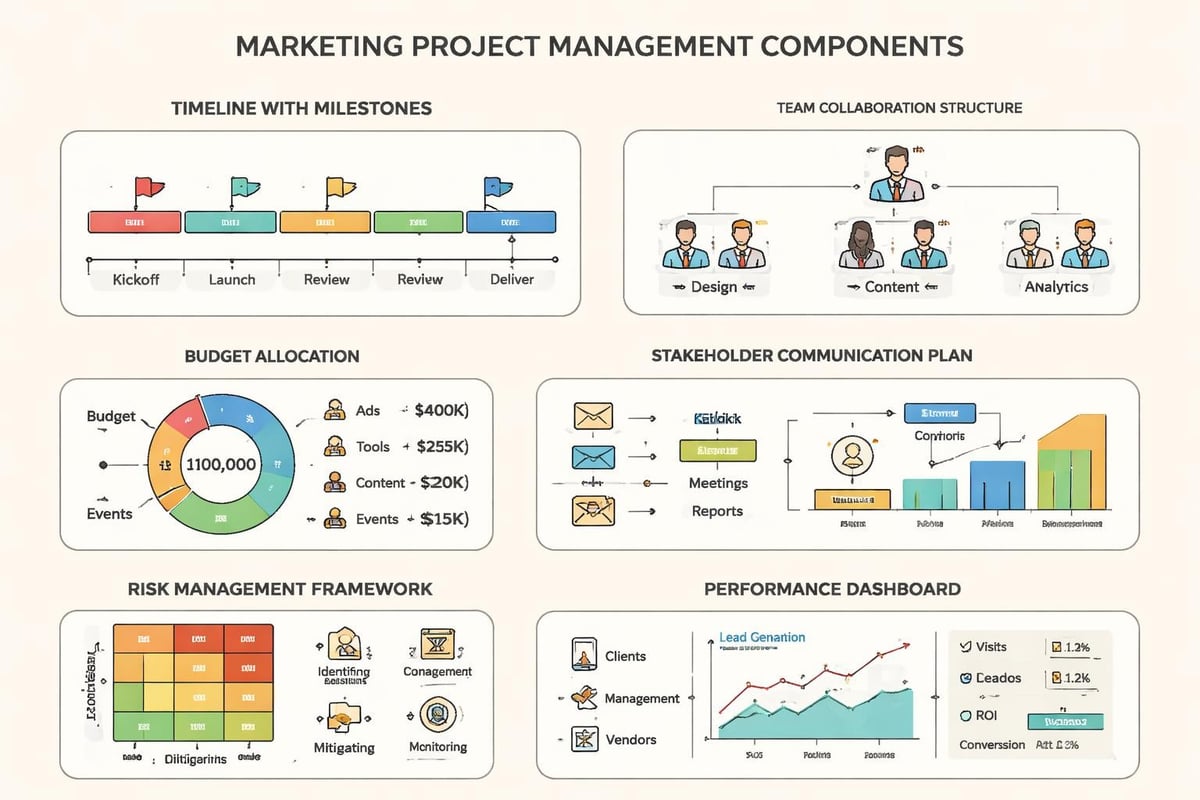
The distinction matters because projects have defined scopes, timelines, and success metrics. They require coordination across multiple disciplines like content creation, paid advertising, website optimization, email automation, and analytics. Unlike ongoing marketing operations, a project has clear start and end points, deliverables you can measure, and learnings you can apply to future work.
Key characteristics that define a digital marketing project:
- Specific business objective tied to revenue or growth
- Defined timeline with milestones and deliverables
- Cross-functional team coordination requirements
- Measurable outcomes and success criteria
- Budget allocation across channels and resources
- Documentation and knowledge transfer components
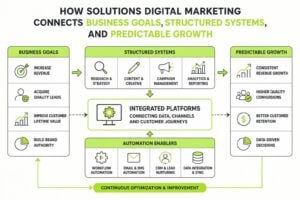
Most importantly, effective digital marketing project management ensures you're not just creating noise but building systems that generate predictable demand over time.
Planning Your Digital Marketing Project Framework
Before you touch any tools or launch any ads, you need a framework that keeps everyone aligned and the work moving forward. This isn't about creating bureaucracy. It's about removing the chaos that kills momentum.
Define Clear Business Outcomes First
Start with what you're actually trying to achieve. Not vanity metrics like followers or impressions, but real business outcomes. Are you generating qualified leads for your sales team? Building awareness in a new market segment? Launching a new service offering?
Your digital marketing project should connect directly to revenue, pipeline, or strategic positioning. Write down the specific number you're trying to hit and the timeframe. "Generate 50 qualified SQLs in Q2 2026" beats "increase brand awareness" every time.
Map Your Audience and Their Journey
You can't build an effective digital marketing project without knowing who you're talking to and where they are in their buying journey. Create specific audience segments based on actual customer data, not assumptions.
| Journey Stage | Audience Mindset | Content Focus | Primary Channels |
|---|---|---|---|
| Awareness | Problem aware, not solution aware | Educational, thought leadership | SEO, social, content marketing |
| Consideration | Evaluating options and approaches | Comparison, case studies, frameworks | Email nurture, webinars, guides |
| Decision | Ready to choose a provider | Proof points, testimonials, demos | Direct outreach, retargeting, sales enablement |
Map your tactics to these stages. A common mistake is creating decision-stage content (case studies, pricing) when most of your audience is still problem-aware. Your digital marketing project should address the full funnel, not just the bottom.
Choose Your Channels Strategically
Not every channel deserves your attention. Choose based on where your audience actually spends time and where you can create meaningful differentiation. For most service businesses, that means prioritizing depth over breadth.
A focused digital marketing project might combine:
- SEO and content to capture demand that already exists
- Email automation to nurture relationships over time
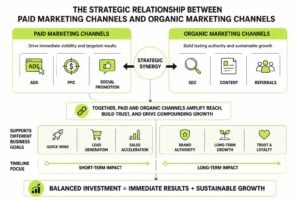
- Paid advertising to accelerate reach in specific segments
- LinkedIn outreach for high-value relationship building
Three channels done well will outperform six channels done poorly. Choose your battleground based on customer behavior data, not what's trendy.
Building Your Digital Marketing Project Team
Every digital marketing project needs clear ownership and coordination across different skill sets. You don't need a massive team, but you do need defined roles and accountability.
Core Roles and Responsibilities
Project Lead/Manager owns the timeline, budget, stakeholder communication, and overall delivery. This person keeps everyone aligned on priorities and removes blockers that slow progress.
Strategist defines the positioning, messaging, audience targeting, and channel mix. They translate business goals into marketing tactics that actually work together.
Content Creator produces the actual assets: blog posts, email sequences, ad copy, landing pages, video scripts. Quality here determines whether people pay attention.
Designer creates visual assets that support the message and reinforce brand identity across every touchpoint.
Technical Specialist handles implementation: website changes, tracking setup, CRM configuration, automation workflows, integration between systems.
Analyst monitors performance, identifies trends, recommends optimizations based on data rather than gut feeling.
You might have one person wearing multiple hats, especially in smaller operations. That's fine. What matters is clarity about who owns what and how decisions get made. Marketing and web development often need to work in lockstep for technical execution.
Executing Your Digital Marketing Project
Execution is where most projects derail. Not from bad strategy, but from poor coordination, scope creep, unclear priorities, and tools that create more work than they eliminate.
Create a Shared Project Hub
Everything related to your digital marketing project should live in one place. Not scattered across email threads, Slack channels, Google Drives, and people's heads. Use a project management platform where everyone can see:
- Current status of every deliverable
- Who owns what and when it's due
- Feedback and revision history
- Asset library and brand guidelines
- Meeting notes and decisions made
Marketing project management best practices emphasize centralized visibility as the foundation for effective team coordination.
Break Work into Sprint Cycles
Rather than planning the entire digital marketing project upfront, work in two-week sprints. Each sprint has specific deliverables, clear priorities, and a review at the end.
Sprint planning should answer:
- What are we shipping this sprint?
- What's blocking progress on current work?
- What dependencies exist between team members?
- What decisions need to be made this week?
This rhythm creates accountability without micromanagement. People know what's expected, when it's due, and how their work fits into the bigger picture.
Build Quality Control Checkpoints
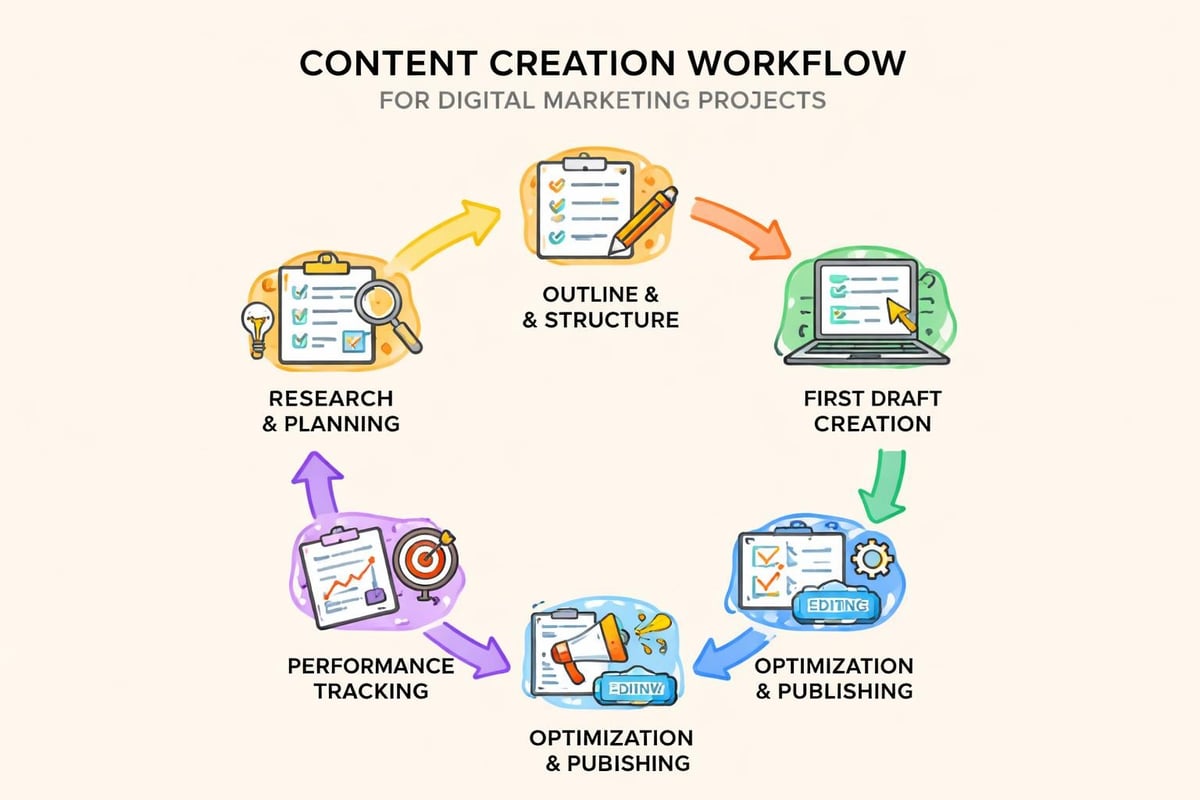
Every piece of content, every ad, every email should pass through defined quality gates before it goes live. This isn't about slowing things down. It's about catching mistakes when they're cheap to fix.
Standard quality checklist:
- Brand voice and messaging alignment verified
- All links tested and functional
- Mobile responsiveness confirmed
- Tracking and attribution properly configured
- Legal/compliance review completed where required
- Stakeholder approval documented
The cost of fixing something after launch is 10x higher than catching it beforehand. Build review into your timeline, not as an afterthought.
Measuring Digital Marketing Project Performance
You can't improve what you don't measure, but measuring everything is just noise. Your digital marketing project needs a tight set of metrics that actually inform decisions.
Establish Your Measurement Framework
Start with your business outcome and work backward. If you need 50 SQLs, how many MQLs do you need? How much traffic? What conversion rates at each stage?
| Metric Level | What It Measures | Example Metrics | Review Frequency |
|---|---|---|---|
| Business Outcomes | Revenue impact | Pipeline generated, deals closed, contract value | Monthly |
| Campaign Performance | Tactical effectiveness | Conversion rates, cost per lead, ROI by channel | Weekly |
| Operational Health | Execution quality | On-time delivery, budget variance, team velocity | Daily/Weekly |
| Leading Indicators | Future performance | Traffic trends, engagement rates, list growth | Daily |
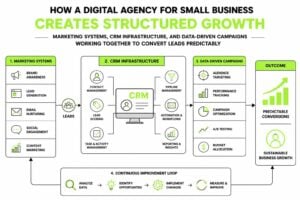
Track leading indicators daily so you can adjust quickly. Review campaign performance weekly to optimize spend. Report business outcomes monthly to stakeholders. This creates a feedback loop that improves performance over time.
Set Up Proper Attribution
Most digital marketing projects fail at attribution. They can't connect activity to outcomes, so they can't make informed decisions about what's working. Fix this from day one.
Use UTM parameters consistently across all campaigns. Configure your CRM to capture source data. Map the customer journey across multiple touchpoints. Understand both first-touch and last-touch attribution, because the truth lives somewhere in between.
For service businesses, the sale cycle often spans weeks or months. You need to track assisted conversions, not just final click. The awareness content someone read six weeks ago matters as much as the case study they downloaded yesterday. Digital and content marketing strategies need proper measurement infrastructure to prove their value.
Common Digital Marketing Project Pitfalls
Even well-planned projects run into predictable problems. Knowing what to watch for helps you avoid the worst mistakes.
Scope Creep That Kills Timelines
Someone always wants to add "just one more thing" halfway through. A new landing page. Another email sequence. Different targeting criteria. Each small addition compounds into major delays.
Protect your digital marketing project scope with a formal change request process. New ideas go into a backlog for future consideration, not into the current sprint unless something else comes out.
Tools That Create More Work
The wrong tool stack will slow you down more than having no tools at all. If your team spends more time managing the platform than doing the actual work, you've got a problem.
Choose tools based on integration capability, not feature lists. Your CRM, email platform, website, and analytics should share data automatically. Manual exports and imports between systems guarantee data accuracy problems and wasted time. Marketing systems should eliminate friction, not create it.
Insufficient Testing Before Launch
Going live with untested campaigns is professional malpractice. Test every link. Review every email in multiple clients. Check mobile rendering. Verify tracking pixels fire correctly. Confirm form submissions flow to the right place.
Pre-launch testing checklist:
- All tracking codes properly implemented
- Forms submit data to correct CRM fields
- Automated emails trigger as expected
- Landing pages render correctly across devices
- Ad creative meets platform specifications
- Budget limits configured to prevent overspend
An hour of testing prevents days of firefighting after launch. Build this time into your project schedule explicitly.
Lack of Documentation
Six months from now, someone will need to understand what you built and why. Without documentation, they'll waste weeks reverse-engineering your work or, worse, make changes that break things.
Document your digital marketing project as you go:
- Strategic decisions and the reasoning behind them
- Campaign setup and configuration details
- Workflow diagrams for automation sequences
- Access credentials and admin permissions
- Performance benchmarks and optimization history
This isn't busywork. It's how institutional knowledge survives beyond individual team members and enables future projects to move faster.
Optimizing Your Digital Marketing Project
The first version of anything rarely performs at its full potential. Optimization is where good projects become great ones.
Create a Testing Roadmap
Systematic testing beats random tweaks every time. Build a prioritized list of hypotheses you want to test, ranked by potential impact and ease of implementation.
High-impact test areas:
- Landing page headlines and value propositions
- Call-to-action copy and button placement
- Email subject lines and send timing
- Audience targeting and segmentation criteria
- Ad creative and messaging angles
- Offer positioning and pricing presentation
Test one variable at a time so you know what actually moved the needle. Document results even when tests fail, because knowing what doesn't work is valuable information.
Build Feedback Loops
Your digital marketing project should have structured ways to gather and act on feedback from multiple sources. Customer responses, sales team input, support ticket trends, and competitive intelligence all inform optimization.
Schedule weekly reviews where the team discusses:
- What performed better than expected and why
- What underperformed and potential causes
- What we learned that changes our assumptions
- What we should test or adjust next
These conversations turn raw data into actionable insights. Understanding digital marketing project management helps teams stay aligned on continuous improvement.
Know When to Stop Optimizing
Diminishing returns are real. At some point, squeezing another 0.5% improvement costs more than it's worth. Recognize when a campaign is performing well enough and shift energy to new opportunities.
Good enough executed beats perfect delayed every single time.
Scaling What Works
The real value of a digital marketing project isn't the immediate results. It's the systems and knowledge you build that compound over future initiatives.
Turn Projects into Processes
When something works, document it as a repeatable process. Template the project plan. Create content briefs based on high-performing pieces. Systematize the launch checklist. Build swipe files of effective ad creative.
Each successful digital marketing project should make the next one faster and more predictable. That's how you scale without proportionally scaling headcount.
Invest in Infrastructure
One-off campaigns are fine, but systems create leverage. Build CRM workflows that nurture leads automatically. Create content libraries that serve multiple campaigns. Develop templates that maintain quality while reducing production time.
The infrastructure work feels slow initially because it doesn't produce immediate results. But six months later, it's the difference between scrambling constantly and operating from a position of strength. This is where marketing systems and branding work pays long-term dividends.
Transfer Knowledge Across Teams
What the product team learns should inform sales. What customer success sees should shape marketing messaging. What paid advertising discovers should guide content strategy.
Create regular cross-functional reviews where teams share insights from their digital marketing projects. The goal isn't more meetings. It's preventing silos that waste resources solving the same problems multiple times.
Managing Stakeholder Communication
Even brilliant execution fails if stakeholders don't understand what you're doing and why it matters. Communication isn't overhead. It's how you maintain support and resources.
Establish Reporting Rhythms
Different stakeholders need different information at different frequencies. Your CEO doesn't need weekly campaign metrics. Your marketing team doesn't need monthly business summaries.
Recommended reporting structure:
- Daily: Internal team standups on blockers and priorities
- Weekly: Campaign performance and optimization decisions
- Monthly: Business outcome reporting to leadership
- Quarterly: Strategic review and planning for next cycle
Each report should be concise, focused on decisions rather than data dumps, and connected to outcomes people care about. Three key metrics beats fifteen mediocre ones.
Manage Expectations Proactively
When something isn't working, say so early and with a plan to address it. When timelines slip, communicate immediately with revised estimates. When priorities shift, explain the tradeoffs clearly.
Surprises destroy trust. Transparency builds it, even when the news isn't great. Your digital marketing project will face obstacles. How you communicate through them determines whether you maintain credibility.
Running an effective digital marketing project requires structure, discipline, and systems that turn one-time wins into repeatable growth. Most service businesses know what they should be doing but struggle with execution, coordination, and making it all work together. At MDO Digital, we build the marketing systems and infrastructure that remove chaos, protect your leads, and create predictable demand that scales over time.