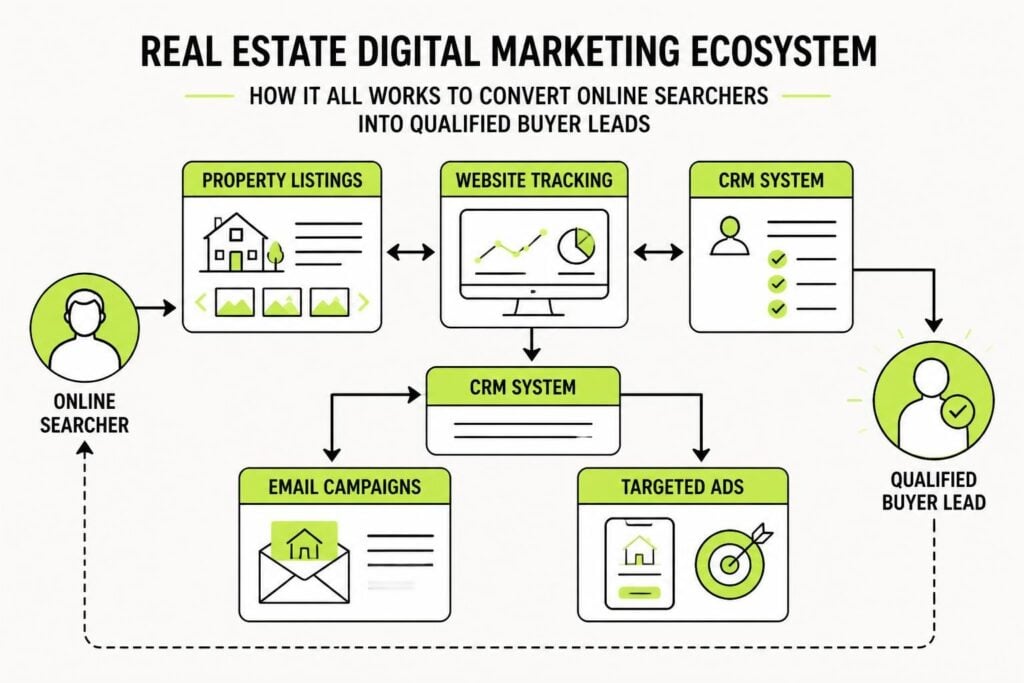
The property market has always been about visibility, trust, and timing. What's changed is where those three things happen. Buyers start their search online, long before they contact an agent. They compare listings, scan neighbourhoods on Google Maps, read reviews, and form opinions based on how you present yourself digitally. If your marketing system isn't built to capture that attention and turn it into predictable leads, you're leaving deals on the table. Digital marketing for real estate isn't optional anymore. It's the infrastructure that determines who wins the listing and who gets forgotten.
Where buyers actually start their search
Most property buyers begin their journey on a screen, not in an office. Research shows that the majority of buyers use online resources as their first step, spending weeks browsing listings, comparing markets, and narrowing down preferences before they ever speak to an agent. That means your digital presence is your first impression.
If your website is slow, unclear, or difficult to navigate, they move on. If your listings lack high-quality images or detailed descriptions, they scroll past. If there's no clear way to contact you or book a viewing, the lead evaporates. Digital marketing for real estate starts with understanding that buyer behaviour has shifted entirely online, and your systems need to meet them there.
The platforms that matter
Not every channel deserves your time. Focus on the ones where buyers actually spend time researching property.
- Google Search and Maps: Where intent is highest. Someone searching "three bedroom house Newtown" is closer to a decision than someone scrolling Instagram.
- Facebook and Instagram: Good for building brand awareness, showcasing lifestyle content, and running targeted campaigns to specific demographics or postcodes.
- YouTube: Property tours, market updates, and neighbourhood walkthroughs perform well and build authority over time.
- Email: The most underrated channel. A well-structured CRM and nurture sequence keeps you top of mind without relying on algorithm changes.
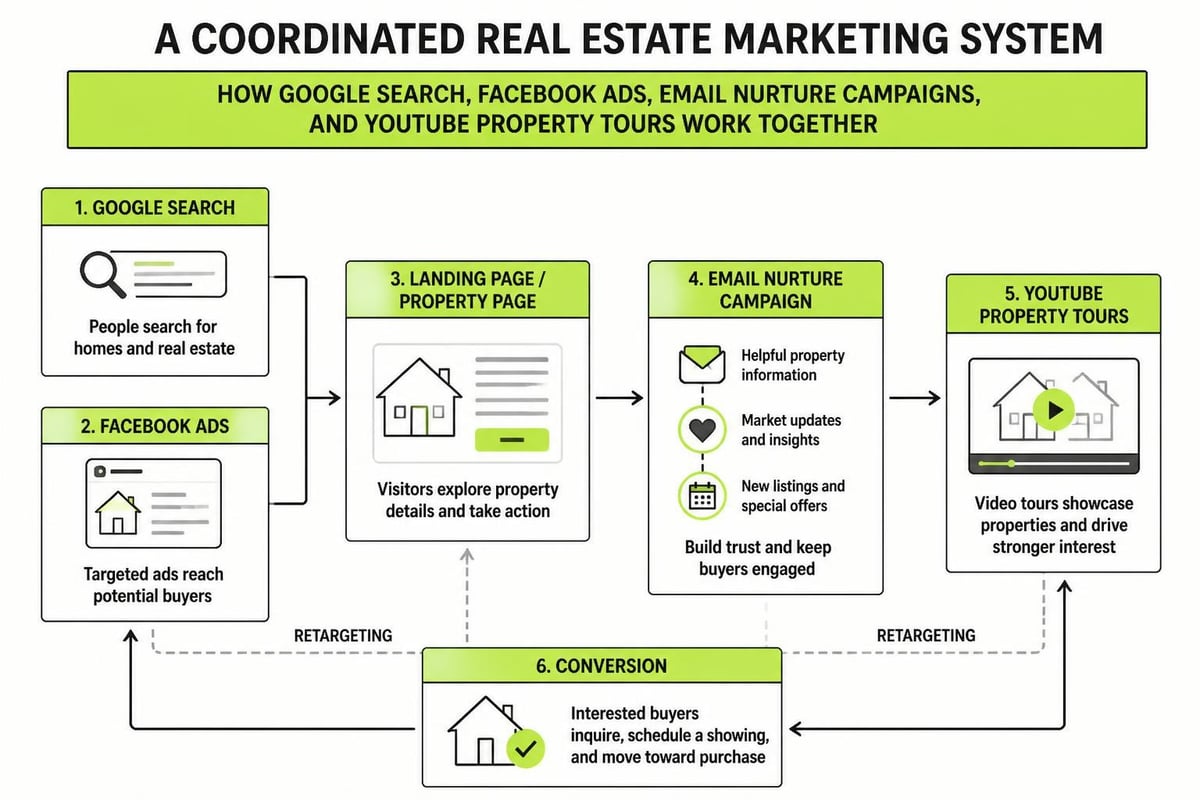
The National Association of REALTORS® tracks how agents adopt digital tools each year, and the data is clear: the ones using multiple platforms in a coordinated system outperform those who treat each channel as a standalone effort.
Building a website that converts, not just displays
Your website isn't a digital brochure. It's a lead-generation machine, or at least it should be. Too many real estate sites focus on looking good and forget to guide visitors toward a next step. Every page should answer a question and offer a clear action.
Here's what a high-converting property website needs:
| Element | Purpose | Implementation |
|---|---|---|
| Fast load time | Keeps visitors engaged, reduces bounce | Compress images, use a reliable host, minimize plugins |
| Clear CTAs | Guides visitors to book, enquire, or subscribe | Use buttons, not buried links. One primary CTA per page |
| Mobile-first design | Most traffic comes from phones | Test on real devices, not just desktop previews |
| Search functionality | Lets buyers filter by price, location, type | Integrate MLS or property database with intuitive filters |
| Lead capture forms | Turns traffic into contacts | Keep forms short. Name, email, phone. That's it |
| Trust signals | Reviews, testimonials, awards, credentials | Display prominently on homepage and listing pages |
If you're serious about tracking what works, implement Google Analytics 4 properly. Set up event tracking for form submissions, phone clicks, and video views. You need to know which pages convert and which ones don't. Guessing wastes budget.
The role of SEO in property marketing
SEO for real estate is about showing up when someone searches for what you sell. That means optimising for location-based keywords, creating content that answers buyer questions, and making sure your site structure is clean.
Focus on:
- Local pages: One page per suburb or neighbourhood you serve, with market insights, schools, transport, and lifestyle info.
- Blog content: "What to look for in a first home", "How to prepare for auction day", "Newtown property market update Q3 2026". Answer real questions.
- Listing pages: Write proper descriptions. Don't just list features. Explain the lifestyle, the light, the proximity to what matters.
- Technical SEO: Fast site, mobile-friendly, structured data for listings, clean URLs, proper headings.
Digital marketing for real estate gets easier when your website does the heavy lifting. It should qualify leads before they even contact you.
Running paid campaigns that don't burn budget
Organic reach is great, but paid ads give you control and speed. The trick is knowing what to promote, who to target, and how to measure results. Most real estate campaigns fail because they're too broad or they send traffic to a homepage instead of a specific offer.
Facebook and Instagram ads
These platforms let you target by location, age, income, life events, and interests. That's powerful for property marketing. You can show a family home to couples aged 30 to 45 within 10km of the listing, or promote an investment property to people who've engaged with financial content.
What to promote:
- New listings: High-quality images, carousel format, clear price and location.
- Open homes: Geo-targeted to a tight radius, running Thursday to Saturday.
- Buyer guides: Lead magnets like "First home buyer checklist" or "Investment property calculator" that require an email to download.
- Market updates: Video content that positions you as the local expert.
Always send traffic to a landing page, not your homepage. One message, one offer, one action. And for the love of all that's holy, don't ignore HUD’s guidance on fair housing advertising. Targeting by income or family status can land you in legal trouble if you're not careful.
Google Ads for high-intent searches
Someone searching "buy house Marrickville" is ready to act. Google Ads lets you show up at that exact moment. Use search campaigns for high-intent keywords and display campaigns to retarget people who've visited your site.
Keep your ad copy direct. Mention the location, the property type, and the next step. Link to a dedicated landing page for that listing or neighbourhood. Track conversions properly so you know your cost per lead.
CRM and automation: the system that keeps leads warm
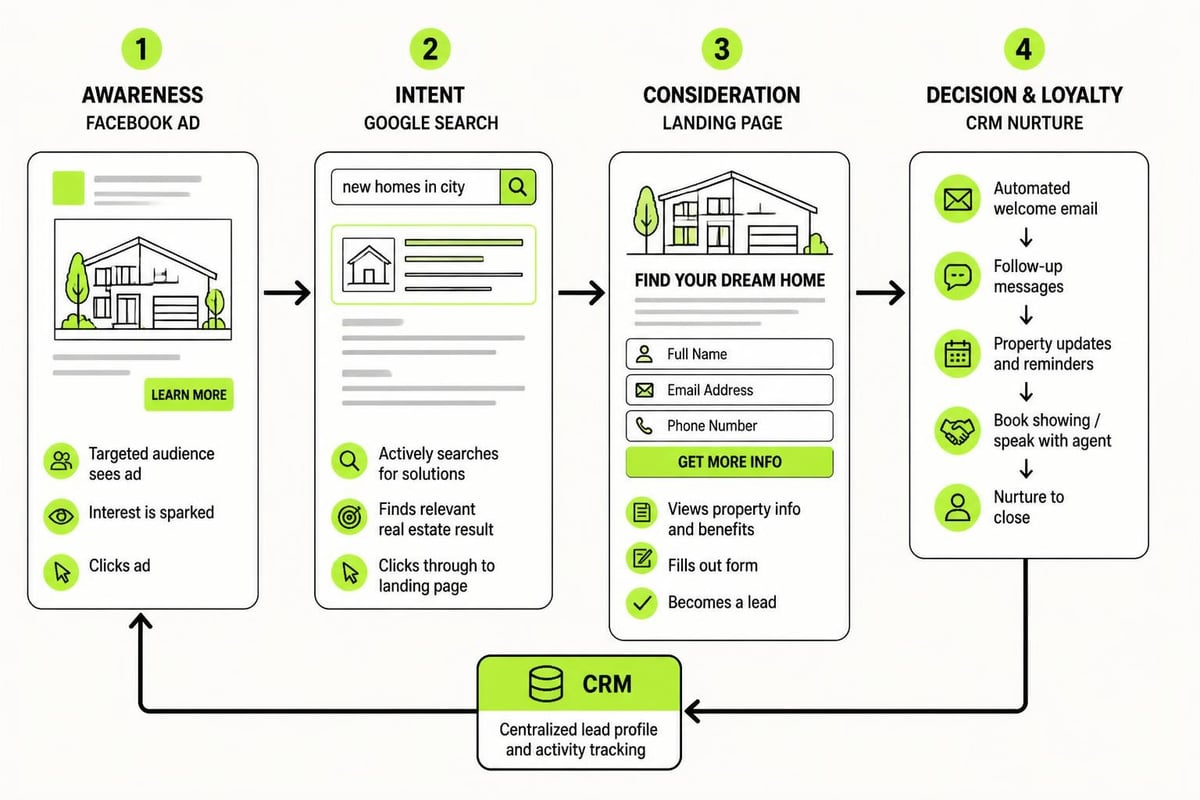
Here's the truth: most leads aren't ready to buy today. They're researching, comparing, waiting for the right time. If you don't have a system to stay in touch without manually chasing every contact, you lose them to someone who does.
A proper CRM captures every lead, tags them by interest and stage, and automates follow-up so nothing falls through the cracks. That's not about being lazy. It's about being consistent at scale.
What a real estate CRM should do
- Capture leads from every source: Website forms, Facebook ads, open home sign-ins, phone calls. One database, no gaps.
- Segment by interest: First home buyers, investors, sellers, renters. Different messages for different goals.
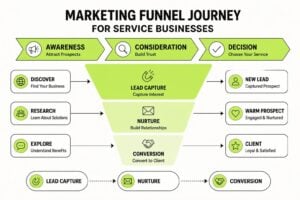
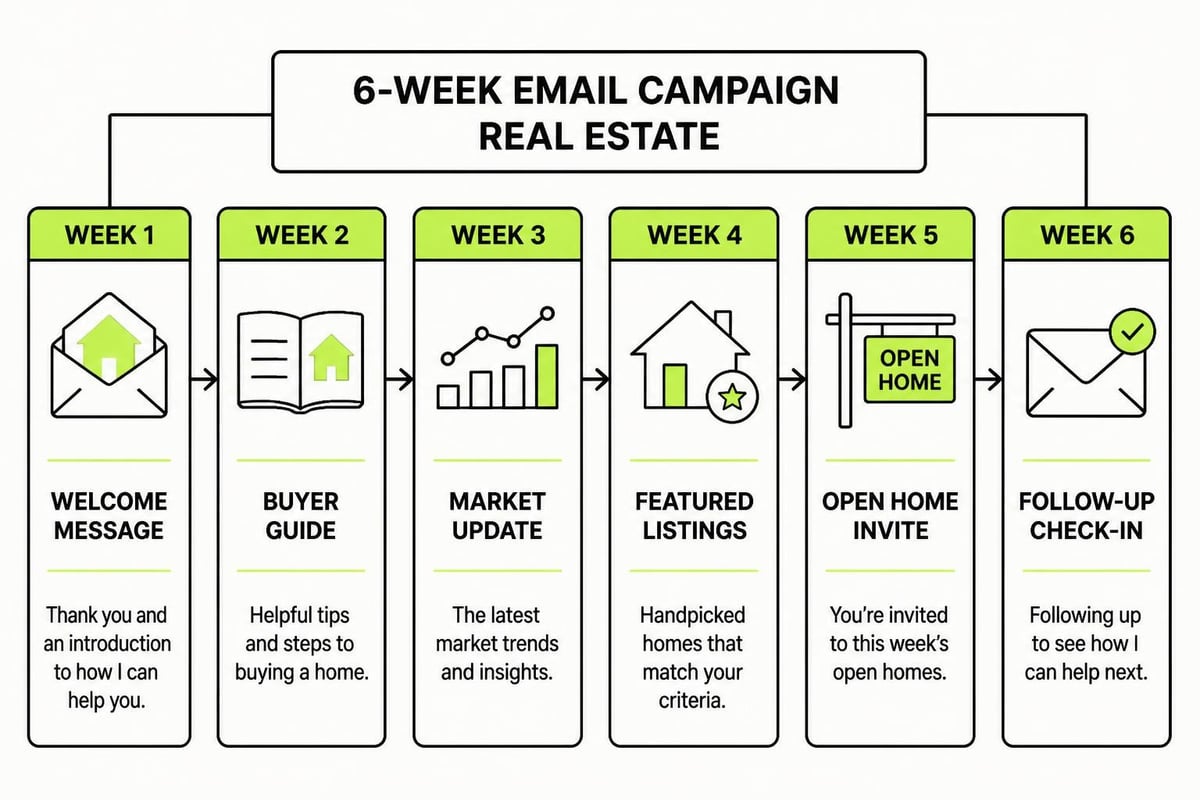
- Automate nurture sequences: A new lead gets a welcome email, a guide, a market update, an invitation to an open home, over weeks or months. Not all at once.
- Trigger actions based on behaviour: If someone opens three emails about investment properties, tag them as investor and send relevant content.
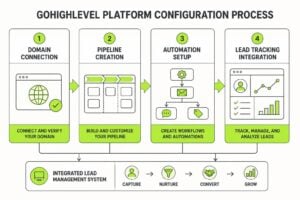
- Integrate with your website and ads: When someone fills out a form, they should enter the CRM instantly and receive a confirmation within minutes.
This is where digital marketing for real estate becomes a repeatable system instead of a chaotic scramble. You're not relying on memory or spreadsheets. You're building infrastructure that works while you sleep.
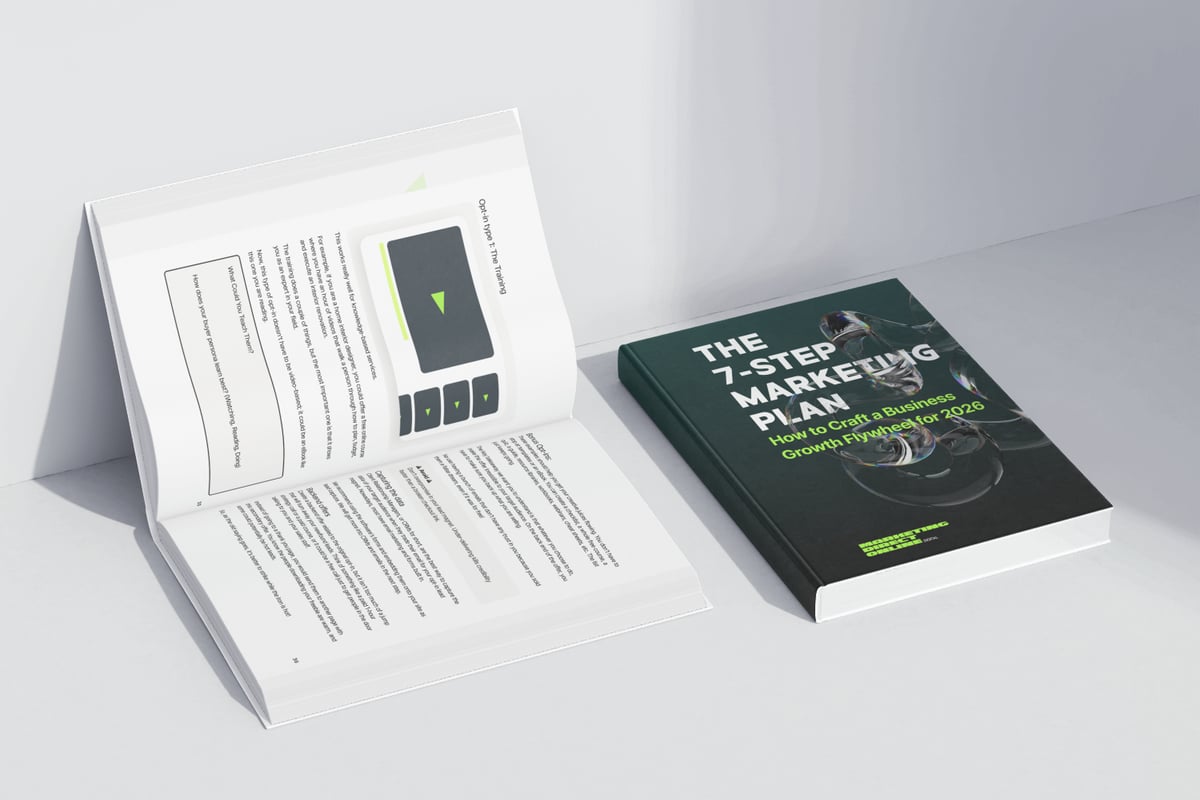
If you're looking for a practical starting point, the 7-Step Marketing Plan walks through how to build this kind of system from scratch. It covers everything from defining your buyer persona to creating nurture campaigns that keep leads engaged until they're ready to act.
Content that builds authority and trust
People buy property from agents they trust. Trust comes from consistent visibility, useful information, and proof that you know what you're talking about. That's where content marketing earns its keep.
You don't need to publish daily. You need to publish well. A weekly email, a fortnightly blog post, or a monthly video that actually helps your audience will outperform daily noise every time.
Content ideas that work for real estate
Market updates: Monthly data on median prices, days on market, auction clearance rates for your area. Buyers and sellers both want this.
Neighbourhood guides: What's it like to live in this suburb? Schools, cafes, parks, transport. Make it detailed and honest.
Property walkthroughs: Video tours that show more than photos can. Talk about layout, light, storage, potential. Make it feel real.
Buying and selling tips: First-time buyer mistakes, how to style a home for sale, what to look for at an inspection. Answer the questions you hear every week.
Case studies: How you helped a client find their dream home or sell above reserve. Make it specific and relatable.
Search Engine Journal has solid examples of how agents use content to stand out in competitive markets. The key is consistency and usefulness, not volume.
Email marketing: the channel you own
Social media platforms change algorithms. Google updates search ranking factors. Email is the one channel where you control the message, the timing, and the list. If you're not building an email database, you're renting attention instead of owning it.
How to grow and use your email list
- Offer something valuable in exchange: A suburb report, a buyer's guide, a market forecast. Make it specific enough that people want it.
- Capture emails everywhere: Website popups, landing pages, open home sign-ins, social media lead ads.
- Segment your list: Don't send the same email to buyers, sellers, and investors. Tailor your message to what they care about.
- Send regularly: Weekly or fortnightly is ideal. Monthly at minimum. Consistency builds familiarity.
- Include a clear next step: Every email should have one CTA. Book a call, view a listing, download a guide, reply with questions.
Your email list is an asset that compounds over time. Treat it like one. For more on how online branding supports long-term growth, focus on building systems that don't rely on rented platforms.
Measuring what matters, not just what's easy
Likes and impressions feel good, but they don't pay the bills. The metrics that matter are the ones tied to actual business outcomes: leads generated, cost per lead, conversion rate from lead to viewing, viewing to offer.
Here's what to track:
| Metric | Why it matters | How to track it |
|---|---|---|
| Website traffic by source | Shows which channels drive visitors | Google Analytics by source/medium |
| Lead conversion rate | Percentage of visitors who submit a form or call | GA4 events, CRM reports |
| Cost per lead | How much you're spending to acquire each contact | Ad platform cost ÷ leads generated |
| Email open and click rates | Measures engagement and message relevance | Email platform analytics |
| Viewing-to-offer ratio | How many viewings convert to offers | CRM pipeline tracking |
| Customer lifetime value | Total commission from a client over time | CRM + financial records |
Statista data shows how often buyers visit property websites and what features they use most. Use that insight to prioritise what you build and measure.
Don't track everything. Track what informs decisions. If a metric doesn't change your actions, ignore it.
Compliance and ethics in digital advertising
Real estate advertising has legal obligations, especially around fair housing. Digital platforms make it easy to target specific demographics, but that precision can cross the line into discrimination if you're not careful.
What you can't do:
- Target ads by race, ethnicity, or religion.
- Exclude demographics based on family status or disability.
- Use language or images that suggest preference or exclusion.
What you should do:
- Review HUD’s guidance before running any housing-related campaign.
- Use broad targeting based on location and interest, not personal characteristics.
- Train your team on fair housing principles.
- Document your targeting criteria and campaign objectives.
The penalties for getting this wrong are serious. It's not worth the risk. Build your campaigns with compliance built in from the start.
The system that turns attention into leads
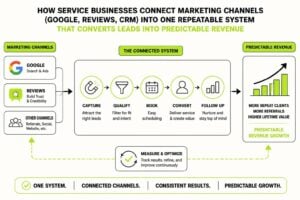
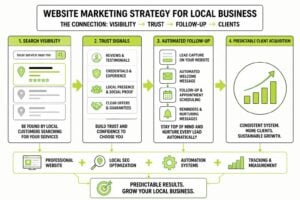
Digital marketing for real estate works when it's treated as a system, not a collection of random tactics. Every piece needs to connect: the website captures attention, ads drive traffic, landing pages convert visitors, the CRM nurtures leads, email keeps you top of mind, content builds trust, and measurement tells you what's working.
Most agents dabble. They run an ad here, post on Instagram there, maybe send an email once in a while. That's not a system. That's hope disguised as marketing. If you want predictable results, you need structured growth that compounds over time.
Building your marketing stack
Here's what a functional real estate marketing system looks like:
- A fast, mobile-friendly website with clear CTAs and lead capture on every relevant page.
- A CRM that captures and segments every lead automatically.
- Email automation that nurtures contacts based on their interests and behaviour.
- Paid campaigns on Google and Facebook that target specific buyer segments with specific offers.
- Content production that answers questions and builds authority in your market.
- Analytics and reporting that tracks cost per lead, conversion rates, and ROI.
You don't need to build it all at once. Start with the website and CRM. Add email. Layer in paid ads. Refine as you learn. But have a plan, and stick to it long enough to see results.
For additional ideas on how branding and digital marketing work together to create clarity and trust, focus on systems that remove chaos and protect leads.
Why most real estate marketing fails
It's not the tactics. Facebook ads work. Google Ads work. SEO works. Email works. The problem is treating each one as a standalone effort instead of part of a connected system.
A lead comes in from an ad, but there's no follow-up sequence. Someone downloads a guide, but they're not tagged in the CRM. You run a campaign, but you don't track cost per lead or measure what happens after. The infrastructure is missing, so the tactics deliver noise instead of growth.
The National Association of REALTORS® marketing resources provide guidance on building cohesive strategies, but the core principle is simple: digital marketing for real estate only works when leads can't fall through the cracks.
What good looks like in 2026
The agents winning today aren't the ones with the biggest budgets. They're the ones with the tightest systems. They know their cost per lead. They track conversion rates. They automate follow-up. They publish consistently. They test, measure, and refine.
They've moved past random acts of marketing and built infrastructure that generates leads, nurtures them, and converts them without relying on memory or hustle. That's the standard now. If your marketing can't run without you checking it every day, it's not a system. It's a second job.
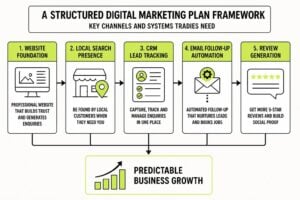
For service-based businesses across industries, the same principles apply. Whether you're in property, trades, or consulting, the path to predictable demand is the same: clarity, structure, and systems that compound. Learn more about how marketing systems remove chaos and create growth that lasts.
Digital marketing for real estate isn't complicated, but it does require discipline. Build the infrastructure first, then layer in the tactics. If your current system relies on manual follow-up, scattered spreadsheets, and hoping leads remember you, it's time to fix the foundations. At MDO Digital, we help service-based businesses build the CRM, automation, and marketing systems that turn attention into predictable demand. Let's build something that works.