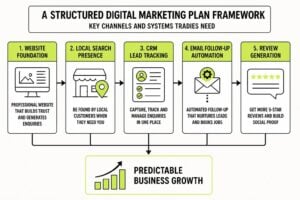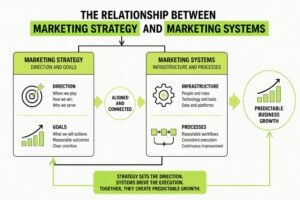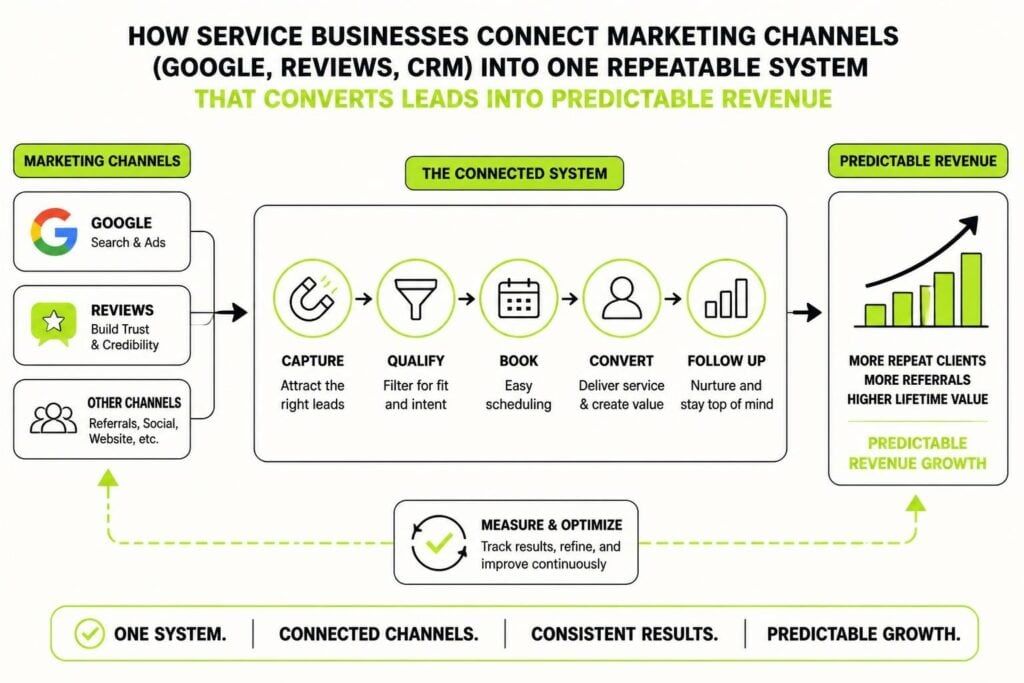
Service businesses face a particular challenge when it comes to marketing. Unlike product companies with inventory and shopping carts, you're selling expertise, time, and trust. Your marketing needs to work harder because every lead is a conversation, every sale requires proof, and every client interaction shapes your reputation. The right marketing solutions for service businesses aren't about running more ads or posting more content. They're about building systems that capture attention, protect leads, and convert interest into booked work without adding chaos to your day.
The Problem Most Service Businesses Face
Most service operators fall into one of two traps. Either they're too busy delivering work to focus on marketing, or they're spending money on tactics that don't connect to anything measurable. You might get a spike of enquiries from a Facebook campaign, but if you're replying from three different inboxes and tracking follow-ups on sticky notes, half those leads evaporate.
The real issue isn't effort. It's structure.
Marketing solutions for service businesses need to solve three things simultaneously:
- Lead capture that doesn't rely on you being available 24/7
- Follow-up systems that nurture enquiries even when you're on the tools
- Measurement and feedback so you know what's working and what's wasting money
If your current setup can't do all three, you're either losing leads or burning time manually patching gaps.
Building a Marketing System That Actually Works
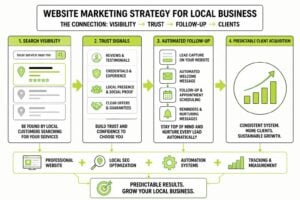
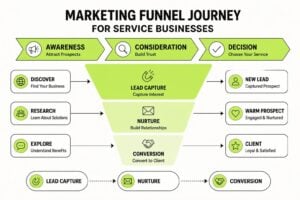
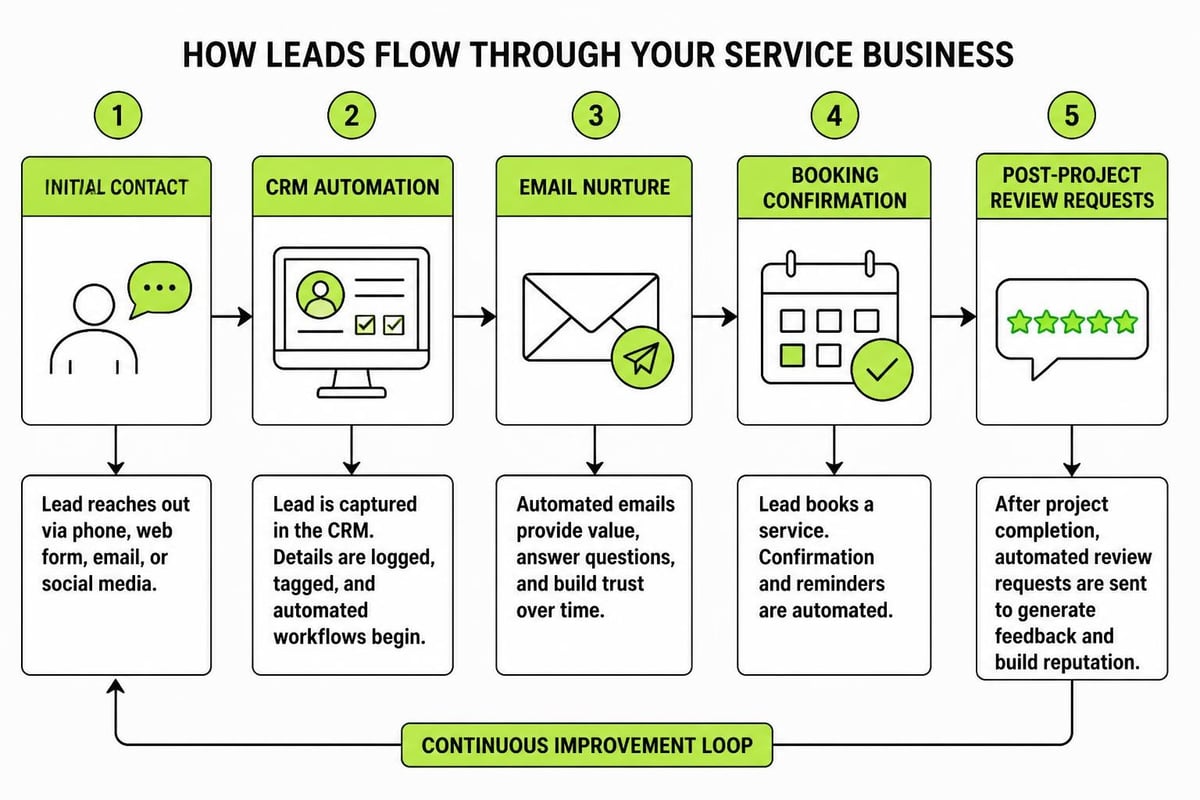
The word "system" gets thrown around a lot, but in practice it just means connecting the pieces so they work without you. A functional marketing system for a service business has clear stages, and each stage hands off to the next without gaps.
Stage One: Get Found
You need to exist where your buyers are looking. For most service businesses in 2026, that's Google, review platforms, and referrals. Building your online presence through Local Services Ads can deliver immediate visibility, especially for trades and professional services competing in metro areas. Paid ads work, but they're expensive if you're not also investing in organic search and reputation.
Your website needs to do one job well. Communicate what you do, who you help, and how someone can take the next step. Most service sites fail here because they treat the website as a brochure instead of a conversion tool. High-trust design, clear messaging, and fast-loading pages matter more than flashy animations.
Stage Two: Capture and Qualify
Once someone lands on your site or calls your number, you need a way to capture that contact and qualify their intent. A contact form that dumps into your personal email isn't enough. You need a CRM (customer relationship management system) that logs every enquiry, tags it by source, and starts a follow-up sequence automatically.
This is where most service businesses leak revenue. According to research on local consumer behaviour, 87% of consumers expect a response within 24 hours. If your system can't deliver that, someone else will.
What a proper capture system includes:
- Lead forms connected to a CRM, not just an inbox
- Auto-reply emails or SMS that confirm receipt and set expectations
- Tagging and segmentation so you can separate hot leads from tyre-kickers
- Tracking where each lead came from (Google, Facebook, referral, repeat client)
The goal isn't to automate the sale. It's to automate the acknowledgment and first follow-up so you can focus on the conversations that matter.
Stage Three: Nurture and Convert
Not every enquiry is ready to buy today. Some need more information. Others are comparing three quotes. A few are just gathering ideas. If your only follow-up is a single reply email, you're leaving money on the table.
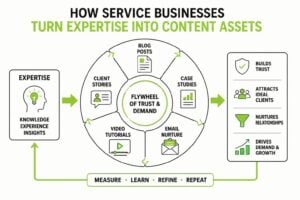
Email nurture campaigns work exceptionally well for service businesses because they build trust over time. A simple five-email sequence can educate a lead, answer objections, share proof (case studies, testimonials), and invite them to book. The emails go out automatically based on triggers like form submission, quote sent, or project completed.
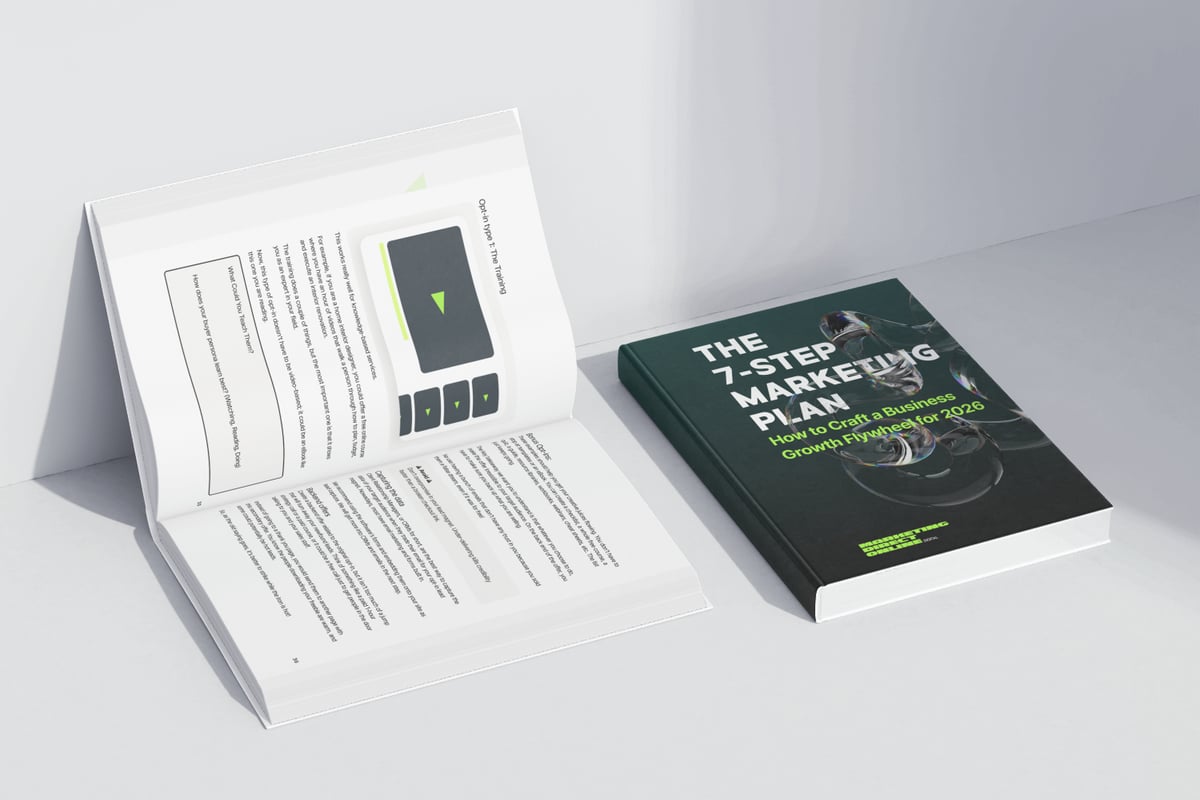
If you want to see what a structured approach looks like, the 7-Step Marketing Plan breaks down exactly how to set goals, define your buyer, choose platforms, build opt-in offers, create CRM workflows, deliver great experiences, and generate referrals. Each step feeds into the next, creating a flywheel instead of a one-off campaign.
The beauty of automation is it scales with you. Whether you get 10 enquiries a month or 100, the system handles the same load without adding hours to your week.
Choosing the Right Marketing Channels
Not every platform deserves your attention. Service businesses often spread themselves too thin because they think they need to be everywhere. You don't. You need to be where your specific buyers are actively searching or engaging.
| Channel | Best For | Time Investment | Cost |
|---|---|---|---|
| Google Ads (LSA) | Immediate local leads | Low (managed) | Medium to high |
| Organic search (SEO) | Long-term visibility and trust | High (upfront) | Low (ongoing) |
| Email nurture | Converting existing leads | Low (automated) | Very low |
| Review platforms | Building proof and local credibility | Medium (ongoing) | Free (or low) |
| Referrals | High-trust, warm introductions | Low (with prompts) | Free |
Start with the channel where your best clients already found you. If most of your revenue comes from Google searches, double down on local SEO and paid search. If referrals dominate, build a system to ask for them consistently.
Reviews and Reputation Management
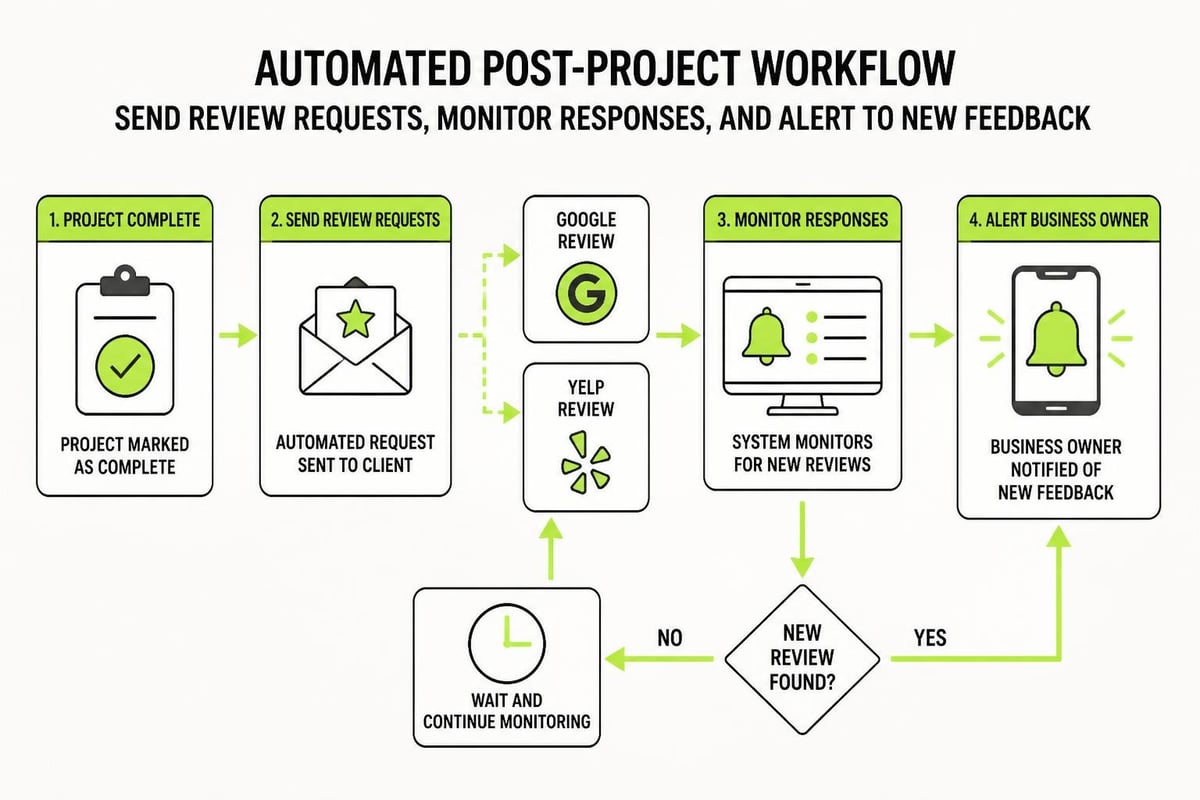
For service businesses, reviews aren't just nice to have. They're the primary trust signal for most buyers. Understanding what review management actually involves can help you move from passively hoping for feedback to actively generating it as part of your post-project workflow.
Set up automated review requests that go out 3-7 days after a job is completed. Make it easy by linking directly to your Google Business Profile or preferred platform. Respond to every review, good or bad. Potential clients are watching how you handle feedback, not just what the feedback says.
Infrastructure: CRM, Automation, and Data
This is where marketing solutions for service businesses separate from generic tactics. You can run ads and post on social all day, but if the back end isn't set up to protect and convert those leads, you're pouring water into a leaky bucket.
CRM Setup
Your CRM is the single source of truth for every client interaction. It tracks enquiries, quotes sent, jobs won and lost, follow-ups due, and project status. Popular options for service businesses include:
- HubSpot (free tier works for small operators, scales well)
- Pipedrive (simple, visual, built for sales pipelines)
- ActiveCampaign (strong automation, great for email-heavy workflows)
- Keap (good for service businesses with complex follow-up needs)
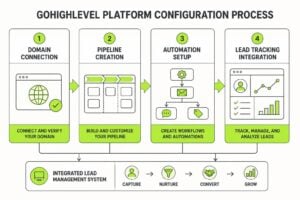
The platform matters less than how you use it. At minimum, your CRM should automatically log new leads, assign them to a pipeline stage, trigger follow-up tasks, and send templated emails based on actions or time delays.
Email and SMS Automation
Once your CRM is live, layer in automation. A few high-value sequences to set up first:
- New lead welcome (confirms enquiry, sets expectations, provides helpful info)
- Quote follow-up (sent 2-3 days after a quote goes out)
- Lost lead re-engagement (targets leads who didn't convert after 30-60 days)
- Post-project nurture (asks for reviews, offers maintenance or upsells, requests referrals)
Each sequence should have a clear goal and a next step. Don't just send information. Invite action.
Measurement and Reporting
If you can't measure it, you can't improve it. Your marketing dashboard should show:
- Lead volume by source (Google, referrals, social, direct)
- Conversion rate (leads to quotes, quotes to won jobs)
- Cost per lead and cost per acquisition
- Revenue per channel
This doesn't require a data science degree. Most CRMs and ad platforms provide these metrics out of the box. The trick is reviewing them monthly and shifting budget toward what's working.
The SBA’s guidance on managing and measuring marketing efforts offers templates and frameworks that are particularly useful for small service operators who need to justify every dollar spent.
Common Mistakes Service Businesses Make
Even businesses with good intentions trip up on a few predictable issues. Recognising them early saves time and money.
Mistake One: Treating Marketing as a Project
Marketing isn't a campaign you run once. It's an ongoing system that feeds your pipeline. If you only advertise when work is slow, you'll always be in feast-or-famine mode. Consistency beats intensity every time.
Mistake Two: Ignoring the Data
You might feel like Facebook ads aren't working, but feelings aren't facts. If your CRM shows Facebook leads convert at 40% and Google leads convert at 15%, the data is telling you something. Trust it.
Mistake Three: No Follow-Up Process
Most service leads don't convert on first contact. If you're not following up at least three times (ideally five to seven over 2-3 weeks), you're leaving half your pipeline to chance.
Mistake Four: Underestimating Automation
Hand-typing the same email to 20 leads is a waste of your time. Automate everything that doesn't require judgment. Save your energy for the conversations that actually need a human.
Aligning Marketing Solutions for Service Businesses with Growth Goals
Your marketing should scale with your business, not against it. That means the systems you build at $200k revenue shouldn't break when you hit $500k or $1M. Structured growth comes from stacking predictable systems on top of each other.
Start with the foundations:
- A CRM that logs and tracks every lead
- A website optimised for conversion (not just traffic)
- Review and reputation management that generates social proof
- At least one automated nurture sequence
Once those are humming, layer in paid acquisition, content marketing, partnerships, and referral programs. But don't skip the boring infrastructure. It's what holds everything else together.
Trends in marketing technology and agency relationships show that service businesses are increasingly investing in owned systems (CRM, email, website) rather than renting attention on platforms. That shift makes sense. Platforms change. Your database doesn't.
How to Audit Your Current Marketing
If you're not sure where you stand, run a quick diagnostic. Grab a notepad and answer these honestly:
- Do you know how many leads you got last month and where they came from?
- Can a lead contact you outside business hours and still get a response?
- Do you have an automated follow-up for leads who don't reply immediately?
- Are you asking for reviews systematically, or only when you remember?
- Can you see which marketing channels generate the most revenue (not just leads)?
If you answered "no" to more than two, your marketing has structural gaps. The good news is these are fixable with the right systems and a bit of upfront effort.
Making It Happen
Marketing solutions for service businesses don't require a massive budget or a full-time team. They require clarity, structure, and the discipline to build systems instead of running tactics. Start with one area. Fix your lead capture. Set up a single nurture sequence. Install review automation. Then add the next piece.
The businesses that win in 2026 won't be the ones with the flashiest ads. They'll be the ones with the tightest systems, the cleanest data, and the most predictable pipelines. That's not exciting, but it's what compounds over time.
For more on how marketing and business development intersect for service companies, this breakdown of integrated approaches walks through how to align your sales and marketing efforts so they reinforce instead of compete.
Building a marketing system that protects leads and scales revenue doesn't happen by accident. It takes intention, the right infrastructure, and a commitment to treating marketing as a system, not a side project. If you're ready to remove the chaos and build something that compounds, MDO Digital can help you design high-trust websites, install CRM and automation, and run data-driven campaigns that turn attention into predictable demand.