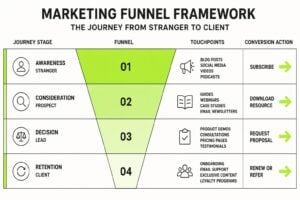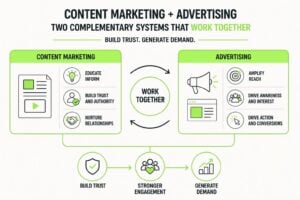
Business to business digital marketing operates differently from consumer campaigns. The sales cycles are longer, the decisions involve multiple stakeholders, and the trust required before someone signs a contract is substantially higher. Unlike consumer marketing where someone might impulse-buy a pair of shoes, B2B buyers are investing in solutions that affect their bottom line, their team's productivity, and their own professional reputation. That changes everything about how you approach marketing.
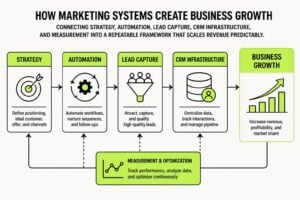
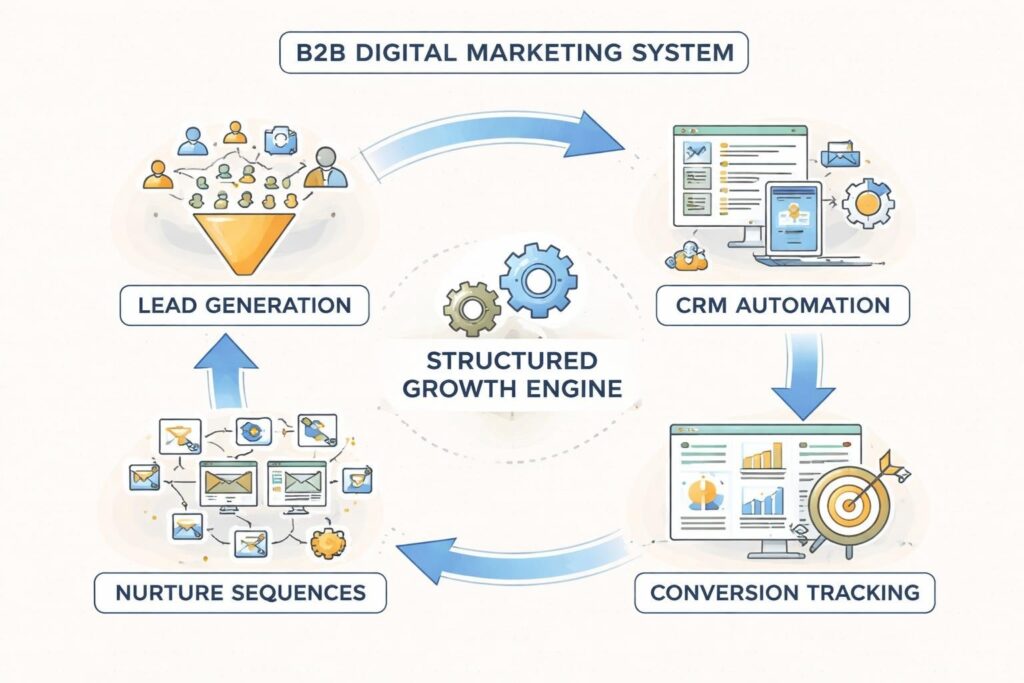
This isn't about viral posts or flashy ads. It's about building infrastructure that captures attention, nurtures relationships over time, and creates predictable pipeline. The businesses that succeed with business to business digital marketing treat it as a system, not a collection of random tactics. They understand that every piece needs to connect: the website that builds trust, the CRM that protects leads, the automation that keeps prospects engaged, and the content that demonstrates genuine expertise.
Why B2B Marketing Requires Different Infrastructure
Consumer marketing often optimises for immediate conversion. Someone sees an ad, clicks through, and buys within minutes. Business to business digital marketing rarely works that way. Your prospects need to research, compare options, get internal buy-in, negotiate budgets, and manage risk. They're not browsing Instagram at 11pm ready to swipe their card.
This extended timeline means your marketing infrastructure needs to work across weeks or months, not hours. You need systems that:
- Capture contact information early through valuable content or tools
- Segment prospects based on their industry, company size, or specific needs
- Nurture relationships automatically with relevant content over time
- Track engagement so sales teams know when someone's genuinely interested
- Maintain consistency even when your team is focused on delivery
The businesses that struggle with B2B marketing usually have gaps in this infrastructure. They might generate leads but have nowhere to store them properly. Or they collect contacts but never follow up systematically. Or they send generic emails that feel mass-produced rather than relevant.
The Role of Trust in Longer Sales Cycles
When someone's evaluating a service provider, they're looking for proof you understand their world. Generic marketing doesn't cut it. They want case studies from similar businesses, content that addresses their specific challenges, and enough transparency to believe you'll deliver what you promise.
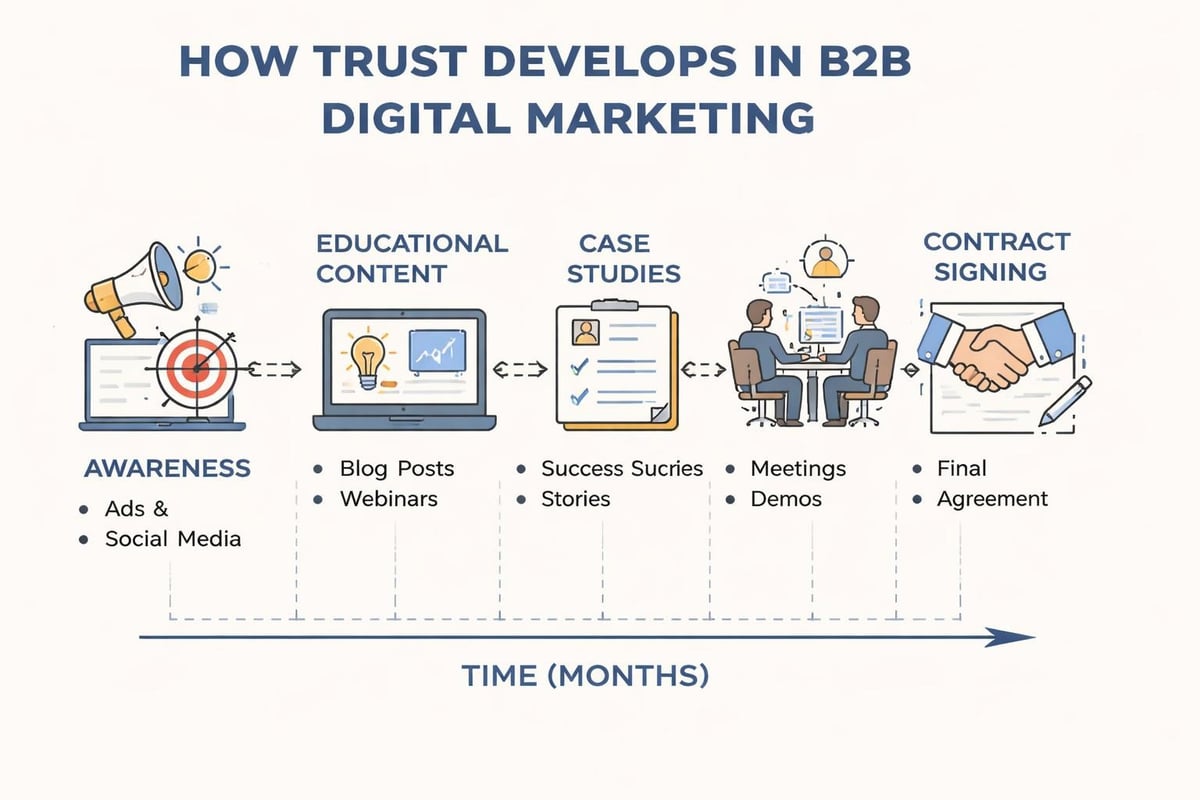
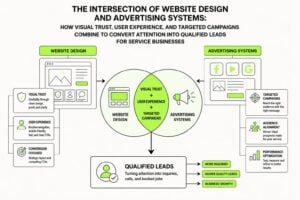
Building this trust digitally means your website, your content, and your automated communications all need to work together. Creating empathy and trust with business audiences requires consistent messaging that proves you understand their context, not just your own services.
The Core Components That Actually Work
Effective business to business digital marketing isn't about doing everything. It's about getting a few critical pieces right and making them work together. Most service businesses need four core components: a high-trust website, a functioning CRM, automated nurture sequences, and content that demonstrates expertise.
Website as Your Digital Storefront
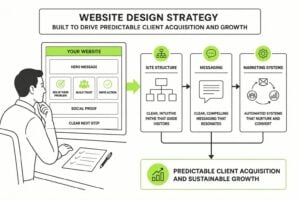
Your website does more heavy lifting in B2B than almost any other channel. It's where prospects research you after a referral, where they go to validate what they heard in a sales call, and where they try to figure out if you're legitimate before they ever contact you.
A high-performance B2B website should:
| Element | Purpose | What It Looks Like |
|---|---|---|
| Clear positioning | Explain who you help and how | Specific language about industries or problems served |
| Case studies | Prove results with real examples | Detailed stories with numbers and context |
| Service detail | Remove ambiguity about what you do | Process explanations, not just service lists |
| Lead capture | Give visitors a reason to share contact info | Valuable resources or frameworks, not just "newsletter signup" |
| Trust signals | Reduce perceived risk | Testimonials, certifications, years in business |
The common mistake is building a website that talks about your company instead of solving your prospect's problem. They don't care about your mission statement. They care whether you can help them hit their targets, reduce their risk, or solve the specific challenge keeping them up at night.
Cornell’s research on B2B tactics consistently points to website performance as the foundation everything else builds from.
CRM and Lead Management Infrastructure
Generating leads means nothing if they disappear into a spreadsheet or someone's email inbox. Business to business digital marketing requires proper lead management from day one. This is where most service businesses leak revenue without realising it.
A functional CRM for B2B should:
- Capture every lead automatically from website forms, email replies, or manual entry
- Tag and segment contacts based on source, industry, company size, or interest
- Track all interactions so anyone on your team can see the full history
- Trigger follow-up sequences based on specific actions or timeframes
- Report on pipeline health so you know what's working and what isn't
The difference between businesses that scale and those that plateau often comes down to whether they protect their leads properly. You might generate fifty enquiries a month, but if ten fall through the cracks because someone forgot to follow up, you're wasting money on marketing that could be going straight to your bottom line.
Automated Nurture That Stays Relevant
Most B2B prospects aren't ready to buy when they first hear about you. They might be researching options six months before budget approval. They might be comparing you to competitors. They might be waiting for their current contract to expire.
Automated nurture sequences keep you front of mind without requiring manual effort. The key is making them feel personal and relevant, not obviously automated. This means:
- Segment your sequences by industry or problem type
- Provide genuine value in each email (insights, frameworks, case studies)
- Space communications appropriately (weekly or fortnightly, not daily)
- Include clear next steps so engaged prospects can raise their hand
- Monitor engagement and adjust based on what people actually open or click
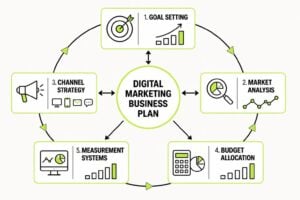
The businesses getting results from business to business digital marketing often use a framework like the 7-Step Marketing Plan, which connects lead generation to systematic nurture and conversion. This approach ensures every new contact enters a structured process rather than getting lost in the noise.

Content Strategy for B2B Authority
Consumer content can be entertaining or aspirational. Business to business digital marketing content needs to be genuinely useful. Your prospects are looking for people who understand their challenges deeply enough to help solve them. Surface-level blog posts don't cut it.
Effective B2B content typically falls into three categories:
Educational Content That Builds Trust
This includes guides, frameworks, how-to articles, and resources that help your prospects do their job better, whether they buy from you or not. The point isn't immediate conversion. It's establishing that you know what you're talking about.
Examples that work:
- Industry-specific process guides
- Comparison frameworks for evaluating solutions
- Template or checklist downloads
- Explainer content on complex topics in your field
Authority Content That Demonstrates Expertise
These are the deeper pieces: detailed case studies, original research, opinion pieces on industry trends, or analysis that shows you're not just repeating what everyone else says. This content takes more effort but creates stronger differentiation.
- Case studies with real numbers and specific contexts
- Original frameworks or methodologies you've developed
- Industry trend analysis with your perspective
- Problem breakdowns that show depth of understanding
Conversion Content That Qualifies Prospects
Not all content needs to be top-of-funnel. Some should help qualified prospects decide if you're the right fit. Service descriptions, process explanations, pricing frameworks (even if not exact numbers), and FAQ content all help prospects self-qualify.
| Content Type | Goal | Distribution |
|---|---|---|
| Educational | Build awareness and trust | Blog, social, search |
| Authority | Differentiate from competitors | Email, LinkedIn, speaking |
| Conversion | Help qualified leads decide | Website, sales collateral, proposals |
The best content strategies for business to business digital marketing integrate all three types, distributed across different channels based on where prospects are in their journey. Understanding B2B marketing best practices means knowing that different content serves different functions in your overall system.
Channel Selection and Resource Allocation
Unlike consumer marketing where you might test TikTok or Instagram ads, business to business digital marketing channels tend to be more focused. Your prospects aren't scrolling social media looking for service providers. They're searching Google when they have a problem, reading LinkedIn during work hours, or responding to email referrals.
Search and SEO for Demand Capture
Most B2B buyers start with search. They Google their problem, search for "best [solution] for [industry]", or look up companies they've heard mentioned. If you're not visible in these searches, you're missing prospects who are actively looking for what you offer.
SEO for business to business digital marketing focuses on:
- Problem-focused keywords rather than just service names
- Industry-specific terms that show you understand their context
- Comparison and evaluation content for mid-funnel prospects
- Local search optimization if you serve specific geographies
- Technical performance because B2B buyers won't wait for slow sites
The advantage of search is intent. These people are actively looking for solutions. The challenge is competition and the time it takes to build rankings. This isn't a quick win, but it compounds over time.
LinkedIn for Relationship Building
LinkedIn is the one social platform where business to business digital marketing genuinely works at scale. Your prospects are there professionally, they're open to business content, and the targeting allows you to reach specific roles, industries, or company sizes.
Effective LinkedIn strategies include:
- Regular posts that demonstrate expertise (not company updates)
- Engaging with prospects' content to build visibility and relationships
- Targeted ads to specific job titles or companies when you have clear ICP
- Thought leadership from founders or senior team members
- Direct outreach to warm connections with relevant value
The mistake most businesses make on LinkedIn is treating it like a broadcast channel. It works better as a relationship platform where consistent presence and genuine engagement matter more than ad spend.
Email as Your Owned Channel
Email remains the highest-ROI channel for business to business digital marketing, primarily because you own the list. Algorithm changes don't affect your ability to reach people who've given you permission to contact them.
Building an email list requires:
- Valuable lead magnets that solve specific problems
- Clear opt-in processes on your website and content
- Segmentation from the start so you can send relevant content
- Consistent sending schedule so people expect and recognize your emails
- Focus on value delivery rather than constant selling
The businesses that succeed with email don't just send monthly newsletters. They build sequences that educate, nurture relationships, and move prospects toward decisions over time. Leveraging email marketing effectively means treating it as a system, not just a communication tool.
Measurement That Drives Decisions
You can't improve business to business digital marketing without measuring what matters. The challenge is distinguishing between vanity metrics and numbers that actually predict revenue.
Metrics That Matter for B2B
| Metric | Why It Matters | How to Track |
|---|---|---|
| Cost per qualified lead | Shows marketing efficiency | CRM with source tracking |
| Lead to opportunity rate | Indicates lead quality | Sales pipeline reporting |
| Opportunity to close rate | Measures sales effectiveness | CRM conversion tracking |
| Customer acquisition cost | Total cost of new business | Marketing spend / new customers |
| Lifetime value to CAC ratio | Long-term profitability | LTV / CAC calculation |
| Pipeline velocity | How fast deals move | Days in each stage |
Website traffic and social followers might feel good, but they don't pay the bills. Focus your measurement on metrics that connect directly to revenue. If you're generating more leads but they're not converting to customers, you have a qualification problem or a sales problem, not a volume problem.
Attribution in Complex Sales Cycles
Business to business digital marketing attribution is messy. Someone might read your blog post, see your LinkedIn ad, download your guide, receive three nurture emails, attend a webinar, then book a call six months later. Which channel gets credit?
The answer is usually "all of them worked together," which is why understanding the B2B buying cycle matters more than arguing about last-click attribution. Track first touch (how they found you), key engagements (what kept them interested), and last touch (what triggered the conversion). Look for patterns across multiple customers rather than obsessing over individual paths.
Common Pitfalls and How to Avoid Them
Most failures in business to business digital marketing come from a few predictable mistakes. Recognizing them early saves time and budget.
Treating B2B Like B2C
Consumer marketing tactics rarely translate directly. Just because short-form video works for DTC brands doesn't mean it'll work for industrial equipment suppliers. B2B buyers want depth, proof, and clarity, not entertainment.
Expecting Immediate Results
Building business to business digital marketing infrastructure takes time. SEO needs months to show results. Nurture sequences work over weeks. LinkedIn relationship-building compounds over quarters. If you need leads next week, you're better off picking up the phone or asking for referrals.
Ignoring Lead Follow-Up
Generating leads is the easy part. Following up consistently, tracking conversations, and moving prospects through your pipeline is where most businesses fail. Your marketing and business development systems need to work together, not operate in silos.
Creating Generic Content
If your content could apply to any industry or any business, it's not doing its job. Specificity builds trust. Generic undermines it.
Not Segmenting Your Audience
Sending the same message to a CFO and a marketing manager, or to a five-person firm and a 500-person company, wastes everyone's time. Business to business digital marketing works better when you acknowledge that different prospects have different contexts.
Building Systems That Compound
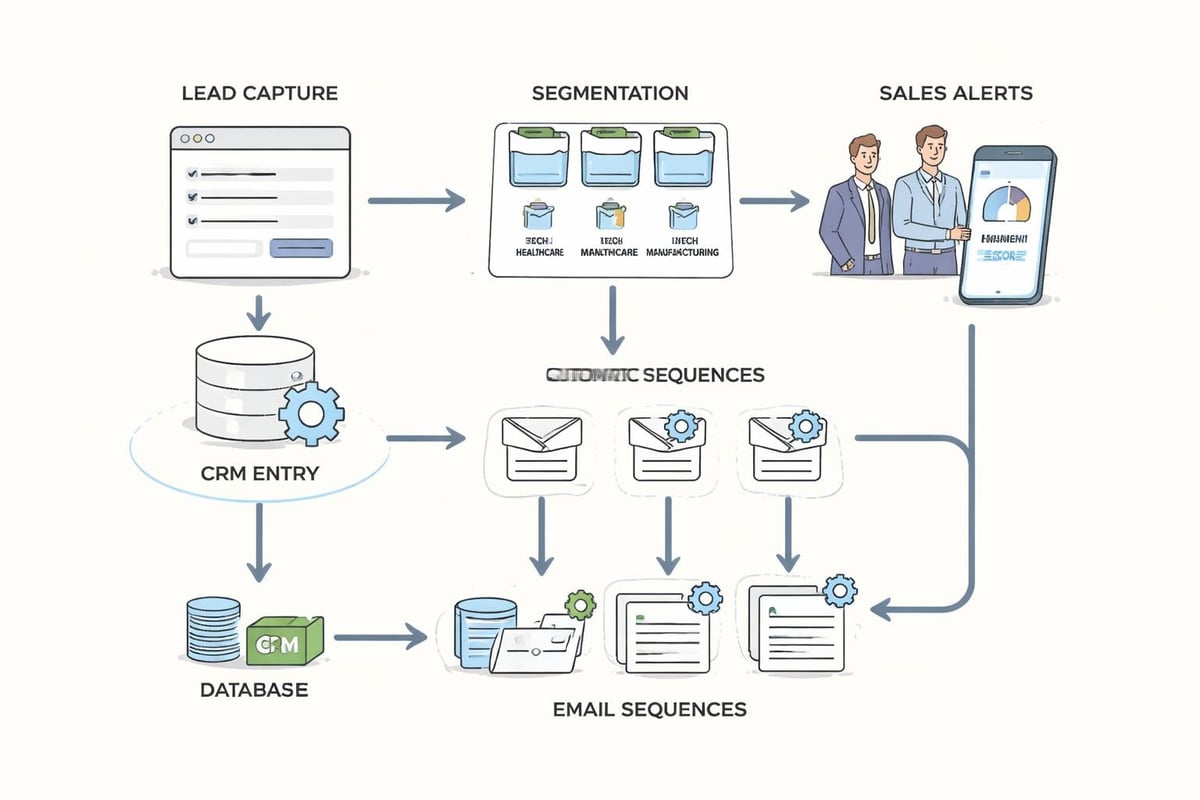
The difference between scattered tactics and effective business to business digital marketing comes down to systems thinking. Every piece should connect to the next. Your SEO content should capture leads. Your lead capture should feed your CRM. Your CRM should trigger nurture sequences. Your nurture should surface hot prospects to sales. Your sales process should request reviews and referrals that feed back into awareness.
When digital marketing and business growth strategies work together as infrastructure rather than isolated campaigns, the results compound. Each month's work builds on the previous month. Each piece of content continues to generate value long after you publish it. Each system improvement makes everything downstream more effective.
This is what separates businesses that scale from those that stay stuck at the same revenue level year after year. It's not about working harder or spending more on ads. It's about building infrastructure that works whether you're actively pushing it or not.
The practical steps to start:
- Audit your current systems to identify gaps between lead generation and conversion
- Fix the leaks first by implementing proper CRM and follow-up processes
- Build one strong channel rather than spreading resources across everything
- Create content systematically based on actual prospect questions and objections
- Measure what predicts revenue and optimize based on those metrics
- Iterate based on data rather than assumptions about what should work
None of this requires massive budgets or huge teams. It requires clarity about who you serve, commitment to building proper infrastructure, and consistency in execution over time. The businesses winning with business to business digital marketing in 2026 aren't doing anything magical. They're just doing the fundamentals properly and systematically.
Business to business digital marketing works when you treat it as infrastructure, not tactics. The fundamentals haven't changed: build trust, stay visible, nurture relationships, and make it easy for qualified prospects to choose you. At MDO Digital, we help service businesses build the systems that make this happen reliably. If your marketing feels chaotic or your leads keep slipping through the cracks, we can help you create the structure that turns attention into predictable pipeline.