Most service businesses run ads the same way they run meetings: reacting to what feels urgent rather than building toward what matters. You'll spend money, see some clicks, maybe get a lead or two, and convince yourself it's working. But without a proper adv strategy, you're just renting attention instead of building systems that compound. The difference between throwing budget at platforms and engineering predictable demand comes down to structure, tracking, and ruthless clarity about what you're actually optimizing for.
Why Most Advertising Falls Apart Before It Starts
The typical approach to paid advertising looks something like this: pick a platform, set a budget, write some copy, choose an image, and hope for the best. When results don't materialize, you either blame the platform or convince yourself that ads "just don't work" for your business.
The real problem isn't the platform. It's that you're missing the infrastructure that makes advertising scalable:
- No clear conversion event defined beyond "contact us"
- Messaging that tries to appeal to everyone and resonates with no one
- Zero connection between ad spend and revenue outcomes
- Landing pages built for aesthetics instead of conversion
- No system to capture, qualify, or follow up with leads consistently
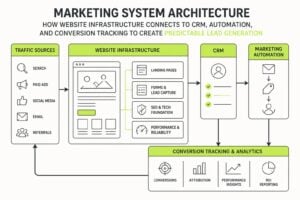
An adv strategy worth running addresses each of these breakpoints before you spend a dollar. It treats advertising as part of a broader system, not as a standalone tactic you turn on when you need more work.
The Three Layers Every ADV Strategy Needs
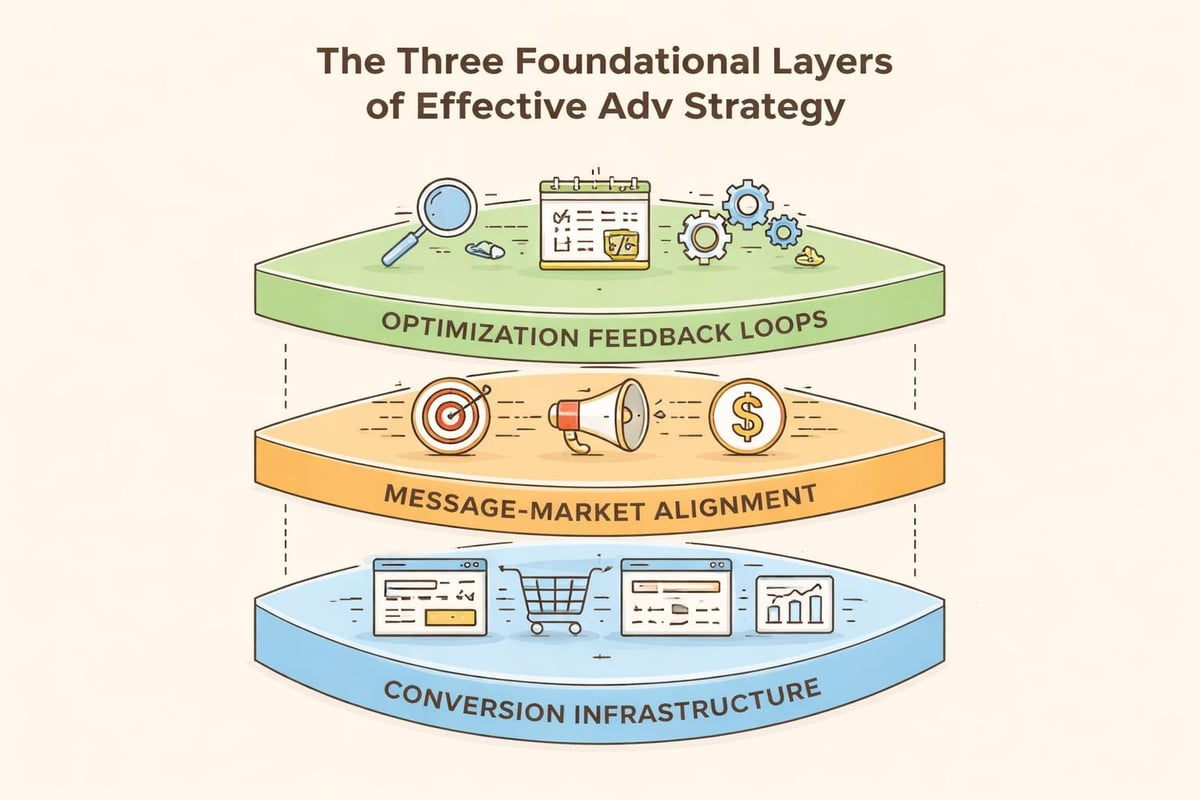
Think of your advertising approach in layers, each one supporting the next. Miss one and the whole thing collapses.
Layer one is foundation. Who are you targeting, what specific outcome do you want them to take, and what conversion infrastructure exists to capture that action? This means landing pages that load fast and guide attention, forms that connect directly to your CRM, and tracking that tells you which ads drive actual revenue, not just clicks.
Layer two is message-market fit. Your ads need to speak to a specific problem your audience already knows they have. Generic promises about "growing your business" get ignored. Specific offers that solve urgent problems get clicks. The tighter your message maps to audience pain, the lower your cost per conversion.
Layer three is optimization feedback. You need real data flowing back from conversions to ad platforms so algorithms can learn what works. That means properly configured tracking pixels, conversion events that matter to your business, and enough budget to give platforms the signal they need to optimize. This is where branding and advertising intersect with performance, the brand clarity informs the message, the message drives the conversion.
Building Your ADV Strategy Around Conversion Events
Most businesses optimize for the wrong thing. They look at impressions, click-through rates, even landing page visits. None of that matters if it doesn't connect to revenue.
A proper adv strategy starts by defining the exact action that leads to business outcomes. For service businesses, that's usually a qualified lead entering your pipeline, not just someone filling out a form.
Defining What Actually Counts
Start by mapping your customer journey backwards from closed revenue. What happened in the 30 days before someone became a client? Did they book a call, request a proposal, attend a workshop?
That conversion event becomes your north star. Everything in your adv strategy optimizes toward making that specific action happen more often and at lower cost. When you're clear about the outcome, you can build the supporting infrastructure:
- Landing pages designed for that one action – Remove navigation, strip out distractions, focus all copy and design on moving people toward the conversion
- Forms that capture qualification data – Not just name and email, but budget, timeline, specific challenge
- CRM automation that routes leads properly – Hot leads get immediate response, others enter nurture sequences
- Tracking that connects ad click to closed revenue – UTM parameters, CRM integration, closed-loop reporting
This level of structure might feel like overkill when you're just trying to get some leads. But it's exactly this infrastructure that separates campaigns that scale from ones that burn cash. The guide from Amazon Ads on effective advertising reinforces this: clear objectives and proper tracking aren't optional, they're the foundation.
Platform Selection Based on Buying Intent
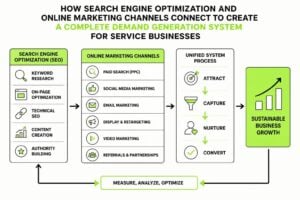
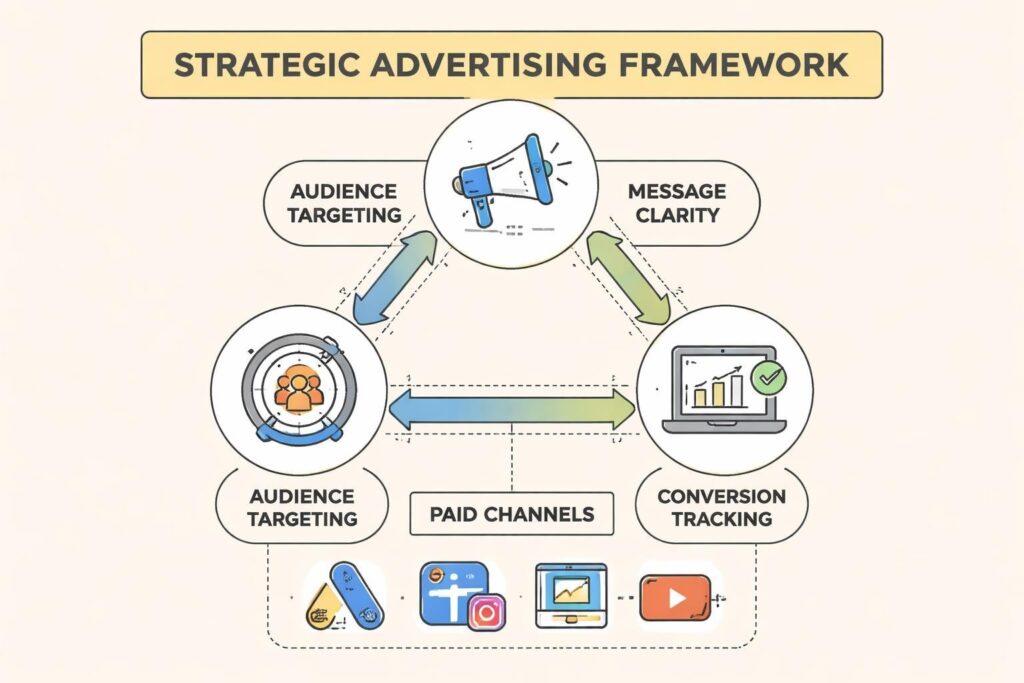
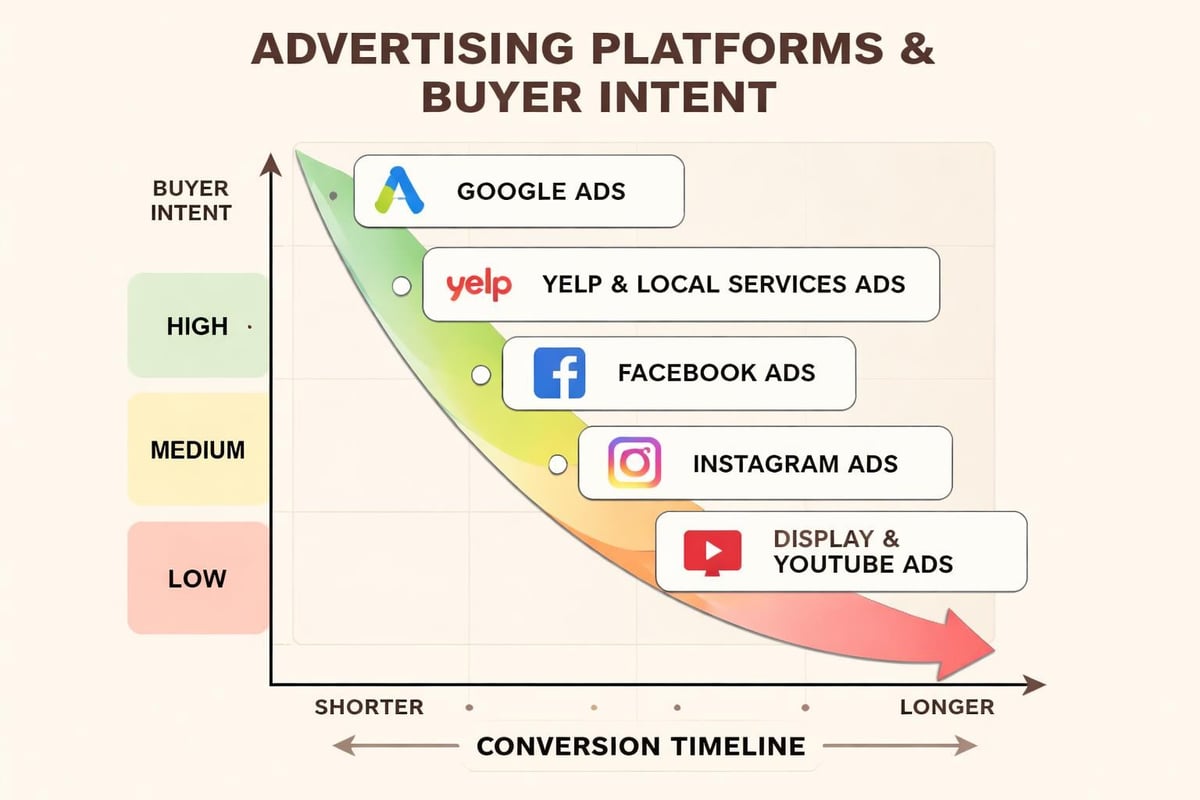
Not all advertising platforms serve the same purpose. Your adv strategy needs to match platform characteristics with where your audience sits in the buying journey.
Search advertising captures high intent. Someone searching "CRM setup for consultants" knows they have a problem and they're looking for a solution right now. These clicks cost more but convert better because the intent is explicit.
Social advertising builds awareness and nurtures consideration. People scrolling LinkedIn aren't actively shopping, but they're open to discovering solutions to problems they know they have. Your messaging needs to interrupt their scroll with something relevant, then guide them toward a conversion over time.
Programmatic display extends reach but requires longer nurture. Banner ads work when you're trying to stay visible across the consideration journey, but they rarely drive immediate conversions. Understanding best practices for programmatic advertising helps you set realistic expectations and build appropriate follow-up sequences.
| Platform Type | Intent Level | Best Use Case | Typical Conversion Timeline |
|---|---|---|---|
| Search (Google) | High | Capture active buyers | 0-7 days |
| Social (LinkedIn) | Medium | Build awareness, nurture | 14-45 days |
| Programmatic Display | Low-Medium | Retargeting, brand presence | 30-90 days |
| YouTube | Low-Medium | Education, trust building | 21-60 days |
Your adv strategy should allocate budget based on where your ideal clients actually spend time and what stage of awareness they're in when they encounter your ads.
Message Architecture That Converts Strangers
Here's the uncomfortable truth: your audience doesn't care about you, your process, or how long you've been in business. They care about their problem and whether you can solve it without adding complexity to their life.
Your adv strategy needs messaging that acknowledges this reality. Every ad should answer three questions instantly:
- What problem does this solve? – Specific, urgent, already top of mind for your audience
- Why should I believe you? – Proof, not promises. Results, not rhetoric
- What happens next? – One clear action, minimal friction
Writing Ads That Acknowledge Buyer Sophistication
Service business buyers in 2026 have seen every growth promise and transformation claim. They're skeptical, informed, and absolutely allergic to hype.
Your messaging needs to meet them where they are. If they're early in awareness, lead with the problem and educate. If they're evaluating solutions, differentiate based on approach and proof. If they're ready to buy, remove friction and make the next step obvious.
This is where online marketing and branding become inseparable. Your brand positioning should inform every piece of ad copy. If your brand stands for removing chaos and building systems, your ads should reflect that same clarity and structure.
Avoid these common messaging mistakes:
- Leading with features instead of outcomes
- Making claims you can't immediately back up
- Trying to serve multiple audiences in one ad
- Using industry jargon that creates confusion
- Asking for too much commitment too early
The best adv strategy simplifies the message until it's almost boring. Boring converts. Clever gets ignored.
Budget Allocation and Testing Framework
You can't optimize what you don't measure, and you can't measure effectively without proper budget allocation. Most businesses either spread their budget too thin across platforms or dump everything into one channel and hope for the best.
A structured adv strategy builds testing into the budget from day one. You need enough spend to generate statistically significant data while protecting yourself from catastrophic waste.
The 70-20-10 Allocation Model
Here's a framework that balances scale with experimentation:
- 70% of budget goes to proven winners – Campaigns, audiences, and messages that already convert at acceptable cost
- 20% goes to optimization tests – New audiences, message variations, landing page tests within proven channels
- 10% goes to exploratory channels – Testing entirely new platforms or approaches
This structure lets you scale what works while continuously searching for efficiency gains and new opportunities. You're not locked into one approach, but you're also not gambling your entire budget on unproven tactics.
Monthly testing rhythm:
- Week one: Launch new tests in the 20% and 10% buckets
- Week two-three: Monitor performance, gather data
- Week four: Analyze results, promote winners to the 70% bucket, kill losers
- Repeat
The key is giving tests enough time and budget to produce meaningful data. A/B testing ad copy with $50 and three days won't tell you anything useful. Following programmatic campaign best practices means setting up proper test conditions before you evaluate results.
Integration With Your Existing Marketing Systems
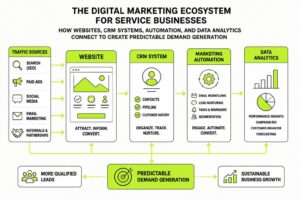
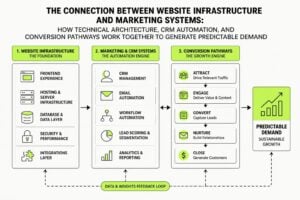
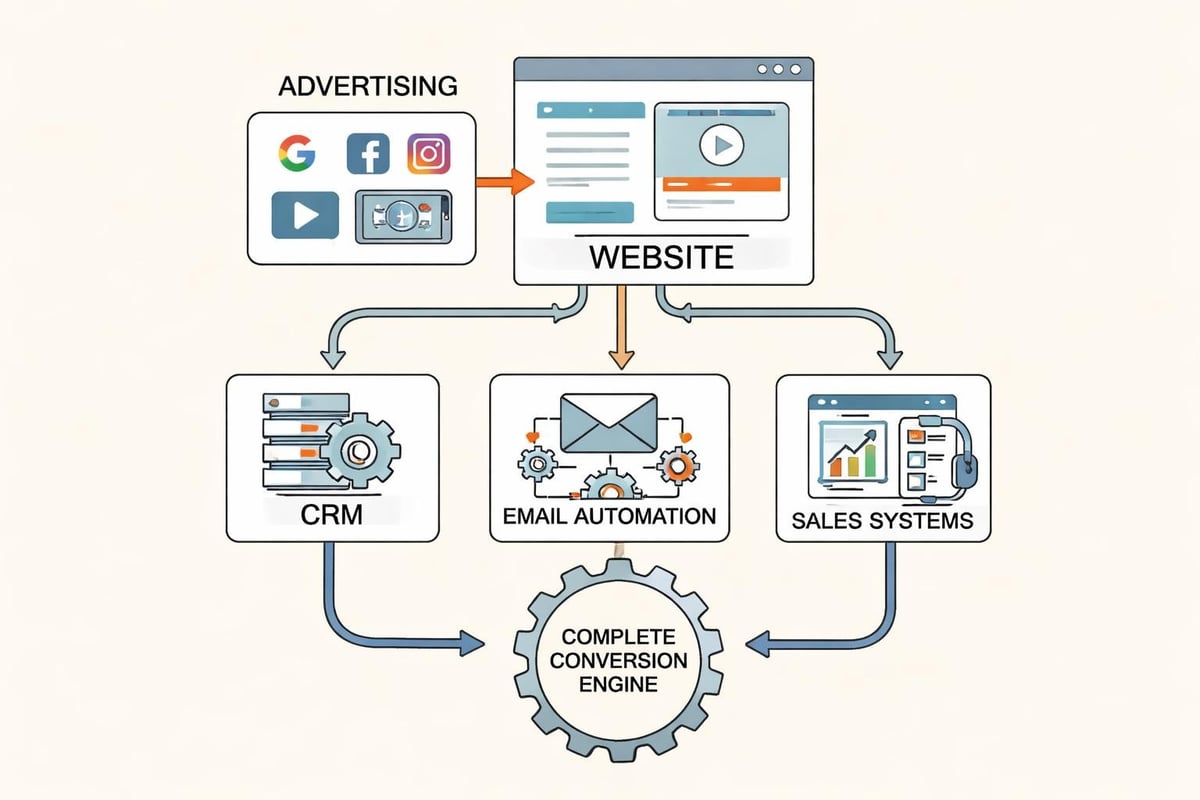
Your adv strategy doesn't exist in isolation. The ads are just the first touch in a longer journey that includes your website, CRM, email sequences, and sales process.
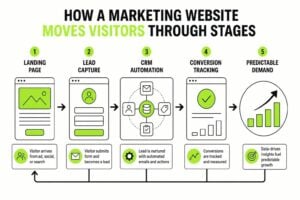
The businesses that see actual ROI from advertising are the ones who've connected all these pieces into a cohesive system. A lead from an ad should trigger specific automation, enter defined nurture sequences, and provide feedback data that improves targeting over time.
Critical integration points:
- Website and landing pages – Fast load times, mobile optimization, clear conversion paths. Your website development and marketing infrastructure needs to support advertising traffic
- CRM and automation – Immediate lead capture, automatic qualification, systematic follow-up that doesn't rely on manual effort
- Analytics and attribution – Connecting ad spend to pipeline value and closed revenue, not just lead count
- Retargeting pools – Capturing engaged visitors and serving them sequential messages based on behavior
When these systems work together, your adv strategy becomes a growth engine instead of an expense line. You're not just buying leads, you're feeding a machine that qualifies, nurtures, and converts attention into predictable demand.
Scaling What Works Without Breaking What's Working
The point where most adv strategies fail isn't at launch. It's when you try to scale. What worked at $2,000 per month breaks at $10,000 per month. Campaigns that delivered consistent leads suddenly spike in cost or tank in quality.
Scaling requires different thinking than launching. You're not just doing more of the same, you're expanding audience pools, entering new market segments, and managing increasing complexity without losing the signal that made your original campaigns work.
Scaling Signals to Watch
Before you increase budget, make sure you're tracking these indicators:
| Metric | Healthy Scaling Signal | Warning Sign |
|---|---|---|
| Cost per conversion | Stays flat or decreases slightly | Increases more than 25% |
| Conversion rate | Maintains baseline or improves | Drops significantly |
| Lead quality | Consistent match rate | Decline in qualification scores |
| Attribution window | Leads convert in expected timeframe | Longer sales cycles appearing |
Scale in 25% increments, not 100% jumps. Give platforms time to adjust, monitor quality metrics, and ensure your conversion infrastructure can handle increased volume. A flood of unqualified leads isn't growth, it's waste with a bigger invoice.
This is where understanding marketing techniques for 2025 success becomes relevant. The tactics might evolve, but the principles of measured scaling and quality over volume remain constant.
Creative Refresh Cycles and Ad Fatigue
Even the best-performing ads eventually stop working. Audiences see them too many times, platforms deprioritize older creative, and message fatigue sets in. Your adv strategy needs built-in creative refresh cycles to combat this reality.
Plan for creative turnover from the start:
- Social ads: refresh every 4-6 weeks
- Search ads: rotate copy every 8-12 weeks
- Display campaigns: new creative every 6-8 weeks
- Video content: quarterly refresh minimum
This doesn't mean completely reinventing your messaging every month. It means having variations ready to deploy, testing new angles within your core positioning, and watching performance metrics for early signs of fatigue.
Creative fatigue indicators include:
- Click-through rate declining week over week
- Cost per click increasing with no change in competition
- Frequency metrics showing 5+ exposures per user
- Comments/engagement dropping on social platforms
When you spot these patterns, have fresh creative ready to launch. The brands that maintain consistent ad performance aren't lucky, they're systematic about creative rotation and testing.
Attribution and Measuring What Actually Matters
The final piece of a solid adv strategy is knowing which efforts actually drive revenue. Most businesses use last-click attribution, giving all credit to the final touchpoint before conversion. This dramatically undervalues the awareness and consideration work that upper-funnel advertising provides.
Multi-touch attribution is closer to reality. A prospect might see a LinkedIn ad, visit your site twice, read several blog posts, see a retargeting ad, and then finally book a call via Google search. Which ad "worked"? All of them played a role.
Your attribution model should reflect your actual buyer journey length and complexity. For service businesses with 30-90 day sales cycles, you need tracking that connects early touchpoints to eventual revenue.
Building Better Attribution
Start with the infrastructure that makes accurate attribution possible. UTM parameters on every ad and link, CRM integration that captures source data, and analytics that can track users across multiple sessions and devices.
Then choose an attribution model that matches your business reality. For most service businesses, time-decay or position-based models work better than last-click. They give credit to the awareness-building work while still valuing the final conversion touch.
The goal isn't perfect attribution. It's good enough data to make smarter budget decisions and understand which parts of your adv strategy actually contribute to growth. Looking at how successful agencies approach this, as shown in Tronvig Group’s case studies, reveals that strategic clarity matters more than perfect measurement.
Continuous Optimization Culture
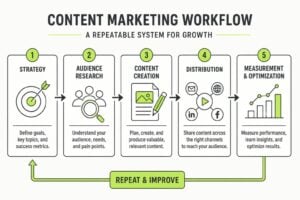
The businesses getting real returns from advertising don't set campaigns and forget them. They build a culture of continuous testing, learning, and refinement. Your adv strategy should include systematic optimization rhythms, not just reactive fixes when performance drops.
Weekly optimization tasks:
- Review conversion cost trends and pause underperformers
- Check search term reports and add negative keywords
- Analyze audience segment performance
- Monitor landing page conversion rates
Monthly optimization tasks:
- Complete A/B test analysis and implement winners
- Review attribution data and adjust budget allocation
- Update audience targeting based on CRM conversion data
- Refresh ad creative that shows fatigue signals
Quarterly strategic reviews:
- Assess overall adv strategy performance against business goals
- Evaluate platform mix and consider new channel tests
- Review competitive landscape and adjust positioning
- Update buyer personas based on actual customer data
This systematic approach, combined with the infrastructure we've covered, is what separates advertising that works from advertising that burns cash. Your competitors are probably doing the bare minimum. Slight edges in optimization discipline compound into significant advantages over time.
For businesses focused on digital growth, this optimization culture becomes the engine that drives consistent improvement. You're not chasing tactics, you're building systems that learn and improve.
A working adv strategy isn't about finding the perfect platform or the magic message. It's about building the infrastructure that captures attention, converts it to qualified leads, and feeds those leads into systems that turn them into revenue. Most of the work happens before you spend the first dollar on ads. If you're ready to build advertising that actually scales your service business instead of just consuming budget, MDO Digital helps you design the systems, infrastructure, and measurement frameworks that make paid channels profitable and predictable.