Most small businesses treat their online presence like a collection of disconnected tasks. They build a website, set up social accounts, maybe send a few emails. Then they wonder why nothing connects and leads slip through the cracks. The truth is, an effective online presence for small business isn't about being everywhere. It's about creating a structured system where every digital touchpoint serves a clear purpose and feeds into predictable growth.
The gap between simply existing online and building an actual presence that converts is wider than most business owners realise. It's the difference between posting content into the void and creating digital infrastructure that captures attention, qualifies interest, and moves people toward a decision. This article breaks down what actually matters when building your digital footprint, without the usual fluff about "engagement" and "brand awareness."
Why Most Small Business Websites Don't Actually Work
Your website sits at the centre of your online presence for small business, but most sites are glorified brochures. They look decent, list services, and do precisely nothing to move visitors toward a next step.
The problem isn't design. It's structure and intent.
A working website needs to:
- Immediately clarify what you do and who it's for
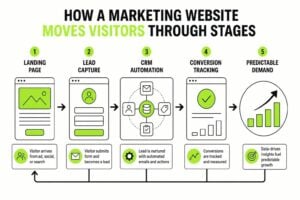
- Present a clear path from landing to action
- Capture visitor information before they leave
- Integrate with your CRM to protect every lead
- Guide people through a logical buyer journey
High-trust websites do more than look professional. They function as the first layer of your sales system. Every page should answer a question, address an objection, or push someone closer to starting a conversation.
Most service-based businesses lose potential clients not because their offering is weak, but because their website creates confusion instead of clarity. Visitors can't figure out if you're right for them, what to do next, or why they should care. So they leave.
The Technical Foundation Nobody Talks About
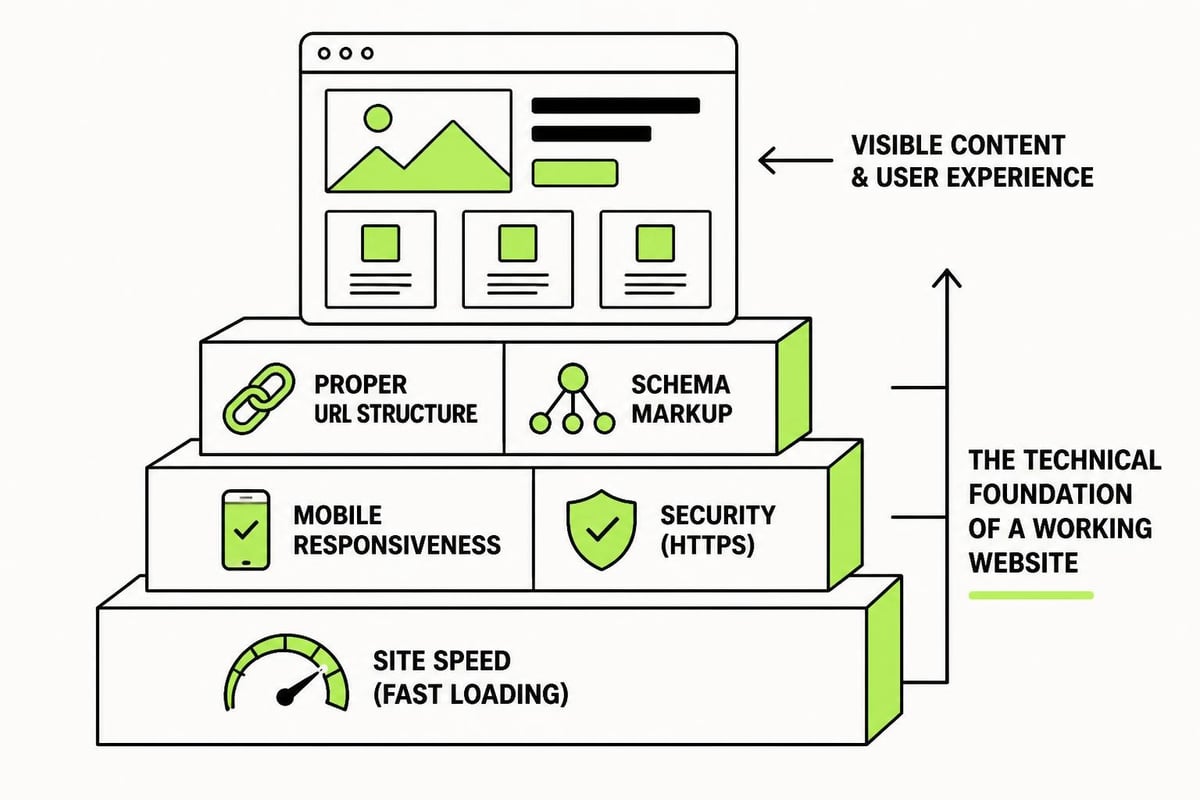
Before you worry about content or visuals, get the foundation right. Your site needs to load quickly, work perfectly on mobile, and be built in a way that search engines can actually index it properly.
| Technical Element | Why It Matters | What Good Looks Like |
|---|---|---|
| Page Speed | Slow sites lose visitors before they engage | Under 3 seconds load time |
| Mobile Responsiveness | Most traffic comes from phones | Perfect function on all screen sizes |
| SSL Certificate | Security and trust signals | HTTPS, not HTTP |
| Clean URL Structure | SEO and user experience | Logical, readable URLs |
| Schema Markup | Helps search engines understand your content | Properly implemented structured data |
These aren't nice-to-haves. They're the cost of entry for a functional online presence for small business in 2026.
CRM and Automation: Where Leads Go to Die or Thrive
Here's where most small businesses completely fall apart. They spend money driving traffic to their website, visitors convert into leads, and then… nothing. The enquiry sits in an inbox. Someone means to follow up. Days pass. The opportunity goes cold.
This isn't a people problem. It's a systems problem.
A proper CRM doesn't just store contact information. It captures every lead automatically, triggers immediate follow-up, tracks every interaction, and makes sure nothing slips away. According to research on small business digital presence, many businesses still rely on spreadsheets and memory to manage their customer relationships, which is essentially choosing to lose money.
Your CRM infrastructure should:
- Capture leads from every source automatically (website forms, social media, email, phone)
- Tag and segment based on where they came from and what they're interested in
- Trigger nurture sequences that educate and build trust over time
- Alert your team when someone shows buying signals
- Track the full customer journey from first touch to closed deal
The difference between a business that scales and one that stays stuck often comes down to whether they protect their leads or let them evaporate.
Building this infrastructure isn't glamorous work, but it's what separates amateur online presence from professional systems. When someone shows interest in your business, your CRM should immediately pull them into a sequence that builds trust, addresses objections, and moves them toward a decision, whether you're awake or not.
Content That Actually Serves Your Business Goals
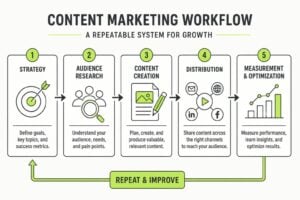
Content for the sake of content is noise. Every piece you publish should either attract the right people, educate them, or move them closer to working with you.
The strategies successful small businesses use focus on consistency and relevance, not volume. You don't need to post every day. You need to publish content that demonstrates expertise and answers the specific questions your potential clients are asking.
What Should You Actually Create?
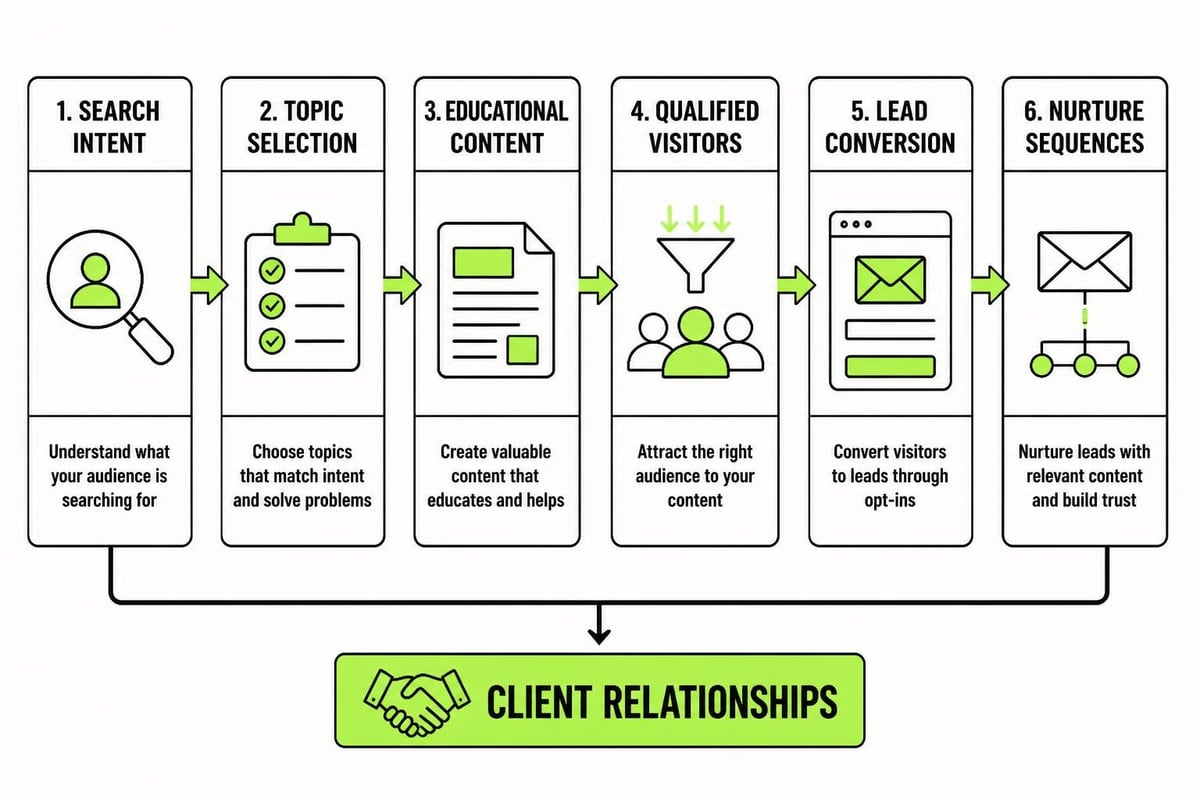
Start with search intent. What are people typing into Google when they have the problem you solve? Build content around those questions.
Content formats that work for service businesses:
- How-to guides that solve specific problems in your niche
- Case studies showing real results for real clients
- Comparison articles that help buyers make informed decisions
- Process breakdowns that demystify what you do
- Industry insights that position you as knowledgeable, not just another provider
Every piece should lead somewhere. A lead magnet. A consultation booking. A next article in the sequence. Creating a digital marketing plan means thinking about content as part of a system, not as isolated posts hoping for attention.
Social Media Without the Performance Theatre
Social platforms matter for online presence for small business, but not in the way most people think. You don't need to dance on TikTok or post motivational quotes on LinkedIn three times a day.
Social media works when it creates genuine touchpoints with your audience and drives people back to your owned assets (your website, your email list, your CRM). Everything else is just borrowed visibility that could disappear tomorrow.
Pick one or two platforms where your actual clients spend time. Show up consistently. Provide value. Direct people to take a next step. That's it.
| Platform | Best For | What Works | What Wastes Time |
|---|---|---|---|
| B2B services, professional services | Thought leadership, insights, case studies | Motivational fluff, daily posting for vanity metrics | |
| Local services, community-based businesses | Community building, local engagement | Organic reach to cold audience | |
| Visual businesses, lifestyle services | Behind-the-scenes, process content | Perfectly curated feeds nobody cares about | |
| YouTube | Complex services needing explanation | Long-form education, demonstrations | Chasing trends unrelated to your business |
The goal isn't followers. It's creating enough trust that someone clicks through to your website, opts into your email list, or books a call. Studies show that 88% of small business owners believe online presence is crucial for success, but most chase vanity metrics instead of actual business outcomes.
Email: The Channel You Own and Control
Unlike social platforms that change algorithms overnight, your email list is yours. It's the most valuable digital asset you can build because it gives you direct access to people who raised their hand and said they're interested.
But only if you use it properly.
Most business emails are boring updates nobody asked for. Effective email nurture campaigns educate, build trust, and move people through a buying journey. They segment based on interest and behaviour. They deliver value before asking for anything.
A working email system includes:
- Lead magnets that give people a reason to opt in (guides, templates, assessments, workshops)
- Welcome sequences that introduce new subscribers to your world and set expectations
- Nurture campaigns that educate and address objections over time
- Segmentation based on interest, behaviour, and buying stage
- Regular broadcasts that maintain the relationship and create opportunities
The 7-Step Marketing Plan we use with clients shows exactly how email fits into a broader system. It's not about blasting promotions. It's about building a predictable pipeline where leads enter at the top and move through structured nurture until they're ready to buy.
Having a framework that connects all these pieces, from defining your ideal buyer to generating referrals from happy clients, removes the guesswork and creates repeatable growth.
Search Engine Presence That Actually Generates Leads
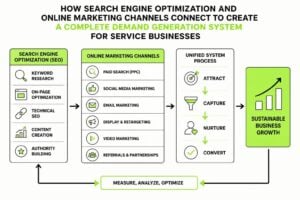
SEO isn't magic. It's about making sure the people searching for what you offer can find you. For service-based businesses, that means showing up for high-intent search terms, the phrases people type when they're ready to hire someone.
Building organic marketing that drives qualified traffic means understanding search intent and creating content that matches it. Someone searching "how to fix a leaky tap" is in a different stage than someone searching "emergency plumber near me." Your content and your site structure need to address both.
Local SEO for Service Businesses
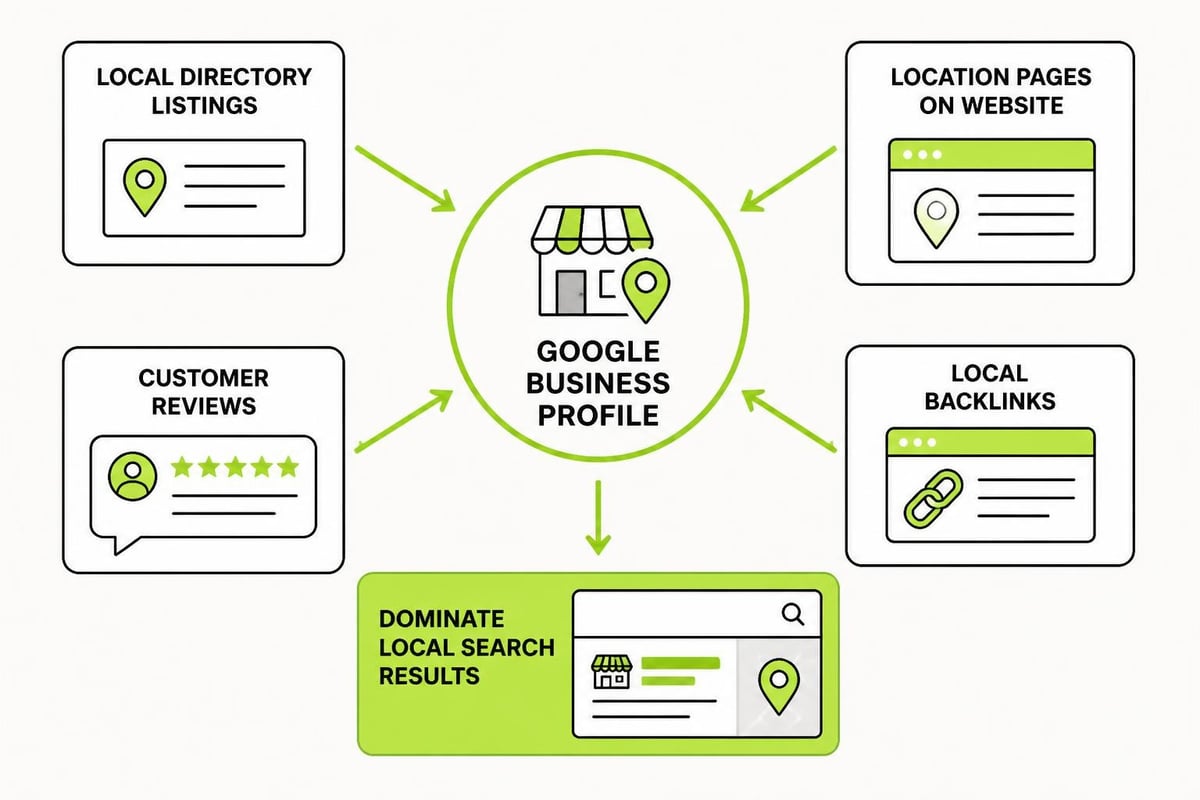
If you serve a geographic area, local search is where you should focus first. Google Business Profile, local citations, and location-specific content matter more than competing for broad national keywords.
Local SEO checklist:
- Claim and optimise your Google Business Profile completely
- Get listed in relevant local directories with consistent NAP (name, address, phone)
- Create location-specific service pages on your website
- Collect and respond to Google reviews consistently
- Build local backlinks from community organisations and partners
The businesses that win local search aren't necessarily the biggest or the oldest. They're the ones who systematically build their local digital footprint and make it easy for Google to understand what they do and where they do it.
Measuring What Actually Matters
Most small businesses drown in data they don't understand or use. Pageviews, bounce rates, impressions, reach. None of that matters if you can't connect it to business outcomes.
The metrics that actually tell you if your online presence for small business is working:
- Lead volume: How many qualified enquiries per month
- Lead source: Where your best leads come from
- Conversion rate: Percentage of visitors who become leads
- Cost per lead: What you spend to acquire each enquiry
- Lead-to-client conversion: How many leads become paying clients
- Customer lifetime value: How much revenue each client generates
- Return on marketing spend: Revenue generated vs marketing invested
Everything else is interesting context, but these numbers tell you whether your digital systems are creating growth or just creating busy work.
Track them monthly. Adjust based on what's working. Double down on channels and tactics that generate qualified leads at an acceptable cost. Cut everything else, no matter how much you personally enjoy it.
Integration: Where Everything Comes Together
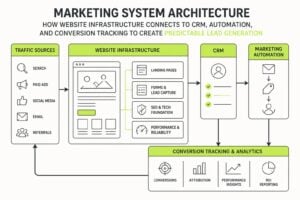
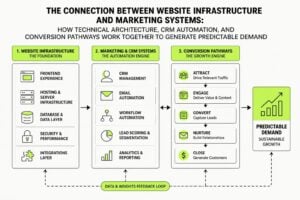
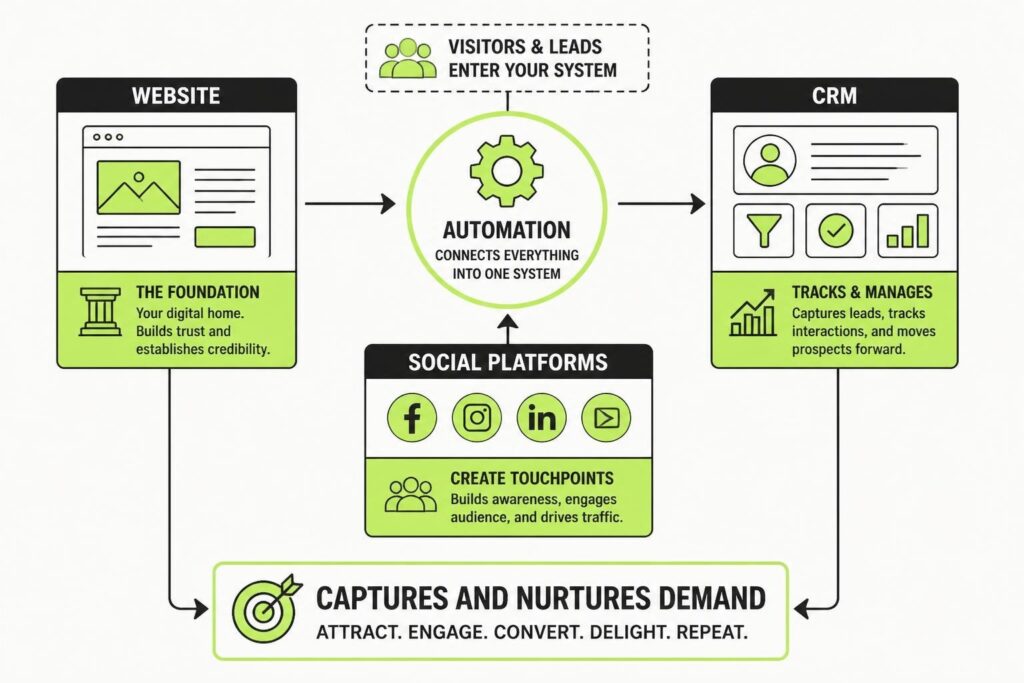
The real power of a proper online presence for small business isn't in any single component. It's in how they all work together as one system.
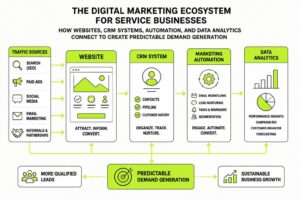
Your website captures attention and converts visitors to leads. Your CRM protects those leads and triggers nurture sequences. Your email builds trust and moves people toward decisions. Your content attracts new visitors through search and social. Your automation makes sure nothing falls through the cracks.
Forbes outlines strategies that emphasise this integrated approach. It's not about picking the right platform. It's about building infrastructure where every piece feeds the others.
When someone discovers you through search, engages with your content, opts into a lead magnet, receives educational emails, and eventually books a consultation, that's not luck. That's a designed system doing exactly what it was built to do.
Most businesses never get there because they bolt together random tools and tactics without understanding how they should connect. They have a website but no CRM. A CRM but no automation. Automation but no content strategy. Social presence but no way to capture leads.
The goal is creating a digital ecosystem where attention flows in, gets captured, gets nurtured, and converts into clients predictably. That requires planning, proper tools, and ruthless focus on what actually drives revenue.
Building vs Buying Your Digital Infrastructure
You can build this yourself, piece by piece, learning as you go. Many businesses do. It takes time, makes mistakes, and often costs more in the long run than getting it right the first time.
Or you can work with someone who's built these systems dozens of times and knows exactly what works for service-based businesses trying to scale.
The real question isn't whether you need a strong online presence for small business. Research makes it clear that digital visibility is non-negotiable in 2026. The question is whether you're building infrastructure that compounds over time or just checking boxes and hoping something works.
Red flags that your current approach isn't working:
- You get website traffic but few enquiries
- Leads come in but most go cold quickly
- You can't track where your clients actually come from
- Your follow-up depends on someone remembering to do it
- You're posting content but it doesn't drive business results
- Your digital tools don't talk to each other
Any of those sound familiar? Then you've got gaps in your system, not gaps in your effort.
What Actually Drives Results
Strip away the noise and online presence for small business comes down to a few core principles. Clarity about who you serve and what you offer. A website that converts visitors into leads. Infrastructure that protects and nurtures those leads. Content that attracts the right people. Automation that removes human error from critical touchpoints.
None of this is complicated. But it does require discipline, the right tools, and a commitment to building systems instead of just staying busy online. The businesses that grow aren't the ones with the biggest social following or the fanciest website. They're the ones who built digital infrastructure that captures demand and converts it into clients, predictably and repeatedly.
Understanding how marketing and business development connect helps you see the bigger picture. Your online presence isn't separate from your business strategy. It is your business strategy, at least the part that determines whether you grow or stagnate.
The work isn't sexy. Setting up proper CRM integration, building nurture sequences, creating content pillars, optimising conversion paths. But it's the difference between hoping for growth and engineering it.
Start with the foundation. Fix what's broken. Build what's missing. Connect the pieces into a system. Then refine based on what your data tells you. That's how you build an online presence that actually works for your business, not just around it.
Building a strong online presence for small business isn't about doing everything. It's about doing the right things in the right order and making sure they work together. If you're tired of digital chaos and ready to build marketing systems that actually generate predictable demand, MDO Digital specialises in exactly that. We remove the guesswork, protect your leads, and create infrastructure that compounds over time. Let's talk about what structured growth looks like for your business.