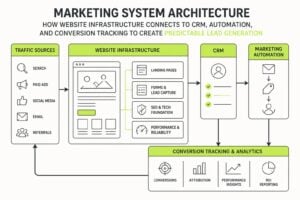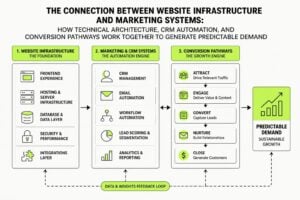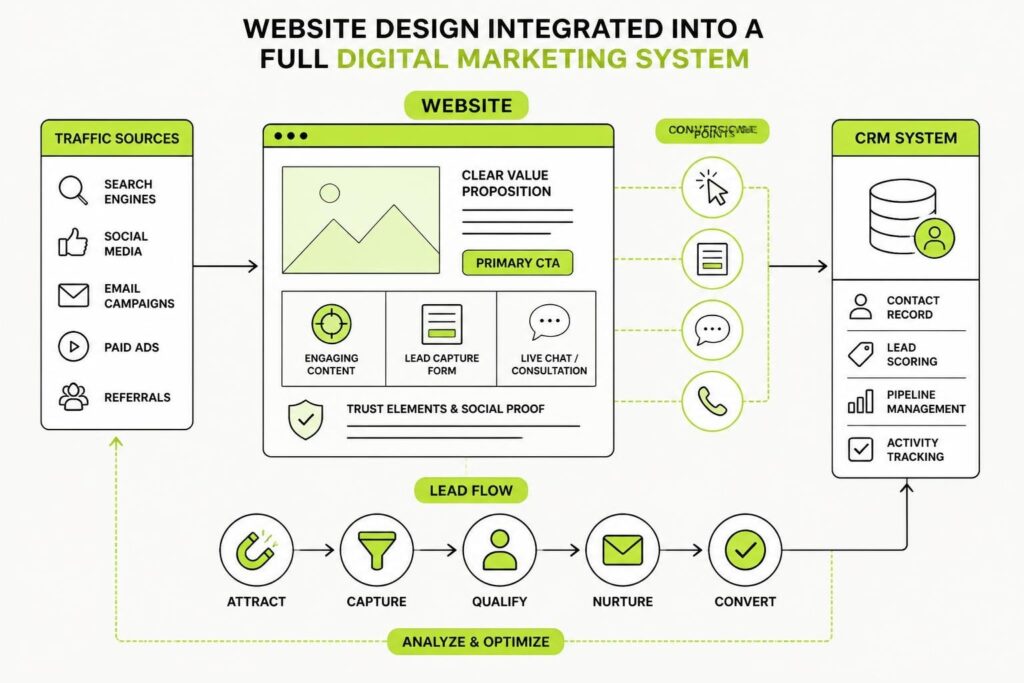
Your website isn't a brochure. It's the engine room of your digital marketing operation. Every page, button, and form should pull its weight in moving prospects toward a decision. Website design in digital marketing goes far beyond aesthetics. It's about architecture, psychology, conversion infrastructure, and data flow. When it works properly, your site becomes a 24/7 lead generation system that feeds your CRM, supports your campaigns, and turns attention into predictable revenue. When it doesn't, you're burning budget on traffic that bounces.
Why Website Design in Digital Marketing Demands a Systems Approach
Most businesses treat their website as a standalone project. They hire a designer, get something that looks decent, and assume the job is done. Then they wonder why their ads don't convert or why leads fall through the cracks.
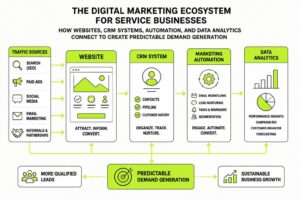
The problem is isolation. Website design in digital marketing only works when it's plugged into the rest of your marketing infrastructure. That means your site needs to talk to your CRM, track behavior, segment visitors, and trigger follow-up sequences. It needs to align with your ad messaging, support your content strategy, and make it dead simple for prospects to take the next step.
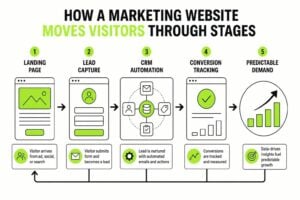
Here's what integrated website design in digital marketing looks like:
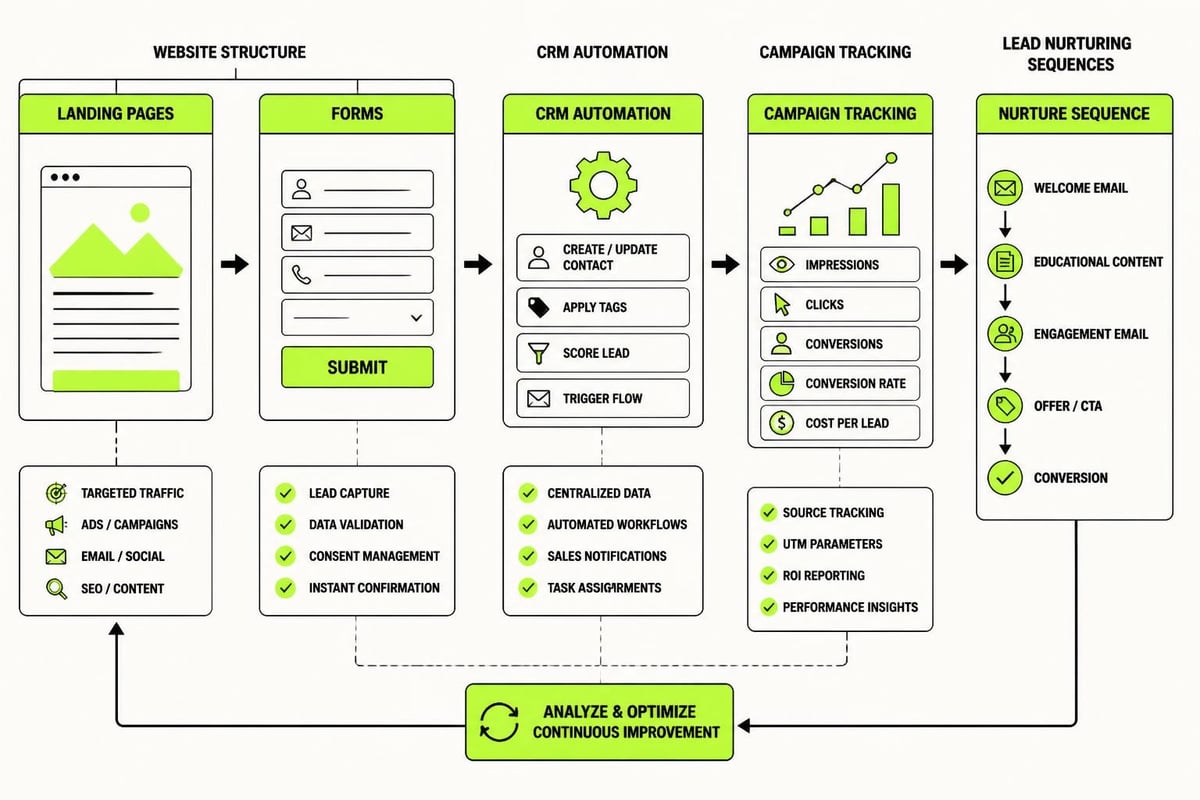
- Landing pages mapped to specific campaigns so messaging stays consistent
- Forms connected to CRM automation that tags, scores, and nurtures leads instantly
- Conversion tracking across every touchpoint so you know what's working
- Clear pathways designed around buyer intent, not just navigation logic
- Performance monitoring that flags drop-offs and informs optimization
When your website operates as part of a system, every element has a job. Nothing is decorative. Everything either moves the prospect forward or gets cut.
The Three Layers of High-Converting Website Design
Website design in digital marketing works across three layers: structure, psychology, and technical performance. Miss one, and the whole thing underperforms.
Structure: The Foundation of Conversion
Structure is how you organize information and guide decision-making. Poor structure creates friction. Good structure makes the next step obvious.
Start with clarity. Your homepage should answer three questions in under five seconds: what you do, who it's for, and why it matters. If a visitor has to hunt for that information, they won't.
Navigation should reflect buyer intent, not your internal org chart. Group pages around problems, outcomes, and decision stages. Use clear labels. Avoid jargon. Test whether a first-time visitor can find what they need in two clicks or less.
Your conversion paths need to be intentional. Map out the journey from first visit to booked call or purchase. Identify where friction exists. Remove unnecessary steps. Make opt-ins, bookings, and purchases as simple as possible without sacrificing lead quality.
| Structural Element | Weak Design | Strong Design |
|---|---|---|
| Homepage clarity | Generic tagline, unclear offer | Specific problem solved, clear next step |
| Navigation | Feature-focused categories | Outcome-focused pathways |
| Forms | 12 fields, unclear value | 3 fields, clear benefit stated |
| CTAs | "Learn more" everywhere | Context-specific actions |
Psychology: Trust Signals and Decision Triggers
Website design in digital marketing has to account for how people actually make decisions. Logic plays a part, but trust and emotion drive action.
Trust signals include social proof, credentials, case studies, and transparent processes. Show the work. Let prospects see what happens next. Remove uncertainty wherever possible. If you're asking for an email, tell them exactly what they'll receive and when.
Aesthetic quality matters more than most businesses admit. Research on website aesthetics shows that color harmony and font choices influence perceived credibility and user engagement. A site that looks outdated or inconsistent triggers doubt. People associate visual polish with operational competence, fairly or not.
Use contrast strategically. Your primary action should stand out. Secondary options should support without competing. White space reduces cognitive load. Readable typography keeps people moving through your content instead of skimming past it.
Technical Performance: Speed and Reliability
A beautiful site that loads slowly is a broken site. Technical performance directly impacts conversion rates, search rankings, and ad costs.
Page speed matters. Aim for under two seconds on mobile. Compress images, lazy load below-the-fold content, and minimize render-blocking resources. Google's Core Web Vitals aren't just an SEO factor, they're a user experience baseline.
Mobile responsiveness is non-negotiable. Over 60% of web traffic comes from mobile devices. If your site doesn't work perfectly on a phone, you're losing half your audience before they read a word.
Form functionality needs testing. A broken contact form is marketing sabotage. Set up alerts so you know immediately if submissions stop coming through. Test every CRM integration. Verify that lead data flows correctly and triggers the right automation.
How Website Design in Digital Marketing Supports Campaign Performance
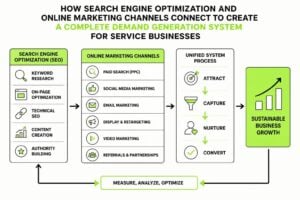
Your advertising only works as well as the page it sends people to. Website design in digital marketing determines whether paid traffic converts or burns budget.
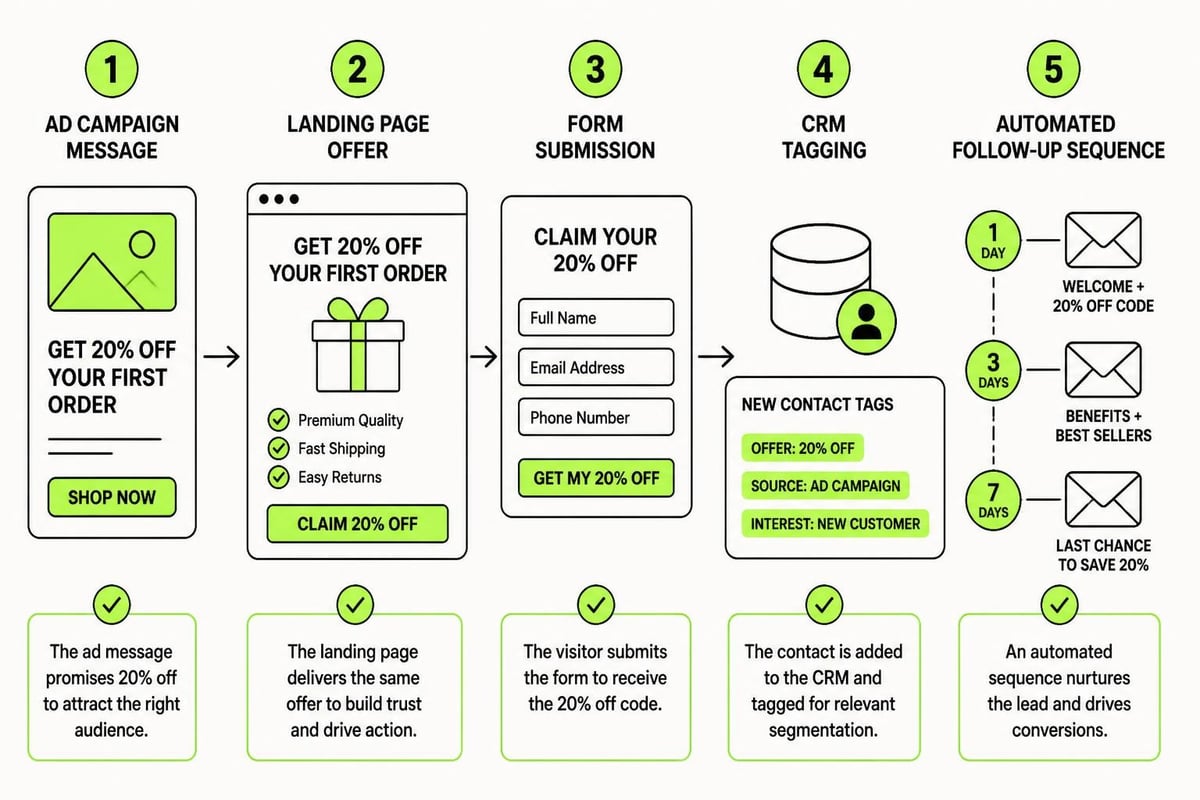
Message match is critical. If your ad promises a free guide on scaling service delivery, the landing page better deliver that guide, not a generic contact form. Visual consistency helps too. Use the same language, imagery, and offer structure across ad and landing page.
Scent trails keep prospects engaged. Every click should feel like progress toward the outcome they want. If someone clicks an ad about CRM setup, don't land them on your homepage. Send them to a page about CRM setup with a clear next step.
Conversion optimization is iterative. Start with a hypothesis, test one variable, measure results, repeat. Common tests include headline variations, CTA button text, form length, and social proof placement. Small improvements compound. A 2% lift in conversion rate can double your lead volume over time if traffic stays consistent.
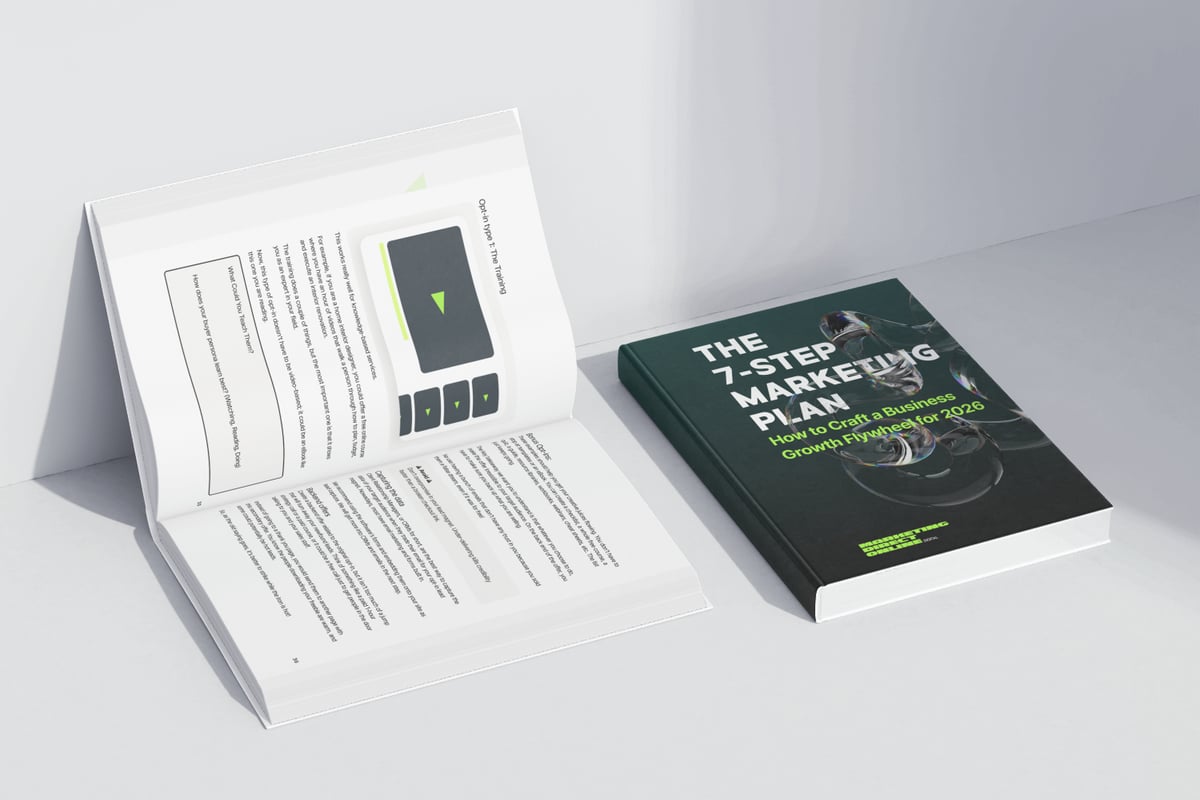
Having a structured marketing plan ensures that your website design in digital marketing aligns with every stage of the buyer journey, from awareness through to conversion and referral. The 7-Step Marketing Plan provides a framework that connects your site to goals, personas, platforms, opt-ins, CRM workflows, and client experience in a way that feeds long-term growth.
Building for Data, Not Just Design
Website design in digital marketing should be built to collect, organize, and act on data. Every visitor leaves signals. Your site should capture them and use them to improve decision-making.
Tracking setup is foundational. Install Google Analytics, set up goal tracking, and configure event tracking for key interactions: form submissions, video plays, downloads, scroll depth. Use UTM parameters on all campaign links so you can trace conversions back to source.
Heatmaps and session recordings show you what's actually happening. Tools like Hotjar or Microsoft Clarity reveal where people click, how far they scroll, and where they abandon. This data uncovers friction that analytics alone won't surface.
Lead scoring and segmentation turn raw traffic into actionable intelligence. Not all visitors are equal. Someone who visits your pricing page three times and downloads a case study is further along than someone who bounced after five seconds. Tag behavior in your CRM and adjust follow-up accordingly.
When AI-driven insights in digital marketing score and extract patterns from content design, you can identify what creative elements drive engagement and adjust faster. Data removes guesswork. It turns optimization from opinion into process.
Common Website Design Mistakes That Kill Conversion
Even well-intentioned businesses make structural mistakes that sabotage their marketing. Here are the most common ones.
Too many options paralyze decision-making. Every CTA competes for attention. Limit choices. Guide the visitor toward one primary action per page. Secondary options are fine, but make them visually subordinate.
Vague value propositions waste traffic. "We help businesses grow" means nothing. Be specific. What do you help them grow? How? For whom? Clarity beats cleverness every time.
Hidden contact information creates unnecessary friction. If someone wants to call or email, make it easy. Don't bury contact details in the footer. If you're asking for trust, be accessible.
Slow load times bleed conversions. Every second of delay costs you traffic and rankings. Audit performance regularly using tools like Google PageSpeed Insights or GTmetrix. Fix what's broken.
Generic stock photos damage credibility. People can spot fake imagery instantly. Use real photos, real team members, real client results. Authenticity builds trust faster than polished nonsense.
How Website Design in Digital Marketing Aligns With Branding
Your website is where branding becomes tangible. Online branding isn't just logos and colors, it's consistency in how you show up, communicate, and deliver value across every interaction.
Website design in digital marketing should reflect your brand voice, positioning, and values. If you position yourself as a premium provider, your site should feel premium. If you're the approachable, straight-talking option, your copy and design should reflect that.
Visual identity includes typography, color palette, imagery style, and layout patterns. These should stay consistent across your site, email templates, proposals, and ads. Inconsistency erodes trust.
Tone and messaging matter just as much. If your brand voice is direct and grounded, avoid fluffy corporate speak on your site. Write like you talk. Use simple sentences. Prioritize clarity over sounding clever.
Differentiation comes from specificity. Instead of "full-service marketing agency," try "CRM and automation infrastructure for service businesses." The more specific you are, the more you stand out and the more qualified your leads become.
Integrating Website Design With CRM and Automation
Website design in digital marketing reaches its full potential when connected to automation. Your site should feed leads into sequences that nurture, qualify, and convert them without manual work.
Form submissions should trigger instant CRM updates. Tag the lead with source, campaign, and offer type. Assign them to the right pipeline stage. Send a confirmation email with next steps. Schedule a follow-up task for your team if needed.
Behavior tracking enables smarter automation. If someone visits your pricing page but doesn't book a call, trigger a follow-up email with a case study and booking link. If they download a guide, send a related resource three days later. Match automation to intent.
Segmentation improves relevance. Not everyone needs the same message. Segment by industry, company size, or engagement level. Use that data to personalize follow-up, adjust offers, and prioritize high-intent leads.
Modern website builders for agencies often include built-in CRM integrations and automation features, making it easier to connect design with lead management systems. The tools exist. The question is whether you're using them strategically.
Measuring What Matters in Website Performance
Website design in digital marketing isn't a set-and-forget task. It requires ongoing measurement and iteration based on real outcomes.
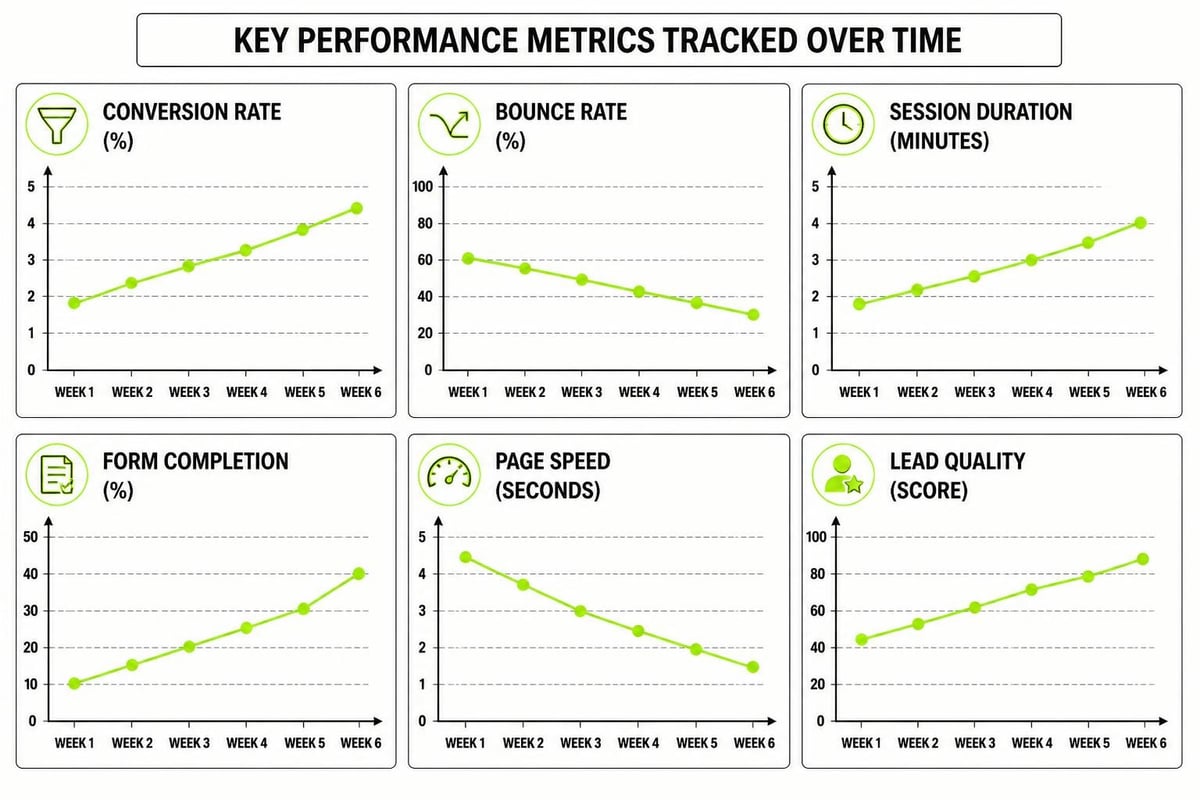
Track these metrics:
- Conversion rate by page and traffic source
- Bounce rate to identify pages that repel visitors
- Average session duration to gauge engagement
- Form completion rate to spot friction points
- Page speed across devices and geographies
- Lead-to-client conversion rate to evaluate lead quality
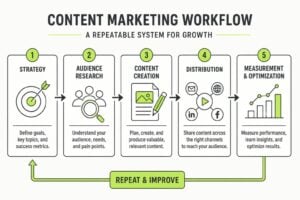
Set up a monthly review process. Look for trends. Compare performance before and after changes. Test hypotheses. Kill what doesn't work. Double down on what does.
| Metric | What It Tells You | What To Do About It |
|---|---|---|
| High bounce rate | Mismatch or poor first impression | Review messaging, improve page speed |
| Low form completion | Too many fields or unclear value | Simplify form, clarify benefit |
| Strong traffic, weak leads | Targeting or qualification issue | Adjust audience, add qualifier questions |
| Good engagement, no conversions | Missing or weak CTA | Test CTA placement and copy |
Website Design as a Competitive Advantage
Most businesses settle for average websites. They check the box, call it done, and move on. That's an opportunity.
When you treat website design in digital marketing as infrastructure, not decoration, you build a system that outperforms competitors over time. Better conversion rates mean lower customer acquisition costs. Better lead quality means higher close rates. Better data means smarter decisions.
The businesses winning in 2026 aren't necessarily the ones with the biggest budgets. They're the ones with tighter systems, clearer processes, and better execution. Your website is where that discipline shows up or doesn't.
Design in digital marketing sets the tone for everything that follows. It determines whether your ads work, whether your content converts, and whether your CRM actually fills with leads worth following up on.
Adapting Website Design to Market Shifts
Markets change. Buyer behavior evolves. Technology improves. Website design in digital marketing should adapt with it.
Stay current with platform changes. Google updates its algorithm. Social platforms shift their features. Privacy regulations tighten. Your site needs to stay compliant and optimized for the current environment, not last year's.
Test new formats and tools. Video content, interactive calculators, chatbots, and AI-assisted navigation are all worth testing if they serve your audience. Don't chase trends for the sake of it, but don't ignore useful innovation either.
Gather feedback regularly. Ask clients how they found you and what convinced them to reach out. Survey prospects who didn't convert. Use that feedback to identify gaps in your messaging, design, or process.
Refresh periodically. A full redesign every 3-5 years keeps your site from looking stale. In between, update copy, swap out underperforming pages, and refine conversion paths based on data.
As AI tools transform web agencies from time-based billing to value-based delivery, efficiency improves and expectations rise. Businesses that keep pace with these shifts maintain a competitive edge.
Making Website Design in Digital Marketing Work for Service Businesses
Service businesses face unique challenges. You're not selling a product with clear features and pricing. You're selling expertise, process, and outcomes. That requires a different approach to website design in digital marketing.
Clarity over complexity. Explain what you do in plain language. Avoid industry jargon unless your audience uses it. Make the process transparent. Show what working with you looks like step by step.
Proof over promises. Case studies, testimonials, and results carry more weight than generic claims. Use specific numbers. Name the problem you solved and the outcome you delivered. Let the work speak.
Qualification over volume. Not every lead is worth pursuing. Use your site to filter out poor fits. Be upfront about pricing ranges, ideal client profiles, and what's required to work together. This saves time and improves close rates.
Expertise over hype. Publish useful content. Answer real questions. Demonstrate depth. This builds authority and trust, which matters more in service sales than flashy design.
Website design in digital marketing for service businesses should prioritize trust and clarity above all else. You're asking for a significant commitment. Your site needs to earn that trust before the first conversation happens.
Website design in digital marketing is infrastructure, not decoration. When built properly, it converts traffic, qualifies leads, feeds your CRM, and compounds the value of every other marketing investment you make. If your site isn't pulling its weight, you're working harder than you need to. MDO Digital builds high-trust websites designed to integrate with CRM systems, support data-driven campaigns, and turn attention into predictable demand for service-based businesses ready to scale with clarity.