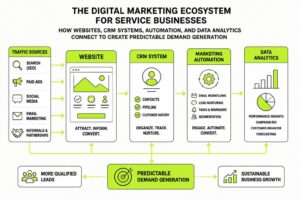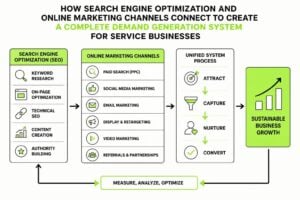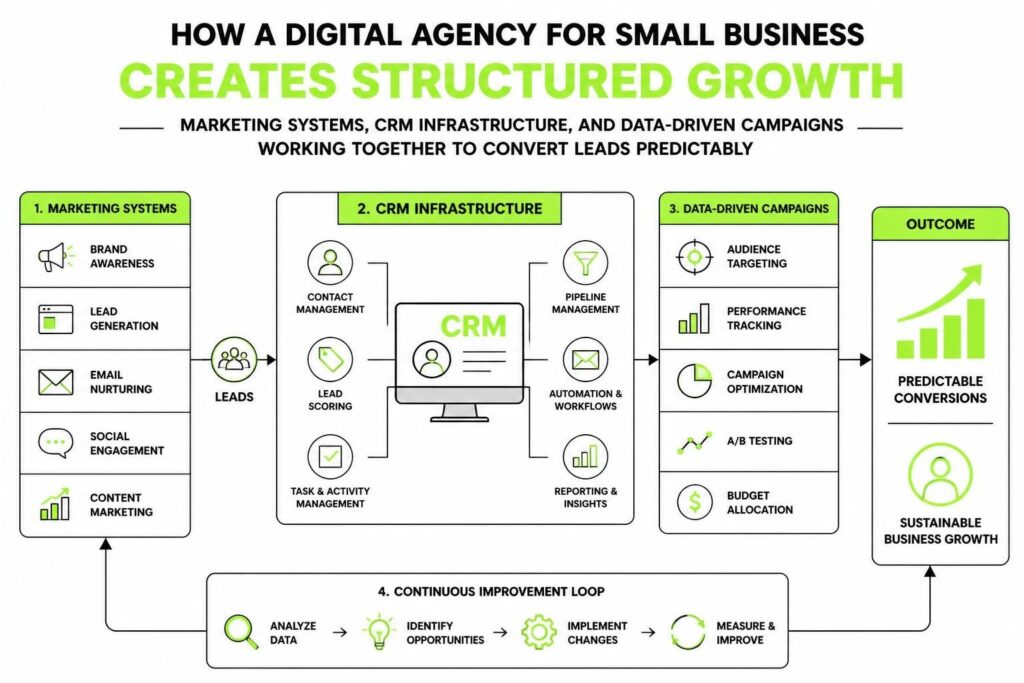
Most small businesses don't need another vendor. They need someone who can untangle the mess, build systems that actually work, and make marketing predictable. That's the job of a good digital agency for small business. But the industry is crowded with noise, vague promises, and agencies built for enterprise clients who happen to take small business money on the side. Finding the right partner means knowing what you actually need, what good looks like, and where most agencies fall short.
What a Digital Agency for Small Business Actually Does
A digital agency for small business should solve real problems, not just deliver services. The best ones focus on building infrastructure that makes your marketing repeatable and scalable.
Core Functions That Matter
Here's what you should expect:
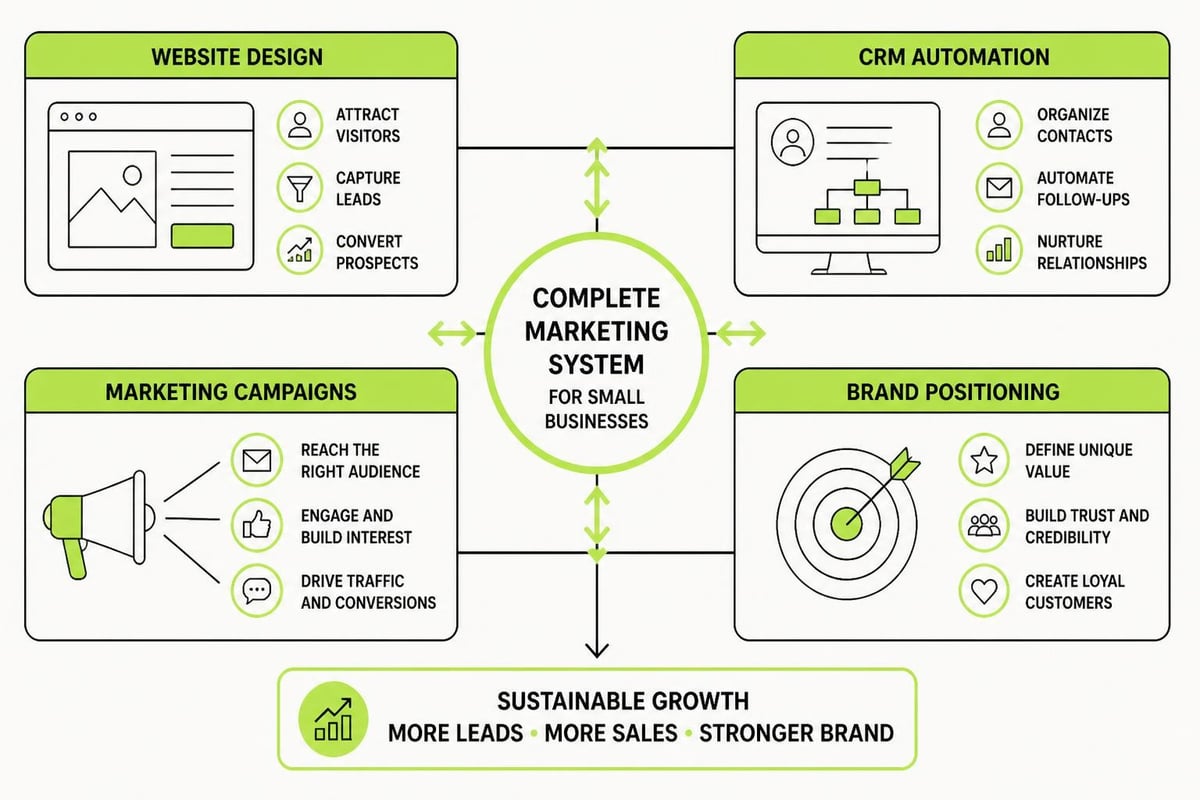
- Website design and development that builds trust and converts visitors into leads
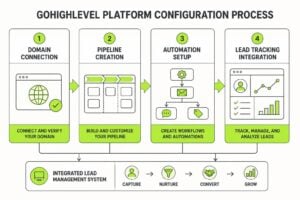
- CRM setup and automation that protects every lead and keeps deals moving
- Marketing campaigns that generate predictable demand, not just traffic
- Brand positioning that makes your business memorable and defendable
- Data tracking and reporting that shows what's working and what isn't
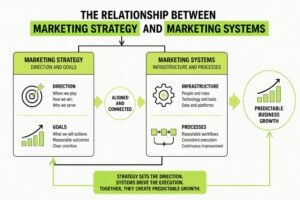
The difference between a good agency and a mediocre one is execution. Anyone can run ads or build a website. The right partner builds systems where every piece connects. Marketing and business development needs to work as one integrated system, not scattered tactics.
What Sets Small Business Agencies Apart
Working with small businesses requires different skills than servicing enterprise clients. You need speed, flexibility, and resourcefulness. Most small businesses can't afford six-month projects or retainers that exceed their revenue. They need quick wins that fund long-term growth.
A proper digital agency for small business understands this rhythm. They prioritize high-impact work, avoid unnecessary complexity, and design solutions that scale without constant reinvestment. According to the U.S. Small Business Administration, effective marketing requires both strategy and execution matched to your budget and goals.
How to Choose the Right Digital Agency for Small Business
Most businesses choose agencies based on price or portfolio. Both matter, but neither tells the full story.
Questions That Reveal Capability
Ask these during discovery calls:
- What marketing systems do you build? Good agencies talk about CRM, automation, lead scoring, and nurture sequences. Weak ones talk about platforms.
- How do you measure success? Look for answers focused on leads, conversions, and revenue. Not impressions or engagement.
- What happens if a campaign underperforms? The right partner has a process for diagnosing problems and adjusting course.
- Do you work with businesses like mine? Specialization matters. An agency experienced in service businesses will outperform one that mostly works with ecommerce.
- What does your onboarding process look like? Structured onboarding means they've done this before and know how to integrate with your business.
| Question Topic | What to Look For | Red Flag |
|---|---|---|
| Systems | Talks about CRM, automation, infrastructure | Only mentions platforms and tools |
| Measurement | Focuses on leads, conversions, revenue | Vague metrics like "brand awareness" |
| Problem-solving | Has a diagnostic process and iterates | Blames algorithm changes or bad luck |
| Experience | Works with similar businesses regularly | Claims to serve everyone equally well |
| Process | Clear onboarding, timelines, deliverables | Makes it up as they go |
Red Flags to Watch For
Some warning signs appear early if you're paying attention:
- Overpromising results. No ethical agency guarantees specific outcomes. Good ones explain what's realistic.
- Refusing to discuss pricing structure. Transparency matters. Hidden costs kill trust.
- No clear deliverables. Retainers without defined outputs are blank cheques.
- Cookie-cutter proposals. Your business is unique. The proposal should reflect that.
Understanding marketing agency pricing helps you spot unrealistic quotes and budget appropriately.
Services That Drive Real Growth for Small Businesses
Not every service delivers the same return. Focus your budget on work that compounds over time.
Website as Infrastructure, Not Decoration
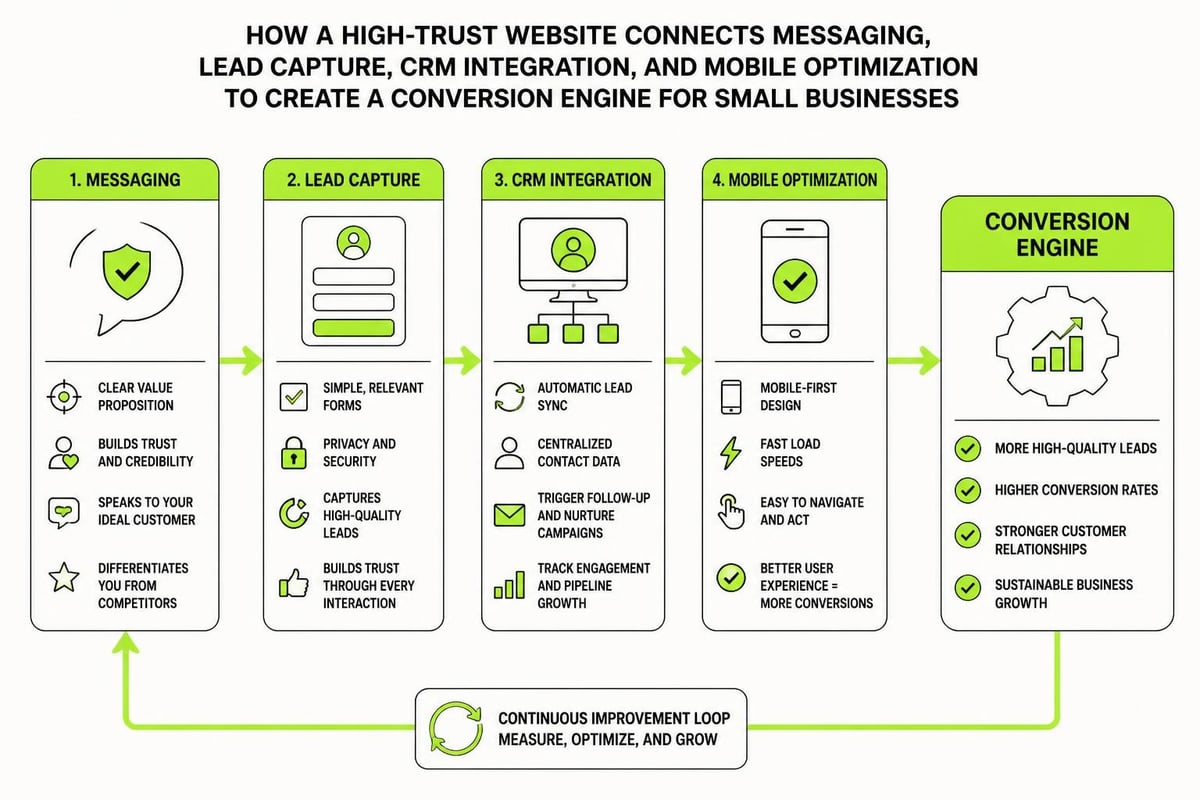
Your website isn't a brochure. It's the foundation of your entire marketing system. A strong digital agency for small business builds sites that:
- Convert visitors through clear messaging and strategic design
- Capture leads with relevant opt-ins and forms
- Integrate with your CRM so no lead falls through cracks
- Load fast and work perfectly on mobile devices
According to Pew Research Center’s mobile usage data, the majority of web traffic now comes from mobile devices. Your site needs to perform flawlessly on every screen size. Digital marketing website design that considers both aesthetics and conversion mechanics delivers better long-term results.
CRM and Automation That Protects Revenue
Every lead costs money. Losing them to disorganization or slow follow-up is expensive. The right CRM setup ensures:
- Every inquiry gets captured and tracked
- Follow-up happens automatically and consistently
- Sales teams know exactly where each deal stands
- Marketing can nurture leads who aren't ready to buy yet
This infrastructure isn't sexy, but it's the difference between chaotic growth and predictable scaling. Many small businesses resist CRM implementation because it feels complicated. A good agency makes it simple and tailored to how you actually work.
Data-Driven Marketing Campaigns
The days of "spray and pray" marketing are over. Modern campaigns run on data. Your digital agency for small business should:
Track everything from first click to closed deal. Without attribution, you're guessing which channels work. Test systematically with controlled experiments that isolate variables. Optimize continuously based on real performance, not hunches. Report transparently with dashboards you can actually understand.
HubSpot’s marketing statistics show that data-driven organizations are 23 times more likely to acquire customers. The right systems make data accessible and actionable.
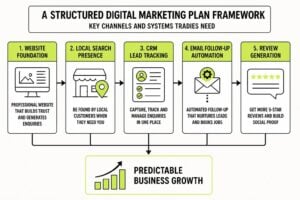
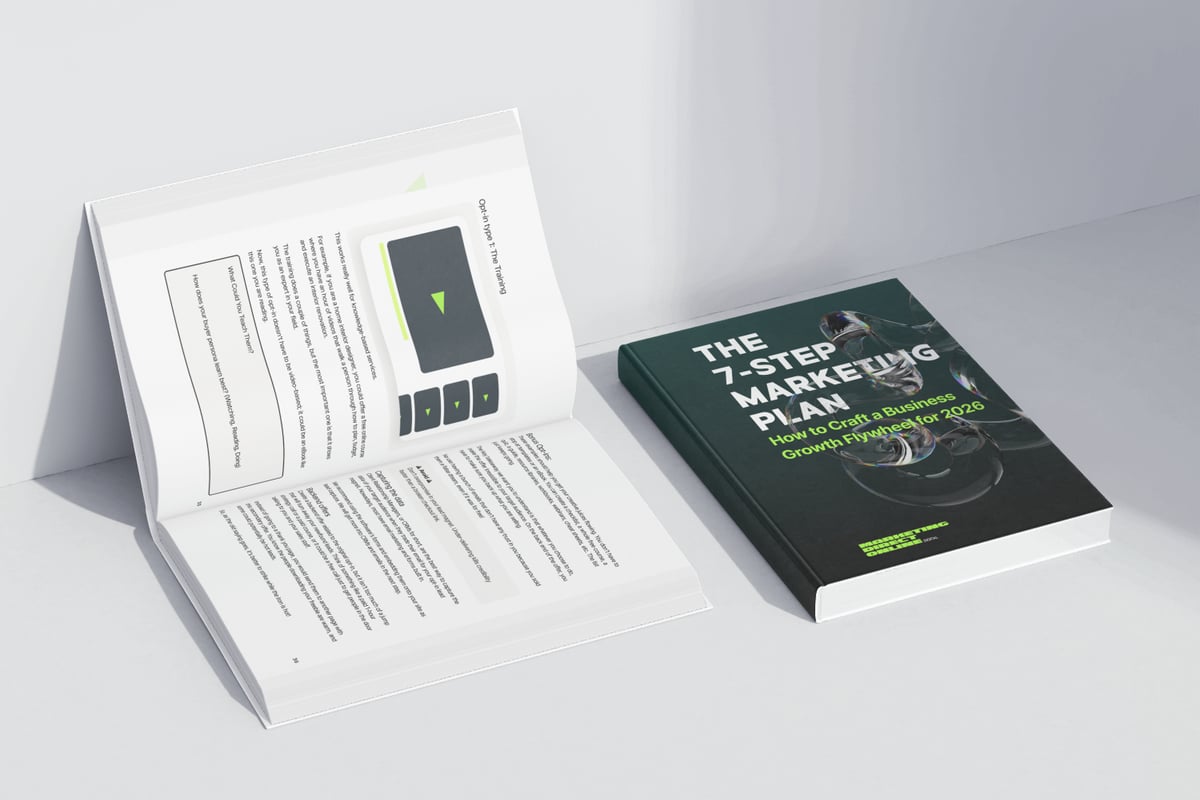
A practical approach to building repeatable marketing is following a clear framework. For businesses ready to build their own system, a structured 7-Step Marketing Plan provides the roadmap: setting goals, defining your ideal buyer, choosing the right platforms, creating opt-in offers, building CRM infrastructure, delivering excellent experiences, and generating referrals. Each step feeds into the next, creating momentum that compounds.
The SEO and Content Foundation
Visibility matters. But not the vanity metrics kind.
SEO That Brings the Right Traffic
Good SEO for small businesses focuses on commercial intent keywords. You want people searching for solutions, not just information. A competent agency will:
- Research keywords your buyers actually use
- Optimize your site structure for search engines and humans
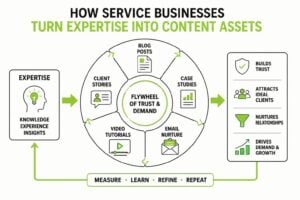
- Build content that answers real questions and drives conversions
- Earn quality backlinks through valuable content and relationships
Search Engine Journal’s SEO guide provides comprehensive guidance on modern search optimization tactics. The fundamentals remain constant even as algorithms evolve. For small businesses, understanding digital presence as more than just showing up online helps frame SEO as part of a broader strategy.
Content That Converts
Content marketing for small businesses should prioritize quality over volume. One excellent piece that drives leads beats ten mediocre posts that get ignored. Focus on:
- Educational content that solves specific problems your prospects face
- Case studies that demonstrate results with real clients
- Process explanations that build trust and reduce objections
- Comparison guides that help buyers make informed decisions
The intersection of content marketing and digital marketing creates opportunities to both attract and convert prospects through valuable information.
What to Expect in Year One
Realistic expectations prevent frustration. Here's what good looks like.
Months 1-3: Foundation
- Discovery and strategy to understand your business and market
- Website launch or significant improvements to existing site
- CRM implementation with basic automation in place
- Initial campaigns testing channels and messages
- Baseline metrics established for future comparison
Months 4-6: Optimization
- Campaign refinement based on early data
- Content production ramping up
- Lead nurture sequences built and deployed
- Systems integration smoothing out
- First meaningful ROI appearing
Months 7-12: Scaling
By this point, you should see:
- Predictable lead flow from multiple channels
- Clear ROI on marketing spend
- Refined messaging that resonates with your market
- Automated systems handling routine marketing tasks
- Scalable processes ready for increased investment
| Timeline | Focus Area | Key Deliverables | Expected Outcomes |
|---|---|---|---|
| Months 1-3 | Foundation | Strategy, website, CRM, initial campaigns | Systems in place, baseline data |
| Months 4-6 | Optimization | Campaign refinement, content, automation | Improving metrics, early ROI |
| Months 7-12 | Scaling | Advanced automation, multi-channel campaigns | Predictable demand, clear ROI |
Common Mistakes When Hiring a Digital Agency for Small Business
Learn from others' expensive lessons.
Choosing Based on Price Alone
The cheapest option usually costs more in the long run. You pay for expertise, systems, and results. An agency charging premium rates but delivering measurable growth will outperform a budget option that delivers mediocre work every time.
Expecting Instant Results
Digital marketing compounds. The first month rarely delivers spectacular results. Good agencies set realistic timelines and explain why certain tactics take time to mature.
Not Defining Success Metrics
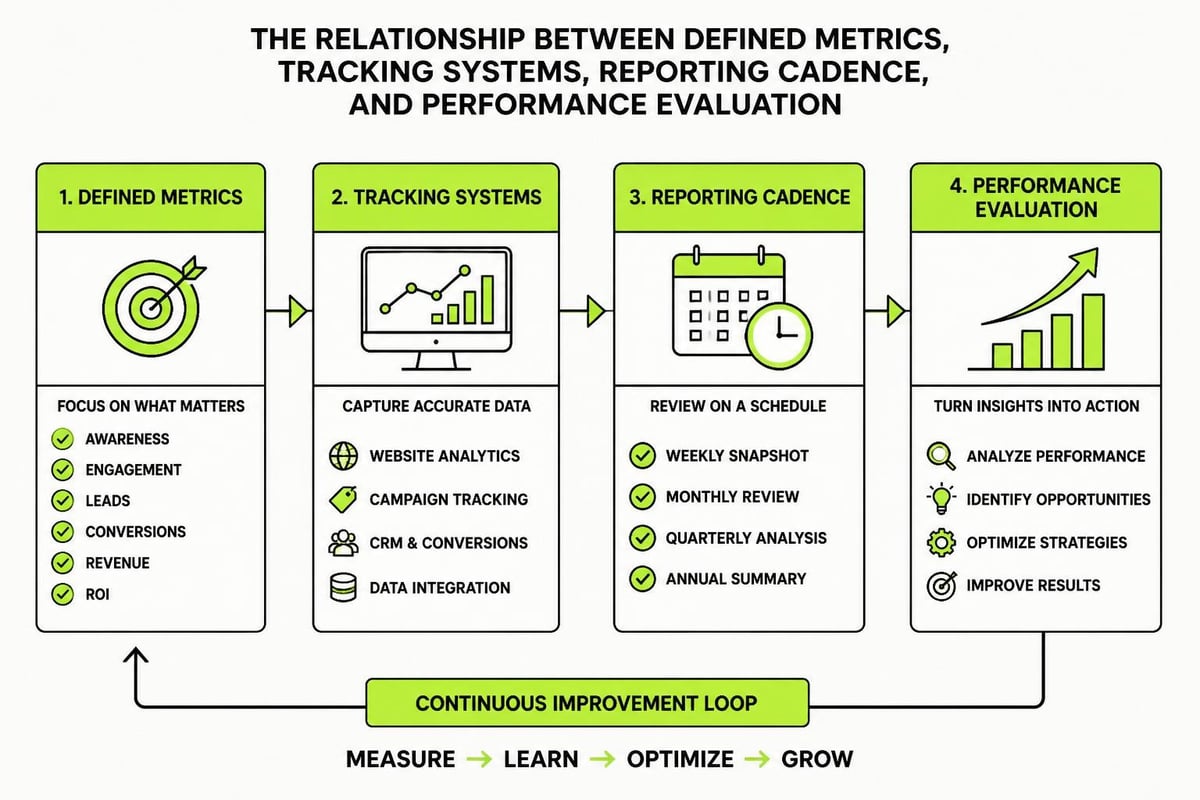
If you don't know what success looks like, you can't evaluate performance. Before signing anything, agree on:
- What metrics matter most
- How they'll be tracked and reported
- What counts as success at 3, 6, and 12 months
The Social Media Examiner’s industry report highlights that businesses with defined goals and metrics consistently outperform those without clear measurement frameworks.
Micromanaging the Process
You hired experts for a reason. Trust the process while holding them accountable to results. There's a difference between staying informed and dictating tactics.
Ignoring the Relationship
Marketing partnerships work best when both sides communicate openly. Share business challenges, competitive threats, and growth goals. The more your agency understands your business, the better they'll serve you.
In-House vs Agency: Making the Right Call
Some businesses wonder if they should hire internally instead. Here's the honest breakdown.
An in-house marketer makes sense when:
- You have enough work to keep someone busy full-time
- Your industry requires deep, specialized knowledge
- You value control over speed to market
- You can afford salary, benefits, and tool costs
A digital agency for small business works better when:
- You need multiple specialties (design, development, ads, SEO, copywriting)
- You want proven systems without trial-and-error learning
- You prefer predictable monthly costs over variable hiring
- You need to scale marketing up and down with business cycles
Most small businesses get better value from agency partnerships. You access senior-level talent across multiple disciplines for less than one full-time hire. Looking at small business digital marketing services reveals the breadth of skills needed to run effective modern marketing.
Questions to Ask Before Signing
Final diligence matters. Get clear answers to these:
- What's included in the monthly retainer? No surprises.
- How often will we communicate? Weekly, monthly, as needed?
- Who owns the work product? Your website, content, and campaign assets should belong to you.
- What's the contract term? Month-to-month, six months, annual?
- What happens if we part ways? Clean transition processes protect both parties.
- Can you share references? Talk to current or past clients in similar situations.
The quality of these answers tells you how the relationship will actually function.
Moving Forward
Choosing a digital agency for small business comes down to fit, capability, and trust. The right partner removes chaos, builds systems that work, and creates predictable growth. The wrong one burns budget and wastes time.
Do your diligence. Ask hard questions. Look for agencies that talk about infrastructure and systems, not just services and deliverables. Focus on partnerships where both sides win when your business grows. For additional context on how branding and digital marketing work together to create market positioning, explore how messaging and systems combine to drive growth.
The best time to start was six months ago. The second best time is now. Every month you delay is a month of lost leads and missed opportunities.
Finding the right digital agency for small business shouldn't feel like guesswork. You need systems that remove chaos, protect leads, and create growth that compounds reliably. MDO Digital builds exactly that. High-trust websites, CRM infrastructure, and data-driven marketing designed for service businesses ready to scale with clarity. If you're done with scattered tactics and ready for structured growth, reach out to MDO Digital and let's build something that lasts.