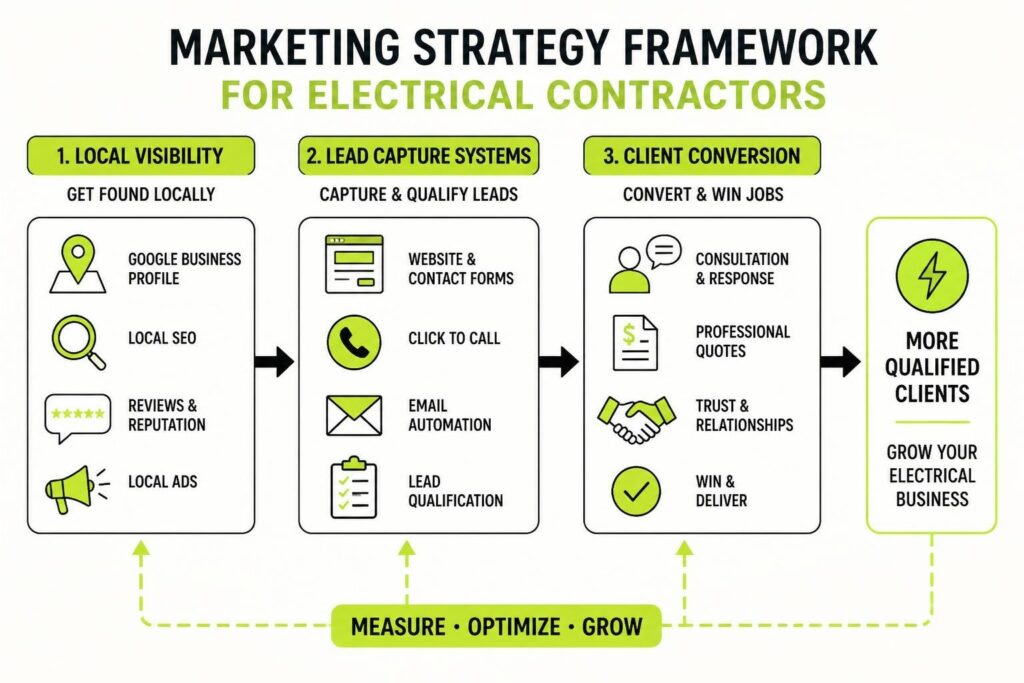
Most electricians learned their trade through years of hands-on work, not marketing textbooks. You know how to wire a house, troubleshoot panels, and keep people safe. But when it comes to filling your calendar with quality jobs, things get murky fast. The good news? Marketing for electricians doesn't require a degree. It requires a system that works while you're on the tools.
Why Marketing for Electricians Is Different
You're not selling widgets. You're selling trust, expertise, and safety in a trade where mistakes can be dangerous. People don't browse electricians for fun. They search when something's broken, when they're building, or when another sparkie let them down.
This creates a unique marketing challenge. Your potential clients are often stressed, time-poor, and wary of cowboys. They want proof you know what you're doing, they want you nearby, and they want it sorted today.
Traditional marketing advice misses this context. It treats electricians like every other business, pushing generic social media tactics or expensive branding exercises that don't move the needle. What actually works is building systems that capture intent at the right moment and convert it into booked jobs.
The Three Pillars That Matter
Effective marketing for electricians rests on three fundamentals:
- Local visibility when people search for electrical services
- Trust signals that prove you're legitimate and capable
- Lead capture systems that turn interest into appointments
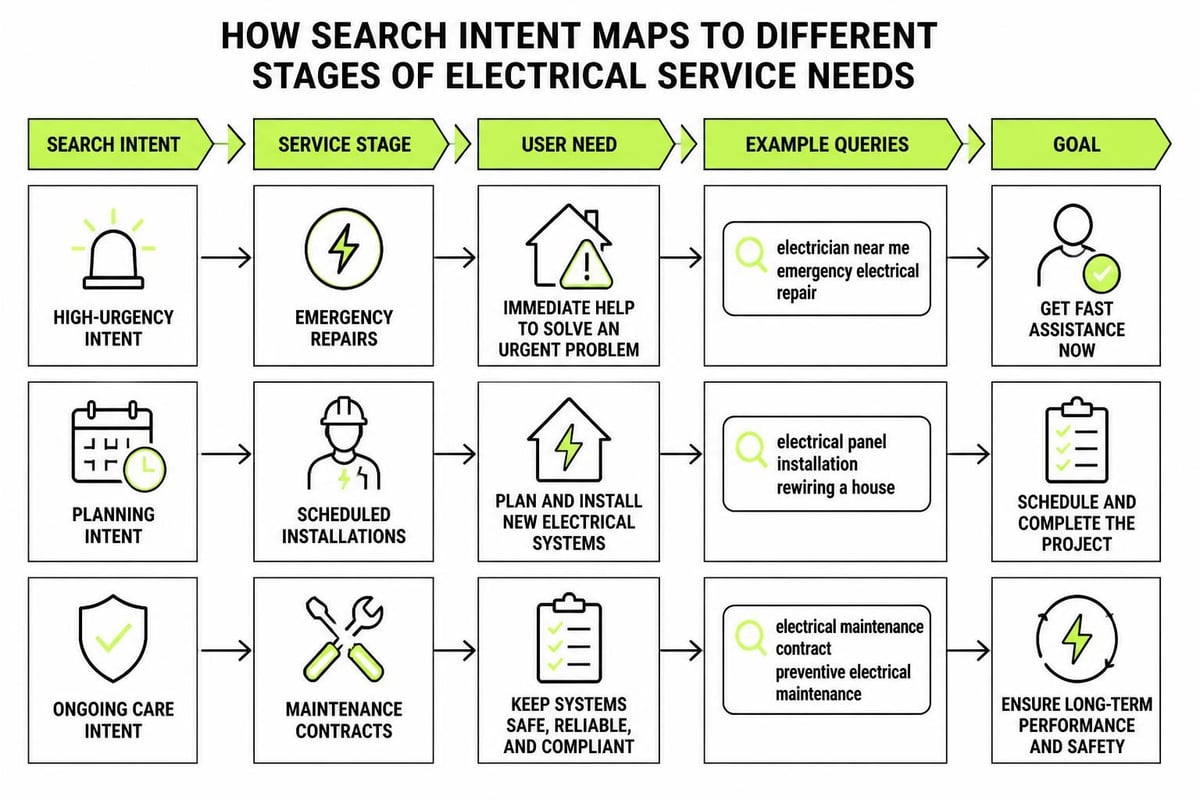
Everything else is noise. You don't need a viral TikTok. You need to show up when someone types "emergency electrician near me" at 9pm on a Tuesday.
Building Your Local Presence
Google Business Profile optimization is the foundation. Not optional. Not a nice-to-have. It's the single most cost-effective marketing channel for electricians operating in defined service areas.
Your profile needs complete information: accurate service areas, current phone number, business hours, and high-quality photos of actual jobs. Not stock images. Real work from real sites.
Getting Reviews That Convert
Reviews aren't just social proof. They're ranking signals. Google rewards businesses with consistent, recent reviews. But more importantly, potential clients read them to assess whether you're the right fit.
The review generation process:
- Finish the job properly
- Ask satisfied clients face-to-face (same day, before you leave)
- Send a follow-up text with a direct review link
- Make it stupidly easy (one click, no login required)
- Respond to every review, good or bad
Don't overthink this. Most electricians never ask. Simply asking puts you ahead. The key is timing and removing friction. Ask when the client's happy, make the process simple, and you'll get reviews.
Bad reviews happen. How you respond matters more than the rating itself. Stay professional, acknowledge the concern, and offer to make it right. Future clients are watching how you handle problems.
Your Website Needs to Work
A website for an electrician has one job: turn visitors into phone calls or form submissions. It's not a portfolio. It's not a blog. It's a conversion tool.
| Essential Element | Why It Matters | Common Mistake |
|---|---|---|
| Mobile-first design | 70% of searches happen on phones | Desktop-focused layouts that break on mobile |
| Click-to-call button | Removes friction for immediate contact | Buried phone number in footer only |
| Service area clarity | Prevents wasted leads from outside zones | Vague "Greater Sydney" descriptions |
| Fast load speed | Google ranks faster sites higher | Heavy images that take 8+ seconds to load |
| Clear service list | Helps both Google and humans understand what you do | Generic "electrical services" with no detail |
Your homepage should answer three questions in under five seconds: What do you do? Where do you do it? How do I contact you?
Everything else is secondary. Testimonials, certifications, and project photos support the decision, but they don't drive it. Clarity drives decisions.
Service Pages That Rank
Each electrical service you offer deserves its own page. Don't lump everything under "Services". Create dedicated pages for:
- Emergency electrical repairs
- Smoke alarm installation and testing
- Level 2 electrical work
- Home rewiring
- Solar panel installation
- Safety switch upgrades
This approach serves two masters: Google and humans. Google can understand exactly what you offer and rank you for specific searches. Humans can find the exact service they need without hunting through generic content.
Write these pages for local searches. Instead of "Smoke Alarm Installation", use "Smoke Alarm Installation [Your Suburb]". Natural language, not keyword stuffing, but location-aware.
Lead Capture and Follow-up Systems
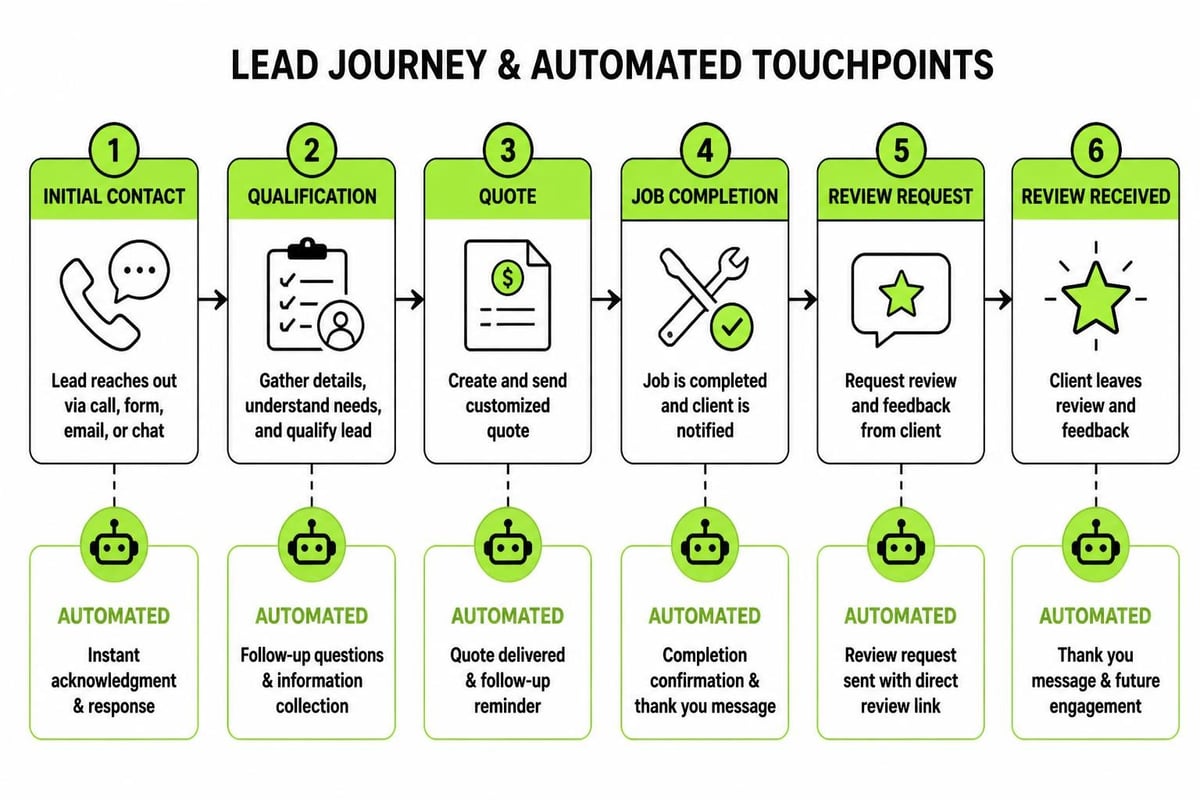
Here's where most electricians leak money. They get traffic. They get inquiries. Then they lose leads because there's no system to capture, qualify, and follow up.
A simple CRM (customer relationship management system) changes this. You don't need enterprise software. You need something that:
- Captures every inquiry (phone, email, website form)
- Tracks the status of each lead
- Reminds you to follow up
- Stores client history for repeat work
The follow-up sequence matters. Someone who submits a form at 10pm doesn't want to wait until tomorrow afternoon. They've probably contacted three other electricians. First response wins.
Set up automated responses that confirm receipt and set expectations. "Thanks for your inquiry. We'll call you within 2 hours during business hours, or first thing tomorrow morning if after 6pm." Then actually do it.
For leads that aren't ready to book immediately, nurture them. Maybe they're planning a renovation in three months. Maybe they're getting quotes. A simple email sequence that provides value (electrical safety tips, what to look for in quotes, seasonal maintenance reminders) keeps you front of mind.
Building this kind of structured marketing system removes the chaos that comes from managing leads in your head or across random text messages.
If you're ready to implement a complete lead generation and nurture approach, the 7-Step Marketing Plan walks you through the exact framework: from defining your ideal client to building automated sequences that turn cold leads into booked jobs.

Paid Advertising That Actually Works
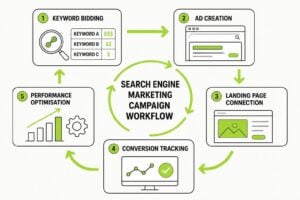
Organic visibility takes time. Google Ads and Facebook Ads can fill your calendar while you build your SEO foundation. But only if you approach them correctly.
For electricians, Google Local Service Ads often outperform standard search ads. You pay per lead, not per click. Google vets your business. You show up at the very top with a "Google Guaranteed" badge. The trust factor is massive.
Standard Google Search Ads work too, but you need tight targeting. Don't bid on generic terms like "electrician" nationally. Focus on:
- Your specific service areas (suburbs, not entire cities)
- Service-specific terms (emergency electrician, switchboard upgrade)
- High-intent modifiers (near me, today, urgent)
Your ad copy should match the search intent. Someone searching "emergency electrician Parramatta" doesn't want to read about your 20 years of experience. They want to know you're available now and can fix their problem.
Facebook Ads for Electricians
Facebook works differently. People aren't actively searching for electricians. You're interrupting their scroll. This means Facebook works better for:
- Building awareness in new service areas
- Promoting specific offers (free safety checks, seasonal specials)
- Retargeting website visitors who didn't convert
The creative matters more on Facebook. Video of completed jobs, before-and-after transformations, and client testimonials outperform stock images or text-heavy graphics.
Budget allocation depends on your growth goals, but a common split for established electricians running both channels:
| Channel | Monthly Budget | Goal | Expected Outcome |
|---|---|---|---|
| Google Local Service Ads | $800-1200 | Immediate leads | 15-25 qualified leads |
| Google Search Ads | $600-1000 | High-intent traffic | 10-20 quote requests |
| Facebook Ads | $400-600 | Awareness + retargeting | 5-10 leads, broader reach |
Track everything. Cost per lead, lead-to-quote ratio, quote-to-job conversion. What gets measured gets managed. If your cost per acquisition is higher than your profit per job, the math doesn't work.
Content Marketing Without the Fluff
You don't need to become a blogger. But strategic content helps in two ways: it feeds your SEO, and it answers questions that build trust.
Focus on problems your clients actually have:
- "How much does it cost to rewire a house in [your city]?"
- "Do I really need to upgrade my switchboard?"
- "What's the difference between a safety switch and a circuit breaker?"
- "How often should smoke alarms be tested?"
These aren't creative writing exercises. They're search-optimized answers that position you as helpful and knowledgeable. When someone researches their problem and finds your clear, jargon-free explanation, they're more likely to call you.
Keep articles practical. Use bullet points, short paragraphs, and real numbers. People skim. Make it easy to extract value.
Understanding how digital presence influences buying decisions helps you create content that actually serves your marketing goals rather than just filling space.
Measuring What Matters
Vanity metrics are everywhere. Website visits, social media followers, page likes. They feel good but they don't pay bills.
Track metrics tied to revenue:
- Phone calls from marketing sources (use call tracking numbers)
- Form submissions and their source (Google Analytics or your CRM)
- Quote requests to won jobs ratio
- Cost per acquisition by channel
- Customer lifetime value (including repeat work and referrals)
Set up a simple dashboard. Monthly snapshots are fine. You want to spot trends, not obsess over daily fluctuations.
If your Google Ads are generating leads at $45 each and your average job profit is $400, you've got a 9x return. That's a channel you double down on. If Facebook is costing $120 per lead and half don't even respond to quotes, you cut it or fix the targeting.
Referrals and Reputation
Word of mouth still drives electrical work. But it's not passive anymore. You can systematize referrals.
After completing a job well, ask for two things:
- A Google review (we covered this earlier)
- Referrals to friends or family planning similar work
Make it specific. "Do you know anyone who might need smoke alarms checked before the rental inspection deadline?" works better than "Let us know if you hear of anyone needing an electrician."
Consider referral incentives. A $50 discount on their next service for every successful referral. It's cheaper than paid advertising and brings in pre-qualified leads with built-in trust.
Partnership Marketing
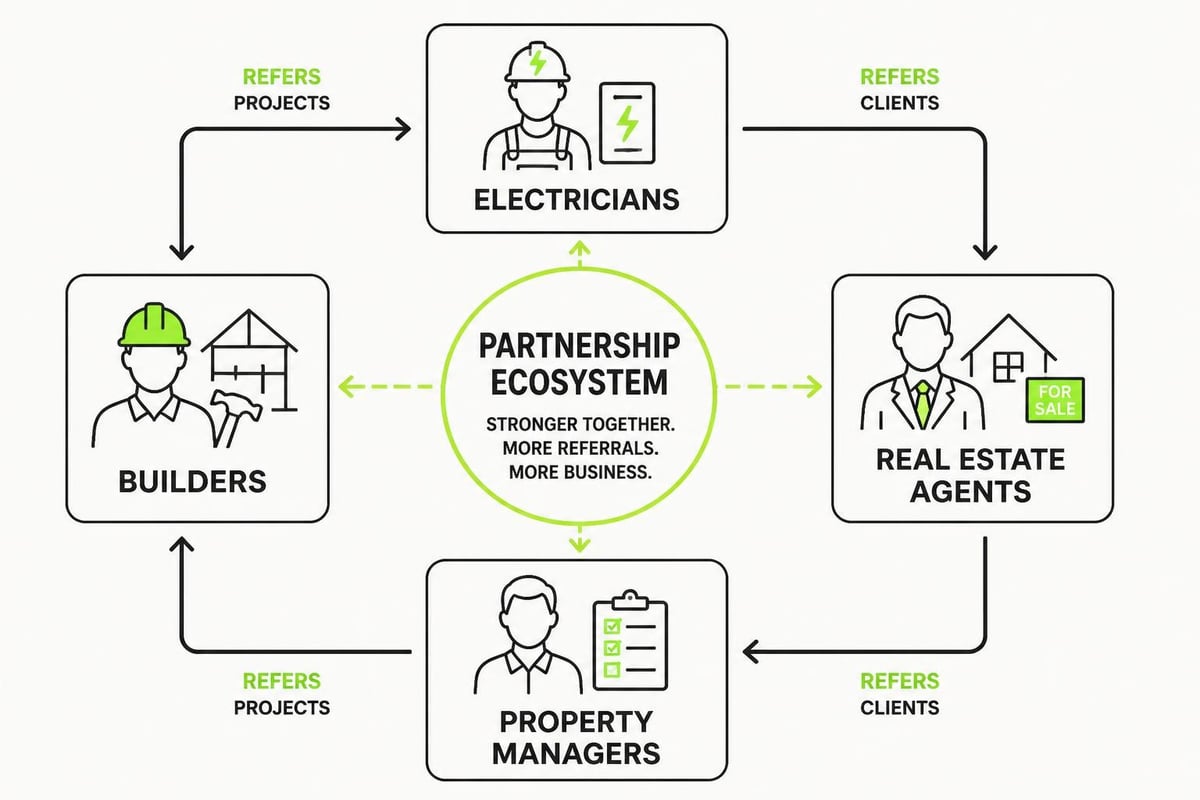
Build relationships with complementary trades and businesses:
- Builders and renovators who need reliable electrical contractors
- Real estate agents managing properties
- Solar installers who don't handle the electrical connection work
- Property managers overseeing maintenance
These partnerships create consistent work pipelines. You're not cold-calling or competing on price. You're the trusted contractor they recommend.
Common Marketing Mistakes to Avoid
Even with the right strategies, execution errors kill results. Here are the traps:
Inconsistent NAP information. Your business name, address, and phone number must match exactly across every platform. Google, Facebook, your website, directories, everywhere. Inconsistencies confuse search engines and hurt rankings.
Ignoring mobile users. If your site doesn't work perfectly on phones, you're losing half your potential clients. Test it yourself. Click every button. Fill out forms. Make a call. If it's clunky, fix it.
No call tracking. If you can't tell which marketing channel drove a phone call, you're flying blind. Use different tracking numbers for different sources or implement call tracking software.
Set and forget campaigns. Markets shift. Competitors adjust. What worked last quarter might not work now. Review performance monthly and adjust.
Competing on price alone. Being the cheapest electrician is a race to the bottom. Compete on reliability, quality, and trust. Price-focused marketing attracts price-focused clients who churn at the first cheaper option.
Integrating Your Marketing Stack
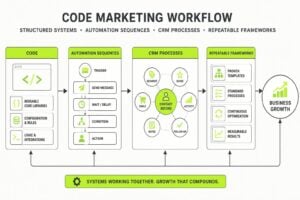
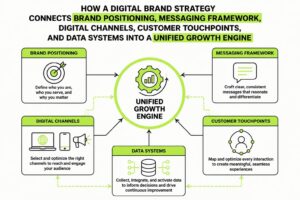
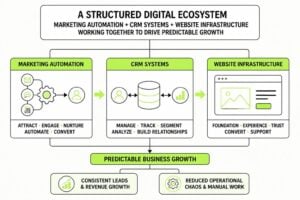
Marketing for electricians works best when everything connects. Your website captures leads, your CRM tracks them, your email system nurtures them, and your ads drive traffic to start the cycle.
This integration prevents leads from falling through cracks. It creates a marketing system rather than a collection of random tactics.
Think of it as infrastructure, not campaigns. You're building something that runs with or without you actively managing it. Automation handles follow-ups. Systems capture every inquiry. Reports tell you what's working.
Proper marketing and business development alignment ensures your growth scales without creating chaos.
What To Do First
If you're starting from scratch, prioritize in this order:
- Claim and optimize your Google Business Profile
- Get your first 10 Google reviews from recent happy clients
- Build or fix your mobile-friendly website with clear calls to action
- Set up basic lead capture (form + automated response)
- Start Google Local Service Ads in your service area
That foundation delivers results within weeks. Everything else builds from there.
If you've got the basics covered but growth has plateaued, focus on:
- Conversion rate optimization (more leads from existing traffic)
- CRM and follow-up improvement (better qualification and nurture)
- Expanded content strategy (ranking for more service-specific terms)
- Partnership development (referral channels that compound)
The Long Game
Marketing for electricians isn't about viral moments or clever campaigns. It's about being findable when someone needs you, being trustworthy when they're evaluating you, and being memorable when they need you again or refer someone else.
Consistent digital branding compounds over time. Every review, every service page, every satisfied client adds to your market position. The electrician who maintains steady marketing effort for 12 months will lap competitors who go hard for 6 weeks then disappear.
Most importantly, track what works for your specific business. Generic advice gets you started, but your numbers tell you where to focus. If emergency call-outs drive your revenue, optimize for that. If commercial solar installations are your highest margin work, build your marketing around attracting those clients.
Your competition is probably ignoring half of this. Many electricians still rely entirely on word of mouth or directories they signed up for years ago. Implementing structured marketing approaches creates an unfair advantage that's hard to reverse.
The trades attract people who like tangible work. Marketing feels abstract by comparison. But the electrician who treats marketing as a system, measures it like a job, and improves it over time, builds a business that doesn't depend on hope and luck.
Start small. Pick one area from this guide. Implement it properly. Measure the result. Then move to the next. Compound progress beats sporadic effort every time.
Marketing for electricians comes down to systems that work while you're on the tools: local visibility when people search, trust signals that convert interest into calls, and follow-up infrastructure that doesn't let leads slip away. MDO Digital helps service-based businesses like yours build exactly this kind of marketing infrastructure. We remove the chaos, protect your leads, and create structured growth that compounds over time.