Most small businesses treat branding as a logo and a colour palette. They spend a few hundred dollars on Fiverr, slap it on their website, and wonder why nothing changes. The truth is, branding for small business is the infrastructure that makes everything else work. It's the foundation that determines whether your marketing converts strangers into clients or just burns cash. Without it, you're building on sand.
Branding isn't fluff. It's the system that controls how people perceive your business, whether they trust you, and if they'll choose you over someone cheaper. It's what makes your CRM campaigns feel cohesive instead of scattered. It's the reason some businesses charge premium rates while others compete on price. And for service based businesses especially, branding is often the only thing standing between you and commoditisation.
What Branding for Small Business Actually Means
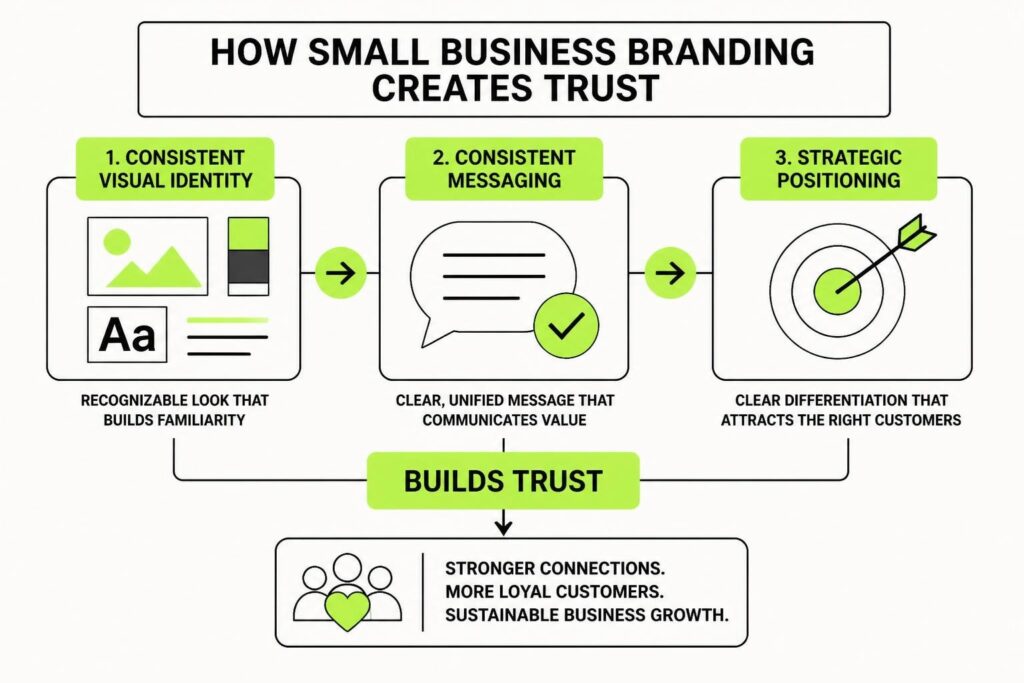
Branding is not your logo. It's not your website colours. It's the entire experience someone has when they interact with your business, from the first Google search to the invoice they receive. It includes your messaging, your positioning, your visual identity, your tone of voice, and the promises you make and keep.
For small businesses, effective branding answers three questions clearly:
- Who you serve (your ideal customer, not everyone)
- What problem you solve (the outcome they actually want)
- Why you're different (the specific way you deliver that outcome)
If your audience can't answer those questions after visiting your website or reading your content, your branding isn't working. Clarity is the competitive advantage. Most small businesses are vague because they're afraid of excluding people. But vague brands don't get remembered, and they don't get chosen.
The Difference Between Branding and Marketing
Marketing is the tactics you use to generate attention. Branding is what you do with that attention once you have it. A Facebook ad campaign is marketing. The page someone lands on, the words they read, the trust signals they see, that's branding. The evolution of marketing has blurred these lines, but the principle remains: marketing gets people to notice you, branding gets them to care.
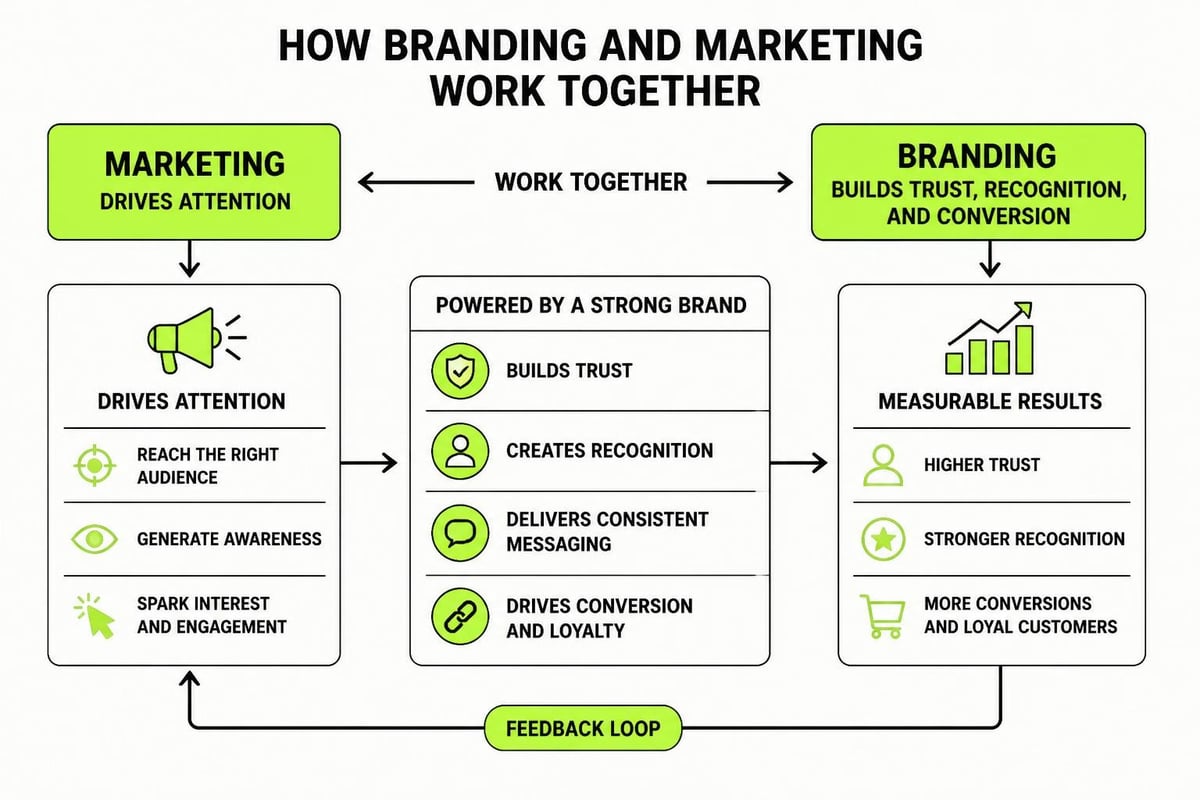
You can run brilliant ads, but if your branding is weak, people bounce. They don't understand what you do. They don't trust you enough to hand over their email or book a call. Branding is the conversion layer. It's what turns clicks into leads and leads into clients.
Why Most Small Businesses Get Branding Wrong
The most common mistake is thinking branding is a one-time project. You hire a designer, get a logo, maybe a brand guide, and then move on. The assets sit in a folder. Your team doesn't use them consistently. Your messaging drifts. Within six months, your brand looks and sounds completely different across platforms.
Another mistake is designing for yourself instead of your customer. You pick colours you like. You write copy that sounds clever to you. But branding for small business only works if it resonates with the people you're trying to reach. Your opinion doesn't matter. Your customer's perception does.
Then there's inconsistency. Your website says one thing. Your proposals say another. Your social media sounds like a different business altogether. This creates friction. People don't trust businesses that can't stay on message. Consistency builds recognition, and building strong client relationships depends on that recognition.
| Common Branding Mistake | Why It Fails | The Fix |
|---|---|---|
| Treating it as a one-time project | Brand drifts over time, becomes inconsistent | Build brand systems that guide every asset you create |
| Designing for yourself, not your customer | Messaging misses the mark, doesn't resonate | Start with customer research, not your personal preferences |
| Inconsistent application across channels | Creates confusion, erodes trust | Use templates, guidelines, and centralised asset libraries |
| Vague positioning that appeals to everyone | Generic brands don't get chosen | Niche down, speak directly to one specific audience |
Building Your Brand Foundation
Before you touch design software or write a single line of copy, you need to define your brand strategy. This is the unsexy work that most people skip. It's also the work that determines whether your branding actually drives results.
Start with positioning. This is how you occupy a specific place in your customer's mind. Positioning isn't what you think about your business. It's what your customer thinks when they hear your name. For service based businesses, strong positioning often comes from specialisation. You're not a marketing agency. You're a marketing systems agency for service businesses. You're not a designer. You're a brand designer for professional services firms.
Defining Your Brand Voice and Messaging
Your brand voice is how you sound across every piece of content. Is it formal or conversational? Technical or plain-spoken? Authoritative or peer-to-peer? For small businesses, authentic branding often means sounding like a real person, not a corporate brochure.
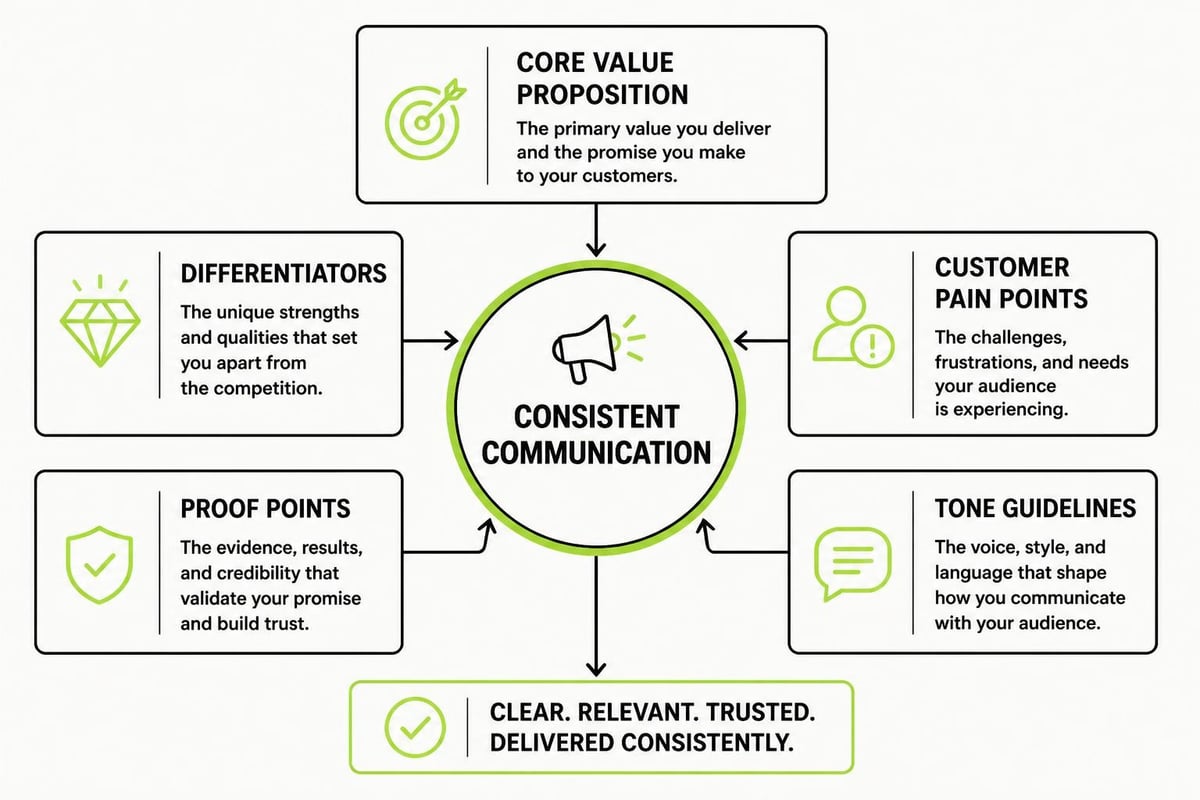
Write a messaging framework that includes:
- Your core value proposition (one sentence)
- Your key differentiators (three specific points)
- Your customer's main pain points (the problems you solve)
- Your proof points (case studies, metrics, credentials)
- Your tone of voice guidelines (with examples)
This framework becomes the reference for every email, every landing page, every social post. It ensures your branding for small business stays consistent even when multiple people are creating content.
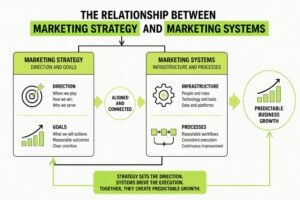
Your messaging should also reflect how branding and digital marketing work together to drive predictable demand. Branding sets the message. Digital marketing distributes it.
Visual Identity That Actually Works
Once your strategy is locked in, visual identity becomes easier. You're not picking colours because they look nice. You're choosing design elements that communicate your positioning and appeal to your specific audience.
Your visual identity includes:
- Logo and variations (primary, secondary, icon)
- Colour palette (primary, secondary, accent colours)
- Typography (headings, body text, special use)
- Imagery style (photography, illustrations, graphics)
- Layout principles (spacing, hierarchy, grid systems)
For small businesses on tight budgets, building a strong brand identity without large investment is absolutely possible. The key is consistency and discipline, not expensive design work. A simple, well-applied brand beats a complex, poorly-applied one every time.
Creating Brand Guidelines
Brand guidelines are the rulebook that keeps everything consistent. They don't need to be a 50-page PDF. A simple document that covers logo usage, colour codes, font choices, and tone of voice is enough. The goal is to make it easy for anyone on your team (or any contractor you hire) to create on-brand work without needing your approval every time.
Store your brand assets in a centralised location. Use tools like Google Drive, Dropbox, or a simple Notion database to keep everything accessible. Include file formats for different use cases: PNG for web, SVG for scalable graphics, PDF for print.
Applying Branding Across Your Business
Branding for small business only works when it's applied everywhere your customer interacts with you. That means your website, your proposals, your email signatures, your CRM campaigns, your social media, even your invoices.
Your website is the centrepiece. It should communicate your positioning within seconds. Visitors should know who you serve, what you do, and why they should care before they scroll. Use consistent visual elements. Apply your brand voice to every headline and every call to action. Make trust signals visible: testimonials, case studies, credentials.
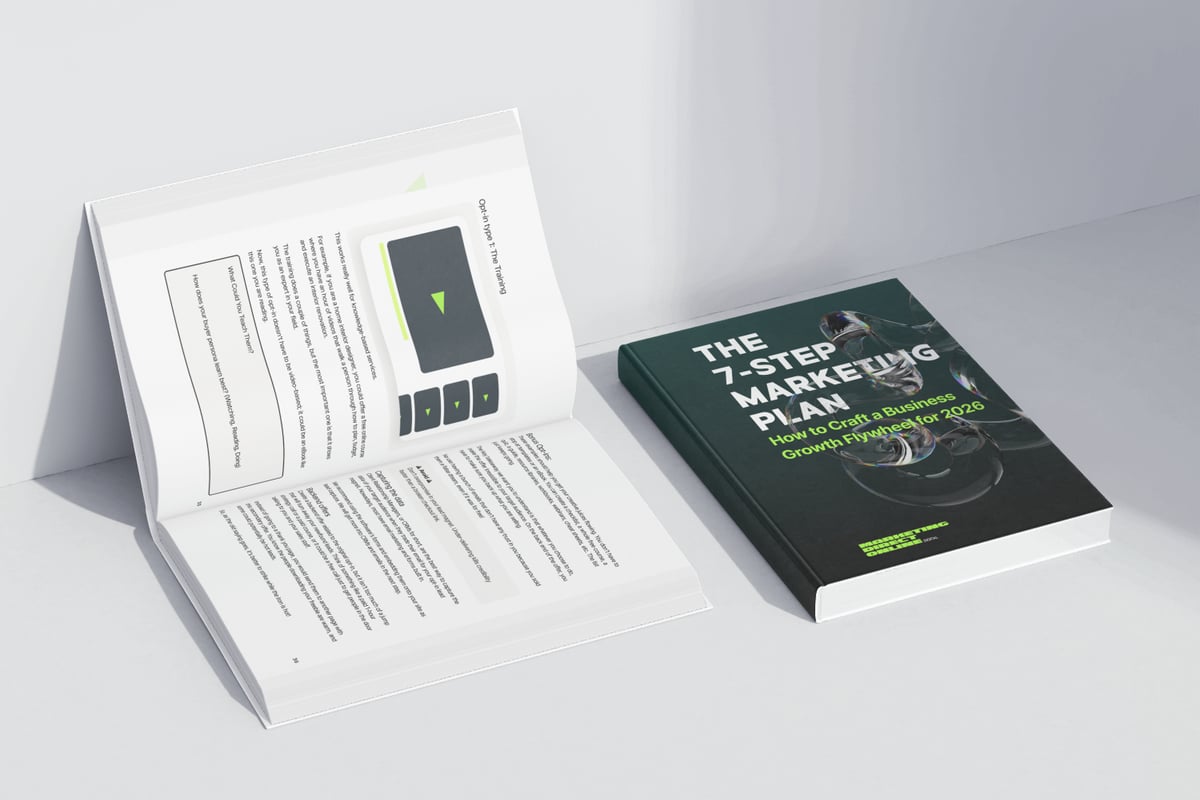
A practical system like the 7-Step Marketing Plan can help you structure how your branding flows through your entire marketing funnel, from awareness to conversion. Each step depends on consistent messaging and a clear brand identity to guide prospects toward becoming clients.
Your email marketing should reflect your brand too. Use branded templates. Write in your defined tone of voice. Every email, whether it's a newsletter or a proposal follow-up, should feel like it came from the same business. This builds trust and recognition over time.
Branding in Client Delivery
Your branding doesn't stop when someone becomes a client. How you onboard them, the documents you send, the way you communicate updates, it all reinforces (or undermines) your brand. Service based businesses especially need to think about the client experience as part of the brand.
Use branded templates for proposals, contracts, invoices, and reports. Create a client portal or welcome pack that feels cohesive. Even the language you use in project management tools should reflect your tone of voice. Small touches add up.
Measuring Brand Performance
Unlike direct response marketing, branding doesn't always deliver instant, trackable ROI. But that doesn't mean it's unmeasurable. You can track indicators that show whether your branding is working.
Monitor these metrics:
- Brand search volume: Are people searching for your business by name?
- Direct traffic: Are visitors coming straight to your site, not through ads?
- Conversion rates: Are more visitors turning into leads or clients?
- Customer lifetime value: Are clients staying longer and spending more?
- Referral rates: Are existing clients recommending you to others?
If your branding is strong, you'll see improvements in these areas over time. Your online branding should make your marketing more efficient, not just prettier. Better branding means lower acquisition costs and higher conversion rates.
| Metric | What It Tells You | How Branding Affects It |
|---|---|---|
| Brand search volume | People know your name and seek you out | Strong branding increases memorability and word-of-mouth |
| Direct traffic | Visitors bypass search and go straight to you | Trust and recognition drive direct visits |
| Conversion rate | How well your site turns visitors into leads | Clear messaging and trust signals improve conversions |
| Customer lifetime value | Client satisfaction and loyalty | Consistent brand experience increases retention |
| Referral rate | Willingness of clients to recommend you | Professional branding makes you easy to refer |
Common Branding Pitfalls to Avoid
One trap is chasing trends. Your branding should outlast the latest design fad. Trends change every six months. Your brand needs to last years. Choose timeless design principles over what's hot on Dribbble right now.
Another pitfall is over-complicating things. Small businesses don't need six logo variations and twelve brand colours. Simplicity scales better. A focused brand is easier to apply consistently and easier for your audience to remember.
Don't ignore feedback, but don't overreact to it either. If one person says they don't like your brand colours, that's not a crisis. If ten potential clients say they don't understand what you do, that's a problem. Electronic word-of-mouth and customer perception data matter far more than personal opinions.
Finally, don't launch branding and then forget about it. Your brand evolves as your business grows. Review it annually. Refine your messaging as you learn more about what resonates. Update visual elements when they start to feel dated. But make changes deliberately, not reactively.
Branding and Systems Thinking
For businesses focused on scale, branding needs to be systematic. It's not just about having a pretty logo. It's about building a framework that ensures every piece of content, every client interaction, every campaign reinforces the same message.
This is where marketing systems and branding intersect. Your CRM should reflect your brand voice in every automated email. Your lead magnets should use your visual identity. Your proposals should communicate your positioning clearly. When branding is treated as a system, not a creative project, it compounds over time.
Systems also protect your brand as you grow. When you hire new team members or work with contractors, they can follow your guidelines without diluting your message. Your brand becomes an asset that scales with you, not something that falls apart when you're not personally involved in every piece of content.
Integrating Branding with Your Tech Stack
Your branding should live in your tools, not just in a PDF guide. Upload brand colours and fonts to your email marketing platform. Create branded templates in your CRM. Use design tools like Canva or Figma to build reusable assets that anyone on your team can customise without breaking your visual identity.
The Better Business Bureau’s branding tips emphasise consistency and trust, and technology makes that consistency easier to maintain. When your brand is baked into your systems, you reduce the manual effort required to stay on-brand.
Scaling Branding as You Grow
As your business grows, your branding needs to grow with it. That doesn't mean changing everything. It means refining and expanding. You might need more sophisticated messaging for different customer segments. You might add service lines that require their own sub-brands. You might need to update your visual identity to match the professionalism of your growing client base.
According to The Hartford’s comprehensive guide on small business branding, effective branding influences customer perception and loyalty, which becomes even more critical as you scale. Loyal customers are your most valuable asset, and consistent branding keeps them engaged.
Revisit your brand strategy annually. Ask:
- Does our positioning still reflect who we serve and how we serve them?
- Is our messaging clear and differentiated in our current market?
- Does our visual identity match the quality of work we're delivering?
- Are we applying our brand consistently across all touchpoints?
- What feedback are we getting from clients and prospects about our brand?
Answer these honestly. Make adjustments based on data, not ego.
Branding as a Long-Term Investment
Branding for small business isn't a quick fix. It's infrastructure. The return comes over months and years, not days and weeks. But that return is real. Strong branding lowers your customer acquisition cost. It increases conversion rates. It allows you to charge premium rates. It makes your marketing more efficient because every campaign builds on the same foundation.
Think of branding as the operating system for your business. Marketing is the apps you run on top. If the OS is buggy, the apps crash. If your branding is weak, your marketing underperforms. But when the foundation is solid, everything runs better.
The businesses that win in 2026 and beyond are the ones that treat branding as a system, not a creative exercise. They build clarity into everything they do. They protect their message. They create trust at scale. And they understand that brand equity compounds over time.
Branding for small business is the system that turns attention into trust and trust into revenue. When done right, it creates clarity, builds recognition, and makes every marketing dollar work harder. If you're ready to build a brand that scales with your business, MDO Digital can help you design the infrastructure. We remove the chaos, protect your leads, and create structured growth that compounds over time.