You've probably read a dozen case studies this month. Impressive growth charts, glowing testimonials, and perfectly scripted success stories that make everything look effortless. But if you're running a service business, you know the truth is messier. Most case studies for digital marketing leave out the hard bits: the false starts, the budget constraints, the weeks where nothing seemed to work. What you actually need isn't another polished case study. You need to understand what makes them useful, how to spot the real insights, and how to build your own proof that creates trust with potential clients.
Why Case Studies for Digital Marketing Matter More Than You Think
Case studies do one job better than any other marketing asset. They turn abstract promises into concrete proof.
When someone lands on your website, they don't want to hear that you're "results-driven" or "client-focused." They want evidence. A well-constructed case study shows the journey from problem to solution, complete with the stumbles along the way. It answers the question every potential client is asking: "Will this work for someone like me?"
The best case studies for digital marketing don't just showcase wins. They reveal methodology. They show:
- What the actual starting point was (not some idealized version)
- Which strategies were tested first and why some failed
- How long results took and what happened in the meantime
- What resources were required in time, budget, and team effort
This level of transparency builds trust faster than any sales page ever could. When prospects see themselves in your case studies, the sale becomes easier because you've already answered their objections.
The Anatomy of a Case Study That Converts
Not all case studies pull their weight. Some read like thinly veiled advertisements. Others drown in jargon that nobody outside your industry understands.
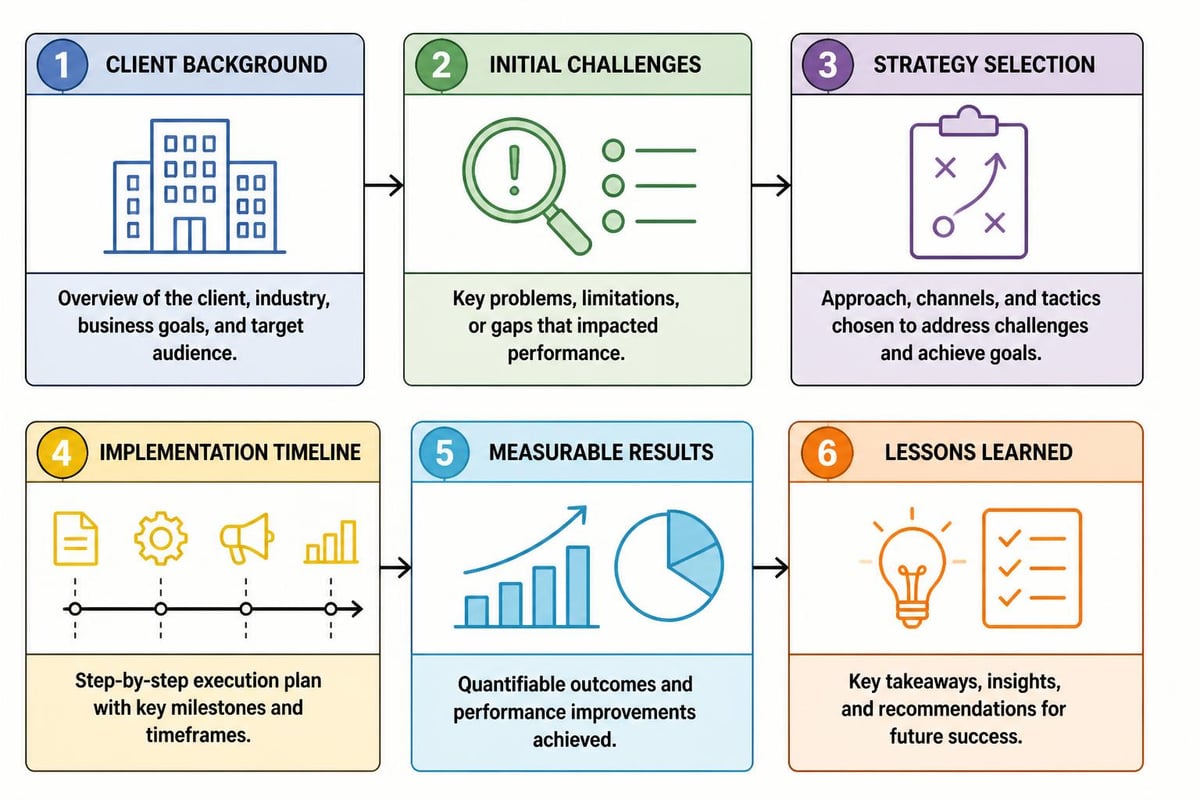
A converting case study follows a structure that feels familiar because it mirrors how we naturally tell stories. Here's what works:
| Element | Purpose | What to Include |
|---|---|---|
| Client Context | Establish relatability | Industry, size, specific challenges |
| Initial State | Set the baseline | Metrics before you started, pain points |
| Strategy Choice | Show thinking | Why this approach, what was rejected |
| Implementation | Reveal process | Timeline, resources, adjustments made |
| Results | Prove impact | Hard numbers, timeline to results |
| Client Voice | Add credibility | Direct quotes, unscripted feedback |
The implementation section matters most. This is where you separate yourself from competitors who only show before and after snapshots. When you explain why you chose specific tactics and how you adjusted when things didn't work perfectly, you demonstrate expertise that prospects can't find elsewhere.
Building Your Own Case Studies Without the Corporate Budget
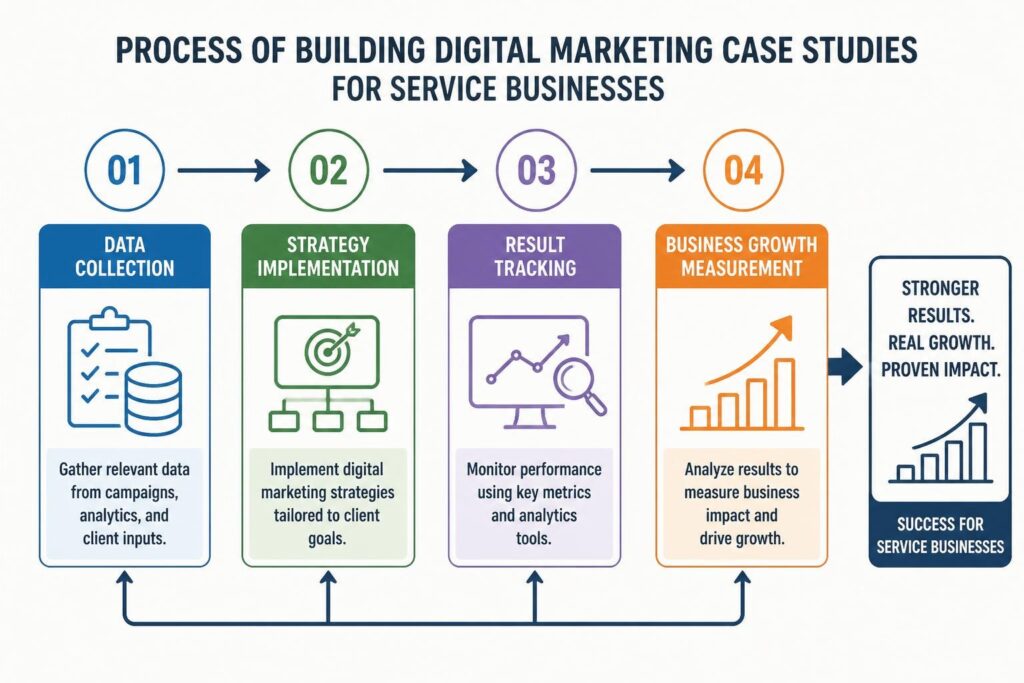
You don't need a videography team or a dedicated content manager to create case studies that work. You need a systematic approach to capturing results as they happen.
Start small. Pick one client project where you delivered measurable improvement. Even a 20% increase in qualified leads or a 15% boost in conversion rate is worth documenting.
The Data Collection System
Set this up before you start any campaign:
- Define 3-5 key metrics that matter to the client's business goals
- Capture baseline numbers with screenshots and dated reports
- Set calendar reminders to pull metrics monthly (not just at the end)
- Document strategy decisions in a shared doc as you make them
- Save client feedback from emails and meetings in one folder
Most agencies lose great case study material because they don't capture it in real time. Three months after a campaign, nobody remembers why you pivoted from Facebook ads to Google or what the client said when leads doubled in week six.
Your digital marketing efforts create data constantly. The question is whether you're set up to collect it systematically.
Writing the Story Without Sounding Like a Robot
Once you have the data, the writing should take a few hours, not days. Use this framework:
Opening paragraph: Describe the client's situation in language they would use themselves. Avoid marketing speak. If they said "we were getting leads but they were all tyre kickers," use that phrase.
Challenge section: List 2-4 specific problems. Use bullet points for clarity:
- Low conversion rate (1.2%) on a high-traffic website
- No system for following up with leads who weren't ready to buy
- Marketing budget spread across six different platforms with no tracking
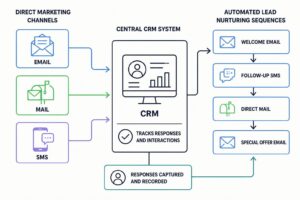
Strategy section: Explain your thinking. "We could have rebuilt the entire website, but the real issue was lead nurture. We focused on implementing a CRM workflow first because…"
This is where frameworks like the 7-Step Marketing Plan become valuable. When you work from a structured system, explaining your approach to clients (and in case studies) becomes straightforward because you're following proven steps rather than making it up as you go.
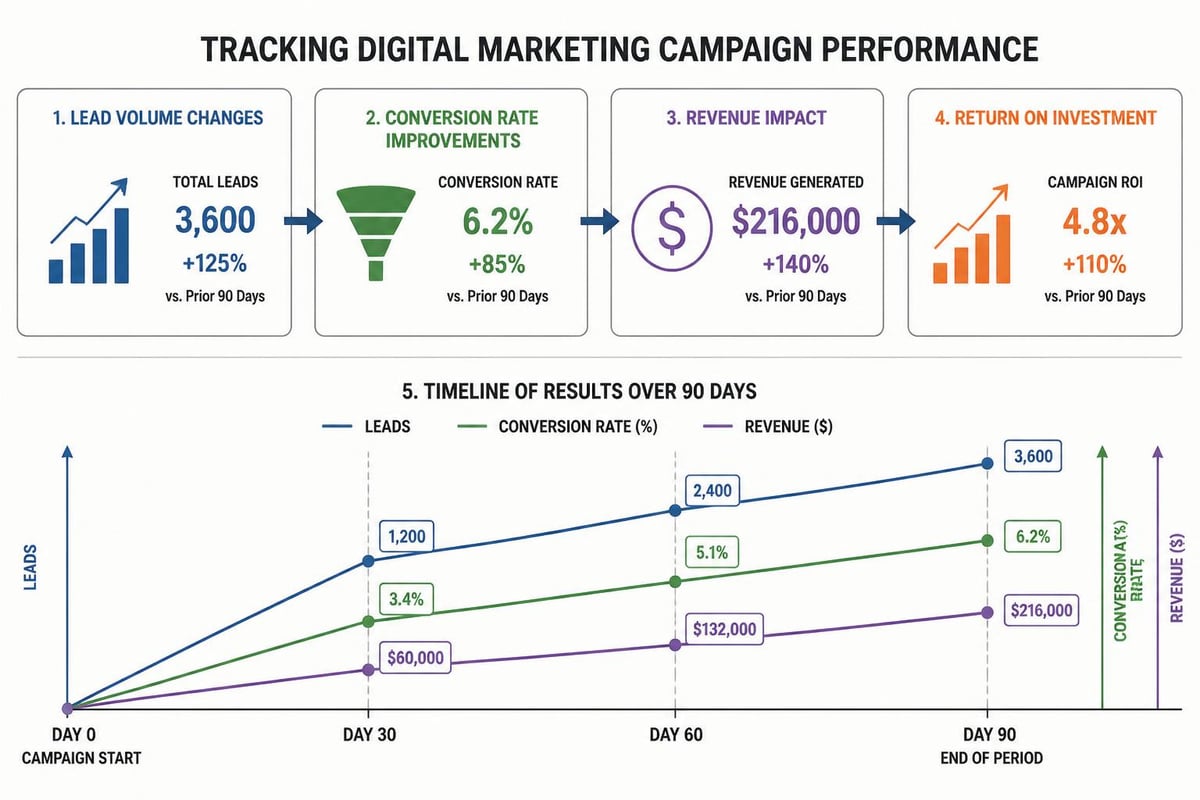
Results section: Lead with the number that matters most. Then provide context. "Qualified leads increased 147% in 90 days. That translated to 23 new client conversations, 11 proposals, and 6 signed contracts worth $180,000."
What Real Case Studies for Digital Marketing Reveal About Strategy
Reading case studies from agencies like Yoghurt Digital or Glass Digital shows patterns that matter more than individual tactics.
The best performing campaigns share three characteristics:
They solve for a specific audience segment. Vague targeting produces vague results. Case studies that show real growth typically started with a clear definition: "B2B service businesses with 10-50 employees who need to replace referral-only growth with predictable lead gen."
They layer multiple channels strategically. Single-channel campaigns work until they don't. Strong case studies show how SEO and content marketing feed paid advertising, which fills the CRM, which triggers automation sequences.
They run longer than you'd expect. Real transformation takes time. When you see case studies claiming 500% growth in 30 days, check the methodology. Sustainable results from Mosaic eMarketing and similar agencies typically show 90-180 day timelines.
Learning from Other Industries
The most valuable case studies often come from outside your immediate niche. A service business can learn from e-commerce conversion tactics. A B2B agency can adapt content strategies from B2C campaigns.
Digital marketing case studies that focus on small business growth reveal patterns that scale. Look for:
- Attribution models that actually track how multiple touchpoints contribute to a sale
- Testing frameworks that show which variables were isolated and tested
- Resource allocation that explains where time and budget went
One pattern shows up consistently across successful campaigns: they start with infrastructure. Before running ads or creating content, the foundation has to work. That means a website that converts, a CRM that captures and nurtures leads, and tracking that connects marketing activity to revenue.
Using Case Studies in Your Sales Process
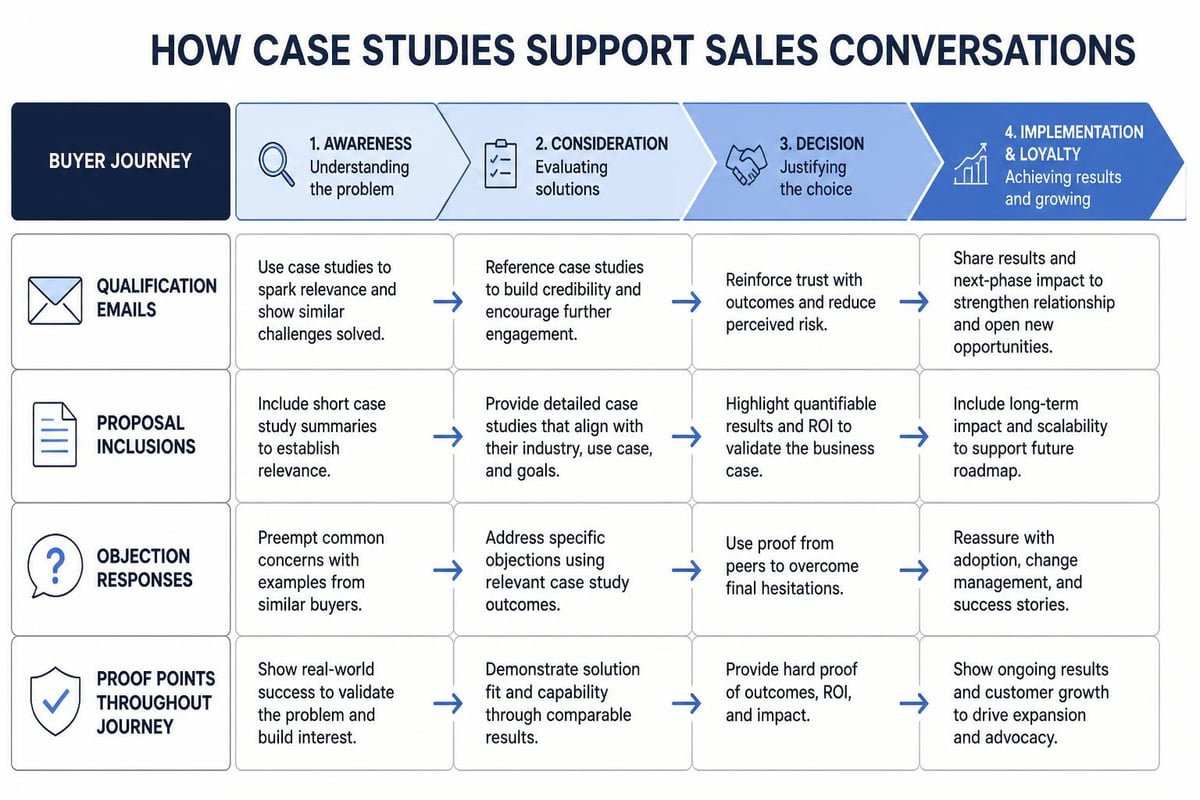
Case studies sitting in a blog archive don't convert prospects. You need to deploy them strategically.
The Qualification Stage
When a prospect books a discovery call, send them one relevant case study beforehand. Choose based on their industry, size, or specific challenge. Include a note: "This is similar to what you mentioned in your form. Worth a quick read before we talk."
This does two things. It pre-frames the conversation around results you've already delivered. And it filters out prospects who aren't serious enough to spend five minutes reading.
The Proposal Stage
Include a mini case study in every proposal. Not a full write-up. A single page showing:
- Similar client before/after
- Timeline and investment required
- Key results in numbers
- One client quote
This reminds the prospect that you've done this before while they're comparing you to other options.
The Objection Handling Stage
Objections around price, timeline, or "we tried this before and it didn't work" all have case study responses. Build a simple doc with 3-4 case studies organized by common objections:
| Objection | Case Study to Share | Key Point |
|---|---|---|
| "Too expensive" | ROI-focused case showing 8x return | Investment vs. cost framing |
| "Takes too long" | 90-day quick win case | Milestone-based results |
| "Tried before, failed" | Turnaround story | Different methodology |
| "Too risky" | Low-risk pilot case | Staged approach |
When you can respond to "this seems expensive" with "I understand. We had a similar conversation with [Client Name] last year. They were spending $3,000/month on ads that weren't converting. Here's what we did differently…" you change the dynamic.
Avoiding the Common Mistakes That Waste Good Case Studies
Most case studies fail because of predictable mistakes. Here's what kills credibility:
Vague metrics. "Increased engagement significantly" means nothing. "Increased email open rates from 18% to 34% and click-through rates from 2.1% to 5.8%" shows real measurement.
Missing timelines. Every result needs a timeframe. "Grew organic traffic 200%" is incomplete without "over six months starting from a site redesign in March."
No attribution. If you ran five tactics simultaneously, don't claim all results came from one. "While we implemented SEO, email nurture, and Google Ads together, the majority of qualified leads (68%) came through organic search."
Hiding the investment. Prospects know results require resources. When you say "we transformed their marketing" without mentioning the monthly retainer, budget, or time commitment, you lose trust.
Perfect success stories. Everything working exactly as planned sounds fabricated because it usually is. The most credible case studies mention what didn't work and how they pivoted.
How to Scale Case Study Production
Creating one case study takes effort. Creating a library of 10-15 requires a system.
Set a quarterly rhythm. Every 90 days, identify one completed client project worth documenting. Block two hours to:
- Pull all metrics and compare to baseline
- Interview the client for 20 minutes (record it)
- Draft the case study using the framework
- Get client approval on messaging
- Publish and add to your sales assets
That's four new case studies per year. In two years, you have eight. In three years, you have a library that covers most prospect scenarios.
The Client Interview Script
Most clients will happily participate if you make it easy. Send this before the call:
"I'd love to create a quick case study showing the results we've achieved together. I'll ask five questions, should take about 15-20 minutes. Here's what I'll ask:
- What was the main challenge before we started?
- Why did you choose to work with us?
- What surprised you about the process?
- What specific results have you seen?
- What would you tell someone considering similar work?"
Record the call. Their actual words are more convincing than anything you'll write. Use direct quotes liberally in the final case study.
The Approval Process That Doesn't Drag
Client approval kills momentum if you're not careful. Send the draft with a clear ask:
"Here's the case study draft. I need your approval by [date] to publish. I've highlighted the two sections where I'd like you to verify the numbers. Everything else is based on our conversation, but feel free to suggest changes."
Give them a deadline. Make it easy to say yes by showing exactly what you need them to check. Most clients will approve within 48 hours if you've done the work properly.
The Academic Side: What Research Shows About Case Study Effectiveness
While most case studies focus on practical results, research into influencer marketing strategies and digital campaign effectiveness shows why case studies work psychologically.
Social proof operates on multiple levels. We trust peer experiences more than brand messages. We believe specific stories more than general claims. We remember narratives better than statistics.
Case studies trigger all three mechanisms. When someone reads about a business like theirs solving a problem like theirs, mirror neurons fire. The prospect begins to see the path from their current state to the desired outcome.
This isn't manipulation. It's clear communication. You're showing, not telling. The best work your business has done becomes the evidence that attracts similar clients.
Repurposing Case Studies Across Channels
One case study can feed your marketing for months if you break it down properly.
From a single 1,500-word case study, create:
- Social media posts: Pull the key result as a stat post, the client quote as a testimonial post, the challenge as a "before" story
- Email sequence: Use the case study as proof in nurture emails to prospects in similar industries
- Sales deck slide: Condense to one visual slide showing problem, solution, result
- Video content: Have the client record a 2-minute testimonial covering the same points
- Blog content: Expand specific tactics into standalone how-to posts
- Podcast episode: Interview the client about their experience in depth
The work of creating one thorough case study multiplies when you think in terms of formats, not just a single piece of content.
Different prospects consume content differently. Some will read a 1,500-word case study. Others prefer a 60-second video. Many will see the Instagram post, then look for the full story. Give them multiple entry points to the same proof.
Case studies for digital marketing work because they replace claims with evidence. They show your thinking, your process, and your results in a format that prospects can relate to their own situation. Building a library of solid case studies takes time, but it's time that compounds. Every case study you create becomes a sales tool that works 24/7, answering objections and building trust while you sleep. If you're ready to build marketing systems that create their own proof over time, MDO Digital can help you design the infrastructure that turns campaigns into case studies worth sharing.