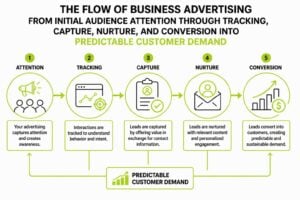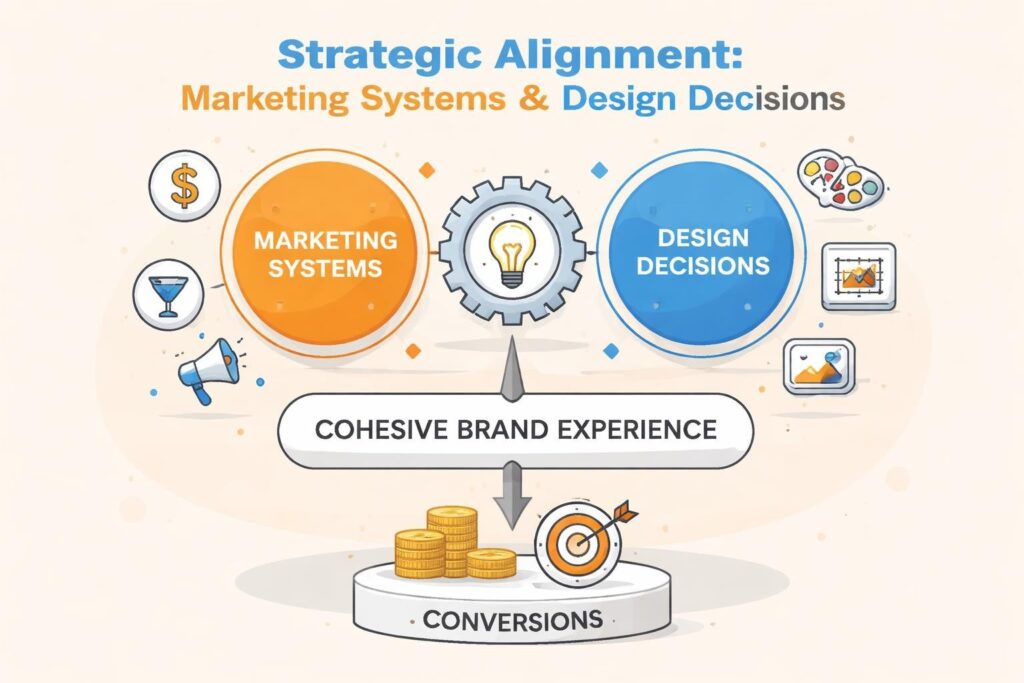
Most service businesses treat marketing and design as separate functions. Marketing focuses on reach and conversion. Design handles logos and websites. The split makes sense until you realise every design decision is a marketing decision, and every marketing asset needs design to land. When you separate them, you end up with campaigns that look disconnected from your brand and websites that don’t convert traffic. The businesses that scale with clarity understand that marketing and design work as a system, not departments.
Why Marketing and Design Must Function as One System
You can’t optimise what you can’t measure, and you can’t measure what doesn’t exist in a structured format. Marketing generates demand. Design shapes how that demand experiences your business. When they operate independently, you create friction. A lead clicks an ad, lands on a page that doesn’t match the promise, and leaves. That’s not a conversion problem or a design problem. It’s a systems problem.
Service-based businesses face specific challenges:
- Limited budgets that can’t afford misalignment
- Long sales cycles where trust compounds over multiple touchpoints
- High-value clients who evaluate professionalism through visual and structural coherence
- Referral-based growth that depends on memorable brand experiences
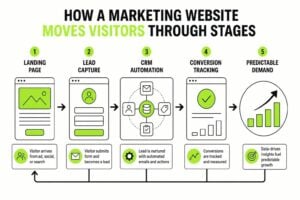
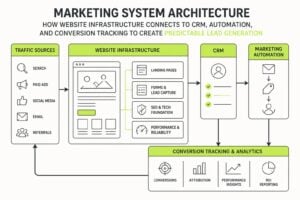
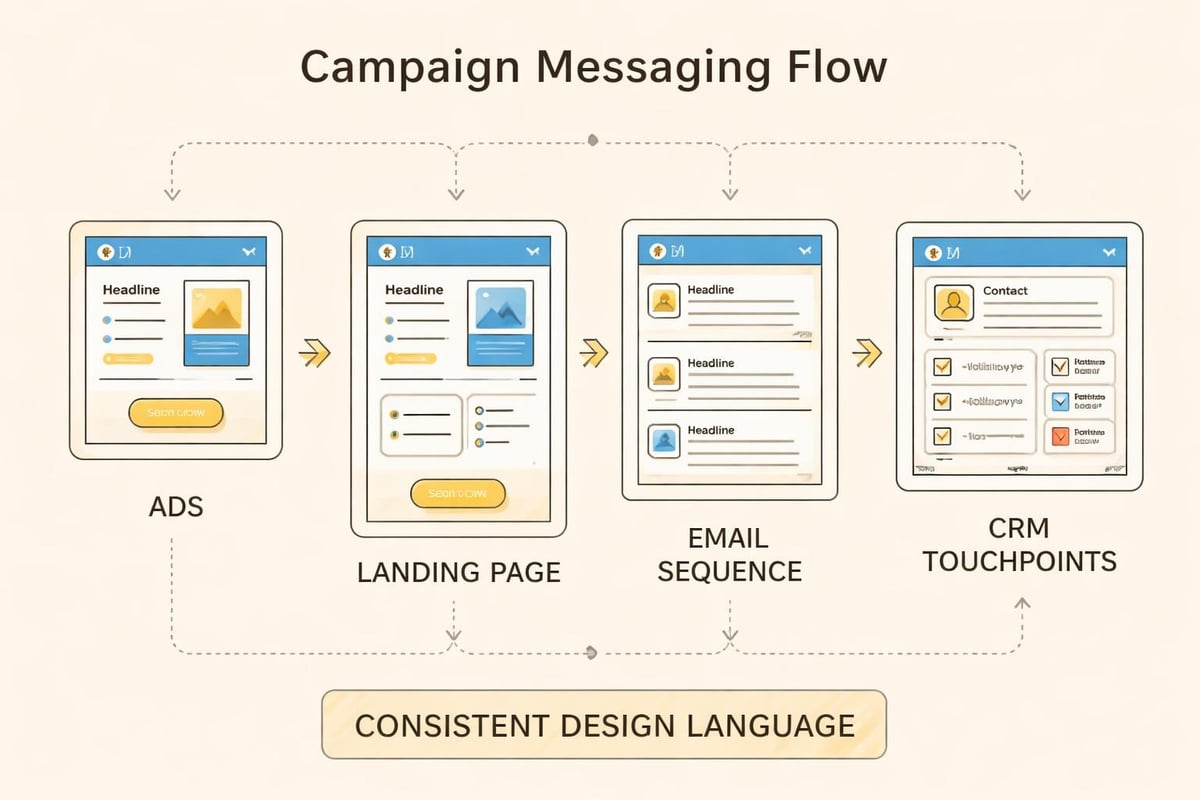
Marketing and design need shared goals, shared timelines, and shared accountability. When both teams (or both sides of your brain if you’re a solo operator) understand how a campaign flows from ad to landing page to CRM to follow-up email, the system works. When they don’t, leads leak out at every step.
Design Decisions That Impact Marketing Performance
Every font choice, colour palette, and layout structure affects whether someone trusts you enough to book a call. Design best practices for marketing materials include clear hierarchy, consistent branding, and purposeful white space. These aren’t aesthetic preferences. They’re conversion variables.
| Design Element | Marketing Impact | What to Optimise |
|---|---|---|
| Typography | Readability affects time on page and comprehension | Line height, font size, contrast ratio |
| Colour | Brand recognition and emotional response | Consistency across touchpoints, accessibility |
| Layout | Scan patterns and information hierarchy | F-pattern design, above-fold clarity |
| Imagery | Trust signals and relevance | Real team photos, contextual graphics |
| White space | Focus and breathing room | Section separation, mobile padding |
If your website looks professional but your email campaigns feel templated and generic, you’ve broken the system. If your brand identity is strong but your landing pages look like everyone else’s, the marketing and design split is costing you deals.
Building a Marketing and Design Framework That Converts
Frameworks remove guesswork. Instead of redesigning your website every 18 months because “it feels outdated,” you build a system where design and marketing evolve together based on performance data. Here’s how service businesses actually structure this work.
Start With Brand Foundations
Before you run ads or design pages, document your brand system:
- Core positioning – what you do, who you serve, what makes you different
- Visual identity – logos, colours, fonts, image style
- Voice and tone – how you write across channels
- Design principles – guidelines for layout, spacing, component use
This isn’t busywork. It’s the reference point for every marketing asset and design decision. When you launch a new service or run a campaign, you’re not starting from scratch. You’re applying the system. MDO Digital’s branding services focus on creating this kind of clarity so marketing execution stays consistent even as you scale.
Map Your Customer Journey to Design Touchpoints
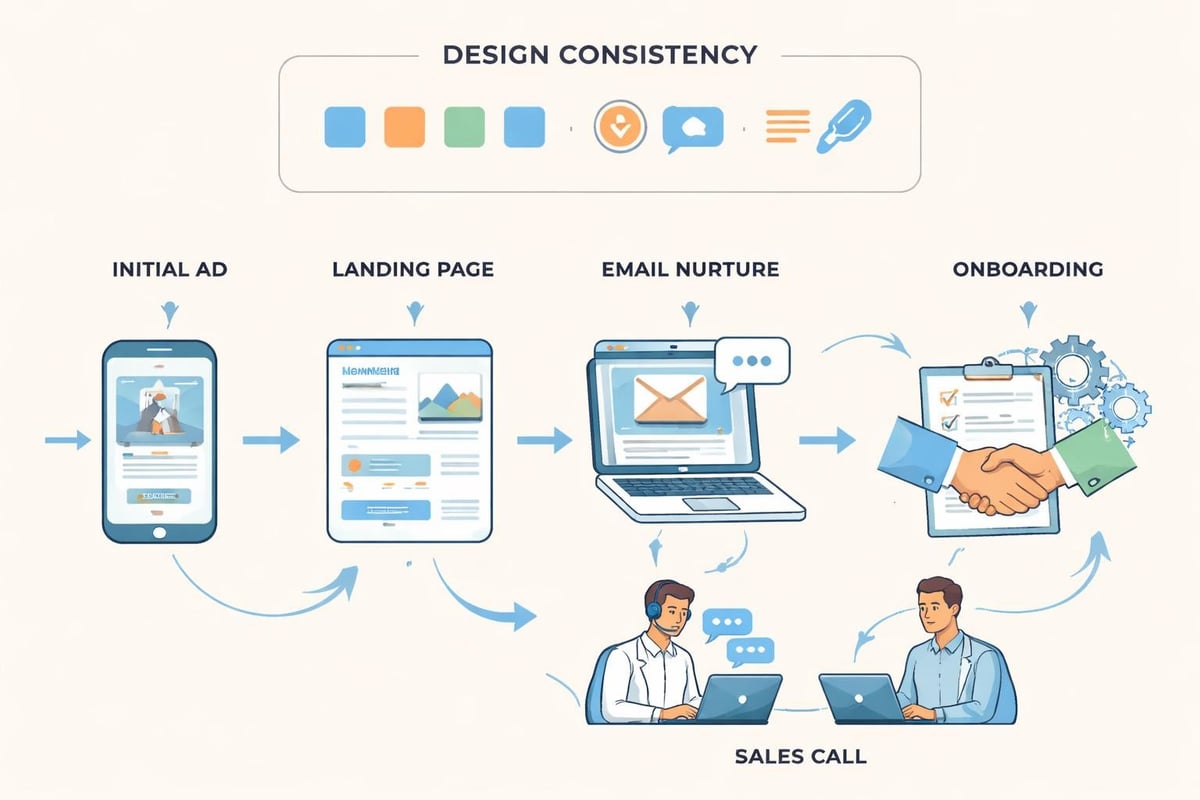
Your customer doesn’t experience “marketing” and “design” as separate things. They see:
- An ad (marketing message + design execution)
- A landing page (offer structure + page layout)
- An email sequence (copywriting + template design)
- A sales conversation (positioning + materials like PDFs or slide decks)
- A website (content strategy + user experience)
Each touchpoint needs message-design alignment. The language in your ad should match the headline on your landing page. The visual style of your email should feel like your website. Email design best practices emphasise consistency, mobile optimisation, and clear calls to action, all of which rely on coordinated marketing and design thinking.
Practical Systems for Aligning Marketing and Design
Theory’s useful, but execution is where most businesses get stuck. You know marketing and design should work together. The question is how to make that happen when you’re running campaigns, managing clients, and trying to grow.
Create Campaign Templates That Lock In Consistency
Build repeatable templates for common marketing activities:
- Ad campaigns – headline structure, image specs, CTA format
- Landing pages – hero section, benefit blocks, social proof, form placement
- Email sequences – header design, body layout, signature block
- Social content – post templates, story formats, branded graphics
Templates don’t limit creativity. They protect consistency while speeding up execution. When you launch a new offer, you’re not debating font sizes. You’re applying proven structures and focusing on message refinement.
Use Design Systems in Your Marketing Tools
Most CRM platforms, email tools, and website builders support design systems through:
- Saved colour palettes
- Custom fonts
- Component libraries (buttons, forms, headers)
- Template structures
Set these up once. Every marketing asset you create inherits the design language automatically. Website design for marketing agencies highlights the importance of custom design systems that differentiate you from competitors while maintaining internal consistency.
Common tools that support design-marketing integration:
- Website builders (Webflow, WordPress with builders) – component-based design
- Email platforms (HubSpot, ActiveCampaign) – template builders with brand assets
- Ad platforms (Facebook Ads, Google Ads) – saved audiences + creative templates
- Design tools (Figma, Canva) – brand kits and team libraries
Establish Weekly Sync Points Between Functions
If you have a team, create a standing meeting where marketing and design review active projects together. If you’re solo, block time to evaluate both sides of current work.
Weekly agenda structure:
- Active campaigns – what’s running, what’s converting, what needs design updates
- Upcoming launches – briefs, timelines, asset requirements
- Performance review – which designs are working, which messages are landing
- Design requests – new templates, page updates, creative needs
Aligning marketing and design teams through regular collaboration prevents last-minute rushes and ensures both functions understand priorities.
Measuring the Impact of Integrated Marketing and Design
You can’t improve what you don’t track. Most businesses measure marketing metrics (clicks, conversions, cost per lead) separately from design metrics (time on page, bounce rate, brand surveys). The real insight comes from connecting them.
Conversion Path Analysis
Track how design changes affect marketing performance:
| Metric | What It Measures | Marketing + Design Connection |
|---|---|---|
| Landing page conversion rate | % of visitors who complete the goal | Does the page design support the ad promise? |
| Email click-through rate | % who click links in emails | Are CTAs clear and visually prominent? |
| Form completion rate | % who start vs finish forms | Is the design reducing friction? |
| Time to conversion | Days from first touch to customer | Do touchpoints feel cohesive or disjointed? |
When you change a landing page design, watch what happens to conversion rates. When you refresh email templates, monitor engagement metrics. This feedback loop tells you whether your marketing and design integration is working or just theoretical.
Brand Recognition Testing
Simple test: show someone your ad, your website, and your email. Can they tell it’s the same company without seeing the logo? If not, your marketing and design aren’t aligned enough.
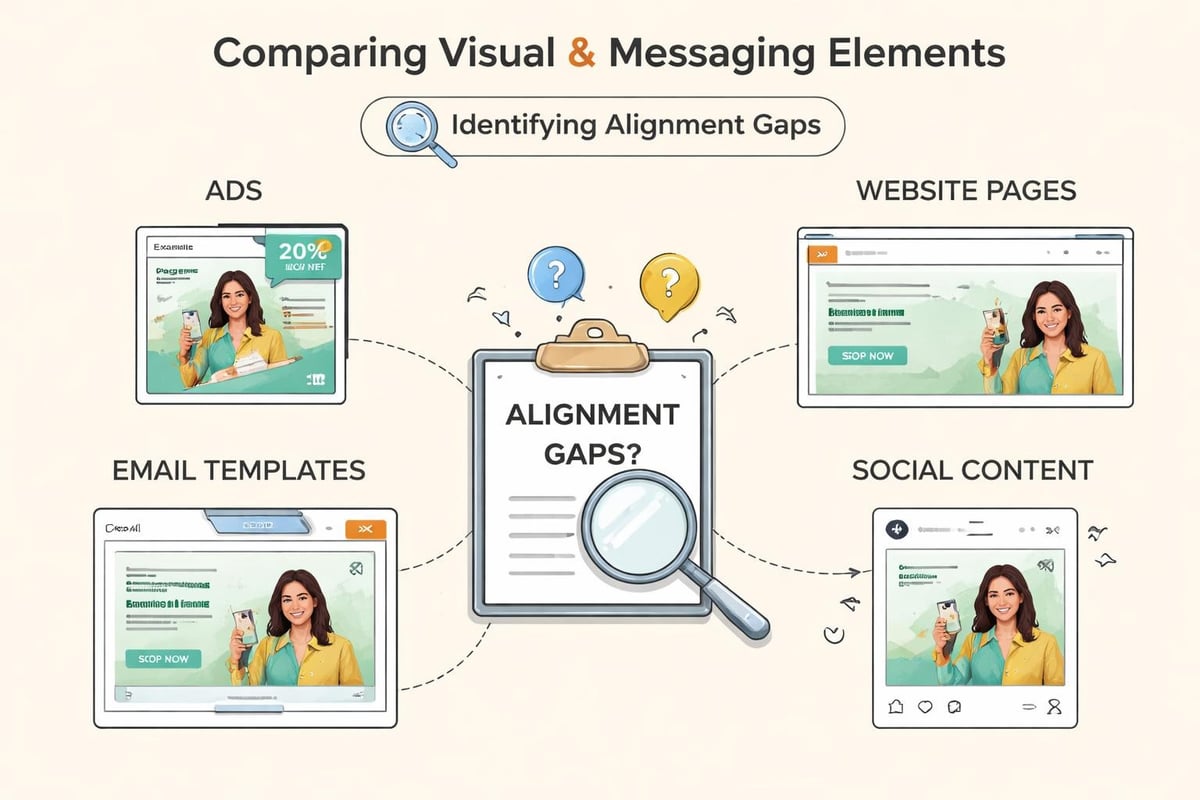
Run quarterly audits where you screenshot current marketing assets and evaluate:
- Visual consistency (colours, fonts, image style)
- Message consistency (tone, value propositions, CTAs)
- Structural consistency (layouts, component use, spacing)
The gaps you find become the roadmap for tightening integration.
Common Marketing and Design Mistakes That Kill Conversions
Even businesses that understand the importance of alignment make predictable mistakes. Here’s what actually breaks the system in real projects.
Designing Without Campaign Context
You can’t design a landing page without knowing the ad that sends traffic to it. The page has to match the promise, the audience temperature, and the specific offer. Generic “services” pages don’t convert cold traffic. Campaign-specific pages designed with the full marketing context do.
Questions to answer before designing any marketing asset:
- Where is this traffic coming from? (Paid ad, organic search, email, referral)
- What did they just see or read? (Ad copy, email subject line, social post)
- What action do we want them to take? (Book call, download guide, request quote)
- What objections need addressing? (Price, timeline, proof, fit)
Running Campaigns Without Design Standards
Launching ads with inconsistent imagery, testing landing pages with different colour schemes, sending emails that look nothing like your website – all of this erodes trust. Every touchpoint should feel like it came from the same business.
Graphic design best practices for digital marketing emphasise mobile-first design, purposeful hierarchy, and brand consistency. These aren’t nice-to-haves. They’re the foundation of campaigns that convert.
Separating Brand Work from Performance Work
“Brand” projects (website redesigns, visual identity updates) often happen separately from “performance” projects (ad campaigns, landing page tests). This creates a gap. Your new website launches, but your ad creative still uses the old style. Your rebrand is live, but your email templates weren’t updated.
Integrated timelines prevent this. When you update brand assets, you update marketing assets in the same sprint. When you launch a campaign, you ensure it reflects current design standards.
What Marketing and Design Integration Looks Like in Practice
Real examples make abstract concepts concrete. Here’s how service businesses actually coordinate marketing and design work.
Campaign Development Process
- Strategy brief – define offer, audience, goals, budget
- Message development – write value propositions, headlines, CTAs (marketing)
- Design brief – specify touchpoints, formats, asset requirements (design)
- Asset creation – build ads, pages, emails with consistent execution (both)
- Launch coordination – deploy everything simultaneously with unified tracking
- Performance review – analyse results, identify improvements, iterate
Notice design isn’t the last step. It’s integrated throughout. The message development influences design direction. The design constraints shape message structure. Marketing and web development work this way when both functions understand they’re building a conversion system, not isolated assets.
Quarterly Brand Refresh Cycle
Rather than major overhauls every few years, successful businesses evolve their marketing and design quarterly:
- Q1 – audit current assets, identify inconsistencies, plan updates
- Q2 – refresh email templates and ad creative based on Q1 performance
- Q3 – update website sections and landing pages with new design elements
- Q4 – consolidate learnings, document new standards, plan next year
This keeps your marketing and design fresh without disrupting active campaigns or confusing your audience with sudden changes.
Building Internal Capacity vs Outsourcing Integration
You have three options for managing marketing and design together: hire internally, outsource to specialists, or use an integrated agency. Each has trade-offs.
| Approach | Pros | Cons | Best For |
|---|---|---|---|
| Internal team | Direct control, deep brand knowledge | High salary costs, skill gaps | Established businesses with steady volume |
| Separate specialists | Best-in-class expertise per function | Coordination overhead, alignment challenges | Businesses with strong project management |
| Integrated agency | Built-in coordination, systems thinking | Less control, requires trust | Growing service businesses needing scale |
Most service businesses under $5M revenue can’t justify full-time marketing and design roles with the right skill overlap. Outsourcing makes sense, but only if the agency or contractors understand systems thinking. Hiring a designer who doesn’t consider conversion rates or a marketer who doesn’t understand visual hierarchy just moves the problem outside your walls.
MDO Digital’s approach combines marketing systems with design execution specifically because service businesses need both to work as one. You’re not coordinating between a design agency and a marketing agency. You’re working with a team that builds the whole conversion system.
How Technology Enables Marketing and Design Alignment
The right tools don’t just make work faster. They make alignment easier by creating shared workspaces, consistent standards, and visible workflows.
Essential Platform Categories
Design-first marketing tools:
- Webflow for websites that look custom without developer dependency
- Figma for collaborative design with version control
- Canva for brand-consistent social and ad creative
Marketing-first design tools:
- HubSpot for email templates with design flexibility
- Unbounce for landing pages optimised for conversion
- ActiveCampaign for automation that maintains brand consistency
The best setups use tools that bridge both worlds. Your website builder should support marketing pixels and A/B testing. Your email platform should allow custom HTML and design control. Your CRM should integrate with design tools for proposal automation and branded client experiences.
Automation That Protects Consistency
Marketing automation isn’t just about sending emails on schedule. It’s about ensuring every automated touchpoint maintains your design standards and message quality.
Automated workflows that need design attention:
- Welcome sequences for new subscribers
- Abandoned form follow-ups
- Post-consultation nurture series
- Client onboarding communications
- Referral request campaigns
Build these once with full marketing and design collaboration. They’ll run for months or years, representing your brand consistently to every person who enters your system. User experience best practices for marketing teams include clear navigation and purposeful information architecture, both of which apply to automated experiences as much as static pages.
Moving From Theory to Execution
Understanding that marketing and design should work together is easy. Actually making it happen when you’re busy serving clients, managing projects, and trying to grow requires specific next steps.
Start here:
- Audit current state – screenshot your main marketing assets (website, emails, ads, social) and evaluate consistency
- Document your brand – create a simple one-page reference with colours, fonts, logo files, and tone guidelines
- Pick one campaign – choose your next launch and build it with full marketing-design integration from day one
- Measure the difference – compare performance to previous campaigns where coordination was loose
- Build the system – take what works and turn it into templates, processes, and standards
You don’t need to overhaul everything simultaneously. You need to stop creating new marketing assets that ignore design standards and new design work that doesn’t consider conversion goals.
Content and digital marketing strategies only work when the content is presented in formats that build trust and guide action. That requires design. Design only converts when it’s built around clear offers and strategic messaging. That requires marketing. They’re two sides of the same system.
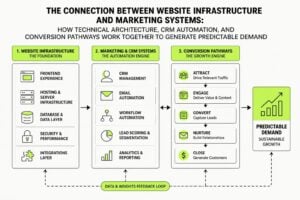
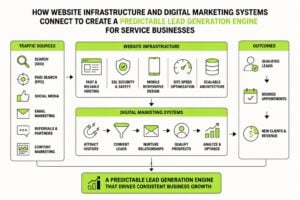
Marketing and design aren’t separate problems to solve. They’re interconnected systems that either amplify each other or create friction. When you align them around conversion goals, consistent standards, and shared metrics, you build infrastructure that scales. If you’re ready to remove the chaos and build marketing and design systems that actually work together, MDO Digital helps service businesses create this kind of clarity. We build the CRM infrastructure, design the conversion-focused websites, and run the campaigns as one integrated system, so you get predictable growth instead of scattered tactics.