Most businesses treat digital marketing and design as separate activities. Marketing pushes traffic. Design makes things look good. Then they wonder why leads don't convert or why nothing feels connected. The truth is simpler than most frameworks suggest: digital marketing and design are the same conversation. One creates the systems that find people. The other builds the trust that converts them. When they're aligned, you get growth that compounds. When they're not, you're just renting attention with no place to put it.
Why Digital Marketing and Design Can't Be Separated
The web doesn't distinguish between your marketing message and your website experience. A visitor clicking through from an ad expects visual and verbal consistency. If your LinkedIn post promises clarity but your landing page is cluttered, trust breaks immediately.
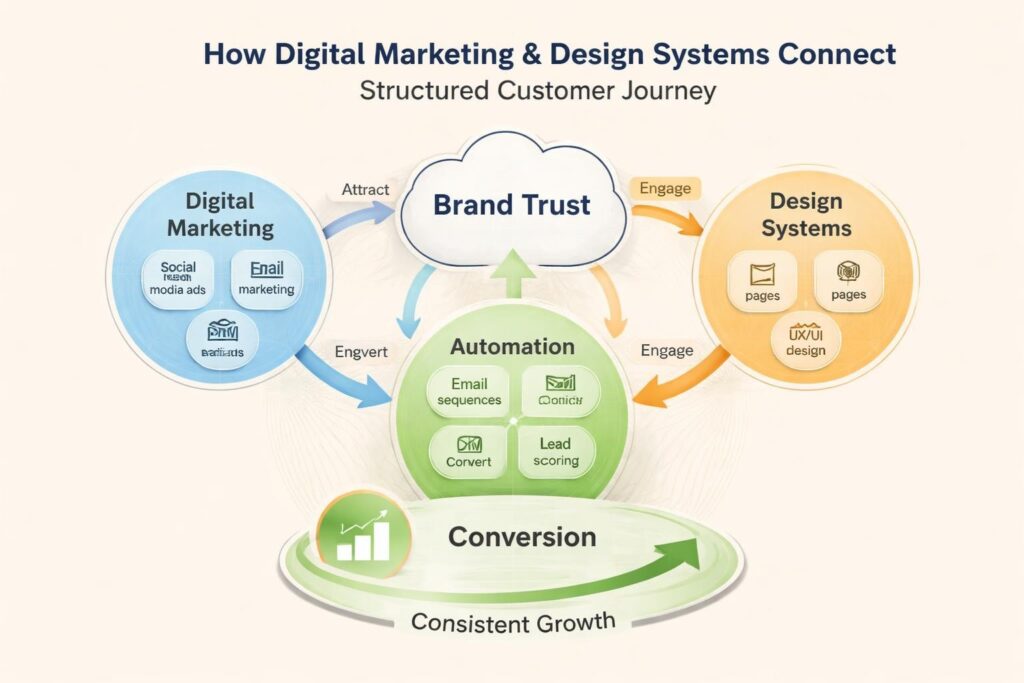
Digital marketing is about creating demand and directing attention. Design is about holding that attention and converting it into action. Neither works in isolation.
Think about it this way:
- Your email campaign gets opened because of the subject line (marketing)
- It gets read because of hierarchy and white space (design)
- It gets clicked because the CTA is clear and trustworthy (both)
Every digital interaction is a designed experience with marketing intent. The moment you separate them, friction appears. Visitors sense the disconnect, even if they can't name it.
The Real Cost of Misalignment
When marketing runs independently from design, you end up with:
| Problem | What It Looks Like | Impact on Growth |
|---|---|---|
| Message-visual mismatch | Ad promises simplicity, site feels complex | High bounce rates, wasted ad spend |
| Inconsistent branding | Different tone across email, site, socials | Weak brand recall, low trust |
| CRM chaos | Leads enter system with no follow-up design | Lost opportunities, manual work |
Misalignment doesn't just cost conversions. It costs time. You're constantly patching, explaining, or redoing work that should have been connected from the start.
Building a Foundation: Design Systems That Support Marketing
A design system isn't just a style guide. It's the visual and structural language that makes every marketing touchpoint feel like it came from the same place. This includes typography, color, spacing, tone, and layout patterns.
Service businesses especially need this. Your prospects are buying trust before they're buying your service. If your branding looks inconsistent or your site feels generic, you're asking them to take a risk.
What Goes Into a Marketing-Ready Design System
Start with components that actually get used:
- Brand identity – Logo, colors, fonts that transfer across platforms
- Website modules – Hero sections, service cards, testimonial blocks built once, reused everywhere
- Email templates – Designed for readability and conversion, not decoration
- Form design – Clean fields, clear CTAs, mobile-friendly layout
- Ad creative templates – Sized for each platform, visually consistent
These aren't nice-to-haves. They're infrastructure. The more repeatable your design components, the faster you can execute marketing without sacrificing quality.
Design for Speed and Trust
Most marketing fails because it's slow or unclear. Design solves both.
Speed comes from systems. When you have pre-built components, launching a new campaign doesn't require a full design cycle. You pull from the library, adjust copy, and ship.
Trust comes from consistency. When someone sees your ad, then lands on your site, then receives your email, the visual continuity tells them you're organized. That subconscious signal matters more than most copy tweaks.
According to recent marketing statistics, 88% of online consumers are less likely to return to a site after a bad experience. Design directly impacts whether marketing efforts compound or decay.
Digital Marketing Channels That Need Design Thinking
Every channel has design requirements. Ignoring them means your marketing works harder for worse results.
SEO and Website Architecture
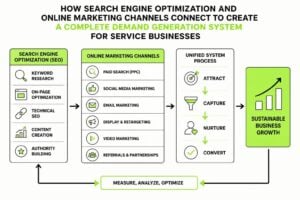
Search engine optimization isn't just keywords. It's structure. How your site is organized affects how Google understands it and how visitors navigate it.
Good SEO design includes:
- Clear page hierarchy with H1, H2, H3 tags used correctly
- Internal linking that guides visitors and distributes authority
- Mobile-responsive layouts that don't break on small screens
- Fast load times from optimized images and clean code
If your website design isn't built with SEO in mind, you're fighting an uphill battle. Design decisions like image size, navigation structure, and content layout directly impact rankings.
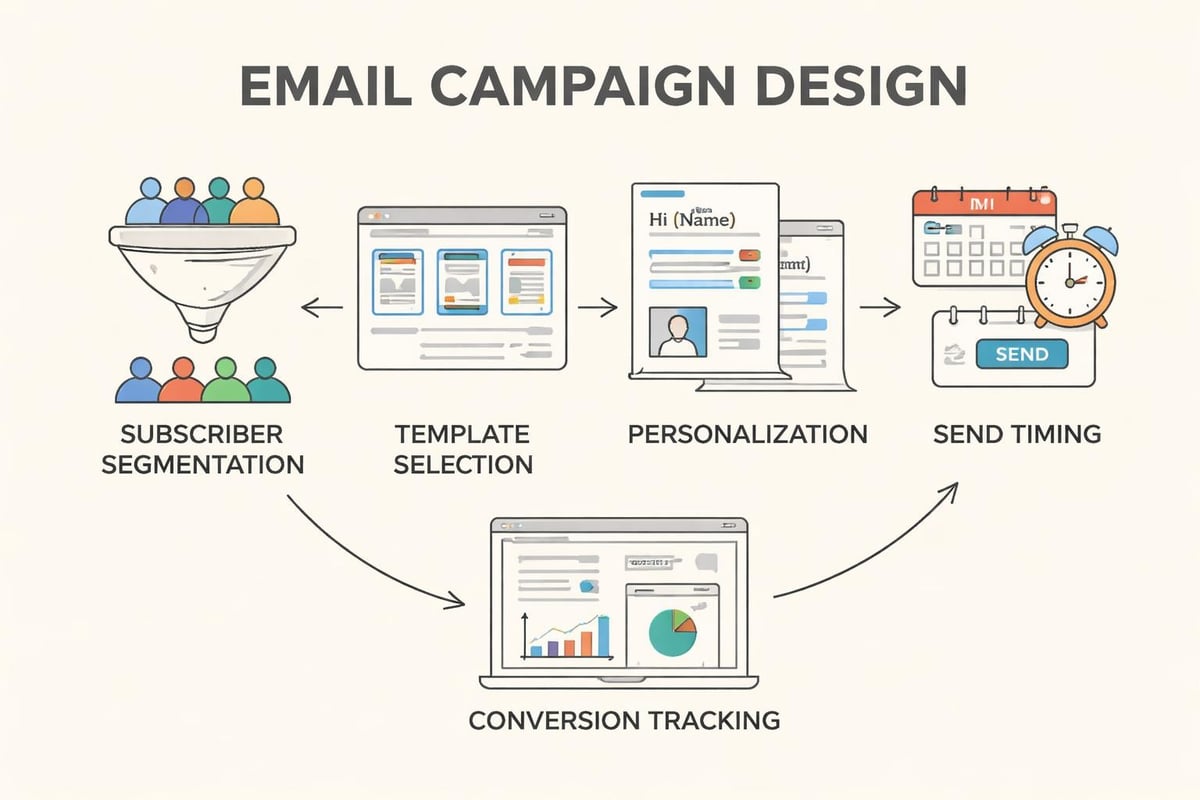
Email Marketing and Visual Hierarchy
Email is still one of the highest-ROI channels. But inbox competition is brutal. Your email needs to be scannable in three seconds.
Design principles for email:
- Single-column layouts work on mobile and desktop
- Clear subject hierarchy with one primary message
- Generous white space so CTAs stand out
- Consistent branding so recipients recognize you instantly
Email marketing continues to evolve, but the fundamentals remain: clarity, speed, and trust. Design is how you deliver all three.
Paid Ads and Landing Page Continuity
Ad performance isn't just about targeting. It's about the entire journey. If your Google Ad promises "done-for-you CRM setup" but the landing page talks about brand strategy, the visitor bounces.
Design continuity means:
- Matching ad headline to landing page H1
- Using the same visual style in ad creative and landing page
- Keeping the CTA language identical across touchpoints
- Removing navigation to reduce exits
Most businesses lose money on ads not because the targeting is wrong, but because the landing experience breaks trust. Digital marketing and design need to speak the same language at every step.
Content Marketing Needs Structure, Not Just Words
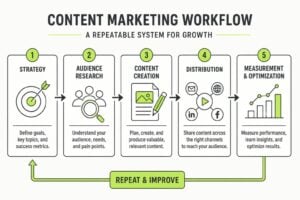
Content marketing builds authority over time. But publishing without structure is just noise. Design gives content the framework it needs to be found, read, and remembered.
Structuring Long-Form Content
Nobody reads walls of text. Even great ideas get ignored if they're hard to scan.
Use these design elements:
- Subheadings every 200-300 words to break up sections
- Bullet lists for features, benefits, or steps
- Tables for comparisons or data
- Bold text to highlight key terms
- Short paragraphs mixed with longer explanations
This isn't about dumbing down content. It's about respecting how people actually consume information online. They scan first, then decide whether to read.
Building a Content Hub
A blog isn't just a collection of posts. It's a search-optimized, lead-generating asset when it's designed properly.
Good content hubs include:
- Category pages that organize topics logically
- Related post suggestions to increase time on site
- Lead magnets placed contextually within articles
- Clear CTAs that guide next steps
When digital marketing and design work together on content, you're not just publishing. You're building a system that attracts, educates, and converts over time.
CRM and Automation: Where Design Meets Systems
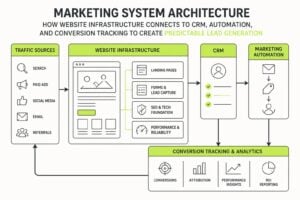
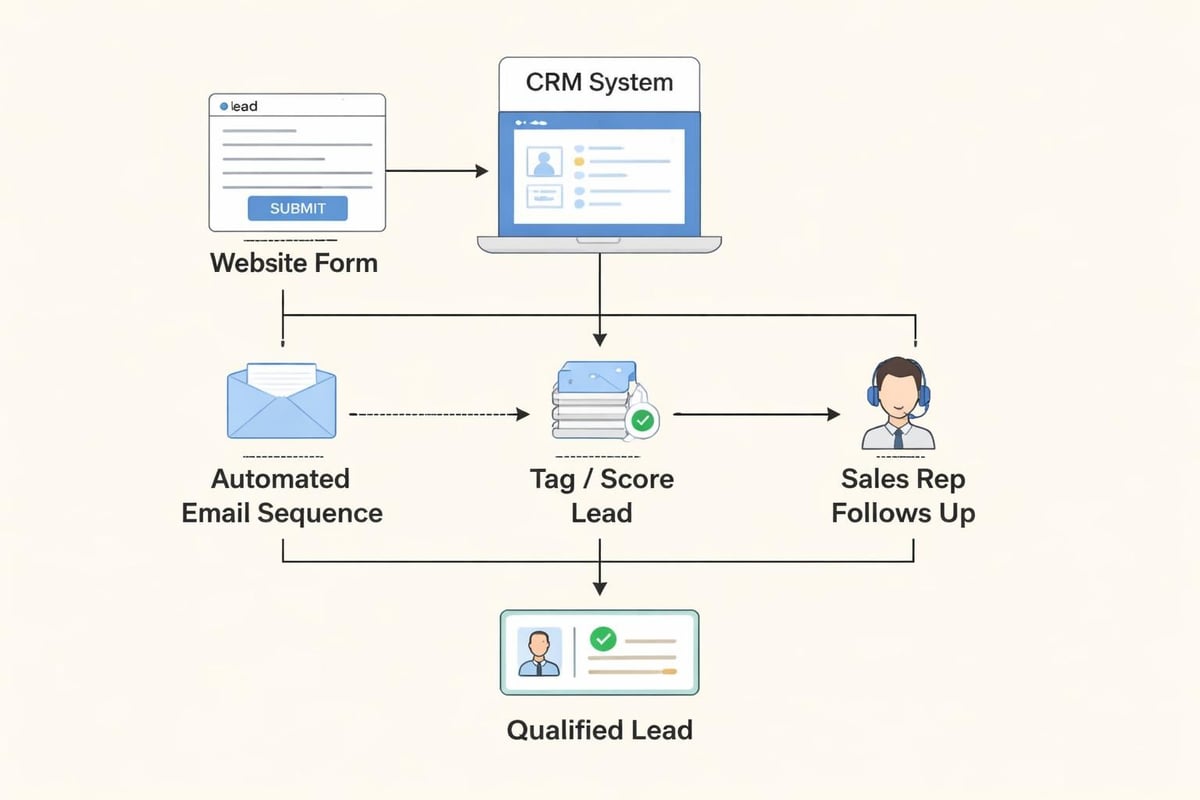
Your CRM isn't a marketing tool. It's where marketing results land. If that system isn't designed for follow-up, automation, and data clarity, your leads leak.
Most service businesses collect leads but have no process for nurturing them. Email addresses sit in a spreadsheet. Follow-up is manual and inconsistent. Opportunities disappear.
Designing Your CRM for Conversion
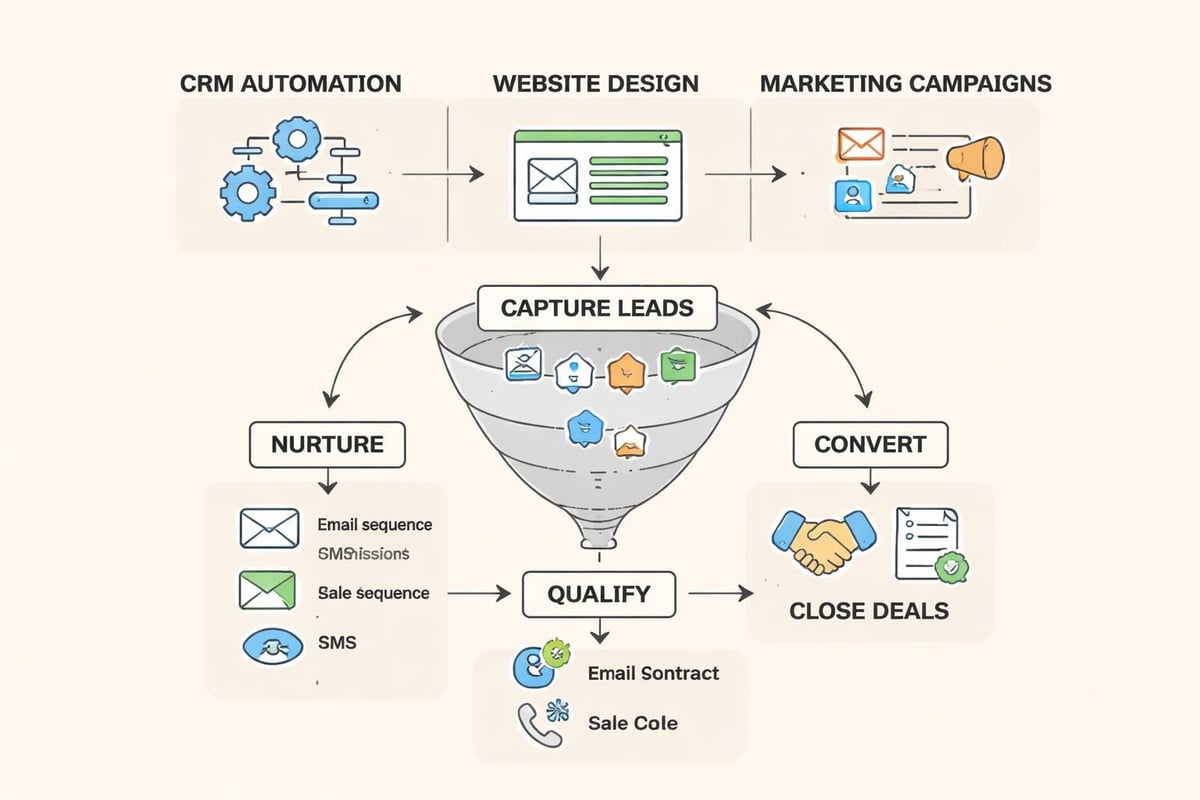
Think of your CRM as the back-end of your digital marketing and design system. It needs:
- Automated tagging based on lead source, service interest, and behavior
- Segmented lists so your messaging stays relevant
- Templated follow-up sequences that feel personal but run automatically
- Pipeline stages that track where each lead sits in the journey
| CRM Stage | Design Need | Marketing Action |
|---|---|---|
| New Lead | Welcome email template | Introduce brand, set expectations |
| Engaged | Case study one-pager | Build credibility, show results |
| Qualified | Booking page design | Remove friction, make scheduling easy |
| Client | Onboarding sequence | Deliver value, reduce buyer's remorse |
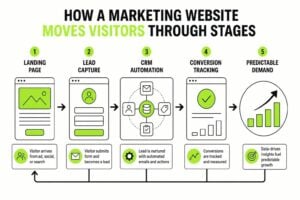
When your CRM is designed as part of your marketing system, conversion becomes predictable. You're not chasing leads. You're guiding them through a structured experience.
Accessibility Isn't Optional
Accessible design is better design. It's clearer, more usable, and reaches more people. It's also becoming a legal requirement in many regions.
The Web Content Accessibility Guidelines outline standards for inclusive design. Meeting them improves your marketing performance, not just your compliance.
Practical Accessibility in Digital Marketing and Design
These changes benefit everyone:
- Color contrast ratios that make text readable in any lighting
- Alt text on images so screen readers and search engines understand content
- Keyboard navigation for users who can't use a mouse
- Clear link text that describes the destination
- Form labels that stay visible and associated with fields
Accessibility isn't about ticking boxes. It's about removing barriers. Every barrier you remove is another potential customer who can engage with your business.
Measuring What Matters
Digital marketing and design both generate data. But most businesses track the wrong things.
Vanity metrics feel good but don't inform decisions:
- Page views without engagement time
- Social followers without conversion tracking
- Ad impressions without click-through rates
Instead, measure what connects to revenue:
- Conversion rate – How many visitors become leads
- Cost per acquisition – What you spend to get a customer
- Time to conversion – How long the journey takes
- Customer lifetime value – Total revenue per client relationship
Design decisions should be tested against these metrics. Does the new landing page improve conversion? Does the email template increase open rates? If not, iterate.
When you connect design changes to business outcomes, you stop guessing and start improving systematically. This is where marketing and business development intersect with operational clarity.
Integration: The Overlooked Advantage
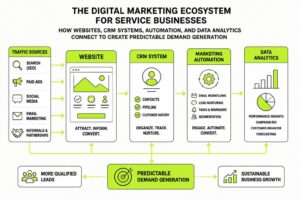
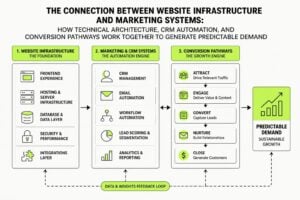
Most tools work in isolation. Your website platform doesn't talk to your email system. Your CRM doesn't sync with your ad accounts. Every gap is manual work and lost data.
Integration isn't sexy, but it's where efficiency lives.
What Should Connect
At minimum, these systems should share data:
- Website forms to CRM – Leads enter your pipeline automatically
- CRM to email platform – Segmentation and automation pull from one source
- Ad platforms to analytics – Track which campaigns drive real conversions
- Scheduling tools to CRM – Meeting bookings update deal stages
When systems integrate, your digital marketing and design efforts compound. Data flows. Processes trigger automatically. Nothing falls through gaps.
Service businesses that get this right scale without adding headcount. The systems do the repetitive work while the team focuses on delivery and strategy.
The Shift from Campaigns to Systems
Most businesses run campaigns. They launch something, get a spike, then go quiet until the next push. It's exhausting and unpredictable.
Systems thinking changes the game. Instead of one-off efforts, you build infrastructure that works continuously.
A campaign is an Instagram ad that runs for two weeks. A system is:
- Evergreen ad creative tested and optimized over months
- Landing pages that convert at predictable rates
- CRM sequences that nurture leads automatically
- Content hubs that attract organic traffic year-round
- Referral processes built into client onboarding
This is how digital marketing and design create compounding growth. Each piece feeds the next. Attention becomes leads. Leads become clients. Clients become case studies that attract better clients.
You're not starting from zero every month. You're building on what already works.
Digital marketing and design aren't separate disciplines. They're two sides of the same system: attracting attention and converting it into trust. When they're aligned, growth becomes predictable. When they're not, you're constantly rebuilding instead of compounding. If you're ready to remove the chaos and build marketing infrastructure that actually scales, MDO Digital helps service businesses design high-trust systems that turn attention into demand. Let's build something that lasts.