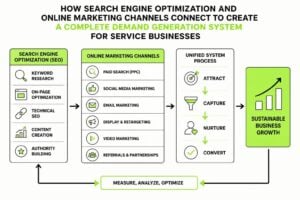
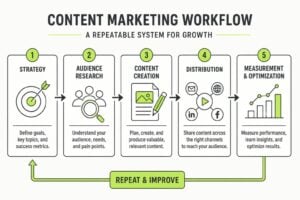
Most service businesses don't fail from lack of talent. They fail because their growth relies on hustle instead of systems. Digital growth isn't about viral posts or marketing gimmicks. It's about building infrastructure that turns attention into revenue without burning out your team. The businesses that scale in 2026 understand this. They've stopped chasing tactics and started building foundations that compound over time.
What Digital Growth Actually Means
Digital growth is the measurable expansion of your business through online channels and systems. Not traffic for traffic's sake. Not followers. We're talking about structured improvements in how you attract, convert, and retain customers through digital infrastructure.
The core components include:
- Marketing systems that capture and nurture leads automatically
- CRM infrastructure that protects customer data and tracks interactions
- Automation that handles repetitive work without human intervention
- Analytics that show what's working and what's wasting money
- Brand assets that build trust before the first conversation
Think of it this way: traditional growth happens when you work harder. Digital growth happens when your systems work smarter. You're building assets that generate returns while you sleep, not just while you're on sales calls.
The Infrastructure Problem
Most service businesses operate in reactive mode. A lead comes in, someone manually enters it into a spreadsheet, another person follows up when they remember, and half the conversations fall through cracks you didn't know existed.
This isn't a people problem. It's a systems problem.
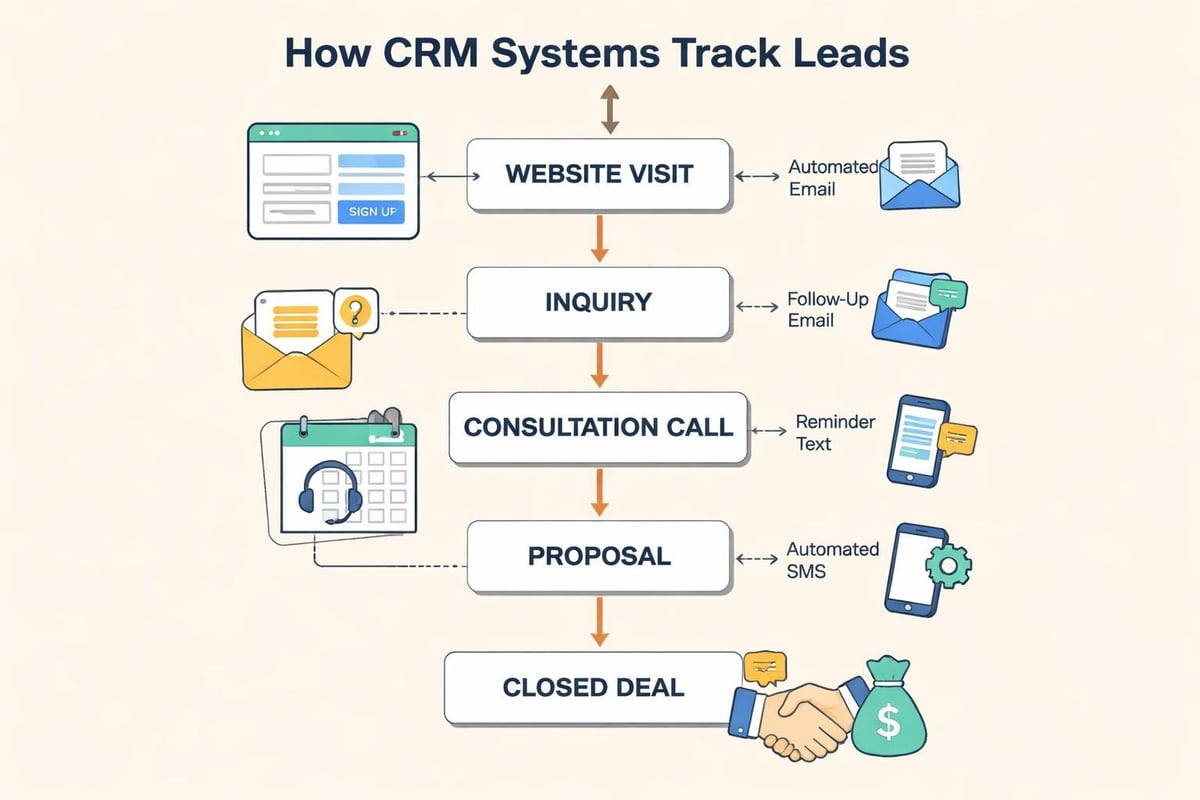
When we talk about digital marketing, we're really talking about creating predictable pathways from first touch to closed deal. The businesses seeing consistent digital growth have mapped these pathways and automated the repetitive bits. They know exactly how many website visitors turn into inquiries, how many inquiries book calls, and how many calls become clients.
Building Systems That Scale
Digital growth requires infrastructure that can handle increased volume without proportionally increasing your workload. Here's where most businesses get stuck: they build for today instead of tomorrow.
The Five Pillars of Scalable Infrastructure
| Pillar | Purpose | Common Gap |
|---|---|---|
| Website | Convert visitors to leads | No clear path to action |
| CRM | Track and nurture relationships | Scattered data, no single source |
| Automation | Handle repetitive tasks | Everything requires manual work |
| Analytics | Measure what matters | Vanity metrics instead of revenue data |
| Brand Clarity | Build trust at scale | Inconsistent messaging across channels |
Your website should do more than look good. It should qualify prospects, answer questions, and make the next step obvious. A high-trust website becomes your best salesperson, working around the clock to move people toward a decision.
The CRM component protects what you've already earned. Every conversation, every proposal, every follow-up gets logged. Nothing depends on someone's memory or inbox. When you bring on a new team member, they can see the complete history of any client relationship in minutes, not days.
Automation That Actually Works
Automation doesn't mean removing the human touch. It means removing the human bottleneck from tasks that don't require judgment or creativity.
Smart automation handles:
- Initial inquiry responses and booking confirmations
- Nurture sequences for prospects not ready to buy
- Onboarding workflows for new clients
- Follow-up reminders for dormant relationships
- Data entry and organization across platforms
The businesses achieving real digital growth in 2026 have embraced business process automation not as a replacement for people, but as support for them. Your team spends time on strategy and relationships, not copying information between systems.
One pattern we see consistently: service businesses that implement proper automation infrastructure report 40-60% time savings on administrative work within the first quarter. That time gets redirected to revenue-generating activities, which accelerates growth further.
Data-Driven Decision Making
Digital growth demands visibility. You can't improve what you don't measure, and you can't scale what you don't understand.
Most businesses track the wrong numbers. They celebrate website traffic while ignoring conversion rates. They measure social media engagement while their email list sits unused. They count leads but don't calculate cost per acquisition or lifetime value.
Metrics That Drive Growth
The difference between businesses that grow and businesses that plateau often comes down to which metrics they prioritize. Here's what actually matters:
- Conversion rate at each stage of your funnel
- Customer acquisition cost compared to lifetime value
- Lead response time and its impact on close rates
- Channel attribution to know where your best clients come from
- Revenue per client and how it trends over time
When you track the right metrics, patterns emerge. You notice that leads who download your guide convert at twice the rate of cold inquiries. You see that proposals sent within 24 hours close at 35% versus 12% for those sent after three days. You discover that clients from referrals stay twice as long as those from paid ads.
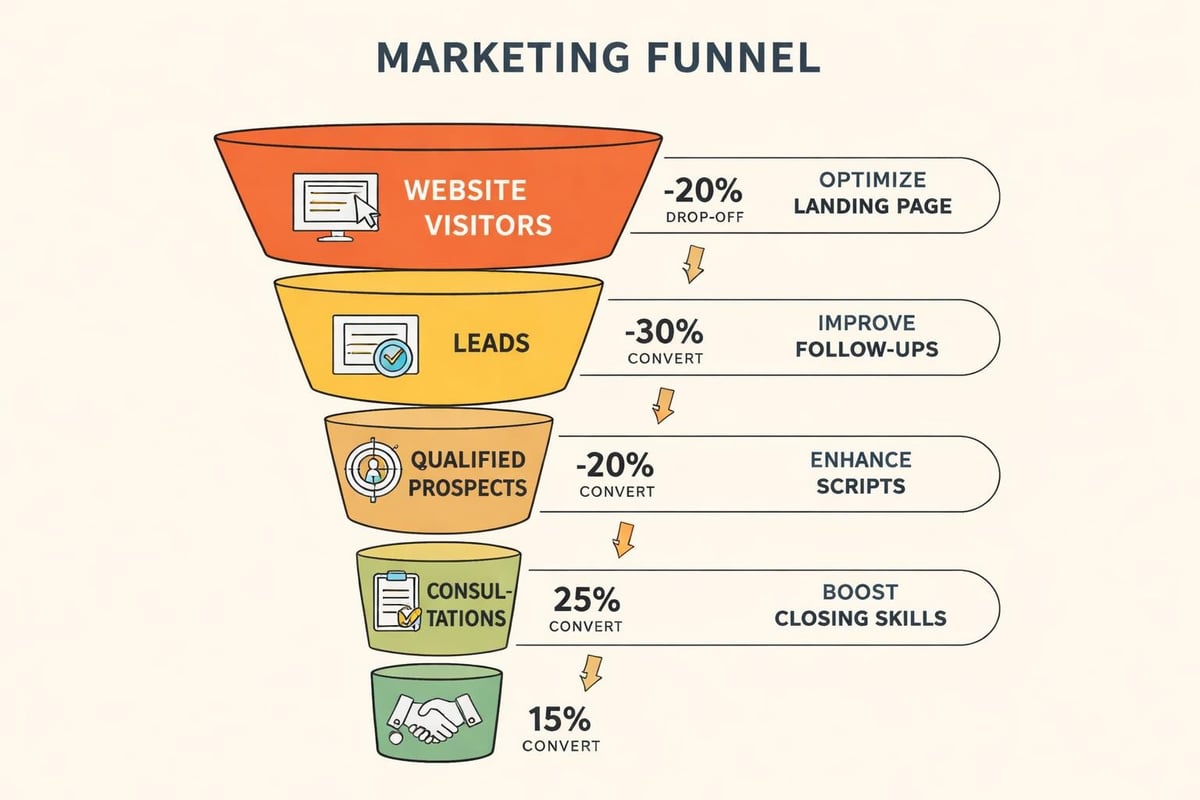
These insights let you focus resources on what works. Instead of spreading budget thin across every channel, you double down on the ones delivering qualified prospects. Instead of treating all leads equally, you prioritize the segments most likely to convert.
The Brand Clarity Advantage
Digital growth accelerates when your brand message is crystal clear. Confused prospects don't convert. They bounce to competitors who make the value proposition obvious in seconds.
Brand clarity isn't about clever taglines or fancy logos. It's about answering three questions immediately:
- What problem do you solve?
- Who do you solve it for?
- Why should they trust you over alternatives?
Your entire digital presence should reinforce these answers consistently. Same language on your website, in your emails, across your social channels, in your proposals. When someone encounters your brand multiple times, they should experience coherent messaging that builds confidence, not confusion.
The businesses scaling fastest in 2026 have invested time defining their positioning before building their systems. They know exactly what they do, who it's for, and how to communicate that value. This clarity flows through every automated email, every landing page, every piece of content they create.
Positioning for Digital Channels
Traditional branding often focuses on emotional connection and story. Digital branding needs that plus extreme clarity. Your online branding must work in contexts where you have 3 seconds of attention and zero relationship.
Effective digital positioning includes:
- One-sentence value proposition that requires no explanation
- Clear differentiation from obvious alternatives
- Specific target audience, not "anyone who needs our service"
- Tangible outcomes clients can expect
- Proof points that build credibility quickly
When your positioning is dialed in, your digital growth systems become far more efficient. The right people self-select in. The wrong people self-select out. Your automation speaks directly to real pain points. Your content attracts qualified prospects instead of tire kickers.
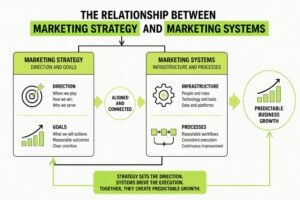
Strategy Over Tactics
The businesses struggling with digital growth in 2026 are still chasing tactics. They implement whatever they read about last week, hoping something sticks. They jump between platforms, trying to be everywhere, mastering nothing.
Real digital growth comes from strategy. You need to understand digital transformation strategies that align with your business model, not just copy what worked for someone else.
Building Your Growth Strategy
Start with business goals, then work backward:
- Define your revenue target for the next 12 months
- Calculate how many clients you need to hit that target
- Determine how many qualified leads you need to close that many clients
- Figure out how many website visitors or touchpoints create those leads
- Build systems to deliver those numbers consistently
This reverse-engineering approach keeps you focused on outcomes instead of activities. It prevents the trap of building impressive marketing systems that don't actually drive revenue.
Some businesses need more leads. Others need better conversion. Some need higher average order value. Some need improved retention. Your digital growth strategy should address your specific constraint, not implement best practices that solve someone else's problem.
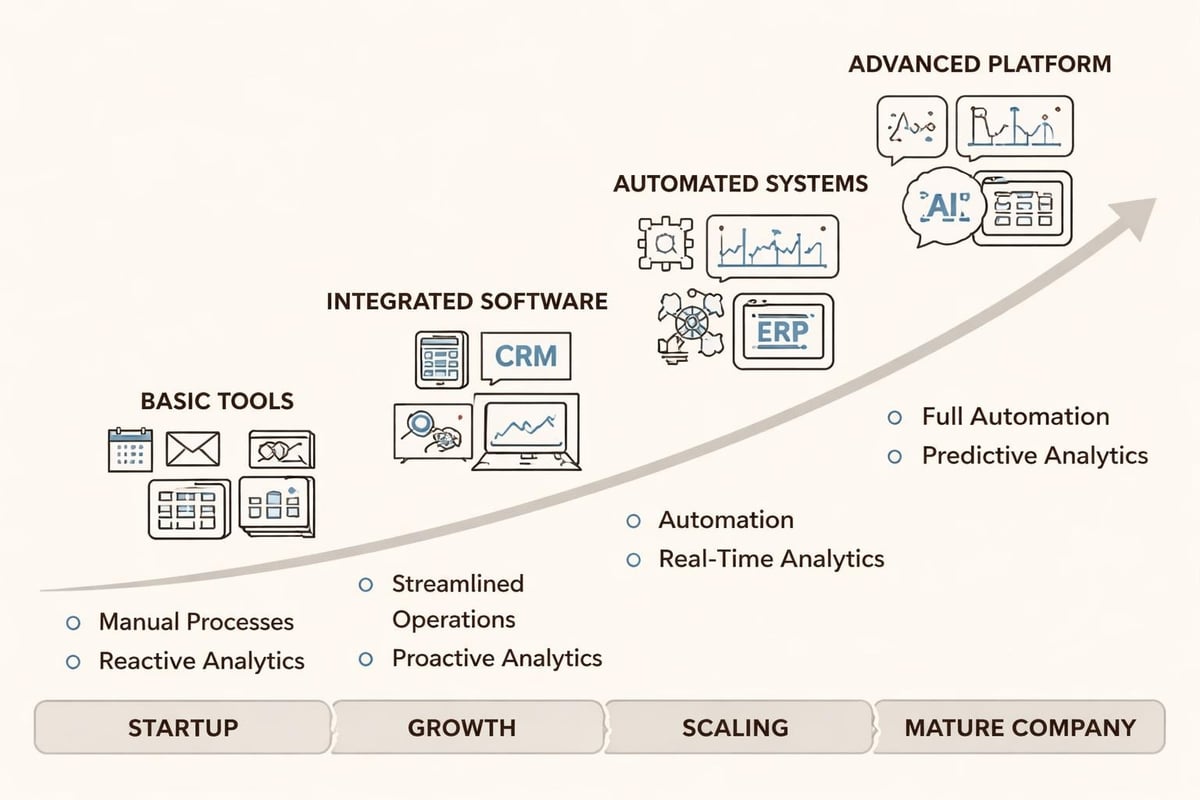
| Business Stage | Primary Focus | Key System |
|---|---|---|
| Startup | Prove offer works | Simple CRM + manual process |
| Early Growth | Generate consistent leads | Website optimization + basic automation |
| Scaling | Handle increased volume | Full automation + team systems |
| Mature | Optimize margins | Advanced analytics + retention systems |
The infrastructure that serves a business doing $500K annually will choke a business trying to reach $2M. Your digital growth strategy needs to anticipate where you're headed, not just solve for where you are.
Integration and Orchestration
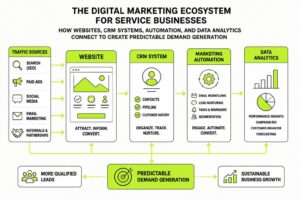
Digital growth systems only deliver results when they work together. The businesses seeing compounding returns in 2026 have connected their tools into cohesive workflows, not just implemented isolated solutions.
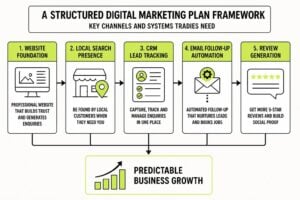
Your website captures leads. Your CRM stores them. Your automation nurtures them. Your analytics measure them. When these systems talk to each other, you get exponential improvements in efficiency and effectiveness.
Common integration wins:
- Website forms that automatically create CRM records with source tracking
- Email automation triggered by specific CRM events or behaviors
- Analytics that tie marketing spend directly to revenue outcomes
- Proposal tools that pull client data from your CRM automatically
- Scheduling systems that update your CRM when meetings are booked
Each connection removes manual work and eliminates errors. More importantly, it creates a complete picture of your customer journey. You can see exactly what happened between first website visit and final invoice, then optimize every step.
The research on business architecture practices shows that organizations with well-integrated systems achieve significantly higher success rates in digital transformation. Integration isn't a nice-to-have. It's the difference between systems that frustrate your team and systems that multiply their effectiveness.
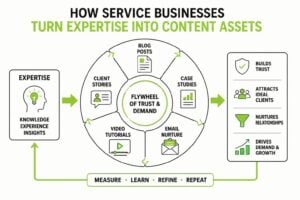
Content as Growth Infrastructure
Most businesses treat content as a marketing tactic. They write blog posts when they have time, post on social media sporadically, send emails occasionally. This approach generates minimal results because content without strategy is just noise.
Digital growth requires content infrastructure. You need systematic creation and distribution that compounds over time. Each piece should serve a specific purpose in your funnel, answer real questions from your audience, and position your expertise clearly.
Strategic Content Frameworks
The businesses using content to drive digital growth follow patterns that newer companies often miss:
- Create cornerstone content that addresses your prospects' biggest questions
- Repurpose strategically across channels instead of creating from scratch
- Build content clusters around core topics to establish authority
- Optimize for search intent, not just keywords
- Track content performance against business metrics, not just traffic
Your digital and content marketing should work as a system, not random acts of publishing. Each piece connects to others, guides prospects toward next steps, and demonstrates your expertise in ways that build trust before you ever speak to someone.
The compounding effect of good content infrastructure is substantial. A guide written in January still generates leads in December. A case study published this quarter continues proving your capabilities for years. Compare that to paid ads that stop working the moment you pause spending.
The Implementation Gap
Understanding digital growth concepts is easy. Actually implementing them is where most businesses stall. They know what they should do, but the gap between knowing and doing feels insurmountable.
This gap exists because implementation requires decisions, resources, and sustained effort. You can't build proper infrastructure in a weekend. You can't set up effective automation without understanding your processes first. You can't create content that converts without clarity on positioning and audience.
The businesses that successfully bridge this gap:
- Commit to specific systems before moving to the next shiny object
- Invest in proper setup instead of quick fixes
- Document processes before automating them
- Test and refine based on data, not assumptions
- Accept that building foundations takes time but pays dividends
Some businesses try to DIY everything, spreading their team too thin and producing mediocre results across the board. Others recognize that digital transformation often requires expertise they don't have in-house, and they bring in specialists to build the foundations right.
The key question isn't whether you can figure it out eventually. It's whether the opportunity cost of slow implementation exceeds the investment in doing it properly. Most service businesses lose more money from delayed growth than they'd spend getting expert help.
Protecting What You Build
Digital growth creates new vulnerabilities. More leads means more data to protect. More automation means more points of potential failure. More complexity means more things that need monitoring and maintenance.
The businesses that sustain growth over years, not just quarters, build protective systems from day one. They don't wait until they have a problem to implement security, backup, and redundancy.
Essential protections include:
- Data backup across all critical systems
- Access controls so team changes don't create chaos
- Documentation that survives employee turnover
- Monitoring that catches issues before they become emergencies
- Regular audits to ensure systems still serve current needs
Your CRM should be backed up automatically. Your website should have staging environments for testing. Your automations should have fail-safes that notify humans when something breaks. Your processes should be documented well enough that a new hire can execute them within days.
These protections might seem like overhead when you're small, but they become essential infrastructure as you scale. The time to implement them is before you need them, not after you've lost critical data or experienced a system failure during a crucial sales period.
Digital growth isn't magic. It's the natural result of building systems that convert attention into revenue predictably and protect what you earn. When you combine clear positioning, proper infrastructure, and strategic execution, growth becomes manageable instead of chaotic. If you're ready to remove the chaos from your marketing and build systems that scale, MDO Digital helps service businesses create the infrastructure that drives predictable growth. We design high-trust websites, build CRM and automation systems, and run data-driven marketing that compounds over time.