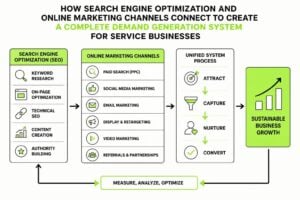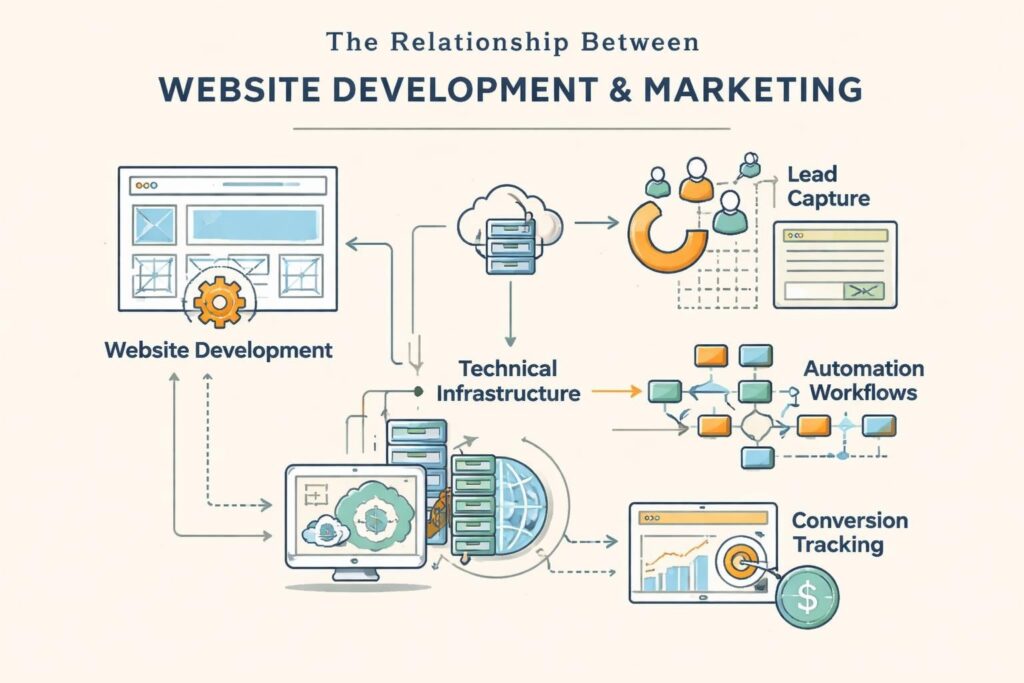
Most service businesses treat their website and their marketing as separate projects. One team builds, another promotes. The disconnect shows up everywhere: slow load times tank your ad performance, conversion tracking breaks because nobody planned for it, and the site looks professional but can't actually capture or qualify leads. Website development and marketing need to work as one system, not two departments pointing fingers when the leads dry up.
When you align your technical build with your marketing strategy from day one, you create infrastructure that compounds. Every page is built to convert. Every form feeds your CRM. Every campaign has the tracking it needs to prove ROI. It's not rocket science, but it does require thinking beyond templates and traffic.
Why Website Development and Marketing Must Work Together
Building a website without a marketing plan is like constructing a shopfront in a location you haven't researched. It might look good, but if nobody shows up or the layout confuses them when they do, you've wasted time and money.
The integration matters because:
- Your site speed directly impacts ad costs and organic rankings
- Conversion tracking requires technical setup before campaigns launch
- Lead capture systems need both design and backend infrastructure
- Content structure affects both user experience and SEO performance
- Analytics implementation shapes every marketing decision you'll make
Most agencies split these functions. You hire a developer who builds what you ask for, then a marketer who works with what they've got. The developer doesn't think about conversion rates. The marketer can't fix technical bottlenecks. You end up with a site that looks fine but performs poorly, and nobody can pinpoint why.
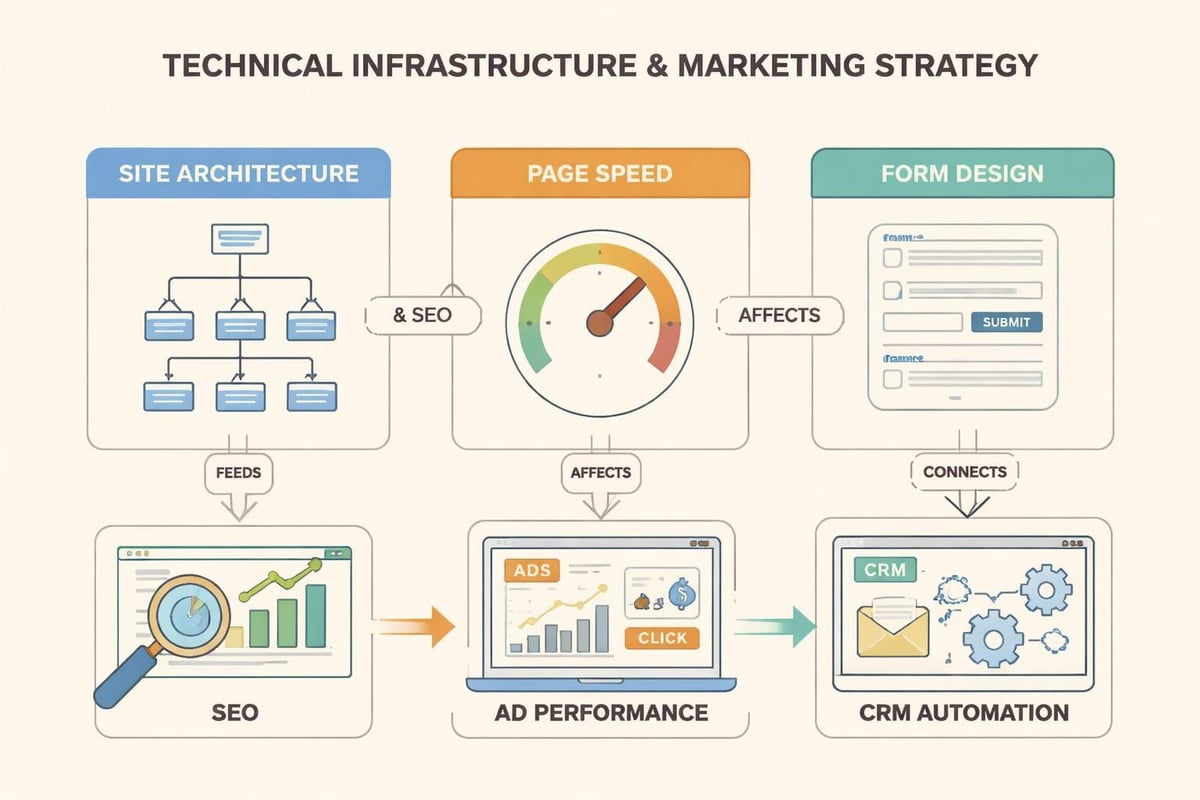
When web development best practices align with marketing needs, you build once and optimize forever. Every technical decision considers conversion impact. Every marketing tactic has the infrastructure to execute properly.
Building for Conversion From the Ground Up
Conversion-focused development means making technical choices that support business goals, not just aesthetic ones. It's choosing a platform that integrates with your CRM. It's structuring pages so the most important elements load first. It's building forms that actually talk to your automation system.
The Technical Foundation
Your hosting environment, platform choice, and site architecture all impact marketing performance. A slow site kills paid traffic ROI before your ads even run. Poor mobile performance destroys organic rankings. Broken tracking means you're flying blind.
| Technical Element | Marketing Impact | What to Prioritize |
|---|---|---|
| Page Speed | Ad quality scores, bounce rate, SEO | Image optimization, lazy loading, caching |
| Mobile Responsiveness | 60%+ of traffic, local search | Responsive web design principles |
| Analytics Setup | Attribution, optimization data | GA4, conversion tracking, event mapping |
| CRM Integration | Lead capture, nurture automation | Native integrations, webhook reliability |
| Security/SSL | Trust signals, search rankings | HTTPS, regular updates, backup systems |
These aren't nice-to-haves. They're prerequisites for marketing that works. You can't optimize campaigns without conversion data. You can't scale lead generation if your forms don't connect to follow-up systems.
MDO Digital’s services focus on this integration because separating development from marketing strategy creates expensive gaps. When your site is built to support campaigns, automation, and conversion tracking from day one, you skip the rebuild cycle most businesses face.
Conversion Architecture
Every page should have a job. Homepage qualifies and directs. Service pages educate and convert. Case studies build trust and overcome objections. Blog posts attract search traffic and demonstrate expertise.
The conversion path needs:
- Clear value propositions above the fold
- Strategic CTAs that match user intent
- Forms that ask for the right information at the right time
- Trust signals placed where objections arise
- Mobile-first layouts that work on every device
Too many businesses build beautiful pages that don't guide visitors anywhere. Or they push for the sale before establishing credibility. The site looks professional, but the conversion rate sits below 2% because nobody mapped the customer journey before building the pages.
Marketing Systems That Scale With Your Website
Website development and marketing create real leverage when your site becomes the hub of your marketing system. Not just a brochure. Not just a lead form. A central platform that captures attention, qualifies leads, feeds your CRM, and provides the data you need to improve everything over time.
Traffic Generation and On-Site Conversion
Getting visitors is pointless if they bounce. Converting visitors is impossible if nobody shows up. The two have to work together, and that requires planning both simultaneously.
Your digital marketing strategy should inform your site structure. If you're running paid search, you need dedicated landing pages optimized for conversion, not homepage traffic. If you're building SEO authority, you need content architecture that clusters topics and builds internal linking power.
Traffic source requirements:
- Paid ads demand fast-loading landing pages with single conversion goals
- Organic search needs content depth, internal linking, and technical SEO
- Social traffic requires mobile optimization and quick value delivery
- Email campaigns benefit from personalized landing experiences
- Referral traffic converts better with social proof and clear positioning
Each channel has different expectations and user intent. Your site needs to handle all of them without creating a dozen different experiences that fragment your brand.
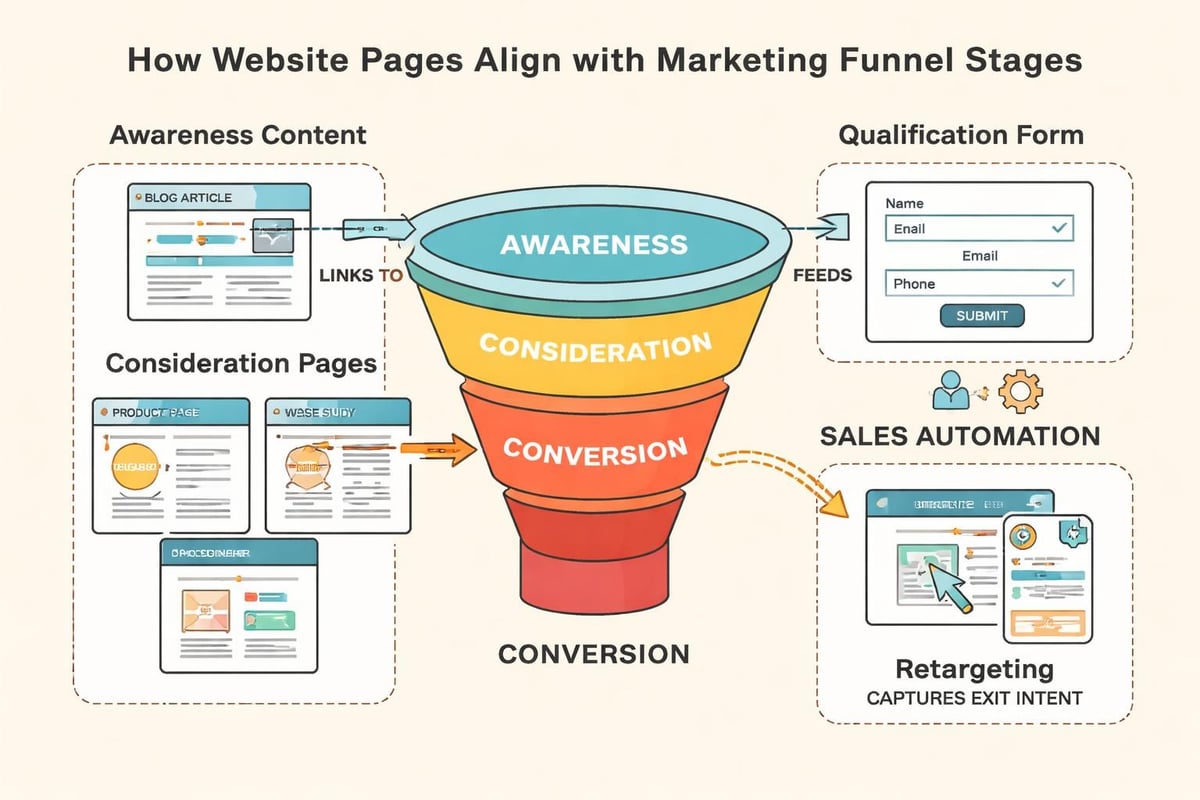
The technical implementation matters as much as the strategy. Installing Facebook Pixel wrong means your retargeting doesn't work. Setting up conversion tracking incorrectly means you optimize for the wrong actions. Missing schema markup means you lose rich snippets in search results.
CRM and Automation Infrastructure
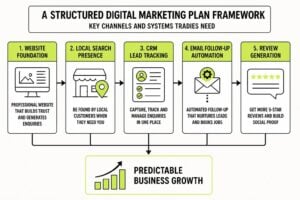
A form on your website is worthless if the lead goes nowhere. Real website development and marketing integration means every conversion point connects to systems that nurture, qualify, and convert over time.
Your CRM should receive every lead with the context it needs: which page they converted on, which ad they clicked, which service they're interested in, where they are in the buying cycle. That data powers everything that happens next.
- Lead capture feeds contact records with source tracking
- Automated sequences start based on behavior and interest level
- Qualification workflows score and route leads appropriately
- Sales handoff provides context and conversion history
- Performance tracking closes the loop from campaign to customer
Most businesses collect leads but don't have infrastructure to work them systematically. The website generates inquiries, but there's no automated follow-up. No lead scoring. No visibility into which marketing channels actually produce customers versus tire-kickers.
Building this infrastructure requires technical skills and marketing knowledge. You need webhook integrations, automation logic, and conversion tracking that all works together. When you check our case studies, you'll see this integration is where businesses unlock predictable growth.
Content Strategy as Development Requirement
Content isn't something you add after the site is built. Your content strategy should shape your information architecture, URL structure, and technical implementation before you write a single page.
SEO-Driven Site Architecture
Search visibility requires technical planning. Your category structure, URL patterns, internal linking strategy, and content hierarchy all impact rankings. These decisions happen during development, not during content creation.
Critical architecture decisions:
- Topic clusters that group related content and build authority
- URL structures that are readable, logical, and keyword-informed
- Internal linking systems that distribute page authority strategically
- Schema markup that enhances search result appearance
- XML sitemaps that guide crawlers to priority content
The sites that dominate search results in 2026 aren't necessarily those with the most content. They're the ones with the best content architecture, technical foundations, and interactive marketing elements that keep users engaged.
Content Management Systems
Your CMS choice impacts everything from SEO capability to editor efficiency to long-term maintenance costs. WordPress, Webflow, custom builds… each has tradeoffs. The right answer depends on your team's technical skills, content volume, and integration requirements.
| CMS Type | Best For | Limitations |
|---|---|---|
| WordPress | Flexibility, plugins, SEO control | Requires maintenance, security vigilance |
| Webflow | Design control, ease of use | Higher costs at scale, less flexibility |
| Custom Build | Unique requirements, full control | Development costs, ongoing maintenance |
| Shopify | E-commerce focused businesses | Limited outside commerce features |
The worst choice is picking a platform because it's trendy, then discovering it can't do what your marketing needs. Branding decisions often prioritize aesthetics over functionality, and you pay for it later when you can't implement the tracking, integrations, or automation your growth requires.
Performance Optimization for Marketing ROI
Website performance isn't a technical vanity metric. It's a marketing multiplier. Faster sites convert better, rank higher, and cost less to advertise. A two-second improvement in load time can increase conversion rates by 15-20%.
Speed as a Conversion Factor
Users expect instant access. Mobile users especially won't wait. Every second of delay increases bounce rate and tanks your conversion metrics.
- Under 2 seconds: Optimal performance, minimal abandonment
- 2-4 seconds: Acceptable for complex pages, conversion drop begins
- 4-6 seconds: Significant abandonment, ad costs increase
- Over 6 seconds: Severe performance problems, revenue loss
Most businesses know their site is slow but don't connect it to marketing performance. Your Google Ads quality score suffers. Your organic rankings drop. Your email campaigns generate clicks but no conversions because people bounce before the page loads.
Performance optimization touches everything: image compression, code minification, caching strategies, CDN implementation, database optimization. It's technical work that directly improves marketing outcomes.
Mobile-First Reality
Over 60% of web traffic comes from mobile devices. If your site isn't built mobile-first, you're designing for the minority experience and hoping it scales down. That's backwards.
Responsive web design isn't enough anymore. You need mobile-optimized page structures, touch-friendly interfaces, and lightning-fast load times on cellular connections. The sites that win mobile conversions are built for mobile from the start, not adapted from desktop layouts.
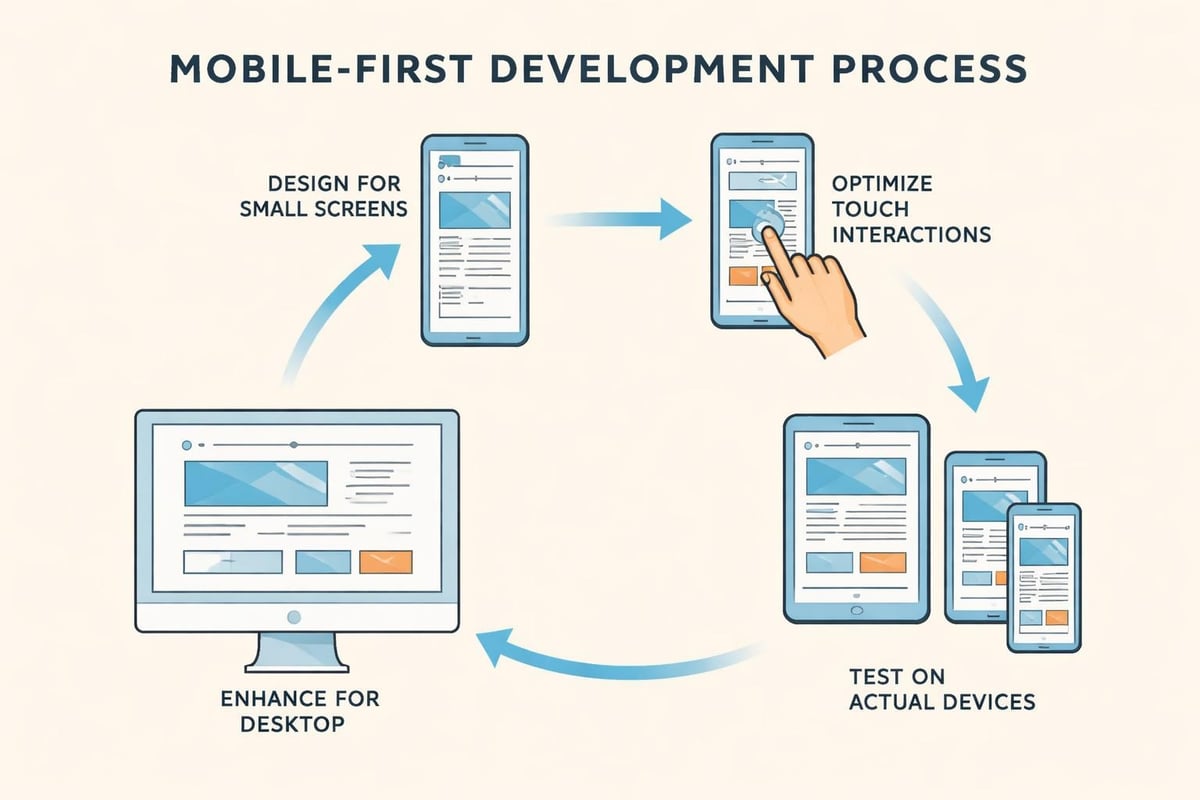
Local service businesses especially can't afford mobile failure. Your potential customers are searching on phones, often while they're actively looking for a solution. If your site loads slowly or displays poorly, they're calling your competitor before your page finishes rendering.
Data-Driven Iteration and Continuous Improvement
Website development and marketing shouldn't end at launch. The best performing sites are constantly tested, measured, and improved based on real user behavior and conversion data.
Analytics Implementation
Proper analytics setup provides the insights that drive optimization. You need to track not just pageviews, but meaningful events: form submissions, scroll depth, button clicks, video engagement, time on critical pages.
Essential tracking elements:
- Conversion goals tied to business outcomes
- Event tracking for micro-conversions and engagement
- User flow analysis to identify drop-off points
- Traffic source attribution across all channels
- Custom dimensions for detailed segmentation
Most businesses install Google Analytics and call it done. But without proper event tracking, conversion goals, and attribution modeling, you're collecting data without extracting insight.
The technical implementation happens during development. You can't retrofit comprehensive tracking without rebuilding portions of your site. That's why website development and marketing need unified planning.
A/B Testing and Optimization
Data tells you what's happening. Testing tells you what works better. Systematic A/B testing of headlines, layouts, CTAs, and conversion flows compounds improvements over time.
| Element to Test | Impact Level | Testing Priority |
|---|---|---|
| Primary CTA copy/placement | High | Test first |
| Headline value propositions | High | Test first |
| Form length/fields | High | Test first |
| Page layout/structure | Medium | Test second wave |
| Color schemes/minor design | Low | Test last |
The sites that dominate their markets aren't necessarily the ones that launched perfectly. They're the ones with systems for continuous improvement based on real performance data. Marketing and business development both benefit when you build testing infrastructure into your technical foundation.
Integration Points That Drive Results
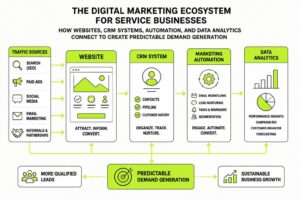
The magic happens where systems connect. Your website talks to your CRM. Your CRM triggers email sequences. Your email platform tracks engagement that informs retargeting ads. Your ads drive traffic back to optimized landing pages. Everything feeds everything else.
Marketing Automation Ecosystem
Modern website development and marketing require platforms that communicate. Siloed systems create manual work, data gaps, and missed opportunities.
Critical integrations:
- CRM connection for lead management and qualification
- Email marketing platform for nurture campaigns
- Ad platforms for conversion tracking and retargeting
- Analytics for performance measurement
- Payment processors for e-commerce or service bookings
- Scheduling tools for consultations and service delivery
Each integration point needs technical implementation. APIs, webhooks, custom code, or native connections… all require planning during development. Adding these later is possible but inefficient and often breaks other functionality.
The businesses achieving predictable demand generation don't have more marketing budget. They have better systems. Their website feeds clean data to automation that works 24/7, nurturing leads and converting buyers while they sleep.
Personalization and User Experience
Generic experiences convert poorly. Personalized marketing delivers content and offers based on user behavior, demographics, and indicated preferences.
Your website can display different content based on traffic source, return visitor status, geographic location, or previous engagement. A first-time visitor from a paid ad sees social proof and clear CTAs. A returning visitor who downloaded your guide sees the next step in the buying journey.
This requires both technical capability and marketing strategy. The development team builds the functionality. The marketing team defines the rules and content variations. Neither works without the other.
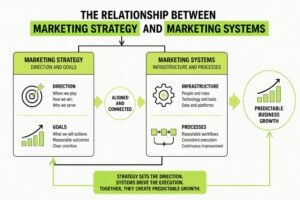
Website development and marketing create exponential results when planned together from the start. Your technical infrastructure should enable your marketing strategy, and your marketing needs should inform every development decision. When you build systems instead of just sites, growth becomes predictable rather than random. MDO Digital helps service businesses create this integration, building high-trust websites connected to CRM infrastructure and data-driven marketing that turns attention into revenue. If you're ready to remove the chaos and build structured growth, let's talk.