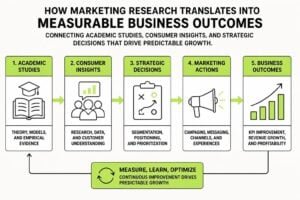
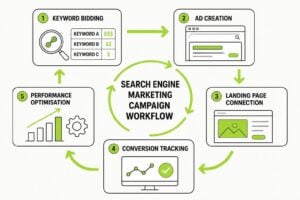
Web growth sounds like a metric you’d see on a dashboard. More visitors, higher rankings, bigger numbers. But if you’re running a service business, you already know that traffic without conversion is just noise. Real web growth is about building systems that turn attention into predictable demand. It’s the difference between a website that sits there looking pretty and one that actively generates revenue while you’re doing other things. The work isn’t glamorous, but it compounds.
What Web Growth Actually Means
Most businesses think web growth is about SEO rankings or social media followers. Those things matter, but they’re outputs, not the system itself. Web growth is the structured expansion of your digital presence in ways that create reliable business outcomes.
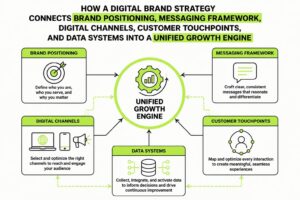
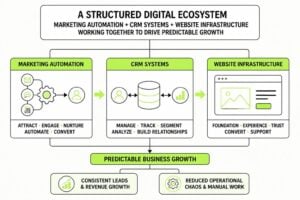
It’s three things working together:
- Traffic generation through channels you control and understand
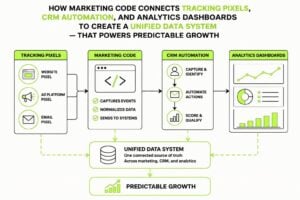
- Conversion infrastructure that captures attention and turns it into leads
- Data systems that tell you what’s working and what’s burning money
Without all three, you’re guessing. You might get lucky with a viral post or a good month, but it won’t repeat. Web development trends show that modern businesses need integrated systems, not isolated tactics.
The goal isn’t just more. It’s more of the right people, moving through a path you’ve designed, becoming customers at a rate you can predict.
The Infrastructure Problem
Here’s where most service businesses get stuck. They build a nice website, maybe run some ads, post on LinkedIn when they remember. But nothing connects. The website doesn’t capture emails. The CRM is a spreadsheet. The ads send people to a homepage that doesn’t speak to their specific problem.
That’s not web growth. That’s hope with a domain name.
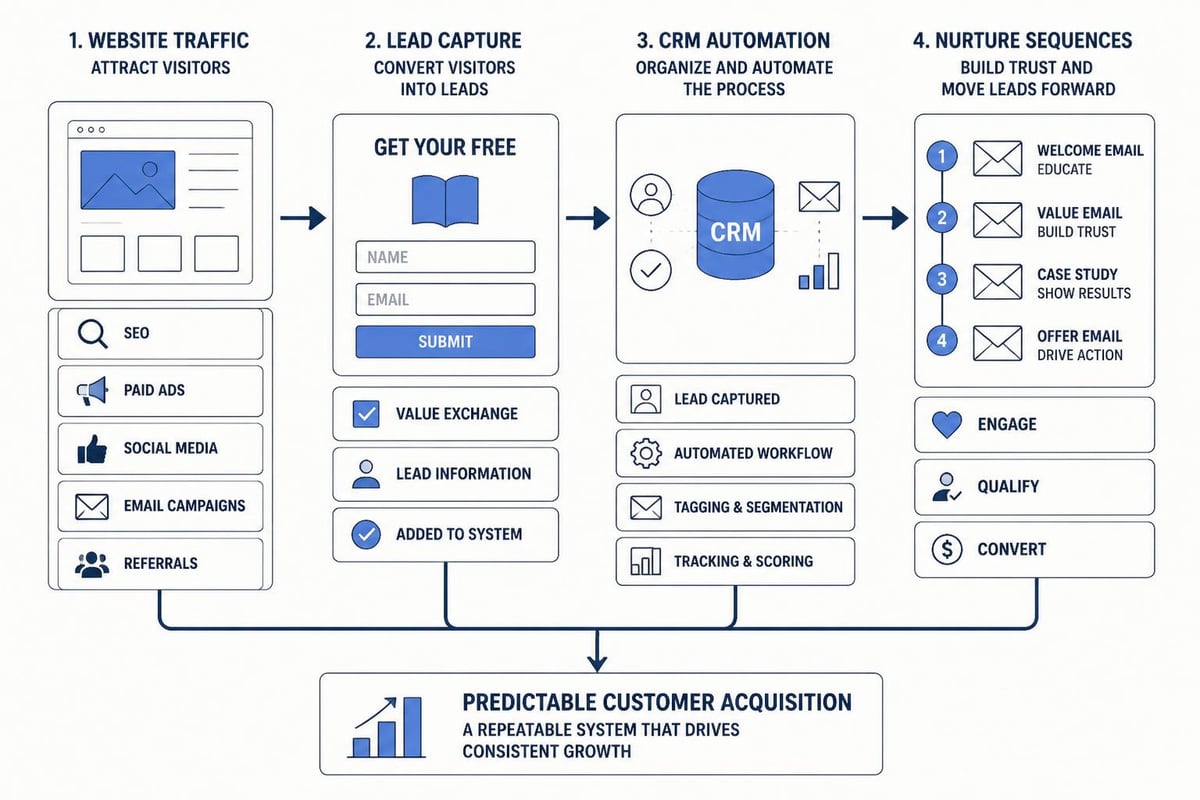
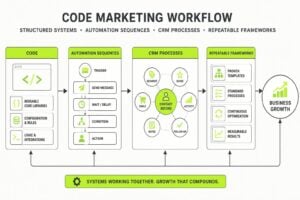
Real web growth requires plumbing. Opt-in forms that actually convert. Email sequences that nurture leads. CRM fields that track where people came from and what they care about. Analytics that show you the path from first click to paid invoice.
This infrastructure isn’t sexy. It’s backend work that most people never see. But it’s the difference between 100 visitors and zero customers versus 100 visitors and three qualified calls.
Building Traffic That Actually Matters
Traffic is easy to buy. Quality traffic that converts is harder. The best web growth strategies focus on attracting people who are already looking for what you sell.
Organic Search as a Long-Term Asset
SEO isn’t quick, but it’s the closest thing to compound interest in marketing. Every article you write, every page you optimise, every backlink you earn becomes an asset that keeps working.
The strategy is straightforward:
- Find keywords your buyers actually search (not industry jargon, real questions)
- Create content that answers those questions better than anyone else
- Build internal links that show search engines how your content connects
- Get external links from sites your audience trusts
- Update and improve based on what’s working
According to data on global web usage, internet traffic grew 19% in 2025, but much of it was bots. That’s why targeting specific buyer intent matters more than chasing volume.
Paid Channels That Support Organic
Ads aren’t the enemy of web growth. They’re accelerants when used correctly. The best approach is to use paid traffic to test messaging and offers quickly, then build organic assets around what converts.
Run LinkedIn ads to a specific offer. If it works, write blog content around that topic. Test Google Ads for buyer-intent keywords. If they convert, build SEO content to own those terms organically over time.
This creates a growth system where paid and organic support each other instead of competing for budget.
Conversion Infrastructure That Captures Value
Getting traffic is half the job. Capturing that traffic as leads is where most businesses leak revenue. Your website needs to do more than inform. It needs to convert.
The Lead Capture Framework
Every page should have a clear next step. Not “contact us” buried in the footer. A specific, valuable offer that makes sense for where the visitor is in their journey.
| Page Type | Offer Type | Example |
|---|---|---|
| Blog post | Educational resource | Checklist, template, guide |
| Service page | Qualification tool | Assessment, calculator, scorecard |
| Homepage | Core value proposition | Free consultation, demo, audit |
| Case study | Proof-based offer | Similar results analysis |
The offer needs to match the intent. Someone reading a blog post about branding isn’t ready to book a $10k project. But they might download a brand positioning worksheet.
Someone on your service page comparing options might want a free audit or consultation. Give them the next logical step, not a generic form.
CRM and Automation That Scales Follow-Up
Once you capture a lead, what happens? If the answer is “someone manually adds them to a spreadsheet and maybe sends an email,” you’re leaving money on the table.
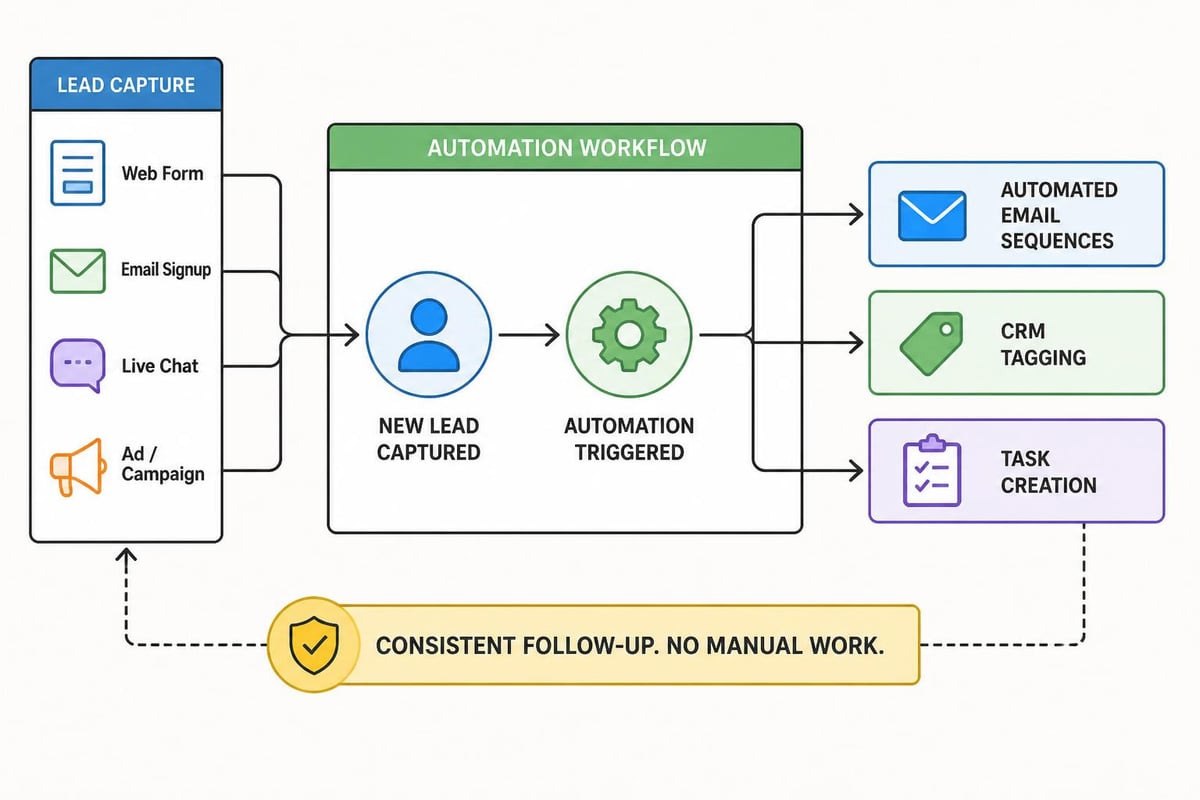
A proper web growth system uses automation to:
- Tag leads based on what they downloaded or which page they visited
- Send relevant nurture sequences that build trust over time
- Create tasks for your team when a lead shows buying signals
- Track which sources and offers produce the best customers
This isn’t complicated technology. It’s structured thinking about how leads move through your system. Tools like HubSpot, ActiveCampaign, or even a well-configured Google Sheets setup can work. The tool matters less than the logic.
For service businesses looking to build this kind of system from scratch, a framework like the 7-Step Marketing Plan provides a clear roadmap. It covers everything from defining your buyer persona to building nurture campaigns that turn leads into clients systematically.
Data Systems That Guide Decisions
Web growth only compounds if you know what’s working. Most businesses drown in data but have no insight. Google Analytics shows thousands of visitors, but you can’t tie revenue to specific campaigns. The CRM has leads, but you don’t know which ones came from SEO versus ads.
What to Actually Track
Focus on metrics that connect to money:
- Traffic source (organic, paid, referral, direct)
- Landing page (which offers attract which people)
- Lead source (which channels produce qualified leads)
- Conversion rate (traffic to lead, lead to customer)
- Customer acquisition cost (what you spend to earn a customer)
- Customer lifetime value (what a customer is worth over time)
Everything else is vanity. Pageviews don’t pay invoices. Bounce rate doesn’t close deals. Focus on the path from attention to revenue.
Building Feedback Loops
The best web growth strategies create tight feedback loops. You run a test, measure the outcome, learn something specific, and apply it to the next test.
Example loop:
- Write a blog post targeting “CRM setup for consultants”
- Track how many people visit and how many download your CRM guide
- Measure how many guide downloaders become customers
- Calculate the revenue per visitor for that post
- Create more content on high-value topics, less on low-performers
This is how web growth becomes predictable. You’re not guessing what to write or where to spend money. You’re following the data toward higher returns.
Technical Foundations That Support Growth
None of this works if your website is slow, broken, or impossible to navigate. Technical performance directly impacts web growth because it affects both search rankings and user behavior.
Speed and Core Web Vitals
Google uses page speed as a ranking factor. Users abandon sites that load slowly. If your website takes more than three seconds to load, you’re losing both rankings and conversions.
Key areas to optimize:
- Image compression and lazy loading
- Minified CSS and JavaScript
- Server response time (good hosting matters)
- Content delivery network for global reach
- Mobile performance (most traffic is mobile now)
The latest web development trends emphasize speed and user experience as non-negotiable for 2026. Jamstack architecture, WebAssembly, and other modern approaches make fast websites easier to build.
Mobile-First Design
Over 60% of web traffic comes from mobile devices. If your site isn’t designed for mobile first, you’re making web growth harder than it needs to be.
Mobile-first means:
- Touch-friendly navigation and buttons
- Readable text without zooming
- Fast load times on slower connections
- Forms that work with auto-fill
- Click-to-call buttons that actually call
Test your site on an actual phone, not just a resized browser window. Use it like a customer would. If anything frustrates you, fix it.
Content That Drives Compound Growth
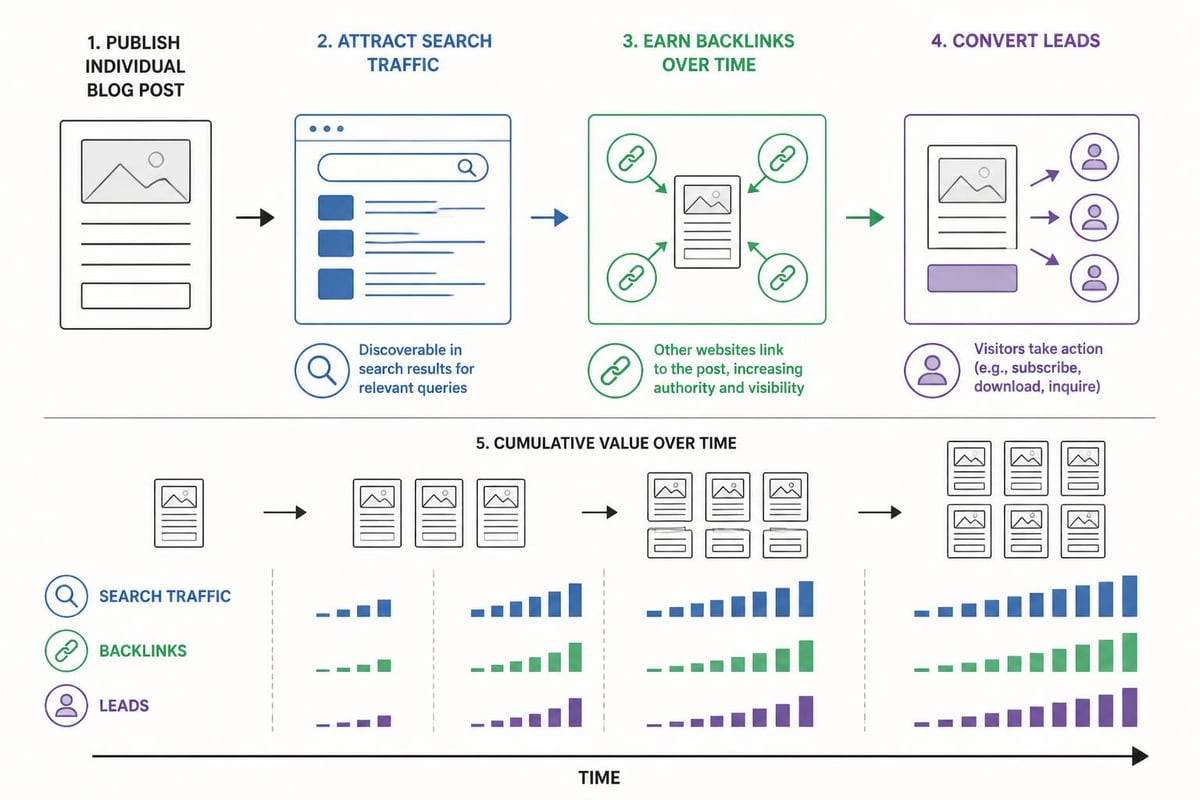
Content is the engine of sustainable web growth. Every article, case study, or resource page becomes an asset that can rank in search, attract links, and convert visitors for years.
The Long-Term Content Strategy
Most businesses treat content like social media. Post something, get a few likes, move on. That’s not how web growth works.
Your content should:
- Target buyer-intent keywords that people search when they need your service
- Answer questions more thoroughly than competitors
- Include clear next steps (opt-ins, consultations, tools)
- Link to related content to keep people on your site
- Get updated and improved as you learn what works
One well-optimized article can generate leads for years. Ten articles can build topic authority. Fifty articles can dominate a niche.
Internal Linking as a Growth Lever
Most businesses ignore internal linking, but it’s one of the most effective web growth tactics. Links between your pages tell search engines which content matters and help visitors find related information.
Strategic internal linking:
- Helps new pages rank faster by passing authority from established pages
- Keeps visitors on your site longer, improving engagement metrics
- Creates topic clusters that signal expertise to search engines
- Guides people through your content toward conversion points
When you publish about website development, link to related posts about marketing systems or CRM setup. When you write about strategy, link to tactical execution guides. Build a web of content that supports itself.
Measuring and Optimizing for Continuous Growth
Web growth isn’t a project with an end date. It’s a system that gets better over time as you learn what works for your specific audience and business model.
Monthly Review Process
Set aside time each month to review:
| Metric | Question | Action |
|---|---|---|
| Traffic by source | Which channels are growing? | Double down on winners, cut losers |
| Top landing pages | Which content converts best? | Create similar content |
| Lead source | Where do paying customers come from? | Invest more in those channels |
| Conversion rate | Are more visitors becoming leads? | Test new offers, improve pages |
| CAC vs LTV | Are we profitable? | Adjust spending or pricing |
This review doesn’t need to take hours. Thirty minutes with clear questions beats three hours staring at dashboards with no plan.
Testing Culture
The businesses that win at web growth test constantly. Not huge overhauls, just small improvements that compound.
Things worth testing:
- Headlines on landing pages
- Opt-in offer positioning and copy
- Email subject lines and send times
- Ad targeting and creative variations
- Call-to-action button text and placement
Run one test at a time. Measure the result. Keep what works. Try something new. Over a year, dozens of small wins create massive improvement.
Platform and Channel Diversification
Relying on one traffic source is risky. Algorithm changes, platform policy shifts, or competitive pressure can tank your results overnight. Web growth requires multiple channels working together.
Owned, Earned, and Paid Media
The most resilient web growth strategies balance three types of media:
- Owned: Your website, email list, CRM (you control these)
- Earned: SEO rankings, referrals, word of mouth (you earn these through quality)
- Paid: Ads, sponsored content, partnerships (you buy these)
If you only do SEO, you’re vulnerable to algorithm updates. If you only run ads, you’re renting attention forever. If you only rely on referrals, you can’t scale predictably.
Build systems in all three areas. Use paid to generate quick wins while you build owned assets. Use owned assets to reduce paid costs over time. Use earned media to multiply the impact of both.
Understanding how different marketing channels work together creates stability. When one channel dips, others keep delivering.
The Execution Reality
Everything above is useless without execution. Web growth doesn’t happen because you understand it. It happens because you build it, piece by piece, over months and years.
Most businesses fail not because they don’t know what to do, but because they don’t do it consistently. They write three blog posts and expect results. They set up a CRM and never use it. They run ads for two weeks and quit when they don’t see immediate ROI.
Web growth rewards:
- Consistent publishing schedules (not sporadic bursts)
- System improvements based on data (not gut feelings)
- Patient investment in long-term assets (not just quick wins)
- Technical excellence that supports strategy (not flashy design that ignores performance)
Start with one thing. Get it working. Add the next piece. Build momentum through small wins, not grand plans that never ship.
The businesses that grow sustainably online are rarely the ones with the biggest budgets or the smartest tactics. They’re the ones that show up, execute, measure, improve, and repeat. Week after week, month after month.
That’s web growth. Not a hack, not a secret. Just structured work that compounds over time.
Web growth is about building systems that turn digital attention into predictable business outcomes. It requires traffic infrastructure, conversion mechanisms, and data systems working together, not isolated tactics. If you’re ready to move beyond random marketing and build growth that compounds, MDO Digital helps service businesses design high-trust websites, build CRM automation, and create data-driven marketing systems that protect leads and generate reliable demand.