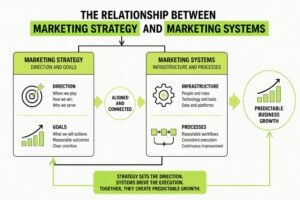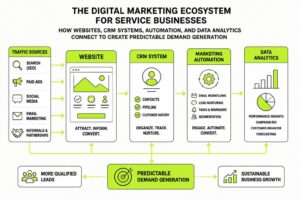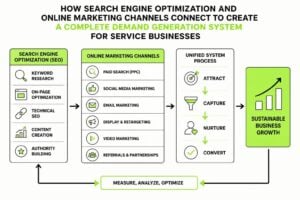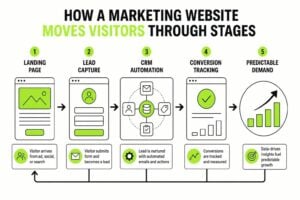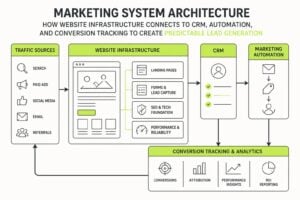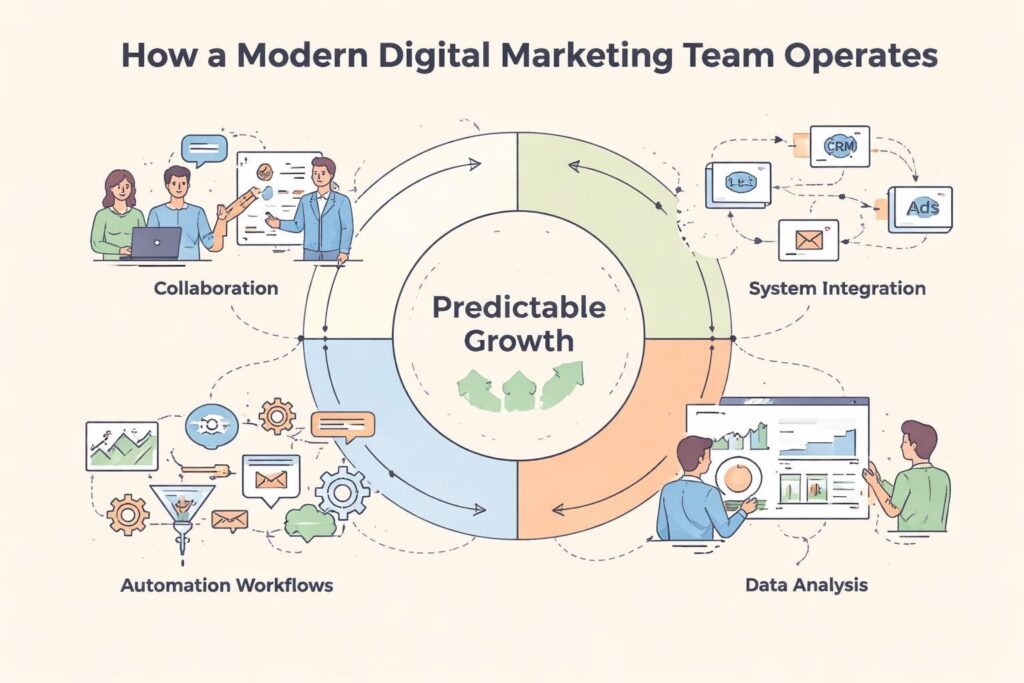
Most service-based businesses hit a wall when their marketing outgrows the founder's capacity. You can only squeeze so much from solo effort, ad hoc campaigns, and scattered tools. That's where team digital marketing becomes essential. Not just hiring more people, but building a structured, collaborative unit that operates with clarity, protects every lead, and compounds growth over time. When done right, your marketing team becomes a system that scales, not a collection of individuals working in silos.
Why Team Digital Marketing Outperforms Solo Efforts
One person can't manage SEO, paid ads, content creation, email automation, CRM infrastructure, and analytics simultaneously. Not well, anyway. Team digital marketing distributes specialized skills across the right roles while maintaining strategic alignment.
The shift from solo to team creates several advantages:
- Specialized expertise in each channel instead of surface-level knowledge everywhere
- Redundancy and resilience when team members take leave or move on
- Cross-functional perspective that spots opportunities individual contributors miss
- Faster execution through parallel workflows instead of sequential bottlenecks
Service businesses often delay building a team digital marketing structure until they're drowning. The smarter move is designing the system before you desperately need it. That means defining roles, workflows, and accountability measures that allow your marketing to scale smoothly.
The Hidden Cost of Marketing Chaos
Without structure, even talented marketers create chaos. One person runs ads without tracking lead sources properly. Another writes content that doesn't align with your service positioning. Someone else builds email campaigns in a tool that doesn't integrate with your CRM. None of it compounds.
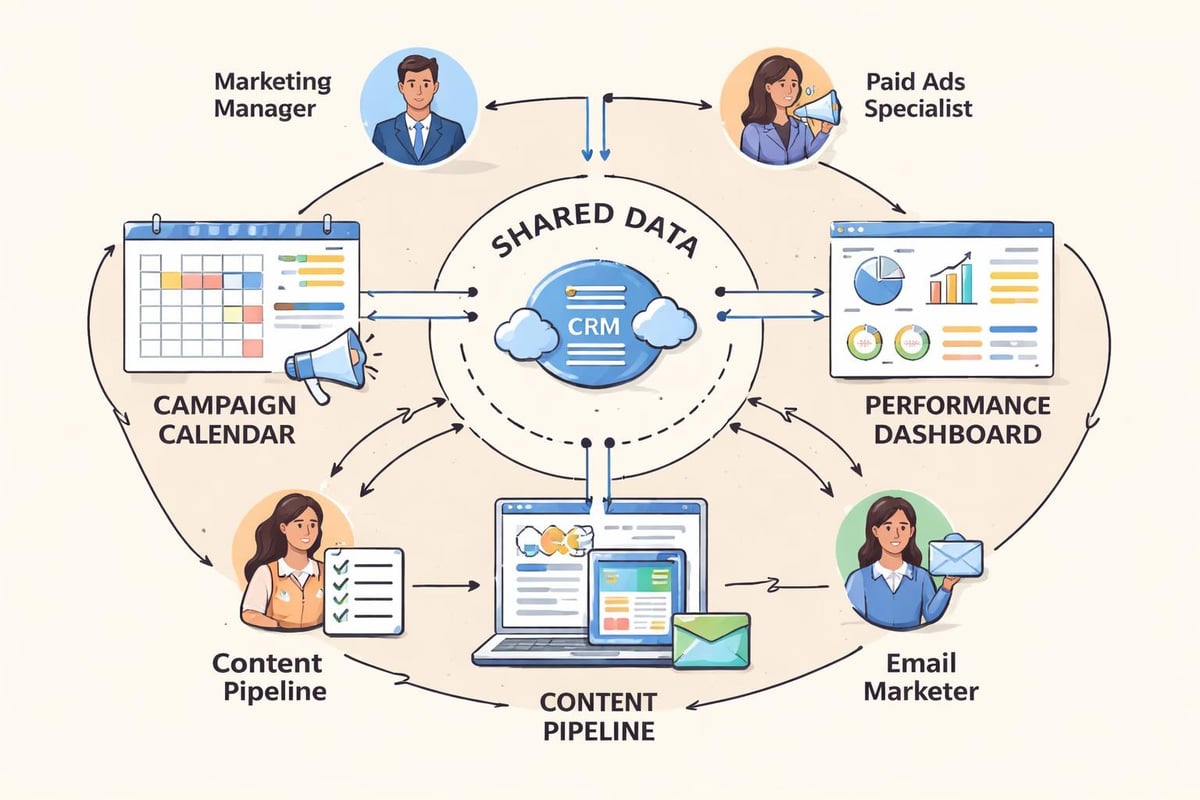
Effective team communication and clear responsibilities eliminate this fragmentation. When your team digital marketing approach includes defined handoffs, shared systems, and unified metrics, every effort builds on the last.
Structuring Your Team Digital Marketing Roles
There's no universal blueprint, but certain functions need coverage. The size and configuration depend on your business model, growth stage, and budget. What matters more than headcount is how roles interact.
Core Functions in Team Digital Marketing
| Function | Responsibility | Why It Matters |
|---|---|---|
| Strategy | Campaign planning, positioning, audience research | Sets direction and prevents wasted effort |
| Content | Writing, design, video, assets | Fuels all channels with high-trust materials |
| Demand Generation | Paid ads, SEO, email, partnerships | Drives qualified attention to your offers |
| Systems | CRM, automation, tracking, integrations | Protects leads and enables data-driven decisions |
| Analysis | Performance reporting, attribution, testing | Identifies what works and compounds wins |
Different structural approaches suit different businesses. Some centralize all digital functions under one leader. Others embed marketing specialists within service delivery teams. The key is matching structure to how your business actually sells and serves clients.
For service-based businesses, the systems function often gets overlooked. But without proper CRM and automation infrastructure, your team digital marketing efforts leak leads and miss conversion opportunities. That technical backbone matters as much as creative talent.
Specialists vs. Generalists
Early-stage teams need versatile generalists who can handle multiple channels. As you scale, specialists deliver better results in their domains. The transition point varies, but watch for these signals:
- Generalists struggle to keep up with platform changes in every channel
- Quality drops because no one has time to go deep
- Opportunities get missed because knowledge gaps exist
- Team members feel stretched across too many responsibilities
A hybrid model often works best. Senior strategists maintain broad perspective while specialists own execution in specific channels. The team digital marketing structure should enable collaboration without creating handoff bottlenecks.
Building Systems That Scale Team Digital Marketing
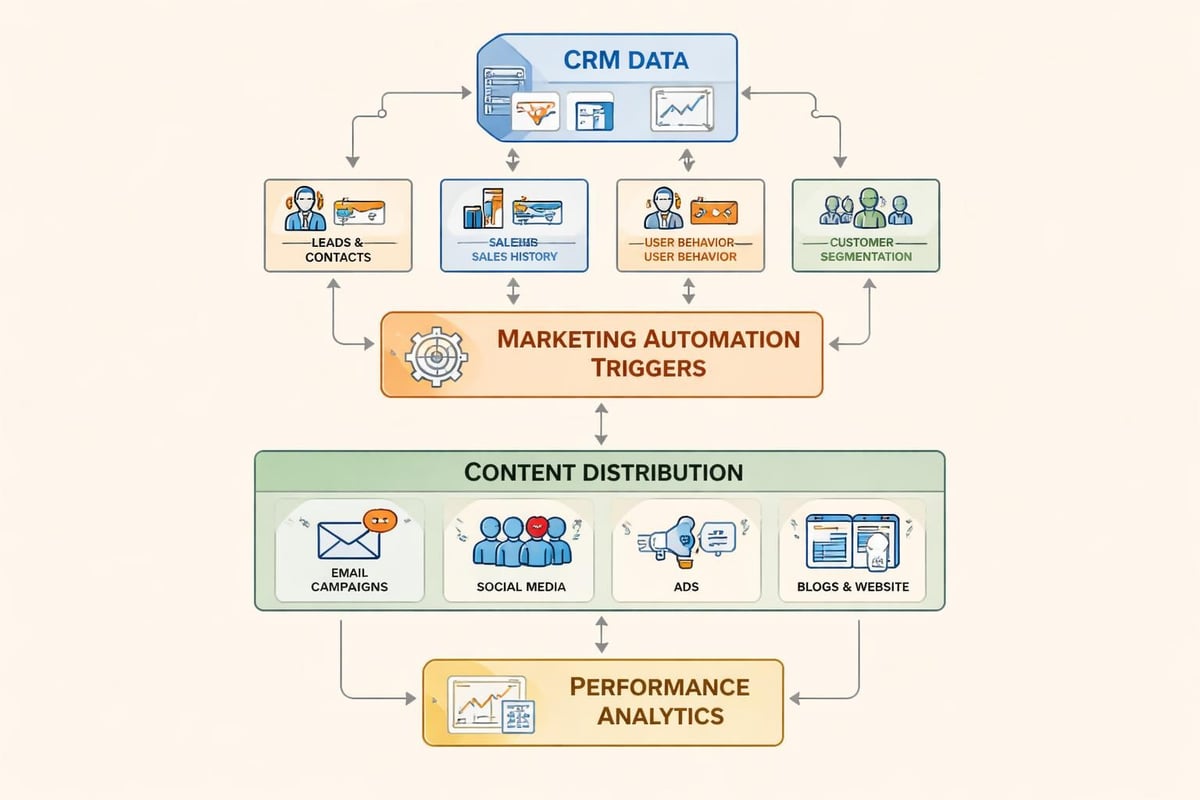
Tools don't create structure, but the right stack enables it. Most teams accumulate platforms reactively, then struggle with integration gaps and data silos. A systems-first approach starts with workflow design, then selects tools that support it.
The Team Digital Marketing Tech Stack
Your core stack should connect seamlessly:
- CRM platform as the single source of truth for lead and customer data
- Marketing automation for email sequences, lead scoring, and nurture workflows
- Content management for website, blog, and landing pages
- Analytics and attribution to track performance across channels
- Project management to coordinate campaigns and maintain accountability
Avoid the trap of adding tools without integration planning. When your paid ads manager can't see what happens after the click, or your content team doesn't know which topics drive conversions, you're flying blind. Marketing systems and infrastructure should eliminate that blindness, not create more complexity.
Workflows That Prevent Chaos
Document how work flows through your team digital marketing structure. Simple process maps beat elaborate playbooks that no one reads.
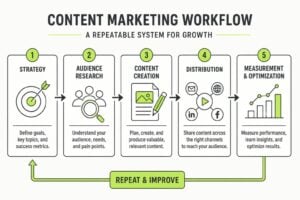
Example: Content Creation Workflow
- Strategy team identifies content opportunity from keyword research and customer questions
- Content creator drafts piece following brand guidelines and SEO brief
- Subject matter expert reviews for accuracy and depth
- Editor polishes for clarity and ensures CTAs align with current campaigns
- Designer creates supporting visuals and formats for distribution
- Demand generation team schedules promotion across email, social, and paid channels
- Analyst adds tracking parameters and sets up performance monitoring
Each step has clear ownership and completion criteria. No one guesses who's responsible or what "done" looks like. This level of process definition might feel bureaucratic initially, but it prevents the constant interruptions and rework that kill productivity.
Collaboration Practices for Team Digital Marketing Success
Even with great structure and systems, teams fail when communication breaks down. Integrated marketing strategies across teams demonstrate how collaboration drives results that siloed efforts can't match.
Regular Rhythm of Meetings
Too many meetings waste time. Too few create misalignment. Find the balance:
- Daily standups (15 min) for fast-moving campaign teams to coordinate execution
- Weekly planning (60 min) to review performance, adjust priorities, and resolve blockers
- Monthly strategy (90 min) for deeper analysis, planning next period, and cross-functional alignment
- Quarterly reviews (half day) to assess what's working, what's not, and where to invest next
Keep meetings focused and action-oriented. Every discussion should produce clear next steps with owners and deadlines. Your team digital marketing effectiveness depends on execution, not endless discussion.
Shared Visibility and Accountability
Everyone should see how their work contributes to business outcomes. Dashboards that show vanity metrics (social followers, page views) without connecting to revenue don't create accountability.
Better metrics for team digital marketing:
- Lead volume by source and campaign
- Conversion rates through each funnel stage
- Cost per acquisition by channel
- Customer lifetime value by acquisition source
- Attribution showing which touchpoints influence conversions
When the content creator sees how their blog posts influence deal pipeline three months later, they understand their impact. When the paid ads specialist tracks leads through to closed revenue, they optimize differently. Transparency creates ownership.
Data-Driven Decision Making in Team Digital Marketing
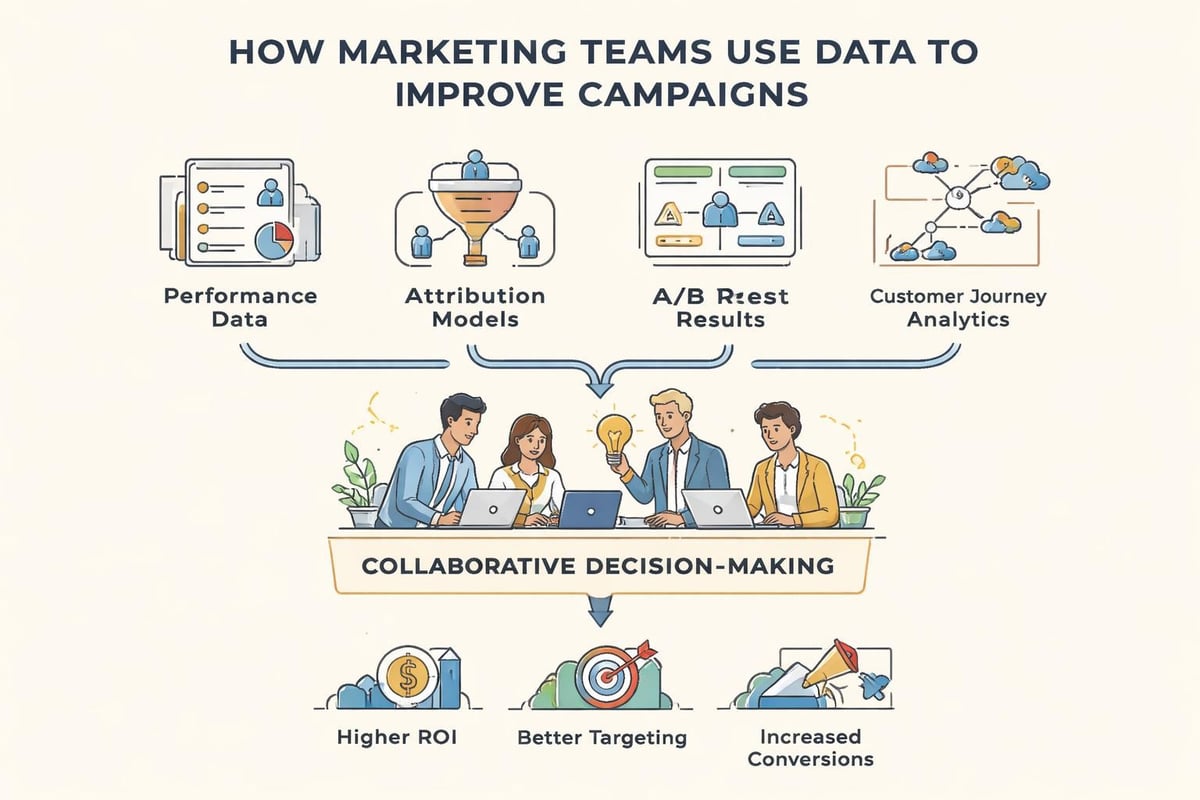
Opinions and gut feel have their place, but digital marketing best practices emphasize data as the foundation for strategic decisions. Your team digital marketing approach should make data accessible and actionable.
What to Measure and Why
Not every metric deserves attention. Focus on indicators that inform decisions:
| Metric Category | What to Track | How It Guides Decisions |
|---|---|---|
| Acquisition | Traffic sources, campaign performance, cost per lead | Where to allocate budget and effort |
| Engagement | Time on site, content consumption, email opens | What messaging and topics resonate |
| Conversion | Form completions, demo requests, quote submissions | Which offers and pages work best |
| Retention | Email engagement over time, repeat interactions | How to nurture leads effectively |
| Revenue | Closed deals, deal size, sales cycle length | Which marketing activities drive business results |
The team digital marketing structure should include regular analysis sessions where the group reviews data together, identifies patterns, and agrees on tests to run. This collaborative analysis beats individual analysts generating reports no one acts on.
Testing and Iteration
Good teams run controlled tests. Great teams learn from them systematically. Build a testing culture where:
- Hypotheses are documented before launching changes
- Test parameters are agreed (sample size, duration, success criteria)
- Results are shared regardless of whether they prove or disprove the hypothesis
- Learnings inform the next round of testing
Your growth marketing strategy compounds faster when every test builds on previous insights. Even failed tests provide value if you document what you learned.
Scaling Team Digital Marketing Without Losing Quality
Growth creates new challenges. The scrappy team digital marketing approach that worked at $500K revenue breaks at $2M. What got you here won't get you there.
When to Add Team Members
Hire strategically, not reactively. Common triggers for team expansion:
- Existing channels are maxed out and you need to open new ones
- Quality is slipping because current team is stretched too thin
- Opportunities sit unexecuted because no one has bandwidth
- Specialized expertise is needed that doesn't exist in-house
Before adding headcount, optimize existing capacity. Often teams waste 30% of their time on low-value activities, unclear handoffs, or tool friction. Fix those first.
Agency Partners vs. In-House
Not everything needs to live in-house. Marketing agency partnerships extend your team digital marketing capabilities without full-time overhead. The decision framework:
Build in-house when:
- The skill is core to your competitive advantage
- You need constant iteration and tight feedback loops
- Long-term institutional knowledge matters
- Volume justifies dedicated resources
Partner with agencies when:
- You need specialized expertise occasionally
- Ramping up quickly matters more than long-term control
- Budget constraints make full-time hiring impractical
- Fresh perspective and cross-industry experience add value
Hybrid models work well. Your core team digital marketing structure handles strategy, systems, and key channels while agency partners execute specialized tactics or overflow work.
Common Team Digital Marketing Pitfalls to Avoid
Even well-structured teams make predictable mistakes. Awareness helps you sidestep them.
Silo Mentality
When the paid ads person doesn't talk to the content creator, and the email specialist operates independently, you create disconnected customer experiences. Cross-team collaboration breaks down these silos.
Practical fixes:
- Share a unified content calendar across all channels
- Rotate team members through campaign planning sessions
- Create shared goals that require cross-functional cooperation
- Design workflows with intentional handoff points
Tool Sprawl
Every new platform promises to solve a problem. Soon you're paying for twelve tools that overlap and don't integrate. Audit your stack quarterly. Kill tools that don't earn their keep or consolidate where possible.
Misaligned Incentives
If your SEO specialist is measured on traffic but conversion rate isn't their concern, they'll optimize for the wrong thing. Align individual metrics with business outcomes. Everyone on your team digital marketing roster should care about revenue impact, not just their channel metrics.
Neglecting Systems Maintenance
CRM hygiene, automation workflows, tracking tags, and integrations degrade over time. Assign ongoing ownership for systems health. Monthly audits catch issues before they corrupt your data or break critical workflows.
Training and Development for Team Digital Marketing
Digital marketing evolves constantly. Platforms change algorithms, new channels emerge, best practices shift. Your team digital marketing capability degrades without continuous learning.
Build development into your culture:
- Budget for courses, conferences, and certifications
- Schedule regular knowledge-sharing sessions where team members teach each other
- Encourage experimentation with new tactics in controlled environments
- Subscribe to industry publications and discuss relevant insights as a team
Understanding evolving best practices keeps your team ahead of changes rather than reacting to them. The investment in learning compounds over years.
The Long Game of Team Digital Marketing
Building effective team digital marketing isn't a project with an end date. It's an ongoing practice of refinement, optimization, and adaptation. The businesses that win don't just assemble talented people; they create systems that help those people collaborate effectively and compound their efforts over time.
Your team digital marketing structure should remove chaos, protect leads, and create predictable growth. It should make complexity manageable and data actionable. Most importantly, it should free you from founder-dependent marketing so your business can scale beyond your personal capacity.
The path from solo marketing to systematic team digital marketing takes time. Start with clear role definition and communication workflows. Add systems and automation that eliminate repetitive work. Build a culture of measurement and testing. Scale deliberately when existing capacity is optimized. Stay focused on business outcomes, not activity metrics.
Building a team digital marketing structure that actually scales requires more than hiring good people. It demands integrated systems, clear workflows, and data infrastructure that turns effort into predictable results. If your marketing feels chaotic or you're ready to move beyond founder-dependent growth, MDO Digital specializes in exactly this challenge. We design the CRM backbone, automation systems, and structured processes that turn marketing teams into growth engines.