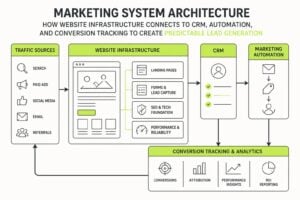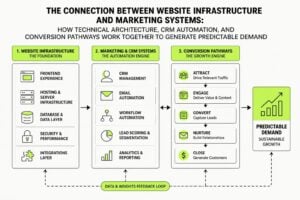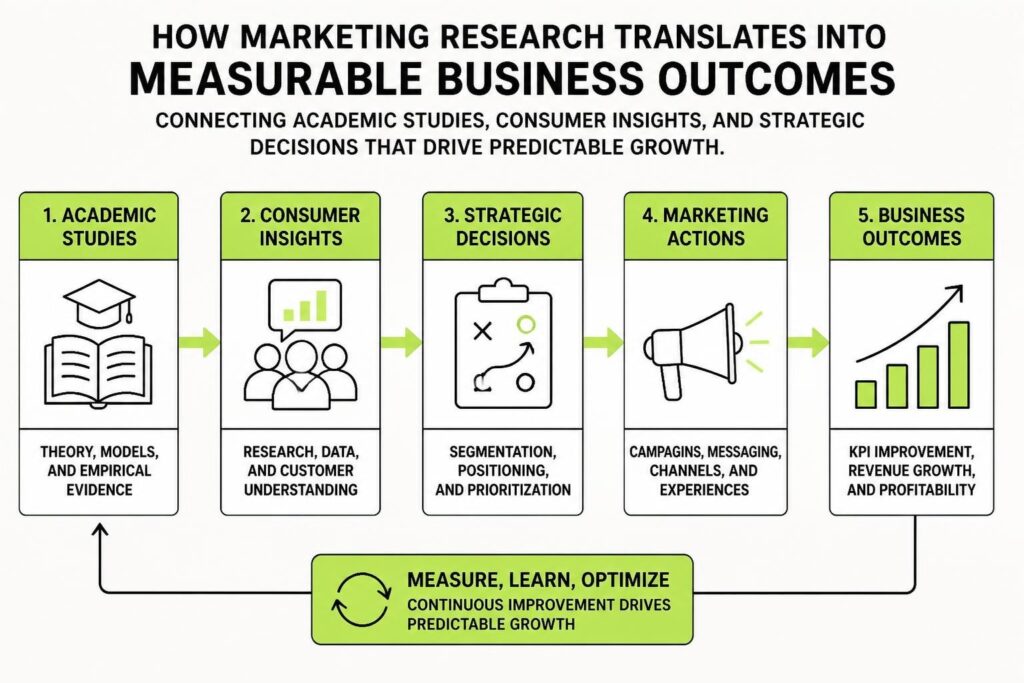
Every marketing decision you make is a bet. You're betting that your message will land, that your audience will care, that your investment will return something measurable. Some businesses make those bets on instinct alone. Others lean on evidence. Studies in marketing exist to shift the odds in your favour. They take the guesswork out of growth and replace it with patterns, data, and frameworks that hold up under pressure. The question isn't whether research matters. It's whether you're using it to build something that lasts.
What Studies in Marketing Actually Measure
Marketing research isn't abstract. It measures the mechanics of how people choose, trust, and buy.
At its core, studies in marketing explore three territories: consumer behaviour, brand perception, and campaign performance. Consumer behaviour research tracks how people make decisions, what triggers action, and which factors override logic. Brand studies measure recognition, emotional association, and long-term preference. Campaign research connects activity to outcomes, measuring reach, engagement, conversion, and retention.
The Difference Between Academic and Applied Research
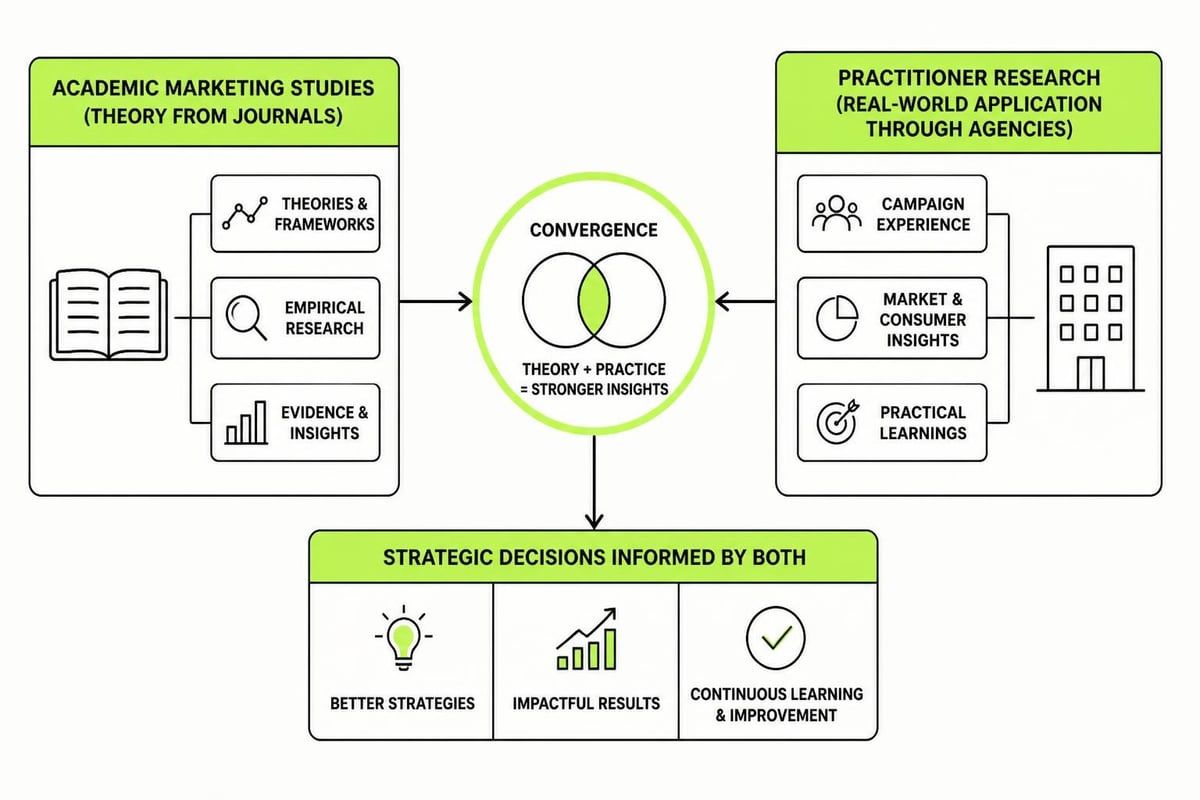
Not all studies are built the same way.
Academic research, published in journals like the Journal of Marketing Research, focuses on theory and methodology. It's rigorous, peer-reviewed, and designed to advance the field. The findings often take years to filter into practice. Applied research, on the other hand, is immediate. It's the work done by agencies, platforms, and brands to solve real problems right now. Both matter. One builds the foundation. The other builds the house.
Service businesses rarely need to read white papers, but they do need to know what those papers prove. For example, long-term brand building outperforms short-term activation, but only when the two work together. That insight came from years of brand growth studies analysing thousands of campaigns. You don't need the data tables. You just need the takeaway.
Key Themes in Current Marketing Studies
The landscape shifts every year, but certain themes remain constant.
| Theme | What It Measures | Why It Matters |
|---|---|---|
| Attribution | Which touchpoints drive conversions | Helps allocate budget intelligently |
| Personalisation | Impact of tailored messaging on response | Increases relevance and engagement |
| Privacy & Trust | How data practices affect brand perception | Protects reputation and retention |
| Media Fragmentation | ROI across channels and platforms | Prevents wasted spend |
| Customer Lifetime Value | Long-term profitability per customer | Shifts focus from acquisition to retention |
Studies in marketing over the past two years have doubled down on measurement. With privacy regulations tightening and third-party cookies disappearing, brands are rebuilding how they track performance. Nielsen’s 2024 Annual Marketing Report confirmed what many suspected: most businesses still struggle to connect marketing activity to revenue. The gap isn't a lack of data. It's a lack of structure.
How Consumer Behaviour Research Informs Strategy
People don't buy logically. They buy emotionally and justify later.
Consumer research reveals the triggers that actually move decisions. Social proof matters more than features. Scarcity accelerates action. Consistency bias makes people follow through once they've taken a small step. These aren't hacks. They're patterns that show up across cultures, industries, and decades of studies in marketing.
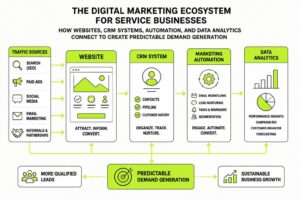
One reliable finding: trust is the bottleneck. If a prospect doesn't trust your brand, no amount of persuasion will close the gap. High-trust websites, transparent CRM processes, and consistent follow-up all reinforce credibility. That's not theory. It's infrastructure.
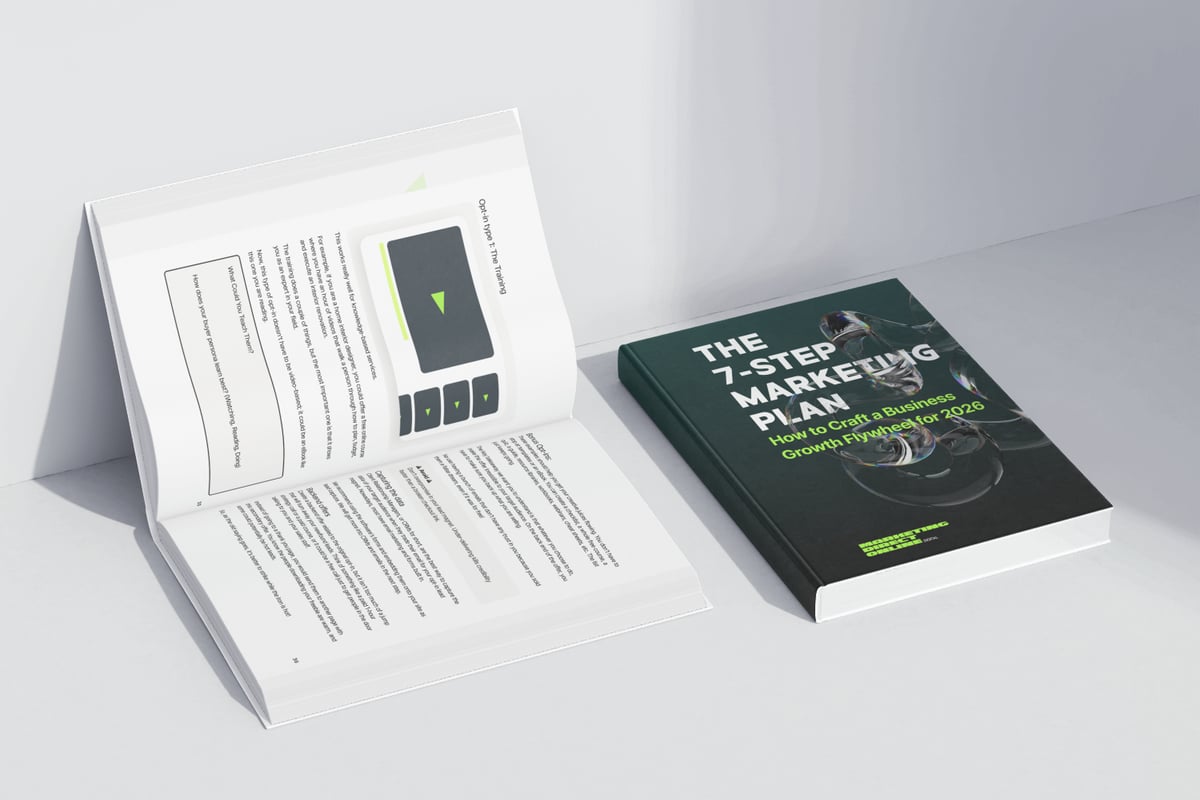
If you're building a repeatable system, frameworks like the 7-Step Marketing Plan translate research into action. It moves prospects from awareness to advocacy using a sequence proven to reduce friction and increase predictability.
Why Businesses Ignore Research (And What It Costs Them)
Most service businesses don't reject research. They just don't know how to use it.
The problem starts with access. Studies in marketing are often locked behind paywalls or written in academic language that doesn't translate to daily decisions. Even when insights are free, they're buried in 80-page reports full of caveats and footnotes. The practical takeaway gets lost.
The second issue is relevance. A study on Fortune 500 brand recall doesn't help a local consultancy. Research on TikTok trends doesn't matter if your clients aren't on TikTok. Without context, even solid findings feel useless.
What Happens When You Guess Instead of Test
Guessing costs more than money. It costs time, momentum, and trust.
- You launch campaigns that don't convert because you skipped audience research
- You waste budget on platforms where your buyers don't exist
- You change strategy every quarter because nothing sticks
- You blame the market when the real issue is misalignment
Marketing without research is like navigation without a map. You might get somewhere, but it won't be efficient and it probably won't be where you meant to go. Studies in marketing give you the map. They show what's worked, what's failed, and what conditions make the difference.
Applying Marketing Research to Real Growth
Research is only valuable when it changes what you do.
Start with segmentation. Most businesses treat their audience as one homogenous group. Studies consistently show that segmented campaigns outperform generic ones by double-digit margins. Break your list into cohorts based on behaviour, intent, or stage. Tailor messaging accordingly. Measure the difference.
Next, test messaging hierarchy. Research from the Association for Consumer Research shows that people process emotional benefits faster than rational ones. Lead with the outcome, not the feature. "Get more leads without chasing referrals" beats "our CRM has automated follow-up sequences." Both are true. One connects faster.
Building Systems That Compound Over Time
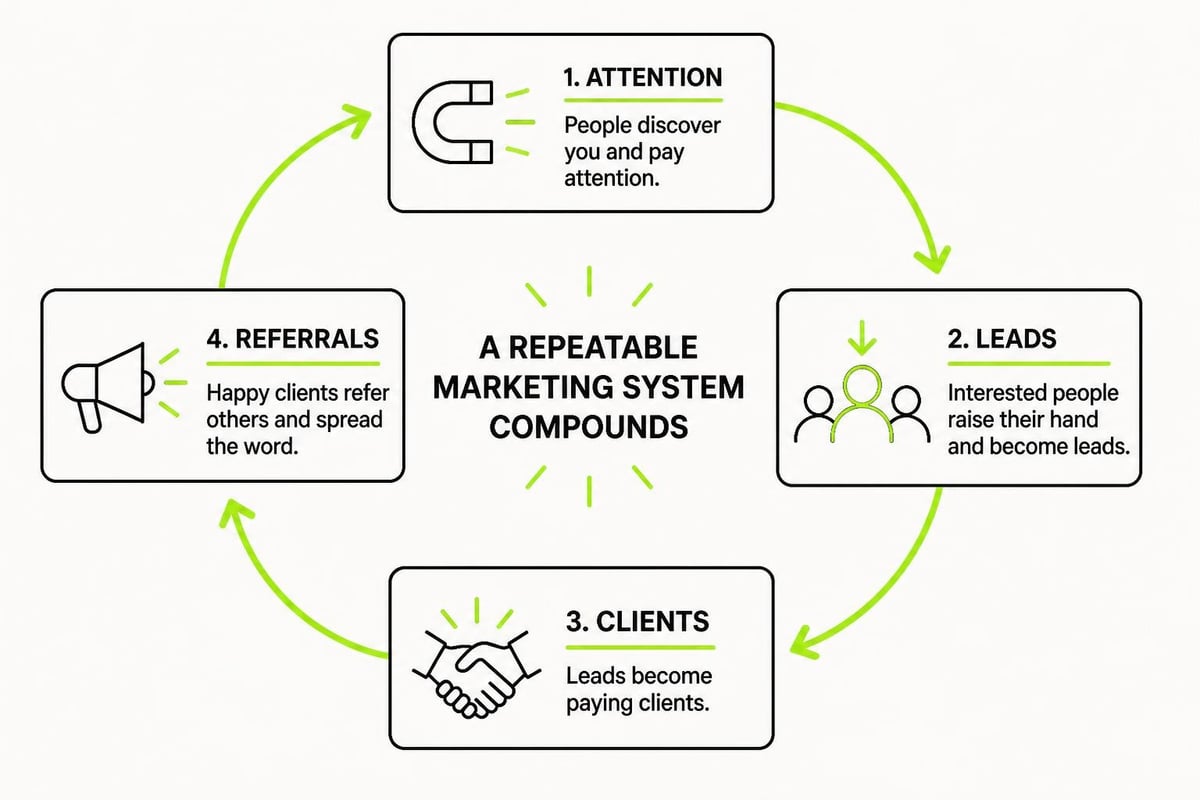
Growth doesn't come from one-off campaigns. It comes from systems that reinforce themselves.
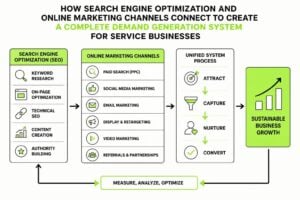
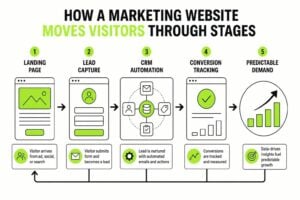
- Capture attention through content that solves a real problem
- Convert attention into an opt-in or enquiry using a clear offer
- Nurture trust with a sequence that educates and qualifies
- Deliver value that exceeds expectations
- Generate advocacy through referrals and reviews that feed the top of the funnel
Each step builds on the last. Studies in marketing confirm that businesses with documented processes grow 30% faster than those winging it. Documentation isn't bureaucracy. It's leverage. When your system is clear, you can scale it, delegate it, and improve it without starting from scratch every time.
If you're not sure where to start, building a marketing funnel gives you a practical framework that connects research to revenue.
Trends Shaping Marketing Studies in 2026
The research community is moving fast. Here's where the focus is landing.
Privacy-first measurement dominates. With third-party tracking fading, studies are exploring first-party data strategies, server-side tracking, and probabilistic attribution. The challenge isn't collecting data. It's using it ethically and effectively. Forrester’s 2025 predictions emphasise that brands earning explicit consent will outperform those relying on surveillance tactics.
AI and personalisation are splitting into two camps. One camp explores hyper-personalisation at scale. The other warns of fatigue and creepiness. Both sides agree: relevance matters, but execution determines whether it builds trust or erodes it. The winning approach balances automation with humanity.
Social Media's Shifting Role
Platform use is fragmenting. Pew Research’s 2024 social media study shows younger audiences spreading across niche platforms while older demographics consolidate on Facebook and LinkedIn. Studies in marketing now emphasise platform-audience fit over blanket reach. Posting everywhere dilutes impact. Owning one or two channels compounds it.
The practical shift: stop chasing every trend. Pick the platform where your buyers actually spend time. Build presence there. Ignore the rest.
Common Mistakes When Interpreting Studies
Not all research is equal, and not all interpretation is sound.
Correlation isn't causation. Just because two things move together doesn't mean one causes the other. A study might show that brands with larger budgets grow faster. That doesn't mean throwing money at ads will fix a weak offer. The underlying factor might be operational maturity, not spend.
Sample size matters. A case study on three businesses proves nothing. A dataset of three thousand starts to reveal patterns. Always check the sample before accepting findings.
Recency bias skews judgment. A 2018 study on Facebook ads has limited relevance today. Platforms change, audiences shift, and what worked five years ago might not work now. Favour recent research, especially in digital marketing where the landscape evolves fast.
The Danger of Cherry-Picking Data
It's easy to find a study that supports what you already believe.
Confirmation bias is real. You can find research claiming email is dead and research proving it's the highest-ROI channel. Both might be technically true under specific conditions. The discipline is reading the methodology, checking the context, and testing the findings in your own environment. Studies in marketing inform decisions, they don't make them for you.
How to Stay Current Without Drowning in Information
You don't need to read every paper. You need a filter.
Follow a few trusted sources that summarise research for practitioners. Bain’s marketing measurement whitepaper is a good example. It distills years of study into actionable frameworks. Subscribe to industry reports from Nielsen, Kantar, and Forrester. They release annual summaries that highlight the shifts worth paying attention to.
Join one community where research gets discussed in context. Whether it's a Slack group, a local meetup, or an industry forum, peer interpretation helps you spot what matters. You'll learn faster from a conversation than from a 40-page PDF.
Set aside one hour a month to skim recent findings. That's enough to stay informed without losing focus. The goal isn't mastery. It's awareness. When a client asks about TikTok or AI or attribution, you'll know the current thinking and whether it applies.
Bridging Research and Execution
Studies in marketing are useless unless they inform what you build.
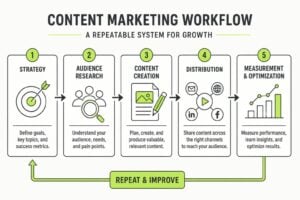
Start every quarter by reviewing one area of your system. Pick a metric that's underperforming. Find research on that specific challenge. Read the recommendations. Test one change. Measure the result. Repeat.
For example, if lead quality is weak, explore research on qualification frameworks. You'll find studies showing that asking one or two screening questions upfront improves downstream conversion by 20-40%. Implement a qualifier in your opt-in form. Track the shift. If it works, keep it. If it doesn't, iterate.
This is how research becomes part of your operation. Not as theory, but as tested improvements that compound over time. That's the difference between businesses that stall and businesses that scale with clarity. The latter treat studies in marketing like a toolkit, not a textbook.
Marketing research exists to make your decisions less risky and your systems more predictable. The best studies in marketing confirm what works, challenge what doesn't, and reveal patterns that hold up across industries and time. When you pair evidence with execution, growth stops feeling random. If you're ready to remove chaos, protect leads, and build a marketing system that compounds, MDO Digital can help you design the infrastructure that turns attention into predictable demand.