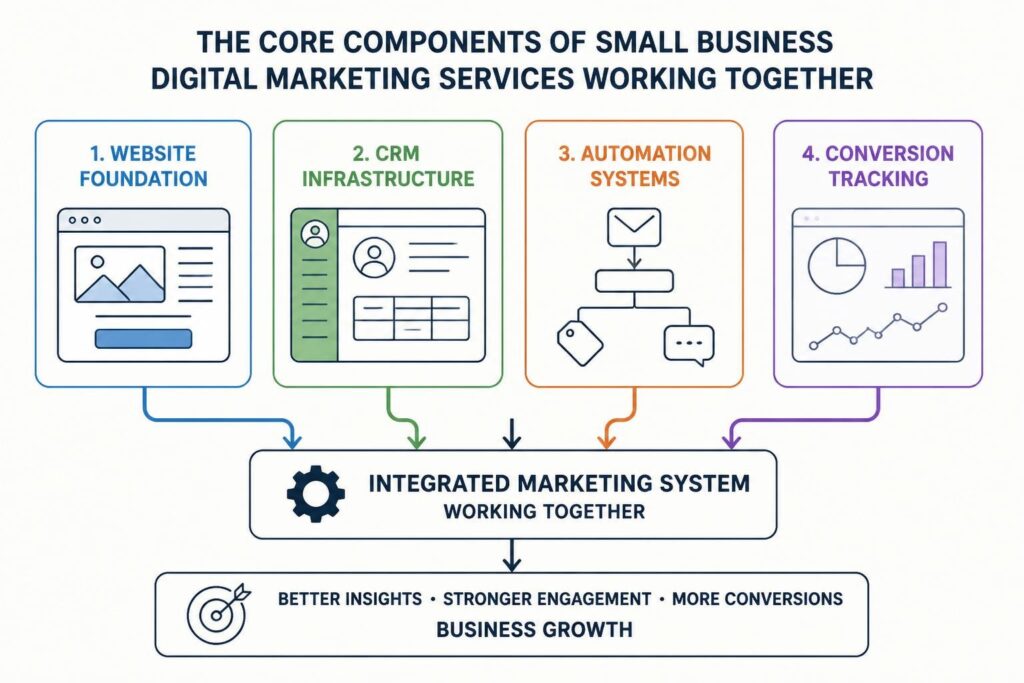
Most small businesses don’t need more marketing tactics. They need marketing that actually works without adding another full-time job to their plate. The gap between knowing you should be doing digital marketing and having it generate real revenue is where most service businesses get stuck. Small business digital marketing services exist to close that gap, but not all of them are built the same way. Some will sell you a website and disappear. Others will promise the world and deliver reports you can’t action. The right approach removes chaos, protects every lead that comes through, and builds systems that compound over time.
What Small Business Digital Marketing Services Actually Include
The term “digital marketing services” covers everything from social media posts to full-scale automation infrastructure. For service businesses, the meaningful work sits in a few specific areas.
Website design and development forms the foundation. Not just something that looks clean, but a high-trust platform that converts visitors into leads. Your website needs clear messaging, obvious next steps, and tracking that shows you exactly where people drop off.
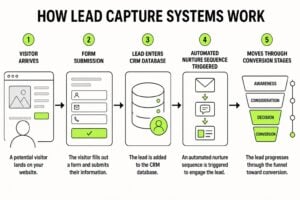
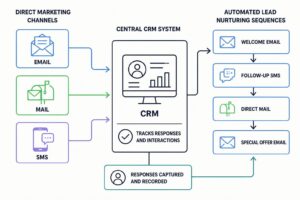
CRM and automation systems protect leads once they arrive. A form submission without a follow-up system is a wasted opportunity. Small business digital marketing services worth paying for will build you infrastructure that captures contact details, segments people based on behaviour, and nurtures them until they’re ready to buy.
Paid advertising drives predictable demand when it’s connected to proper tracking. Google Ads, Facebook, LinkedIn… the platform matters less than whether you can measure cost per lead and cost per customer. Too many small businesses run ads into a void and wonder why nothing converts.
- SEO and content marketing for organic visibility
- Email campaigns that move prospects through buying stages
- Analytics and reporting that show actual ROI
- Conversion rate optimisation to improve results over time
The Difference Between Tactics and Systems
Here’s where most small businesses waste money. They buy tactics when they need systems.
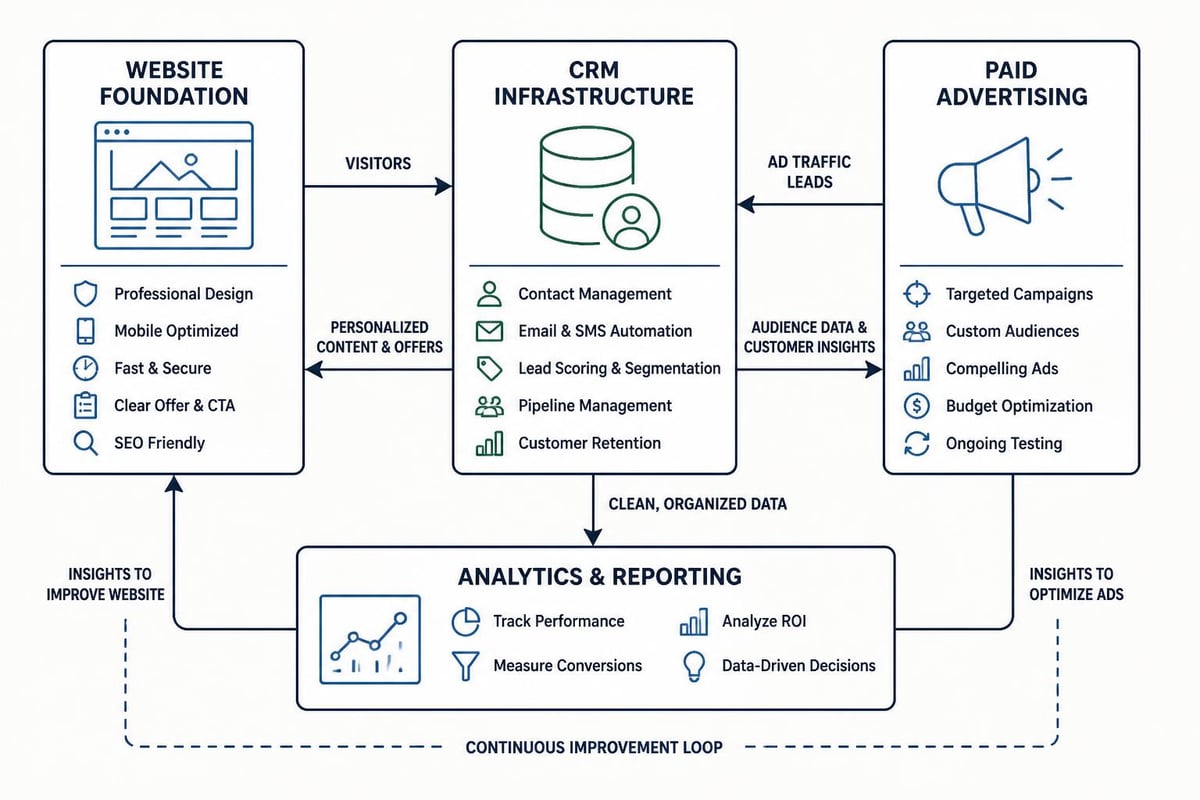
A tactic is running Facebook ads for a month. A system is running Facebook ads that feed into a CRM, trigger automated follow-ups, book discovery calls, and track revenue back to the source.
A tactic is posting on Instagram three times a week. A system is creating content that drives traffic to an opt-in offer, builds your email list, and nurtures those contacts until they convert.
Small business digital marketing services built around systems give you compounding returns. Every lead gets captured. Every interaction gets tracked. Every campaign feeds data back into better decisions. When you’re choosing a provider, ask them to explain their systems, not just their tactics.
How to Choose the Right Provider
According to BrightLocal’s 2025 SMB Marketing Report, most small businesses now recognise digital marketing as essential but struggle with execution and consistency. The question isn’t whether to invest. It’s who to trust with that investment.
In-House vs Agency vs Freelance
| Approach | Best For | Typical Cost | Main Risk |
|---|---|---|---|
| In-house team | Businesses with $500k+ revenue and ongoing needs | $60k-$120k per year | Knowledge gaps, no backup when people leave |
| Agency partnership | Service businesses scaling past $250k | $2k-$10k per month | Quality varies widely, some overpromise |
| Freelancers | Specific project work or tight budgets | $50-$200 per hour | Coordination overhead, inconsistent availability |
The in-house route works when you have volume. Hiring a marketing coordinator at $60k plus tools, training, and management overhead makes sense if you’re already doing $500k in revenue and need someone focused full-time on execution.
Collaborada’s analysis of small business marketing approaches shows agencies deliver better ROI for most service businesses between $250k and $2M in revenue. You get access to a full team (strategy, design, copywriting, ads, analytics) without the fixed cost of multiple salaries.
Freelancers fill gaps. Need a website refresh? A freelance designer can handle it. Need someone to manage your Google Ads for three months while you test a new service line? A freelancer works. But building a complete marketing system across freelancers creates coordination chaos.
What to Look For in Small Business Digital Marketing Services
Start with clarity. Can they explain what they’ll do and why it matters in plain language? If the pitch is full of jargon and vague promises about “brand awareness” and “engagement”, walk away.
Ask about their process. Good providers have structured frameworks. They’ll outline discovery, strategy, implementation, and optimisation phases. They’ll show you what success looks like at each stage.
Check their focus on systems over aesthetics. A beautiful website that doesn’t convert is decoration. Small business digital marketing services built for service businesses prioritise function first. Does the site capture leads? Does the CRM segment and nurture them? Can you track ROI on every dollar spent?
Look for data-driven decision making. Marketing without measurement is guessing. Your provider should be obsessed with tracking, testing, and iterating based on real numbers.
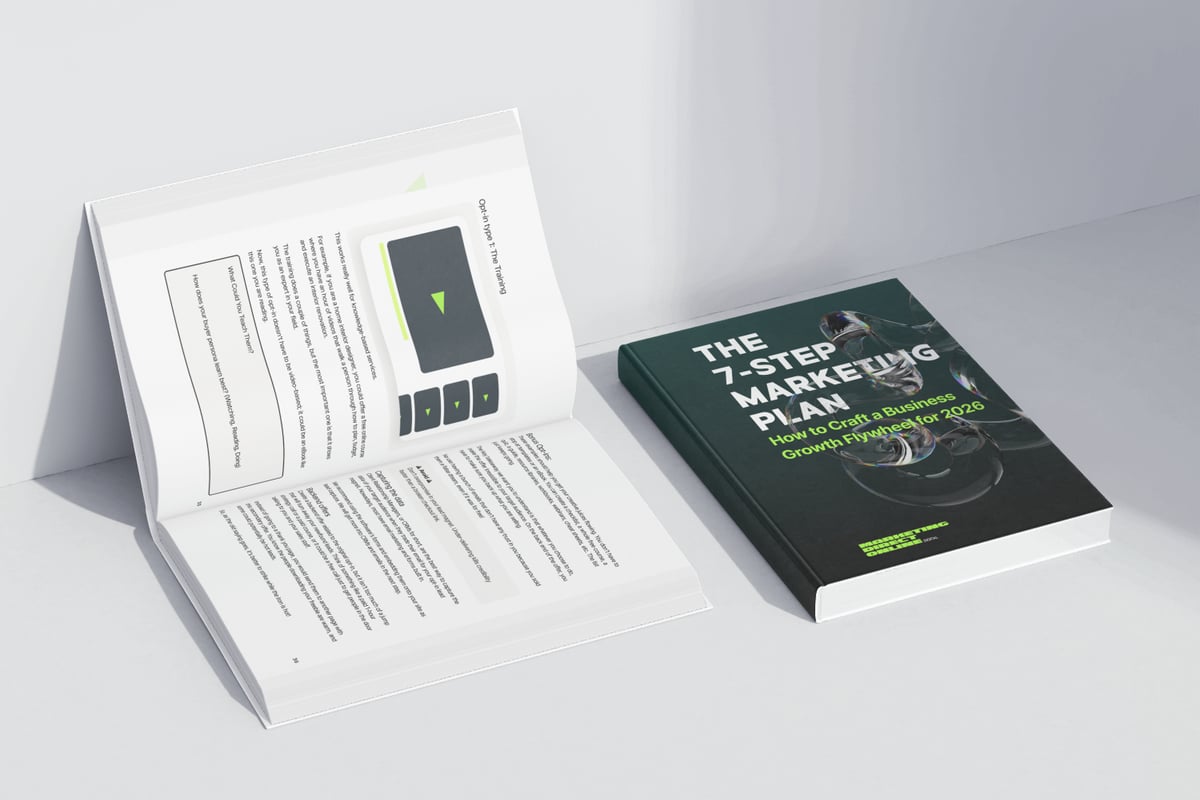
One practical framework that helps businesses build repeatable marketing systems is the 7-Step Marketing Plan. It covers everything from defining your buyer persona to generating reviews and referrals, with each step feeding into the next to create momentum. This kind of structured thinking separates providers who understand systems from those who just sell tasks.
Core Services Worth Investing In
Not every service delivers equal value. Some are foundational. Others are nice to have once the foundations are solid.
Website Development with Conversion Focus
Your website isn’t a brochure. It’s a lead generation engine. Small business digital marketing services that understand this will audit your existing site for conversion killers before they touch design.
- Clear value proposition in the first screen
- Single, obvious call to action on every key page
- Mobile-first design because over 60% of traffic comes from phones
- Fast load times (under 3 seconds or people bounce)
- Trust signals like testimonials, case studies, and credentials
The design should support the message, not overshadow it. Every element on the page should have a job. If it doesn’t guide someone closer to contacting you, it shouldn’t be there.
CRM and Marketing Automation
This is where most small businesses leak revenue. You spend money on ads, SEO, and content to drive traffic. Leads come through. Then they sit in an inbox or a spreadsheet and go cold.
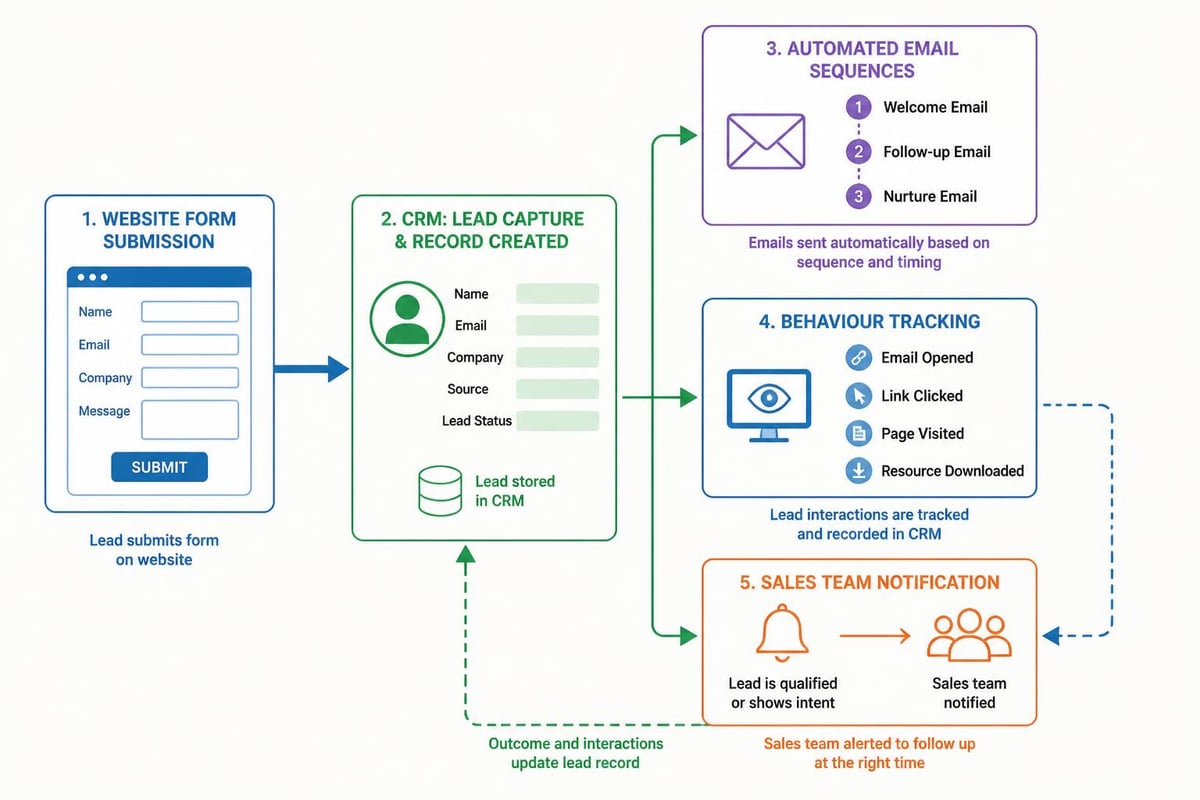
A proper CRM captures every lead, tags them based on source and behaviour, and triggers follow-up sequences automatically. When someone downloads your guide, they get a welcome email. When they visit your pricing page three times, your sales team gets notified. When they go quiet for 30 days, they re-enter a nurture sequence.
| Function | Manual Approach | Automated System |
|---|---|---|
| Lead capture | Copy-paste from forms to spreadsheet | Automatic entry into CRM with source tracking |
| Follow-up | Remember to email (or forget) | Triggered sequences based on actions |
| Segmentation | None or manual tagging | Automatic based on behaviour and source |
| Sales handoff | Email or Slack message | Task created for sales with full context |
The difference between these approaches isn’t just time saved. It’s leads that convert versus leads that disappear.
Paid Advertising with Proper Attribution
Google Ads and Facebook campaigns are tools, not strategies. The strategy is knowing your cost per lead, cost per customer, and lifetime value, then using ads to acquire customers profitably.
Good small business digital marketing services will:
- Set up conversion tracking properly (not just clicks or impressions)
- Test ad creative and targeting systematically
- Build audiences based on website behaviour and CRM data
- Scale what works and kill what doesn’t, based on actual cost per acquisition
- Connect ad spend to revenue, not vanity metrics
If your provider talks about impressions and engagement but can’t tell you how many customers each campaign generated, you’re paying for awareness theatre.
Common Mistakes Small Businesses Make
Even when you’re working with competent providers, certain mistakes kill results. Most of them come down to misaligned expectations or trying to skip foundational work.
Jumping to tactics before strategy. Running ads before your website converts is burning money. Building a fancy site before you’ve clarified your message creates expensive confusion. The sequence matters. Message, then website, then traffic, then optimisation.
Hiring based on price alone. The cheapest provider usually delivers the least value. Not because they’re incompetent, but because good marketing systems take time to build. If someone quotes $500 for a website and complete marketing system, they’re either lying or building you a template that won’t convert. AMW’s guide to marketing agencies shows realistic pricing ranges for different service levels.
Expecting immediate results. SEO takes 4-6 months to gain traction. CRM and automation need data before they optimise. Even paid ads require testing phases. Small business digital marketing services work best when you commit to at least 6-12 months of consistent effort. The businesses that win are the ones that play long enough for compounding to kick in.
Building a Marketing System That Scales
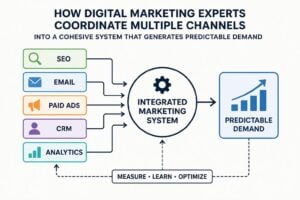
The goal isn’t just to “do digital marketing.” It’s to build infrastructure that generates predictable demand without requiring more hours from you.
Here’s what that looks like in practice:
Month 1-3: Foundation
- Messaging clarity. Who you serve, what problem you solve, why you’re different.
- Website optimisation. High-trust design, clear CTAs, conversion tracking installed.
- CRM setup. Lead capture forms connected, basic automation sequences built.
Month 4-6: Traffic and Testing
- Paid campaigns launch. Start with small budgets, test messaging and audiences.
- Content creation begins. SEO-focused articles, case studies, resources.
- Email nurture sequences. Automated follow-up for different lead types.
Month 7-12: Optimisation and Scale
- Double down on what converts. More budget to winning ad campaigns.
- Improve weak points. A/B test landing pages, refine email sequences.
- Expand channels. Add LinkedIn, retargeting, partnerships based on data.
The service businesses that scale profitably don’t hop from tactic to tactic. They build systems, measure ruthlessly, and iterate based on what the data shows. Small business digital marketing services worth paying for will guide you through this sequence rather than selling you everything at once.
How Systems Create Compounding Growth
Marketing systems compound in ways individual tactics never can. Every lead you capture this month can be nurtured for 6-12 months. Every piece of content you publish continues to rank and drive traffic. Every automation you build runs without extra effort.
Compare that to buying ads with no follow-up system. You get a spike in traffic, some leads come through, most go cold, and next month you’re starting from zero again.
Or posting on social media without a CRM. You might get engagement, but if those people don’t end up in a system that nurtures them toward a purchase, you’re just creating noise.
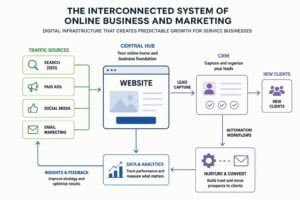
The multiplier effect happens when systems connect:
- Website converts visitors to leads
- CRM captures and segments those leads
- Automation nurtures them with relevant content
- Paid ads retarget people who visited but didn’t convert
- Email campaigns move prospects through buying stages
- Analytics show you which sources deliver customers, so you invest more there
Each piece makes the others more effective. That’s how digital marketing becomes sustainable growth rather than a monthly expense you’re not sure is working.
What Good Execution Looks Like
Choosing small business digital marketing services is one thing. Making sure they execute well is another. Here’s how to know if things are on track.
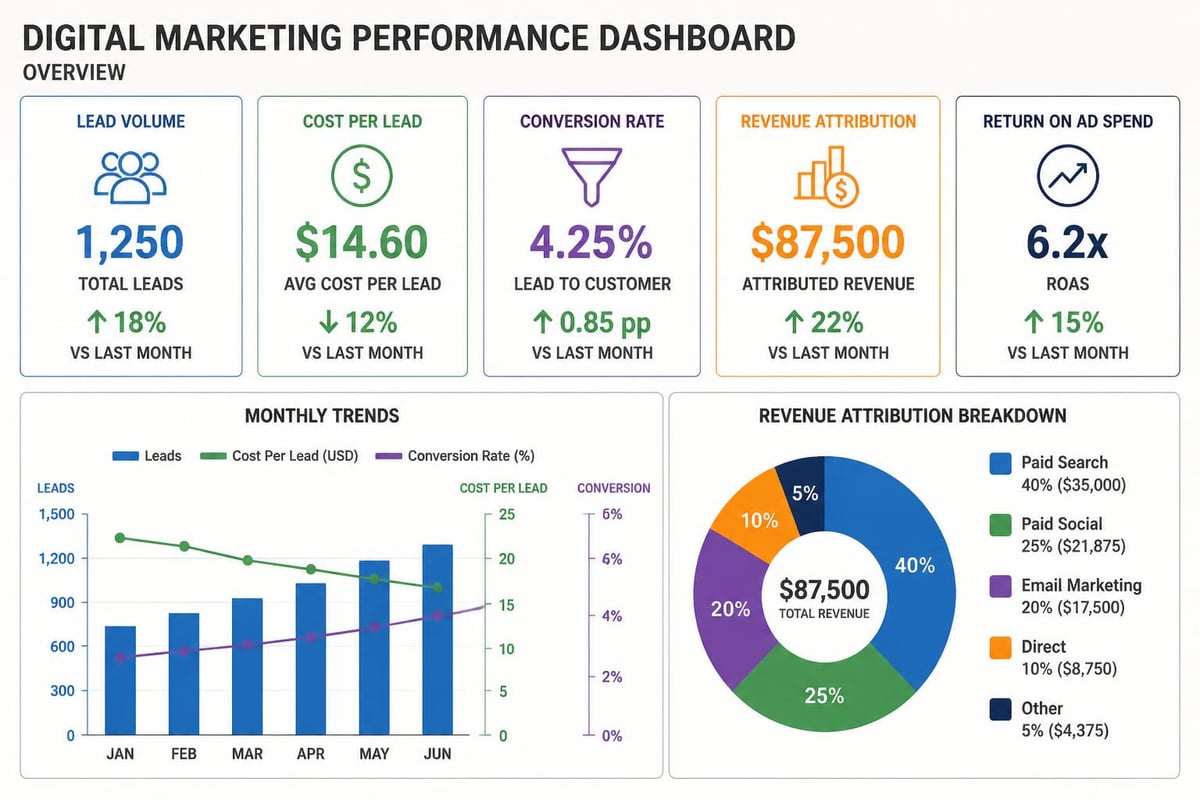
You should get regular reporting that makes sense. Not 40-page PDFs full of charts. A clear summary showing leads generated, cost per lead, conversion rates, and revenue attributed to marketing. If you can’t understand the report in five minutes, it’s not useful.
You should see consistent output. Content published on schedule. Ad campaigns optimised weekly. Email sequences tested and improved monthly. Marketing systems require maintenance. If your provider goes quiet for weeks, that’s a red flag.
You should have direct access to the person or team doing the work. Not a sales rep who disappeared after you signed. Not an account manager who relays messages. The people building your systems should be explaining what they’re doing and why.
Most importantly, you should feel less chaos, not more. Good small business digital marketing services simplify your operation. Leads come through predictable channels. Follow-up happens automatically. You have clarity on what’s working and what needs adjustment. If working with a provider feels like you’ve added complexity, something’s wrong.
Finding the Right Fit for Your Business Stage
What you need from digital marketing changes as your business grows. A solo consultant has different requirements than a $2M service business with a sales team.
Under $100k revenue: Focus on fundamentals. A professional website that converts. Basic CRM to capture leads. One or two traffic sources that you execute consistently. Trying to do everything spreads you too thin. Get the basics working before you expand.
$100k to $500k: This is where systems start to pay off. Invest in proper automation. Build email sequences that nurture leads while you focus on delivery. Start testing paid ads to supplement organic traffic. The goal here is reducing the manual work of following up while increasing conversion rates.
$500k to $2M: Now you need integrated systems across multiple channels. Your website, CRM, email platform, and ad accounts should all talk to each other. You should have clear attribution showing which marketing dollars produce customers. This is where partnering with an agency focused on marketing systems often makes more sense than trying to coordinate freelancers or hiring in-house.
Over $2M: You’re likely running multiple services or entering new markets. Your marketing systems need to segment audiences, personalise messaging, and scale without breaking. You need a team that can handle complexity while keeping everything measurable.
One Little Web’s list of digital marketing agencies specialising in small business shows the range of providers available. The key is matching their expertise to your stage and needs, not just their portfolio or pricing.
Questions to Ask Before You Commit
Don’t sign anything until you’ve asked these questions and understood the answers:
- What does success look like in 90 days? Six months? A year? Vague answers like “increased visibility” aren’t enough. You want specific metrics.
- How will you measure ROI? If they can’t explain how marketing spend connects to revenue, they’re not building systems.
- What happens if results don’t meet expectations? Good providers have clear processes for diagnosing problems and adjusting strategy.
- Who actually does the work? Are you getting the senior strategist who pitched you, or does everything get handed to a junior team member?
- What do you need from us to be successful? Marketing isn’t magic. You’ll need to provide input, approve content, give feedback. Make sure expectations are clear.
- How do you handle communication and reporting? Weekly check-ins? Monthly reports? Ad-hoc Slack messages? Know what you’re getting into.
The businesses that get the most value from small business digital marketing services are the ones who treat providers as partners, not vendors. You’re building systems together. That requires trust, transparency, and clear communication on both sides.
Small business digital marketing services work when they’re built around systems, not tactics. The right approach removes the chaos of trying to do everything yourself while giving you predictable demand and protected leads. MDO Digital helps service businesses build exactly this kind of infrastructure. If you’re ready to stop guessing and start scaling with clarity, let’s talk.