Most businesses approach services for digital marketing like a buffet. They pick what looks good, try a bit of everything, and wonder why nothing sticks. The reality is simpler and harder at the same time. You don't need every service. You need the right ones, in the right order, working as a system. This article walks through what actually matters in 2026, what's changed, and how to build marketing infrastructure that compounds instead of just consuming budget.
What Services for Digital Marketing Actually Include
The term gets thrown around loosely, but services for digital marketing fall into clear categories. Each serves a specific function in your growth system.
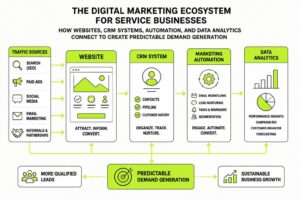
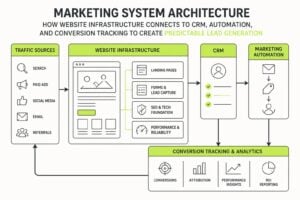
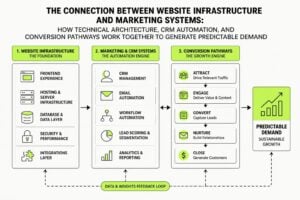
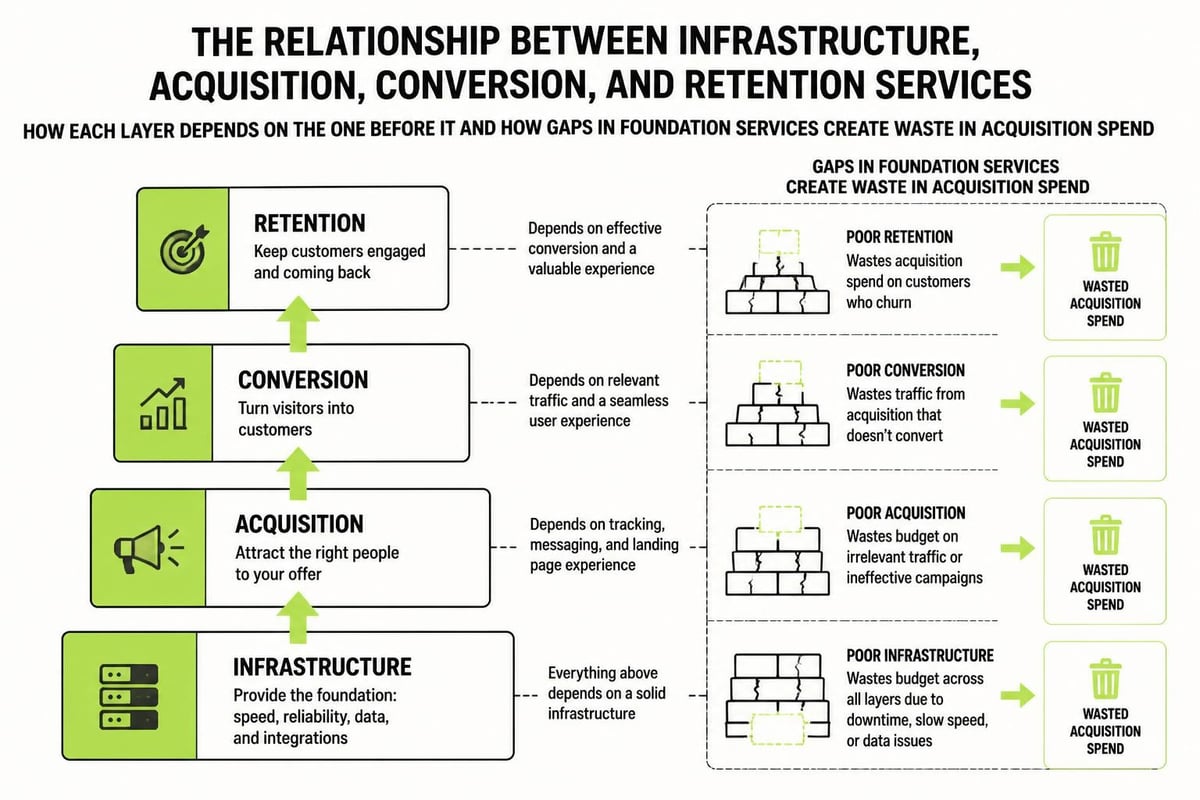
Infrastructure services form the foundation. This includes website design and development, CRM setup, marketing automation, and analytics implementation. Without these, you're building on sand.
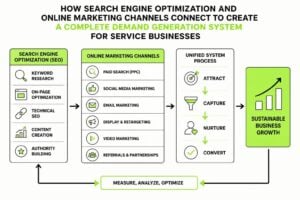
Acquisition services focus on getting attention. SEO, paid advertising, content marketing, social media management, and email campaigns all live here. They bring people into your ecosystem.
Conversion services turn attention into outcomes. Landing page optimisation, funnel design, copywriting, and lead nurturing systems make sure you don't waste the traffic you earn.
Retention services keep people engaged. Email sequences, customer experience design, review generation, and referral programs compound your growth by turning clients into advocates.
The mistake most businesses make is jumping straight to acquisition without infrastructure. You end up with leads falling through cracks, data scattered across platforms, and no way to measure what actually works.
SEO and Organic Search Services
Search remains the most reliable long-term channel for service businesses. Unlike paid ads that stop when budget runs out, organic visibility compounds over time.
Modern SEO services include technical audits, on-page optimisation, content strategy, and authority building through strategic link building. The work has shifted from keyword stuffing to understanding search intent and creating genuinely useful resources.
What Changed in 2026
Google's AI overviews and ChatGPT integrations mean showing up in traditional search results isn't enough anymore. Artificial Intelligence Optimization has become essential for service businesses wanting to appear in AI-generated recommendations.
The fundamentals haven't changed though. Clear site structure, fast loading speeds, mobile optimisation, and content that answers real questions still win. What's different is the importance of structured data and entity-based SEO over simple keyword targeting.
Key SEO service components in 2026:
- Technical infrastructure and Core Web Vitals optimisation
- Entity mapping and knowledge graph optimisation
- AI platform visibility (ChatGPT, Claude, Perplexity)
- Traditional search engine positioning
- Local SEO for service area businesses
- Content strategy aligned with buyer journey stages
The return on SEO compounds. Year one might feel slow. Year three, you're getting qualified leads while competitors are still paying for clicks. For service businesses with long customer lifecycles, this matters enormously.
Paid Advertising Services
Paid channels offer speed and control that organic can't match. But they're also the easiest place to burn money without building long-term value.
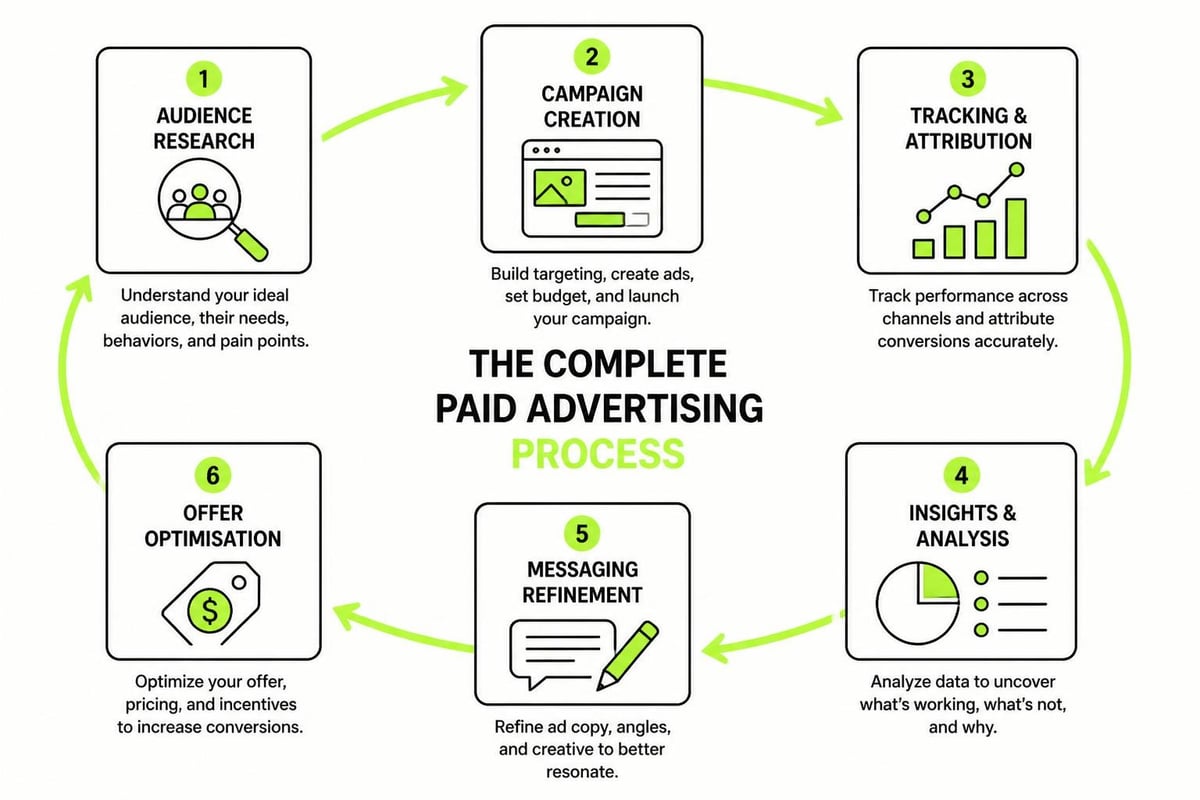
Effective paid advertising services include platform management (Google Ads, LinkedIn Ads, Facebook Ads), creative development, audience research, landing page creation, and conversion tracking. The emphasis should be on testing and iteration, not just running ads.
| Platform | Best For | Typical Cost per Lead | Time to Results |
|---|---|---|---|
| Google Search | High-intent buyers | $50-300 | 2-4 weeks |
| B2B services | $80-400 | 4-8 weeks | |
| Facebook/Instagram | Broader awareness | $20-150 | 1-3 weeks |
| YouTube | Educational content | $30-200 | 4-12 weeks |
The real value in paid services comes from data. Each campaign teaches you what messaging works, which audiences respond, and what offer converts. That intelligence feeds back into your organic strategy, email campaigns, and product development.
Most agencies focus on reducing cost per click. Better ones focus on increasing customer lifetime value and using paid to accelerate what's already working organically.
Content Marketing and Strategy Services
Content isn't just blog posts. It's the primary way service businesses demonstrate expertise and build trust before asking for a sale.
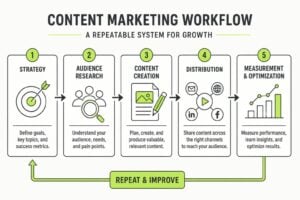
Proper content services include strategy development, editorial planning, content creation, distribution, and performance analysis. The work spans written content, video, podcasts, case studies, and resources that serve specific stages of the buyer journey.
Creating compelling thought leadership requires understanding what decisions your prospects are making and what information they need at each stage. A service business selling high-ticket offerings needs different content than one with transactional products.
The Framework That Works
Stage 1: Awareness content addresses problems prospects don't yet connect to your solution. This ranks for broader search terms and builds initial trust.
Stage 2: Consideration content compares approaches, explains methodologies, and positions your specific solution without being overtly promotional.
Stage 3: Decision content includes case studies, detailed service breakdowns, pricing transparency, and process explanations that help buyers choose you specifically.
Most businesses create only Stage 1 content and wonder why it doesn't convert. Others jump straight to Stage 3 and wonder why no one reads it. A proper content service covers all three, distributed based on your traffic and conversion data.
CRM and Marketing Automation Services
This is where most service businesses have the biggest gap. You can't scale without systems that track, nurture, and convert leads automatically.
CRM and automation services include platform selection, technical setup, workflow design, email sequence creation, lead scoring implementation, and integration with your website and other tools.
The goal is simple. Every lead gets captured, tagged based on behavior and source, entered into appropriate nurture sequences, and surfaced to your team at the right time with full context. No leads slip through. No follow-ups get forgotten. No data gets lost.
Core automation workflows for service businesses:
- New lead welcome sequence
- Content-based nurture by service interest
- Re-engagement for cold leads
- Post-consultation follow-up
- Client onboarding and experience
- Review and referral requests
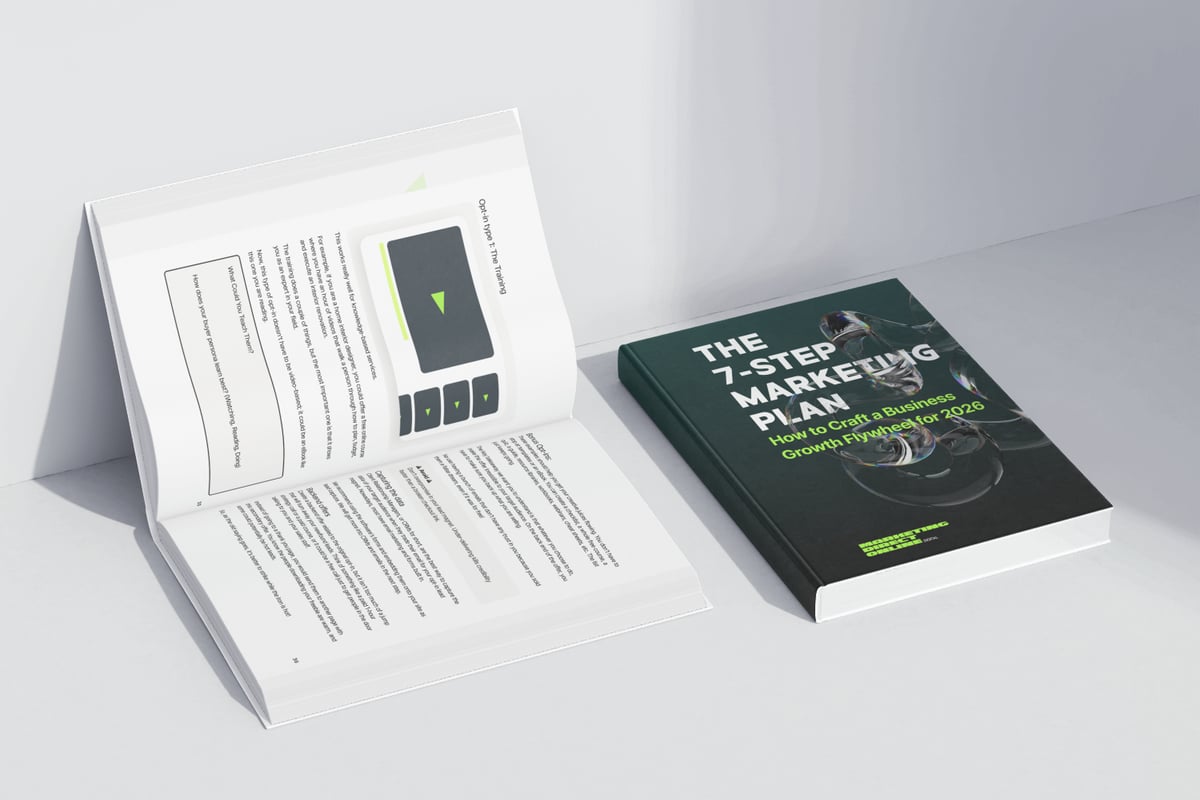
Setting this up properly takes 4-8 weeks. Running a business without it means you're losing 30-60% of potential revenue to disorganisation and poor timing. The 7-Step Marketing Plan provides a framework for building these systems in a structured way, ensuring each component connects to the next.
Website Design and Development Services
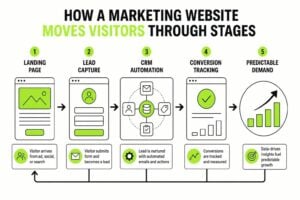
Your website does three jobs. Generate trust, capture leads, and provide information that moves people toward a decision.
Modern website services for service businesses include strategic planning, user experience design, conversion-focused copywriting, technical development, mobile optimisation, and ongoing performance improvement.
What Matters in 2026
Speed and clarity matter more than ever. If your site takes more than two seconds to load or requires more than five seconds to understand what you do, you're losing people.
Essential website elements:
- Clear value proposition above the fold
- Trust signals (case studies, credentials, reviews)
- Lead capture mechanisms matched to buyer intent
- Mobile-first responsive design
- Fast loading times (Core Web Vitals)
- Clear service descriptions and process explanations
- Multiple conversion paths for different buyer stages
A good website is never finished. It's a system you test, measure, and improve based on actual user behavior. Services should include ongoing optimisation, not just a one-time build.
The digital marketing approach has shifted from aesthetic-first to system-first design. Pretty doesn't matter if it doesn't convert.
Email Marketing Services
Email remains the highest-ROI channel for most service businesses. Not because people love email, but because it's the one channel you own completely.
Email services include list building strategy, template design, sequence creation, segmentation, deliverability management, and performance optimisation. The work focuses on turning subscribers into buyers and buyers into repeat clients.
Three types of email campaigns that work:
- Welcome sequences that build trust immediately after opt-in
- Nurture campaigns that educate and position your solution over time
- Re-engagement campaigns that recover cold leads and inactive subscribers
The shift in 2026 is toward behavior-based sending rather than calendar-based blasts. Instead of sending the same message to everyone on Tuesday, smart email systems send based on what someone downloaded, which pages they visited, or how they responded to previous emails.
This requires integration between your website, CRM, and email platform. It's more work to set up. It also delivers 3-5x better results than batch-and-blast approaches.
Social Media Management Services
Social media for B2B service businesses isn't about viral posts. It's about consistent visibility, relationship building, and directing attention to owned channels where you can convert it.
Effective social media services include strategy development, content creation, community management, paid social advertising, and performance tracking. The focus should be on platforms where your actual buyers spend time, not where you wish they did.
Platform Selection for Service Businesses
| Platform | Best For | Content Type | Posting Frequency |
|---|---|---|---|
| B2B services, thought leadership | Articles, insights, case studies | 3-5x per week | |
| Local services, community building | Updates, photos, events | 5-7x per week | |
| Visual services, brand building | Photos, stories, reels | 4-7x per week | |
| Twitter/X | News, commentary, engagement | Short updates, threads | 1-3x per day |
The mistake is treating social as a primary channel rather than a supporting one. Social works best when it feeds traffic to your website, email list, or other owned assets where you can build deeper relationships.
Understanding the broader evolution of digital marketing helps contextualize why owned channels matter more than rented attention on social platforms.
Analytics and Reporting Services
You can't improve what you don't measure. Analytics services turn activity into insight and insight into better decisions.
This includes analytics platform setup, goal and event tracking, dashboard creation, attribution modeling, and regular reporting that connects marketing activity to business outcomes.
Key metrics for service businesses:
- Traffic sources and volume
- Lead generation by channel and campaign
- Cost per lead and cost per client
- Conversion rates at each funnel stage
- Customer acquisition cost (CAC)
- Customer lifetime value (LTV)
- Time to conversion by source
The real work is connecting these metrics to actual revenue. Most analytics setups track website activity but lose the thread when someone becomes a client. Proper implementation tracks the full journey from first click to closed deal.
This requires CRM integration, offline conversion tracking, and often custom development. It's worth it. Knowing that LinkedIn generates leads at $200 each that close at 30% versus Google at $80 that close at 15% changes everything about where you invest.
Choosing the Right Services for Your Business
Not every business needs every service. The right mix depends on where you are and what you're trying to accomplish.
If you're just starting: Focus on infrastructure first. Get a clear website, basic CRM, and simple automation in place. Then add one acquisition channel and get good at it before expanding.
If you have leads but poor conversion: Investment in conversion services, better landing pages, follow-up automation, and sales enablement content will deliver faster returns than more traffic.
If you have good conversion but inconsistent lead flow: Double down on acquisition through SEO, content, and potentially paid channels to create predictable volume.
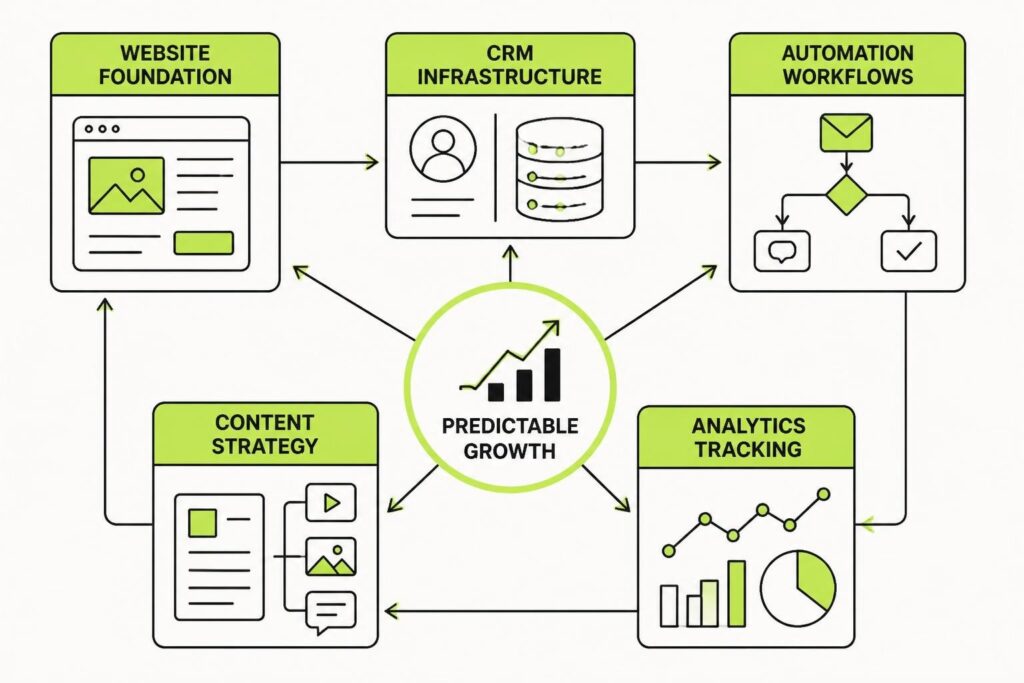
If you're scaling: You need it all working together. Infrastructure, acquisition, conversion, and retention operating as a system with proper measurement throughout.
The marketing systems approach means choosing services based on what creates compound growth, not what sounds exciting or what competitors are doing.
What to Expect from Services for Digital Marketing
Realistic expectations prevent frustration and bad decisions.
SEO takes 6-12 months to show meaningful results. Anyone promising page one rankings in 30 days is either targeting keywords no one searches or using tactics that will hurt you long-term.
Paid advertising can generate leads immediately, but profitable campaigns usually take 60-90 days of testing and optimisation. Budget at least 3x your target cost per lead for the learning phase.
Content marketing compounds over time. Month one might generate a handful of readers. Month 12 might generate hundreds, plus backlinks, social shares, and leads from content published months earlier.
Email automation delivers returns immediately for existing lists and compounds as your list grows. ROI can exceed 40:1 for service businesses with proper sequences.
Website improvements show results within weeks for traffic you're already getting. Combined with better acquisition, impact multiples quickly.
The businesses that succeed with services for digital marketing understand this timing. They invest in foundations, give strategies time to work, and make decisions based on data rather than impatience.
Services for digital marketing work when they're chosen strategically and operated as a system, not a collection of random tactics. The businesses seeing real growth in 2026 have solid infrastructure, clear measurement, and patient execution across channels that compound over time. If you're ready to build marketing systems that remove chaos and create structured growth, MDO Digital helps service businesses do exactly that with clarity, infrastructure, and data-driven execution.