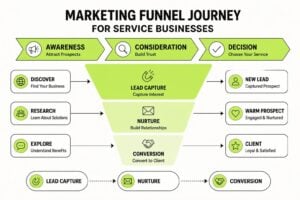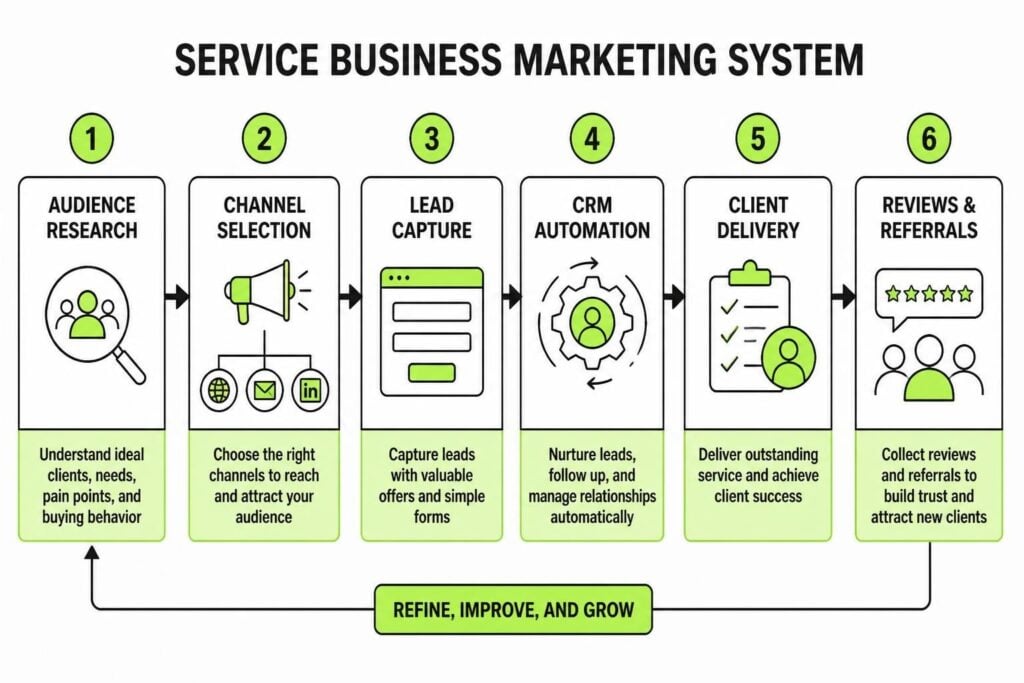
Most service businesses approach online marketing the same way they approach their tools shed. Bits and pieces collected over time, no real system, and a vague hope it'll all work when needed. A proper online marketing plan for service business operations changes that. It gives you structure, repeatable steps, and a way to measure what's actually working. Without one, you're guessing. With one, you're building infrastructure that compounds.
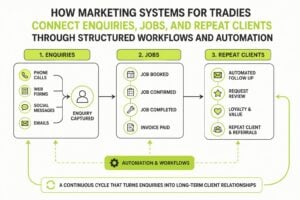
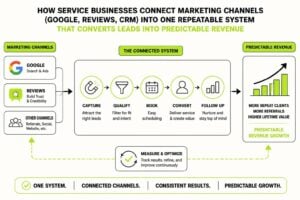
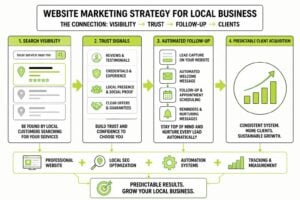
The goal isn't to do more marketing. It's to build a system that captures attention, converts it into leads, nurtures those leads with automation, and turns clients into referrers. That's how service businesses scale without burning out their team or wasting budget on tactics that don't connect.
Why Service Businesses Need a Different Approach
Service businesses sell time, expertise, and outcomes. Not products. That changes everything about how you market.
Your leads need more convincing because the stakes are higher. They're not buying a thing they can return. They're trusting you with their problem, their budget, and often their reputation. That means your online marketing plan for service business growth must focus on trust signals, proof, and clarity at every stage.
The Trust Gap Problem
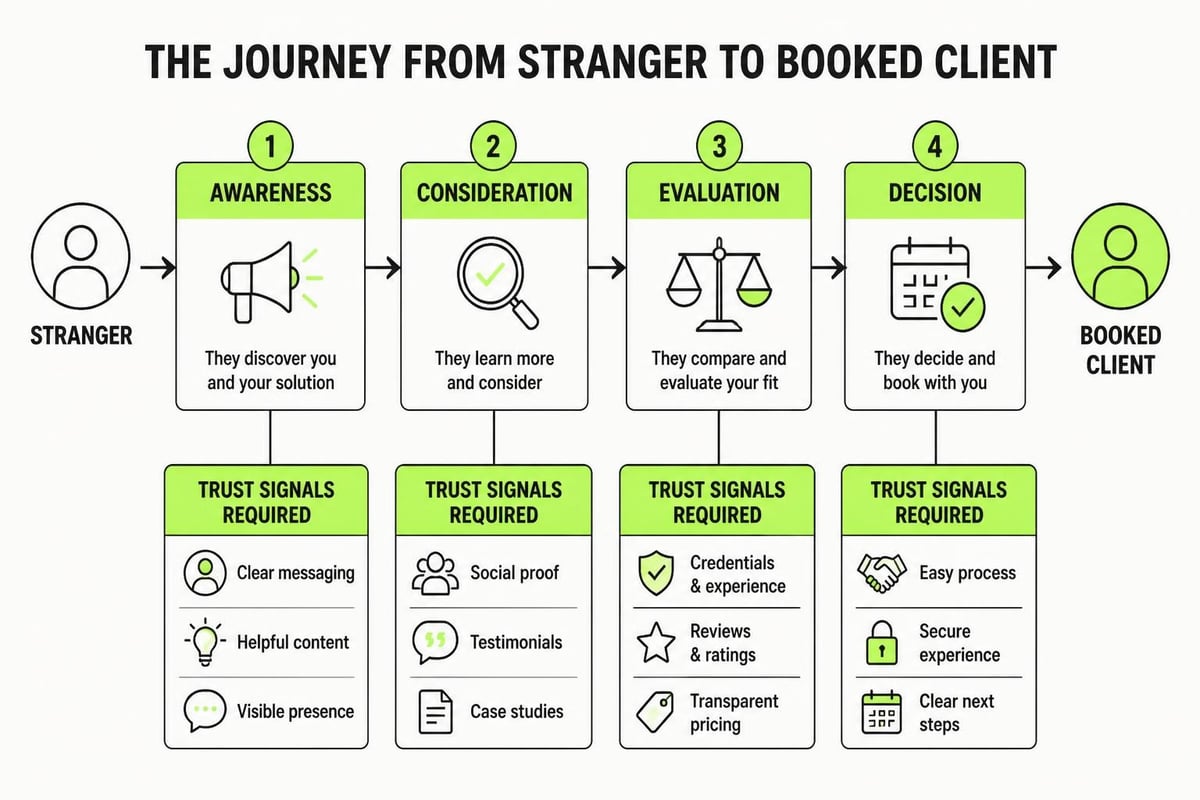
Between the moment someone learns about you and the moment they book, there's a gap. They're deciding if you're credible, if you understand their problem, and if you're worth the risk. Most service businesses try to close this gap with a contact form and hope. That's not a plan.
Your marketing system needs to bridge that gap deliberately:
- Educational content that shows you understand the problem
- Case studies and testimonials that prove you've solved it before
- A nurture sequence that builds familiarity over time
- Clear positioning that makes your difference obvious
The evolution of digital marketing has made this both easier and harder. Easier because the tools exist. Harder because everyone has access to the same tools, so execution and clarity matter more than ever.
The Seven Core Components Every Plan Needs
An online marketing plan for service business success isn't a document you write once and file away. It's a working system with components that feed each other. Miss one, and the whole thing leaks.
Goals That Actually Drive Decisions
Start with revenue, then work backward. If you need $500k in revenue and your average project is $10k, you need 50 clients. If 20% of qualified leads convert, you need 250 leads. If 5% of website visitors opt in, you need 5,000 visitors.
Now you have real numbers to plan around. This is how you decide which channels matter and where to invest time.
| Metric | Example Target | Why It Matters |
|---|---|---|
| Revenue Goal | $500k | Defines everything else |
| Average Project Value | $10k | Sets lead volume needed |
| Lead-to-Client Rate | 20% | Shows sales efficiency |
| Visitor-to-Lead Rate | 5% | Drives traffic targets |
| Monthly Leads Needed | 21 | Makes marketing measurable |
Buyer Persona Definition
You're not marketing to everyone. You're marketing to the person who has the problem you solve, the budget to pay for it, and the authority to decide.
Write this down in detail:
- What specific problem keeps them up at night?
- What have they already tried that didn't work?
- What objections will they have about hiring you?
- Where do they go to research solutions?
- What proof do they need to feel confident?
This isn't creative writing. It's research. Talk to your best clients. Ask them what they were dealing with before they found you and what almost stopped them from booking. Their answers will shape every piece of content and every campaign you run.
Platform and Channel Selection
Most service businesses spread too thin. They're on every social platform, running ads everywhere, trying to be omnipresent. That's not strategic. It's chaos dressed up as hustle.
Pick 2-3 channels based on where your buyer persona actually spends time and how they prefer to consume information. A Hootsuite's social media marketing strategy guide can help you evaluate which platforms align with your audience and capacity.
High-Intent Channels (people actively searching for solutions):
- Google Search (local SEO and content)
- Google Ads (if your customer lifetime value supports it)
- Industry-specific directories and review sites
Relationship Channels (building familiarity over time):
- LinkedIn (for B2B services)
- Email marketing (the most underrated channel)
- Facebook or Instagram (for local or lifestyle services)
Referral Channels (leveraging existing trust):
- Client referral programs
- Strategic partnerships
- Guest content on established platforms
Don't try to win on every channel. Win on the ones that matter, then expand.
Lead Magnets and Opt-In Offers
A contact form isn't enough anymore. People don't hand over their email for nothing. They need a reason, a fair trade: useful information in exchange for contact details.
Your lead magnet should solve a small, specific problem your buyer persona faces. It should give them a quick win and position you as the expert who can deliver bigger results.
Examples That Work for Service Businesses:
- Checklists (e.g., "Pre-Renovation Planning Checklist for Homeowners")
- Templates (e.g., "RFP Template for Hiring a Marketing Agency")
- Guides (e.g., "How to Evaluate Quotes from Web Developers")
- Assessments (e.g., "Is Your Current Accountant Costing You Money?")
We've seen this work consistently across service businesses. A 7-Step Marketing Plan framework, for example, helps businesses understand the full system they need before they dive into tactics. That kind of value upfront builds trust and positions you as someone who thinks strategically, not just someone selling a service.
CRM and Nurture Infrastructure
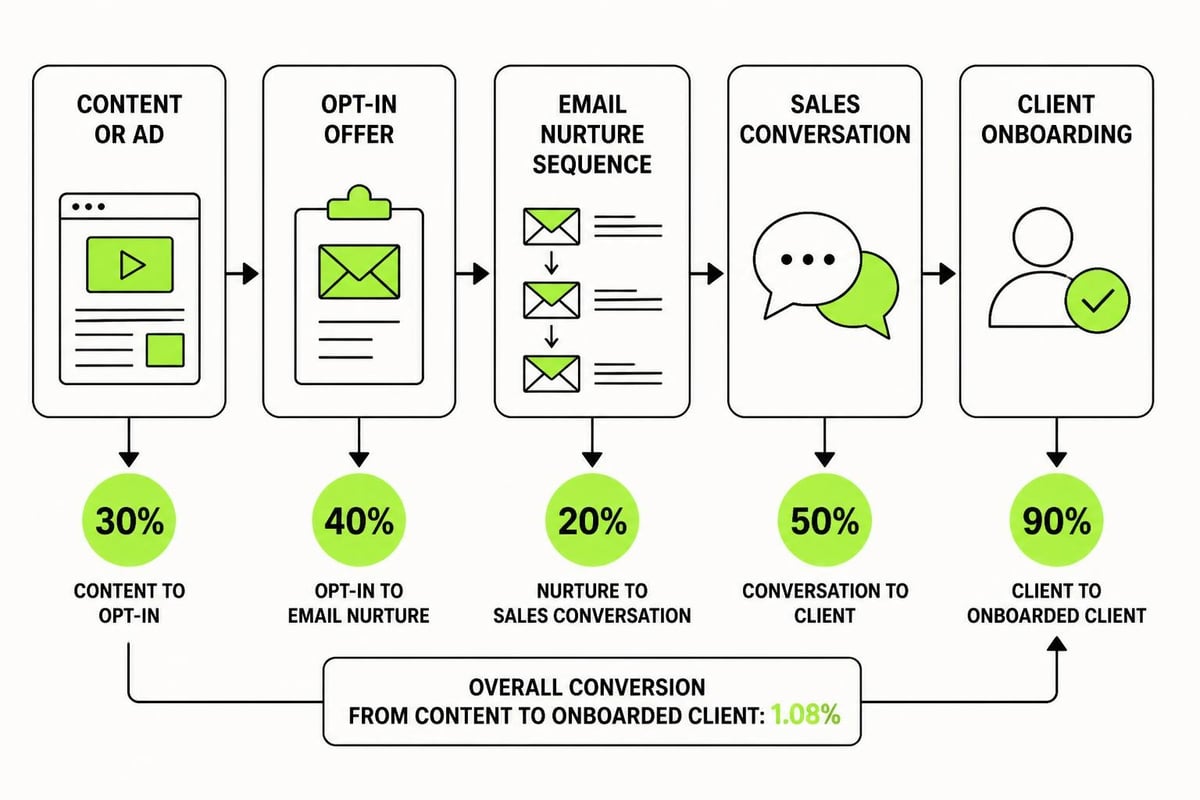
This is where most service businesses lose the game. They generate leads, then let them sit in an inbox or a spreadsheet. No follow-up system. No automation. No structure.
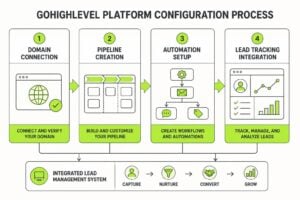
A proper online marketing plan for service business growth includes a CRM (customer relationship management system) and automated nurture sequences that keep leads warm until they're ready to buy.
Your nurture campaign should:
- Deliver the lead magnet immediately
- Send educational content over the next 2-4 weeks
- Include social proof (case studies, testimonials)
- Make a clear offer to book a call or get a quote
- Tag and segment leads based on engagement
Email still converts better than almost any other channel for service businesses. According to data from Litmus’ email marketing reports, well-structured email nurture campaigns can see open rates above 20% and click rates above 3%, which is substantial when you're targeting a qualified audience.
The key is not to blast promotions. Send valuable insights, case studies, and clear next steps. Treat your email list like an audience, not a sales target.
Service Delivery and Client Experience
Marketing doesn't stop when someone pays. In fact, for service businesses, the client experience is marketing. A great result leads to testimonials, referrals, and repeat business. A mediocre one kills your pipeline no matter how good your ads are.
Build this into your plan:
- Onboarding sequence that sets expectations clearly
- Regular progress updates (even when there's not much to report)
- Asking for feedback before the project ends
- Documented processes so delivery is consistent
When you communicate value throughout the project, clients feel confident in their decision. That confidence turns into reviews and referrals, which feed the top of your marketing system again.
Review and Referral Generation
Most service businesses wait and hope for reviews. That's leaving money on the table. Build a system that asks at the right moment, in the right way.
The best time to ask for a review is right after a win. Just finished a website and the client is thrilled? That's your moment. Solved a major problem ahead of schedule? Ask then.
Make it easy:
- Send a direct link to your Google Business Profile or preferred review platform
- Provide a template or prompts if they're not sure what to write
- Offer a referral incentive for introducing you to similar businesses
According to Moz’s local SEO guide, reviews are one of the top ranking factors for local service businesses, and they heavily influence purchase decisions. If you're not systematically generating reviews, your competitors who do will rank higher and win more business.
Building the Actual Plan Document
An online marketing plan for service business teams should be a working document, not a PDF that gets ignored. Here's how to structure it so it actually gets used.
Monthly Action Plan Format
Break your plan into monthly sprints with specific actions, owners, and deadlines.
| Month | Channel | Action | Target Metric | Owner |
|---|---|---|---|---|
| Jan | SEO | Publish 4 blog posts targeting buyer keywords | 500 organic visits | Content Lead |
| Jan | Build nurture sequence (6 emails) | 30% open rate | Marketing Ops | |
| Feb | Ads | Launch Google Ads campaign for high-intent keywords | 20 leads at <$100 CPA | Ads Manager |
| Feb | Partnerships | Outreach to 10 referral partners | 2 active partnerships | BD Lead |
This format forces clarity. Everyone knows what they're responsible for and what success looks like. Review it weekly, adjust based on results, and don't be precious about changing direction if something's not working.
Budget Allocation by Channel
Spread your budget based on expected return and strategic priorities, not gut feel. If you've never run ads before, don't commit 70% of your budget there. Test, learn, then scale.
Sample Budget for $5k/Month Marketing Spend:
- SEO and content: $1,500 (long-term asset building)
- Paid ads (Google or social): $2,000 (immediate lead generation)
- CRM and automation tools: $500 (infrastructure)
- Creative and design: $700 (ads, landing pages, emails)
- Testing and optimization: $300 (A/B tests, new channels)
Adjust based on what's working. If organic content is driving 60% of your leads, shift more budget there. If ads aren't converting, pull back and fix your landing page or offer first.
Measurement and Reporting Cadence
You can't improve what you don't measure. Set up weekly and monthly reporting so you spot problems early and double down on what's working.
Weekly Metrics to Track:
- Website visitors and traffic sources
- Leads generated and cost per lead
- Email open and click rates
- Ad spend and conversion rates
Monthly Metrics to Review:
- Total leads and lead quality
- Lead-to-client conversion rate
- Revenue from marketing channels
- Customer acquisition cost (CAC)
- Client lifetime value (LTV)
The goal is to build a system where marketing becomes predictable. You know roughly how many leads you'll generate, how many will convert, and what you need to invest to hit revenue targets. That's when you stop guessing and start scaling with confidence. Resources like HubSpot’s marketing strategy guide offer templates and frameworks to keep your reporting structured and actionable.
Aligning Marketing, Sales, and Delivery Teams
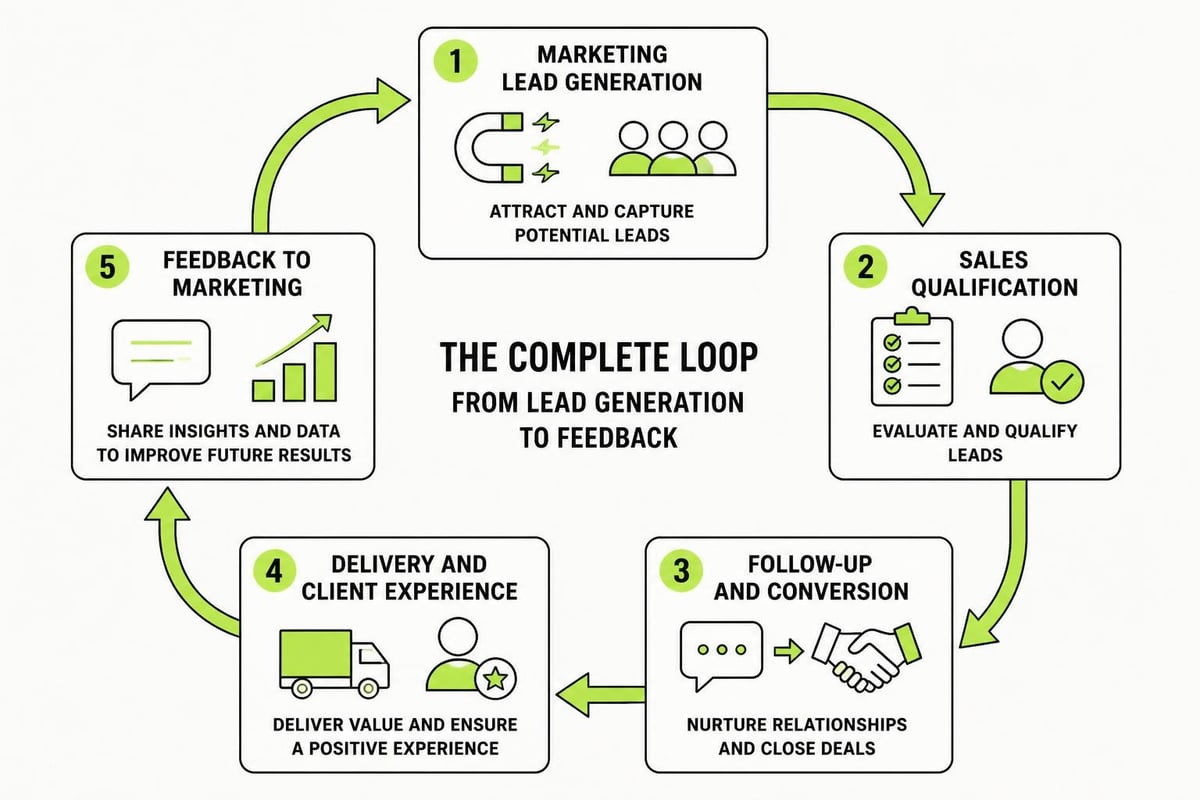
An online marketing plan for service business execution only works when the whole team is aligned. Marketing can generate perfect leads, but if sales doesn't follow up or delivery under-delivers, the system breaks.
Defining a Qualified Lead
Marketing and sales need to agree on what counts as a qualified lead. Not every form fill or email address is valuable. A qualified lead fits your ideal client profile, has an active need, and has the budget and authority to move forward.
Document your lead qualification criteria:
- Industry or business type
- Company size or revenue range
- Specific need or problem
- Timeline to solve it
- Budget range
When both teams use the same definition, you stop wasting time on bad leads and improve conversion rates.
Handoff Process and SLAs
Marketing's job isn't done when a lead comes in. There needs to be a clear handoff to sales with context and speed.
Best Practice Handoff:
- Lead fills form or downloads lead magnet
- CRM tags lead and notifies sales rep
- Sales rep reaches out within 24 hours (faster is better)
- If no response, nurture sequence continues automatically
- Sales logs outcome (booked, not interested, nurture further)
Speed matters. Research shows that leads contacted within an hour are 7x more likely to convert than those contacted after 24 hours. Build that urgency into your process.
Feedback Loop for Continuous Improvement
Sales and delivery teams talk to clients every day. They hear objections, questions, and concerns that marketing needs to address.
Set up a monthly feedback session:
- What objections are sales hearing repeatedly?
- What questions do clients ask during onboarding?
- What misconceptions did clients have before they hired you?
- What surprised clients (good or bad) about working with you?
This feedback should shape your content, messaging, and lead magnets. If clients consistently misunderstand your pricing model, create content that explains it clearly before they ever get on a sales call. When you're thinking about how to talk about pricing and value, the Harvard Business Review article on communicating with customers about prices offers useful frameworks for service businesses.
Common Mistakes That Kill Service Business Marketing Plans
Even a solid online marketing plan for service business teams can fail if you fall into predictable traps. Here's what to avoid.
Chasing Tactics Without Strategy
Every month there's a new "must-have" tactic. TikTok ads. SEO hacks. AI chatbots. Most service businesses jump from one to the next without asking if it fits their strategy or serves their buyer persona.
Tactics are tools. Strategy decides which tools to use and when. If your buyer persona is a 55-year-old business owner who doesn't use social media, TikTok ads are a waste. If they Google everything, local SEO and content are your leverage points.
Stick to your plan. Test new tactics only when they align with your strategy and you have capacity to execute them properly.
Not Tracking Lead Source and Quality
Generating 100 leads sounds great until you realise 90 of them were tire-kickers who never had the budget. If you're not tracking where leads come from and how they perform through your sales process, you're flying blind.
Tag every lead with its source (Google Ads, organic search, referral, email campaign). Track conversion rates by source. Over time, you'll see which channels bring high-intent leads and which bring noise. Double down on quality, cut the noise.
Ignoring Existing Clients for New Lead Gen
New leads are exciting. Existing clients are reliable. Yet most service businesses spend 90% of their marketing budget chasing new business and ignore the clients who already trust them.
Your existing clients are your lowest-cost, highest-converting audience. Build retention and upsell campaigns:
- Quarterly check-ins to see if they need additional services
- Educational content tailored to their industry or growth stage
- Early access to new services or special pricing
- Annual reviews to show the value you've delivered
Retention compounds. A 5% increase in retention can increase profits by 25-95% depending on your business model. Don't ignore that lever while chasing new leads.
Setting and Forgetting the Plan
A marketing plan isn't a one-and-done exercise. Markets change. Algorithms shift. Competitors launch new offers. Your plan needs to adapt.
Schedule quarterly reviews to assess:
- What's working better than expected?
- What's underperforming and why?
- What new opportunities have emerged?
- What should you stop doing?
Update the plan based on real data, not opinion. If Google Ads are converting at $50 per lead and you projected $150, increase the budget. If blog content isn't driving traffic after six months, reassess your keyword strategy or content quality.
Making the Plan Work in Real Business Conditions
Theory is easy. Execution is where most service businesses get stuck. You've got client work, team management, operations, and a dozen other priorities. How do you actually make an online marketing plan for service business operations work when you're already stretched thin?
Start With One Channel and One Campaign
Don't try to launch everything at once. Pick the channel most likely to drive results based on your buyer persona and start there. If it's SEO, publish consistent content and build backlinks for three months before adding paid ads. If it's email, build your nurture sequence and test it before worrying about social media.
Depth beats breadth. One channel done well will outperform five channels done poorly.
Batch and Automate Repetitive Work
Marketing has plenty of recurring tasks. Writing social posts. Sending follow-up emails. Publishing blog content. Use batching and automation to reduce the time drain.
Batch These Tasks:
- Write a month of social content in one session
- Record several videos or podcasts in one day
- Plan email campaigns quarterly, schedule them monthly
Automate These Tasks:
- Email nurture sequences after lead magnet downloads
- Social media post scheduling
- Lead notifications to sales reps
- Review request emails after project completion
When you remove repetitive work, you free up time to focus on strategy and client delivery, which is where your actual value lives. If you're exploring branding and automation systems, the investment pays off quickly in time saved and leads protected.
Build Marketing Into Service Delivery
The best marketing content comes from real client work. Solve a problem for a client? Document it and turn it into a case study, blog post, or email. Client asks a great question? Answer it publicly in your content.
This approach does two things. It makes content creation faster because you're not inventing topics, and it makes your marketing more credible because it's rooted in real work.
Hire or Partner for Gaps You Can't Fill
You don't need to be an expert in every channel. If you're great at sales and delivery but average at writing, hire a copywriter. If you understand strategy but struggle with paid ads, bring in a specialist.
The mistake is trying to DIY everything because you don't want to spend the money. That costs more in time, poor results, and missed opportunities. Hire for the skills that will move the needle fastest and keep your focus on what you do best.
An online marketing plan for service business growth isn't about doing more. It's about building a system that works predictably, protects your leads, and turns attention into revenue without burning out your team. The businesses that scale are the ones that treat marketing like infrastructure, not a side project. If you're ready to remove the chaos and build a system that compounds over time, MDO Digital helps service businesses do exactly that with clarity, structure, and execution that drives real results.