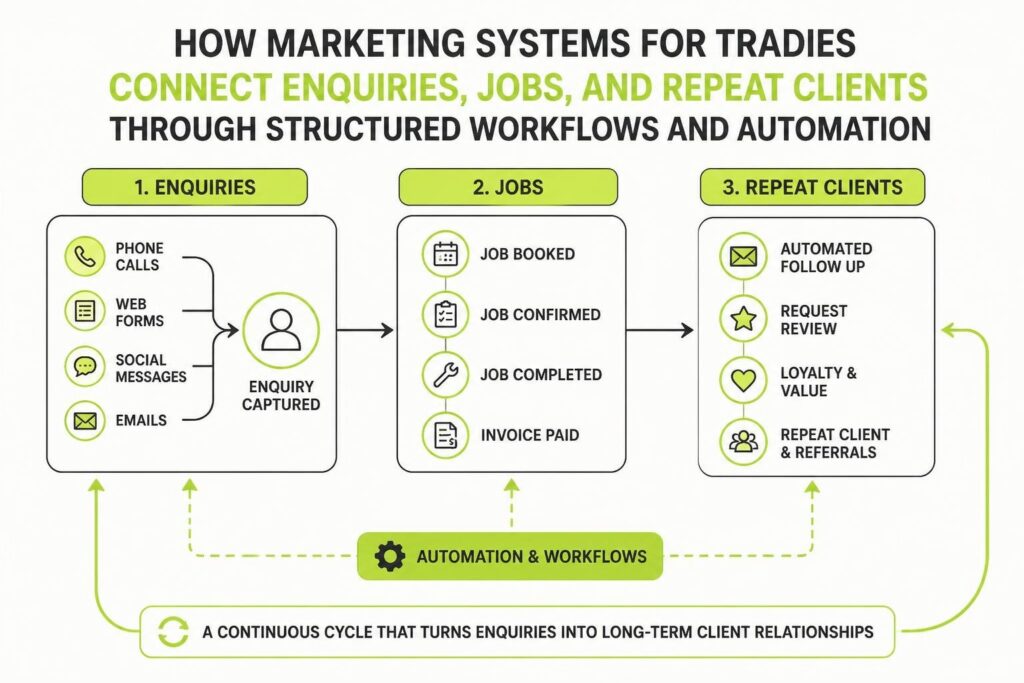
Most tradies don't have a marketing problem. They have a system problem. Jobs come in, some get followed up, others slip through. Busy weeks mean enquiries go cold. Quiet weeks mean scrambling for work. The work is good, but the pipeline feels like chaos. That's not a reflection of skill or reputation. It's what happens when marketing runs on memory instead of structure. Marketing systems for tradies fix that. They turn attention into demand, protect leads, and make growth predictable. Not sexy, but it works.
Why tradies need marketing systems, not just marketing
Marketing without a system is expensive noise. You might run Google Ads, post on Facebook, or rely on word of mouth. Sometimes it works. Sometimes it doesn't. The problem isn't the channel. It's what happens after someone shows interest.
A tradie rings back three days later, leaves a voicemail, never hears back. An email enquiry sits in the inbox under fifty unread messages. A referral asks for a quote, gets one, then disappears because there's no follow-up. None of that is laziness. It's the natural result of running a trade business without infrastructure to capture, nurture, and convert.
What a marketing system actually does
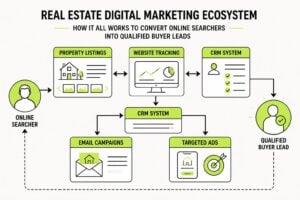
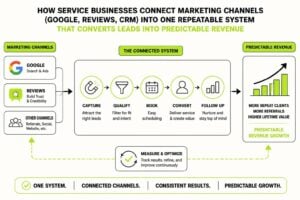
A proper marketing system handles the repeatable work so you can focus on the skilled work. It doesn't replace you. It makes sure nothing falls through the cracks.
Here's what it covers:
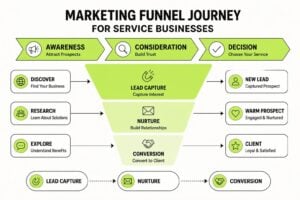
- Lead capture: Every enquiry, regardless of source, lands in one place.
- Follow-up: Automated reminders, emails, and touchpoints so no one gets forgotten.
- Nurture: Educational content or value delivered over time to prospects not ready to buy yet.
- Conversion tracking: You know which channels send paying customers, not just tyre kickers.
- Referral generation: Happy clients are prompted to leave reviews or refer others at the right moment.
It's not complicated. It just needs to exist.
The core pieces of marketing systems for tradies
You don't need a dozen platforms or a full-time marketer. You need a few solid pieces working together. Start simple, then layer.
A CRM that captures every lead
Customer relationship management software sounds corporate. For a tradie, it's just a central database where every phone call, email, form fill, and referral gets logged. That's it.
Most tradies use their phone's contact list or a spiral notebook. Both work until they don't. A CRM means you can search, filter, follow up, and review your pipeline without relying on memory. HubSpot’s CRM guidance for small businesses breaks down what matters and what doesn't when choosing one.
What to look for:
- Mobile-friendly so you can update it on site
- Integration with your phone and email
- Task reminders for follow-ups
- Custom fields for job type, urgency, estimated value
Don't overthink it. Pick something simple and use it consistently.
Automated follow-up sequences
Most jobs are lost in the gap between enquiry and quote. Someone calls, you're on a ladder. They email, you're in the ute. By the time you respond, they've moved on.
Automation fills that gap. When a lead comes in, they get an instant acknowledgment: "Thanks for reaching out, I'll get back to you within 24 hours." If you haven't followed up in two days, you get a reminder. If they haven't responded to your quote in a week, they get a friendly nudge.
This isn't spammy. It's professional. People expect it.
| Automation Type | Purpose | Example Trigger |
|---|---|---|
| Instant acknowledgment | Confirms you received their enquiry | Form submission or missed call |
| Follow-up reminder | Keeps you accountable | Lead sits untouched for 48 hours |
| Quote follow-up | Brings cold quotes back to life | No response 7 days after sending quote |
| Job completion check-in | Prompts review or referral | 3 days after job marked complete |
You set these once. They run forever.
A lead magnet that filters intent
Not every enquiry is ready to buy. Some are doing research. Others are price shopping. A lead magnet helps you filter and nurture the ones who need more time.
A lead magnet is something useful you give away in exchange for contact details. For tradies, that could be:
- A maintenance checklist (plumbers, electricians)
- A cost guide or breakdown (renovations, landscaping)
- A "what to look for" guide when hiring in your trade
This does two things. It builds trust by offering value upfront. And it captures leads who aren't ready to book yet, so you can follow up when they are. The 7-Step Marketing Plan walks through exactly how to build this kind of system, step by step, so nothing is left to guesswork.

Consistent visibility in local search
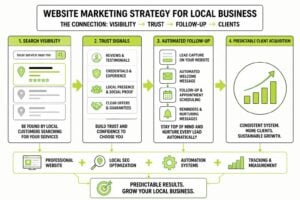
If someone searches "plumber near me" or "electrician in [suburb]," you want to show up. That's local SEO, and it's one of the highest-converting channels for tradies.
Your Google Business Profile is the foundation. Keep it updated with accurate hours, photos of recent work, and your service area. Respond to every review, good or bad. Post updates when you can.
Semrush’s local SEO checklist covers the technical pieces like NAP consistency (name, address, phone number across every directory), on-page optimisation, and citation building. It's not glamorous, but it works.
Quick local SEO priorities:
- Claim and optimise your Google Business Profile
- Get your NAP details consistent across directories
- Collect reviews from real customers
- Build backlinks from local websites (sponsorships, supplier directories, local news)
- Add location keywords to your website's service pages
Local backlinks and citations help Google trust that you're a legitimate, active business in your area. The more signals pointing to you, the higher you rank.
How to build marketing systems for tradies without losing your mind
You don't need to do everything at once. Start with the biggest leak, plug it, then move to the next one.
Step one: Audit where leads go to die
Look at your last 20 enquiries. How many turned into jobs? How many never got a response? How many got quoted but ghosted you?
Write down what went wrong. Was it slow follow-up? Forgetting to send the quote? No system for checking back in? That's where you start.
Step two: Pick one tool and commit
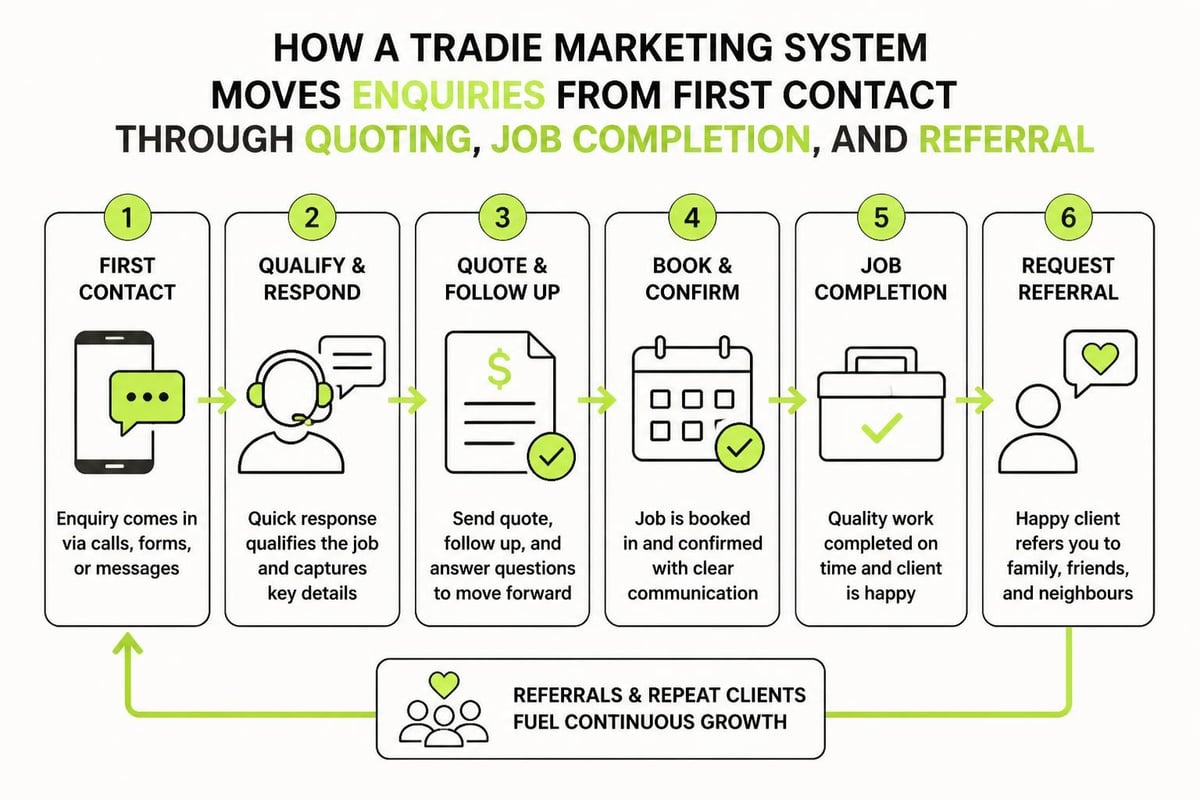
Choose a CRM. Doesn't matter which one, just pick something and use it daily. Most have free plans. Set up your pipeline stages (enquiry, quoted, booked, completed). Add every new lead. Update it as things move.
Make it a habit. End of day, everything gets logged.
Step three: Automate the repetitive stuff
Set up one automated email. Just one. Could be the instant acknowledgment when someone fills your contact form. Could be the follow-up reminder that emails you if a lead hasn't been touched in 48 hours.
Once that's running, add the next one. Then the next.
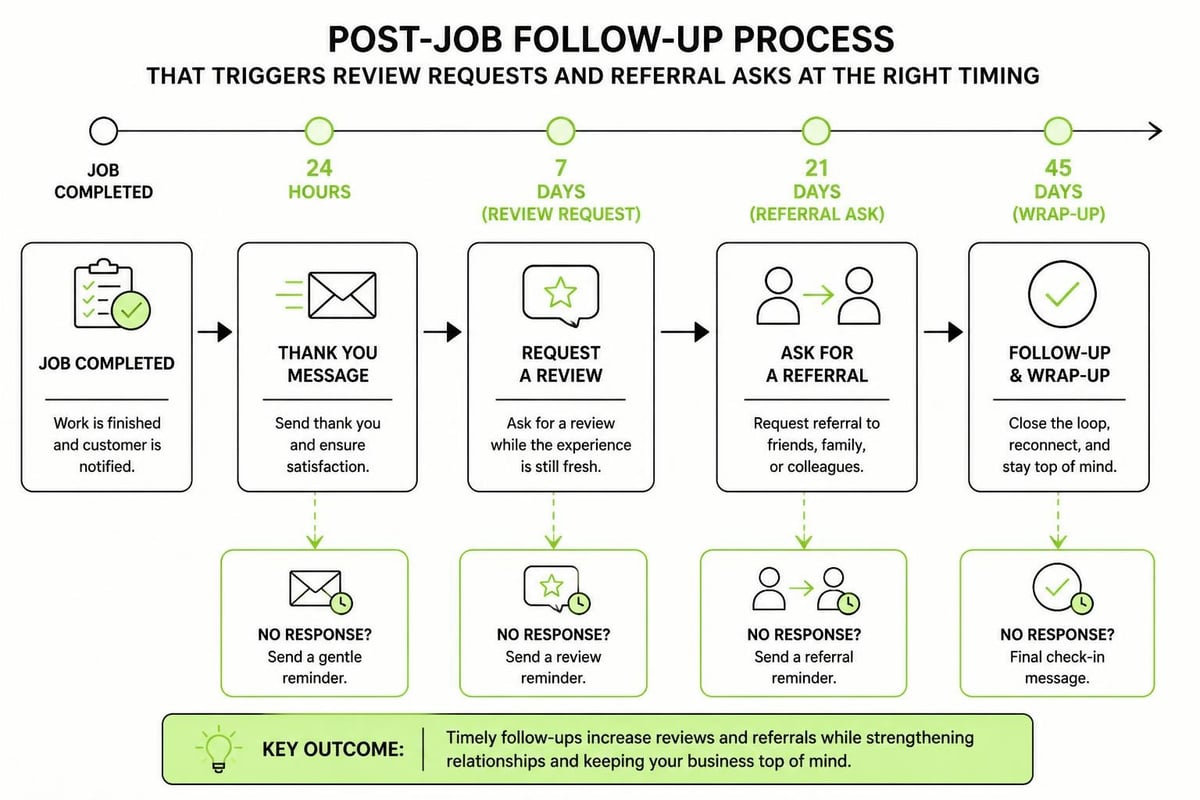
Step four: Build a simple referral system
Happy customers are your best marketers. But they won't refer unless prompted.
Create a post-job email that goes out three days after completion. Thank them, ask how it went, and include a direct link to leave a Google review. If they're really happy, ask if they know anyone else who might need your services.
Research on customer referrals shows that referrals don't just bring one customer. They create clusters. One happy client tells three mates, two of those book, and it compounds.
Step five: Track what actually converts
You're spending money and time on marketing. You should know what's working.
Track where every lead comes from. Google Ads? Facebook? Referral? Local search? Word of mouth? After six months, you'll see patterns. Double down on what converts. Cut or reduce what doesn't.
This is where a CRM earns its keep. You can filter by source, see conversion rates, and make decisions based on data instead of gut feel.
Common mistakes tradies make with marketing systems
Building a system is simple. Doesn't mean it's easy. Here's where most fall over.
Trying to do too much at once
You don't need email marketing, Google Ads, Facebook ads, SEO, and a referral program all running in week one. Start with one channel and one automated process. Get it working. Then add.
Picking tools before defining the process
Don't buy software because it looks impressive. Define the problem first. What are you trying to fix? Then find a tool that solves it.
Ignoring mobile usability
You're not at a desk. Your system needs to work from your phone. If it's clunky on mobile, you won't use it.
Not training your team
If you have apprentices, office staff, or subcontractors involved in customer contact, they need to know how the system works. Otherwise, leads still slip through.
| Mistake | Why It Happens | How to Fix It |
|---|---|---|
| No follow-up after quote | Too busy, forget to check in | Automate a 7-day follow-up email |
| Losing track of referrals | No system to log who referred who | Add a "referred by" field in your CRM |
| Slow response times | Missed calls, unread emails | Set up instant auto-replies and reminders |
| Inconsistent branding | Different logo, tone, messaging across platforms | Document your brand basics and use templates |
Budgeting for marketing systems as a tradie
You don't need a massive budget. You need consistency and smart allocation. Guidance from the U.S. Small Business Administration recommends service businesses allocate 7-10% of revenue to marketing. For tradies, that might sound high, but it includes everything: your CRM, your website hosting, paid ads, local sponsorships, and automation tools.
Start smaller if you need to. Even 3-5% can fund a CRM, some Google Ads, and basic automation.
Typical monthly costs for a tradie marketing system:
- CRM with automation: $20-$50/month (many free options exist)
- Website hosting: $10-$30/month
- Google Ads budget: $300-$1,000/month depending on competition
- Email marketing tool: $0-$30/month
- Review management or reputation tool: $50-$150/month (optional)
Total: $380-$1,260/month for a working system. Compare that to the value of one extra job per month and it's already paying for itself.
BrightLocal’s research on small business marketing priorities shows that tradies who treat marketing as infrastructure, not an expense, see compounding returns year on year.
Scaling your system as you grow
Once the basics are running, you can layer in more sophisticated pieces.
Add retargeting ads to follow people who visited your website but didn't enquire. Build an email nurture sequence for leads not ready to book yet. Create case studies or before-and-after galleries to feed into your social proof. Partner with local businesses for cross-referrals.
The structure you built early makes all of this easier. You're not starting from scratch every time. You're just plugging in another piece.
For service-based businesses looking to scale without chaos, building repeatable marketing systems removes the guesswork and protects every lead that comes through.
What success looks like with a dialled-in system
You'll know your marketing system is working when:
- Every enquiry gets logged and followed up without you having to remember
- You can see your pipeline at a glance and forecast revenue a month out
- Leads don't go cold because automation keeps them warm
- Reviews and referrals happen regularly without you chasing them
- You know exactly which marketing channels send you profitable work
It won't happen overnight. But once it's in place, it runs itself. You focus on doing great work. The system handles the rest.
Online reviews influence buying decisions more than almost any other factor for local services. A system that prompts happy customers to leave reviews builds trust that compounds with every job.
Marketing systems for tradies aren't about doing more. They're about protecting the leads you already attract and turning chaos into repeatable growth. Once the infrastructure exists, marketing becomes predictable instead of stressful. If you're ready to stop losing leads and start building a system that scales with your business, MDO Digital helps tradies and service businesses remove the guesswork, build the right infrastructure, and grow without the chaos.