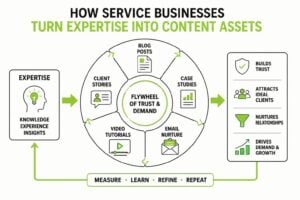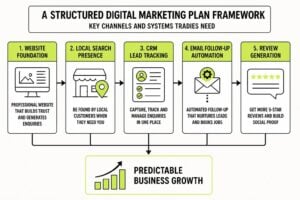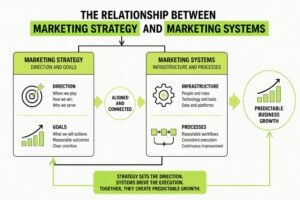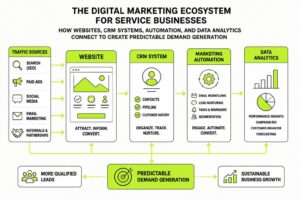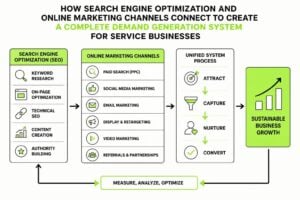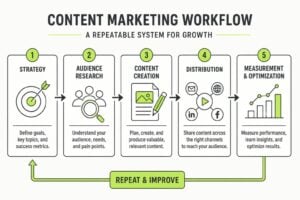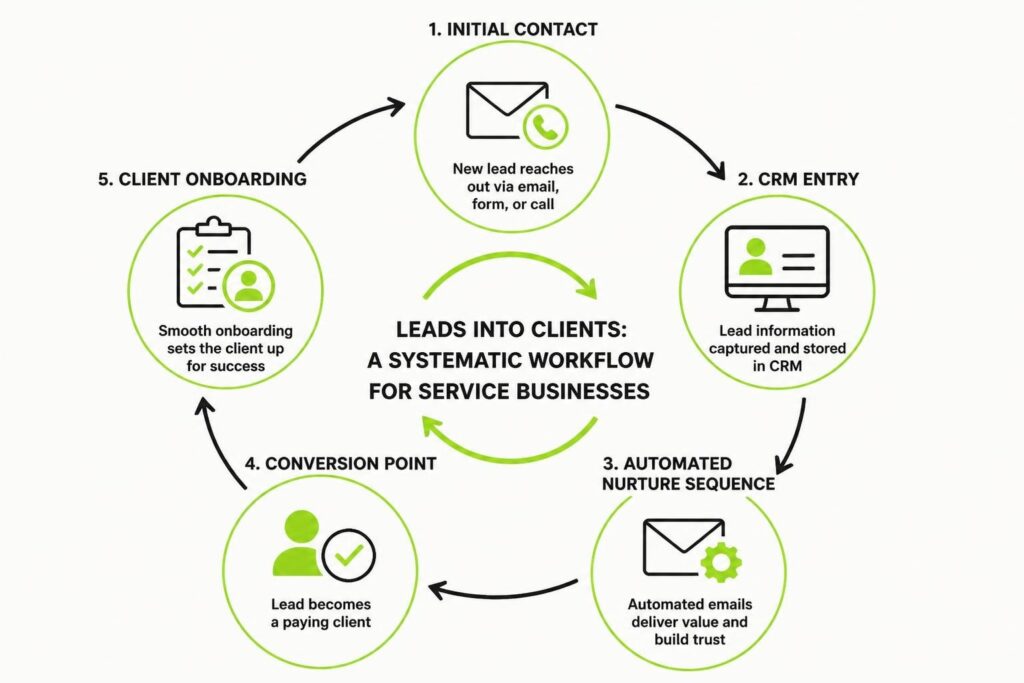
Most service-based businesses don't have a marketing problem. They have a systems problem. You're good at what you do. You deliver results. But when it comes to getting new clients, you're running on hope, hustle, and whatever worked last month. That's not sustainable, and it doesn't scale. Marketing systems for service-based businesses solve this by turning random activity into repeatable processes that protect every lead and create predictable growth.
Why Service Businesses Need Systems, Not Just Marketing
The difference between a tactic and a system is simple. A tactic is posting on LinkedIn three times a week. A system is the infrastructure that captures attention, qualifies interest, nurtures trust, and converts leads without you manually driving every step.
Service businesses face unique challenges. You're selling expertise, not products. Your sales cycle is longer. Trust matters more than price. And most of your leads aren't ready to buy today. Without marketing systems for service-based businesses, you lose most opportunities before they ever convert.
The Cost of Not Having a System
When marketing is just a collection of disconnected tactics, here's what happens:
- Leads fall through the cracks because there's no CRM tracking
- You can't measure what's working, so you keep spending on hope
- Follow-up is manual and inconsistent
- New team members can't replicate your process
- Growth plateaus because you can't scale yourself
Every missed follow-up is lost revenue. Every untracked lead is wasted ad spend. The chaos compounds, and eventually you hit a ceiling where working harder doesn't create more results.
The Core Components of Effective Marketing Systems
A functioning system isn't complicated, but it does need structure. Here are the pieces that matter.
Lead Capture Infrastructure
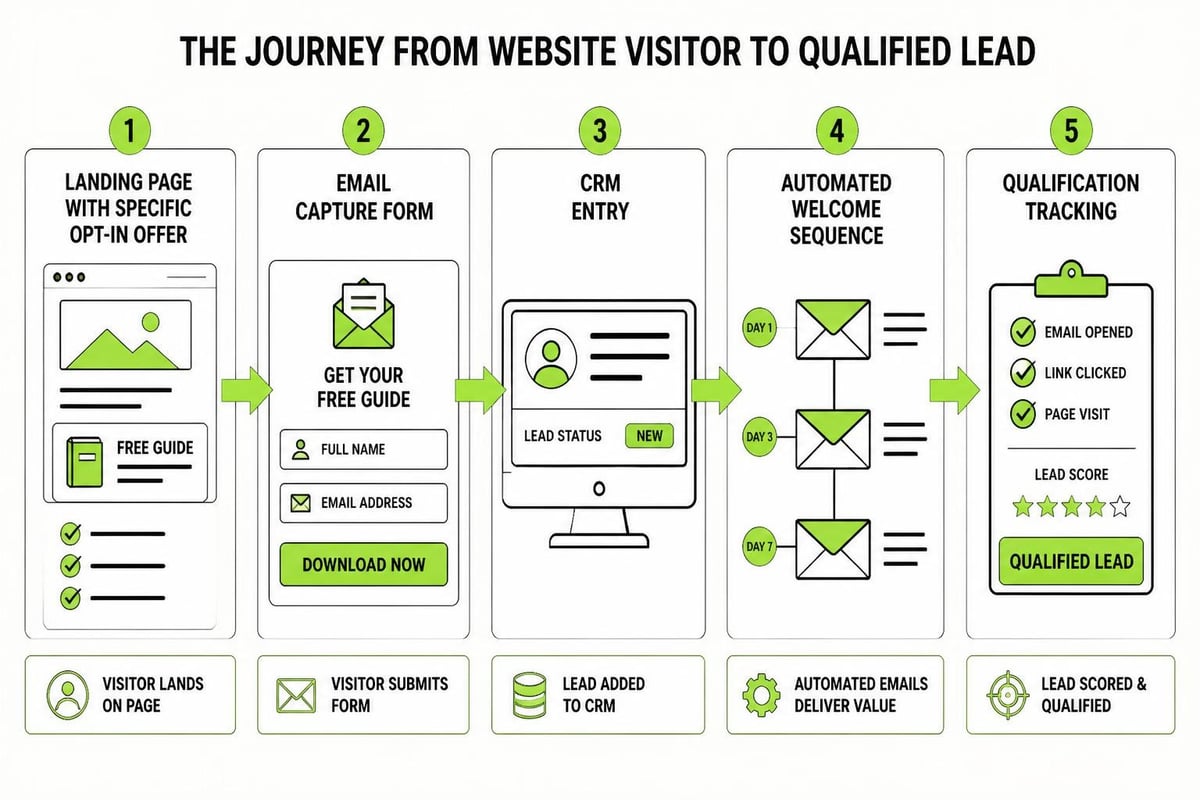
Your website isn't a brochure. It's the first point in your system. Every page should have a clear path for visitors to raise their hand and enter your ecosystem.
This means opt-in offers that solve a specific problem. Not generic "contact us" forms. Give people a reason to share their details. A checklist, a template, a diagnostic tool. Something valuable that positions you as the expert and starts building trust immediately.
CRM That Actually Gets Used
Customer relationship management isn't just software. It's the single source of truth for every lead, contact, and client interaction. If your CRM is complicated, it won't get used. If it's not connected to your other tools, data gets lost.
The right setup does a few things well:
- Automatically logs every interaction (form fills, email opens, website visits)
- Tags and segments leads based on behavior and interest
- Triggers follow-up sequences without manual input
- Gives you visibility into pipeline health and conversion rates
Your CRM should make life easier, not add admin work. If you're manually entering data or copying information between platforms, the system is broken.
Automated Nurture Sequences
Most leads aren't ready to buy today. That's fine. Marketing systems for service-based businesses excel at staying relevant until timing aligns.
Nurture sequences do the work of building trust over time. They educate, demonstrate expertise, and keep you front of mind. Email is still the most reliable channel for this, but the same principles apply to SMS, retargeting ads, and even direct mail for high-value services.
| Sequence Type | Purpose | Typical Length | Best For |
|---|---|---|---|
| Welcome | Introduce brand, set expectations | 3-5 emails | New subscribers |
| Educational | Build authority, teach concepts | 6-10 emails | Cold leads |
| Case study | Prove results with real examples | 3-4 emails | Warm prospects |
| Re-engagement | Revive inactive contacts | 2-3 emails | Dormant leads |
Each sequence should have a clear goal and a specific next step. Don't just send content. Guide people toward a decision.
Building Your System Step by Step
You don't need to build everything at once. Start with the foundation and layer in complexity as you grow.
Step One: Define Your Buyer Persona and Journey
Who are you trying to reach? What problems keep them up at night? Where are they looking for solutions? How do they make buying decisions?
Map out the stages they move through:
- Awareness: They realize they have a problem
- Consideration: They're evaluating different approaches
- Decision: They're choosing a specific provider
Your system needs different content and touchpoints for each stage. Awareness content educates and builds credibility. Consideration content demonstrates your methodology. Decision content proves results and removes objections.
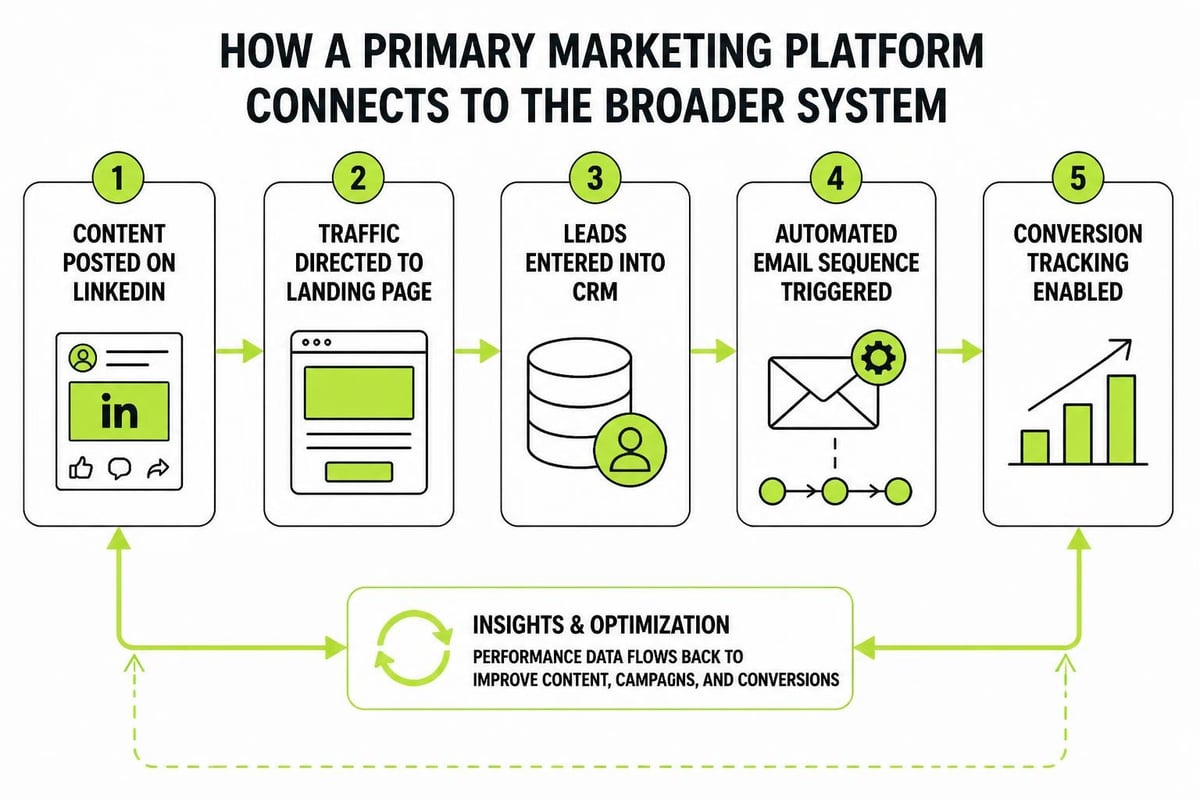
Step Two: Choose Your Primary Platform
Don't try to be everywhere. Pick one channel where your ideal clients actually spend time and build depth there. For B2B services, that's often LinkedIn. For local services, Google and SEO matter more. For creative services, Instagram or a strong content strategy might lead.
The platform is just the distribution method. The system still needs to capture attention, move people into your CRM, and nurture them toward conversion.
Step Three: Create Your Opt-In Offer
This is the bridge between browsing and becoming a lead. Your offer needs to solve a real problem quickly and demonstrate your expertise without giving away the full service.
Good opt-in offers for service businesses:
- Assessment tools or scorecards
- Templates and frameworks
- Checklists and resource guides
- Mini-courses or email workshops
- Diagnostic reports
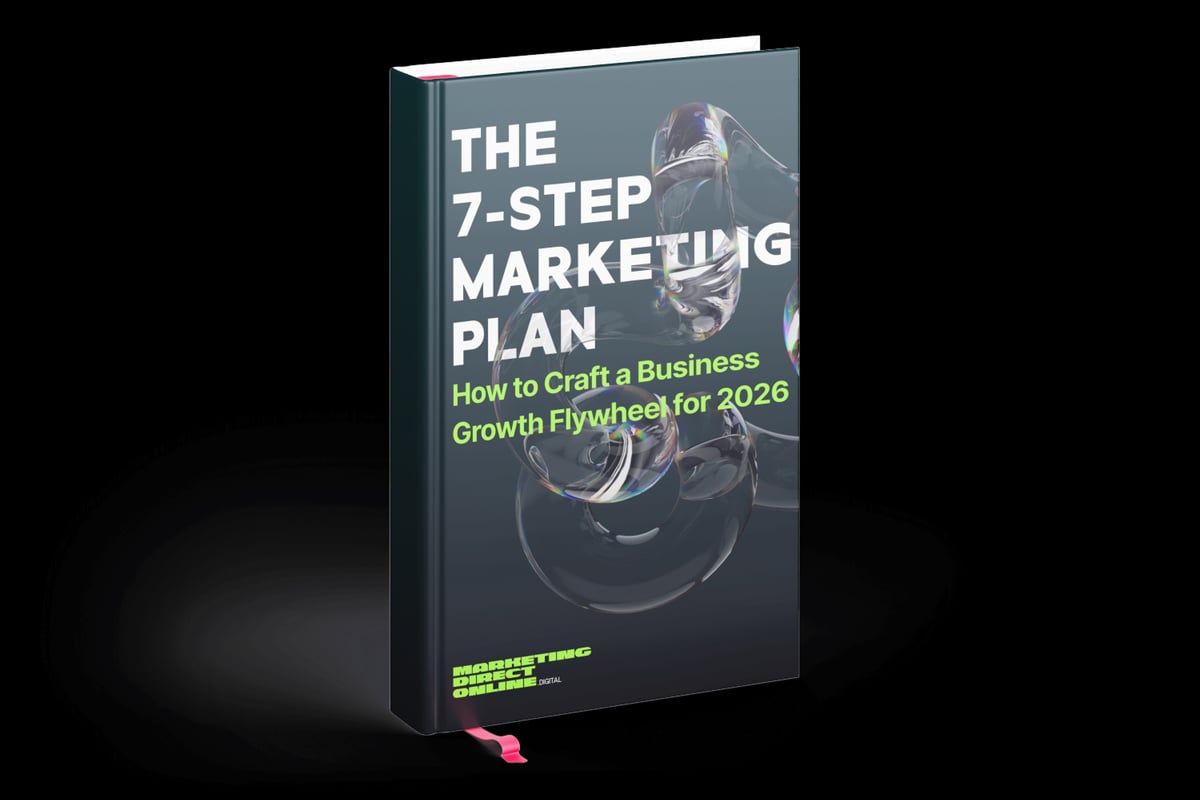
The offer should be directly related to your core service. If you're a brand strategist, a positioning template makes sense. If you run a marketing agency, a 7-step marketing plan framework that helps businesses build repeatable systems is a natural fit. Whatever you choose, make it specific and immediately useful.
Step Four: Build Your CRM Foundation
Start simple. You need:
- Contact records with key fields (name, email, company, source)
- Lead status tracking (new, contacted, qualified, proposal, client)
- Activity logging (emails, calls, meetings)
- Basic segmentation (by service interest, company size, or stage)
As you grow, add pipeline management, deal tracking, and revenue attribution. But don't overcomplicate it early. A system that works beats a complex system that sits unused.
Step Five: Set Up Automated Nurture
Write one solid welcome sequence first. Five to seven emails that deliver value, tell your story, showcase results, and invite conversation.
Then build sequences for specific use cases:
- Leads who download specific resources
- Website visitors who don't convert
- Past clients you want to re-engage
- Referral partners you want to activate
Each sequence should feel personal, even when automated. Use their name. Reference their specific interest. Write like a human, not a marketing robot.
Measuring What Actually Matters
Marketing systems for service-based businesses only work if you track the right metrics. Vanity numbers don't matter. Revenue does.
Track These Metrics
| Metric | What It Tells You | How to Improve It |
|---|---|---|
| Lead volume | Top of funnel health | Increase traffic, improve opt-in conversion |
| Lead quality | Are you attracting the right people? | Refine targeting, update messaging |
| Conversion rate | How many leads become clients? | Improve nurture, strengthen offers |
| Time to conversion | How long does it take to close? | Better qualification, faster follow-up |
| Customer lifetime value | Long-term revenue per client | Retention programs, upsells |
| Cost per acquisition | What you spend to get a client | Optimize ad spend, improve conversion |
Don't just collect data. Review it monthly. Look for patterns. Test changes. A good system gets better over time because you're constantly refining based on real results.
The Feedback Loop
Your system should tell you what's working. If email open rates drop, your subject lines need work. If landing page conversion falls, test new copy or offers. If CRM data shows leads going cold after three weeks, adjust your nurture timing.
Marketing systems for service-based businesses create compounding returns when you use data to make smarter decisions. Small improvements across multiple touchpoints add up to significant growth over time.
Common Mistakes to Avoid
Building systems is straightforward, but easy to get wrong. Here's what trips up most service businesses.
Overcomplicating Too Early
You don't need twelve funnels and fifteen email sequences. Start with one clear path from attention to conversion. Perfect that. Then add variations.
Complexity without foundation just creates more chaos. Simple systems that work beat complicated systems that don't.
Ignoring Follow-Up Speed
Research shows response time matters more than almost anything else. The faster you follow up with a new lead, the higher your conversion rate. If someone fills out a form and doesn't hear from you for two days, they've already contacted three competitors.
Automate immediate responses. Even a simple "thanks, here's what happens next" email keeps the conversation alive while you prepare a proper reply.
Not Connecting the Pieces
Your website, CRM, email platform, and ads need to talk to each other. If data lives in silos, you can't track the full journey from first touch to closed deal.
Integration isn't optional. It's the difference between a system and a collection of tools. Many businesses benefit from working with teams that understand digital marketing and content marketing integration at a technical level.
Forgetting to Nurture Existing Clients
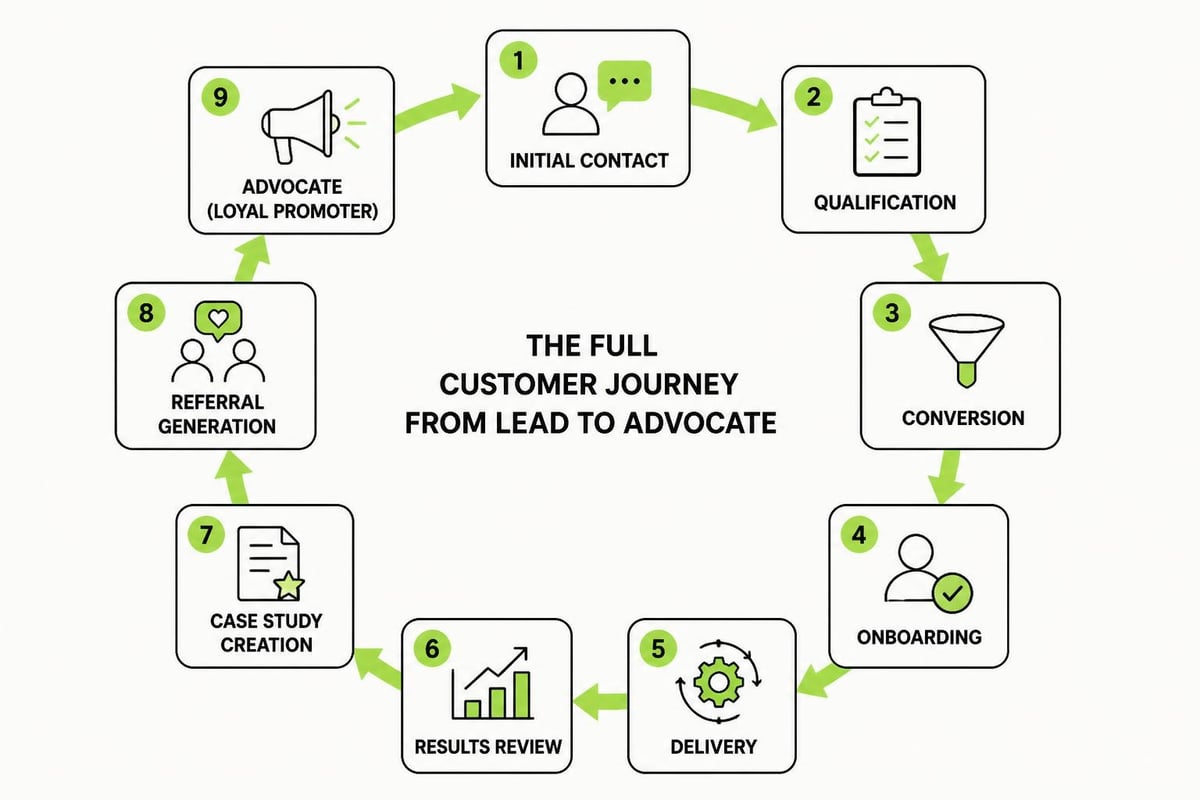
New client acquisition gets all the attention. But your best opportunities are often sitting in your existing database. Past clients who had a good experience. Leads who weren't ready six months ago but might be now.
Build reactivation campaigns. Send value to people who've gone quiet. Stay in touch with former clients. The easiest sale is often to someone who already knows your work.
Making Your System Self-Improving
The best marketing systems for service-based businesses don't stay static. They evolve based on performance data and market feedback.
Monthly System Audits
Set aside time each month to review:
- Which traffic sources are sending qualified leads?
- Where are leads dropping off in the funnel?
- What content is driving the most engagement?
- Which email sequences have the highest conversion?
- What objections are coming up in sales conversations?
Use those insights to update your approach. If a specific blog post drives tons of qualified traffic, create more content on that topic. If leads drop off after the third nurture email, test a different message or offer at that point.
A/B Testing That Matters
Don't test for the sake of testing. Test things that could meaningfully impact results:
- Landing page headlines and offers
- Email subject lines and call-to-action placement
- Ad creative and targeting parameters
- Lead magnet formats and topics
Run one test at a time. Give it enough data to be significant. Implement winners. Move to the next test. Small, consistent improvements compound into major performance gains over time. This approach aligns well with how effective digital marketing project work gets executed and refined.
Documentation and Team Enablement
If the system lives in your head, it dies when you're not available. Document processes. Create SOPs. Make it possible for someone else to execute the system without needing to ask you how it works.
This becomes critical as you grow. New team members should be able to follow the system and get results. Contractors should understand how their piece fits into the whole. Everyone should know what good looks like and how to measure it.
Scaling With System Infrastructure
Once your foundation is solid, scaling becomes a question of adding capacity, not reinventing the wheel. Marketing systems for service-based businesses allow you to grow without proportionally increasing workload.
When to Add Channels
You're ready to expand to a second channel when your first channel is:
- Consistently generating qualified leads
- Managed by documented processes
- Performing predictably month over month
- Not taking all your available time
Don't add channels because you're bored or because a competitor is there. Add them when you have capacity and when data suggests there's opportunity.
Building Team Around Systems
Hire to manage and improve systems, not to replace them. A good marketing coordinator can run your email sequences, monitor CRM data, and optimize campaigns. But only if the system is clear enough to hand off.
Systems create leverage. They let you do more with the same effort. They make your team more effective. They protect your business when someone leaves or goes on holiday.
Why This Matters in 2026
The businesses winning right now aren't the ones with the biggest ad budgets. They're the ones with the tightest systems. Markets are noisier than ever. Attention is harder to capture and more expensive to buy. You can't afford to waste leads or rely on manual follow-up.
Marketing systems for service-based businesses create competitive advantage by doing what human effort alone can't. They work 24/7. They don't forget. They improve with data. They scale without burning out.
If you're still treating marketing as a series of one-off tactics, you're working harder than you need to and leaving money on the table. The shift to systems thinking isn't complicated, but it does require intention and structure. The return is predictable growth that compounds over time, driven by infrastructure that works whether you're in the office or not.
Marketing systems for service-based businesses turn chaos into clarity by creating repeatable processes that protect leads and drive predictable growth. When you build the right infrastructure around your expertise, you stop chasing clients and start attracting them consistently. MDO Digital helps service businesses build these exact systems with high-trust websites, CRM automation, and data-driven marketing that converts attention into demand. If you're ready to remove the chaos and create structured growth that scales, let's talk.